PROPER DEFINATION
A brochure is
a flyer, pamphlet or leaflet that is
used to pass information about
something
A brochure (also referred to as a
pamphlet ) .
Brochures are advertising
pieces.
Brochures are distributed by
mail, handed personally or
placed in brochure racks.
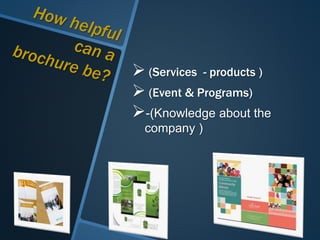
 (Services - products )
 (Event & Programs)
-(Knowledge about the
company )
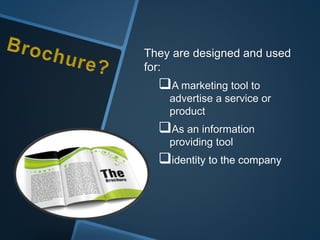
They are designed and used
for:
A marketing tool to
advertise a service or
product
As an information
providing tool
identity to the company
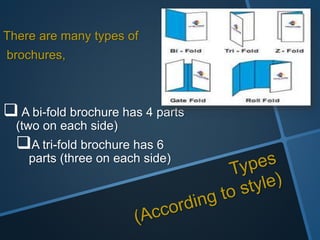
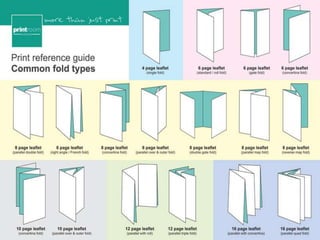
There are many types of
brochures,
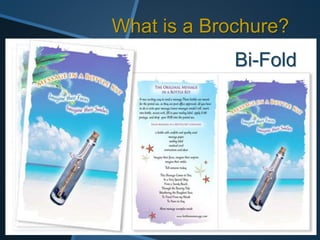
 A bi-fold brochure has 4 parts
(two on each side)
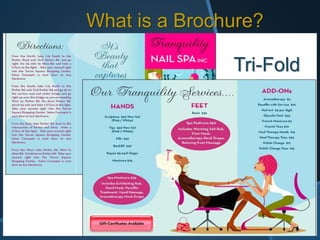
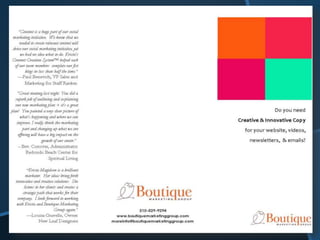
A tri-fold brochure has 6
parts (three on each side)
Bi-Fold
What is a Brochure?
What is a Brochure?
Tri-Fold
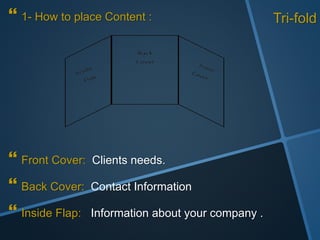
Tri-fold 1- How to place Content :
 Front Cover: Clients needs.
 Back Cover: Contact Information
 Inside Flap: Information about your company .
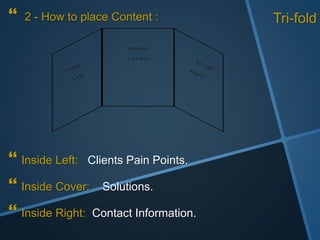
Tri-fold 2 - How to place Content :
 Inside Left: Clients Pain Points.
 Inside Cover: Solutions.
 Inside Right: Contact Information.
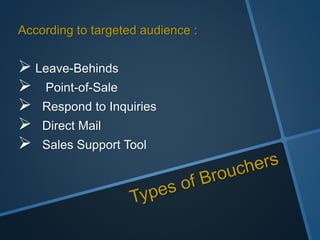
According to targeted audience :
 Leave-Behinds
 Point-of-Sale
 Respond to Inquiries
 Direct Mail
 Sales Support Tool
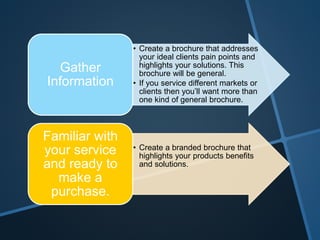
• Create a brochure that addresses
your ideal clients pain points and
highlights your solutions. This
brochure will be general.
• If you service different markets or
clients then you’ll want more than
one kind of general brochure.
Gather
Information
• Create a branded brochure that
highlights your products benefits
and solutions.
Familiar with
your service
and ready to
make a
purchase.
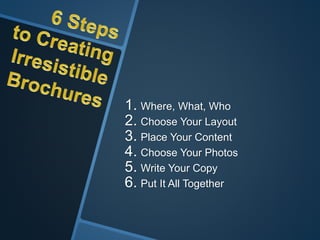
1. Where, What, Who
2. Choose Your Layout
3. Place Your Content
4. Choose Your Photos
5. Write Your Copy
6. Put It All Together
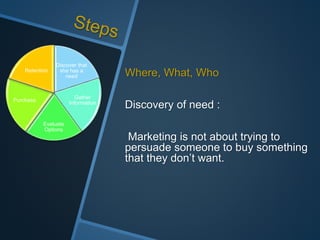
Where, What, Who
Discovery of need :
Marketing is not about trying to
persuade someone to buy something
that they don’t want.
Discover that
she has a
need
Gather
Information
Evaluate
Options
Purchase
Retention
Purpose
Information (the history of the
company, goals, services)
Pages of the brochure should
also be arranged .
Sketched out.
Unique Design .
Tell one story
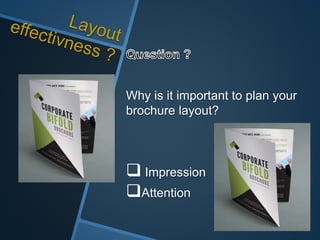
Why is it important to plan your
brochure layout?
 Impression
Attention
 Attractive
 The name of
organization/place/company
In addition, a photo or
graphic should be on the
cover page
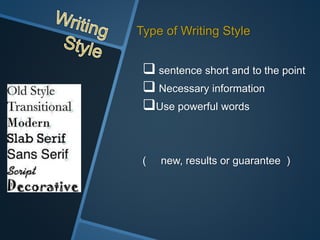
Type of Writing Style
 sentence short and to the point
 Necessary information
Use powerful words
( new, results or guarantee )
The use of headings draw
attention to sections on
your brochure
The heading should stand
out, by having a bigger font
and color
It is very important that you
proof read your work
Grammatical and spelling
mistakes takes the
attention of the reader’s
away
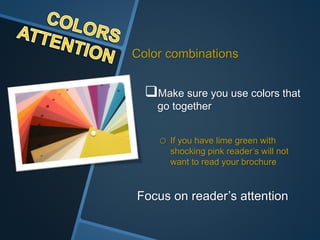
Color combinations
Make sure you use colors that
go together
o If you have lime green with
shocking pink reader’s will not
want to read your brochure
Focus on reader’s attention
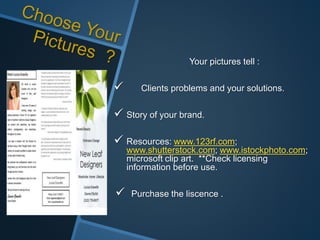
Your pictures tell :
 Clients problems and your solutions.
 Story of your brand.
 Resources: www.123rf.com;
www.shutterstock.com; www.istockphoto.com;
microsoft clip art. **Check licensing
information before use.
 Purchase the liscence .
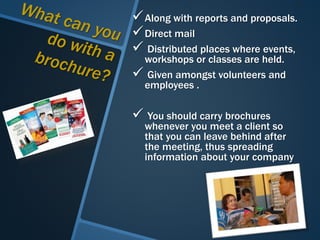
Along with reports and proposals.
Direct mail
 Distributed places where events,
workshops or classes are held.
 Given amongst volunteers and
employees .
 You should carry brochures
whenever you meet a client so
that you can leave behind after
the meeting, thus spreading
information about your company
Ok , then , I think You should “Google” your further Queries … 
www.google.com
Brochures

Brochures

  • 3.
    PROPER DEFINATION A brochureis a flyer, pamphlet or leaflet that is used to pass information about something
  • 4.
    A brochure (alsoreferred to as a pamphlet ) . Brochures are advertising pieces. Brochures are distributed by mail, handed personally or placed in brochure racks.
  • 5.
     (Services -products )  (Event & Programs) -(Knowledge about the company )
  • 6.
    They are designedand used for: A marketing tool to advertise a service or product As an information providing tool identity to the company
  • 7.
    There are manytypes of brochures,  A bi-fold brochure has 4 parts (two on each side) A tri-fold brochure has 6 parts (three on each side)
  • 8.
  • 9.
    What is aBrochure? Tri-Fold
  • 11.
    Tri-fold 1- Howto place Content :  Front Cover: Clients needs.  Back Cover: Contact Information  Inside Flap: Information about your company .
  • 13.
    Tri-fold 2 -How to place Content :  Inside Left: Clients Pain Points.  Inside Cover: Solutions.  Inside Right: Contact Information.
  • 14.
    According to targetedaudience :  Leave-Behinds  Point-of-Sale  Respond to Inquiries  Direct Mail  Sales Support Tool
  • 15.
    • Create abrochure that addresses your ideal clients pain points and highlights your solutions. This brochure will be general. • If you service different markets or clients then you’ll want more than one kind of general brochure. Gather Information • Create a branded brochure that highlights your products benefits and solutions. Familiar with your service and ready to make a purchase.
  • 16.
    1. Where, What,Who 2. Choose Your Layout 3. Place Your Content 4. Choose Your Photos 5. Write Your Copy 6. Put It All Together
  • 17.
    Where, What, Who Discoveryof need : Marketing is not about trying to persuade someone to buy something that they don’t want. Discover that she has a need Gather Information Evaluate Options Purchase Retention
  • 18.
    Purpose Information (the historyof the company, goals, services) Pages of the brochure should also be arranged . Sketched out. Unique Design . Tell one story
  • 19.
    Why is itimportant to plan your brochure layout?  Impression Attention
  • 20.
     Attractive  Thename of organization/place/company In addition, a photo or graphic should be on the cover page
  • 21.
    Type of WritingStyle  sentence short and to the point  Necessary information Use powerful words ( new, results or guarantee )
  • 22.
    The use ofheadings draw attention to sections on your brochure The heading should stand out, by having a bigger font and color
  • 23.
    It is veryimportant that you proof read your work Grammatical and spelling mistakes takes the attention of the reader’s away
  • 24.
    Color combinations Make sureyou use colors that go together o If you have lime green with shocking pink reader’s will not want to read your brochure Focus on reader’s attention
  • 25.
    Your pictures tell:  Clients problems and your solutions.  Story of your brand.  Resources: www.123rf.com; www.shutterstock.com; www.istockphoto.com; microsoft clip art. **Check licensing information before use.  Purchase the liscence .
  • 26.
    Along with reportsand proposals. Direct mail  Distributed places where events, workshops or classes are held.  Given amongst volunteers and employees .  You should carry brochures whenever you meet a client so that you can leave behind after the meeting, thus spreading information about your company
  • 27.
    Ok , then, I think You should “Google” your further Queries …  www.google.com