factors Affecting Enzyme activity
12
factors Affecting Enzyme activity
• Three factors:
1. Environmental Conditions
2. Activators-Cofactors and Coenzymes
3. Enzyme Inhibitors
Environmental FACTORS
Affecting Rate of Enzyme Reactions
 Temperature
 Hydrogen ion concentration(pH)
 Enzyme concentration
 Substrate concentration
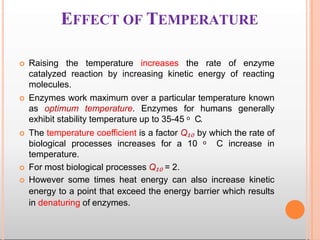
EFFECT OF TEMPERATURE
 Raising the temperature increases the rate of enzyme
catalyzed reaction by increasing kinetic energy of reacting
molecules.
 Enzymes work maximum over a particular temperature known
as optimum temperature. Enzymes for humans generally
exhibit stability temperature up to 35-45 ᵒ C.
 The temperature coefficient is a factor Q₁₀ by which the rate of
biological processes increases for a 10 ᵒ C increase in
temperature.
 For most biological processes Q₁₀ = 2.
 However some times heat energy can also increase kinetic
energy to a point that exceed the energy barrier which results
in denaturing of enzymes.
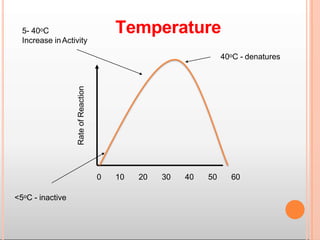
RateofReaction
Temperature
40oC - denatures
5- 40oC
Increase inActivity
0 10 20 30 40 50 60
<5oC - inactive
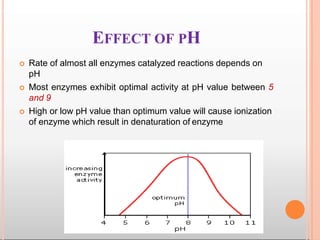
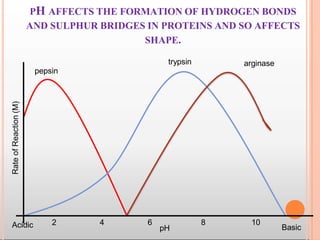
EFFECT OF PH
 Rate of almost all enzymes catalyzed reactions depends on
pH
 Most enzymes exhibit optimal activity at pH value between 5
and 9
 High or low pH value than optimum value will cause ionization
of enzyme which result in denaturation of enzyme
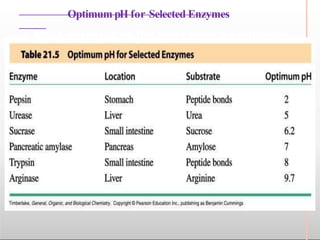
Optimum pH for Selected Enzymes
• Most enzymes of the body have an optimum
pH of about 7.4
• However, in certain organs, enzymes operate
at lower and higher optimum pH values
PH AFFECTS THE FORMATION OF HYDROGEN BONDS
AND SULPHUR BRIDGES IN PROTEINS AND SO AFFECTS
SHAPE.
pepsin
trypsin arginase
2 4 8 106
pH
RateofReaction(M)
Acidic Basic
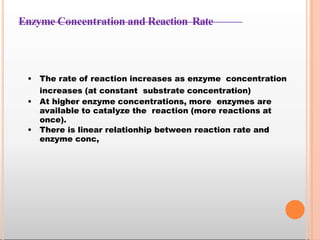
Enzyme Concentration and Reaction Rate
• The rate of reaction increases as enzyme concentration
increases (at constant substrate concentration)
• At higher enzyme concentrations, more enzymes are
available to catalyze the reaction (more reactions at
once).
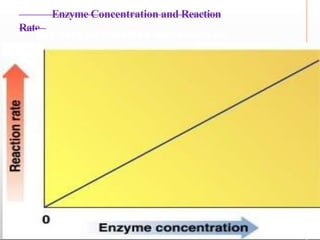
• There is linear relationhip between reaction rate and
enzyme conc,
Enzyme Concentration and Reaction
Rate
• The rate of reaction increases as
enzyme concentration increases (at
constant substrate concentration)
• At higher enzyme concentrations, more
enzymes are available to catalyze the
reaction (more reactions at once)
n
tion (at
• There i
reactio
consta
s a linear relationship betwee
n rate and enzyme concentra
nt substrate concentration)
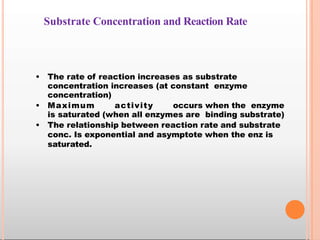
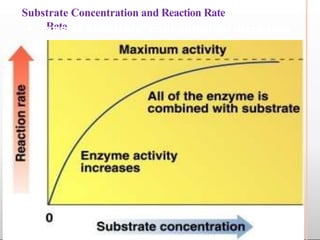
Substrate Concentration and Reaction Rate
• The rate of reaction increases as substrate
concentration increases (at constant enzyme
concentration)
• Maximum activity occurs when the enzyme
is saturated (when all enzymes are binding substrate)
• The relationship between reaction rate and substrate
conc. Is exponential and asymptote when the enz is
saturated.
Substrate Concentration and Reaction Rate
Rate• Tses as substrate concentration increases
(at constant enzyme concentration)
• Maximum activity occurs when the
enzyme is saturated (when all enzymes are
binding substrate)
• The relationship between reaction rate and
ial,
e
subst
and a
enzym
rate concentration is exponent
symptotes (levels off) when th
e is saturated
Products of Reaction and Reaction Rate
If products are removed as fast as they are
formed,the reaction will be 100% complete,but if
they are not removed,the reaction will remain
incomplete.
ACTIVATIO
N
ACTIVATION
 Activation is defined as the conversion of an inactive form of
an enzyme to active form which processes the metabolic
activity.
TYPES OF ACTIVATION
 Activation by co-factors.
 Conversion of an enzyme precursor.
ACTIVATION BY CO FACTORS
 Many enzymes are activated by co-factors.
Examples:
 DNA polymerase is a holoenzyme that catalyzes the
polymerization of de -oxyribonucleotide into a DNA strand. It
uses Mg- ion for catalytic activity.
 NADH Dehydrogenase uses NADH for its activation
Carbonic anhydrase uses Zn- ion for it‟s activation.
CONVERSION OF AN ENZYME
PRECURSOR
 Specific proteolysis is a common method of activating
enzymes and other proteins in biological system.
Example:
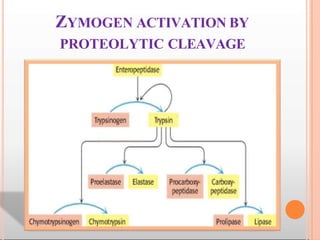
 The generation of trypsin from trypsinogen leads to the
activation of other zymogens.
ZYMOGEN ACTIVATION BY
PROTEOLYTIC CLEAVAGE
INHIBITIO
N
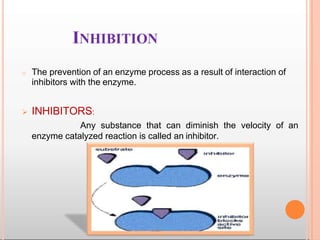
INHIBITION
o The prevention of an enzyme process as a result of interaction of
inhibitors with the enzyme.
 INHIBITORS:
Any substance that can diminish the velocity of an
enzyme catalyzed reaction is called an inhibitor.
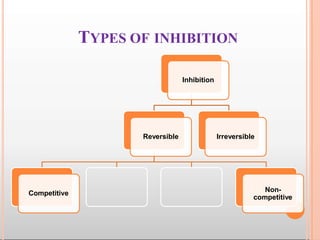
TYPES OF INHIBITION
Inhibition
Reversible
Competitive Non-
competitive
Irreversible
REVERSIBLE INHIBITION
o It is an inhibition of enzyme activity in which the inhibiting
molecular entity can associate and dissociate from the
enzyme’s binding site.
TYPES OF REVERSIBLE INHIBITION
o There are two types:
 Competitive inhibition
 Non-competitive inhibition.
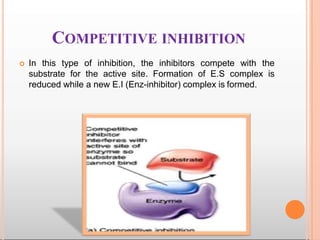
COMPETITIVE INHIBITION
 In this type of inhibition, the inhibitors compete with the
substrate for the active site. Formation of E.S complex is
reduced while a new E.I (Enz-inhibitor) complex is formed.
EXAMPLES OF COMPETITIVE INHIBITION
 Statin Drug As Example Of Competitive Inhibition:
 Statin drugs such as lipitor compete with HMG-CoA(substrate)
and inhibit the active site of HMG CoA-REDUCTASE (that
bring about the catalysis of cholesterol synthesis).
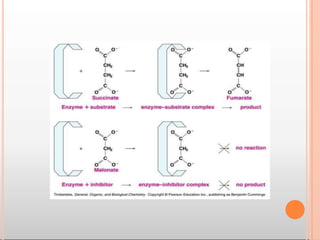
• Malonate is a competitive inhibitor of
succinate dehydrogenase
- it has a structure that is similar to
succinate
-inhibition can be reversed by
adding succinate.
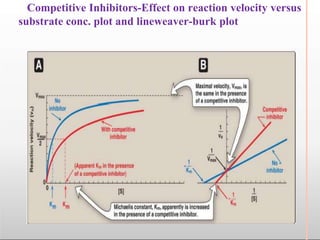
Competitive Inhibitors-Effect on reaction velocity versus
substrate conc. plot and lineweaver-burk plot
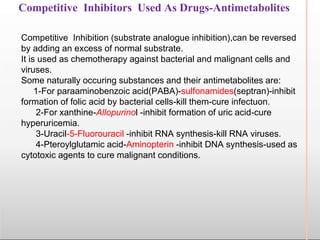
Competitive Inhibitors Used As Drugs-Antimetabolites
Competitive Inhibition (substrate analogue inhibition),can be reversed
by adding an excess of normal substrate.
It is used as chemotherapy against bacterial and malignant cells and
viruses.
Some naturally occuring substances and their antimetabolites are:
1-For paraaminobenzoic acid(PABA)-sulfonamides(septran)-inhibit
formation of folic acid by bacterial cells-kill them-cure infectuon.
2-For xanthine-Allopurinol -inhibit formation of uric acid-cure
hyperuricemia.
3-Uracil-5-Fluorouracil -inhibit RNA synthesis-kill RNA viruses.
4-Pteroylglutamic acid-Aminopterin -inhibit DNA synthesis-used as
cytotoxic agents to cure malignant conditions.
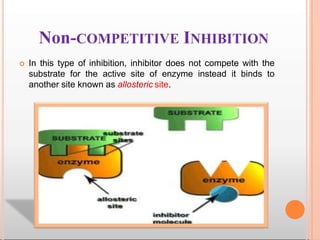
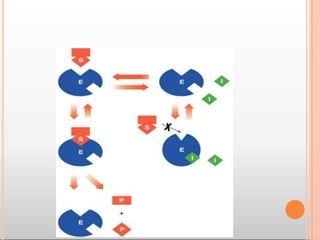
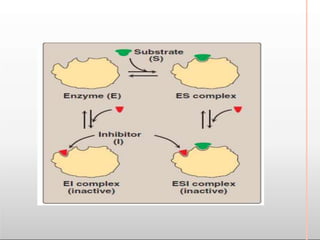
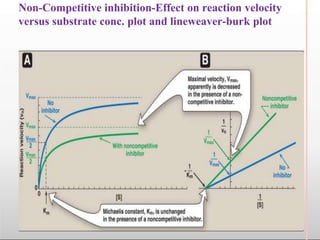
Non-COMPETITIVE INHIBITION
 In this type of inhibition, inhibitor does not compete with the
substrate for the active site of enzyme instead it binds to
another site known as allosteric site.
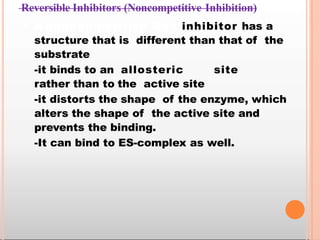
Reversible Inhibitors (Noncompetitive Inhibition)
• A noncompetitive Non inhibitor has a
structure that is different than that of the
substrate
-it binds to an allosteric site
rather than to the active site
-it distorts the shape of the enzyme, which
alters the shape of the active site and
prevents the binding.
-It can bind to ES-complex as well.
Non-COMPETITIVE INHIBITION
EXAMPLE:
EDTA(Ethylene diamin tetra acetic acid):used in labs as anticoagulant
in blood samples,it bind all the Ca++ in blood sample,therefore inhibit
all enzymes which need Ca++ as co-factor for their activation.
FLOURIDE IONS: Remove Mg++ needed for many enzymes
activation e.g. Enolase in glycolysis.
Replacement of these ions(Ca++ & Mg++) can result in reappearance
of the activity of the enzymes.
Non-Competitive inhibition-Effect on reaction velocity
versus substrate conc. plot and lineweaver-burk plot
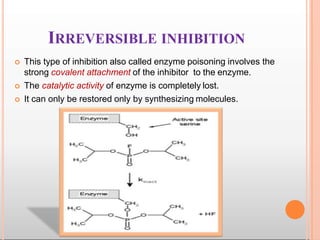
IRREVERSIBLE INHIBITION
 This type of inhibition also called enzyme poisoning involves the
strong covalent attachment of the inhibitor to the enzyme.
 The catalytic activity of enzyme is completely lost.
 It can only be restored only by synthesizing molecules.
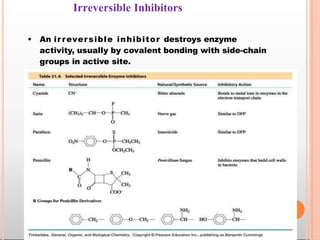
Irreversible Inhibitors
• An irreversible inhibitor destroys enzyme
activity, usually by covalent bonding with side-chain
groups in active site.
DFP=DichloroFlouroPhosphate
EXAMPLES OF IRREVERSIBLE
INHIBITION
 Lead: inhibit Ferrochelatase,enzyme irreversibly in heme
synthesis.
 SUICIDE INHIBITION :
 It is an unusual type of irreversible inhibition where the
enzyme converts the inhibitor into a reactive form in its active
site.
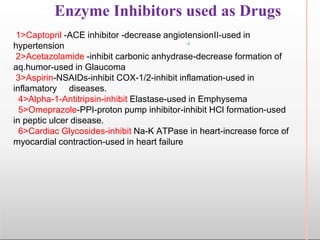
Enzyme Inhibitors used as Drugs
1>Captopril -ACE inhibitor -decrease angiotensionII-used in
hypertension
2>Acetazolamide -inhibit carbonic anhydrase-decrease formation of
aq.humor-used in Glaucoma
3>Aspirin-NSAIDs-inhibit COX-1/2-inhibit inflamation-used in
inflamatory diseases.
4>Alpha-1-Antitripsin-inhibit Elastase-used in Emphysema
5>Omeprazole-PPI-proton pump inhibitor-inhibit HCl formation-used
in peptic ulcer disease.
6>Cardiac Glycosides-inhibit Na-K ATPase in heart-increase force of
myocardial contraction-used in heart failure
ENZYME REGULATION
ENZYME REGULATION
Regulation of reaction velocity of enzyme is essential to coordinate
numerous metabolic processes.
By 3-ways:
1-ALLOSTERIC ENZYMES
2-BY COVALENT MODIFICATION
3-ENZYME INDUCTION AND REPRESSION
REGULATION OF ENZYMES -Allosteric Enzyme
Allosteric Enzymes:
These enzymes have Alosteric sites,where Effector molecules
bind,noncovalently,which alter the affinity of enzyme for its substrate.
Negative effectors: Decrease affinity-Inhibit enzyme activity.
Positive effectors: Increase affinity-stimulate enzyme activity.
Important allosteric effectors produced in response to certain
hormones are: c AMP,c GMP,DAG,IP3,Ca++ and Calmodulin.
Two types:
Homotropic effectors:
Heterotropic effectors:
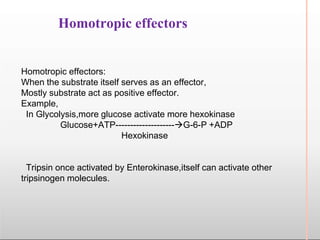
Homotropic effectors
Homotropic effectors:
When the substrate itself serves as an effector,
Mostly substrate act as positive effector.
Example,
In Glycolysis,more glucose activate more hexokinase
Glucose+ATP--------------------G-6-P +ADP
Hexokinase
Tripsin once activated by Enterokinase,itself can activate other
tripsinogen molecules.
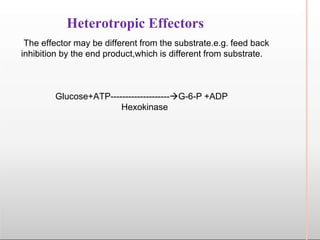
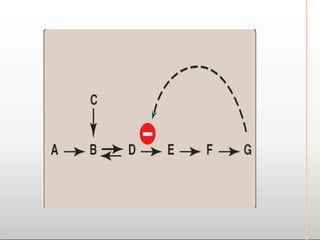
Heterotropic Effectors
The effector may be different from the substrate.e.g. feed back
inhibition by the end product,which is different from substrate.
Glucose+ATP--------------------G-6-P +ADP
Hexokinase
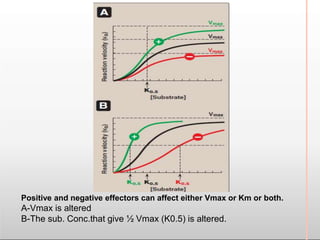
Positive and negative effectors can affect either Vmax or Km or both.
A-Vmax is altered
B-The sub. Conc.that give ½ Vmax (K0.5) is altered.
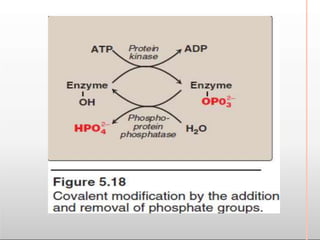
REGULATION OF ENZYMES-By Covalent Modification
It is by addition or removal of phosphate groups (by protein kinases+ATP
/phosphatases) from specific serine,threonine or tyrosine residues of the
enzyme.
Response of enzyme to phosphorylation:
Phosphorylated form may be more or less active than unphosphorylated
enzyme.
e.g.phosphorylation of glycogen phosphorylase increase activity,
while addition of phosphate to glycogen synthase decrease activity.
REGULATION BY-
Induction and repression of enzyme synthesis
The regulatory mechanisms described above modify the activity of
existing enzyme molecules.
Cells can also regulate the amount of enzyme present by altering the
rate of enzyme degradation or, more typically, the rate of enzyme
synthesis.
The increase (induction) or decrease (repression) of enzyme synthesis
leads to an alteration in the total population of active sites, under
selected physiologic conditions.
For example, elevated levels of insulin as a result of high blood
glucose levels after meal cause an increase in the synthesis of key
enzymes involved in glucose metabolism.
Induction n Repression of Enzymes
In some cases drugs are used to activate or
induce a certain enzyme action.
Example is phenobarbitone used to decrease
raised unconjugated billirubin in whome UDP-
glucuronyl transferase is defficient (newborn
babies) in hepatocytes.
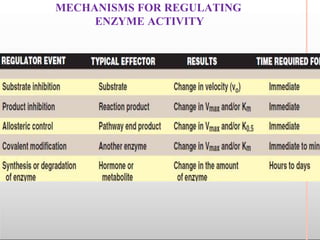
MECHANISMS FOR REGULATING
ENZYME ACTIVITY
PROPERTIES OF ENZYMES
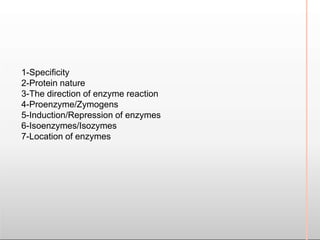
1-Specificity
2-Protein nature
3-The direction of enzyme reaction
4-Proenzyme/Zymogens
5-Induction/Repression of enzymes
6-Isoenzymes/Isozymes
7-Location of enzymes
ENZYME
SPECIFICITY
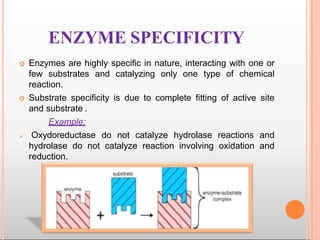
ENZYME SPECIFICITY
 Enzymes are highly specific in nature, interacting with one or
few substrates and catalyzing only one type of chemical
reaction.
 Substrate specificity is due to complete fitting of active site
and substrate .
Example:
 Oxydoreductase do not catalyze hydrolase reactions and
hydrolase do not catalyze reaction involving oxidation and
reduction.
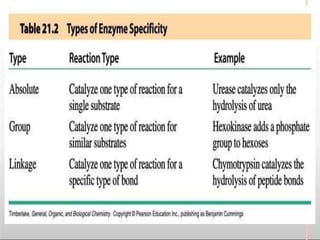
• Enzymes have varying degrees of specificity for
substrates
• Enzymes may recognize and catalyze:
- a single substrate
- a group of similar substrates
- a particular type of
bond
TYPES OF ENZYME SPECIFICITY
 Enzymes show different degrees of specificity:
 Absolute specificity.
 Group specificity.
 Bond specificity.
 Optical or stereo-specificity.
 Dual specificity.
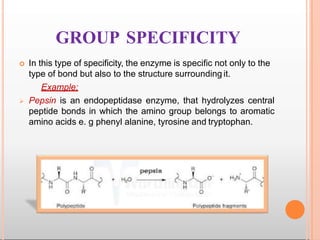
GROUP SPECIFICITY
 In this type of specificity, the enzyme is specific not only to the
type of bond but also to the structure surrounding it.
Example:
 Pepsin is an endopeptidase enzyme, that hydrolyzes central
peptide bonds in which the amino group belongs to aromatic
amino acids e. g phenyl alanine, tyrosine and tryptophan.
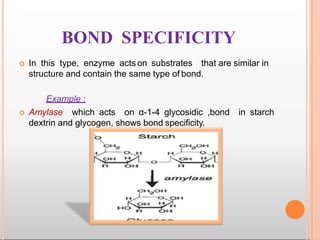
BOND SPECIFICITY
 In this type, enzyme acts on substrates that are similar in
structure and contain the same type of bond.
Example :
 Amylase which acts on α-1-4 glycosidic ,bond in starch
dextrin and glycogen, shows bond specificity.
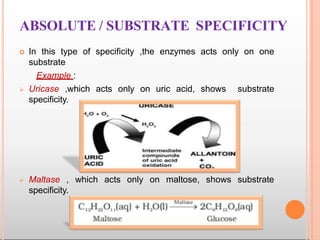
ABSOLUTE / SUBSTRATE SPECIFICITY
 In this type of specificity ,the enzymes acts only on one
substrate
Example :
 Uricase ,which acts only on uric acid, shows substrate
specificity.
 Maltase , which acts only on maltose, shows substrate
specificity.
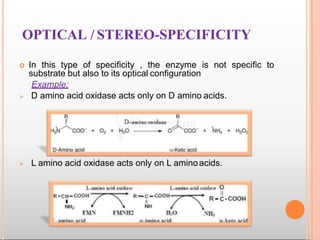
OPTICAL / STEREO-SPECIFICITY
 In this type of specificity , the enzyme is not specific to
substrate but also to its optical configuration
Example:
 D amino acid oxidase acts only on D amino acids.
 L amino acid oxidase acts only on L aminoacids.
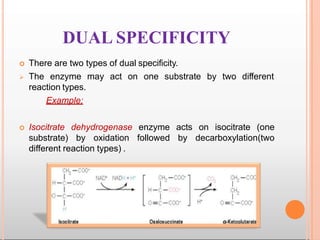
DUAL SPECIFICITY
 There are two types of dual specificity.
may act on one substrate by two different The enzyme
reaction types.
Example:
 Isocitrate dehydrogenase enzyme acts on isocitrate (one
substrate) by oxidation followed by decarboxylation(two
different reaction types) .
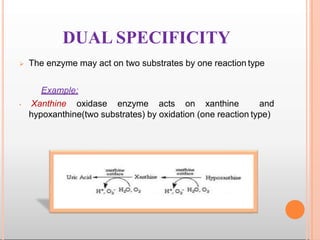
 The enzyme may act on two substrates by one reaction type
Example:
• Xanthine oxidase enzyme acts on xanthine and
hypoxanthine(two substrates) by oxidation (one reaction type)
DUAL SPECIFICITY
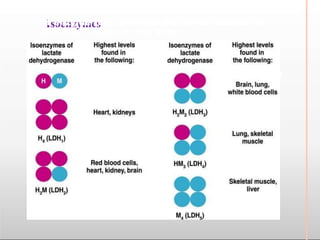
Isoenzymes
• Isoenzymes are different forms of an enzyme that
catalyze the same reaction in different tissues in body.
• They have slight variations in the amino acid sequences
of the subunits of their quaternary structure.
• Different organs commonly contain characteristic proportions
of different isoenzymes.
• The pattern of isoenzymes found in the plasma serve as a
means of identifying the site of tissue damage.
• For example, lactate dehydrogenase (LDH), which
converts lactate to pyruvate, consists of five
Isoforms.
Isoenzymes• I f enzyme that catalyze the same reaction in
different tissues in the body
- they have slight variations in the amino acid
sequences of the subunits of their
quaternary structure
• For example, lactate dehydrogenase (LDH), which
converts lactate to pyruvate, consists of five
iso
enzyme
s
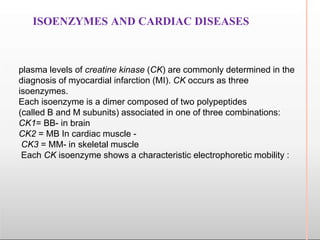
ISOENZYMES AND CARDIAC DISEASES
plasma levels of creatine kinase (CK) are commonly determined in the
diagnosis of myocardial infarction (MI). CK occurs as three
isoenzymes.
Each isoenzyme is a dimer composed of two polypeptides
(called B and M subunits) associated in one of three combinations:
CK1= BB- in brain
CK2 = MB In cardiac muscle -
CK3 = MM- in skeletal muscle
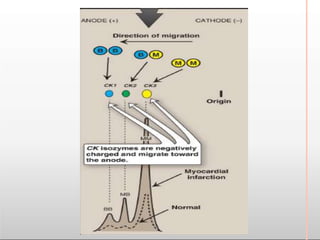
Each CK isoenzyme shows a characteristic electrophoretic mobility :
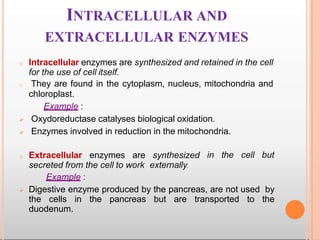
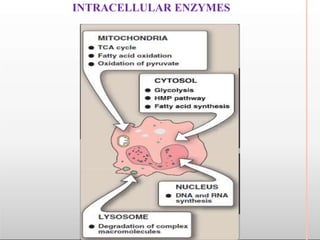
INTRACELLULAR AND
EXTRACELLULAR ENZYMES
o Intracellular enzymes are synthesized and retained in the cell
for the use of cell itself.
o They are found in the cytoplasm, nucleus, mitochondria and
chloroplast.
Example :
 Oxydoreductase catalyses biological oxidation.
 Enzymes involved in reduction in the mitochondria.
in the cell buto Extracellular enzymes are synthesized
secreted from the cell to work externally.
Example :
 Digestive enzyme produced by the pancreas, are not used by
the cells in the pancreas but are transported to the
duodenum.
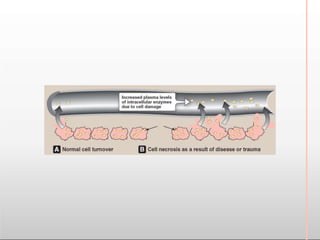
INTRACELLULAR ENZYMES
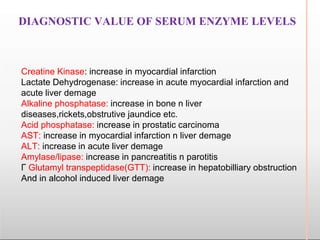
DIAGNOSTIC VALUE OF SERUM ENZYME LEVELS
Creatine Kinase: increase in myocardial infarction
Lactate Dehydrogenase: increase in acute myocardial infarction and
acute liver demage
Alkaline phosphatase: increase in bone n liver
diseases,rickets,obstrutive jaundice etc.
Acid phosphatase: increase in prostatic carcinoma
AST: increase in myocardial infarction n liver demage
ALT: increase in acute liver demage
Amylase/lipase: increase in pancreatitis n parotitis
Γ Glutamyl transpeptidase(GTT): increase in hepatobilliary obstruction
And in alcohol induced liver demage
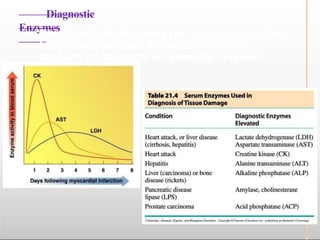
Diagnostic
Enzymes
• The levels of diagnostic enzymes in the
blood can be used to determine the
amount of damage in specific tissues
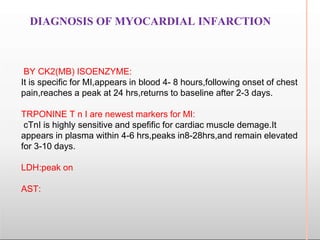
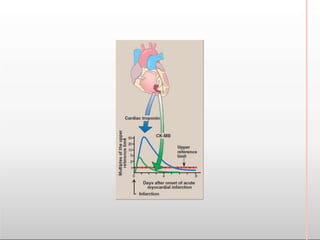
DIAGNOSIS OF MYOCARDIAL INFARCTION
BY CK2(MB) ISOENZYME:
It is specific for MI,appears in blood 4- 8 hours,following onset of chest
pain,reaches a peak at 24 hrs,returns to baseline after 2-3 days.
TRPONINE T n I are newest markers for MI:
cTnI is highly sensitive and spefific for cardiac muscle demage.It
appears in plasma within 4-6 hrs,peaks in8-28hrs,and remain elevated
for 3-10 days.
LDH:peak on
AST:
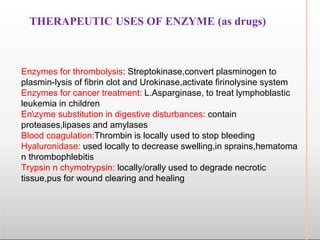
THERAPEUTIC USES OF ENZYME (as drugs)
Enzymes for thrombolysis: Streptokinase,convert plasminogen to
plasmin-lysis of fibrin clot and Urokinase,activate firinolysine system
Enzymes for cancer treatment: L.Asparginase, to treat lymphoblastic
leukemia in children
Enzyme substitution in digestive disturbances: contain
proteases,lipases and amylases
Blood coagulation:Thrombin is locally used to stop bleeding
Hyaluronidase: used locally to decrease swelling,in sprains,hematoma
n thrombophlebitis
Trypsin n chymotrypsin: locally/orally used to degrade necrotic
tissue,pus for wound clearing and healing
ASSIGNMENT FOT TODAY
1-DIFFERENTIATE B/W:
Ribozymes and zymogens
and isoenzymes
2-Enlist:
diagnostic and therapeutic
uses of enzymes
factors  Affecting   Enzyme  activity

factors Affecting Enzyme activity

  • 1.
  • 2.
    12 factors Affecting Enzymeactivity • Three factors: 1. Environmental Conditions 2. Activators-Cofactors and Coenzymes 3. Enzyme Inhibitors
  • 3.
    Environmental FACTORS Affecting Rateof Enzyme Reactions  Temperature  Hydrogen ion concentration(pH)  Enzyme concentration  Substrate concentration
  • 4.
    EFFECT OF TEMPERATURE Raising the temperature increases the rate of enzyme catalyzed reaction by increasing kinetic energy of reacting molecules.  Enzymes work maximum over a particular temperature known as optimum temperature. Enzymes for humans generally exhibit stability temperature up to 35-45 ᵒ C.  The temperature coefficient is a factor Q₁₀ by which the rate of biological processes increases for a 10 ᵒ C increase in temperature.  For most biological processes Q₁₀ = 2.  However some times heat energy can also increase kinetic energy to a point that exceed the energy barrier which results in denaturing of enzymes.
  • 5.
    RateofReaction Temperature 40oC - denatures 5-40oC Increase inActivity 0 10 20 30 40 50 60 <5oC - inactive
  • 6.
    EFFECT OF PH Rate of almost all enzymes catalyzed reactions depends on pH  Most enzymes exhibit optimal activity at pH value between 5 and 9  High or low pH value than optimum value will cause ionization of enzyme which result in denaturation of enzyme
  • 7.
    Optimum pH forSelected Enzymes • Most enzymes of the body have an optimum pH of about 7.4 • However, in certain organs, enzymes operate at lower and higher optimum pH values
  • 8.
    PH AFFECTS THEFORMATION OF HYDROGEN BONDS AND SULPHUR BRIDGES IN PROTEINS AND SO AFFECTS SHAPE. pepsin trypsin arginase 2 4 8 106 pH RateofReaction(M) Acidic Basic
  • 9.
    Enzyme Concentration andReaction Rate • The rate of reaction increases as enzyme concentration increases (at constant substrate concentration) • At higher enzyme concentrations, more enzymes are available to catalyze the reaction (more reactions at once). • There is linear relationhip between reaction rate and enzyme conc,
  • 10.
    Enzyme Concentration andReaction Rate • The rate of reaction increases as enzyme concentration increases (at constant substrate concentration) • At higher enzyme concentrations, more enzymes are available to catalyze the reaction (more reactions at once) n tion (at • There i reactio consta s a linear relationship betwee n rate and enzyme concentra nt substrate concentration)
  • 11.
    Substrate Concentration andReaction Rate • The rate of reaction increases as substrate concentration increases (at constant enzyme concentration) • Maximum activity occurs when the enzyme is saturated (when all enzymes are binding substrate) • The relationship between reaction rate and substrate conc. Is exponential and asymptote when the enz is saturated.
  • 12.
    Substrate Concentration andReaction Rate Rate• Tses as substrate concentration increases (at constant enzyme concentration) • Maximum activity occurs when the enzyme is saturated (when all enzymes are binding substrate) • The relationship between reaction rate and ial, e subst and a enzym rate concentration is exponent symptotes (levels off) when th e is saturated
  • 13.
    Products of Reactionand Reaction Rate If products are removed as fast as they are formed,the reaction will be 100% complete,but if they are not removed,the reaction will remain incomplete.
  • 14.
  • 15.
    ACTIVATION  Activation isdefined as the conversion of an inactive form of an enzyme to active form which processes the metabolic activity. TYPES OF ACTIVATION  Activation by co-factors.  Conversion of an enzyme precursor.
  • 16.
    ACTIVATION BY COFACTORS  Many enzymes are activated by co-factors. Examples:  DNA polymerase is a holoenzyme that catalyzes the polymerization of de -oxyribonucleotide into a DNA strand. It uses Mg- ion for catalytic activity.  NADH Dehydrogenase uses NADH for its activation Carbonic anhydrase uses Zn- ion for it‟s activation.
  • 17.
    CONVERSION OF ANENZYME PRECURSOR  Specific proteolysis is a common method of activating enzymes and other proteins in biological system. Example:  The generation of trypsin from trypsinogen leads to the activation of other zymogens.
  • 18.
  • 19.
  • 20.
    INHIBITION o The preventionof an enzyme process as a result of interaction of inhibitors with the enzyme.  INHIBITORS: Any substance that can diminish the velocity of an enzyme catalyzed reaction is called an inhibitor.
  • 21.
  • 22.
    REVERSIBLE INHIBITION o Itis an inhibition of enzyme activity in which the inhibiting molecular entity can associate and dissociate from the enzyme’s binding site. TYPES OF REVERSIBLE INHIBITION o There are two types:  Competitive inhibition  Non-competitive inhibition.
  • 23.
    COMPETITIVE INHIBITION  Inthis type of inhibition, the inhibitors compete with the substrate for the active site. Formation of E.S complex is reduced while a new E.I (Enz-inhibitor) complex is formed.
  • 24.
    EXAMPLES OF COMPETITIVEINHIBITION  Statin Drug As Example Of Competitive Inhibition:  Statin drugs such as lipitor compete with HMG-CoA(substrate) and inhibit the active site of HMG CoA-REDUCTASE (that bring about the catalysis of cholesterol synthesis).
  • 25.
    • Malonate isa competitive inhibitor of succinate dehydrogenase - it has a structure that is similar to succinate -inhibition can be reversed by adding succinate.
  • 27.
    Competitive Inhibitors-Effect onreaction velocity versus substrate conc. plot and lineweaver-burk plot
  • 28.
    Competitive Inhibitors UsedAs Drugs-Antimetabolites Competitive Inhibition (substrate analogue inhibition),can be reversed by adding an excess of normal substrate. It is used as chemotherapy against bacterial and malignant cells and viruses. Some naturally occuring substances and their antimetabolites are: 1-For paraaminobenzoic acid(PABA)-sulfonamides(septran)-inhibit formation of folic acid by bacterial cells-kill them-cure infectuon. 2-For xanthine-Allopurinol -inhibit formation of uric acid-cure hyperuricemia. 3-Uracil-5-Fluorouracil -inhibit RNA synthesis-kill RNA viruses. 4-Pteroylglutamic acid-Aminopterin -inhibit DNA synthesis-used as cytotoxic agents to cure malignant conditions.
  • 29.
    Non-COMPETITIVE INHIBITION  Inthis type of inhibition, inhibitor does not compete with the substrate for the active site of enzyme instead it binds to another site known as allosteric site.
  • 30.
    Reversible Inhibitors (NoncompetitiveInhibition) • A noncompetitive Non inhibitor has a structure that is different than that of the substrate -it binds to an allosteric site rather than to the active site -it distorts the shape of the enzyme, which alters the shape of the active site and prevents the binding. -It can bind to ES-complex as well.
  • 33.
    Non-COMPETITIVE INHIBITION EXAMPLE: EDTA(Ethylene diamintetra acetic acid):used in labs as anticoagulant in blood samples,it bind all the Ca++ in blood sample,therefore inhibit all enzymes which need Ca++ as co-factor for their activation. FLOURIDE IONS: Remove Mg++ needed for many enzymes activation e.g. Enolase in glycolysis. Replacement of these ions(Ca++ & Mg++) can result in reappearance of the activity of the enzymes.
  • 34.
    Non-Competitive inhibition-Effect onreaction velocity versus substrate conc. plot and lineweaver-burk plot
  • 35.
    IRREVERSIBLE INHIBITION  Thistype of inhibition also called enzyme poisoning involves the strong covalent attachment of the inhibitor to the enzyme.  The catalytic activity of enzyme is completely lost.  It can only be restored only by synthesizing molecules.
  • 36.
    Irreversible Inhibitors • Anirreversible inhibitor destroys enzyme activity, usually by covalent bonding with side-chain groups in active site.
  • 37.
  • 38.
    EXAMPLES OF IRREVERSIBLE INHIBITION Lead: inhibit Ferrochelatase,enzyme irreversibly in heme synthesis.  SUICIDE INHIBITION :  It is an unusual type of irreversible inhibition where the enzyme converts the inhibitor into a reactive form in its active site.
  • 39.
    Enzyme Inhibitors usedas Drugs 1>Captopril -ACE inhibitor -decrease angiotensionII-used in hypertension 2>Acetazolamide -inhibit carbonic anhydrase-decrease formation of aq.humor-used in Glaucoma 3>Aspirin-NSAIDs-inhibit COX-1/2-inhibit inflamation-used in inflamatory diseases. 4>Alpha-1-Antitripsin-inhibit Elastase-used in Emphysema 5>Omeprazole-PPI-proton pump inhibitor-inhibit HCl formation-used in peptic ulcer disease. 6>Cardiac Glycosides-inhibit Na-K ATPase in heart-increase force of myocardial contraction-used in heart failure
  • 40.
  • 41.
    ENZYME REGULATION Regulation ofreaction velocity of enzyme is essential to coordinate numerous metabolic processes. By 3-ways: 1-ALLOSTERIC ENZYMES 2-BY COVALENT MODIFICATION 3-ENZYME INDUCTION AND REPRESSION
  • 42.
    REGULATION OF ENZYMES-Allosteric Enzyme Allosteric Enzymes: These enzymes have Alosteric sites,where Effector molecules bind,noncovalently,which alter the affinity of enzyme for its substrate. Negative effectors: Decrease affinity-Inhibit enzyme activity. Positive effectors: Increase affinity-stimulate enzyme activity. Important allosteric effectors produced in response to certain hormones are: c AMP,c GMP,DAG,IP3,Ca++ and Calmodulin. Two types: Homotropic effectors: Heterotropic effectors:
  • 43.
    Homotropic effectors Homotropic effectors: Whenthe substrate itself serves as an effector, Mostly substrate act as positive effector. Example, In Glycolysis,more glucose activate more hexokinase Glucose+ATP--------------------G-6-P +ADP Hexokinase Tripsin once activated by Enterokinase,itself can activate other tripsinogen molecules.
  • 44.
    Heterotropic Effectors The effectormay be different from the substrate.e.g. feed back inhibition by the end product,which is different from substrate. Glucose+ATP--------------------G-6-P +ADP Hexokinase
  • 46.
    Positive and negativeeffectors can affect either Vmax or Km or both. A-Vmax is altered B-The sub. Conc.that give ½ Vmax (K0.5) is altered.
  • 47.
    REGULATION OF ENZYMES-ByCovalent Modification It is by addition or removal of phosphate groups (by protein kinases+ATP /phosphatases) from specific serine,threonine or tyrosine residues of the enzyme. Response of enzyme to phosphorylation: Phosphorylated form may be more or less active than unphosphorylated enzyme. e.g.phosphorylation of glycogen phosphorylase increase activity, while addition of phosphate to glycogen synthase decrease activity.
  • 49.
    REGULATION BY- Induction andrepression of enzyme synthesis The regulatory mechanisms described above modify the activity of existing enzyme molecules. Cells can also regulate the amount of enzyme present by altering the rate of enzyme degradation or, more typically, the rate of enzyme synthesis. The increase (induction) or decrease (repression) of enzyme synthesis leads to an alteration in the total population of active sites, under selected physiologic conditions. For example, elevated levels of insulin as a result of high blood glucose levels after meal cause an increase in the synthesis of key enzymes involved in glucose metabolism.
  • 50.
    Induction n Repressionof Enzymes In some cases drugs are used to activate or induce a certain enzyme action. Example is phenobarbitone used to decrease raised unconjugated billirubin in whome UDP- glucuronyl transferase is defficient (newborn babies) in hepatocytes.
  • 51.
  • 52.
  • 53.
    1-Specificity 2-Protein nature 3-The directionof enzyme reaction 4-Proenzyme/Zymogens 5-Induction/Repression of enzymes 6-Isoenzymes/Isozymes 7-Location of enzymes
  • 54.
  • 55.
    ENZYME SPECIFICITY  Enzymesare highly specific in nature, interacting with one or few substrates and catalyzing only one type of chemical reaction.  Substrate specificity is due to complete fitting of active site and substrate . Example:  Oxydoreductase do not catalyze hydrolase reactions and hydrolase do not catalyze reaction involving oxidation and reduction.
  • 56.
    • Enzymes havevarying degrees of specificity for substrates • Enzymes may recognize and catalyze: - a single substrate - a group of similar substrates - a particular type of bond
  • 57.
    TYPES OF ENZYMESPECIFICITY  Enzymes show different degrees of specificity:  Absolute specificity.  Group specificity.  Bond specificity.  Optical or stereo-specificity.  Dual specificity.
  • 58.
    GROUP SPECIFICITY  Inthis type of specificity, the enzyme is specific not only to the type of bond but also to the structure surrounding it. Example:  Pepsin is an endopeptidase enzyme, that hydrolyzes central peptide bonds in which the amino group belongs to aromatic amino acids e. g phenyl alanine, tyrosine and tryptophan.
  • 59.
    BOND SPECIFICITY  Inthis type, enzyme acts on substrates that are similar in structure and contain the same type of bond. Example :  Amylase which acts on α-1-4 glycosidic ,bond in starch dextrin and glycogen, shows bond specificity.
  • 60.
    ABSOLUTE / SUBSTRATESPECIFICITY  In this type of specificity ,the enzymes acts only on one substrate Example :  Uricase ,which acts only on uric acid, shows substrate specificity.  Maltase , which acts only on maltose, shows substrate specificity.
  • 61.
    OPTICAL / STEREO-SPECIFICITY In this type of specificity , the enzyme is not specific to substrate but also to its optical configuration Example:  D amino acid oxidase acts only on D amino acids.  L amino acid oxidase acts only on L aminoacids.
  • 62.
    DUAL SPECIFICITY  Thereare two types of dual specificity. may act on one substrate by two different The enzyme reaction types. Example:  Isocitrate dehydrogenase enzyme acts on isocitrate (one substrate) by oxidation followed by decarboxylation(two different reaction types) .
  • 63.
     The enzymemay act on two substrates by one reaction type Example: • Xanthine oxidase enzyme acts on xanthine and hypoxanthine(two substrates) by oxidation (one reaction type) DUAL SPECIFICITY
  • 64.
    Isoenzymes • Isoenzymes aredifferent forms of an enzyme that catalyze the same reaction in different tissues in body. • They have slight variations in the amino acid sequences of the subunits of their quaternary structure. • Different organs commonly contain characteristic proportions of different isoenzymes. • The pattern of isoenzymes found in the plasma serve as a means of identifying the site of tissue damage. • For example, lactate dehydrogenase (LDH), which converts lactate to pyruvate, consists of five Isoforms.
  • 65.
    Isoenzymes• I fenzyme that catalyze the same reaction in different tissues in the body - they have slight variations in the amino acid sequences of the subunits of their quaternary structure • For example, lactate dehydrogenase (LDH), which converts lactate to pyruvate, consists of five iso enzyme s
  • 66.
    ISOENZYMES AND CARDIACDISEASES plasma levels of creatine kinase (CK) are commonly determined in the diagnosis of myocardial infarction (MI). CK occurs as three isoenzymes. Each isoenzyme is a dimer composed of two polypeptides (called B and M subunits) associated in one of three combinations: CK1= BB- in brain CK2 = MB In cardiac muscle - CK3 = MM- in skeletal muscle Each CK isoenzyme shows a characteristic electrophoretic mobility :
  • 68.
    INTRACELLULAR AND EXTRACELLULAR ENZYMES oIntracellular enzymes are synthesized and retained in the cell for the use of cell itself. o They are found in the cytoplasm, nucleus, mitochondria and chloroplast. Example :  Oxydoreductase catalyses biological oxidation.  Enzymes involved in reduction in the mitochondria. in the cell buto Extracellular enzymes are synthesized secreted from the cell to work externally. Example :  Digestive enzyme produced by the pancreas, are not used by the cells in the pancreas but are transported to the duodenum.
  • 69.
  • 71.
    DIAGNOSTIC VALUE OFSERUM ENZYME LEVELS Creatine Kinase: increase in myocardial infarction Lactate Dehydrogenase: increase in acute myocardial infarction and acute liver demage Alkaline phosphatase: increase in bone n liver diseases,rickets,obstrutive jaundice etc. Acid phosphatase: increase in prostatic carcinoma AST: increase in myocardial infarction n liver demage ALT: increase in acute liver demage Amylase/lipase: increase in pancreatitis n parotitis Γ Glutamyl transpeptidase(GTT): increase in hepatobilliary obstruction And in alcohol induced liver demage
  • 72.
    Diagnostic Enzymes • The levelsof diagnostic enzymes in the blood can be used to determine the amount of damage in specific tissues
  • 73.
    DIAGNOSIS OF MYOCARDIALINFARCTION BY CK2(MB) ISOENZYME: It is specific for MI,appears in blood 4- 8 hours,following onset of chest pain,reaches a peak at 24 hrs,returns to baseline after 2-3 days. TRPONINE T n I are newest markers for MI: cTnI is highly sensitive and spefific for cardiac muscle demage.It appears in plasma within 4-6 hrs,peaks in8-28hrs,and remain elevated for 3-10 days. LDH:peak on AST:
  • 75.
    THERAPEUTIC USES OFENZYME (as drugs) Enzymes for thrombolysis: Streptokinase,convert plasminogen to plasmin-lysis of fibrin clot and Urokinase,activate firinolysine system Enzymes for cancer treatment: L.Asparginase, to treat lymphoblastic leukemia in children Enzyme substitution in digestive disturbances: contain proteases,lipases and amylases Blood coagulation:Thrombin is locally used to stop bleeding Hyaluronidase: used locally to decrease swelling,in sprains,hematoma n thrombophlebitis Trypsin n chymotrypsin: locally/orally used to degrade necrotic tissue,pus for wound clearing and healing
  • 76.
    ASSIGNMENT FOT TODAY 1-DIFFERENTIATEB/W: Ribozymes and zymogens and isoenzymes 2-Enlist: diagnostic and therapeutic uses of enzymes