PREPARED BY
SALMAN HABEEB
COMMONLY DRUGS USED
• EMETICS
• ANTIEMETICS
• PROKINETICS
• PURGATIVES
• ANTACIDS
• ANTIDIARRHOEALS
• ANTIULCERS
• CARMINATIVES
• ANORECTAL PREPARATIONS
EMETICS
• EMESIS =?
DRUGS THAT PRODUCE/ INDUCE
VOMITING IS CALLED EMETIS
MECHANISM OF VOMITING
• WHAT IS VOMITING?
• It is the forceful expulsion of the contents of the
stomach via the mouth or sometimes through
the nose.
• The vomiting reflex is stimulated by two centers
in the medulla
1 . vomiting center
2 .chemoreceptor trigger zone(CTZ)
How this CTZ is stimulated
• Tactile stimulation of the back of the throat,
a reflex to get rid of something that is too
big or too irritating to be swallowed
• Excessive stomach distention
• Increasing intracranial pressure by direct
stimulation
• Stimulation of the vestibular receptors in
the inner ear
• Intense pain fiber stimulation
• Direct stimulation by various chemicals,
including fumes, certain drugs, and debris
from cellular death
• CTZ is stimulated by several different
processes and initiates a complex series of
responses that first preparet he system for
vomiting and then cause a strong backward
peristalsis to rid the stomach of its contents.
Classification of Emetics
1.Stimulants of CTZ
a.Apomorphine
b.Morphine
2.Irritants of gastric mucosa
a.mustard
b.sodium chloride
3.Both CTZ stimulant and irritant effect
a.ipecacuanha
b.digitalis
Apomorphine
• It is obtained by treating morphine with
HCL
• MECHANISM?
• Produce vomiting in 5-10 minutes after
admn
• Dose- 2 to 4mg
• Route- subcutaneous/IM
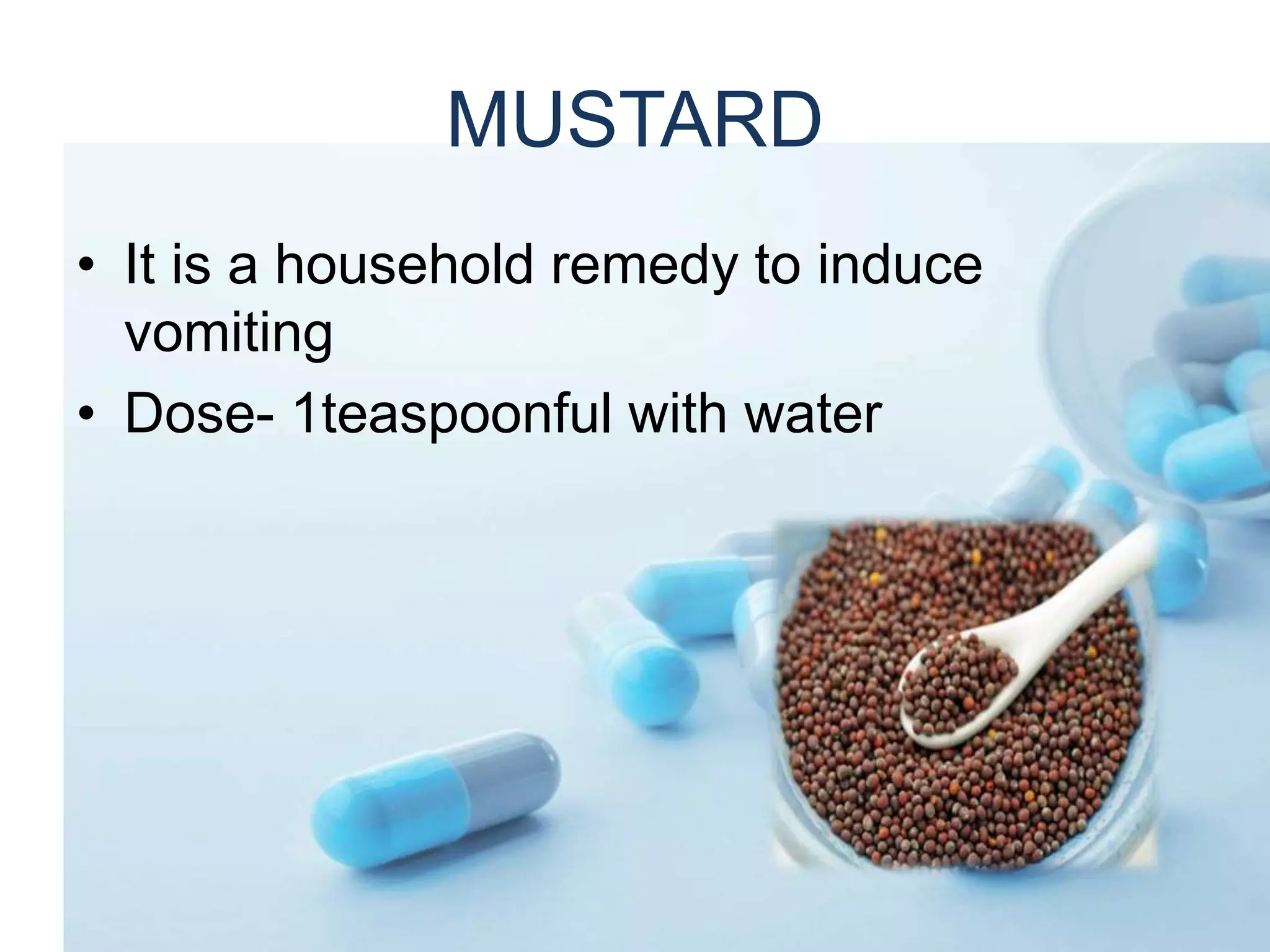
MUSTARD
• It is a household remedy to induce
vomiting
• Dose- 1teaspoonful with water
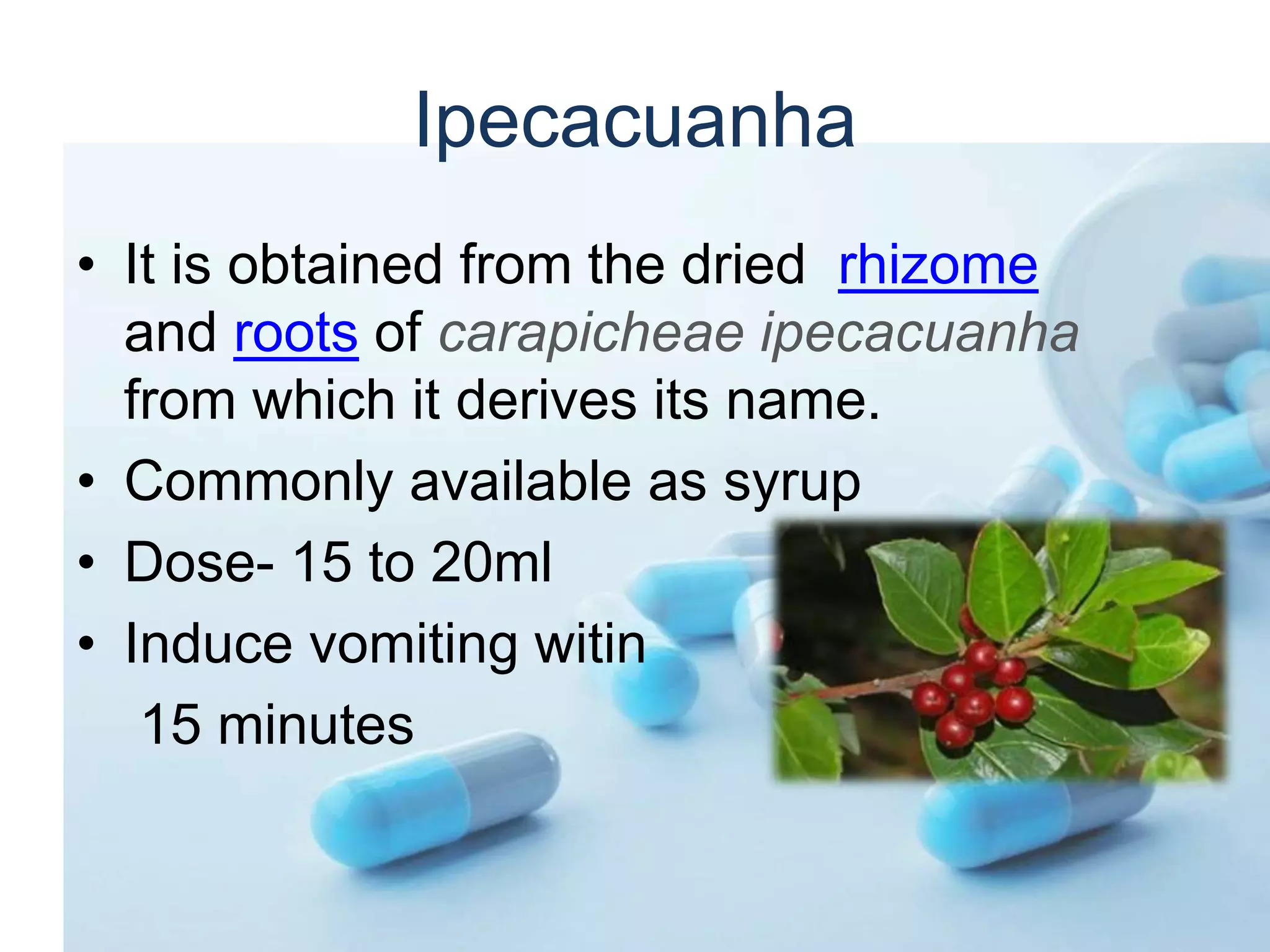
Ipecacuanha
• It is obtained from the dried rhizome
and roots of carapicheae ipecacuanha
from which it derives its name.
• Commonly available as syrup
• Dose- 15 to 20ml
• Induce vomiting witin
15 minutes
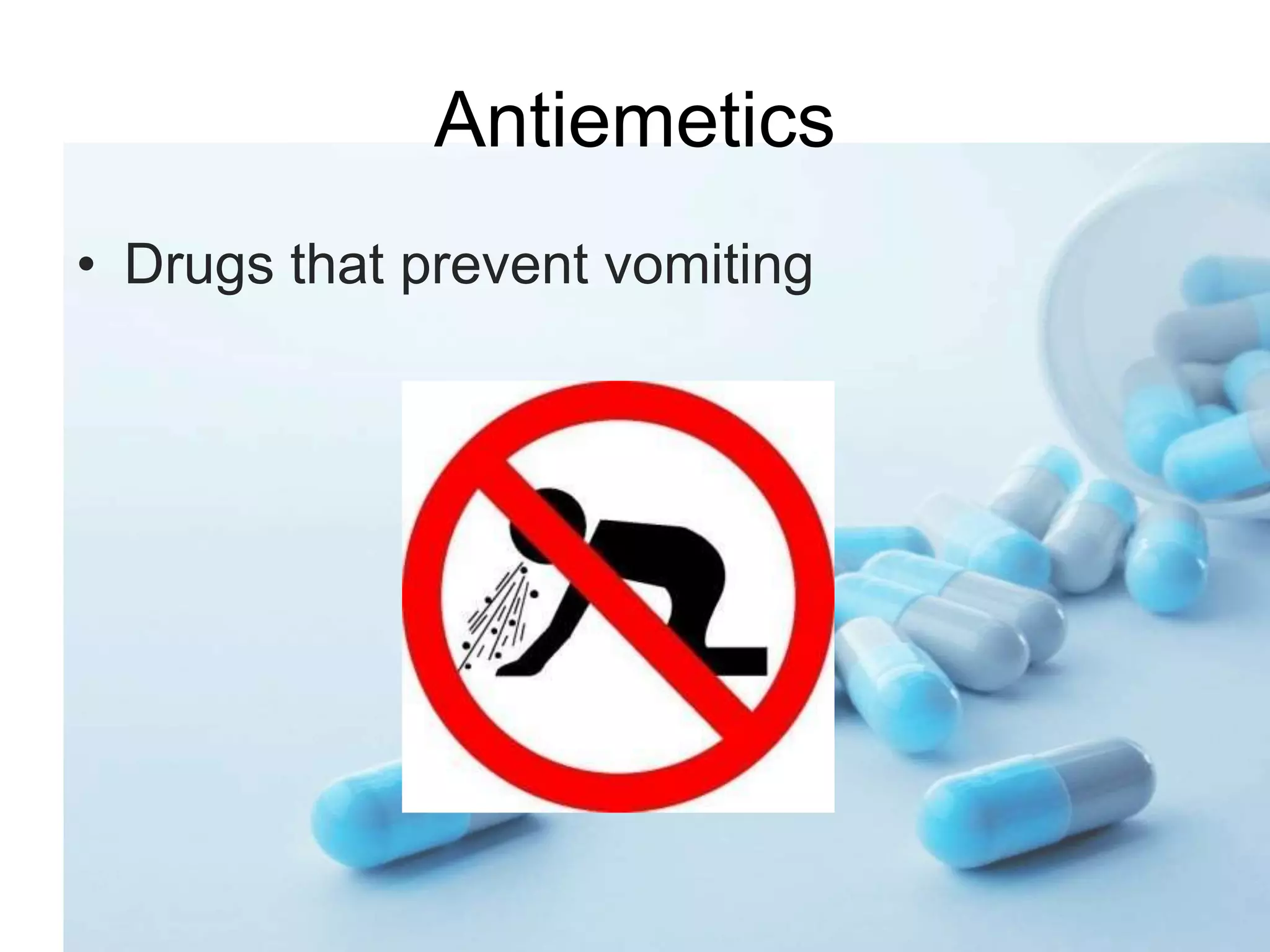
Antiemetics
• Drugs that prevent vomiting
CLASSIFICATION
1.Prokinetics
a.metochlorpramide
b.domperidone
2.Antimuscarinics
a.hyocine
b.meclozine
3.Antihistamines
a.cyclizine
b.promethazine(phenergan)
4.Neuroleptics
a.chlorpromazine
b.prochlorpromazine
5. 5-HT3 antagonists
a.ondancetron
b.granicetron
Prokinetics
• These drugs which promote gastrointestinal
motility and quicken gastric emptying
• Metoclorpramide(REGLAN)
It has both central and peripheral
effects
Central- blocks the dopeminergic
receptors
peripheral- increased gastric emptying
dose- 5- 10 mg
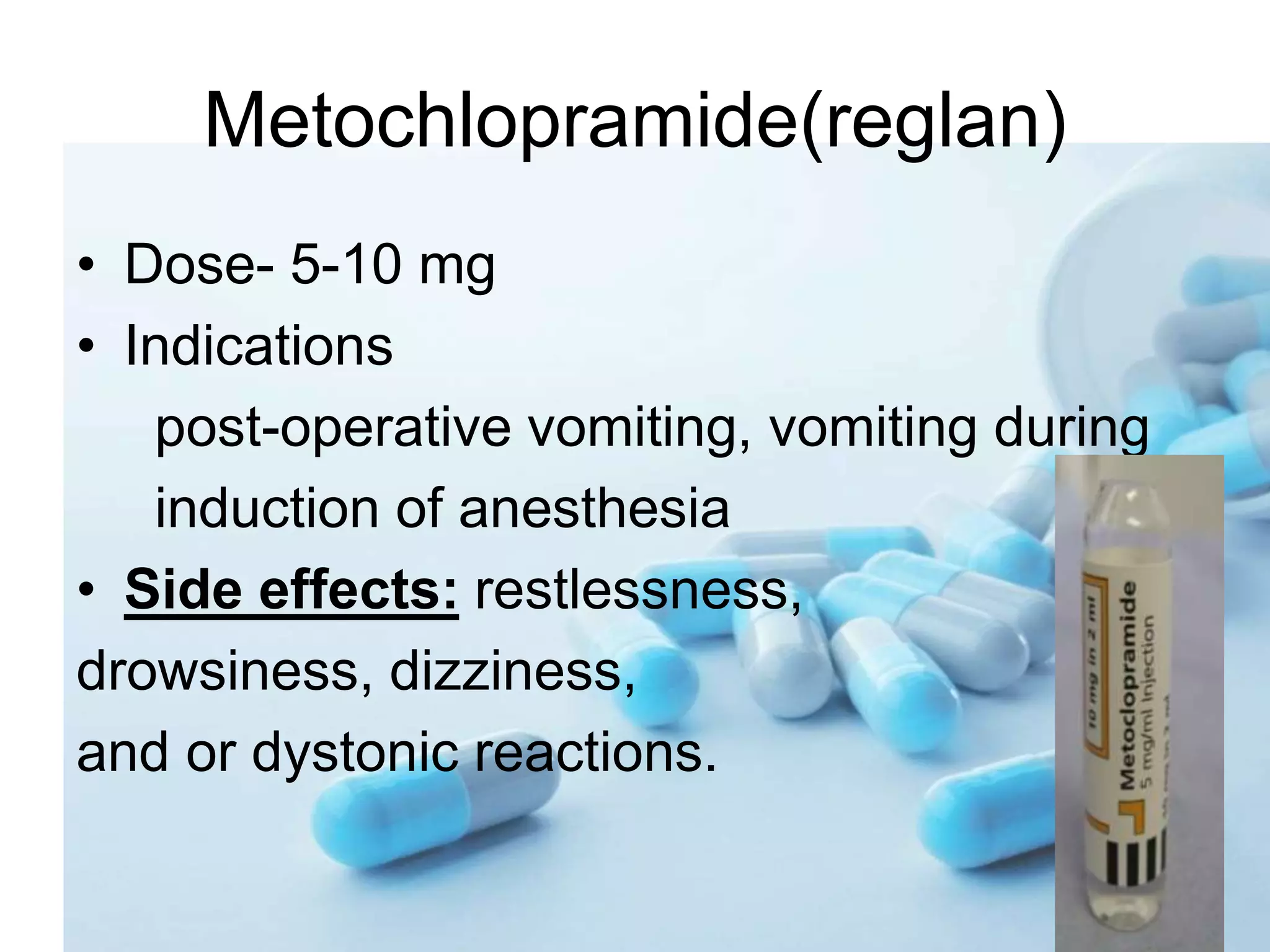
Metochlopramide(reglan)
• Dose- 5-10 mg
• Indications
post-operative vomiting, vomiting during
induction of anesthesia
• Side effects: restlessness,
drowsiness, dizziness,
and or dystonic reactions.
Domeperidone
• Action- Block the dopaminergic receptors
in the upper GIT
• Dose- 10mg,30mg tablets
1mg/ml syrup
Side effects: Headache, dizziness, dry
mouth, nervousness, flushing, or irritability
Antimuscarinics
• Action- Competitively inhibits action of
acetylcholine at muscarinic receptors
• Hyoscine –very effective in controlling
motion sickness
• Dose -0.4-0.6 mg po 30 min before
journey
• It is a labrynthine sedative
Neuroleptics
• Action- they act by suppressing the CTZ
so they antagonize vomiting produced by
drugs which stiimulate CTZ
Eg; chlorpromazine
• dose; PO: 10-25 mg q4-6hr
IV/IM: 25-50 mg q4-6hr
5-HT3 Antagonists
• (5-HT3) receptor antagonists block the
vomiting reflex by inhibiting 5-HT3
receptors in the vomiting center , the
chemoreceptor trigger zone and in the
small intestine
Ondansetron(Emeset)
• Blocks 5HT3 receptors in git and CTZ
• Specially used In chemotherapy,post op
vomiting other drug induced vomiting
• Dose- 4mg in each ampule
• 4,8 mg tab
• Side effects:
Headache, constipation, and dizziness are
the most commonly reported side effects
associated with its use
Granisetron
• It is 10 to 15 times more potent than
ondansetron
• More effective in chemotherapy
• Dose – IV 1mg
Antihistamines
• They act by sedating the vomiting centre
• They are safer for long term use
• Effective in motion sickness and vomiting
due to labrynthine disoders
eg. Cyclizine
meclozine
dose- 50mg/ml inj
50mg tab
Nursing Considerations for Patients
Receiving
an Antiemetic Agent
• Assess for possible contraindications or
cautions history of allergy to antiemetic to
avoid potential hypersensitivity reactions;
impaired renal or hepatic function
• ■ Assess the patient’s neurological status,
including level of orientation, affect, and
reflexes,
• ■ Examine the abdomen, including the
liver, and auscultate bowel sounds
• ■ Assess complaints of nausea and
evaluate emesis; note color, amount, and
frequency of vomiting episodes
• Instruct the client to avoid over-the-counter
preparations.
• Instruct the client not to consume alcohol
while taking antiemetics.
• Advise pregnant women to avoid
antiemetics during the first trimester.

Emetics and antiemetics

  • 1.
  • 2.
    COMMONLY DRUGS USED •EMETICS • ANTIEMETICS • PROKINETICS • PURGATIVES • ANTACIDS • ANTIDIARRHOEALS • ANTIULCERS • CARMINATIVES • ANORECTAL PREPARATIONS
  • 3.
    EMETICS • EMESIS =? DRUGSTHAT PRODUCE/ INDUCE VOMITING IS CALLED EMETIS
  • 4.
    MECHANISM OF VOMITING •WHAT IS VOMITING? • It is the forceful expulsion of the contents of the stomach via the mouth or sometimes through the nose. • The vomiting reflex is stimulated by two centers in the medulla 1 . vomiting center 2 .chemoreceptor trigger zone(CTZ)
  • 5.
    How this CTZis stimulated • Tactile stimulation of the back of the throat, a reflex to get rid of something that is too big or too irritating to be swallowed • Excessive stomach distention • Increasing intracranial pressure by direct stimulation • Stimulation of the vestibular receptors in the inner ear
  • 6.
    • Intense painfiber stimulation • Direct stimulation by various chemicals, including fumes, certain drugs, and debris from cellular death • CTZ is stimulated by several different processes and initiates a complex series of responses that first preparet he system for vomiting and then cause a strong backward peristalsis to rid the stomach of its contents.
  • 7.
    Classification of Emetics 1.Stimulantsof CTZ a.Apomorphine b.Morphine 2.Irritants of gastric mucosa a.mustard b.sodium chloride 3.Both CTZ stimulant and irritant effect a.ipecacuanha b.digitalis
  • 8.
    Apomorphine • It isobtained by treating morphine with HCL • MECHANISM? • Produce vomiting in 5-10 minutes after admn • Dose- 2 to 4mg • Route- subcutaneous/IM
  • 9.
    MUSTARD • It isa household remedy to induce vomiting • Dose- 1teaspoonful with water
  • 10.
    Ipecacuanha • It isobtained from the dried rhizome and roots of carapicheae ipecacuanha from which it derives its name. • Commonly available as syrup • Dose- 15 to 20ml • Induce vomiting witin 15 minutes
  • 11.
  • 12.
  • 13.
    Prokinetics • These drugswhich promote gastrointestinal motility and quicken gastric emptying • Metoclorpramide(REGLAN) It has both central and peripheral effects Central- blocks the dopeminergic receptors peripheral- increased gastric emptying dose- 5- 10 mg
  • 14.
    Metochlopramide(reglan) • Dose- 5-10mg • Indications post-operative vomiting, vomiting during induction of anesthesia • Side effects: restlessness, drowsiness, dizziness, and or dystonic reactions.
  • 15.
    Domeperidone • Action- Blockthe dopaminergic receptors in the upper GIT • Dose- 10mg,30mg tablets 1mg/ml syrup Side effects: Headache, dizziness, dry mouth, nervousness, flushing, or irritability
  • 16.
    Antimuscarinics • Action- Competitivelyinhibits action of acetylcholine at muscarinic receptors • Hyoscine –very effective in controlling motion sickness • Dose -0.4-0.6 mg po 30 min before journey • It is a labrynthine sedative
  • 17.
    Neuroleptics • Action- theyact by suppressing the CTZ so they antagonize vomiting produced by drugs which stiimulate CTZ Eg; chlorpromazine • dose; PO: 10-25 mg q4-6hr IV/IM: 25-50 mg q4-6hr
  • 18.
    5-HT3 Antagonists • (5-HT3)receptor antagonists block the vomiting reflex by inhibiting 5-HT3 receptors in the vomiting center , the chemoreceptor trigger zone and in the small intestine
  • 19.
    Ondansetron(Emeset) • Blocks 5HT3receptors in git and CTZ • Specially used In chemotherapy,post op vomiting other drug induced vomiting • Dose- 4mg in each ampule • 4,8 mg tab
  • 20.
    • Side effects: Headache,constipation, and dizziness are the most commonly reported side effects associated with its use
  • 21.
    Granisetron • It is10 to 15 times more potent than ondansetron • More effective in chemotherapy • Dose – IV 1mg
  • 22.
    Antihistamines • They actby sedating the vomiting centre • They are safer for long term use • Effective in motion sickness and vomiting due to labrynthine disoders eg. Cyclizine meclozine dose- 50mg/ml inj 50mg tab
  • 23.
    Nursing Considerations forPatients Receiving an Antiemetic Agent • Assess for possible contraindications or cautions history of allergy to antiemetic to avoid potential hypersensitivity reactions; impaired renal or hepatic function • ■ Assess the patient’s neurological status, including level of orientation, affect, and reflexes,
  • 24.
    • ■ Examinethe abdomen, including the liver, and auscultate bowel sounds • ■ Assess complaints of nausea and evaluate emesis; note color, amount, and frequency of vomiting episodes
  • 25.
    • Instruct theclient to avoid over-the-counter preparations. • Instruct the client not to consume alcohol while taking antiemetics. • Advise pregnant women to avoid antiemetics during the first trimester.

Editor's Notes