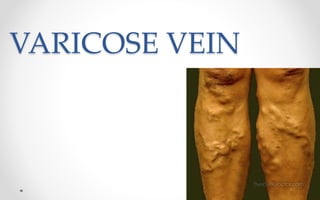
VARICOSE VEIN
Definition
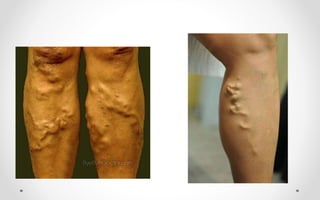
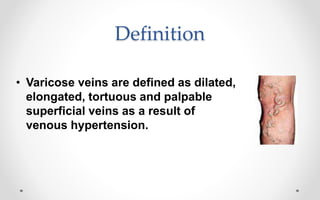
• Varicose veins are defined as dilated,
elongated, tortuous and palpable
superficial veins as a result of
venous hypertension.
• Varicose presentation
•More common in males in India
•Left lower limb more commonly involved
•Long saphenous system affected in 2/3 rd
of cases
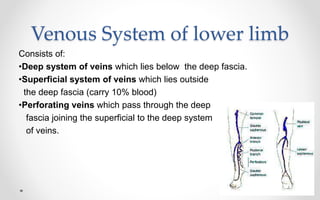
Venous System of lower limb
Consists of:
•Deep system of veins which lies below the deep fascia.
•Superficial system of veins which lies outside
the deep fascia (carry 10% blood)
•Perforating veins which pass through the deep
fascia joining the superficial to the deep system
of veins.
Valves in the veins
• Valves present in superficial veins.
• Prevent flow of blood from proximal to distal and from
deep to superficial
• Absent from above groin level
• Valves can resist pressure up to 300 mm of Hg.
Factors Helping in Venous
return
• Negative pressure in thorax during inspiration to -6 mm.
• Calf muscle pump: Normal venous pressure in relaxed state 20mm
of Hg. Rises to 80-100 mm of Hg during muscle contraction.
• Vis a tergo: arterial pressure transmitted to venous side through
capillary bed
• Competent valves
• Venae commitants: lie by the side of artery, helped by arterial
pulsation to propel blood.
Types
• Primary ( idiopathic)
• More common in women
• Lower extremities
• Strong family history
SECONDARY
PREVIOUS DVT
other identifiable obstruction
Also occur in esophagus, haemorrhoids, arterivenous malformation
Etiology
• •Long hours of standing,
which increase the
hydrostatic pressure of
gravity,
• Family history
• Pregnancy
• Ageing
• Deep vein thrombosis
• Oral contraceptives
• obesity
Pathophysiology
• Etiological factors
enlargement of veins
valves are stretched and become incompetent
Back flow of the venous blood
further increased distention of veins
clinical manifestations
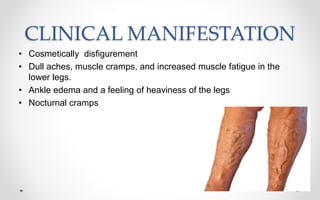
CLINICAL MANIFESTATION
• Cosmetically disfigurement
• Dull aches, muscle cramps, and increased muscle fatigue in the
lower legs.
• Ankle edema and a feeling of heaviness of the legs
• Nocturnal cramps
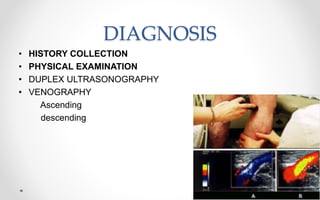
DIAGNOSIS
• HISTORY COLLECTION
• PHYSICAL EXAMINATION
• DUPLEX ULTRASONOGRAPHY
• VENOGRAPHY
Ascending
descending
Complications
• Bleeding
• Thrombophlebitis
• Venous Hypertension leading to venous ulcer
• Calcification
• Eczematoid dermatitis and pigmentation
Conservative management
• Avoiding prolonged standing
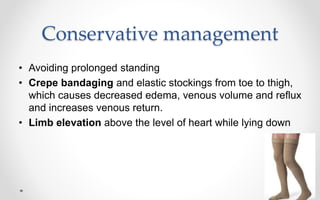
• Crepe bandaging and elastic stockings from toe to thigh,
which causes decreased edema, venous volume and reflux
and increases venous return.
• Limb elevation above the level of heart while lying down
• Sclerotherapy
A chemical is injected into the vein, irritating the venous
endothelium and producing localized phlebitis and fibrosis,
thereby obliterating the lumen of the vein
• Under Ultrasound guidance.
• hypertonic sodium chloride solution
• Sodium morrhuate
• Ethanolamine oleate
• Polidocanol
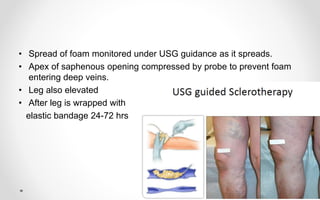
• Spread of foam monitored under USG guidance as it spreads.
• Apex of saphenous opening compressed by probe to prevent foam
entering deep veins.
• Leg also elevated
• After leg is wrapped with
elastic bandage 24-72 hrs
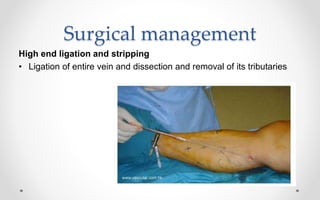
Surgical management
High end ligation and stripping
• Ligation of entire vein and dissection and removal of its tributaries
• Laser fiber produce endoluminal heat that destroy the
vascular endothelium
Nursing management
• Bed rest is maintained for 24 hours, after which the patient begins
walking every 2 hours for 5 to 10 minutes.
• Elastic compression stockings are used to maintaincompression of
the leg. They are worn continuously for about 1 week after vein
stripping
• The foot of the bed should be elevated, Standing still and sitting are
discouraged
• Usually, the patient may shower after the first 24 hours. The
patient is instructed to dry the incisions well with a clean towel
using a patting technique rather than rubbing
• If the patient underwent sclerotherapy, a burning sensation in
the injected leg may be experienced for 1 or 2 days. The nurse
may encourage the use of a mild analgesi
(eg,acetaminophen,ibuprofen)

Varicose vein

  • 1.
  • 3.
    Definition • Varicose veinsare defined as dilated, elongated, tortuous and palpable superficial veins as a result of venous hypertension.
  • 4.
    • Varicose presentation •Morecommon in males in India •Left lower limb more commonly involved •Long saphenous system affected in 2/3 rd of cases
  • 5.
    Venous System oflower limb Consists of: •Deep system of veins which lies below the deep fascia. •Superficial system of veins which lies outside the deep fascia (carry 10% blood) •Perforating veins which pass through the deep fascia joining the superficial to the deep system of veins.
  • 6.
    Valves in theveins • Valves present in superficial veins. • Prevent flow of blood from proximal to distal and from deep to superficial • Absent from above groin level • Valves can resist pressure up to 300 mm of Hg.
  • 7.
    Factors Helping inVenous return • Negative pressure in thorax during inspiration to -6 mm. • Calf muscle pump: Normal venous pressure in relaxed state 20mm of Hg. Rises to 80-100 mm of Hg during muscle contraction. • Vis a tergo: arterial pressure transmitted to venous side through capillary bed • Competent valves • Venae commitants: lie by the side of artery, helped by arterial pulsation to propel blood.
  • 8.
    Types • Primary (idiopathic) • More common in women • Lower extremities • Strong family history SECONDARY PREVIOUS DVT other identifiable obstruction Also occur in esophagus, haemorrhoids, arterivenous malformation
  • 9.
    Etiology • •Long hoursof standing, which increase the hydrostatic pressure of gravity, • Family history • Pregnancy • Ageing • Deep vein thrombosis • Oral contraceptives • obesity
  • 10.
    Pathophysiology • Etiological factors enlargementof veins valves are stretched and become incompetent Back flow of the venous blood further increased distention of veins clinical manifestations
  • 11.
    CLINICAL MANIFESTATION • Cosmeticallydisfigurement • Dull aches, muscle cramps, and increased muscle fatigue in the lower legs. • Ankle edema and a feeling of heaviness of the legs • Nocturnal cramps
  • 12.
    DIAGNOSIS • HISTORY COLLECTION •PHYSICAL EXAMINATION • DUPLEX ULTRASONOGRAPHY • VENOGRAPHY Ascending descending
  • 13.
    Complications • Bleeding • Thrombophlebitis •Venous Hypertension leading to venous ulcer • Calcification • Eczematoid dermatitis and pigmentation
  • 14.
    Conservative management • Avoidingprolonged standing • Crepe bandaging and elastic stockings from toe to thigh, which causes decreased edema, venous volume and reflux and increases venous return. • Limb elevation above the level of heart while lying down
  • 15.
    • Sclerotherapy A chemicalis injected into the vein, irritating the venous endothelium and producing localized phlebitis and fibrosis, thereby obliterating the lumen of the vein • Under Ultrasound guidance.
  • 16.
    • hypertonic sodiumchloride solution • Sodium morrhuate • Ethanolamine oleate • Polidocanol
  • 17.
    • Spread offoam monitored under USG guidance as it spreads. • Apex of saphenous opening compressed by probe to prevent foam entering deep veins. • Leg also elevated • After leg is wrapped with elastic bandage 24-72 hrs
  • 18.
    Surgical management High endligation and stripping • Ligation of entire vein and dissection and removal of its tributaries
  • 20.
    • Laser fiberproduce endoluminal heat that destroy the vascular endothelium
  • 21.
    Nursing management • Bedrest is maintained for 24 hours, after which the patient begins walking every 2 hours for 5 to 10 minutes. • Elastic compression stockings are used to maintaincompression of the leg. They are worn continuously for about 1 week after vein stripping • The foot of the bed should be elevated, Standing still and sitting are discouraged • Usually, the patient may shower after the first 24 hours. The patient is instructed to dry the incisions well with a clean towel using a patting technique rather than rubbing
  • 22.
    • If thepatient underwent sclerotherapy, a burning sensation in the injected leg may be experienced for 1 or 2 days. The nurse may encourage the use of a mild analgesi (eg,acetaminophen,ibuprofen)