GIT PHARMACOLOGY
When it is necessary to intervene?
• motility disorders (vomiting, reflux disease,
disorders of passages, irritant colon, colics)
• absorption disorders (disorders of enzymes
secretion, disorders of the absorption)
• peptic lesions (ulcer disease GD)
• inflammatory bowel disease (ulcerative colitis,
Crohn disease)
• excessive intake of food (antiobesitics)
• haemorrhage in GIT (prophylaxis and treatment)
Nousea and vomiting
• nausea – only subjective symptom
• vomiting-
– metabolic disorders (loss of potassium,
water, HCl),
– aspiration, mucosal defects
• the need for prevention and treatment
• of importance especially in oncology
antiemetics
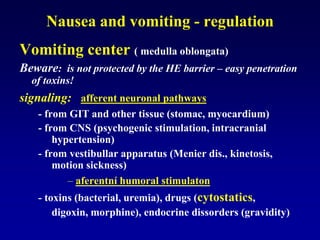
Nausea and vomiting - regulation
Vomiting center ( medulla oblongata)
Beware: is not protected by the HE barrier – easy penetration
of toxins!
signaling: afferent neuronal pathways
- from GIT and other tissue (stomac, myocardium)
- from CNS (psychogenic stimulation, intracranial
hypertension)
- from vestibullar apparatus (Menier dis., kinetosis,
motion sickness)
– aferentní humoral stimulaton
- toxins (bacterial, uremia), drugs (cytostatics,
digoxin, morphine), endocrine dissorders (gravidity)
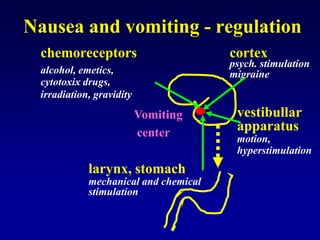
Nausea and vomiting - regulation
chemoreceptors
alcohol, emetics,
cytotoxix drugs,
irradiation, gravidity
cortex
psych. stimulation
migraine
vestibullar
apparatus
motion,
hyperstimulation
Vomiting
center
larynx, stomach
mechanical and chemical
stimulation
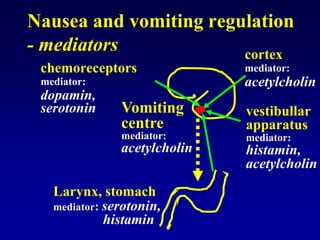
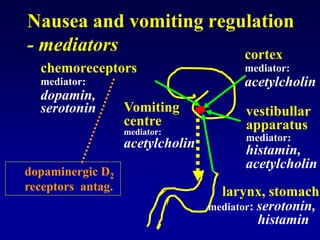
Nausea and vomiting regulation
- mediators
chemoreceptors
mediator:
dopamin,
serotonin
cortex
mediator:
acetylcholin
vestibullar
apparatus
mediator:
histamin,
acetylcholin
Vomiting
centre
mediator:
acetylcholin
Larynx, stomach
mediator: serotonin,
histamin
Nausea and vomiting regulation
- mediators
chemoreceptors
mediator:
dopamin,
serotonin
cortex
mediator:
acetylcholin
vestibullar
apparatus
mediator:
histamin,
acetylcholin
Vomiting
centre
mediator:
acetylcholin
larynx, stomach
mediator: serotonin,
histamin
dopaminergic D2
receptors antag.
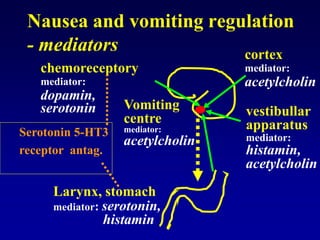
Nausea and vomiting regulation
- mediators
chemoreceptory
mediator:
dopamin,
serotonin
cortex
mediator:
acetylcholin
vestibullar
apparatus
mediator:
histamin,
acetylcholin
Vomiting
centre
mediator:
acetylcholin
Larynx, stomach
mediator: serotonin,
histamin
Serotonin 5-HT3
receptor antag.
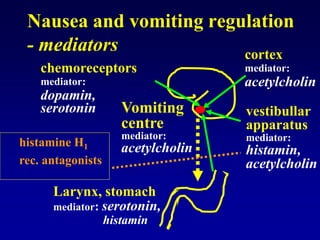
Nausea and vomiting regulation
- mediators
chemoreceptors
mediator:
dopamin,
serotonin
cortex
mediator:
acetylcholin
vestibullar
apparatus
mediator:
histamin,
acetylcholin
Vomiting
centre
mediator:
acetylcholin
Larynx, stomach
mediator: serotonin,
histamin
histamine H1
rec. antagonists
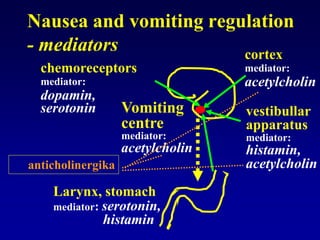
Nausea and vomiting regulation
- mediators
chemoreceptors
mediator:
dopamin,
serotonin
cortex
mediator:
acetylcholin
vestibullar
apparatus
mediator:
histamin,
acetylcholin
Vomiting
centre
mediator:
acetylcholin
Larynx, stomach
mediator: serotonin,
histamin
anticholinergika
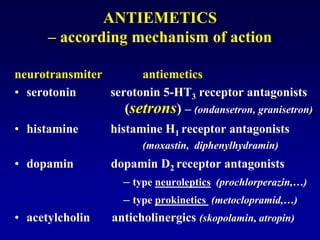
ANTIEMETICS
– according mechanism of action
neurotransmiter antiemetics
• serotonin serotonin 5-HT3 receptor antagonists
(setrons) – (ondansetron, granisetron)
• histamine histamine H1 receptor antagonists
(moxastin, diphenylhydramin)
• dopamin dopamin D2 receptor antagonists
– type neuroleptics (prochlorperazin,…)
– type prokinetics (metoclopramid,…)
• acetylcholin anticholinergics (skopolamin, atropin)
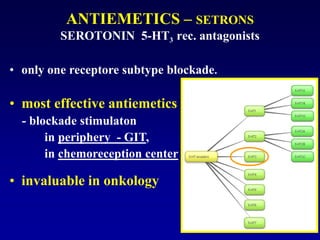
ANTIEMETICS – SETRONS
SEROTONIN 5-HT3 rec. antagonists
• only one receptore subtype blockade.
• most effective antiemetics
- blockade stimulaton
in periphery - GIT,
in chemoreception center
• invaluable in onkology
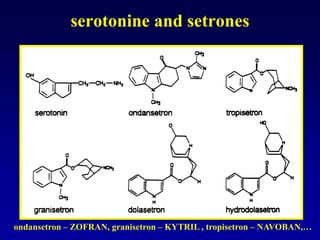
serotonine and setrones
ondansetron – ZOFRAN, granisetron – KYTRIL , tropisetron – NAVOBAN,…
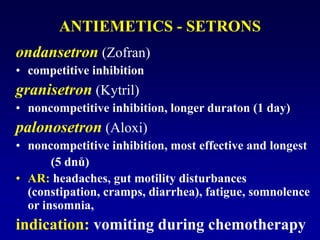
ANTIEMETICS - SETRONS
ondansetron (Zofran)
• competitive inhibition
granisetron (Kytril)
• noncompetitive inhibition, longer duraton (1 day)
palonosetron (Aloxi)
• noncompetitive inhibition, most effective and longest
(5 dnů)
• AR: headaches, gut motility disturbances
(constipation, cramps, diarrhea), fatigue, somnolence
or insomnia,
indication: vomiting during chemotherapy
ANTIEMETICS
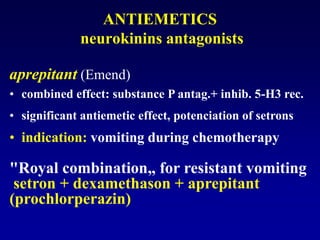
neurokinins antagonists
aprepitant (Emend)
• combined effect: substance P antag.+ inhib. 5-H3 rec.
• significant antiemetic effect, potenciation of setrons
• indication: vomiting during chemotherapy
"Royal combination„ for resistant vomiting
setron + dexamethason + aprepitant
(prochlorperazin)
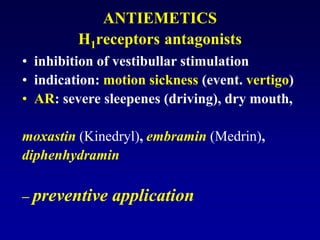
ANTIEMETICS
H1receptors antagonists
• inhibition of vestibullar stimulation
• indication: motion sickness (event. vertigo)
• AR: severe sleepenes (driving), dry mouth,
moxastin (Kinedryl), embramin (Medrin),
diphenhydramin
– preventive application
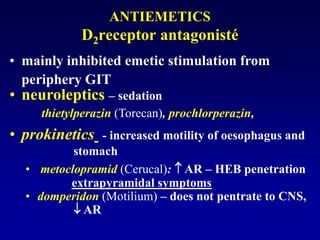
ANTIEMETICS
D2receptor antagonisté
• mainly inhibited emetic stimulation from
periphery GIT
• neuroleptics – sedation
thietylperazin (Torecan), prochlorperazin,
• prokinetics - increased motility of oesophagus and
stomach
• metoclopramid (Cerucal):  AR – HEB penetration
extrapyramidal symptoms
• domperidon (Motilium) – does not pentrate to CNS,
 AR
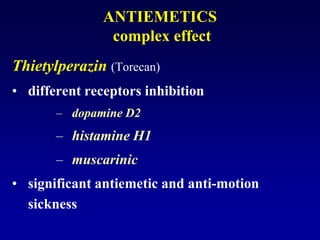
ANTIEMETICS
complex effect
Thietylperazin (Torecan)
• different receptors inhibition
– dopamine D2
– histamine H1
– muscarinic
• significant antiemetic and anti-motion
sickness
ANTIEMETICS
ANTICHOLINERGICS
• are not able to inhibit chemoreceptor
stimulation
• muscarinic receptor inhibition.
• spasmolytic effect
• supporting effect only, little importance
scopolamine (supporting treatment),
atropine- not regularly used
prokinetics
PROKINETICS
mechanism of action
• peripheral dopamine D2 receptor inhibition
– dopamine inhibits GIT motility
• acetylcholine agonists (myenteric plexus)
– acetylcholin stimulate peristaltics
– acetylcholinesterase inhibition
•  ACH availability in synapses
Prokinetics
–dopamine D2 receptor inhibition
.metoclopramide (Cerucal, Degan)
– antiemetic effect, cholinomimetic action, dopamine antag.
– gastro-oesophageal reflux, gastric emptying
• lipophilic - passing HEB – central effects
• frequent AR 10-20%
– central - extrapyramidal (tremor), sleepenes
– peripheral - diarrhoea
– hyperprolactinemia – gallactorhea, menstruation
abnormalities
 cheap, fast, and short time action – 1-2 hours
PROKINETICS
• Domperidone (Motilium)
– selective dopamine D2 receptor antagonists,
– antiemetic effect
– increasing GIT motility and smooth muscle
tonus,
AR – not passing HEB, less AR than
metoclopramide
hyperprolactinemia present,
longer effect 4-6 hours
PROKINETICS
• Cisapride – not on the market
– stimulation of Ach release from myenteric plexus in
upper GIT
– increased gastric motility, increase sphincter tonus
– long halve life 10 hours
– no antiemetic action
– diarrhoea, abdominal cramps, tachycardia
– Q-T interval prolonged, dangerous
interactions
• erythromycine, ketokonazole, terfenadine
PROKINETICS – dual action
• Itoprid (Ganaton)
• dual action: peripheral D2 receptore blockade
•  Ach availability (acetylcholinesterase inhibition)
• effect:  tonus aesophageal sfincter (reflux)
 gastric evacuation (for gastroparesis)
 tonus and gut motility (paralytic. ileus)
• AR – less common diarrhea, hypersalivation,
hyperprolactinemia
• more expensive, highly effective and well tolerated,
quick onset - 30 min, duration 6-8 hod
Peptic ulcer
• proton pump inhibitors (PPIs)
- Helicobacter pylori eradicatio
• enhancing mucosal resistance
– H2 antihistaminics
– antacids
– parasympatholytics
Peptic ulcer
• primary
– gastritis with Helicobacter pylori
infection
• secundary
– produced by drugs (antirevmatics,
NSAISs, corticoids
- stress, endocrinological abnormalities
(ZE syndrome),
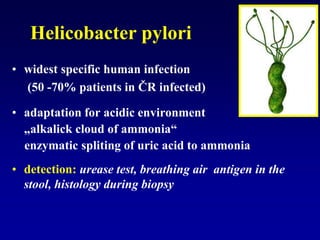
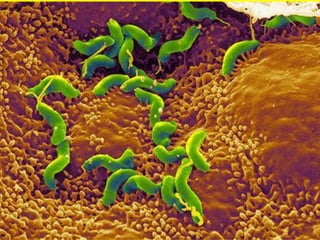
Helicobacter pylori
• widest specific human infection
(50 -70% patients in ČR infected)
• adaptation for acidic environment
„alkalick cloud of ammonia“
enzymatic spliting of uric acid to ammonia
• detection: urease test, breathing air antigen in the
stool, histology during biopsy
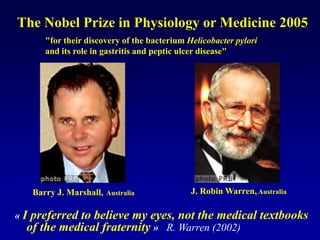
The Nobel Prize in Physiology or Medicine 2005
"for their discovery of the bacterium Helicobacter pylori
and its role in gastritis and peptic ulcer disease"
Barry J. Marshall, Australia J. Robin Warren,Australia
« I preferred to believe my eyes, not the medical textbooks
of the medical fraternity » R. Warren (2002)
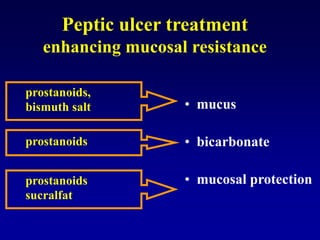
Peptic ulcer treatment
• mucus
• bicarbonate
• mucosal protection
prostanoids,
bismuth salt
prostanoids
prostanoids
sucralfat
Peptic ulcer treatment
enhancing mucosal resistance
Neutralisation of gastric secretion
Reflux oesophagitis
• proton pump inhibitors
– omeprazole, pantoprazole
• H2 receptor antagonists
– ranitidine, famotidine, antacids
– alumimium, magnesium salt
• bismuth chelates
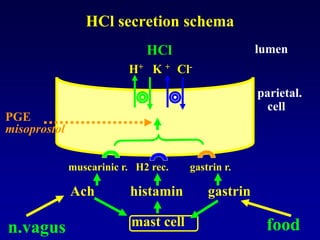
HCl secretion schema
H+ K + Cl-
HCl
muscarinic r. H2 rec. gastrin r.
Ach histamin gastrin
mast cell.n.vagus
parietal.
cell
lumen
food
HCl secretion schema
H+ K + Cl-
HCl
muscarinic r. H2 rec. gastrin r.
Ach histamin gastrin
mast cell.n.vagus
parietal.
cell
lumen
food
proton
pump
inhibition.
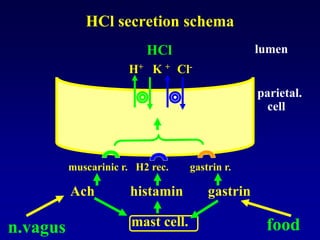
HCl secretion schema
H+ K + Cl-
HCl
muscarinic r. H2 rec. gastrin r.
Ach histamin gastrin
mast cell.n.vagus
parietal.
cell
lumen
food
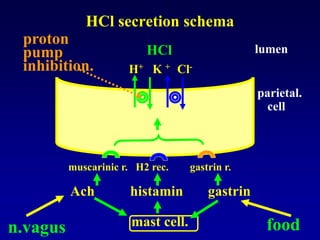
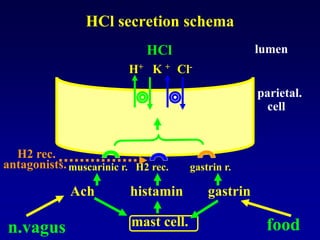
anticholinergics
atropin
HCl secretion schema
H+ K + Cl-
HCl
muscarinic r. H2 rec. gastrin r.
Ach histamin gastrin
mast cell.n.vagus
parietal.
cell
lumen
food
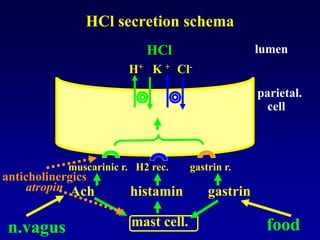
H2 rec.
antagonists.
HCl secretion schema
H+ K + Cl-
HCl
muscarinic r. H2 rec. gastrin r.
Ach histamin gastrin
mast celln.vagus
parietal.
cell
lumen
food
PGE
misoprostol
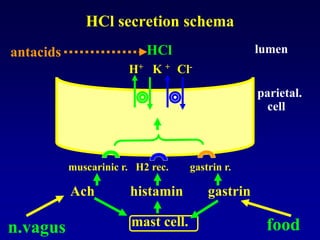
HCl secretion schema
H+ K + Cl-
HCl
muscarinic r. H2 rec. gastrin r.
Ach histamin gastrin
mast cell.n.vagus
parietal.
cell
lumen
food
antacids
Proton pump inhibitors - PPI
- the most effective inhibition
of gastric HCl secretion
PROTON-PUMP INHIBITORS
• Omeprazole, pantoprazole, lanzoprazole,
rabeprazole
• Irreversible inhibition of H+/K+-ATPase
– proton pump, terminal step of acid secretion
• inhibition of basal and stimulated secretion
• half life relatively short, but single dose effect last 2-3 days
• side effects - not common, headache, diarrhoea, rashes,
dizziness, somnolence, mental confusion, impotence, pain in
muscles and joints
• most effective, Helicobacter pylori eradication, NSAID ulcer
Omeprazol – metabolic interactions
• metabolised by CYP2C19 oxidase (+CYP3A4)
• omeprazol inhibits CYP2C19 oxidase – affects
a series of drugs metabolism and effects
• slows down metabolism of diazepamu
N
S
O
Cl
O CH3
C
O
N
S
O
Cl
O CH3
C
HOOC
* HS
N
O
Cl
OCH3
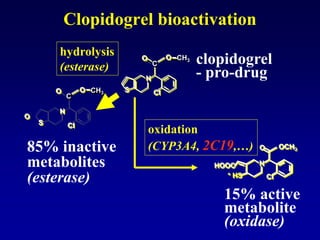
Clopidogrel bioactivation
85% inactive
metabolites
(esterase)
hydrolysis
(esterase)
oxidation
(CYP3A4, 2C19,…)
clopidogrel
- pro-drug
15% active
metabolite
(oxidase)
Pantoprazol
Same mechanism of action as omeprazol
• slower onset of action 1-3 h.,
• longer duration of action
– secretion restored after 1 week
• weaker inhibition CYP2C19 than omeprazol
H2 receptor antagonists
- fully replaceable by PPI
H2 antagonists
• Competitive inhibition histamine stimulating
secretion,
– H2 receptors blocking
• Ranitidine, Cimetidine, Famotidine, Nizatidine,
• OTC
• Side effects
– cimetidine – only for short term treatment
– hepatic enzyme inhibition
– potentiates oral anticoagulants, fenytoin, carbamazepine,
quinidine,,
– antiandrogenic effect
Antacids
today only symptomatic,
fast acting treatment of pyrosis
(heartburn)
Neutralisation of gastric secretion
Reflux oesophagitis
• ANTACIDS
– great number o products
– Magnesium and Aluminium salt
– galenic form important
– frequent dosage
– long lasting treatment
Neutralisation of gastric secretion
ANTACIDS
• Magnesium hydroxide
– insoluble powder, no systemic alkalosis
• Magnesium trisilicate
– insoluble, long lasting effect
• Aluminium hydroxide gel
– strong action, several hours,
• Sodium bicarbonate
– rapid action, carbon dioxide, rebound fenomenon,
absorption, can cause alkalosis, do not use
• Alginates
Neutralisation of gastric secretion
ANTACIDS
• Interactions
– TTC, fluorochinolons, penicilamine, fluorides,
bisfosfonates
– azithromycine, nitrofurantoins, rifampycine, fenytoine,
chlorochine, antipsychotics, domperidone
– Li + bicarbonates
• enterosolvent tablets
Drugs which protect the
mucosa
- supporting therapy of peptic ulcer
- drugs of the second to the third
choice
Drugs which protect the mucosa
• Bismuth chelate
– coloidal bismuth subcitrate, subnitrate, ranitidine
bismuth citrate
• Sucralfate
– aluminium hydroxide - sulphated sucrose
– complex gel, high binding power, not absorbed
• Misoprostol
– prostaglandine derivative - PGE1, inhibits gastric
secretion, mucosal protection,
– NSAIDs ulcer protection
Helicobacter eradication
proton pump inhibitors
antibiotics + chemotherapeutics
bismuth salt
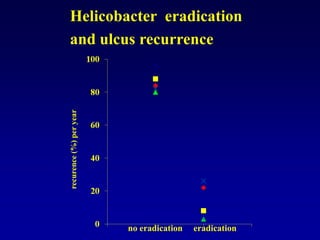
recurence(%)peryear
no eradication eradication
Helicobacter eradication
and ulcus recurrence
Helicobacter eradication
strategy: triple therapy
• combination two ATB + IPP
(or ATB + chemotherapeutics + IPP)
• ATB: amoxicillin, klaritromycin, tetracycline,
azithromycine,
or. chemotherap. metronidazol,
• PPI: omeprazol, pantoprazol
• eradication usually within one week,
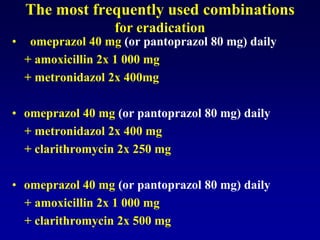
The most frequently used combinations
for eradication
• omeprazol 40 mg (or pantoprazol 80 mg) daily
+ amoxicillin 2x 1 000 mg
+ metronidazol 2x 400mg
• omeprazol 40 mg (or pantoprazol 80 mg) daily
+ metronidazol 2x 400 mg
+ clarithromycin 2x 250 mg
• omeprazol 40 mg (or pantoprazol 80 mg) daily
+ amoxicillin 2x 1 000 mg
+ clarithromycin 2x 500 mg
Spasmolytics
• symptomatic treatment of acute and
chronic diseases accompanied by GIT
smooth muscle hypertony
• heterogennous group of drugs,
• common mechanism of action
relaxing effect on the smooth muscle
Spasmolytics
• neurotropic spasmolytics -
parasympatolytics
• musculotropic spasmolytics
papaverine like
calcium chanel blockers
• nonspecific spasmolytics
(nitrates, local anesthetics)
neurotropic spasmolytics
• derivatives of Atropa belladona
alkaloids
• spasmolytic effect during hypertrophy,
hyperkinesia or dyskinesia of smooth
muscle
• release of stomach, gut, gall blader and
urinary tract spasm
Parasympatolytics
a) non-selective (general muscarinic receptor
blockade – also bronchial, urogenital)
– atropin
– scopolamine
• butylscopolamine (Buscopan)
– otilonium
– ipratropium (also antiasthmatic)
b) selective - specific muskarinic M1 rec. blockade
– pirenzepin (not in ČR)
musculotropic spasmolytics
a) papaverine-like type
• direct smooth muscle relaxation - increased cAMP
(phosphodiesterase inhibition)
• papaverine – opium alkaloid without analgetic
effect and euphoria, also vazodilatation
• usually in combinations
• pitofenon (in combinations Algifen)
• drotaverin (Nospa) strong spasmolytic
• indication: irritable bowel, billiary colic
musculotropic spasmolytics
b) calcium channel blockers
• pinaverin (Dicetel)
– selective inhibition calcium chanel
• indication: irritable bowel, billiary colic
Adverse reactions of spasmolytics
• parasympatolytics
- tachycardia, tachyarytmia
- urine retention
- excitation
- increased intraocullar presuusre
(cave: glaucoma)
- accomodation disorders- midriásis
all others spasmolytics and opioids
- paralytic ileus
- toxic megacolon
LAXATIVES
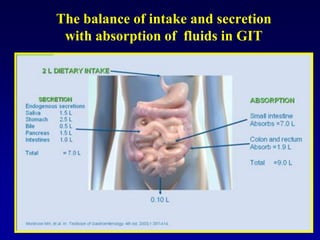
The balance of intake and secretion
with absorption of fluids in GIT
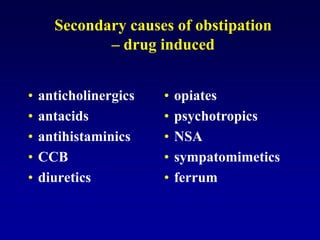
Secondary causes of obstipation
– drug induced
• anticholinergics
• antacids
• antihistaminics
• CCB
• diuretics
• opiates
• psychotropics
• NSA
• sympatomimetics
• ferrum
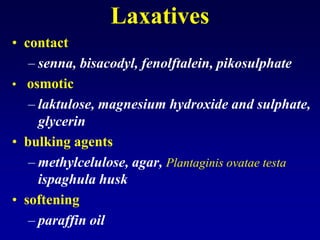
Laxatives
• contact
– senna, bisacodyl, fenolftalein, pikosulphate
• osmotic
– laktulose, magnesium hydroxide and sulphate,
glycerin
• bulking agents
– methylcelulose, agar, Plantaginis ovatae testa
ispaghula husk
• softening
– paraffin oil
STIMULANT LAXATIVES
mechanism of action: increase peristalsis
– primary stimulation nervous plexus (colon)
– Na pump inhibition - more elektrolytes in the
lumen sekundary peristaltic stimulation
– onset of effect: 4 - 12 h, suppository 10 min.
– AR: intestinal spasm, gut paralysis
• mucosal damage
• not use chronicaly
STIMULANT LAXATIVES
bisacodyl (low toxicity)
• tbl – evening application – morning effect
• supp – morning aplication – effect during 15min.
up to 1hour
phenolphtalein
• effect in colon – after 10 - 14 hours
• enterohepatic circulation – effect for days
• rash
STIMULANT LAXATIVES
antrachinons
– antracene derivatives (glykosides)
– effect only in colon, where hydrolysed
– myenteric plexus stimulants + sodium active
transport block dual peristaltic stimulation
• onset after 6-12 hours
• do not use during pregnancy, excretion to
milk!!!
senna – plant, natural product
• glykosides (sennosides similar to antrachinons)
• only for short terme use
OSMOTIC LAXATIVES
lactulose (non iritant, mild)
• disacharid no resorbable
• spliting in colon to  resorbable fructose and
galactose  osmotic flow to the lumen
• effect after 12-24 hours
glycerol
• suppository – effect after 15 - 30 min
hydroxyd and magnesium sulphate
 solubility, non-resorbable, osmotic activity
ANTIDIARRHOEAL
DRUGS
Causes of acute diarrhoea
(<14 days)
• infections
• drugs
• ischemic collitis
• mesenteric artery thrombosis
• acute diverticulitis
Causes of chronic diarrhoea
(>14 days)
• inflammation – nonspecific and radiation
colitis
• osmotic – absorption disturbances -
pankreatic insufficiency
• secretion – karcinoid, ZE syndrome
• motility disturbances – irritable bowel,
neurological diseses.
• arteficial –laxative overuse
ANTIDIARRHOEAL DRUGS
• diarhoe is only symptom
– „travellers diarrhoea“
– necessary to treat the cause
mechanism of treatment:
• decreased toxins absorption (adsorption)
• decreased motility– prolong time for
reabsorption of electrolytes - (opioids)
• elimination of infection (desinfectants, ATB)
• changed gut microflora - (probiotika)
ANTIDIARRHOEAL DRUGS-
adsorbentia
• non-resorbable, activated surface
• mainly for infections as supporting
therapy
• Carbo adsorbens, kaolin
• potassium magnesium aluminium
silicate (diosmektit)
ANTIDIARRHOEAL DRUGS
decreased motility
direct stimulation of opioid receptors 
• slowdown propulsion and secretion in
the gut
• loperamid (Imodium) – opioid,
–non resorbable
• tinctura opii
ANTIDIARRHOEAL DRUGS -
chemotherapeutics
• chloroxin (Endiaron)
- chinolone type chemotherapeutic
- effect on G- and G+
- after long time treatment (>4 weeks)
neurotoxicity
• nifuroxazid (Ercefuryl)
– wider spectrum than chloroxin
• fluorochinolons – ciprofloxacin ofloxacin,
norfloxacin
ANTIDIARRHOEAL DRUGS
antibiotics
• rifaximin (Normix)
- bacteriostatic and bactericidal ATB
–G+ and G- spectrum
- non resorbable
- risk of resistance relatively high and
quick
„travellers diarrhoea“
Non specific treatment
• rehydratation, diet
• adsorbentia - carbo adsorbens, diosmectit (Smecta)
• chemotherapeutics– chloroxin (Endiaron),
• decreased motility – loperamid (Imodium) –
contraindication – blood in stool or fever
• probiotics
„travellers diarrhoea“
• ATB only for severe course (fever)
• chloroxin (Endiaron), nifuroxazid (Ercefuryl)
• (fluorochinolons) - ciprofloxacin, norfloxacin,
ofloxacin
– Only last choice – development of resistance
• rifaximin (Normix)
probiotics (eubiotics)
- freeze-dried culture – viable, non-patogenic
strains E.coli or Saccharomyces
• modulation of the intestinal microflora, restore
physiological gut flora
indications: supporting care
• Irritable bowel, chronic diarrhoea, meteorism ,
• constipation
• Nonspecific inflammation (Crohn disease), snížení
dysmicrobia after ATB treatment

GIT pharmacology

  • 1.
  • 2.
    When it isnecessary to intervene? • motility disorders (vomiting, reflux disease, disorders of passages, irritant colon, colics) • absorption disorders (disorders of enzymes secretion, disorders of the absorption) • peptic lesions (ulcer disease GD) • inflammatory bowel disease (ulcerative colitis, Crohn disease) • excessive intake of food (antiobesitics) • haemorrhage in GIT (prophylaxis and treatment)
  • 3.
    Nousea and vomiting •nausea – only subjective symptom • vomiting- – metabolic disorders (loss of potassium, water, HCl), – aspiration, mucosal defects • the need for prevention and treatment • of importance especially in oncology
  • 4.
  • 5.
    Nausea and vomiting- regulation Vomiting center ( medulla oblongata) Beware: is not protected by the HE barrier – easy penetration of toxins! signaling: afferent neuronal pathways - from GIT and other tissue (stomac, myocardium) - from CNS (psychogenic stimulation, intracranial hypertension) - from vestibullar apparatus (Menier dis., kinetosis, motion sickness) – aferentní humoral stimulaton - toxins (bacterial, uremia), drugs (cytostatics, digoxin, morphine), endocrine dissorders (gravidity)
  • 6.
    Nausea and vomiting- regulation chemoreceptors alcohol, emetics, cytotoxix drugs, irradiation, gravidity cortex psych. stimulation migraine vestibullar apparatus motion, hyperstimulation Vomiting center larynx, stomach mechanical and chemical stimulation
  • 7.
    Nausea and vomitingregulation - mediators chemoreceptors mediator: dopamin, serotonin cortex mediator: acetylcholin vestibullar apparatus mediator: histamin, acetylcholin Vomiting centre mediator: acetylcholin Larynx, stomach mediator: serotonin, histamin
  • 8.
    Nausea and vomitingregulation - mediators chemoreceptors mediator: dopamin, serotonin cortex mediator: acetylcholin vestibullar apparatus mediator: histamin, acetylcholin Vomiting centre mediator: acetylcholin larynx, stomach mediator: serotonin, histamin dopaminergic D2 receptors antag.
  • 9.
    Nausea and vomitingregulation - mediators chemoreceptory mediator: dopamin, serotonin cortex mediator: acetylcholin vestibullar apparatus mediator: histamin, acetylcholin Vomiting centre mediator: acetylcholin Larynx, stomach mediator: serotonin, histamin Serotonin 5-HT3 receptor antag.
  • 10.
    Nausea and vomitingregulation - mediators chemoreceptors mediator: dopamin, serotonin cortex mediator: acetylcholin vestibullar apparatus mediator: histamin, acetylcholin Vomiting centre mediator: acetylcholin Larynx, stomach mediator: serotonin, histamin histamine H1 rec. antagonists
  • 11.
    Nausea and vomitingregulation - mediators chemoreceptors mediator: dopamin, serotonin cortex mediator: acetylcholin vestibullar apparatus mediator: histamin, acetylcholin Vomiting centre mediator: acetylcholin Larynx, stomach mediator: serotonin, histamin anticholinergika
  • 12.
    ANTIEMETICS – according mechanismof action neurotransmiter antiemetics • serotonin serotonin 5-HT3 receptor antagonists (setrons) – (ondansetron, granisetron) • histamine histamine H1 receptor antagonists (moxastin, diphenylhydramin) • dopamin dopamin D2 receptor antagonists – type neuroleptics (prochlorperazin,…) – type prokinetics (metoclopramid,…) • acetylcholin anticholinergics (skopolamin, atropin)
  • 13.
    ANTIEMETICS – SETRONS SEROTONIN5-HT3 rec. antagonists • only one receptore subtype blockade. • most effective antiemetics - blockade stimulaton in periphery - GIT, in chemoreception center • invaluable in onkology
  • 14.
    serotonine and setrones ondansetron– ZOFRAN, granisetron – KYTRIL , tropisetron – NAVOBAN,…
  • 15.
    ANTIEMETICS - SETRONS ondansetron(Zofran) • competitive inhibition granisetron (Kytril) • noncompetitive inhibition, longer duraton (1 day) palonosetron (Aloxi) • noncompetitive inhibition, most effective and longest (5 dnů) • AR: headaches, gut motility disturbances (constipation, cramps, diarrhea), fatigue, somnolence or insomnia, indication: vomiting during chemotherapy
  • 16.
    ANTIEMETICS neurokinins antagonists aprepitant (Emend) •combined effect: substance P antag.+ inhib. 5-H3 rec. • significant antiemetic effect, potenciation of setrons • indication: vomiting during chemotherapy "Royal combination„ for resistant vomiting setron + dexamethason + aprepitant (prochlorperazin)
  • 17.
    ANTIEMETICS H1receptors antagonists • inhibitionof vestibullar stimulation • indication: motion sickness (event. vertigo) • AR: severe sleepenes (driving), dry mouth, moxastin (Kinedryl), embramin (Medrin), diphenhydramin – preventive application
  • 18.
    ANTIEMETICS D2receptor antagonisté • mainlyinhibited emetic stimulation from periphery GIT • neuroleptics – sedation thietylperazin (Torecan), prochlorperazin, • prokinetics - increased motility of oesophagus and stomach • metoclopramid (Cerucal):  AR – HEB penetration extrapyramidal symptoms • domperidon (Motilium) – does not pentrate to CNS,  AR
  • 19.
    ANTIEMETICS complex effect Thietylperazin (Torecan) •different receptors inhibition – dopamine D2 – histamine H1 – muscarinic • significant antiemetic and anti-motion sickness
  • 20.
    ANTIEMETICS ANTICHOLINERGICS • are notable to inhibit chemoreceptor stimulation • muscarinic receptor inhibition. • spasmolytic effect • supporting effect only, little importance scopolamine (supporting treatment), atropine- not regularly used
  • 21.
  • 22.
    PROKINETICS mechanism of action •peripheral dopamine D2 receptor inhibition – dopamine inhibits GIT motility • acetylcholine agonists (myenteric plexus) – acetylcholin stimulate peristaltics – acetylcholinesterase inhibition •  ACH availability in synapses
  • 23.
    Prokinetics –dopamine D2 receptorinhibition .metoclopramide (Cerucal, Degan) – antiemetic effect, cholinomimetic action, dopamine antag. – gastro-oesophageal reflux, gastric emptying • lipophilic - passing HEB – central effects • frequent AR 10-20% – central - extrapyramidal (tremor), sleepenes – peripheral - diarrhoea – hyperprolactinemia – gallactorhea, menstruation abnormalities  cheap, fast, and short time action – 1-2 hours
  • 24.
    PROKINETICS • Domperidone (Motilium) –selective dopamine D2 receptor antagonists, – antiemetic effect – increasing GIT motility and smooth muscle tonus, AR – not passing HEB, less AR than metoclopramide hyperprolactinemia present, longer effect 4-6 hours
  • 25.
    PROKINETICS • Cisapride –not on the market – stimulation of Ach release from myenteric plexus in upper GIT – increased gastric motility, increase sphincter tonus – long halve life 10 hours – no antiemetic action – diarrhoea, abdominal cramps, tachycardia – Q-T interval prolonged, dangerous interactions • erythromycine, ketokonazole, terfenadine
  • 26.
    PROKINETICS – dualaction • Itoprid (Ganaton) • dual action: peripheral D2 receptore blockade •  Ach availability (acetylcholinesterase inhibition) • effect:  tonus aesophageal sfincter (reflux)  gastric evacuation (for gastroparesis)  tonus and gut motility (paralytic. ileus) • AR – less common diarrhea, hypersalivation, hyperprolactinemia • more expensive, highly effective and well tolerated, quick onset - 30 min, duration 6-8 hod
  • 27.
    Peptic ulcer • protonpump inhibitors (PPIs) - Helicobacter pylori eradicatio • enhancing mucosal resistance – H2 antihistaminics – antacids – parasympatholytics
  • 28.
    Peptic ulcer • primary –gastritis with Helicobacter pylori infection • secundary – produced by drugs (antirevmatics, NSAISs, corticoids - stress, endocrinological abnormalities (ZE syndrome),
  • 29.
    Helicobacter pylori • widestspecific human infection (50 -70% patients in ČR infected) • adaptation for acidic environment „alkalick cloud of ammonia“ enzymatic spliting of uric acid to ammonia • detection: urease test, breathing air antigen in the stool, histology during biopsy
  • 31.
    The Nobel Prizein Physiology or Medicine 2005 "for their discovery of the bacterium Helicobacter pylori and its role in gastritis and peptic ulcer disease" Barry J. Marshall, Australia J. Robin Warren,Australia « I preferred to believe my eyes, not the medical textbooks of the medical fraternity » R. Warren (2002)
  • 32.
  • 33.
    • mucus • bicarbonate •mucosal protection prostanoids, bismuth salt prostanoids prostanoids sucralfat Peptic ulcer treatment enhancing mucosal resistance
  • 34.
    Neutralisation of gastricsecretion Reflux oesophagitis • proton pump inhibitors – omeprazole, pantoprazole • H2 receptor antagonists – ranitidine, famotidine, antacids – alumimium, magnesium salt • bismuth chelates
  • 35.
    HCl secretion schema H+K + Cl- HCl muscarinic r. H2 rec. gastrin r. Ach histamin gastrin mast cell.n.vagus parietal. cell lumen food
  • 36.
    HCl secretion schema H+K + Cl- HCl muscarinic r. H2 rec. gastrin r. Ach histamin gastrin mast cell.n.vagus parietal. cell lumen food proton pump inhibition.
  • 37.
    HCl secretion schema H+K + Cl- HCl muscarinic r. H2 rec. gastrin r. Ach histamin gastrin mast cell.n.vagus parietal. cell lumen food anticholinergics atropin
  • 38.
    HCl secretion schema H+K + Cl- HCl muscarinic r. H2 rec. gastrin r. Ach histamin gastrin mast cell.n.vagus parietal. cell lumen food H2 rec. antagonists.
  • 39.
    HCl secretion schema H+K + Cl- HCl muscarinic r. H2 rec. gastrin r. Ach histamin gastrin mast celln.vagus parietal. cell lumen food PGE misoprostol
  • 40.
    HCl secretion schema H+K + Cl- HCl muscarinic r. H2 rec. gastrin r. Ach histamin gastrin mast cell.n.vagus parietal. cell lumen food antacids
  • 41.
    Proton pump inhibitors- PPI - the most effective inhibition of gastric HCl secretion
  • 42.
    PROTON-PUMP INHIBITORS • Omeprazole,pantoprazole, lanzoprazole, rabeprazole • Irreversible inhibition of H+/K+-ATPase – proton pump, terminal step of acid secretion • inhibition of basal and stimulated secretion • half life relatively short, but single dose effect last 2-3 days • side effects - not common, headache, diarrhoea, rashes, dizziness, somnolence, mental confusion, impotence, pain in muscles and joints • most effective, Helicobacter pylori eradication, NSAID ulcer
  • 43.
    Omeprazol – metabolicinteractions • metabolised by CYP2C19 oxidase (+CYP3A4) • omeprazol inhibits CYP2C19 oxidase – affects a series of drugs metabolism and effects • slows down metabolism of diazepamu
  • 44.
    N S O Cl O CH3 C O N S O Cl O CH3 C HOOC *HS N O Cl OCH3 Clopidogrel bioactivation 85% inactive metabolites (esterase) hydrolysis (esterase) oxidation (CYP3A4, 2C19,…) clopidogrel - pro-drug 15% active metabolite (oxidase)
  • 45.
    Pantoprazol Same mechanism ofaction as omeprazol • slower onset of action 1-3 h., • longer duration of action – secretion restored after 1 week • weaker inhibition CYP2C19 than omeprazol
  • 46.
    H2 receptor antagonists -fully replaceable by PPI
  • 47.
    H2 antagonists • Competitiveinhibition histamine stimulating secretion, – H2 receptors blocking • Ranitidine, Cimetidine, Famotidine, Nizatidine, • OTC • Side effects – cimetidine – only for short term treatment – hepatic enzyme inhibition – potentiates oral anticoagulants, fenytoin, carbamazepine, quinidine,, – antiandrogenic effect
  • 48.
    Antacids today only symptomatic, fastacting treatment of pyrosis (heartburn)
  • 49.
    Neutralisation of gastricsecretion Reflux oesophagitis • ANTACIDS – great number o products – Magnesium and Aluminium salt – galenic form important – frequent dosage – long lasting treatment
  • 50.
    Neutralisation of gastricsecretion ANTACIDS • Magnesium hydroxide – insoluble powder, no systemic alkalosis • Magnesium trisilicate – insoluble, long lasting effect • Aluminium hydroxide gel – strong action, several hours, • Sodium bicarbonate – rapid action, carbon dioxide, rebound fenomenon, absorption, can cause alkalosis, do not use • Alginates
  • 51.
    Neutralisation of gastricsecretion ANTACIDS • Interactions – TTC, fluorochinolons, penicilamine, fluorides, bisfosfonates – azithromycine, nitrofurantoins, rifampycine, fenytoine, chlorochine, antipsychotics, domperidone – Li + bicarbonates • enterosolvent tablets
  • 52.
    Drugs which protectthe mucosa - supporting therapy of peptic ulcer - drugs of the second to the third choice
  • 53.
    Drugs which protectthe mucosa • Bismuth chelate – coloidal bismuth subcitrate, subnitrate, ranitidine bismuth citrate • Sucralfate – aluminium hydroxide - sulphated sucrose – complex gel, high binding power, not absorbed • Misoprostol – prostaglandine derivative - PGE1, inhibits gastric secretion, mucosal protection, – NSAIDs ulcer protection
  • 54.
    Helicobacter eradication proton pumpinhibitors antibiotics + chemotherapeutics bismuth salt
  • 55.
  • 56.
    Helicobacter eradication strategy: tripletherapy • combination two ATB + IPP (or ATB + chemotherapeutics + IPP) • ATB: amoxicillin, klaritromycin, tetracycline, azithromycine, or. chemotherap. metronidazol, • PPI: omeprazol, pantoprazol • eradication usually within one week,
  • 57.
    The most frequentlyused combinations for eradication • omeprazol 40 mg (or pantoprazol 80 mg) daily + amoxicillin 2x 1 000 mg + metronidazol 2x 400mg • omeprazol 40 mg (or pantoprazol 80 mg) daily + metronidazol 2x 400 mg + clarithromycin 2x 250 mg • omeprazol 40 mg (or pantoprazol 80 mg) daily + amoxicillin 2x 1 000 mg + clarithromycin 2x 500 mg
  • 58.
    Spasmolytics • symptomatic treatmentof acute and chronic diseases accompanied by GIT smooth muscle hypertony • heterogennous group of drugs, • common mechanism of action relaxing effect on the smooth muscle
  • 59.
    Spasmolytics • neurotropic spasmolytics- parasympatolytics • musculotropic spasmolytics papaverine like calcium chanel blockers • nonspecific spasmolytics (nitrates, local anesthetics)
  • 60.
    neurotropic spasmolytics • derivativesof Atropa belladona alkaloids • spasmolytic effect during hypertrophy, hyperkinesia or dyskinesia of smooth muscle • release of stomach, gut, gall blader and urinary tract spasm
  • 61.
    Parasympatolytics a) non-selective (generalmuscarinic receptor blockade – also bronchial, urogenital) – atropin – scopolamine • butylscopolamine (Buscopan) – otilonium – ipratropium (also antiasthmatic) b) selective - specific muskarinic M1 rec. blockade – pirenzepin (not in ČR)
  • 62.
    musculotropic spasmolytics a) papaverine-liketype • direct smooth muscle relaxation - increased cAMP (phosphodiesterase inhibition) • papaverine – opium alkaloid without analgetic effect and euphoria, also vazodilatation • usually in combinations • pitofenon (in combinations Algifen) • drotaverin (Nospa) strong spasmolytic • indication: irritable bowel, billiary colic
  • 63.
    musculotropic spasmolytics b) calciumchannel blockers • pinaverin (Dicetel) – selective inhibition calcium chanel • indication: irritable bowel, billiary colic
  • 64.
    Adverse reactions ofspasmolytics • parasympatolytics - tachycardia, tachyarytmia - urine retention - excitation - increased intraocullar presuusre (cave: glaucoma) - accomodation disorders- midriásis all others spasmolytics and opioids - paralytic ileus - toxic megacolon
  • 65.
  • 66.
    The balance ofintake and secretion with absorption of fluids in GIT
  • 67.
    Secondary causes ofobstipation – drug induced • anticholinergics • antacids • antihistaminics • CCB • diuretics • opiates • psychotropics • NSA • sympatomimetics • ferrum
  • 68.
    Laxatives • contact – senna,bisacodyl, fenolftalein, pikosulphate • osmotic – laktulose, magnesium hydroxide and sulphate, glycerin • bulking agents – methylcelulose, agar, Plantaginis ovatae testa ispaghula husk • softening – paraffin oil
  • 69.
    STIMULANT LAXATIVES mechanism ofaction: increase peristalsis – primary stimulation nervous plexus (colon) – Na pump inhibition - more elektrolytes in the lumen sekundary peristaltic stimulation – onset of effect: 4 - 12 h, suppository 10 min. – AR: intestinal spasm, gut paralysis • mucosal damage • not use chronicaly
  • 70.
    STIMULANT LAXATIVES bisacodyl (lowtoxicity) • tbl – evening application – morning effect • supp – morning aplication – effect during 15min. up to 1hour phenolphtalein • effect in colon – after 10 - 14 hours • enterohepatic circulation – effect for days • rash
  • 71.
    STIMULANT LAXATIVES antrachinons – antracenederivatives (glykosides) – effect only in colon, where hydrolysed – myenteric plexus stimulants + sodium active transport block dual peristaltic stimulation • onset after 6-12 hours • do not use during pregnancy, excretion to milk!!! senna – plant, natural product • glykosides (sennosides similar to antrachinons) • only for short terme use
  • 72.
    OSMOTIC LAXATIVES lactulose (noniritant, mild) • disacharid no resorbable • spliting in colon to  resorbable fructose and galactose  osmotic flow to the lumen • effect after 12-24 hours glycerol • suppository – effect after 15 - 30 min hydroxyd and magnesium sulphate  solubility, non-resorbable, osmotic activity
  • 73.
  • 74.
    Causes of acutediarrhoea (<14 days) • infections • drugs • ischemic collitis • mesenteric artery thrombosis • acute diverticulitis
  • 75.
    Causes of chronicdiarrhoea (>14 days) • inflammation – nonspecific and radiation colitis • osmotic – absorption disturbances - pankreatic insufficiency • secretion – karcinoid, ZE syndrome • motility disturbances – irritable bowel, neurological diseses. • arteficial –laxative overuse
  • 76.
    ANTIDIARRHOEAL DRUGS • diarhoeis only symptom – „travellers diarrhoea“ – necessary to treat the cause mechanism of treatment: • decreased toxins absorption (adsorption) • decreased motility– prolong time for reabsorption of electrolytes - (opioids) • elimination of infection (desinfectants, ATB) • changed gut microflora - (probiotika)
  • 77.
    ANTIDIARRHOEAL DRUGS- adsorbentia • non-resorbable,activated surface • mainly for infections as supporting therapy • Carbo adsorbens, kaolin • potassium magnesium aluminium silicate (diosmektit)
  • 78.
    ANTIDIARRHOEAL DRUGS decreased motility directstimulation of opioid receptors  • slowdown propulsion and secretion in the gut • loperamid (Imodium) – opioid, –non resorbable • tinctura opii
  • 79.
    ANTIDIARRHOEAL DRUGS - chemotherapeutics •chloroxin (Endiaron) - chinolone type chemotherapeutic - effect on G- and G+ - after long time treatment (>4 weeks) neurotoxicity • nifuroxazid (Ercefuryl) – wider spectrum than chloroxin • fluorochinolons – ciprofloxacin ofloxacin, norfloxacin
  • 80.
    ANTIDIARRHOEAL DRUGS antibiotics • rifaximin(Normix) - bacteriostatic and bactericidal ATB –G+ and G- spectrum - non resorbable - risk of resistance relatively high and quick
  • 81.
    „travellers diarrhoea“ Non specifictreatment • rehydratation, diet • adsorbentia - carbo adsorbens, diosmectit (Smecta) • chemotherapeutics– chloroxin (Endiaron), • decreased motility – loperamid (Imodium) – contraindication – blood in stool or fever • probiotics
  • 82.
    „travellers diarrhoea“ • ATBonly for severe course (fever) • chloroxin (Endiaron), nifuroxazid (Ercefuryl) • (fluorochinolons) - ciprofloxacin, norfloxacin, ofloxacin – Only last choice – development of resistance • rifaximin (Normix)
  • 83.
    probiotics (eubiotics) - freeze-driedculture – viable, non-patogenic strains E.coli or Saccharomyces • modulation of the intestinal microflora, restore physiological gut flora indications: supporting care • Irritable bowel, chronic diarrhoea, meteorism , • constipation • Nonspecific inflammation (Crohn disease), snížení dysmicrobia after ATB treatment