ANTI-AMOEBIC DRUGS
Dr.RENJU.S.RAVI MD
AMOEBIASIS
infection with Entamoeba histolytica.
transmitted through GIT.
has two stages of development: cyst
and trophozoite.
Cysts → small intestine → little
trophozoites (ileocecum)
AMOEBIASIS
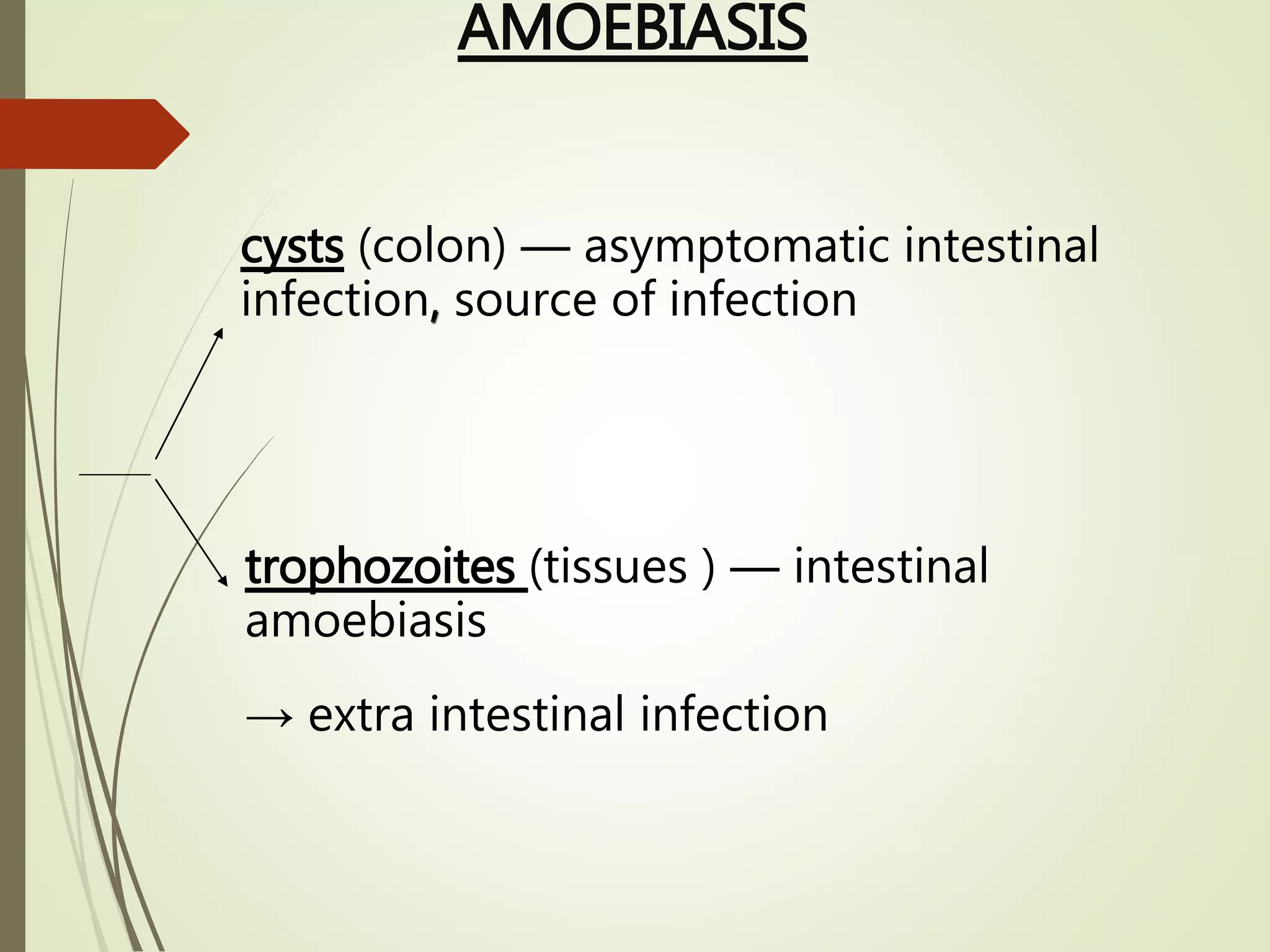
cysts (colon) — asymptomatic intestinal
infection, source of infection
trophozoites (tissues ) — intestinal
amoebiasis
→ extra intestinal infection
Intestinal amoebiasis :
amoebic ulcers a/c dysentery(blood,mucus in
stools)
C/c int. amoebiasis  vague abd.symptoms,
amoeboma
Extra intestinal d/s
Liver abscess
Rare- lung, spleen, kidney, brain
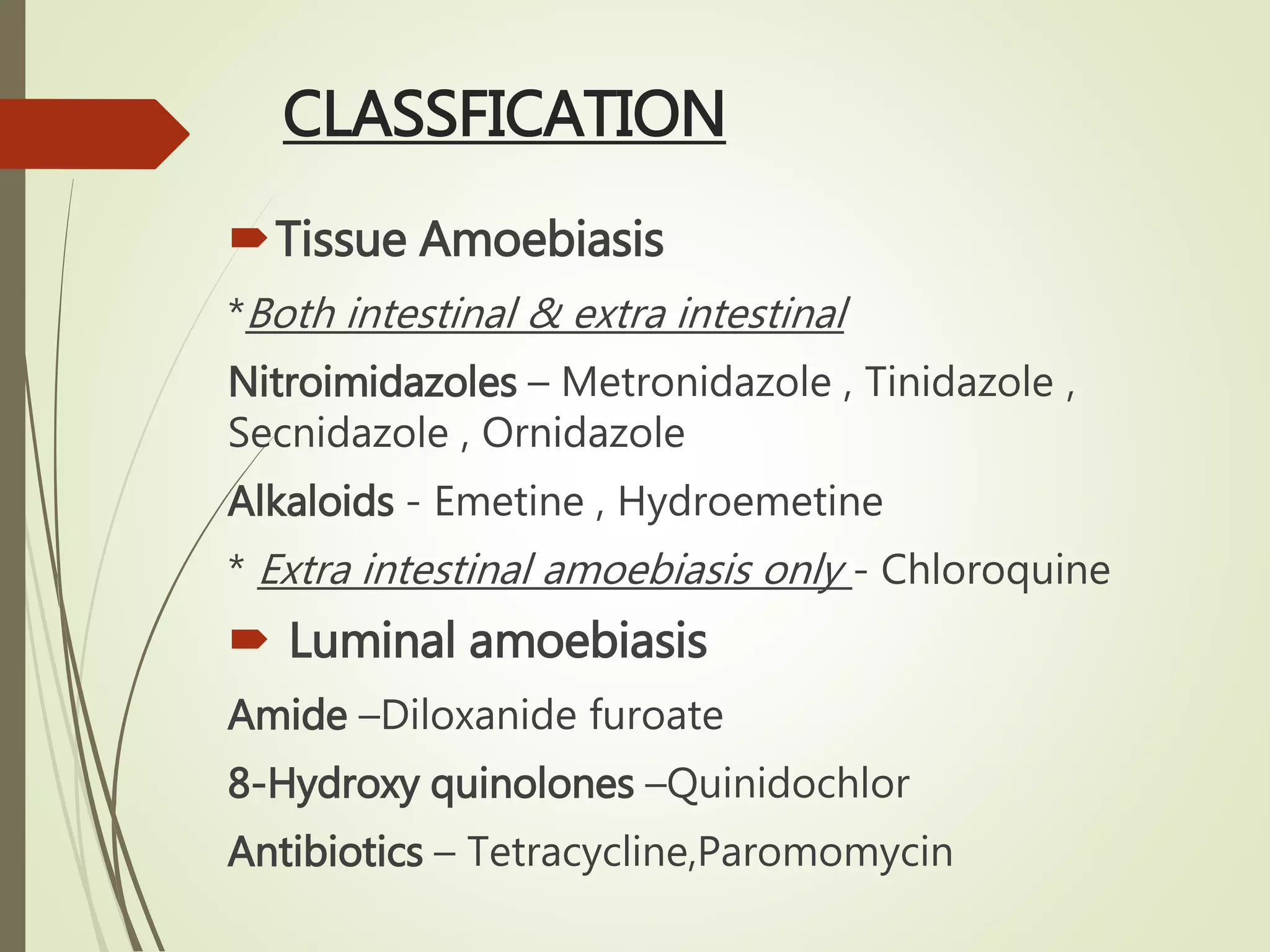
CLASSFICATION
Tissue Amoebiasis
*Both intestinal & extra intestinal
Nitroimidazoles – Metronidazole , Tinidazole ,
Secnidazole , Ornidazole
Alkaloids - Emetine , Hydroemetine
* Extra intestinal amoebiasis only - Chloroquine
 Luminal amoebiasis
Amide –Diloxanide furoate
8-Hydroxy quinolones –Quinidochlor
Antibiotics – Tetracycline,Paromomycin
Metronidazole
 Prototype drug introduced in 1959
 Bactericidal against Giardia lamblia,
anaerobic bacteria - Bacteroides fragilis,
Fusobacterium, Clostridium
perfringes/difficile, Helicobacter pylori,
Anaerobic Streptococci.
Does not affect aerobic bacteria.
MOA
• Not clearly understood
 Enters microorganism by diffusion - Nitro
group reduced to a highly reactive nitro radical
- DNA damaged Cytotoxicity.
 High selective anaerobic action – interference
with electron transportation from NADPH or
other reduced substrates
 • Also inhibits cell mediated immunity
 • Induce mutagenesis
 • Cause radio-sensitization
Metronidazole
Pharmacokinetics
• Completely absorbed from intestine
• Wide distribution in body.t ½ - 8hrs.
• Therapeutic concentrations in -Vaginal
secretions ,Semen ,Saliva, CSF
• Route of administration – oral &
parenteral
Metronidazole
Broad spectrum cidal action for
protozoa
1. Anti-amoebiasis: kills E histolytic
trophozoites but not cysts. Treatment of
all tissue infections with E histolytic. No
effect against luminal parasites and so
must be used with a luminal amoebicide
to ensure eradication of the infection.
2. Anti-trichomoniasis
3. Anti-anaerobic bacteria
4. Anti-giardiasis
Metronidazole
 Pseudomembranous colitis, Ulcerative
gingivitis, H.pylori, Peptic ulcer disease, Guinea
worm infestation.
 Adverse Drug Reactions
• Frequent - Anorexia, nausea, METALLIC TASTE,
abdominal cramps, disulfiram reaction.
• Less frequent - Headache, glossitis, dry mouth,
dizziness, rashes, transient neutropenia.
• On prolonged administration - Peripheral
neuropathy, CNS effects.
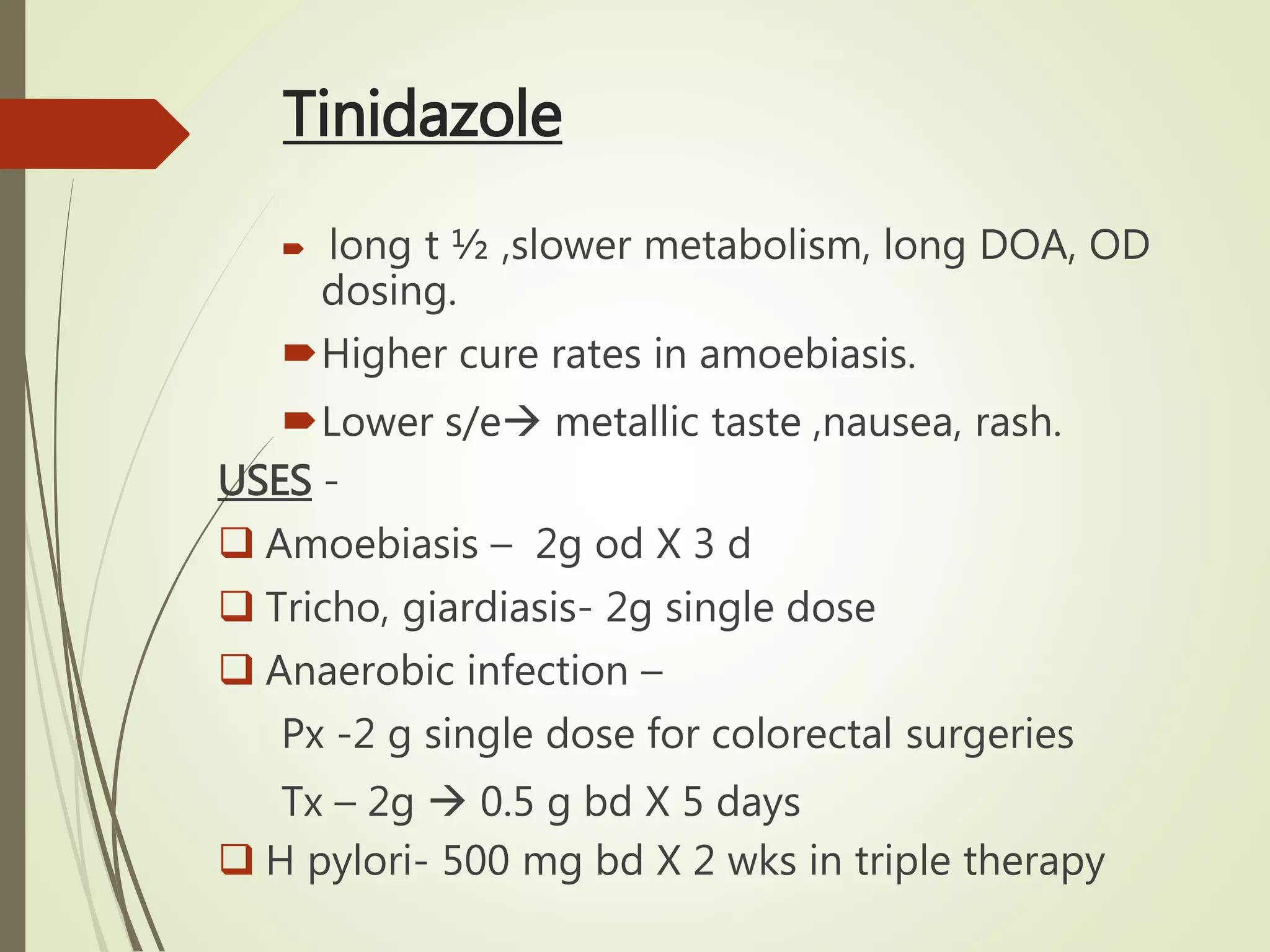
Tinidazole
 long t ½ ,slower metabolism, long DOA, OD
dosing.
Higher cure rates in amoebiasis.
Lower s/e metallic taste ,nausea, rash.
USES -
 Amoebiasis – 2g od X 3 d
 Tricho, giardiasis- 2g single dose
 Anaerobic infection –
Px -2 g single dose for colorectal surgeries
Tx – 2g  0.5 g bd X 5 days
 H pylori- 500 mg bd X 2 wks in triple therapy
 Secnidazole : longest t ½ [17-29 hrs]
2 g single dose but for hepatic amoebiasis 1.5 gm
od X5 days
 Ornidazole –long t ½ ,similar to Tinidazole
 Satranidazole –
better tolerability
No disulfiram reaction
No acetamide metabolite [weak carcinogen]
Emetine and Dehydroemetine
Emetine - alkaloid from Cephaelis ipecacuanha.
 Dehydroemetine - a semisynthetic
analog[less cardiotoxic,less cumulative]
 are effective against tissue trophozoites of E
histolytica .
MOA
Inhibiting peptidyl-tRNA translocation →
inhibiting elongation of peptide chain →
inhibiting protein synthesis → interfering
cleavage and breeding of trophozoites
No action on cysts
PK
 Administered s/c (preferred) or im. (but never
i.v.)
Uses
 kills E histolytic trophozoites of histolytic tissues
but no effect against luminal cysts -- + luminal
amoebicide
 Rapid action.
 Given only till a/c sx subside ( not> 10 days)
 Cumulative in liver, kidney, spleen, lungs– 2nd
course only after 6 weeks
 Reserve drug for severe cases or metronidazole
resistant or intolerant.
 Also for liver fluke infection.
Adverse Effects
 low selectivity → also inhibits
protein synthesis of eukaryote.
 Toxicity increase with length of
therapy.
1. Local irritant: pain and tenderness in
the area of injection.
2. GIT : nausea, vomiting (central and
direct),abdominal cramps ,diarrhoea.
3. Cardiac toxicity: arrhythmias,
congestive heart failure, hypotension,
ECG changes–to avoid strict bed rest
during therapy, no exercise X 2mnths
4. Neuromuscular blockade: muscle
weakness and discomfort– myositis
like
 Not be used in patients with cardiac
or renal disease, in young children,
or in pregnancy.
Chloroquine
Kills trophozoites .
Chloroquine reaches high liver concentrations
→ treatment of amoebic liver abscess.
 Not effective in the treatment of intestinal or
other extrahepatic amoebiasis.
 nor in controlling the luminal cycle (cyst
passers). completely absorbed from the upper
intestine
Efficacy similar to emetine, but duration
of treatment is longer and relapses
frequent.
No resistance detected.
Dose for amoebic liver abscess: 600
mg (base) for 2 days  300 mg daily for
2-3 weeks.
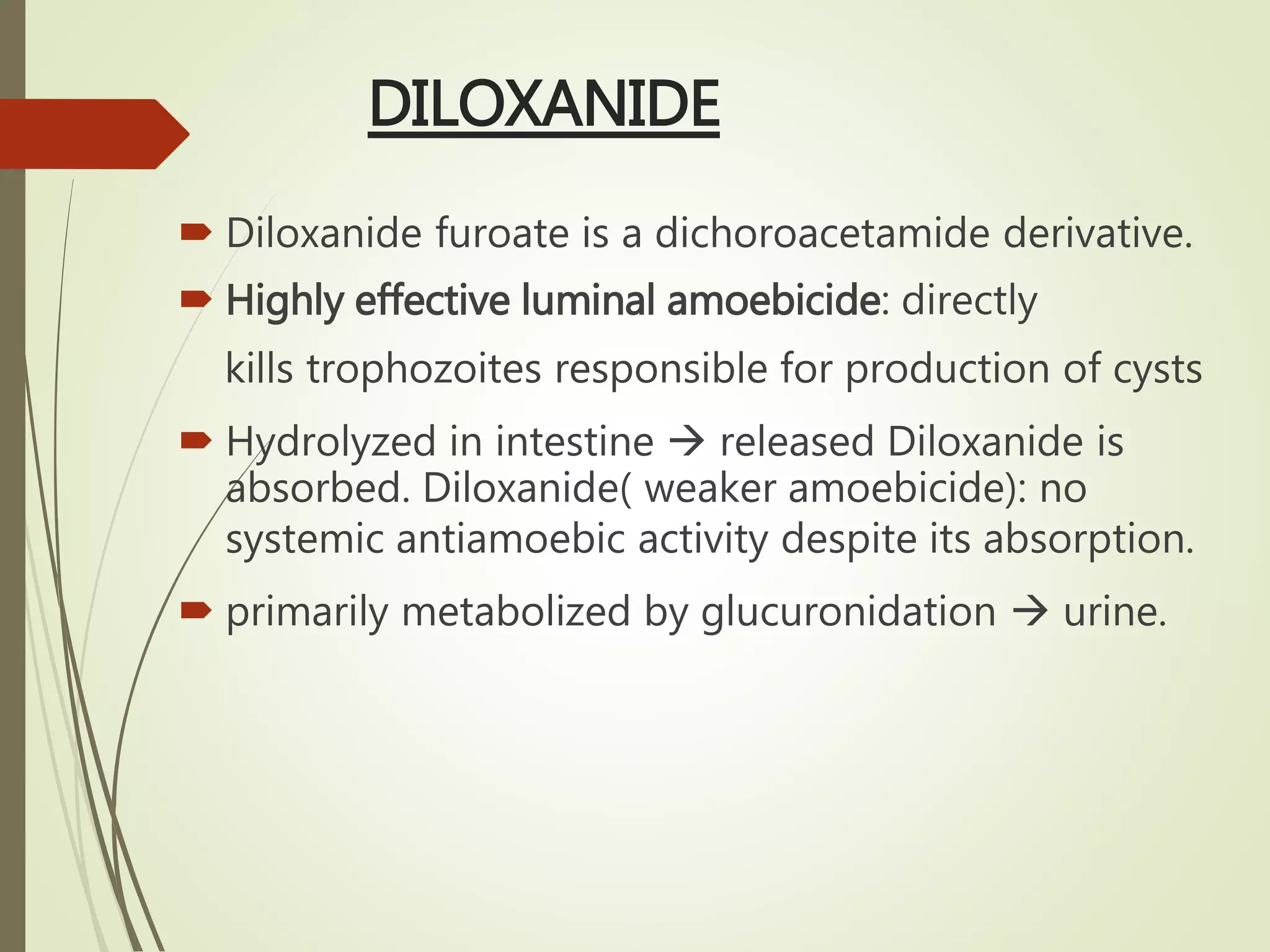
DILOXANIDE
 Diloxanide furoate is a dichoroacetamide derivative.
 Highly effective luminal amoebicide: directly
kills trophozoites responsible for production of cysts
 Hydrolyzed in intestine  released Diloxanide is
absorbed. Diloxanide( weaker amoebicide): no
systemic antiamoebic activity despite its absorption.
 primarily metabolized by glucuronidation  urine.
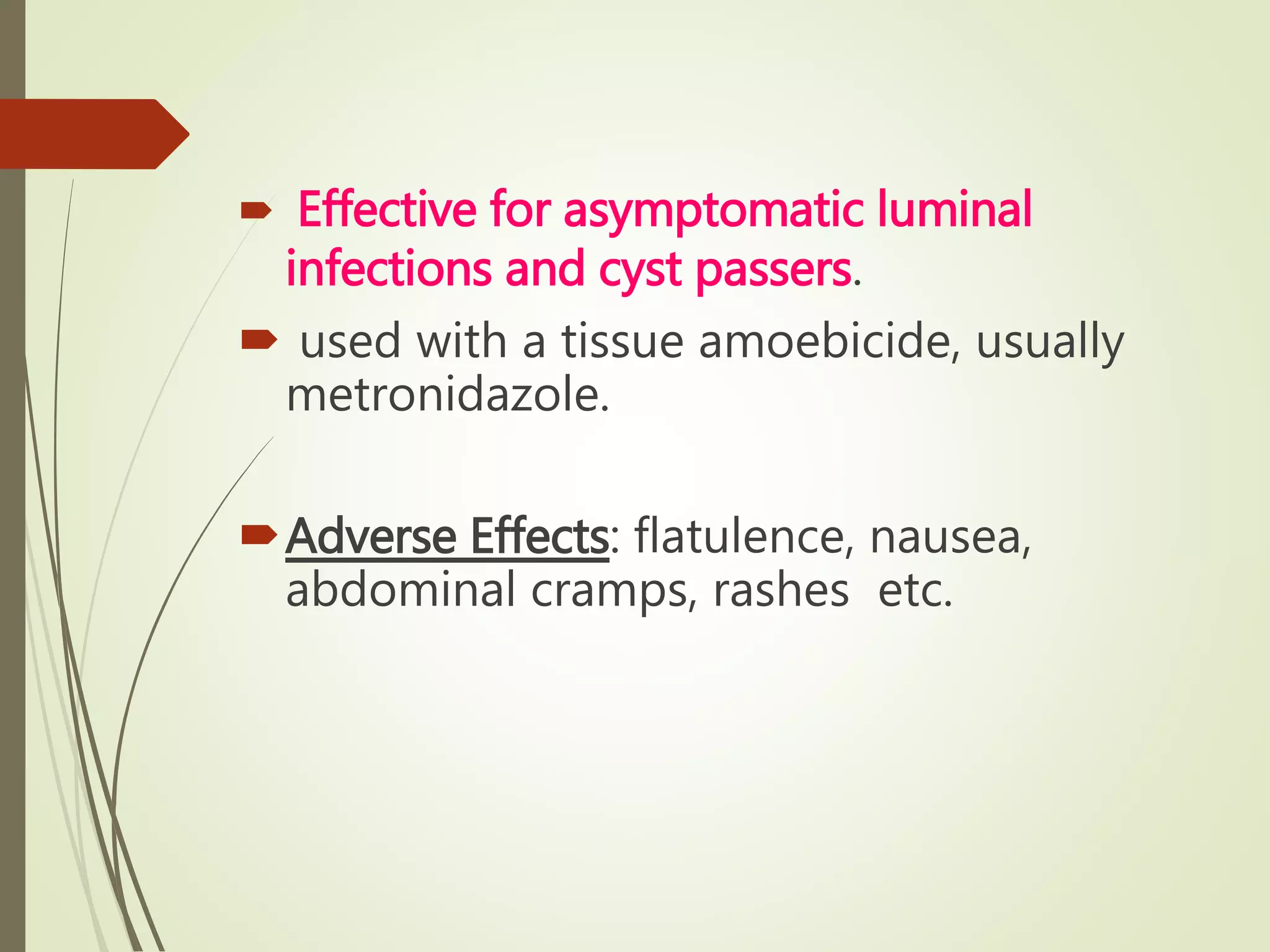
 Effective for asymptomatic luminal
infections and cyst passers.
 used with a tissue amoebicide, usually
metronidazole.
Adverse Effects: flatulence, nausea,
abdominal cramps, rashes etc.
NITAZOXANIDE
 Salicylamide congener of anthelminthic Niclosamide.
Spectrum
 Cryptosporidium parvum
 G. intestinalis, E. histolytica, and T. vaginalis , other
protozoans.
Intestinal helminths: Hymenolepis nana, Trichuris
trichiura, Ascaris lumbricoides, Enterobius vermicularis,
Ancylostoma duodenale, Strongyloides stercoralis, and
the liver fluke Fasciola hepatica.
Anaerobic bacteria, including Clostridium spp. and H.
pylori.
 Antiviral activity  now undergoing clinical trials for the
treatment of hepatitis C.
PK
 Prodrug  tizoxanide
 PFOR inhibitor [essential enzyme p/w of electron
transport metabolism in anaerobic organisms]
 Conjugated in liver  bile and urine
USE
 Amoebic dysentery as luminal amoebicide
 Giardiasis, Cryptosporidiosis
ADR
Abd pain, vomiting, head ache…
PAROMOMYCIN
Aminoglycoside antibiotic.
Not significantly absorbed from the GIT.
Only as a luminal amoebicide and has no
effect against extra intestinal amoebic
infections.
inhibiting protein synthesis → kill
trophozoites.
inhibiting symbiosis flora → indirectly
inhibiting amoeba protozoa.
Uses
DOC for treating intestinal colonization with E.
histolytica.
Giardiasis in pregnant women, especially during
the first trimester, when metronidazole is
contraindicated and as an alternative agent for
metronidazole-resistant isolates of G.
intestinalis.
Dose - 500 mg orally three times daily for 10
days
 6.25% cream has been used to treat vaginal
trichomoniasis in patients who had failed
metronidazole therapy or could not receive
metronidazole.
 Leishmaniasis.
Adverse effects
 abdominal pain and cramping, epigastric pain,
nausea and vomiting, steatorrhea, and diarrhea.
Rarely, rash and headache.
8-HYDROXYQUINOLINES
against Entamoeba, Giardia, Trichomonas, some
fungi (dermatophytes, Candida) and some
bacteria.
USE
 Intestinal amoebiasis as alternatives to Diloxanide
furoate.
Other uses are--giardiasis; local treatment of
monilial and trichomonas vaginitis, fungal and
bacterial skin infections.
Diarrhoeal diseases
Di iodohydroxyquine safer drug
 ADR
 Nausea, transient loose and green stools, pruritus
etc. Goiter  prolonged medication.
 Iodism (furunculosis, inflammation of mucous
membranes) --due to chronic iodine overload.
 Prolonged/repeated use of high doses of
quiniodochlor caused a neuropathic syndrome
called 'subacute myelo-optic neuropathy' (SMON)
 India banned only for pediatric patients,
[blindness]. Banned in other countries.
Tetracyclines
 Directly inhibit amoebae at high concentrations.
 Older tetracyclines are incompletely absorbed in
the small intestine, reach the colon in large
amounts and inhibit the bacterial flora with which
Entamoebae live symbiotically.
Thus, they indirectly reduce proliferation of
entamoebae in the colon and are used in chronic,
difficult to treat cases with only the luminal cycle
and little mucosal invasion.
 They are not good for acute dysentery and for
hepatic amoebiasis
 Tetracyclines lessen risk of
opportunistic infections
perforation
peritonitis
when given along with systemic amoebicide.
TREATMENT OF AMOEBIASIS
1. Invasive intestinal amoebiasis
• Metronidazole/ Tinidazole are DOC.
 Secnidazole, ornidazole,satranidazole are the
alternatives.
 Adjuvant measures for diarrhea and abdominal pain.
 Dehydroemetine is rarely used for most severe
cases faster symptomatic relief. discontinued
as soon as acute symptoms are controlled (2-3
days) and metronidazole started.
 Emetine may also be needed when
metronidazole is contraindicated or produces
rashes/neurotoxicity.
 This should be followed by a luminal
amoebicide to eradicate and to prevent carrier
(cyst passing) state.
2. Chronic intestinal amoebiasis/
asymptomatic cyst passers
 Diloxanide furoate –DOC
 Metronidazole/ Tinidazole- cure any latent
hepatic infection.
 A single course of a hydroxyquinoline not > 2
weeks may be used as third choice.
 A tetracycline with tissue amoebicide in cases
which fail to clear completely.
3. Hepatic amoebiasis
 Complete eradication of trophozoites from the liver is
essential to avoid relapses.
 Metronidazole / Tinidazole are the first choice drugs.
 Dehydroemetine is to be used only if metronidazole
cannot be given for one reason or the other.
 Abscess  aspirated.
 A luminal amoebicide must be given later to finish the
intestinal reservoir of infection.
THANK YOU

Anti Amoebic Drugs

  • 1.
  • 2.
    AMOEBIASIS infection with Entamoebahistolytica. transmitted through GIT. has two stages of development: cyst and trophozoite. Cysts → small intestine → little trophozoites (ileocecum)
  • 3.
    AMOEBIASIS cysts (colon) —asymptomatic intestinal infection, source of infection trophozoites (tissues ) — intestinal amoebiasis → extra intestinal infection
  • 4.
    Intestinal amoebiasis : amoebiculcers a/c dysentery(blood,mucus in stools) C/c int. amoebiasis  vague abd.symptoms, amoeboma Extra intestinal d/s Liver abscess Rare- lung, spleen, kidney, brain
  • 5.
    CLASSFICATION Tissue Amoebiasis *Both intestinal& extra intestinal Nitroimidazoles – Metronidazole , Tinidazole , Secnidazole , Ornidazole Alkaloids - Emetine , Hydroemetine * Extra intestinal amoebiasis only - Chloroquine  Luminal amoebiasis Amide –Diloxanide furoate 8-Hydroxy quinolones –Quinidochlor Antibiotics – Tetracycline,Paromomycin
  • 6.
    Metronidazole  Prototype drugintroduced in 1959  Bactericidal against Giardia lamblia, anaerobic bacteria - Bacteroides fragilis, Fusobacterium, Clostridium perfringes/difficile, Helicobacter pylori, Anaerobic Streptococci. Does not affect aerobic bacteria.
  • 7.
    MOA • Not clearlyunderstood  Enters microorganism by diffusion - Nitro group reduced to a highly reactive nitro radical - DNA damaged Cytotoxicity.  High selective anaerobic action – interference with electron transportation from NADPH or other reduced substrates  • Also inhibits cell mediated immunity  • Induce mutagenesis  • Cause radio-sensitization
  • 8.
    Metronidazole Pharmacokinetics • Completely absorbedfrom intestine • Wide distribution in body.t ½ - 8hrs. • Therapeutic concentrations in -Vaginal secretions ,Semen ,Saliva, CSF • Route of administration – oral & parenteral
  • 9.
    Metronidazole Broad spectrum cidalaction for protozoa 1. Anti-amoebiasis: kills E histolytic trophozoites but not cysts. Treatment of all tissue infections with E histolytic. No effect against luminal parasites and so must be used with a luminal amoebicide to ensure eradication of the infection. 2. Anti-trichomoniasis 3. Anti-anaerobic bacteria 4. Anti-giardiasis
  • 10.
    Metronidazole  Pseudomembranous colitis,Ulcerative gingivitis, H.pylori, Peptic ulcer disease, Guinea worm infestation.  Adverse Drug Reactions • Frequent - Anorexia, nausea, METALLIC TASTE, abdominal cramps, disulfiram reaction. • Less frequent - Headache, glossitis, dry mouth, dizziness, rashes, transient neutropenia. • On prolonged administration - Peripheral neuropathy, CNS effects.
  • 11.
    Tinidazole  long t½ ,slower metabolism, long DOA, OD dosing. Higher cure rates in amoebiasis. Lower s/e metallic taste ,nausea, rash. USES -  Amoebiasis – 2g od X 3 d  Tricho, giardiasis- 2g single dose  Anaerobic infection – Px -2 g single dose for colorectal surgeries Tx – 2g  0.5 g bd X 5 days  H pylori- 500 mg bd X 2 wks in triple therapy
  • 12.
     Secnidazole :longest t ½ [17-29 hrs] 2 g single dose but for hepatic amoebiasis 1.5 gm od X5 days  Ornidazole –long t ½ ,similar to Tinidazole  Satranidazole – better tolerability No disulfiram reaction No acetamide metabolite [weak carcinogen]
  • 13.
    Emetine and Dehydroemetine Emetine- alkaloid from Cephaelis ipecacuanha.  Dehydroemetine - a semisynthetic analog[less cardiotoxic,less cumulative]  are effective against tissue trophozoites of E histolytica .
  • 14.
    MOA Inhibiting peptidyl-tRNA translocation→ inhibiting elongation of peptide chain → inhibiting protein synthesis → interfering cleavage and breeding of trophozoites No action on cysts PK  Administered s/c (preferred) or im. (but never i.v.)
  • 15.
    Uses  kills Ehistolytic trophozoites of histolytic tissues but no effect against luminal cysts -- + luminal amoebicide  Rapid action.  Given only till a/c sx subside ( not> 10 days)  Cumulative in liver, kidney, spleen, lungs– 2nd course only after 6 weeks  Reserve drug for severe cases or metronidazole resistant or intolerant.  Also for liver fluke infection.
  • 16.
    Adverse Effects  lowselectivity → also inhibits protein synthesis of eukaryote.  Toxicity increase with length of therapy. 1. Local irritant: pain and tenderness in the area of injection. 2. GIT : nausea, vomiting (central and direct),abdominal cramps ,diarrhoea.
  • 17.
    3. Cardiac toxicity:arrhythmias, congestive heart failure, hypotension, ECG changes–to avoid strict bed rest during therapy, no exercise X 2mnths 4. Neuromuscular blockade: muscle weakness and discomfort– myositis like  Not be used in patients with cardiac or renal disease, in young children, or in pregnancy.
  • 18.
    Chloroquine Kills trophozoites . Chloroquinereaches high liver concentrations → treatment of amoebic liver abscess.  Not effective in the treatment of intestinal or other extrahepatic amoebiasis.  nor in controlling the luminal cycle (cyst passers). completely absorbed from the upper intestine
  • 19.
    Efficacy similar toemetine, but duration of treatment is longer and relapses frequent. No resistance detected. Dose for amoebic liver abscess: 600 mg (base) for 2 days  300 mg daily for 2-3 weeks.
  • 20.
    DILOXANIDE  Diloxanide furoateis a dichoroacetamide derivative.  Highly effective luminal amoebicide: directly kills trophozoites responsible for production of cysts  Hydrolyzed in intestine  released Diloxanide is absorbed. Diloxanide( weaker amoebicide): no systemic antiamoebic activity despite its absorption.  primarily metabolized by glucuronidation  urine.
  • 21.
     Effective forasymptomatic luminal infections and cyst passers.  used with a tissue amoebicide, usually metronidazole. Adverse Effects: flatulence, nausea, abdominal cramps, rashes etc.
  • 22.
    NITAZOXANIDE  Salicylamide congenerof anthelminthic Niclosamide. Spectrum  Cryptosporidium parvum  G. intestinalis, E. histolytica, and T. vaginalis , other protozoans. Intestinal helminths: Hymenolepis nana, Trichuris trichiura, Ascaris lumbricoides, Enterobius vermicularis, Ancylostoma duodenale, Strongyloides stercoralis, and the liver fluke Fasciola hepatica. Anaerobic bacteria, including Clostridium spp. and H. pylori.  Antiviral activity  now undergoing clinical trials for the treatment of hepatitis C.
  • 23.
    PK  Prodrug tizoxanide  PFOR inhibitor [essential enzyme p/w of electron transport metabolism in anaerobic organisms]  Conjugated in liver  bile and urine USE  Amoebic dysentery as luminal amoebicide  Giardiasis, Cryptosporidiosis ADR Abd pain, vomiting, head ache…
  • 24.
    PAROMOMYCIN Aminoglycoside antibiotic. Not significantlyabsorbed from the GIT. Only as a luminal amoebicide and has no effect against extra intestinal amoebic infections. inhibiting protein synthesis → kill trophozoites. inhibiting symbiosis flora → indirectly inhibiting amoeba protozoa.
  • 25.
    Uses DOC for treatingintestinal colonization with E. histolytica. Giardiasis in pregnant women, especially during the first trimester, when metronidazole is contraindicated and as an alternative agent for metronidazole-resistant isolates of G. intestinalis. Dose - 500 mg orally three times daily for 10 days
  • 26.
     6.25% creamhas been used to treat vaginal trichomoniasis in patients who had failed metronidazole therapy or could not receive metronidazole.  Leishmaniasis. Adverse effects  abdominal pain and cramping, epigastric pain, nausea and vomiting, steatorrhea, and diarrhea. Rarely, rash and headache.
  • 27.
    8-HYDROXYQUINOLINES against Entamoeba, Giardia,Trichomonas, some fungi (dermatophytes, Candida) and some bacteria. USE  Intestinal amoebiasis as alternatives to Diloxanide furoate. Other uses are--giardiasis; local treatment of monilial and trichomonas vaginitis, fungal and bacterial skin infections. Diarrhoeal diseases Di iodohydroxyquine safer drug
  • 28.
     ADR  Nausea,transient loose and green stools, pruritus etc. Goiter  prolonged medication.  Iodism (furunculosis, inflammation of mucous membranes) --due to chronic iodine overload.  Prolonged/repeated use of high doses of quiniodochlor caused a neuropathic syndrome called 'subacute myelo-optic neuropathy' (SMON)  India banned only for pediatric patients, [blindness]. Banned in other countries.
  • 29.
    Tetracyclines  Directly inhibitamoebae at high concentrations.  Older tetracyclines are incompletely absorbed in the small intestine, reach the colon in large amounts and inhibit the bacterial flora with which Entamoebae live symbiotically. Thus, they indirectly reduce proliferation of entamoebae in the colon and are used in chronic, difficult to treat cases with only the luminal cycle and little mucosal invasion.
  • 30.
     They arenot good for acute dysentery and for hepatic amoebiasis  Tetracyclines lessen risk of opportunistic infections perforation peritonitis when given along with systemic amoebicide.
  • 31.
    TREATMENT OF AMOEBIASIS 1.Invasive intestinal amoebiasis • Metronidazole/ Tinidazole are DOC.  Secnidazole, ornidazole,satranidazole are the alternatives.  Adjuvant measures for diarrhea and abdominal pain.
  • 32.
     Dehydroemetine israrely used for most severe cases faster symptomatic relief. discontinued as soon as acute symptoms are controlled (2-3 days) and metronidazole started.  Emetine may also be needed when metronidazole is contraindicated or produces rashes/neurotoxicity.  This should be followed by a luminal amoebicide to eradicate and to prevent carrier (cyst passing) state.
  • 33.
    2. Chronic intestinalamoebiasis/ asymptomatic cyst passers  Diloxanide furoate –DOC  Metronidazole/ Tinidazole- cure any latent hepatic infection.  A single course of a hydroxyquinoline not > 2 weeks may be used as third choice.  A tetracycline with tissue amoebicide in cases which fail to clear completely.
  • 34.
    3. Hepatic amoebiasis Complete eradication of trophozoites from the liver is essential to avoid relapses.  Metronidazole / Tinidazole are the first choice drugs.  Dehydroemetine is to be used only if metronidazole cannot be given for one reason or the other.  Abscess  aspirated.  A luminal amoebicide must be given later to finish the intestinal reservoir of infection.
  • 35.