PHARMACOLOGY
Presentation on:
Drug affecting gastrointestinal tract:
Emetics and antiemetics
Group 6
[pharmacy department]
By tujar kaso(b pharm)
Emetics
 emetics are drugs that produce or induce emesis/vomiting.
MECHANISM OF EMESIS/VOMITING
 emesis is the forceful expulsion of the contents of the stomach via
the mouth or sometimes through the nose.
 the vomiting reflex is stimulated by two centers in the medulla
vomiting center
 chemoreceptor trigger zone(CTZ)
Haw CTZ is stimulated?
 tactile stimulation of the back of the throat, a reflex to get
rid of something that is too big or too irritating to be
swallowed.
 excessive stomach distention.
Increase intercranial pressure by direct stimulation
Stimulation of the vestibular receptor in the inner ear
 intense pain fiber stimulation
 direct stimulation by varies chemicals, including fumes,
certain drugs, and debris from cellular death
Classification of emetics
1. STIMULANTS OF CTZ
A. apomorphine
B. morphine
2. IRRITANTS OF GASTRIC MUCOSA
A. Mustard
B. sodium chloride
3. BOTH CTZ STIMULANT AND IRRITANT EFFECT
A. ipecacuanha
B. digitalis
APOMORPHINE
 given through subcutaneously or through intramuscular -6mg
 causes vomiting within 15 min
 in hypertensive individual, however ,even a subtherapeutic dose may
elicit sever emesis and collapse
 vomiting is often accompanied by sedation
 it should not be used if respiration is depressed
 larger doses often produce restlessness, tremor, occasionally
convulsion
 sometimes may cause hypotension, syncope and coma
MUSTARD
 it is household remedy to induce vomiting
 volatile oil
 dose-1teaspoonful with water
 formed as a result of a reaction between a glycoside and an enzyme in the
presence of water
SODIUM CHLORIDE:
 given orally
Withdraw fluids from the cells lining the stomach thus causes irritation
which reflex emesis.
Ipecacuanha(Emetine)
 act by irritating gastric mucosa as well as through CTZ
 dried root of cephalis ipecacuanha contains emetine
 commonly available as syrup to induce emesis at a dose of:
 adults-15-20ml
 children- 10-15ml
 infant-5ml
 takes 15 min or more for the effect.
Emetics-contraindication
 ALL EMETICS CONTRAINDICATED IN:
 corrosive(alkali, acid) poisoning
 CNS stimulant drug poisoning
 kerosine(petroleum) poisoning
 unconscious patient
Antiemetics
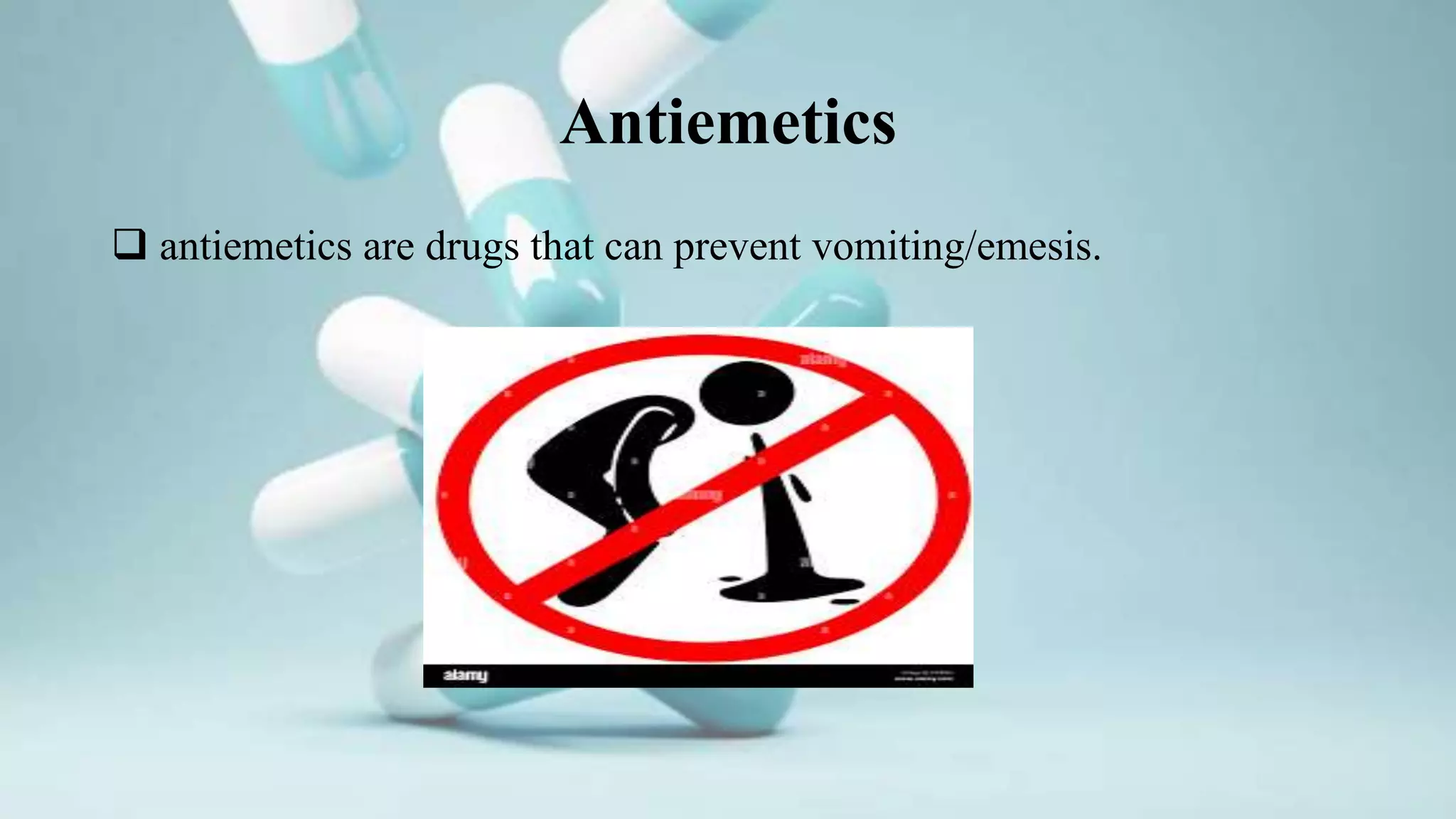
 antiemetics are drugs that can prevent vomiting/emesis.
CLASSIFICATION
1. prokinetics
A. metochlorpramide
B. domperidone
2. antimuscarinic
A. hyoscine
B. meclozine
3. antihistamine
A. cyclizine
B. promethazine(Phenergan)
4. Neuroleptics
A. Cyclizine
B. Promethazine(Phenergan)
5. 5-HT3 antagonists
A. Ondansetron
B. granicetron
prokinetics
 these drugs which promote gastrointestinal motility and quicken
gastric emptying
drug available:
metochlorpramide
 domperidone
mechanism of action of prokinetic drug
 D2 antagonist
 5-HT4 agonism
5HT3 antagonism
metoclopramide
 introduced in early 1970s as a “gastric hurrying agent”
 widely used antiemetic
 it has both central and peripheral effect:
 central-block the dopaminergic receptor
 peripheral- increased gastric emptying at a dose of-5-
10mg
Interaction:
 hastens absorption of many drugs:
Aspirin
 diazepam etc. facilitate the gastric emptying
 reduced absorption of digoxin
adverse effect:
sedations, dizziness, diarrhea, muscle dystonia
 long term use can cause parkinsonism, galactorrhea and
gynecomastia
domperidone
 D2 antagonist
 chemically related to haloperidol but pharmacologically related to
metoclopramide
 has lower ceiling antiemetic and prokinetic action
 poorly crosses BBB
 rare extra pyramidal side effect
 given with lavodo or bromocriptine to counteract their dose limiting
emetic action
 absorbed orally, but bioavailability is only 15% due to first pass
metabolism
 completely metabolized and excreted in urine
 t1/2 I 7.5hr
 side effect are less than with metoclopramide:
dry mouth
 loose stool
 headache
 rashes
 galactorrhea
 cardiac arrhythmias on rapid I.V injection
ANTIMUSCARINIC
 competitively inhibit action of acetylcholine at muscarinic receptor
hyoscine:
 most effective in controlling motion sickness
 0.2-0.4 mg oral, I.M
 brief duration of action
 transdermal patch 1.5mg applied behind thee pinna to be delivered
over 3 days-suppresses motion sickness while producing only mild
side effect
Neuroleptics
 they act by suppressing the CTZ so they antagonize vomiting
produced by drug which stimulate CTZ.
 act by block d1 receptors in the CTZ
 antiemetic dose is much lower than antipsychotic doses
 these agents should not be administered until the cause of vomiting
has been diagnosed
 broad spectrum antiemetic, effective in:
 drug induced and post anesthetic nausea and vomiting
 disease induced vomiting
 chemotherapy induced
 morning sickness: should not be used except in
hyperemesis gravidarum
5-HT3 Antagonists
 (5-HT3) receptor antagonists block the vomiting reflex by inhibiting
5-HT3 receptors in the vomiting center, the chemoreceptor trigger
zone and in the small intestine.
 high first pass metabolism
Excreted by the liver and kidney
 given once or twice daily-orally or intravenously.
 even though 5 HT3 receptors are present in vomiting center and CTZ,
the antiemetic action is restricted to emesis caused by vagal
stimulation.
Granicetron
 it is 10 to 15 times more potent than ondansetron
 more effective in chemotherapy
 dose- iv 1mg
Ondansetron(emeset):
 block 5 HT3 receptors in GIT and CTZ
 specially used in the chemotherapy,
 dose- 4mg in each ampule, 4,8 mg tablet
Antihistamine
 they act by sedating the vomiting center
 they are safer for long term use
 effective in motion sickness and vomiting due to labyrinthine
disorder
 all antimotion drugs are more effective when taken ½-1 hr. before
commencing journey
 once sickness has started, it is more difficult to control

emetic and antiemetic drugs.pptx

  • 1.
    PHARMACOLOGY Presentation on: Drug affectinggastrointestinal tract: Emetics and antiemetics Group 6 [pharmacy department] By tujar kaso(b pharm)
  • 2.
    Emetics  emetics aredrugs that produce or induce emesis/vomiting. MECHANISM OF EMESIS/VOMITING  emesis is the forceful expulsion of the contents of the stomach via the mouth or sometimes through the nose.  the vomiting reflex is stimulated by two centers in the medulla vomiting center  chemoreceptor trigger zone(CTZ)
  • 3.
    Haw CTZ isstimulated?  tactile stimulation of the back of the throat, a reflex to get rid of something that is too big or too irritating to be swallowed.  excessive stomach distention. Increase intercranial pressure by direct stimulation Stimulation of the vestibular receptor in the inner ear  intense pain fiber stimulation  direct stimulation by varies chemicals, including fumes, certain drugs, and debris from cellular death
  • 4.
    Classification of emetics 1.STIMULANTS OF CTZ A. apomorphine B. morphine 2. IRRITANTS OF GASTRIC MUCOSA A. Mustard B. sodium chloride 3. BOTH CTZ STIMULANT AND IRRITANT EFFECT A. ipecacuanha B. digitalis
  • 5.
    APOMORPHINE  given throughsubcutaneously or through intramuscular -6mg  causes vomiting within 15 min  in hypertensive individual, however ,even a subtherapeutic dose may elicit sever emesis and collapse  vomiting is often accompanied by sedation  it should not be used if respiration is depressed  larger doses often produce restlessness, tremor, occasionally convulsion  sometimes may cause hypotension, syncope and coma
  • 6.
    MUSTARD  it ishousehold remedy to induce vomiting  volatile oil  dose-1teaspoonful with water  formed as a result of a reaction between a glycoside and an enzyme in the presence of water SODIUM CHLORIDE:  given orally Withdraw fluids from the cells lining the stomach thus causes irritation which reflex emesis.
  • 7.
    Ipecacuanha(Emetine)  act byirritating gastric mucosa as well as through CTZ  dried root of cephalis ipecacuanha contains emetine  commonly available as syrup to induce emesis at a dose of:  adults-15-20ml  children- 10-15ml  infant-5ml  takes 15 min or more for the effect.
  • 8.
    Emetics-contraindication  ALL EMETICSCONTRAINDICATED IN:  corrosive(alkali, acid) poisoning  CNS stimulant drug poisoning  kerosine(petroleum) poisoning  unconscious patient
  • 9.
    Antiemetics  antiemetics aredrugs that can prevent vomiting/emesis.
  • 10.
    CLASSIFICATION 1. prokinetics A. metochlorpramide B.domperidone 2. antimuscarinic A. hyoscine B. meclozine 3. antihistamine A. cyclizine B. promethazine(Phenergan)
  • 11.
    4. Neuroleptics A. Cyclizine B.Promethazine(Phenergan) 5. 5-HT3 antagonists A. Ondansetron B. granicetron
  • 12.
    prokinetics  these drugswhich promote gastrointestinal motility and quicken gastric emptying drug available: metochlorpramide  domperidone mechanism of action of prokinetic drug  D2 antagonist  5-HT4 agonism 5HT3 antagonism
  • 13.
    metoclopramide  introduced inearly 1970s as a “gastric hurrying agent”  widely used antiemetic  it has both central and peripheral effect:  central-block the dopaminergic receptor  peripheral- increased gastric emptying at a dose of-5- 10mg
  • 14.
    Interaction:  hastens absorptionof many drugs: Aspirin  diazepam etc. facilitate the gastric emptying  reduced absorption of digoxin adverse effect: sedations, dizziness, diarrhea, muscle dystonia  long term use can cause parkinsonism, galactorrhea and gynecomastia
  • 15.
    domperidone  D2 antagonist chemically related to haloperidol but pharmacologically related to metoclopramide  has lower ceiling antiemetic and prokinetic action  poorly crosses BBB  rare extra pyramidal side effect  given with lavodo or bromocriptine to counteract their dose limiting emetic action  absorbed orally, but bioavailability is only 15% due to first pass metabolism
  • 16.
     completely metabolizedand excreted in urine  t1/2 I 7.5hr  side effect are less than with metoclopramide: dry mouth  loose stool  headache  rashes  galactorrhea  cardiac arrhythmias on rapid I.V injection
  • 17.
    ANTIMUSCARINIC  competitively inhibitaction of acetylcholine at muscarinic receptor hyoscine:  most effective in controlling motion sickness  0.2-0.4 mg oral, I.M  brief duration of action  transdermal patch 1.5mg applied behind thee pinna to be delivered over 3 days-suppresses motion sickness while producing only mild side effect
  • 18.
    Neuroleptics  they actby suppressing the CTZ so they antagonize vomiting produced by drug which stimulate CTZ.  act by block d1 receptors in the CTZ  antiemetic dose is much lower than antipsychotic doses  these agents should not be administered until the cause of vomiting has been diagnosed
  • 19.
     broad spectrumantiemetic, effective in:  drug induced and post anesthetic nausea and vomiting  disease induced vomiting  chemotherapy induced  morning sickness: should not be used except in hyperemesis gravidarum
  • 20.
    5-HT3 Antagonists  (5-HT3)receptor antagonists block the vomiting reflex by inhibiting 5-HT3 receptors in the vomiting center, the chemoreceptor trigger zone and in the small intestine.  high first pass metabolism Excreted by the liver and kidney  given once or twice daily-orally or intravenously.  even though 5 HT3 receptors are present in vomiting center and CTZ, the antiemetic action is restricted to emesis caused by vagal stimulation.
  • 21.
    Granicetron  it is10 to 15 times more potent than ondansetron  more effective in chemotherapy  dose- iv 1mg Ondansetron(emeset):  block 5 HT3 receptors in GIT and CTZ  specially used in the chemotherapy,  dose- 4mg in each ampule, 4,8 mg tablet
  • 22.
    Antihistamine  they actby sedating the vomiting center  they are safer for long term use  effective in motion sickness and vomiting due to labyrinthine disorder  all antimotion drugs are more effective when taken ½-1 hr. before commencing journey  once sickness has started, it is more difficult to control