1
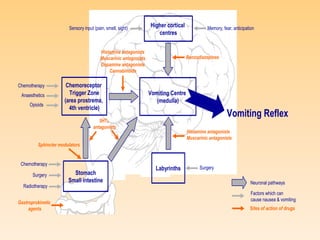
Vomiting Centre
(medulla)
Stomach
Small intestine
Higher cortical
centres
Chemoreceptor
Trigger Zone
(area prostrema,
4th ventricle)
Memory, fear, anticipationSensory input (pain, smell, sight)
Surgery
Surgery
Labyrinths
Anaesthetics
Vomiting Reflex
Neuronal pathways
Factors which can
cause nausea & vomiting
Chemotherapy
Chemotherapy
Radiotherapy
Opioids
Sites of action of drugs
5HT3
antagonists
Sphincter modulators
Histamine antagonists
Muscarinic antagonists
Gastroprokinetic
agents
Benzodiazepines
Histamine antagonists
Muscarinic antagonists
Dopamine antagonists
Cannabinoids
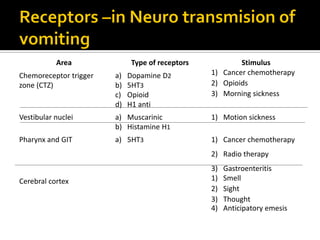
Area Type of receptors Stimulus
Chemoreceptor trigger
zone (CTZ)
a) Dopamine D2
b) 5HT3
c) Opioid
d) H1 anti
1) Cancer chemotherapy
2) Opioids
3) Morning sickness
Vestibular nuclei a) Muscarinic
b) Histamine H1
1) Motion sickness
Pharynx and GIT a) 5HT3 1) Cancer chemotherapy
2) Radio therapy
3) Gastroenteritis
Cerebral cortex 1) Smell
2) Sight
3) Thought
4) Anticipatory emesis
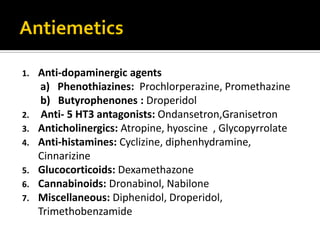
1. Anti-dopaminergic agents
a) Phenothiazines: Prochlorperazine, Promethazine
b) Butyrophenones : Droperidol
2. Anti- 5 HT3 antagonists: Ondansetron,Granisetron
3. Anticholinergics: Atropine, hyoscine , Glycopyrrolate
4. Anti-histamines: Cyclizine, diphenhydramine,
Cinnarizine
5. Glucocorticoids: Dexamethazone
6. Cannabinoids: Dronabinol, Nabilone
7. Miscellaneous: Diphenidol, Droperidol,
Trimethobenzamide
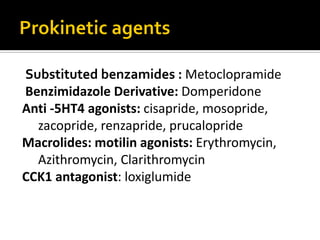
Substituted benzamides : Metoclopramide
Benzimidazole Derivative: Domperidone
Anti -5HT4 agonists: cisapride, mosopride,
zacopride, renzapride, prucalopride
Macrolides: motilin agonists: Erythromycin,
Azithromycin, Clarithromycin
CCK1 antagonist: loxiglumide
 Phenothiazines are primarily antipsychotic
Mechanism of the antiemetic action: inhibition
of central dopamine, muscarinic and H1
histamine receptors receptors
Use:
 Chemotherapy-induced vomiting
 Radiotherapy-induced vomiting
 postoperative nausea and vomiting
 are primarily antipsychotic agents
 Mechanism of the antiemetic action: inhibition
of central dopamine receptors
 Use:
 Chemotherapy-induced vomiting
 Radiotherapy-induced vomiting
 postoperative nausea and vomiting
 Adverse effects: droperidol may prolong the QT
inter, therefore, it should not be used in patients
with QT prolongation (should only be used in
patients who have not responded adequately to
alternative agents).
1. Ondansetron, Granisetron, Dolasetron,
Palonosetron
2. Mechanism of action: Peripheral 5-HT3 receptor
blockade on intestinal vagal afferents.
 Central 5-HT3 receptor blockade in the vomiting
center and chemoreceptor trigger zone
 High first pass metabolism
 Excreted by liver & kidney
1) Chemotherapy induced nausea and vomiting
2) Post radiation nausea & vomiting
3) Vomiting of pregnancy
4) Postoperative vomiting
Adverse drug reactions
 Headache and dizziness
 Constipation or diarrhoea
Dexamethazone
Corticosteroids have antiemetic properties
Mechanism of action: possibly by suppressing
peritumoral inflammation and prostaglandin
production.
Use: to enhance efficacy of 5HT3 receptor antagonists
in the treatment of chemotherapy-induced vomiting.
Use: prevention or treatment of motion sickness.
Adverse effects: sedation, dizziness,confusion, dry mouth,
cycloplegia, and urinary retention.
.
Diphenhydramine dimenhydrinate First generation H1 receptor blockers
that have anticholinergic and
sedating properties
Meclizine First generation H1 receptor blockers
that have lesser anticholinergic and
sedating properties
Hyoscine Muscarinic receptor blocker
 Pharmacokinetics: Readily absorbed after oral
administration
It undergoes extensive first-pass metabolism with
limited systemic bioavailability after single doses.
Metabolites are excreted primarily via the biliary-fecal
route
 Adverse effects: Euphoria or dysphoria, sedation
1. withdrawal syndrome (restless, insomnia and irritability)
2. Autonomic effects (sympathetic) in the form of
tachycardia, palpitation, orthostatic hypotension.
 Use: For the prevention of chemotherapy-induced
nausea and vomiting
 Substituted benzamides Metoclopramide
 5HT3 and 5HT4 receptor antagonist
 Mechanism of antiemetic action: Central dopamine-
receptor blockade
 Prokinetic effects- activation of 5HT4 receptors
 Side effects: (mainly extrapyramidal):
 Restlessness,Dystonias
 Parkinsonian symptoms
 Galactorrhoea and gynacomastia
 Structurally similar to haloperidol
 MOA similar to metaclopramide
 Used to prevent emetic side effect of
levodopa or bromocriptine
 Ipecac is an OTC drug
 Administration
 Take with a glass of water or fluid, not with milk or
carbonated beverage
 Vomiting occurs in 20 to 30 minutes and if not,
repeat dose
 Gastric lavage may be needed if vomiting does not
occur
 Caution: avoid vomiting if substance is caustic or
petroleum
 Apomorphine is a morphine derive emetic, SQ/IM,
Onset 15 min
 Cisapride, Mosopride, Zacopride, Renzapride,
Prucalopride
 -no antiemetic effect
 Promote release of Ach from myentric plexus
 Cisapride- facilitates gastric motility,
throughout the GIT
 Hastens gastric emptying, improves LES tone
 And oesophageal peristalsis.
 Abdominal cramps, diarrhoea
 QT prolongation
 Cytochrome P450 inhibition

 Motilin receptors
 Increase LES tone
 CCK1 receptor antagonist
 Loxiglumide –increase GI motility
 THANK YOU

Antiemetic drugs

  • 1.
  • 2.
    Vomiting Centre (medulla) Stomach Small intestine Highercortical centres Chemoreceptor Trigger Zone (area prostrema, 4th ventricle) Memory, fear, anticipationSensory input (pain, smell, sight) Surgery Surgery Labyrinths Anaesthetics Vomiting Reflex Neuronal pathways Factors which can cause nausea & vomiting Chemotherapy Chemotherapy Radiotherapy Opioids Sites of action of drugs 5HT3 antagonists Sphincter modulators Histamine antagonists Muscarinic antagonists Gastroprokinetic agents Benzodiazepines Histamine antagonists Muscarinic antagonists Dopamine antagonists Cannabinoids
  • 3.
    Area Type ofreceptors Stimulus Chemoreceptor trigger zone (CTZ) a) Dopamine D2 b) 5HT3 c) Opioid d) H1 anti 1) Cancer chemotherapy 2) Opioids 3) Morning sickness Vestibular nuclei a) Muscarinic b) Histamine H1 1) Motion sickness Pharynx and GIT a) 5HT3 1) Cancer chemotherapy 2) Radio therapy 3) Gastroenteritis Cerebral cortex 1) Smell 2) Sight 3) Thought 4) Anticipatory emesis
  • 4.
    1. Anti-dopaminergic agents a)Phenothiazines: Prochlorperazine, Promethazine b) Butyrophenones : Droperidol 2. Anti- 5 HT3 antagonists: Ondansetron,Granisetron 3. Anticholinergics: Atropine, hyoscine , Glycopyrrolate 4. Anti-histamines: Cyclizine, diphenhydramine, Cinnarizine 5. Glucocorticoids: Dexamethazone 6. Cannabinoids: Dronabinol, Nabilone 7. Miscellaneous: Diphenidol, Droperidol, Trimethobenzamide
  • 5.
    Substituted benzamides :Metoclopramide Benzimidazole Derivative: Domperidone Anti -5HT4 agonists: cisapride, mosopride, zacopride, renzapride, prucalopride Macrolides: motilin agonists: Erythromycin, Azithromycin, Clarithromycin CCK1 antagonist: loxiglumide
  • 6.
     Phenothiazines areprimarily antipsychotic Mechanism of the antiemetic action: inhibition of central dopamine, muscarinic and H1 histamine receptors receptors Use:  Chemotherapy-induced vomiting  Radiotherapy-induced vomiting  postoperative nausea and vomiting
  • 7.
     are primarilyantipsychotic agents  Mechanism of the antiemetic action: inhibition of central dopamine receptors  Use:  Chemotherapy-induced vomiting  Radiotherapy-induced vomiting  postoperative nausea and vomiting  Adverse effects: droperidol may prolong the QT inter, therefore, it should not be used in patients with QT prolongation (should only be used in patients who have not responded adequately to alternative agents).
  • 8.
    1. Ondansetron, Granisetron,Dolasetron, Palonosetron 2. Mechanism of action: Peripheral 5-HT3 receptor blockade on intestinal vagal afferents.  Central 5-HT3 receptor blockade in the vomiting center and chemoreceptor trigger zone  High first pass metabolism  Excreted by liver & kidney
  • 9.
    1) Chemotherapy inducednausea and vomiting 2) Post radiation nausea & vomiting 3) Vomiting of pregnancy 4) Postoperative vomiting Adverse drug reactions  Headache and dizziness  Constipation or diarrhoea
  • 10.
    Dexamethazone Corticosteroids have antiemeticproperties Mechanism of action: possibly by suppressing peritumoral inflammation and prostaglandin production. Use: to enhance efficacy of 5HT3 receptor antagonists in the treatment of chemotherapy-induced vomiting.
  • 11.
    Use: prevention ortreatment of motion sickness. Adverse effects: sedation, dizziness,confusion, dry mouth, cycloplegia, and urinary retention. . Diphenhydramine dimenhydrinate First generation H1 receptor blockers that have anticholinergic and sedating properties Meclizine First generation H1 receptor blockers that have lesser anticholinergic and sedating properties Hyoscine Muscarinic receptor blocker
  • 12.
     Pharmacokinetics: Readilyabsorbed after oral administration It undergoes extensive first-pass metabolism with limited systemic bioavailability after single doses. Metabolites are excreted primarily via the biliary-fecal route  Adverse effects: Euphoria or dysphoria, sedation 1. withdrawal syndrome (restless, insomnia and irritability) 2. Autonomic effects (sympathetic) in the form of tachycardia, palpitation, orthostatic hypotension.  Use: For the prevention of chemotherapy-induced nausea and vomiting
  • 13.
     Substituted benzamidesMetoclopramide  5HT3 and 5HT4 receptor antagonist  Mechanism of antiemetic action: Central dopamine- receptor blockade  Prokinetic effects- activation of 5HT4 receptors  Side effects: (mainly extrapyramidal):  Restlessness,Dystonias  Parkinsonian symptoms  Galactorrhoea and gynacomastia
  • 14.
     Structurally similarto haloperidol  MOA similar to metaclopramide  Used to prevent emetic side effect of levodopa or bromocriptine
  • 15.
     Ipecac isan OTC drug  Administration  Take with a glass of water or fluid, not with milk or carbonated beverage  Vomiting occurs in 20 to 30 minutes and if not, repeat dose  Gastric lavage may be needed if vomiting does not occur  Caution: avoid vomiting if substance is caustic or petroleum  Apomorphine is a morphine derive emetic, SQ/IM, Onset 15 min
  • 16.
     Cisapride, Mosopride,Zacopride, Renzapride, Prucalopride  -no antiemetic effect  Promote release of Ach from myentric plexus  Cisapride- facilitates gastric motility, throughout the GIT  Hastens gastric emptying, improves LES tone  And oesophageal peristalsis.
  • 17.
     Abdominal cramps,diarrhoea  QT prolongation  Cytochrome P450 inhibition 
  • 18.
     Motilin receptors Increase LES tone  CCK1 receptor antagonist  Loxiglumide –increase GI motility  THANK YOU