
ANTI EMETICS
PRESENTED BY
ABHILASHA VERMA
LECTURER
JHALAWAR NURSING COLLEGE
DEFINITION
“Drugs which prevent or control/suppress
vomiting are known as anti-emetic drugs”
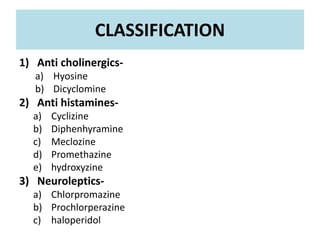
CLASSIFICATION
1) Anti cholinergics-
a) Hyosine
b) Dicyclomine
2) Anti histamines-
a) Cyclizine
b) Diphenhyramine
c) Meclozine
d) Promethazine
e) hydroxyzine
3) Neuroleptics-
a) Chlorpromazine
b) Prochlorperazine
c) haloperidol
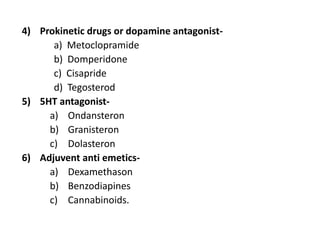
4) Prokinetic drugs or dopamine antagonist-
a) Metoclopramide
b) Domperidone
c) Cisapride
d) Tegosterod
5) 5HT antagonist-
a) Ondansteron
b) Granisteron
c) Dolasteron
6) Adjuvent anti emetics-
a) Dexamethason
b) Benzodiapines
c) Cannabinoids.
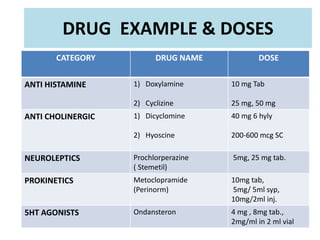
DRUG EXAMPLE & DOSES
CATEGORY DRUG NAME DOSE
ANTI HISTAMINE 1) Doxylamine
2) Cyclizine
10 mg Tab
25 mg, 50 mg
ANTI CHOLINERGIC 1) Dicyclomine
2) Hyoscine
40 mg 6 hyly
200-600 mcg SC
NEUROLEPTICS Prochlorperazine
( Stemetil)
5mg, 25 mg tab.
PROKINETICS Metoclopramide
(Perinorm)
10mg tab,
5mg/ 5ml syp,
10mg/2ml inj.
5HT AGONISTS Ondansteron 4 mg , 8mg tab.,
2mg/ml in 2 ml vial
MECHANISM OF ACTION
 Anti-cholinergics- They blocks the conduction of nerve
impulses from vestibular part of ear to vomiting center.
 Anti-histamines- They blocks the histamine neurotransmitter
and they act by effect on vomiting center and by producing
sedation.
 Prokinetics ( Dopamine agonist)- They blocks dopamine
neurotransmitter, they promote GIT motility and quicken
gastric emptying .
 5HT anatagonist- They blocks serotonin receptor in CNS and
GIT. Also treat post operative and cytotoxic chemotherapy
induced nausea, vomiting.
 Adjuvent anti-emetics- Increase the anti-emetic effect of
primary anti emetic drugs like ondansterone ,
metoclopramide
INDICATION / USES
• 5 HT antagonists are used in management of nausea,
vomiting associated with cancer chemotherapy.
• Anti histamines used mainly for motion sickness and
morning sickness as well as post operative vomiting.
• Metoclopramide is used for NG tube feeding patient and
GERD ( Gastric esophageal reflux disease)
• Anticholinergics are used in travel sickness ( motion
sickness)
• Neuroleptics used in drug induced and post anaesthetic
nausea and vomiting.
• Neuroleptics used only in case of hyperemesis
gravidarum.
• Disease induced vomiting like gastritis, meningitis,PUD.
CONTRAINDICATION
• Hypersensitivity to drugs
• Renal impairment ( Reduce dose)
• Metoclopramide contraindicated in suspected
GIT problems.
DRUG INTERACTION
• Anti histamine with other CNS depressant drugs
including opioids and sedatives, hypnotic drugs may
cause additive CNS depressants.
• Metoclopramide increase absorption rate of drugs
like asprine, diazepam.
• Metoclopramide reduce digoxin absorption.
ADVERSE EFFECTS
• Hypotension
• Constipation
• Dryness of mouth
• Blurred vision
• Acute muscle dystonia ( due to Prochlorperazine)
• Rectal irritation.
• Vertigo ( due to doxylamine)
• Loose stools, gynaecomastism, galactorrhoea. ( due to
Metoclopramide)
• Abdominal upset
• Cardiac arrythemia due to rapid IV injection.
• Sedation.etc.
NURSING RESPONSIBILITY
• Assess the patient for nausea, vomiting and fluid- electrolyte
imbalance.
• Advise the patient to take oral anti emetic 1 hour before
exposure to condition causing vomiting like- travel.
• Decrease metoclopramide dose up to 50% of usual
recommanded dose if creatinine clearance is less than 40 ml/
min.
• Instruct the patient to not to consume alcohol while taking
anti emetic drugs.

Anti emetics

  • 1.
    ANTI EMETICS PRESENTED BY ABHILASHAVERMA LECTURER JHALAWAR NURSING COLLEGE
  • 2.
    DEFINITION “Drugs which preventor control/suppress vomiting are known as anti-emetic drugs”
  • 3.
    CLASSIFICATION 1) Anti cholinergics- a)Hyosine b) Dicyclomine 2) Anti histamines- a) Cyclizine b) Diphenhyramine c) Meclozine d) Promethazine e) hydroxyzine 3) Neuroleptics- a) Chlorpromazine b) Prochlorperazine c) haloperidol
  • 4.
    4) Prokinetic drugsor dopamine antagonist- a) Metoclopramide b) Domperidone c) Cisapride d) Tegosterod 5) 5HT antagonist- a) Ondansteron b) Granisteron c) Dolasteron 6) Adjuvent anti emetics- a) Dexamethason b) Benzodiapines c) Cannabinoids.
  • 5.
    DRUG EXAMPLE &DOSES CATEGORY DRUG NAME DOSE ANTI HISTAMINE 1) Doxylamine 2) Cyclizine 10 mg Tab 25 mg, 50 mg ANTI CHOLINERGIC 1) Dicyclomine 2) Hyoscine 40 mg 6 hyly 200-600 mcg SC NEUROLEPTICS Prochlorperazine ( Stemetil) 5mg, 25 mg tab. PROKINETICS Metoclopramide (Perinorm) 10mg tab, 5mg/ 5ml syp, 10mg/2ml inj. 5HT AGONISTS Ondansteron 4 mg , 8mg tab., 2mg/ml in 2 ml vial
  • 6.
    MECHANISM OF ACTION Anti-cholinergics- They blocks the conduction of nerve impulses from vestibular part of ear to vomiting center.  Anti-histamines- They blocks the histamine neurotransmitter and they act by effect on vomiting center and by producing sedation.  Prokinetics ( Dopamine agonist)- They blocks dopamine neurotransmitter, they promote GIT motility and quicken gastric emptying .  5HT anatagonist- They blocks serotonin receptor in CNS and GIT. Also treat post operative and cytotoxic chemotherapy induced nausea, vomiting.  Adjuvent anti-emetics- Increase the anti-emetic effect of primary anti emetic drugs like ondansterone , metoclopramide
  • 7.
    INDICATION / USES •5 HT antagonists are used in management of nausea, vomiting associated with cancer chemotherapy. • Anti histamines used mainly for motion sickness and morning sickness as well as post operative vomiting. • Metoclopramide is used for NG tube feeding patient and GERD ( Gastric esophageal reflux disease) • Anticholinergics are used in travel sickness ( motion sickness) • Neuroleptics used in drug induced and post anaesthetic nausea and vomiting. • Neuroleptics used only in case of hyperemesis gravidarum. • Disease induced vomiting like gastritis, meningitis,PUD.
  • 8.
    CONTRAINDICATION • Hypersensitivity todrugs • Renal impairment ( Reduce dose) • Metoclopramide contraindicated in suspected GIT problems.
  • 9.
    DRUG INTERACTION • Antihistamine with other CNS depressant drugs including opioids and sedatives, hypnotic drugs may cause additive CNS depressants. • Metoclopramide increase absorption rate of drugs like asprine, diazepam. • Metoclopramide reduce digoxin absorption.
  • 10.
    ADVERSE EFFECTS • Hypotension •Constipation • Dryness of mouth • Blurred vision • Acute muscle dystonia ( due to Prochlorperazine) • Rectal irritation. • Vertigo ( due to doxylamine) • Loose stools, gynaecomastism, galactorrhoea. ( due to Metoclopramide) • Abdominal upset • Cardiac arrythemia due to rapid IV injection. • Sedation.etc.
  • 11.
    NURSING RESPONSIBILITY • Assessthe patient for nausea, vomiting and fluid- electrolyte imbalance. • Advise the patient to take oral anti emetic 1 hour before exposure to condition causing vomiting like- travel. • Decrease metoclopramide dose up to 50% of usual recommanded dose if creatinine clearance is less than 40 ml/ min. • Instruct the patient to not to consume alcohol while taking anti emetic drugs.