Chapter 22.3
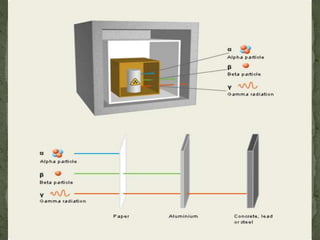
1. Compare the penetrating ability and shielding
requirements of alpha particles, beta particles, and
gamma rays.
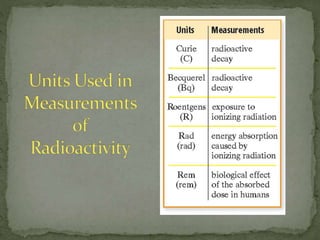
2. Define the terms roentgen and rem, and
distinguish between them.
3. Describe three devices used in radiation detection.
4. Discuss applications of radioactive nuclides.
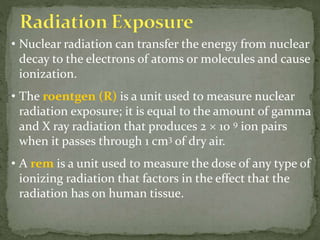
• Nuclear radiation can transfer the energy from nuclear
decay to the electrons of atoms or molecules and cause
ionization.
• The roentgen (R) is a unit used to measure nuclear
radiation exposure; it is equal to the amount of gamma
and X ray radiation that produces 2  10 9 ion pairs
when it passes through 1 cm3 of dry air.
• A rem is a unit used to measure the dose of any type of
ionizing radiation that factors in the effect that the
radiation has on human tissue.
• Film badges use exposure of film to measure the
approximate radiation exposure of people working
with radiation.
• are instruments that detect radiation by counting
electric pulses carried by gas ionized by radiation.
• Scintillation counters are instruments that convert
scintillating light to an electric signal for detecting
radiation.
• Substances that scintillate absorb ionizing
radiation and emit visible light.
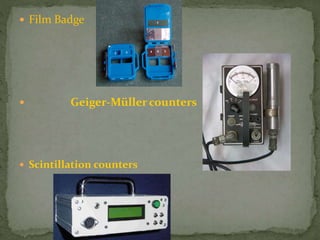
 Film Badge
 Geiger-Müller counters
 Scintillation counters
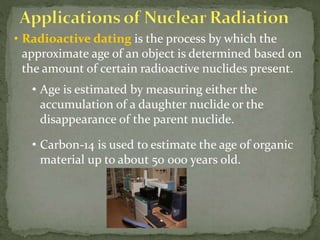
• Radioactive dating is the process by which the
approximate age of an object is determined based on
the amount of certain radioactive nuclides present.
• Age is estimated by measuring either the
accumulation of a daughter nuclide or the
disappearance of the parent nuclide.
• Carbon-14 is used to estimate the age of organic
material up to about 50 000 years old.
•Radioactive Nuclides in Medicine
•In medicine, radioactive nuclides are used to destroy
certain types of cancer cells.
• cobalt-60
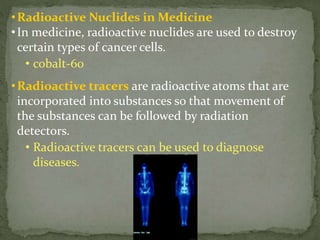
•Radioactive tracers are radioactive atoms that are
incorporated into substances so that movement of
the substances can be followed by radiation
detectors.
• Radioactive tracers can be used to diagnose
diseases.
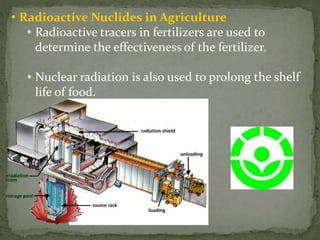
• Radioactive Nuclides in Agriculture
• Radioactive tracers in fertilizers are used to
determine the effectiveness of the fertilizer.
• Nuclear radiation is also used to prolong the shelf
life of food.
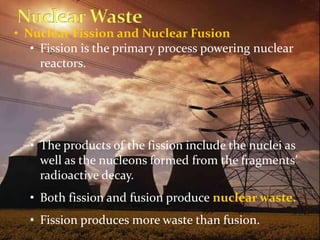
• Nuclear Fission and Nuclear Fusion
• Fission is the primary process powering nuclear
reactors.
• The products of the fission include the nuclei as
well as the nucleons formed from the fragments’
radioactive decay.
• Both fission and fusion produce nuclear waste.
• Fission produces more waste than fusion.
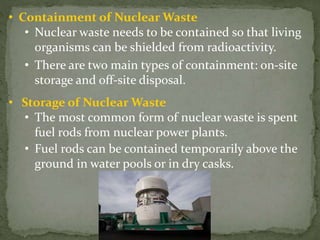
• Containment of Nuclear Waste
• Nuclear waste needs to be contained so that living
organisms can be shielded from radioactivity.
• There are two main types of containment: on-site
storage and off-site disposal.
• Storage of Nuclear Waste
• The most common form of nuclear waste is spent
fuel rods from nuclear power plants.
• Fuel rods can be contained temporarily above the
ground in water pools or in dry casks.
• Disposal of Nuclear Waste
• Disposal of nuclear waste is done with the
intention of never retrieving the materials.
• There are 77 disposal sites around the United
States.
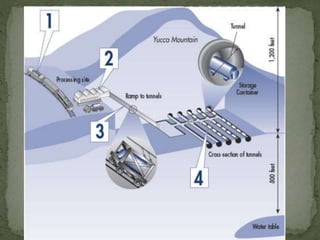
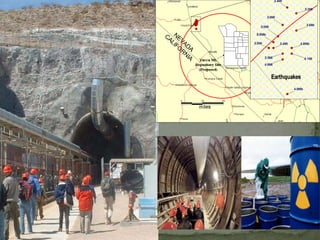
• A new site called Yucca Mountain is being
developed for the permanent disposal of much of
the nuclear waste.
Chapter 22.3 : Nuclear Radiation

Chapter 22.3 : Nuclear Radiation

  • 1.
  • 2.
    1. Compare thepenetrating ability and shielding requirements of alpha particles, beta particles, and gamma rays. 2. Define the terms roentgen and rem, and distinguish between them. 3. Describe three devices used in radiation detection. 4. Discuss applications of radioactive nuclides.
  • 3.
    • Nuclear radiationcan transfer the energy from nuclear decay to the electrons of atoms or molecules and cause ionization. • The roentgen (R) is a unit used to measure nuclear radiation exposure; it is equal to the amount of gamma and X ray radiation that produces 2  10 9 ion pairs when it passes through 1 cm3 of dry air. • A rem is a unit used to measure the dose of any type of ionizing radiation that factors in the effect that the radiation has on human tissue.
  • 6.
    • Film badgesuse exposure of film to measure the approximate radiation exposure of people working with radiation. • are instruments that detect radiation by counting electric pulses carried by gas ionized by radiation. • Scintillation counters are instruments that convert scintillating light to an electric signal for detecting radiation. • Substances that scintillate absorb ionizing radiation and emit visible light.
  • 7.
     Film Badge Geiger-Müller counters  Scintillation counters
  • 9.
    • Radioactive datingis the process by which the approximate age of an object is determined based on the amount of certain radioactive nuclides present. • Age is estimated by measuring either the accumulation of a daughter nuclide or the disappearance of the parent nuclide. • Carbon-14 is used to estimate the age of organic material up to about 50 000 years old.
  • 10.
    •Radioactive Nuclides inMedicine •In medicine, radioactive nuclides are used to destroy certain types of cancer cells. • cobalt-60 •Radioactive tracers are radioactive atoms that are incorporated into substances so that movement of the substances can be followed by radiation detectors. • Radioactive tracers can be used to diagnose diseases.
  • 11.
    • Radioactive Nuclidesin Agriculture • Radioactive tracers in fertilizers are used to determine the effectiveness of the fertilizer. • Nuclear radiation is also used to prolong the shelf life of food.
  • 12.
    • Nuclear Fissionand Nuclear Fusion • Fission is the primary process powering nuclear reactors. • The products of the fission include the nuclei as well as the nucleons formed from the fragments’ radioactive decay. • Both fission and fusion produce nuclear waste. • Fission produces more waste than fusion.
  • 13.
    • Containment ofNuclear Waste • Nuclear waste needs to be contained so that living organisms can be shielded from radioactivity. • There are two main types of containment: on-site storage and off-site disposal. • Storage of Nuclear Waste • The most common form of nuclear waste is spent fuel rods from nuclear power plants. • Fuel rods can be contained temporarily above the ground in water pools or in dry casks.
  • 14.
    • Disposal ofNuclear Waste • Disposal of nuclear waste is done with the intention of never retrieving the materials. • There are 77 disposal sites around the United States. • A new site called Yucca Mountain is being developed for the permanent disposal of much of the nuclear waste.