Life ScienceHuman Body Systems and Health
Body Organization and StructureCirculation and RespirationThe Digestive and Urinary SystemsCommunication and ControlBody Defenses and DiseasesStaying HealthyTable of Contents
Life Science 1.1Body Organization and Structure
Objectives:Describehow tissues, organs, and organ systems are related.List 11 major organ systems.Identify how organ systems work together to maintain homeostasis.Bellringer:Match the body system in the first column with the correct function in the second column:1. respiratory system 	a. regulates body functions2. muscular system 	b. breaks down food3. digestive system 		c. pumps blood4. circulatory system 	d. absorbs oxygen5. endocrine system 	e. moves bones
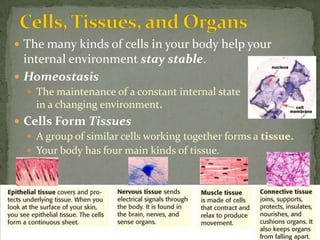
Cells, Tissues, and OrgansThe many kinds of cells in your body help your internal environment stay stable.Homeostasis The maintenance of a constant internal state                                 in a changing environment.Cells Form Tissues A group of similar cells working together forms a tissue.Your body has four main kinds of tissue.
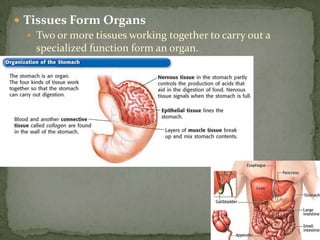
Tissues Form Organs  Two or more tissues working together to carry out a specialized function form an organ.
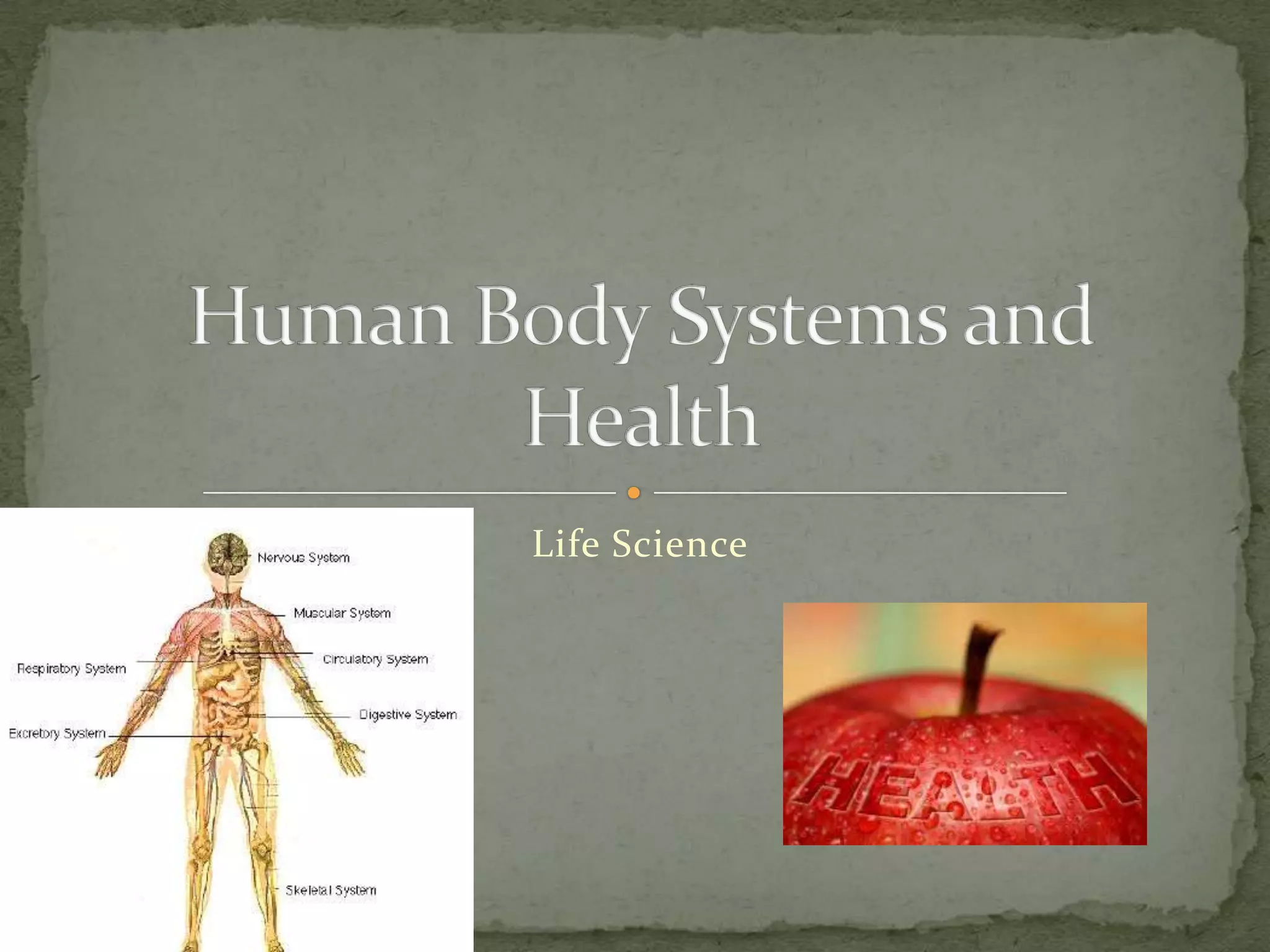
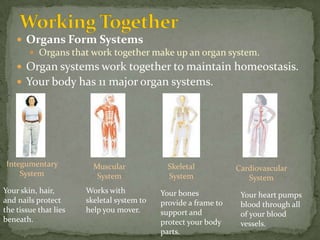
Working TogetherOrgans Form Systems Organs that work together make up an organ system.Organ systems work together to maintain homeostasis.Your body has 11 major organ systems.Integumentary SystemSkeletal SystemMuscular SystemCardiovascular SystemYour skin, hair, and nails protect the tissue that lies beneath.Works with skeletal system to help you mover.Your bones provide a frame to support and protect your body parts.Your heart pumps blood through all of your blood vessels.
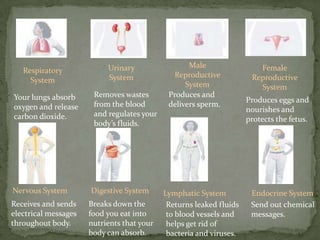
Male Reproductive SystemUrinary    SystemFemale Reproductive SystemRespiratory SystemRemoves wastes from the blood and regulates your body’s fluids.Produces and delivers sperm.Your lungs absorb oxygen and release carbon dioxide.Produces eggs and nourishes and protects the fetus.Nervous SystemDigestive SystemLymphatic SystemEndocrine SystemReceives and sends electrical messages throughout body.Breaks down the food you eat into nutrients that your body can absorb.Returns leaked fluids to blood vessels and helps get rid of bacteria and viruses.Send out chemical messages.

Life Science 1.1 : Body Organization

  • 1.
    Life ScienceHuman BodySystems and Health
  • 2.
    Body Organization andStructureCirculation and RespirationThe Digestive and Urinary SystemsCommunication and ControlBody Defenses and DiseasesStaying HealthyTable of Contents
  • 3.
    Life Science 1.1BodyOrganization and Structure
  • 4.
    Objectives:Describehow tissues, organs,and organ systems are related.List 11 major organ systems.Identify how organ systems work together to maintain homeostasis.Bellringer:Match the body system in the first column with the correct function in the second column:1. respiratory system a. regulates body functions2. muscular system b. breaks down food3. digestive system c. pumps blood4. circulatory system d. absorbs oxygen5. endocrine system e. moves bones
  • 5.
    Cells, Tissues, andOrgansThe many kinds of cells in your body help your internal environment stay stable.Homeostasis The maintenance of a constant internal state in a changing environment.Cells Form Tissues A group of similar cells working together forms a tissue.Your body has four main kinds of tissue.
  • 6.
    Tissues Form Organs Two or more tissues working together to carry out a specialized function form an organ.
  • 7.
    Working TogetherOrgans FormSystems Organs that work together make up an organ system.Organ systems work together to maintain homeostasis.Your body has 11 major organ systems.Integumentary SystemSkeletal SystemMuscular SystemCardiovascular SystemYour skin, hair, and nails protect the tissue that lies beneath.Works with skeletal system to help you mover.Your bones provide a frame to support and protect your body parts.Your heart pumps blood through all of your blood vessels.
  • 8.
    Male Reproductive SystemUrinary SystemFemale Reproductive SystemRespiratory SystemRemoves wastes from the blood and regulates your body’s fluids.Produces and delivers sperm.Your lungs absorb oxygen and release carbon dioxide.Produces eggs and nourishes and protects the fetus.Nervous SystemDigestive SystemLymphatic SystemEndocrine SystemReceives and sends electrical messages throughout body.Breaks down the food you eat into nutrients that your body can absorb.Returns leaked fluids to blood vessels and helps get rid of bacteria and viruses.Send out chemical messages.