
NUCLEAR RADIATION
DETECTOR
Presented By: Mukesh
,Muskan,Narayan,Mayank,Mitesh,Naveen
GOVT. ENGG. COLLEGE
AJMER
Introduction
The instrument which
used to detect the
nuclear particles or
radiation are called
Nuclear radiation
detectors.
These are based on
the principle of
excitation or ionization
of atoms of medium in
which the incident
charged particles pass
through.
Types of Radiations
1) Charged particles
 α- particles
 Protons
 Fast moving electrons
2) Uncharged particles
 neutrons
3) Electromagnetic radiations
 γ- particles
 X-rays
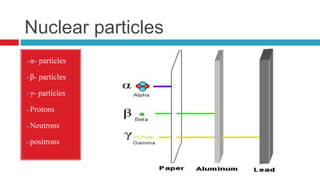
Nuclear particles
α- particles
β- particles
γ- particles
Protons
Neutrons
positrons
Procedure
 All methods of detection are based on the interaction of
the nuclear particles of radiations with the base material of
the detector.
 When a charge particles moves through material of a
detector it ionises or excites the atoms or molecules of the
substance of the detector.
 Charged particles and γ- rays are capable of producing ions
in the detectors directly but for neutrons which are
uncharged particles intermediate reactions have to be used
for detection.
Classification of Detectors
1. Gas filled detectors
2. Ionization chamber
3. Geiger-Muller counter
4. Semiconductor detector
5. Wilson cloud chamber
6. Bubble chamber
Characteristics
The working of various detectors is based upon one of the
following three main characteristics properties:
1) Ionisation : Particles and rays ionise the gas through which
they pass.
2) Fluorescence : Particles and rays cause fluorescence in
certain materials.
3) Particles and rays effect the photographic plate.
Nuclear radiation detector

Nuclear radiation detector

  • 1.
    NUCLEAR RADIATION DETECTOR Presented By:Mukesh ,Muskan,Narayan,Mayank,Mitesh,Naveen GOVT. ENGG. COLLEGE AJMER
  • 2.
    Introduction The instrument which usedto detect the nuclear particles or radiation are called Nuclear radiation detectors. These are based on the principle of excitation or ionization of atoms of medium in which the incident charged particles pass through.
  • 3.
    Types of Radiations 1)Charged particles  α- particles  Protons  Fast moving electrons 2) Uncharged particles  neutrons 3) Electromagnetic radiations  γ- particles  X-rays
  • 4.
    Nuclear particles α- particles β-particles γ- particles Protons Neutrons positrons
  • 5.
    Procedure  All methodsof detection are based on the interaction of the nuclear particles of radiations with the base material of the detector.  When a charge particles moves through material of a detector it ionises or excites the atoms or molecules of the substance of the detector.  Charged particles and γ- rays are capable of producing ions in the detectors directly but for neutrons which are uncharged particles intermediate reactions have to be used for detection.
  • 6.
    Classification of Detectors 1.Gas filled detectors 2. Ionization chamber 3. Geiger-Muller counter 4. Semiconductor detector 5. Wilson cloud chamber 6. Bubble chamber
  • 7.
    Characteristics The working ofvarious detectors is based upon one of the following three main characteristics properties: 1) Ionisation : Particles and rays ionise the gas through which they pass. 2) Fluorescence : Particles and rays cause fluorescence in certain materials. 3) Particles and rays effect the photographic plate.