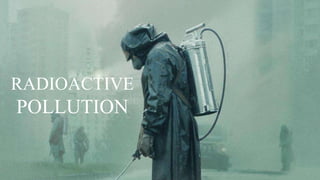
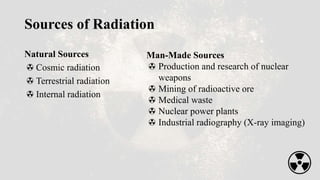
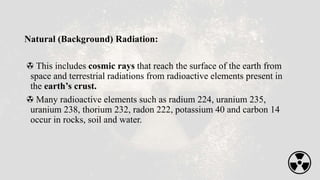
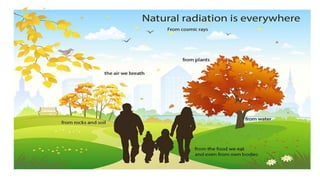
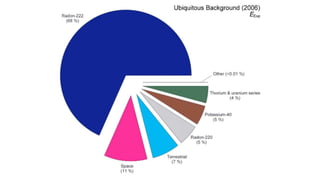
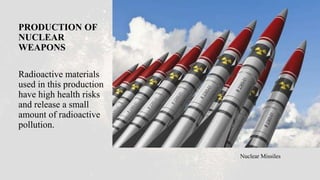
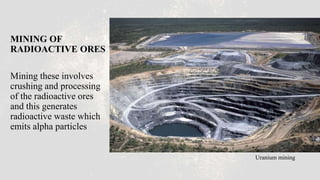
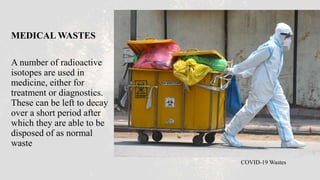
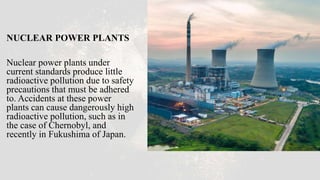
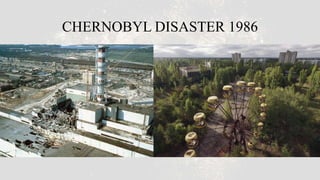
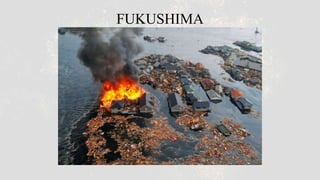
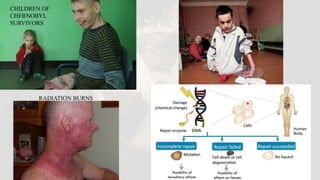
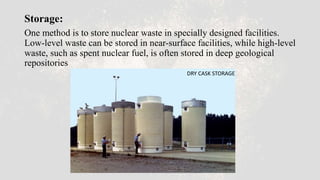
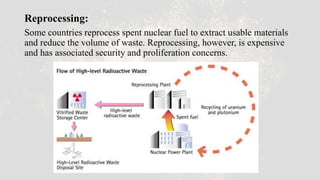
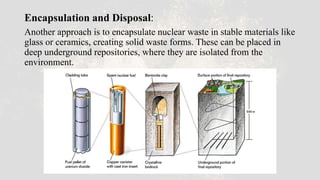
Radioactive pollution occurs when radioactive materials are released into the environment through human activities like nuclear weapons production, uranium mining, medical waste disposal, and nuclear power plant accidents. Sources of radioactive pollution include natural background radiation from cosmic rays and radioactive elements in the earth, as well as man-made activities. Exposure to radiation can cause both acute and long-term health effects in humans including cancer, genetic mutations, and developmental issues. It can also impact plants through chromosomal damage, reduced growth and reproduction, and mortality. Methods to prevent, store, and remediate radioactive pollution include reducing nuclear testing and fission, encapsulating nuclear waste, and using bioremediation with microorganisms, plants, and fungi.