SUBMITED BY :
V.RAKESH
N.YASHWANTHRAJ
K.RAJU
K.MAHESH
G.SREENATH
BRAIN COMPUTER INTERFACE
WHAT IS BCI ?
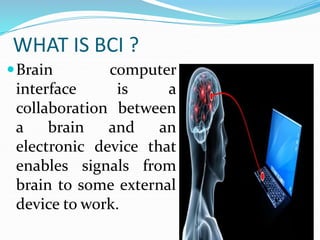
Brain computer
interface is a
collaboration between
a brain and an
electronic device that
enables signals from
brain to some external
device to work.
Working principle of BCI :
 Electroencephalography :It is the physiological method of choice to record the electrical
activity generated by the brain via electrodes placed on the scalp surface. For faster
application, electrodes are mounted in elastic caps similar to bathing caps, ensuring that
the data can be collected from identical scalp positions across all respondents.
 Despite its somewhat daunting name (and pronunciation), grasping the essentials of
electroencephalography is surprisingly simple:
 EEG:
 measures electrical activity generated by the synchronized activity of thousands of
neurons (in volts)
 provides excellent time resolution, allowing you to detect activity within cortical areas -
even at sub-second timescales
 As the voltage fluctuations measured at the electrodes are very small, the recorded data is
digitized and sent to an amplifier. The amplified data can then be displayed as a sequence
of voltage values.
 Price differences in EEG systems are typically due to the number of electrodes, the quality
of the digitization, the quality of the amplifier, and the number of snapshots the device
can take per second (this is the sampling rate in Hz).
 EEG is one of the fastest imaging techniques available as it often has a high sampling rate.
One hundred years ago the time course of an EEG was plotted on paper. Current systems
digitally display the data as a continuous flow of voltages on a screen.
WORKING :
 As the power of modern computer grows alongside our understanding of the
human brain ,we move closer to make some pretty spectacular science
fiction into reality.imagine transmitting signals directly to someone’s brain
that would allow them to see, hear or feel specific sensory inputs .consider
the potential to manipulate computers or machinery wirh nothinh more
than a thought .
 The reason a bci works all because of the way our brain function .the work is
carried out by smaal electric signalsthat zip from neuron as fast as 250 mph .
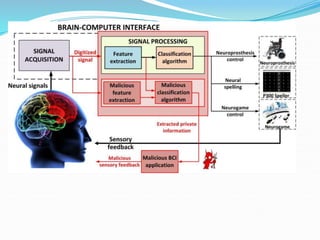
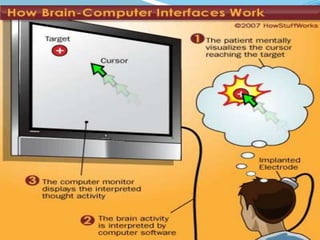
 Brain computer interface is relatively new technology aiming at
assisting,augmenting.to control a bci the user should produce various
braibn activity patterns that are captured in form of
electroencephalogram(eeg) and converting to commands by identifying the
oatterns on the system.
advantages
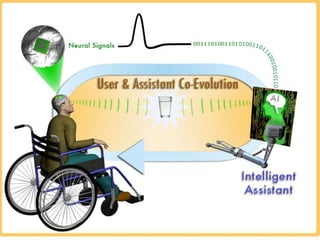
 Allow paralyzed people to control prosthetic
limbs with their mind.
Transmit visual images to the mind of a blind person,
allowing them to use.
Transmit auditory data to mind of a deaf person,
allowing them to hear.
Allow gamers to control video games with their minds.
Allow a mute person to have their thoughts displayed
and spoken by a computer.
disadvantages
 Research is still in beginning stages.
 The current technology is crude.
 Ethical issue may prevent its development.
 Electrodes outside of the skull can detect very few
electric signals from the brain.
 Electrodes placed inside the skull create scar tissue in
their brain.

BRAIN COMPUTER INTERFACE

  • 1.
  • 2.
    WHAT IS BCI? Brain computer interface is a collaboration between a brain and an electronic device that enables signals from brain to some external device to work.
  • 3.
    Working principle ofBCI :  Electroencephalography :It is the physiological method of choice to record the electrical activity generated by the brain via electrodes placed on the scalp surface. For faster application, electrodes are mounted in elastic caps similar to bathing caps, ensuring that the data can be collected from identical scalp positions across all respondents.  Despite its somewhat daunting name (and pronunciation), grasping the essentials of electroencephalography is surprisingly simple:  EEG:  measures electrical activity generated by the synchronized activity of thousands of neurons (in volts)  provides excellent time resolution, allowing you to detect activity within cortical areas - even at sub-second timescales  As the voltage fluctuations measured at the electrodes are very small, the recorded data is digitized and sent to an amplifier. The amplified data can then be displayed as a sequence of voltage values.  Price differences in EEG systems are typically due to the number of electrodes, the quality of the digitization, the quality of the amplifier, and the number of snapshots the device can take per second (this is the sampling rate in Hz).  EEG is one of the fastest imaging techniques available as it often has a high sampling rate. One hundred years ago the time course of an EEG was plotted on paper. Current systems digitally display the data as a continuous flow of voltages on a screen.
  • 4.
    WORKING :  Asthe power of modern computer grows alongside our understanding of the human brain ,we move closer to make some pretty spectacular science fiction into reality.imagine transmitting signals directly to someone’s brain that would allow them to see, hear or feel specific sensory inputs .consider the potential to manipulate computers or machinery wirh nothinh more than a thought .  The reason a bci works all because of the way our brain function .the work is carried out by smaal electric signalsthat zip from neuron as fast as 250 mph .  Brain computer interface is relatively new technology aiming at assisting,augmenting.to control a bci the user should produce various braibn activity patterns that are captured in form of electroencephalogram(eeg) and converting to commands by identifying the oatterns on the system.
  • 6.
    advantages  Allow paralyzedpeople to control prosthetic limbs with their mind. Transmit visual images to the mind of a blind person, allowing them to use. Transmit auditory data to mind of a deaf person, allowing them to hear. Allow gamers to control video games with their minds. Allow a mute person to have their thoughts displayed and spoken by a computer.
  • 9.
    disadvantages  Research isstill in beginning stages.  The current technology is crude.  Ethical issue may prevent its development.  Electrodes outside of the skull can detect very few electric signals from the brain.  Electrodes placed inside the skull create scar tissue in their brain.