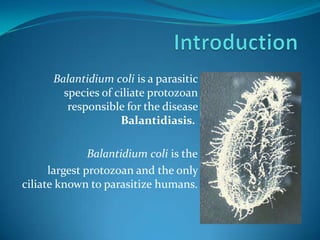
Balantidium coli is a parasitic
species of ciliate protozoan
responsible for the disease
Balantidiasis.
Balantidium coli is the
largest protozoan and the only
ciliate known to parasitize humans.
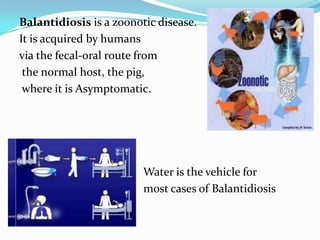
Balantidiosis is a zoonotic disease.
It is acquired by humans
via the fecal-oral route from
the normal host, the pig,
where it is Asymptomatic.

Water is the vehicle for
most cases of Balantidiosis
ofBalantidiosis.
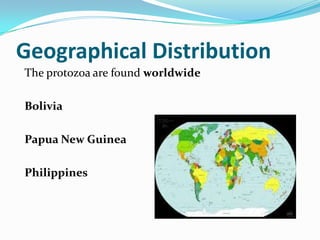
Geographical Distribution
The protozoa are found worldwide
Bolivia

Papua New Guinea
Philippines
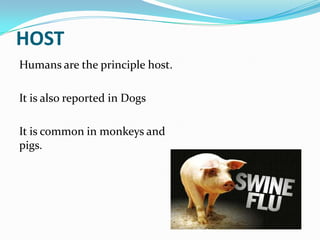
HOST
Humans are the principle host.
It is also reported in Dogs
It is common in monkeys and
pigs.
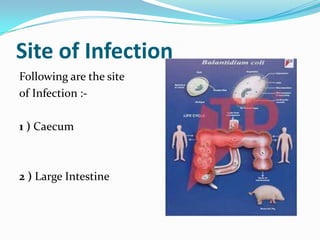
Site of Infection
Following are the site
of Infection :1 ) Caecum

2 ) Large Intestine
Morphology
Balantidium coli has 2 developmental stages .
1) Trophozoite stage
2) Cyst stage
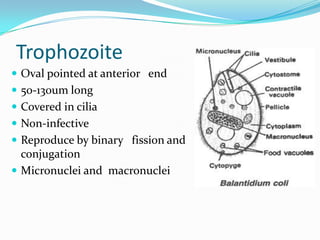
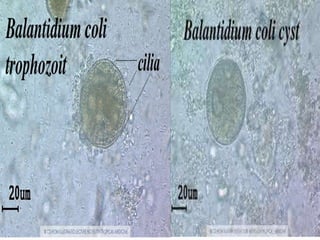
Trophozoite
 Oval pointed at anterior end
 50-130um long
 Covered in cilia
 Non-infective

 Reproduce by binary fission and

conjugation
 Micronuclei and macronuclei
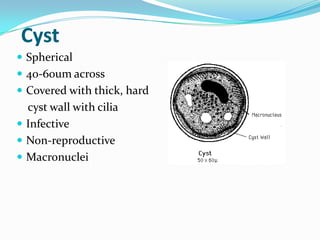
Cyst
 Spherical
 40-60um across
 Covered with thick, hard

cyst wall with cilia
 Infective
 Non-reproductive
 Macronuclei
2) Cyst stage
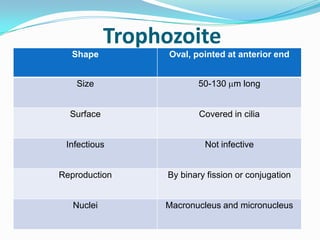
Trophozoite
Shape

Oval, pointed at anterior end

Size

50-130 m long

Surface

Covered in cilia

Infectious

Not infective

Reproduction

By binary fission or conjugation

Nuclei

Macronucleus and micronucleus
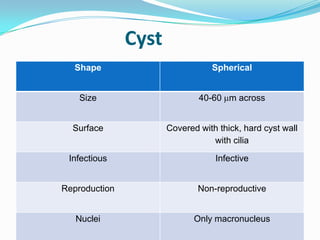
Cyst
Shape

Spherical

Size

40-60 m across

Surface

Covered with thick, hard cyst wall
with cilia

Infectious

Infective

Reproduction

Non-reproductive

Nuclei

Only macronucleus
Life cycle
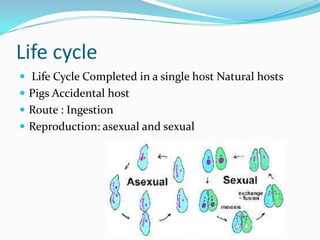
 Life Cycle Completed in a single host Natural hosts
 Pigs Accidental host
 Route : Ingestion
 Reproduction: asexual and sexual
Life Cycle
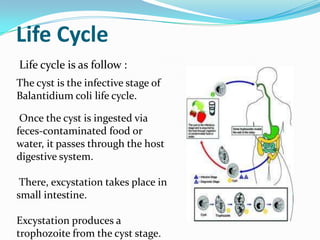
Life cycle is as follow :
The cyst is the infective stage of
Balantidium coli life cycle.
Once the cyst is ingested via
feces-contaminated food or
water, it passes through the host
digestive system.
There, excystation takes place in
small intestine.
Excystation produces a
trophozoite from the cyst stage.
 The motile trophozoite then resides in the lumen
of the large intestine, feeding on intestinal
nutrients.
 Trophozoites multiply by asexual binary fission or
sexual conjugation
 The trophozoite may become invasive and
penetrate the mucosa of the large intestine.
 Trophozoites are released with the feces, and
encyst to form new cyst

Cysts in the environment are then ready to infect
another host.
Sign and Symptoms
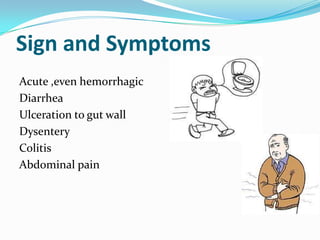
Acute ,even hemorrhagic
Diarrhea
Ulceration to gut wall
Dysentery
Colitis
Abdominal pain
Diagnosis
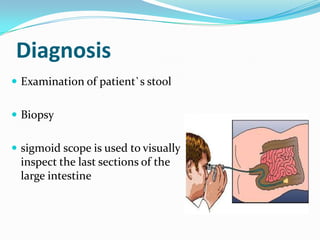
 Examination of patient`s stool
 Biopsy
 sigmoid scope is used to visually

inspect the last sections of the
large intestine
Treatment
 Three drugs are commonly used and administered

orally
1) Tetracycline

2) Metronidazole
3) Iodoquinol
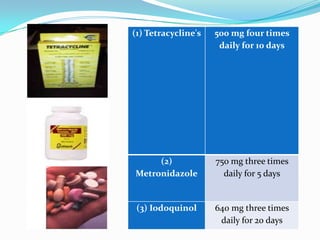
(1) Tetracycline's

500 mg four times
daily for 10 days

(2)
Metronidazole

750 mg three times
daily for 5 days

(3) Iodoquinol

640 mg three times
daily for 20 days
Control and Prevention
 Avoid ingestion of material contaminated with

animal feces
 Prevention and control Sanitary disposal of human

and pig feces
 Treatment of infected pigs
 Prevention of fecal contamination of food and water
THANK YOU

Balantidium Coli

  • 2.
    Balantidium coli isa parasitic species of ciliate protozoan responsible for the disease Balantidiasis. Balantidium coli is the largest protozoan and the only ciliate known to parasitize humans.
  • 3.
    Balantidiosis is azoonotic disease. It is acquired by humans via the fecal-oral route from the normal host, the pig, where it is Asymptomatic. Water is the vehicle for most cases of Balantidiosis ofBalantidiosis.
  • 4.
    Geographical Distribution The protozoaare found worldwide Bolivia Papua New Guinea Philippines
  • 5.
    HOST Humans are theprinciple host. It is also reported in Dogs It is common in monkeys and pigs.
  • 6.
    Site of Infection Followingare the site of Infection :1 ) Caecum 2 ) Large Intestine
  • 7.
    Morphology Balantidium coli has2 developmental stages . 1) Trophozoite stage 2) Cyst stage
  • 8.
    Trophozoite  Oval pointedat anterior end  50-130um long  Covered in cilia  Non-infective  Reproduce by binary fission and conjugation  Micronuclei and macronuclei
  • 9.
    Cyst  Spherical  40-60umacross  Covered with thick, hard cyst wall with cilia  Infective  Non-reproductive  Macronuclei
  • 10.
  • 11.
    Trophozoite Shape Oval, pointed atanterior end Size 50-130 m long Surface Covered in cilia Infectious Not infective Reproduction By binary fission or conjugation Nuclei Macronucleus and micronucleus
  • 12.
    Cyst Shape Spherical Size 40-60 m across Surface Coveredwith thick, hard cyst wall with cilia Infectious Infective Reproduction Non-reproductive Nuclei Only macronucleus
  • 13.
    Life cycle  LifeCycle Completed in a single host Natural hosts  Pigs Accidental host  Route : Ingestion  Reproduction: asexual and sexual
  • 14.
    Life Cycle Life cycleis as follow : The cyst is the infective stage of Balantidium coli life cycle. Once the cyst is ingested via feces-contaminated food or water, it passes through the host digestive system. There, excystation takes place in small intestine. Excystation produces a trophozoite from the cyst stage.
  • 15.
     The motiletrophozoite then resides in the lumen of the large intestine, feeding on intestinal nutrients.  Trophozoites multiply by asexual binary fission or sexual conjugation  The trophozoite may become invasive and penetrate the mucosa of the large intestine.  Trophozoites are released with the feces, and encyst to form new cyst Cysts in the environment are then ready to infect another host.
  • 16.
    Sign and Symptoms Acute,even hemorrhagic Diarrhea Ulceration to gut wall Dysentery Colitis Abdominal pain
  • 17.
    Diagnosis  Examination ofpatient`s stool  Biopsy  sigmoid scope is used to visually inspect the last sections of the large intestine
  • 18.
    Treatment  Three drugsare commonly used and administered orally 1) Tetracycline 2) Metronidazole 3) Iodoquinol
  • 19.
    (1) Tetracycline's 500 mgfour times daily for 10 days (2) Metronidazole 750 mg three times daily for 5 days (3) Iodoquinol 640 mg three times daily for 20 days
  • 20.
    Control and Prevention Avoid ingestion of material contaminated with animal feces  Prevention and control Sanitary disposal of human and pig feces  Treatment of infected pigs  Prevention of fecal contamination of food and water
  • 21.