
Downloaded 787 times



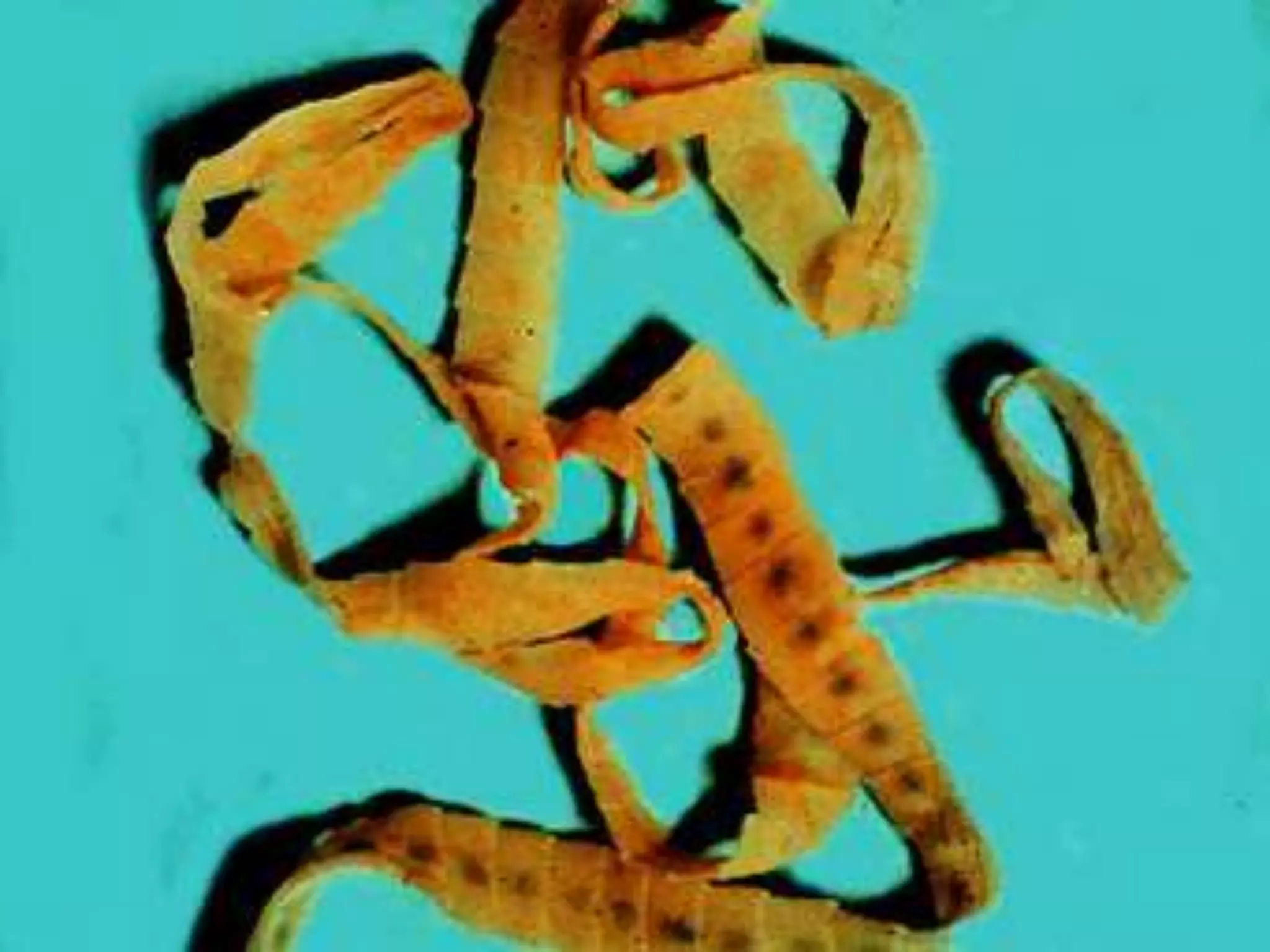
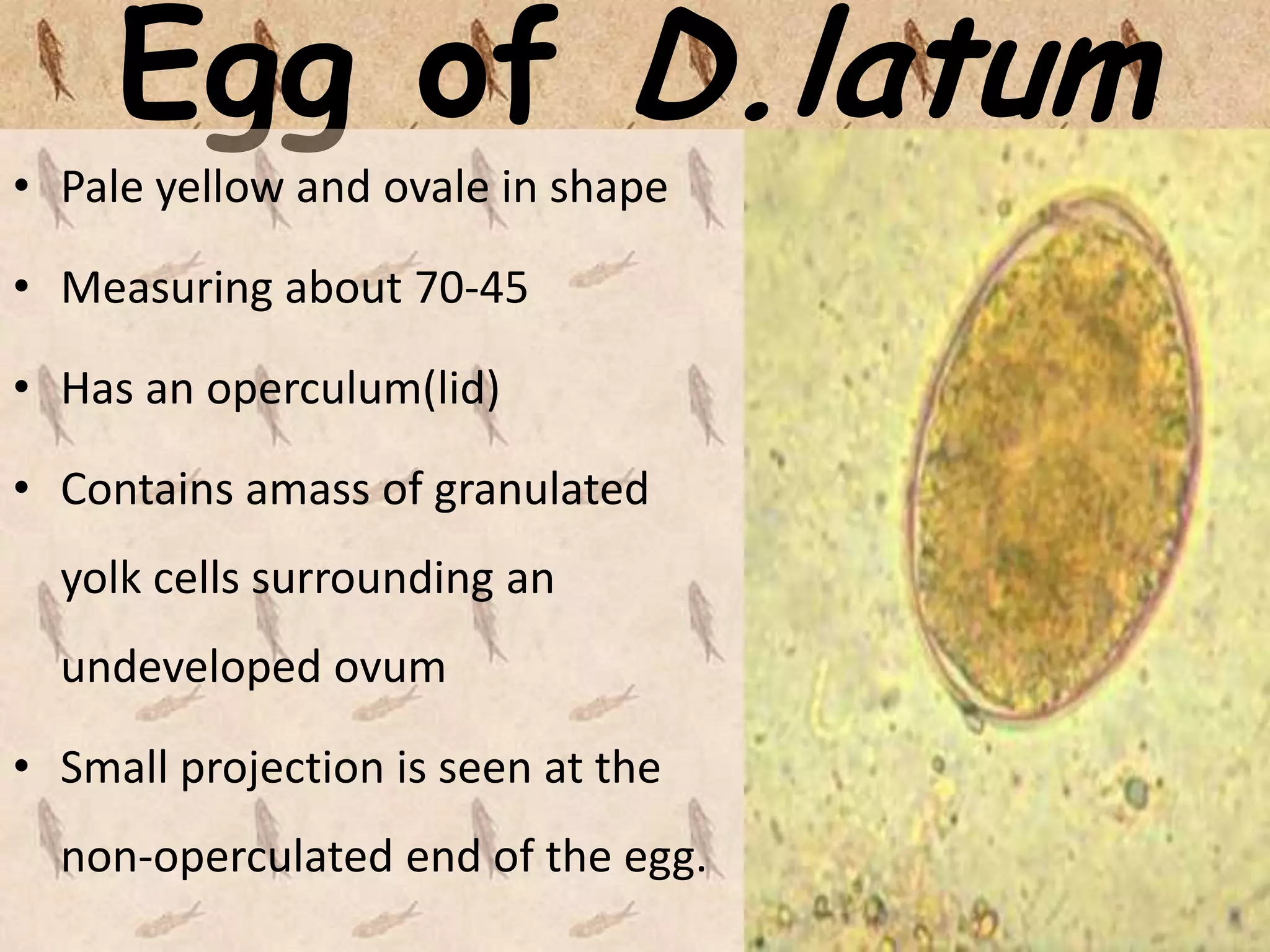


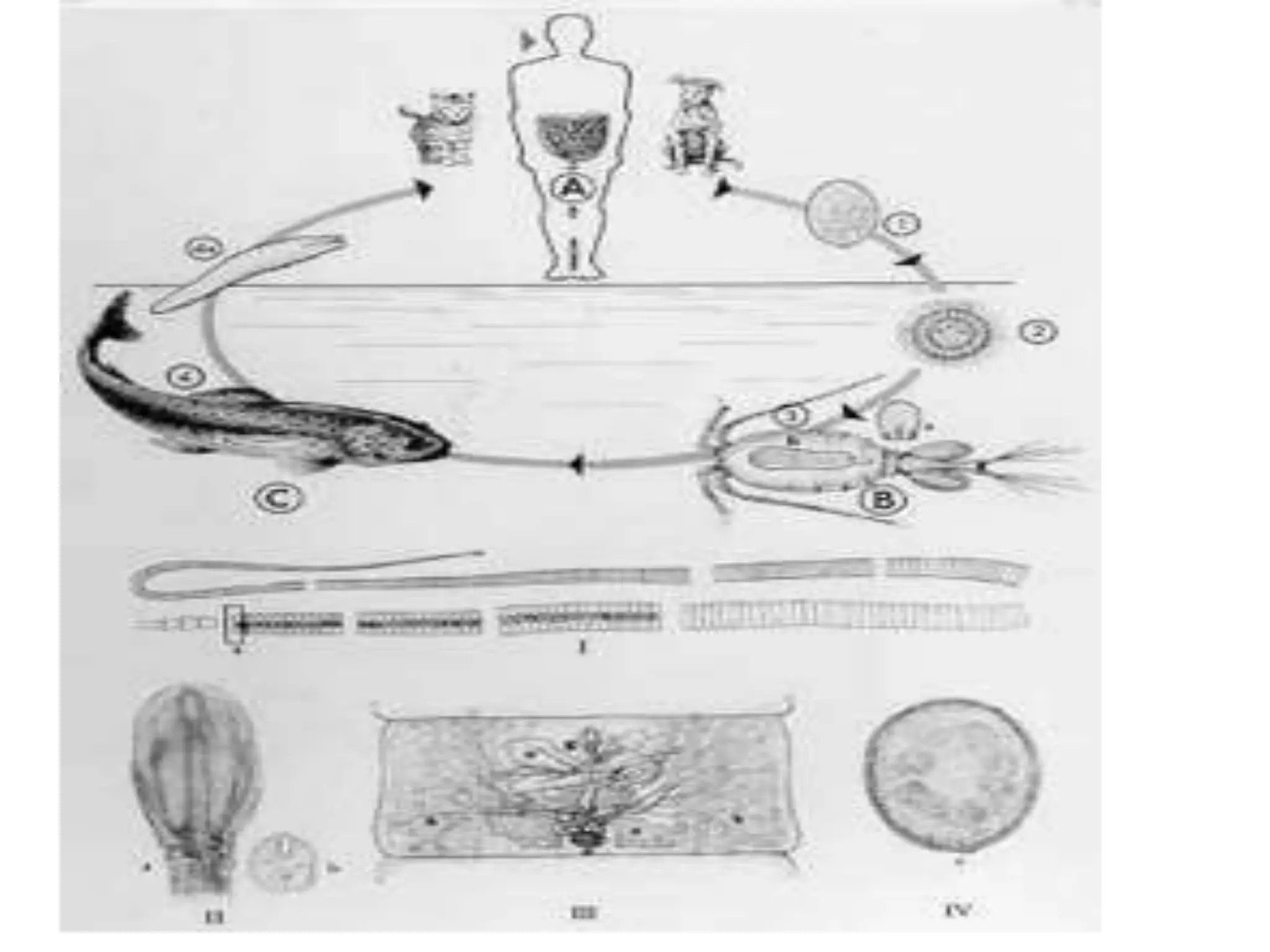


Diphyllobothrium latum, also known as the fish tapeworm, infects humans who consume raw or undercooked freshwater fish containing plerocercoid larvae. The adult tapeworm lives in the small intestine and can grow to 10 meters long. It lays eggs that are released in feces and infect copepods in water. Fish eat the copepods and can become infected, transmitting the larvae when eaten raw or undercooked by humans. Infection usually causes mild or no symptoms but can potentially lead to vitamin B12 deficiency. Treatment involves praziquantel or niclosamide and prevention focuses on thoroughly cooking fish from infected waters.


![[Micro] hymenolepis nana](https://cdn.slidesharecdn.com/ss_thumbnails/3rxjz7ekrwinb1sq3uxs-signature-2127a2ca5368c7fdfd023e8d90dde3fc0b9fe7d91346a4189562c9f63dc0d19d-poli-150819190755-lva1-app6892-thumbnail.jpg?width=640&height=640&fit=bounds)


![[Micro] cestodes](https://cdn.slidesharecdn.com/ss_thumbnails/nvpl1fbyq2ofjfsbmped-signature-2127a2ca5368c7fdfd023e8d90dde3fc0b9fe7d91346a4189562c9f63dc0d19d-poli-150819190753-lva1-app6892-thumbnail.jpg?width=640&height=640&fit=bounds)


