Genus
Cryptosporidium
Contents
 -General Introduction
 -History
 -Clinical Signs
 -General life Cycle
 -Pathogenesis
 -Epidemiology
 -Diagnosis & Treatment
 -Prevention
Genus Cryptosporidium
 Cryptosporidiosis is caused by protozoan parasites of
the genus Cryptosporidium, in which there are 18
‘valid’ species. In livestock, C. parvum, C. andersoni,
C. galli have been reported to cause morbidity and
outbreaks of disease.
 Some species are host specific but some are found in
more than one species
 Transmission by fecal oral route
 Person-to-person
 Person-to-animal –Waterborne-Foodborne
 Fomrs Oocyste with 4 sporozoits
History
 1993: Milwaukee, West Indies
 Largest known water supply outbreak
 400,000 persons became ill
 1997: In decorative fountains
369 cases Appeared
 Most cases in children <10 years old
 In Pakistan
 Fecal excretion of Cryptosporidium parvum oocysts was
determined in 625 children less than five years old who
presented at the pediatric clinic of a teaching hospital in
Rawalpindi, Pakistan.
(+) Signs (--)
 Infections characterized by watery diarrhea
 Stools with rancid odor
 Weight loss
 Anorexia
 Yellow to white color stools
 Tenesmus
Pathogenesis
 Cryptosporidium parvum
 Primarily infects small intestine.
 Infections characterized by watery Diarrhea
Impaired intestinal absorption.
 Forms oocysts
-4-6 µm in diameter
-killed by ozone, desiccation
Post Mortem Lesions
 Gross lesions
(not common)
 Hyperemia of intestinal mucosaThe mucosal folds are
markedly thickened, and there are numerous pinpoint foci of
hyperemia.
 Microscopic lesions
 Mild to severe villous atrophy
 Spherical organisms in the
brush border
Common in
calves and lambs
(Some days after birth)
Other species
– Dogs (rare)
– Cats (rare)
– Horses (rare)
Epidemiology
 More common with immune deficiency diseases such
as AIDS.
 Cryptosporidiosis occurs worldwide. It causes 50.8% of
the water-borne diseases attributed to parasites
 When Cryptosporidium spreads beyond the
intestine,(as in AIDS) it can reach upto lungs, middle
ear, pancreas and stomach.
 Unlike other coccidians autoinfection can occur
Diagnosis
Diagnostic tests
- Acid-fast staining
- (histologic
examination)
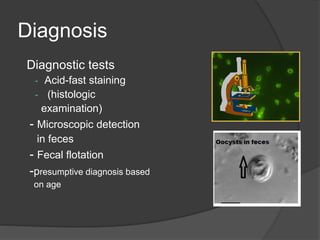
- Microscopic detection
in feces
- Fecal flotation
-presumptive diagnosis based
on age
Treatment
 No specific treatment
-Supportive care
 No vaccine
Prevention & Cares
 Minimizing contact with infected individuals
 Wash hands
 Wash fruits/vegetables
 Minimize contact with young
animals especially having
age of somedays.
Presented by Ali Saqlain student of veterinary sciences
Uaf Pakistan

Cryptosporidium

  • 1.
  • 2.
    Contents  -General Introduction -History  -Clinical Signs  -General life Cycle  -Pathogenesis  -Epidemiology  -Diagnosis & Treatment  -Prevention
  • 3.
    Genus Cryptosporidium  Cryptosporidiosisis caused by protozoan parasites of the genus Cryptosporidium, in which there are 18 ‘valid’ species. In livestock, C. parvum, C. andersoni, C. galli have been reported to cause morbidity and outbreaks of disease.  Some species are host specific but some are found in more than one species  Transmission by fecal oral route  Person-to-person  Person-to-animal –Waterborne-Foodborne  Fomrs Oocyste with 4 sporozoits
  • 4.
    History  1993: Milwaukee,West Indies  Largest known water supply outbreak  400,000 persons became ill  1997: In decorative fountains 369 cases Appeared  Most cases in children <10 years old  In Pakistan  Fecal excretion of Cryptosporidium parvum oocysts was determined in 625 children less than five years old who presented at the pediatric clinic of a teaching hospital in Rawalpindi, Pakistan.
  • 5.
    (+) Signs (--) Infections characterized by watery diarrhea  Stools with rancid odor  Weight loss  Anorexia  Yellow to white color stools  Tenesmus
  • 8.
    Pathogenesis  Cryptosporidium parvum Primarily infects small intestine.  Infections characterized by watery Diarrhea Impaired intestinal absorption.  Forms oocysts -4-6 µm in diameter -killed by ozone, desiccation
  • 9.
    Post Mortem Lesions Gross lesions (not common)  Hyperemia of intestinal mucosaThe mucosal folds are markedly thickened, and there are numerous pinpoint foci of hyperemia.  Microscopic lesions  Mild to severe villous atrophy  Spherical organisms in the brush border
  • 10.
    Common in calves andlambs (Some days after birth) Other species – Dogs (rare) – Cats (rare) – Horses (rare)
  • 11.
    Epidemiology  More commonwith immune deficiency diseases such as AIDS.  Cryptosporidiosis occurs worldwide. It causes 50.8% of the water-borne diseases attributed to parasites  When Cryptosporidium spreads beyond the intestine,(as in AIDS) it can reach upto lungs, middle ear, pancreas and stomach.  Unlike other coccidians autoinfection can occur
  • 12.
    Diagnosis Diagnostic tests - Acid-faststaining - (histologic examination) - Microscopic detection in feces - Fecal flotation -presumptive diagnosis based on age
  • 13.
    Treatment  No specifictreatment -Supportive care  No vaccine
  • 14.
    Prevention & Cares Minimizing contact with infected individuals  Wash hands  Wash fruits/vegetables  Minimize contact with young animals especially having age of somedays.
  • 15.
    Presented by AliSaqlain student of veterinary sciences Uaf Pakistan