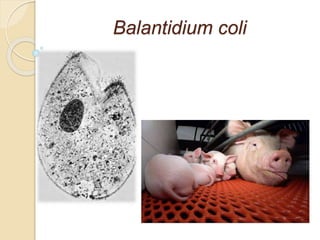
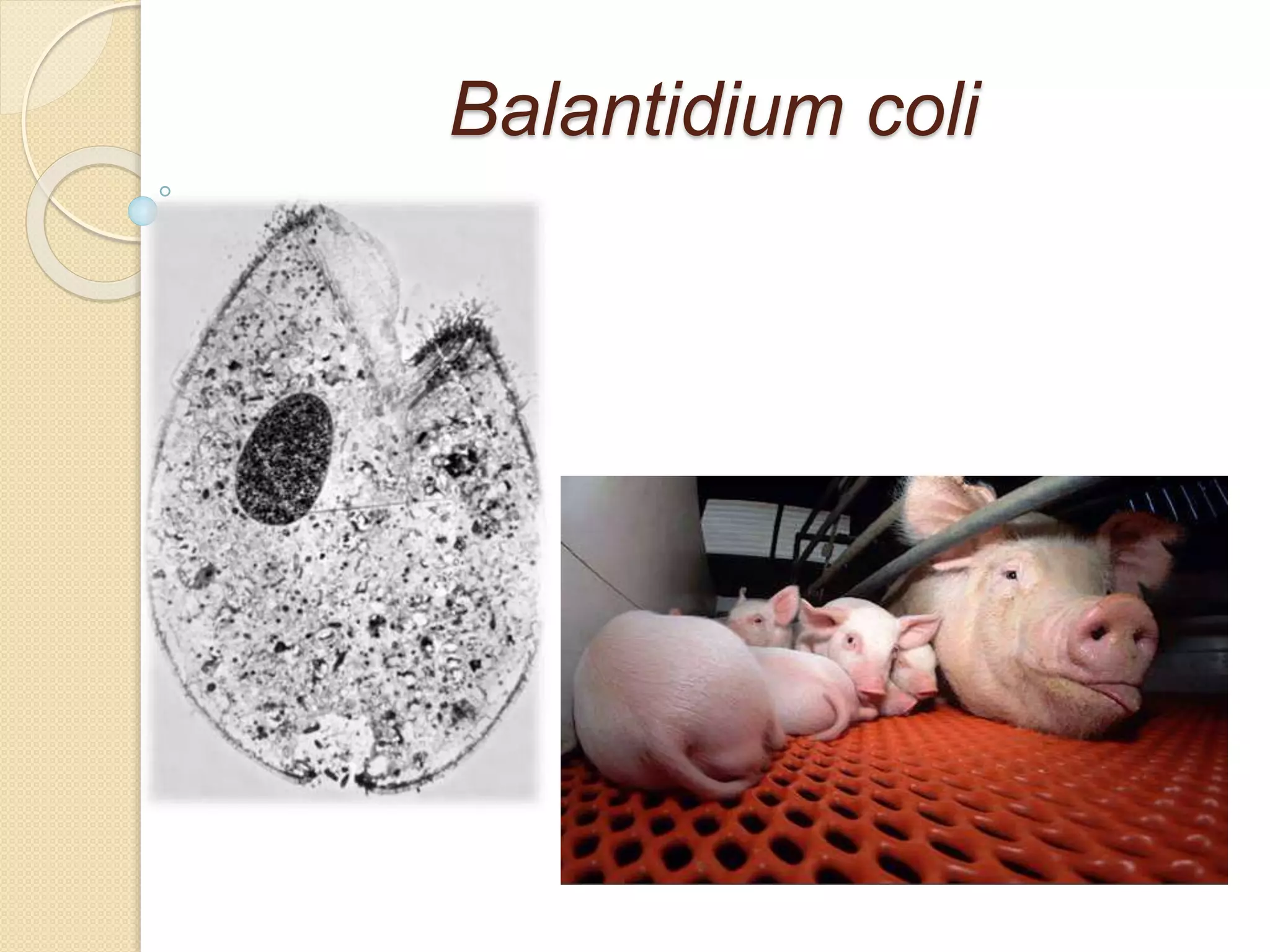
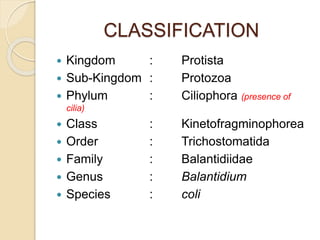
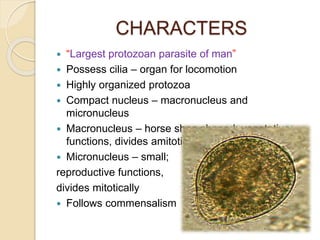
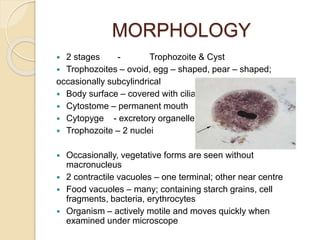
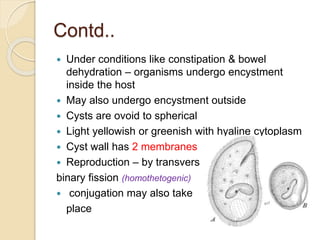
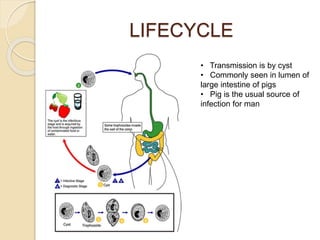
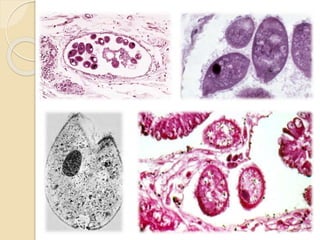
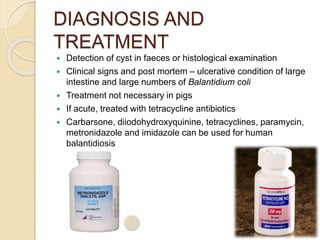
This document summarizes information about Balantidium coli, the largest protozoan parasite that infects humans. It is classified within the kingdom Protista, phylum Ciliophora. B. coli has two life stages, a trophozoite stage that is motile and pear-shaped, containing two nuclei and contractile vacuoles, and a cyst stage that forms under conditions like constipation. B. coli typically infects pigs and is transmitted to humans via ingestion of cysts. In humans, it can cause diarrhea and dysentery through ulceration in the large intestine. Diagnosis involves finding cysts in feces and treatment involves antibiotics like tetracycline or metronidazole.



![CASE_PRESENTATION_ON_subdural_hematoma(SDH)[1 FINAL PPT]-1.pptx](https://cdn.slidesharecdn.com/ss_thumbnails/casepresentationonsubduralhematomasdh1finalppt-1-260129172522-d405d375-thumbnail.jpg?width=640&height=640&fit=bounds)


