Including Basic Knots & Leg Raising
Casting is an approach to throw the animal on the
ground in certain direction, for treatment and various
surgical procedures.
Prepare Beforehand
• Know the Characteristics e.g. Panoramic vision, keen
hearing in cattle etc.
• Get Information about the psychology of animal.
• Show good body language, eye contact etc.
• Be well trained and Skilled.
• Be safe and keep the patient safe.
• Provide minimum stress.
Precautions for Casting
• The individual must be separate from the
herd.
• If possible, it is desirable to fast the
animal before 12 hours of casting.
• In order to achieve perfect casting, there
should be sufficient labour available; for
least distress to animal.
• A reliable man should be at head side, as
its control is of utmost importance. So
long head is firmly held down struggling
will be less and animal will not rise until
head is released.
• Rope should be strong and of good quality.
• The site of casting should be chosen carefully; well
grassed, comfortable, field should be preferable.
There should be no bricks or stones.
• Stable bandages are advisable for horses, along with
knee caps and hock boots to properly secure the
animal.
• As far possible ruminants must be thrown on its
right side of body. If thrown on left side it may upset
the digestion as the rumen is on left side.
• Do not leave the animal down for a long time as
bloat may develop.
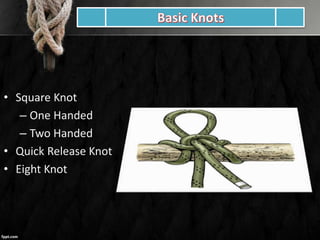
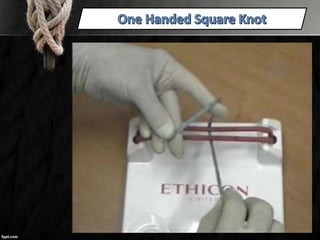
• Square Knot
– One Handed
– Two Handed
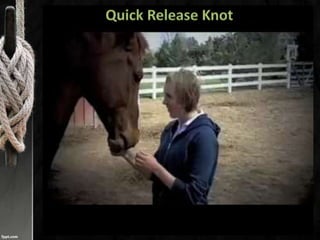
• Quick Release Knot
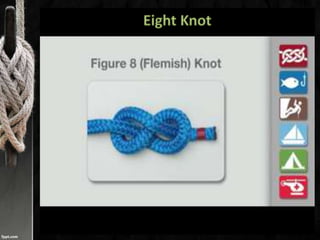
• Eight Knot
• Objectives
– Examination or Treatment
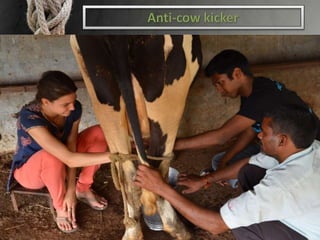
– Make a cow stand still and to avoid her from
kicking with a hind leg.
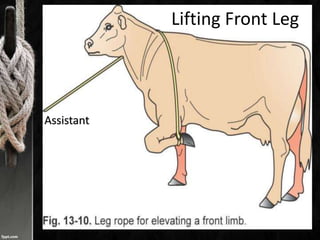
• Procedure
– One end of the rope is used to tie a knot around
the pastern. The other end of the rope passes
over the withers where is should be held by an
assistant so that it can be released quickly if the
cow starts to go down.
Assistant
Lifting Front Leg
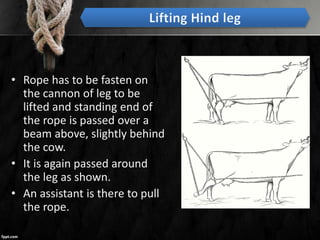
• Rope has to be fasten on
the cannon of leg to be
lifted and standing end of
the rope is passed over a
beam above, slightly behind
the cow.
• It is again passed around
the leg as shown.
• An assistant is there to pull
the rope.
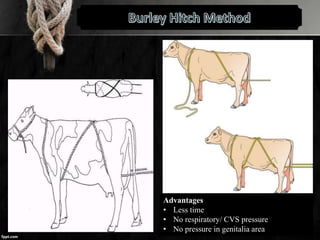
• Burley Hitch method.
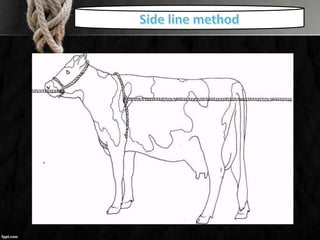
• Side line method.
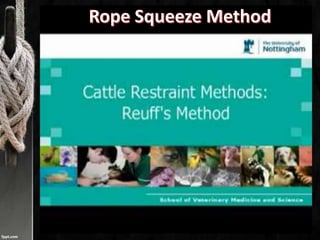
• Rope Squeeze method.
Advantages
• Less time
• No respiratory/ CVS pressure
• No pressure in genitalia area
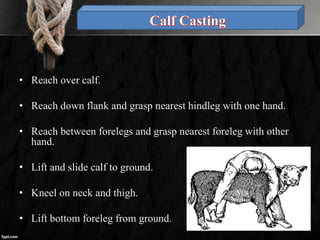
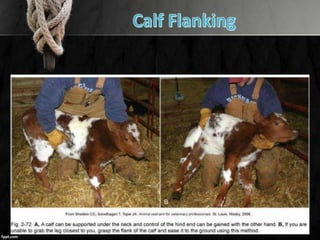
• Reach over calf.
• Reach down flank and grasp nearest hindleg with one hand.
• Reach between forelegs and grasp nearest foreleg with other
hand.
• Lift and slide calf to ground.
• Kneel on neck and thigh.
• Lift bottom foreleg from ground.
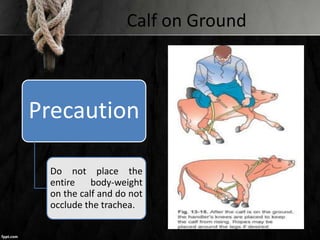
Calf on Ground
Precaution
Do not place the
entire body-weight
on the calf and do not
occlude the trachea.
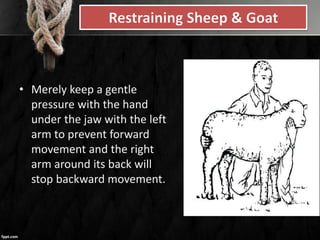
• Merely keep a gentle
pressure with the hand
under the jaw with the left
arm to prevent forward
movement and the right
arm around its back will
stop backward movement.
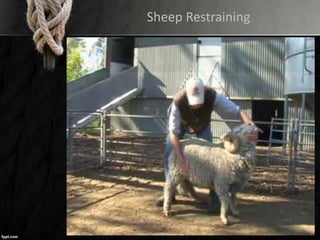
Sheep Restraining
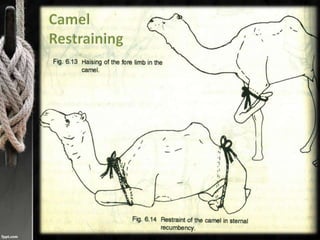
Camel restraining
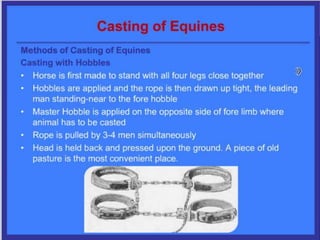
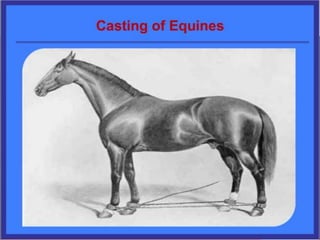
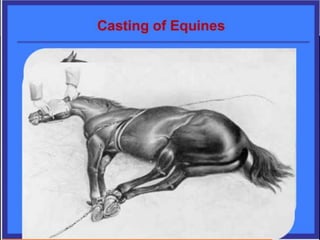
Horse
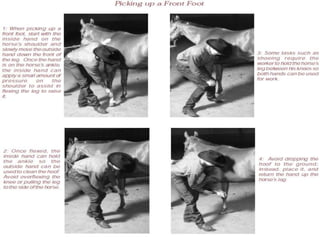
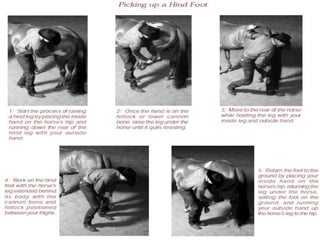
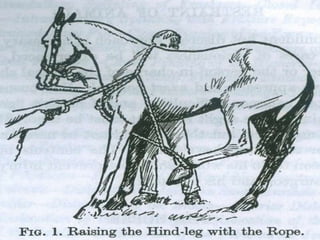
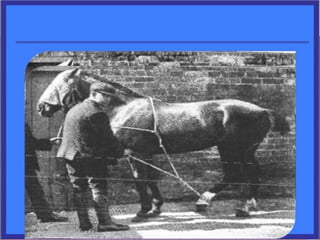
• Leg Raising
• Casting
– Leg Raising Method
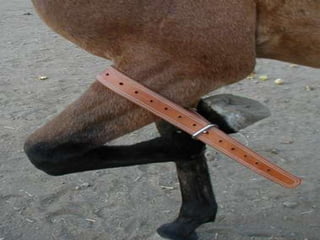
– Hobbles
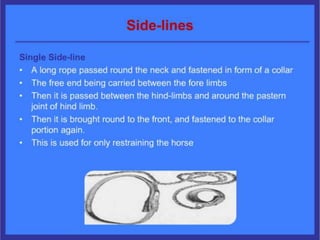
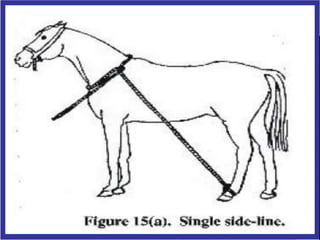
– Side line method
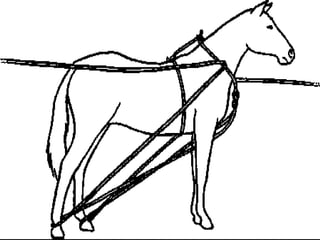
– Double side line methods
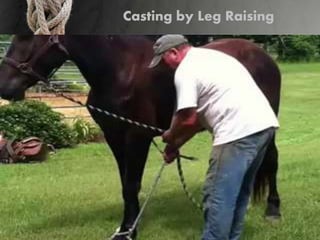
Casting by Leg Raising
Pets Restraining Techniques
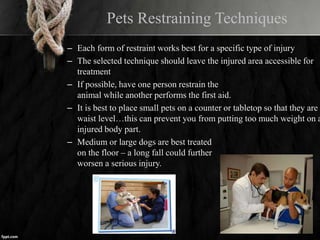
– Each form of restraint works best for a specific type of injury
– The selected technique should leave the injured area accessible for
treatment
– If possible, have one person restrain the
animal while another performs the first aid.
– It is best to place small pets on a counter or tabletop so that they are
waist level…this can prevent you from putting too much weight on a
injured body part.
– Medium or large dogs are best treated
on the floor – a long fall could further
worsen a serious injury.
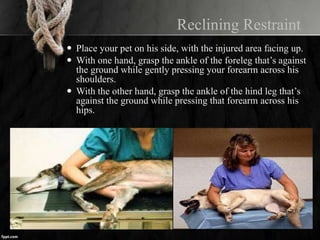
Reclining Restraint
 Place your pet on his side, with the injured area facing up.
 With one hand, grasp the ankle of the foreleg that’s against
the ground while gently pressing your forearm across his
shoulders.
 With the other hand, grasp the ankle of the hind leg that’s
against the ground while pressing that forearm across his
hips.
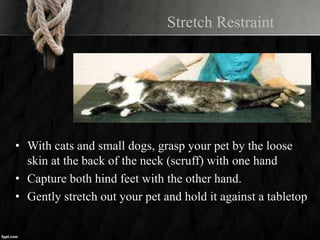
Stretch Restraint
• With cats and small dogs, grasp your pet by the loose
skin at the back of the neck (scruff) with one hand
• Capture both hind feet with the other hand.
• Gently stretch out your pet and hold it against a tabletop
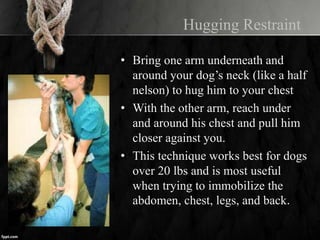
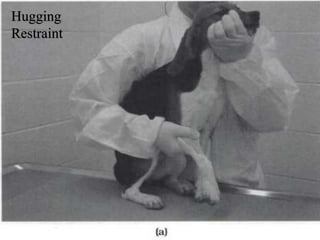
Hugging Restraint
• Bring one arm underneath and
around your dog’s neck (like a half
nelson) to hug him to your chest
• With the other arm, reach under
and around his chest and pull him
closer against you.
• This technique works best for dogs
over 20 lbs and is most useful
when trying to immobilize the
abdomen, chest, legs, and back.
Hugging
Restraint

Various Casting Techniques

  • 1.
    Including Basic Knots& Leg Raising
  • 2.
    Casting is anapproach to throw the animal on the ground in certain direction, for treatment and various surgical procedures.
  • 3.
    Prepare Beforehand • Knowthe Characteristics e.g. Panoramic vision, keen hearing in cattle etc. • Get Information about the psychology of animal. • Show good body language, eye contact etc. • Be well trained and Skilled. • Be safe and keep the patient safe. • Provide minimum stress.
  • 4.
    Precautions for Casting •The individual must be separate from the herd. • If possible, it is desirable to fast the animal before 12 hours of casting. • In order to achieve perfect casting, there should be sufficient labour available; for least distress to animal. • A reliable man should be at head side, as its control is of utmost importance. So long head is firmly held down struggling will be less and animal will not rise until head is released.
  • 5.
    • Rope shouldbe strong and of good quality. • The site of casting should be chosen carefully; well grassed, comfortable, field should be preferable. There should be no bricks or stones. • Stable bandages are advisable for horses, along with knee caps and hock boots to properly secure the animal. • As far possible ruminants must be thrown on its right side of body. If thrown on left side it may upset the digestion as the rumen is on left side. • Do not leave the animal down for a long time as bloat may develop.
  • 6.
    • Square Knot –One Handed – Two Handed • Quick Release Knot • Eight Knot
  • 11.
    • Objectives – Examinationor Treatment – Make a cow stand still and to avoid her from kicking with a hind leg. • Procedure – One end of the rope is used to tie a knot around the pastern. The other end of the rope passes over the withers where is should be held by an assistant so that it can be released quickly if the cow starts to go down.
  • 12.
  • 13.
    • Rope hasto be fasten on the cannon of leg to be lifted and standing end of the rope is passed over a beam above, slightly behind the cow. • It is again passed around the leg as shown. • An assistant is there to pull the rope.
  • 15.
    • Burley Hitchmethod. • Side line method. • Rope Squeeze method.
  • 16.
    Advantages • Less time •No respiratory/ CVS pressure • No pressure in genitalia area
  • 19.
    • Reach overcalf. • Reach down flank and grasp nearest hindleg with one hand. • Reach between forelegs and grasp nearest foreleg with other hand. • Lift and slide calf to ground. • Kneel on neck and thigh. • Lift bottom foreleg from ground.
  • 21.
    Calf on Ground Precaution Donot place the entire body-weight on the calf and do not occlude the trachea.
  • 22.
    • Merely keepa gentle pressure with the hand under the jaw with the left arm to prevent forward movement and the right arm around its back will stop backward movement.
  • 23.
  • 24.
  • 25.
    Horse • Leg Raising •Casting – Leg Raising Method – Hobbles – Side line method – Double side line methods
  • 31.
  • 39.
    Pets Restraining Techniques –Each form of restraint works best for a specific type of injury – The selected technique should leave the injured area accessible for treatment – If possible, have one person restrain the animal while another performs the first aid. – It is best to place small pets on a counter or tabletop so that they are waist level…this can prevent you from putting too much weight on a injured body part. – Medium or large dogs are best treated on the floor – a long fall could further worsen a serious injury.
  • 40.
    Reclining Restraint  Placeyour pet on his side, with the injured area facing up.  With one hand, grasp the ankle of the foreleg that’s against the ground while gently pressing your forearm across his shoulders.  With the other hand, grasp the ankle of the hind leg that’s against the ground while pressing that forearm across his hips.
  • 41.
    Stretch Restraint • Withcats and small dogs, grasp your pet by the loose skin at the back of the neck (scruff) with one hand • Capture both hind feet with the other hand. • Gently stretch out your pet and hold it against a tabletop
  • 42.
    Hugging Restraint • Bringone arm underneath and around your dog’s neck (like a half nelson) to hug him to your chest • With the other arm, reach under and around his chest and pull him closer against you. • This technique works best for dogs over 20 lbs and is most useful when trying to immobilize the abdomen, chest, legs, and back.
  • 43.