Alcohol : Pleasures and Problems
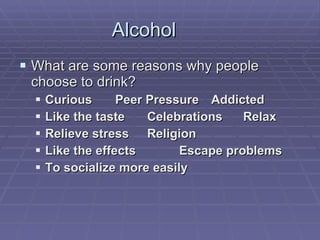
Alcohol What are some reasons why people choose to drink? Curious Peer Pressure Addicted Like the taste Celebrations Relax Relieve stress Religion Like the effects Escape problems To socialize more easily
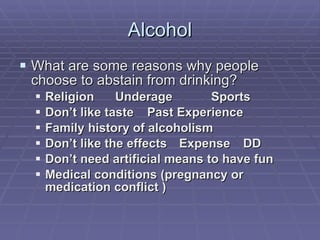
Alcohol What are some reasons why people choose to abstain from drinking? Religion Underage Sports Don’t like taste Past Experience Family history of alcoholism Don’t like the effects Expense DD Don’t need artificial means to have fun Medical conditions (pregnancy or medication conflict )
Alcohol True or False: Alcohol passes through the body the same way every time?
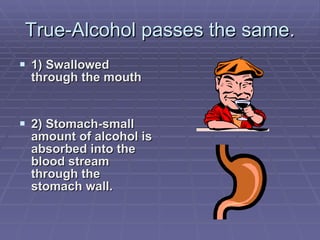
True-Alcohol passes the same. 1) Swallowed through the mouth 2) Stomach-small amount of alcohol is absorbed into the blood stream through the stomach wall.
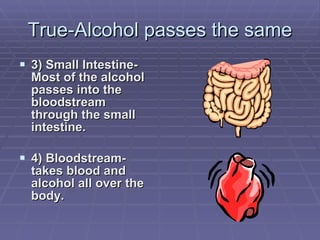
True-Alcohol passes the same 3) Small Intestine- Most of the alcohol passes into the bloodstream through the small intestine. 4) Bloodstream-takes blood and alcohol all over the body.
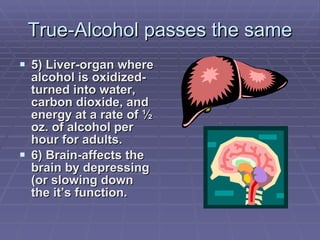
True-Alcohol passes the same 5) Liver-organ where alcohol is oxidized-turned into water, carbon dioxide, and energy at a rate of ½ oz. of alcohol per hour for adults. 6) Brain-affects the brain by depressing (or slowing down the it’s function.
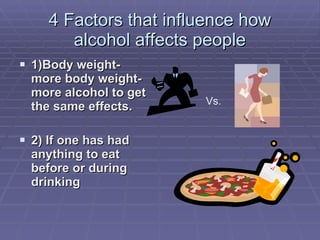
4 Factors that influence how alcohol affects people 1)Body weight- more body weight-more alcohol to get the same effects. 2) If one has had anything to eat before or during drinking Vs.
4 Factors that influence how alcohol affects people 3) Amount of alcohol consumed 4) Thoughts & Expectations: Often what you think alcohol will do for you is what it actually does for you.
Define Psychological tolerance Learning what the effects of alcohol are and then compensating for those effects so that a person does not appear to be as affected by alcohol as they really are.
Alcohol’s Most Common Effects 1) Pleasure 2) Inhibitions loosened: “Life of the Party” 3) Thinking skills impaired 4)Physical performance impaired 5)Diseases and Bodily Damage: Cirrhosis of liver Brain function Delirium Tremens Death
Alcohol’s Most Common Effects 6) Physical Tolerance: body gets used to having the alcohol in the system-need more alcohol to get the same effects with smaller amounts previously. 7)Body Temperature-generates more heat as it cools off the body lowering body temp.
Alcohol’s Most Common Effects 8) Energizer: makes person seem like they have more energy. Example: run a lot faster-all a myth. 9) Hangovers: happens after all alcohol has left body.  There is no cure or short cut for getting rid of hangover, except time.
Most People who die from cirrhosis of the liver are heavy drinkers?  T or F True- There are other causes of cirrhosis, but by far the most common cause is heavy alcohol drinking.
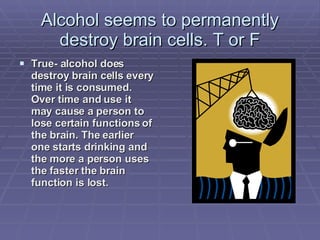
Alcohol seems to permanently destroy brain cells. T or F True- alcohol does destroy brain cells every time it is consumed.  Over time and use it may cause a person to lose certain functions of the brain. The earlier one starts drinking and the more a person uses the faster the brain function is lost.
Define Delirium Tremens Hallucinations suffered by an alcoholic when they do not have alcohol in their system.  In other words, when someone who is addicted to alcohol is going through withdrawal.
3 People die in the US from alcohol poisoning everyday.  T or F True- over 1,095 people die in a year simply from drinking too much too fast!
Define Physical Tolerance: When one needs more and more of a substance to get the same effects they used to get with smaller amounts.
What are 3 reasons alcohol has a stronger effect on Teens than adults? 1) Usually smaller body weight 2) Less psychological tolerance for teens 3) More stress in teen lives 4) Liver does not completely mature until early 20’s-can’t oxidize alcohol as fast as a result.
Define BAC Blood Alcohol Concentration/Content: How much alcohol is in your system compared to how much total blood volume you have. .08% is the illegal driving limit in MN.
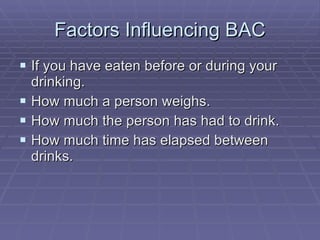
Factors Influencing BAC If you have eaten before or during your drinking. How much a person weighs. How much the person has had to drink. How much time has elapsed between drinks.
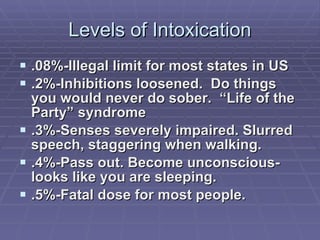
Levels of Intoxication .08%-Illegal limit for most states in US .2%-Inhibitions loosened.  Do things you would never do sober.  “Life of the Party” syndrome .3%-Senses severely impaired. Slurred speech, staggering when walking. .4%-Pass out. Become unconscious-looks like you are sleeping. .5%-Fatal dose for most people.
Define a Social Drinker A social drinker is a person who can control their drinking.  They rarely if ever drink to excess.
Define a Problem Drinker: A person who can control their drinking. Do not have to drink very often but when they do drink they cause problems for themselves or others Abuse spouse or children Drive under the influence Drinking aggravates other medical conditions .
Define alcoholism: A person who can not control their drinking at all or only for a short period of time.  When an alcoholic starts drinking they will continue to drink until they run out of alcohol or they pass out. Most important reason alcoholics won’t admit they have a problem is that it means they won’t be able to continue to drink.
Drinking Stats: More teens have problem with alcohol than any other chemical. More men than women have problems with alcohol-there are probably more women than we are aware of-easier for them to hide.
Why do People continue to drink despite problems? Psychological: Something in their thoughts and feelings causes them to drink. Social: How people drink is a result from what is going on in their society.  Whether they are taught that drunkenness is acceptable or not. Biological: There is some evidence that alcoholism may be genetic.
Treatments Drugs: Antabuse is most common.  Makes a person ill if they drink with this in their system. Talking Cures: psychologists, trained counselors. Alcoholics Anonymous (AA): World-wide organization where alcoholics talk about what their drinking did to them and their families.

Alcohol Presentation

  • 1.
    Alcohol : Pleasuresand Problems
  • 2.
    Alcohol What aresome reasons why people choose to drink? Curious Peer Pressure Addicted Like the taste Celebrations Relax Relieve stress Religion Like the effects Escape problems To socialize more easily
  • 3.
    Alcohol What aresome reasons why people choose to abstain from drinking? Religion Underage Sports Don’t like taste Past Experience Family history of alcoholism Don’t like the effects Expense DD Don’t need artificial means to have fun Medical conditions (pregnancy or medication conflict )
  • 4.
    Alcohol True orFalse: Alcohol passes through the body the same way every time?
  • 5.
    True-Alcohol passes thesame. 1) Swallowed through the mouth 2) Stomach-small amount of alcohol is absorbed into the blood stream through the stomach wall.
  • 6.
    True-Alcohol passes thesame 3) Small Intestine- Most of the alcohol passes into the bloodstream through the small intestine. 4) Bloodstream-takes blood and alcohol all over the body.
  • 7.
    True-Alcohol passes thesame 5) Liver-organ where alcohol is oxidized-turned into water, carbon dioxide, and energy at a rate of ½ oz. of alcohol per hour for adults. 6) Brain-affects the brain by depressing (or slowing down the it’s function.
  • 8.
    4 Factors thatinfluence how alcohol affects people 1)Body weight- more body weight-more alcohol to get the same effects. 2) If one has had anything to eat before or during drinking Vs.
  • 9.
    4 Factors thatinfluence how alcohol affects people 3) Amount of alcohol consumed 4) Thoughts & Expectations: Often what you think alcohol will do for you is what it actually does for you.
  • 10.
    Define Psychological toleranceLearning what the effects of alcohol are and then compensating for those effects so that a person does not appear to be as affected by alcohol as they really are.
  • 11.
    Alcohol’s Most CommonEffects 1) Pleasure 2) Inhibitions loosened: “Life of the Party” 3) Thinking skills impaired 4)Physical performance impaired 5)Diseases and Bodily Damage: Cirrhosis of liver Brain function Delirium Tremens Death
  • 12.
    Alcohol’s Most CommonEffects 6) Physical Tolerance: body gets used to having the alcohol in the system-need more alcohol to get the same effects with smaller amounts previously. 7)Body Temperature-generates more heat as it cools off the body lowering body temp.
  • 13.
    Alcohol’s Most CommonEffects 8) Energizer: makes person seem like they have more energy. Example: run a lot faster-all a myth. 9) Hangovers: happens after all alcohol has left body. There is no cure or short cut for getting rid of hangover, except time.
  • 14.
    Most People whodie from cirrhosis of the liver are heavy drinkers? T or F True- There are other causes of cirrhosis, but by far the most common cause is heavy alcohol drinking.
  • 15.
    Alcohol seems topermanently destroy brain cells. T or F True- alcohol does destroy brain cells every time it is consumed. Over time and use it may cause a person to lose certain functions of the brain. The earlier one starts drinking and the more a person uses the faster the brain function is lost.
  • 16.
    Define Delirium TremensHallucinations suffered by an alcoholic when they do not have alcohol in their system. In other words, when someone who is addicted to alcohol is going through withdrawal.
  • 17.
    3 People diein the US from alcohol poisoning everyday. T or F True- over 1,095 people die in a year simply from drinking too much too fast!
  • 18.
    Define Physical Tolerance:When one needs more and more of a substance to get the same effects they used to get with smaller amounts.
  • 19.
    What are 3reasons alcohol has a stronger effect on Teens than adults? 1) Usually smaller body weight 2) Less psychological tolerance for teens 3) More stress in teen lives 4) Liver does not completely mature until early 20’s-can’t oxidize alcohol as fast as a result.
  • 20.
    Define BAC BloodAlcohol Concentration/Content: How much alcohol is in your system compared to how much total blood volume you have. .08% is the illegal driving limit in MN.
  • 21.
    Factors Influencing BACIf you have eaten before or during your drinking. How much a person weighs. How much the person has had to drink. How much time has elapsed between drinks.
  • 22.
    Levels of Intoxication.08%-Illegal limit for most states in US .2%-Inhibitions loosened. Do things you would never do sober. “Life of the Party” syndrome .3%-Senses severely impaired. Slurred speech, staggering when walking. .4%-Pass out. Become unconscious-looks like you are sleeping. .5%-Fatal dose for most people.
  • 23.
    Define a SocialDrinker A social drinker is a person who can control their drinking. They rarely if ever drink to excess.
  • 24.
    Define a ProblemDrinker: A person who can control their drinking. Do not have to drink very often but when they do drink they cause problems for themselves or others Abuse spouse or children Drive under the influence Drinking aggravates other medical conditions .
  • 25.
    Define alcoholism: Aperson who can not control their drinking at all or only for a short period of time. When an alcoholic starts drinking they will continue to drink until they run out of alcohol or they pass out. Most important reason alcoholics won’t admit they have a problem is that it means they won’t be able to continue to drink.
  • 26.
    Drinking Stats: Moreteens have problem with alcohol than any other chemical. More men than women have problems with alcohol-there are probably more women than we are aware of-easier for them to hide.
  • 27.
    Why do Peoplecontinue to drink despite problems? Psychological: Something in their thoughts and feelings causes them to drink. Social: How people drink is a result from what is going on in their society. Whether they are taught that drunkenness is acceptable or not. Biological: There is some evidence that alcoholism may be genetic.
  • 28.
    Treatments Drugs: Antabuseis most common. Makes a person ill if they drink with this in their system. Talking Cures: psychologists, trained counselors. Alcoholics Anonymous (AA): World-wide organization where alcoholics talk about what their drinking did to them and their families.