ALGAE
BODY CHARACTERISTICS
Size and Shape :
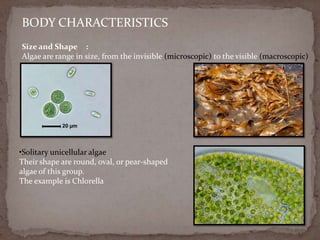
Algae are range in size, from the invisible (microscopic) to the visible (macroscopic)


•Solitary unicellular algae
Their shape are round, oval, or pear-shaped
algae of this group.
The example is Chlorella
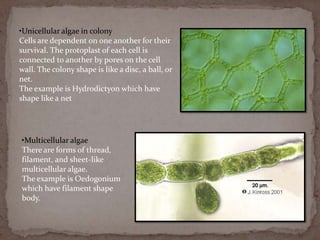
•Unicellular algae in colony
Cells are dependent on one another for their
survival. The protoplast of each cell is
connected to another by pores on the cell
wall. The colony shape is like a disc, a ball, or
net.
The example is Hydrodictyon which have
shape like a net


•Multicellular algae
There are forms of thread,
filament, and sheet-like
multicellular algae.
The example is Oedogonium
which have filament shape
body.
BODY STRUCTURE
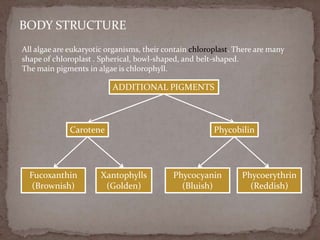
All algae are eukaryotic organisms, their contain chloroplast. There are many
shape of chloroplast . Spherical, bowl-shaped, and belt-shaped.
The main pigments in algae is chlorophyll.

                          ADDITIONAL PIGMENTS


              Carotene                                  Phycobilin


  Fucoxanthin          Xantophylls          Phycocyanin         Phycoerythrin
   (Brownish)           (Golden)              (Bluish)            (Reddish)
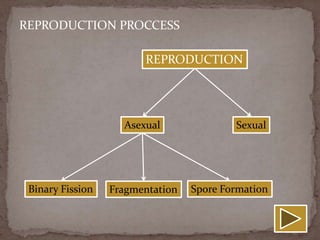
REPRODUCTION PROCCESS

                        REPRODUCTION


                    Asexual               Sexual


 Binary Fission   Fragmentation   Spore Formation
REPRODUCTION
Binary Fission
Binary Fission occurs only in unicellular algae. Such as Chlorella and Euglena.
A mother cell divided into two to form two identical daughter cells.
REPRODUCTION
Fragmentation
Fragmentation occurs only in multicellular filamentous and thallus algae. Such
as Spirogyra, Laminaria and Sargassum
REPRODUCTION
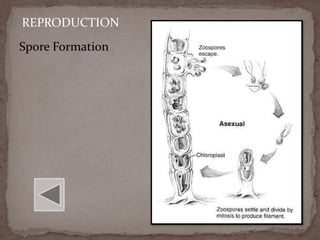
Spore Formation
REPRODUCTION
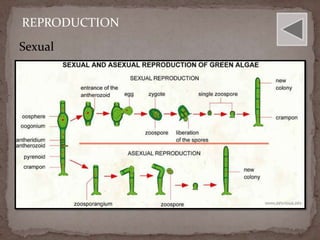
Sexual
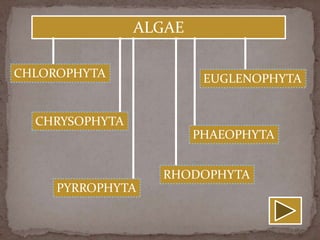
ALGAE

CHLOROPHYTA              EUGLENOPHYTA


  CHRYSOPHYTA
                        PHAEOPHYTA


                  RHODOPHYTA
     PYRROPHYTA
EUGLENOPHYTA
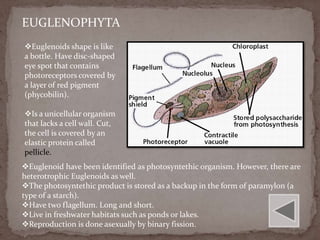
Euglenoids shape is like
a bottle. Have disc-shaped
eye spot that contains
photoreceptors covered by
a layer of red pigment
(phycobilin).

Is a unicellular organism
that lacks a cell wall. Cut,
the cell is covered by an
elastic protein called
pellicle.
Euglenoid have been identified as photosyntethic organism. However, there are
heterotrophic Euglenoids as well.
The photosyntethic product is stored as a backup in the form of paramylon (a
type of a starch).
Have two flagellum. Long and short.
Live in freshwater habitats such as ponds or lakes.
Reproduction is done asexually by binary fission.
CHLOROPHYTA

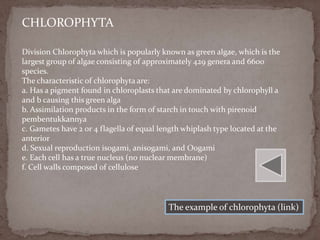
Division Chlorophyta which is popularly known as green algae, which is the
largest group of algae consisting of approximately 429 genera and 6600
species.
The characteristic of chlorophyta are:
a. Has a pigment found in chloroplasts that are dominated by chlorophyll a
and b causing this green alga
b. Assimilation products in the form of starch in touch with pirenoid
pembentukkannya
c. Gametes have 2 or 4 flagella of equal length whiplash type located at the
anterior
d. Sexual reproduction isogami, anisogami, and Oogami
e. Each cell has a true nucleus (no nuclear membrane)
f. Cell walls composed of cellulose


                                           The example of chlorophyta (link)
CHRYSOPHYTA
Have a dominant carotene pigment,
xanthophyll.

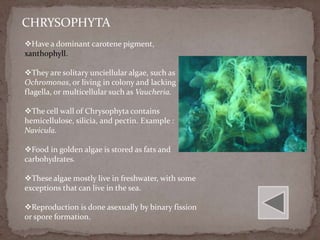
They are solitary unciellular algae, such as
Ochromonas, or living in colony and lacking
flagella, or multicellular such as Vaucheria.

The cell wall of Chrysophyta contains
hemicellulose, silicia, and pectin. Example :
Navicula.

Food in golden algae is stored as fats and
carbohydrates.

These algae mostly live in freshwater, with some
exceptions that can live in the sea.

Reproduction is done asexually by binary fission
or spore formation.
PHAEOPHYTA

Phaeophyta are the most complex forms of algae. The cell walls are composed of
cellulose and alginic acid (a complex polysaccharide). Unlike green algae or
Cholorophyta, they lack true starch. The food reserves contain sugar, higher
alcohol and other complex forms of polysaccharides. The members of phaeophyta
belonging to Laminarales are called kelps.

Kelps are the only algae with a significant internal tissue differentiation. Though
true conductive tissues like xylem and phloem are absent, kelps show some sort of
conductive tissues. Speaking about the reproduction of phaeophyta, they can
reproduce by means of both sexual and asexual means. Higher phaeophyta have
life cycle consisting of both haploid and diploid stages, referred to as an
alternation of generation. The thallus representing haploid stage and diploid
stage may be similar (isomorphic) or different (heteromorphic).
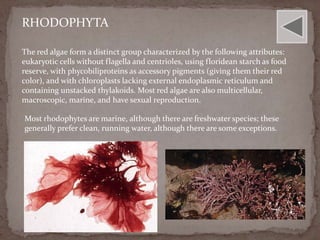
RHODOPHYTA

The red algae form a distinct group characterized by the following attributes:
eukaryotic cells without flagella and centrioles, using floridean starch as food
reserve, with phycobiliproteins as accessory pigments (giving them their red
color), and with chloroplasts lacking external endoplasmic reticulum and
containing unstacked thylakoids. Most red algae are also multicellular,
macroscopic, marine, and have sexual reproduction.

Most rhodophytes are marine, although there are freshwater species; these
generally prefer clean, running water, although there are some exceptions.
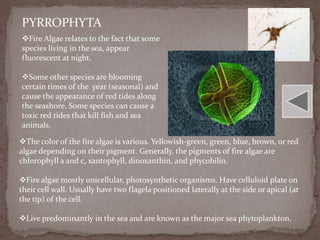
PYRROPHYTA
Fire Algae relates to the fact that some
species living in the sea, appear
fluorescent at night.

Some other species are blooming
certain times of the year (seasonal) and
cause the appearance of red tides along
the seashore. Some species can cause a
toxic red tides that kill fish and sea
animals.

The color of the fire algae is various. Yellowish-green, green, blue, brown, or red
algae depending on their pigment. Generally, the pigments of fire algae are
chlorophyll a and c, xantophyll, dinoxanthin, and phycobilin.

Fire algae mostly unicellular, photosynthetic organisms. Have celluloid plate on
their cell wall. Usually have two flagela positioned laterally at the side or apical (at
the tip) of the cell.

Live predominantly in the sea and are known as the major sea phytoplankton.
Thank’s for attention 

Alga

  • 1.
  • 2.
    BODY CHARACTERISTICS Size andShape : Algae are range in size, from the invisible (microscopic) to the visible (macroscopic) •Solitary unicellular algae Their shape are round, oval, or pear-shaped algae of this group. The example is Chlorella
  • 3.
    •Unicellular algae incolony Cells are dependent on one another for their survival. The protoplast of each cell is connected to another by pores on the cell wall. The colony shape is like a disc, a ball, or net. The example is Hydrodictyon which have shape like a net •Multicellular algae There are forms of thread, filament, and sheet-like multicellular algae. The example is Oedogonium which have filament shape body.
  • 4.
    BODY STRUCTURE All algaeare eukaryotic organisms, their contain chloroplast. There are many shape of chloroplast . Spherical, bowl-shaped, and belt-shaped. The main pigments in algae is chlorophyll. ADDITIONAL PIGMENTS Carotene Phycobilin Fucoxanthin Xantophylls Phycocyanin Phycoerythrin (Brownish) (Golden) (Bluish) (Reddish)
  • 5.
    REPRODUCTION PROCCESS REPRODUCTION Asexual Sexual Binary Fission Fragmentation Spore Formation
  • 6.
    REPRODUCTION Binary Fission Binary Fissionoccurs only in unicellular algae. Such as Chlorella and Euglena. A mother cell divided into two to form two identical daughter cells.
  • 7.
    REPRODUCTION Fragmentation Fragmentation occurs onlyin multicellular filamentous and thallus algae. Such as Spirogyra, Laminaria and Sargassum
  • 8.
  • 9.
  • 10.
    ALGAE CHLOROPHYTA EUGLENOPHYTA CHRYSOPHYTA PHAEOPHYTA RHODOPHYTA PYRROPHYTA
  • 11.
    EUGLENOPHYTA Euglenoids shape islike a bottle. Have disc-shaped eye spot that contains photoreceptors covered by a layer of red pigment (phycobilin). Is a unicellular organism that lacks a cell wall. Cut, the cell is covered by an elastic protein called pellicle. Euglenoid have been identified as photosyntethic organism. However, there are heterotrophic Euglenoids as well. The photosyntethic product is stored as a backup in the form of paramylon (a type of a starch). Have two flagellum. Long and short. Live in freshwater habitats such as ponds or lakes. Reproduction is done asexually by binary fission.
  • 12.
    CHLOROPHYTA Division Chlorophyta whichis popularly known as green algae, which is the largest group of algae consisting of approximately 429 genera and 6600 species. The characteristic of chlorophyta are: a. Has a pigment found in chloroplasts that are dominated by chlorophyll a and b causing this green alga b. Assimilation products in the form of starch in touch with pirenoid pembentukkannya c. Gametes have 2 or 4 flagella of equal length whiplash type located at the anterior d. Sexual reproduction isogami, anisogami, and Oogami e. Each cell has a true nucleus (no nuclear membrane) f. Cell walls composed of cellulose The example of chlorophyta (link)
  • 13.
    CHRYSOPHYTA Have a dominantcarotene pigment, xanthophyll. They are solitary unciellular algae, such as Ochromonas, or living in colony and lacking flagella, or multicellular such as Vaucheria. The cell wall of Chrysophyta contains hemicellulose, silicia, and pectin. Example : Navicula. Food in golden algae is stored as fats and carbohydrates. These algae mostly live in freshwater, with some exceptions that can live in the sea. Reproduction is done asexually by binary fission or spore formation.
  • 14.
    PHAEOPHYTA Phaeophyta are themost complex forms of algae. The cell walls are composed of cellulose and alginic acid (a complex polysaccharide). Unlike green algae or Cholorophyta, they lack true starch. The food reserves contain sugar, higher alcohol and other complex forms of polysaccharides. The members of phaeophyta belonging to Laminarales are called kelps. Kelps are the only algae with a significant internal tissue differentiation. Though true conductive tissues like xylem and phloem are absent, kelps show some sort of conductive tissues. Speaking about the reproduction of phaeophyta, they can reproduce by means of both sexual and asexual means. Higher phaeophyta have life cycle consisting of both haploid and diploid stages, referred to as an alternation of generation. The thallus representing haploid stage and diploid stage may be similar (isomorphic) or different (heteromorphic).
  • 15.
    RHODOPHYTA The red algaeform a distinct group characterized by the following attributes: eukaryotic cells without flagella and centrioles, using floridean starch as food reserve, with phycobiliproteins as accessory pigments (giving them their red color), and with chloroplasts lacking external endoplasmic reticulum and containing unstacked thylakoids. Most red algae are also multicellular, macroscopic, marine, and have sexual reproduction. Most rhodophytes are marine, although there are freshwater species; these generally prefer clean, running water, although there are some exceptions.
  • 16.
    PYRROPHYTA Fire Algae relatesto the fact that some species living in the sea, appear fluorescent at night. Some other species are blooming certain times of the year (seasonal) and cause the appearance of red tides along the seashore. Some species can cause a toxic red tides that kill fish and sea animals. The color of the fire algae is various. Yellowish-green, green, blue, brown, or red algae depending on their pigment. Generally, the pigments of fire algae are chlorophyll a and c, xantophyll, dinoxanthin, and phycobilin. Fire algae mostly unicellular, photosynthetic organisms. Have celluloid plate on their cell wall. Usually have two flagela positioned laterally at the side or apical (at the tip) of the cell. Live predominantly in the sea and are known as the major sea phytoplankton.
  • 17.