
















By SREEREMYA.S
INTRODUCTION 
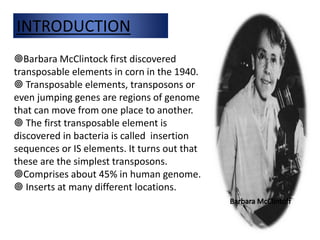
Barbara McClintock first discovered 
transposable elements in corn in the 1940. 
 Transposable elements, transposons or 
even jumping genes are regions of genome 
that can move from one place to another. 
 The first transposable element is 
discovered in bacteria is called insertion 
sequences or IS elements. It turns out that 
these are the simplest transposons. 
Comprises about 45% in human genome. 
 Inserts at many different locations.
The final method of changing the DNA in a genome 
that we will consider is transposition, which is the 
movement of DNA from one location to another. 
Segments of DNA with this ability to move are 
called transposable elements.
Transposable elements were formerly thought to be 
found only in a few species, but now they are 
recognized as components of the genomes of virtually 
all species. In fact, transposable elements (both active 
and inactive) occupy approximately half the human 
genome and a substantially greater fraction of some 
plant genomes!
Types of transposable elements 
Different types of transposable elements are present 
in both prokaryotes and eukaryotes. 
There 3 types in prokaryotes 
a) Insertion sequences 
b) Transposons 
c) Bacteriophage μ
Types of transposable elements 
Different types of transposable elements are present 
in both prokaryotes and eukaryotes. 
There 3 types in prokaryotes 
a) Insertion sequences 
b) Transposons 
c) Bacteriophage μ
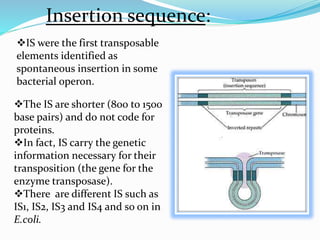
Insertion sequence: 
IS were the first transposable 
elements identified as 
spontaneous insertion in some 
bacterial operon. 
The IS are shorter (800 to 1500 
base pairs) and do not code for 
proteins. 
In fact, IS carry the genetic 
information necessary for their 
transposition (the gene for the 
enzyme transposase). 
There are different IS such as 
IS1, IS2, IS3 and IS4 and so on in 
E.coli.
Transposons: 
Transposons are similar to IS elements but carry 
additional genes. 
Tn are several thousands base pair long and have 
genes coding for one or more proteins 
On either side of a transposon is a short direct 
repeat. The sequence into which the transposable 
element insert is called target sequence
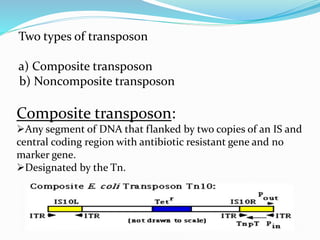
Two types of transposon 
a) Composite transposon 
b) Noncomposite transposon 
Composite transposon: 
Any segment of DNA that flanked by two copies of an IS and 
central coding region with antibiotic resistant gene and no 
marker gene. 
Designated by the Tn.
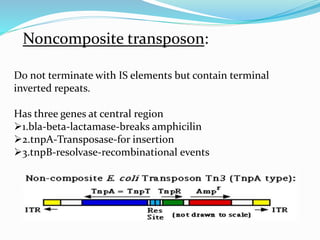
Noncomposite transposon: 
Do not terminate with IS elements but contain terminal 
inverted repeats. 
Has three genes at central region 
1.bla-beta-lactamase-breaks amphicilin 
2.tnpA-Transposase-for insertion 
3.tnpB-resolvase-recombinational events
Bacteriophage Mu 
The longest transposon knows so far. 
Caries numerous genes for viral head and tail 
formation. 
The vegetative replication of mu produces about 100 
viral chromosomes in a cell arises from the 
transposition of Mu to about 100 different target sites. 
Therefore considered as giant mutator transposon.
Tranposable
Tranposable
Tranposable
Tranposable
Tranposable
Tranposable
Tranposable
Tranposable
Tranposable
Tranposable
Tranposable
Tranposable
Tranposable
Tranposable
Tranposable
Tranposable

Tranposable

  • 1.
  • 2.
    INTRODUCTION Barbara McClintockfirst discovered transposable elements in corn in the 1940.  Transposable elements, transposons or even jumping genes are regions of genome that can move from one place to another.  The first transposable element is discovered in bacteria is called insertion sequences or IS elements. It turns out that these are the simplest transposons. Comprises about 45% in human genome.  Inserts at many different locations.
  • 3.
    The final methodof changing the DNA in a genome that we will consider is transposition, which is the movement of DNA from one location to another. Segments of DNA with this ability to move are called transposable elements.
  • 4.
    Transposable elements wereformerly thought to be found only in a few species, but now they are recognized as components of the genomes of virtually all species. In fact, transposable elements (both active and inactive) occupy approximately half the human genome and a substantially greater fraction of some plant genomes!
  • 5.
    Types of transposableelements Different types of transposable elements are present in both prokaryotes and eukaryotes. There 3 types in prokaryotes a) Insertion sequences b) Transposons c) Bacteriophage μ
  • 6.
    Types of transposableelements Different types of transposable elements are present in both prokaryotes and eukaryotes. There 3 types in prokaryotes a) Insertion sequences b) Transposons c) Bacteriophage μ
  • 7.
    Insertion sequence: ISwere the first transposable elements identified as spontaneous insertion in some bacterial operon. The IS are shorter (800 to 1500 base pairs) and do not code for proteins. In fact, IS carry the genetic information necessary for their transposition (the gene for the enzyme transposase). There are different IS such as IS1, IS2, IS3 and IS4 and so on in E.coli.
  • 8.
    Transposons: Transposons aresimilar to IS elements but carry additional genes. Tn are several thousands base pair long and have genes coding for one or more proteins On either side of a transposon is a short direct repeat. The sequence into which the transposable element insert is called target sequence
  • 9.
    Two types oftransposon a) Composite transposon b) Noncomposite transposon Composite transposon: Any segment of DNA that flanked by two copies of an IS and central coding region with antibiotic resistant gene and no marker gene. Designated by the Tn.
  • 10.
    Noncomposite transposon: Donot terminate with IS elements but contain terminal inverted repeats. Has three genes at central region 1.bla-beta-lactamase-breaks amphicilin 2.tnpA-Transposase-for insertion 3.tnpB-resolvase-recombinational events
  • 11.
    Bacteriophage Mu Thelongest transposon knows so far. Caries numerous genes for viral head and tail formation. The vegetative replication of mu produces about 100 viral chromosomes in a cell arises from the transposition of Mu to about 100 different target sites. Therefore considered as giant mutator transposon.