RNA Editing
Protein Splicing
Codon Bias
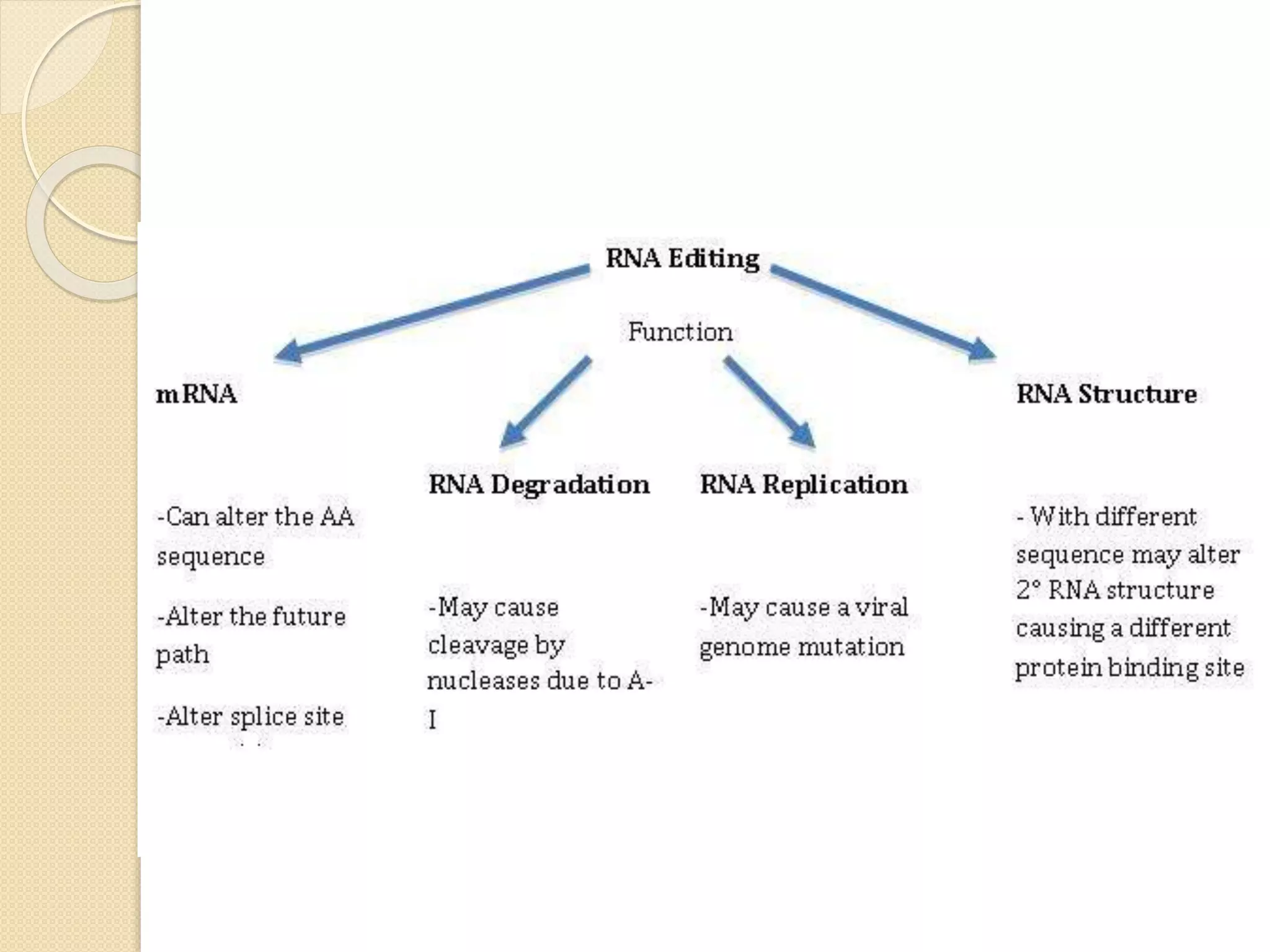
RNA Editing
 Any process, other than splicing, that
results in a change in the sequence of a
RNA transcript such that it differs from the
sequence of the DNA template
 Discovered in trypanosome mitochondria
 Also common in plant mitochondria
 Also occurs in a few chloroplast genes of
higher plants, and at least a few nuclear
genes in mammals
 As a consequence of RNA editing, functionally
distinct proteins can be produced from a single
gene.
 One gene- many proteins
 Editing and modification are done post-
transcriptional.
 Base modification (A – I, C – U, or U – C, etc)
 Insertion/Deletion
Mechanism:
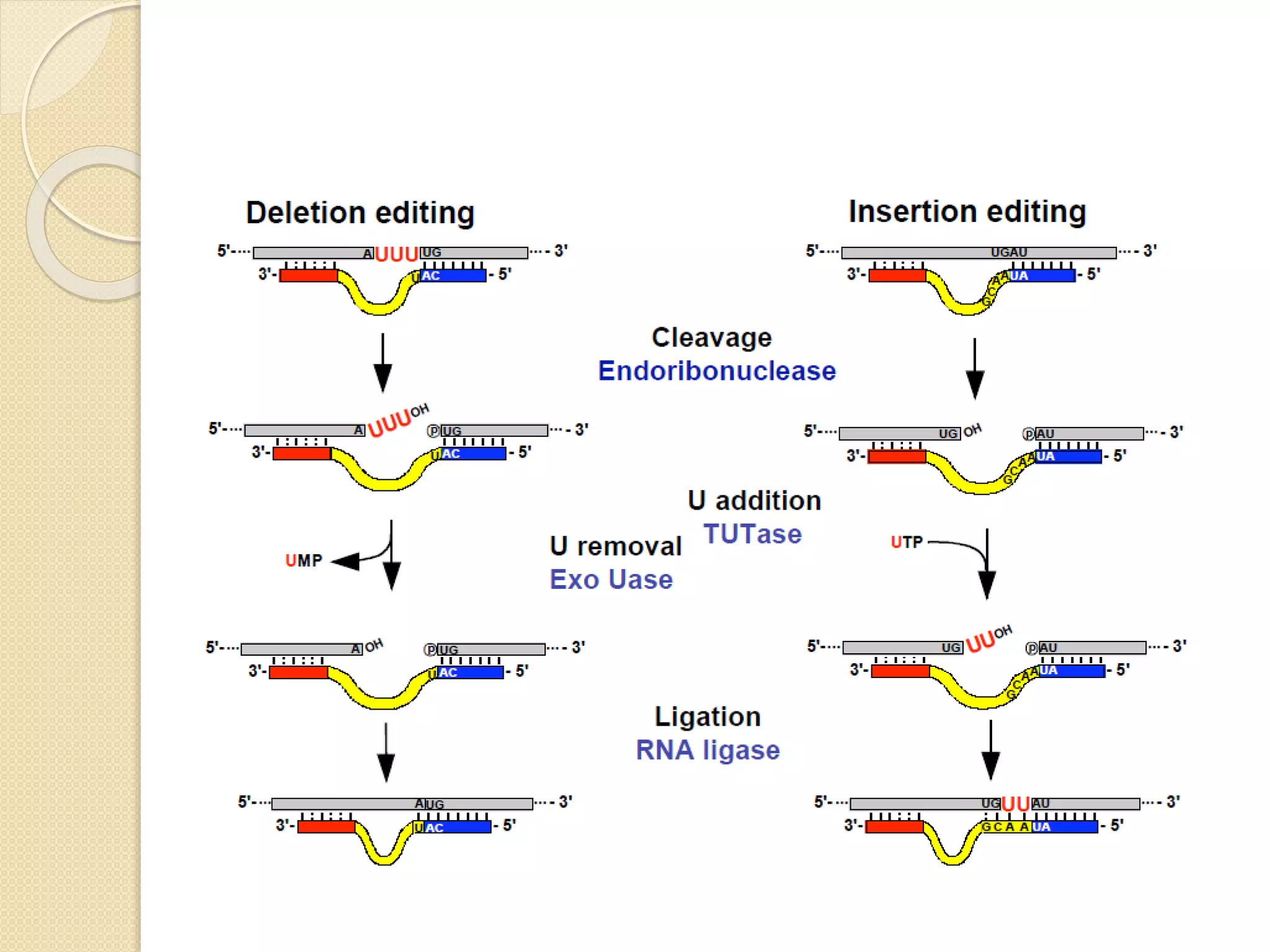
Guide RNA dependent Editing
 gRNAs are small and complementary to
portions of the edited mRNA
 Base-pairing of gRNA with unedited RNA
gives mismatched regions, which are
recognized by the editing machinery
 Machinery includes an Endonuclease, a
Terminal UridylylTransferase (TUTase), and
a RNA ligase
 Editing is directional, from 3’ to 5’
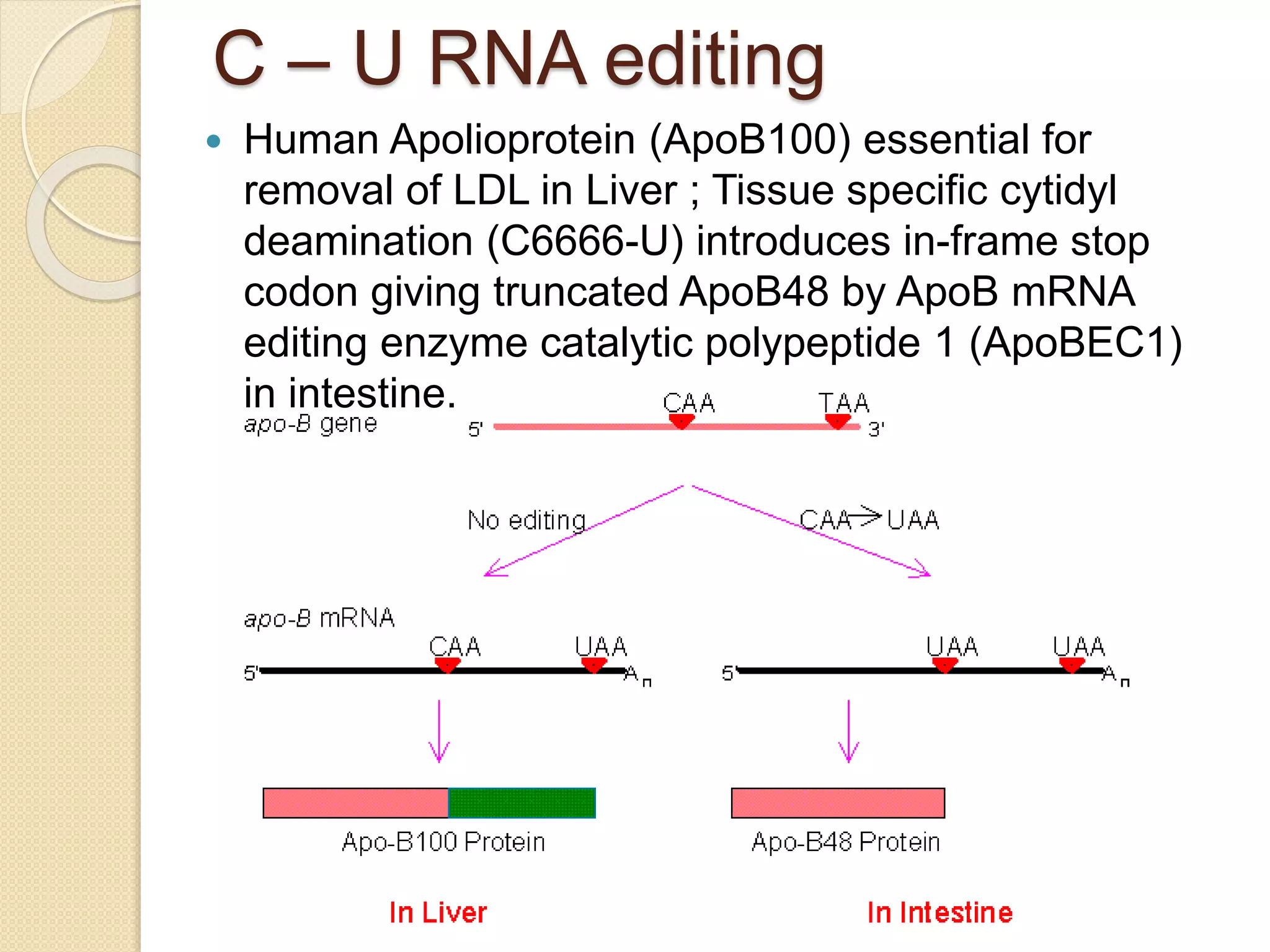
C – U RNA editing
 Human Apolioprotein (ApoB100) essential for
removal of LDL in Liver ; Tissue specific cytidyl
deamination (C6666-U) introduces in-frame stop
codon giving truncated ApoB48 by ApoB mRNA
editing enzyme catalytic polypeptide 1 (ApoBEC1)
in intestine.
A – I RNA editing
 Only adenosines within the context of RNA
molecules are targeted by ADARs.
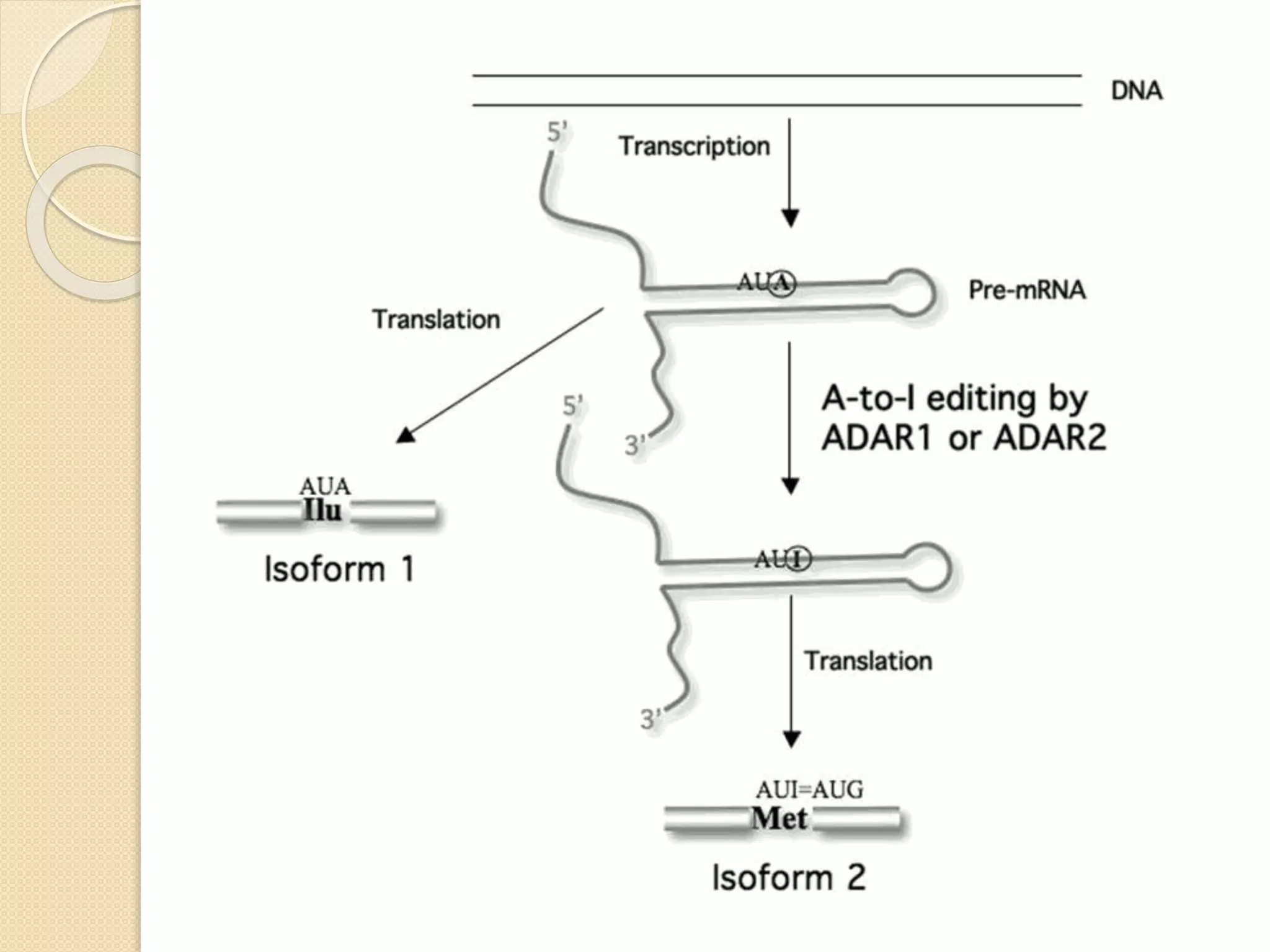
 ADARs (Adenosine deaminases acting on
RNAs) catalyze A to I only on dsRNA
structures.
 A-to-I RNA editing by ADARs proceeds via
a hydrolytic deamination mechanism
without the requirement for RNA backbone
breaks.
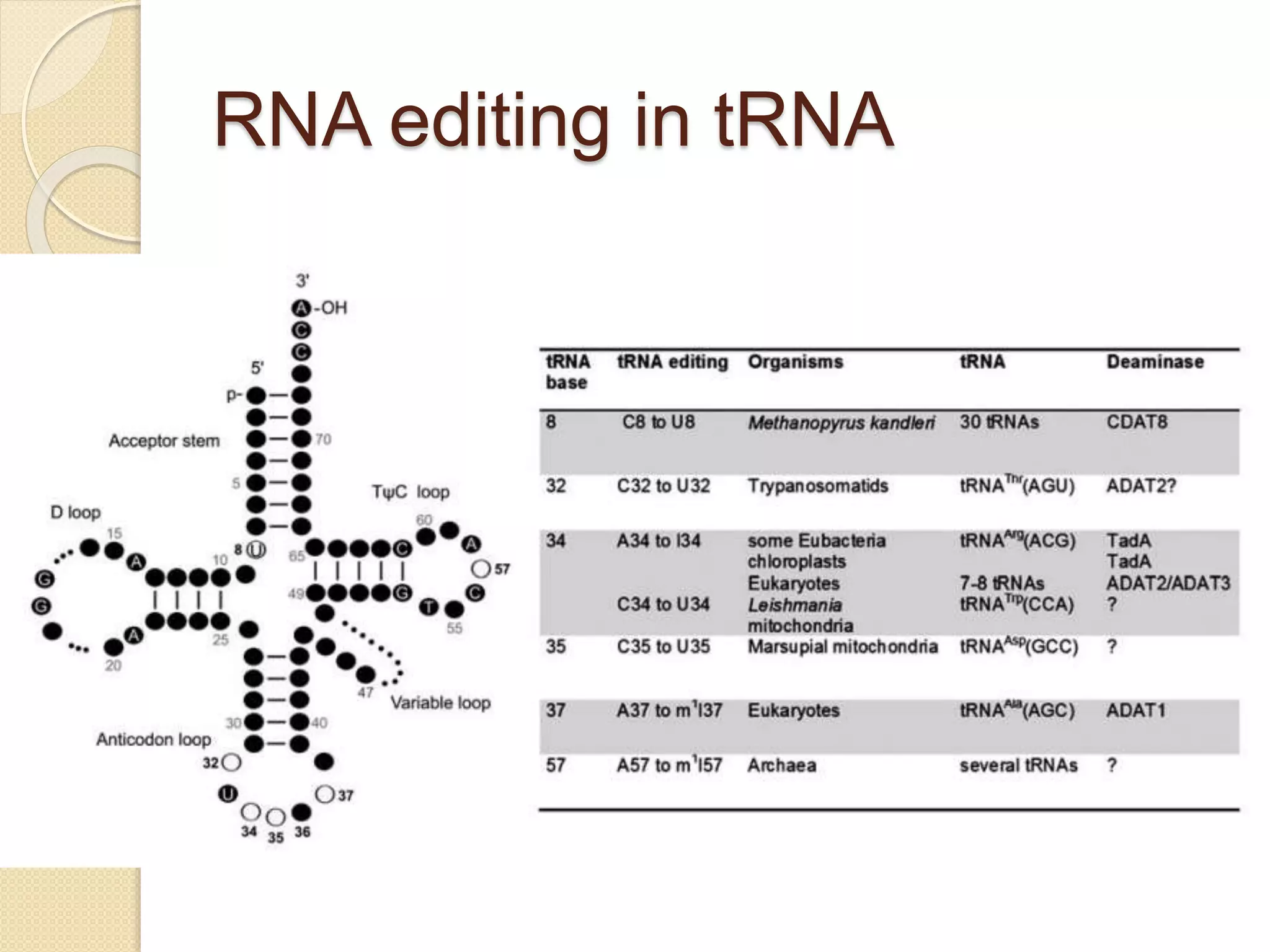
RNA editing in tRNA
Protein Splicing
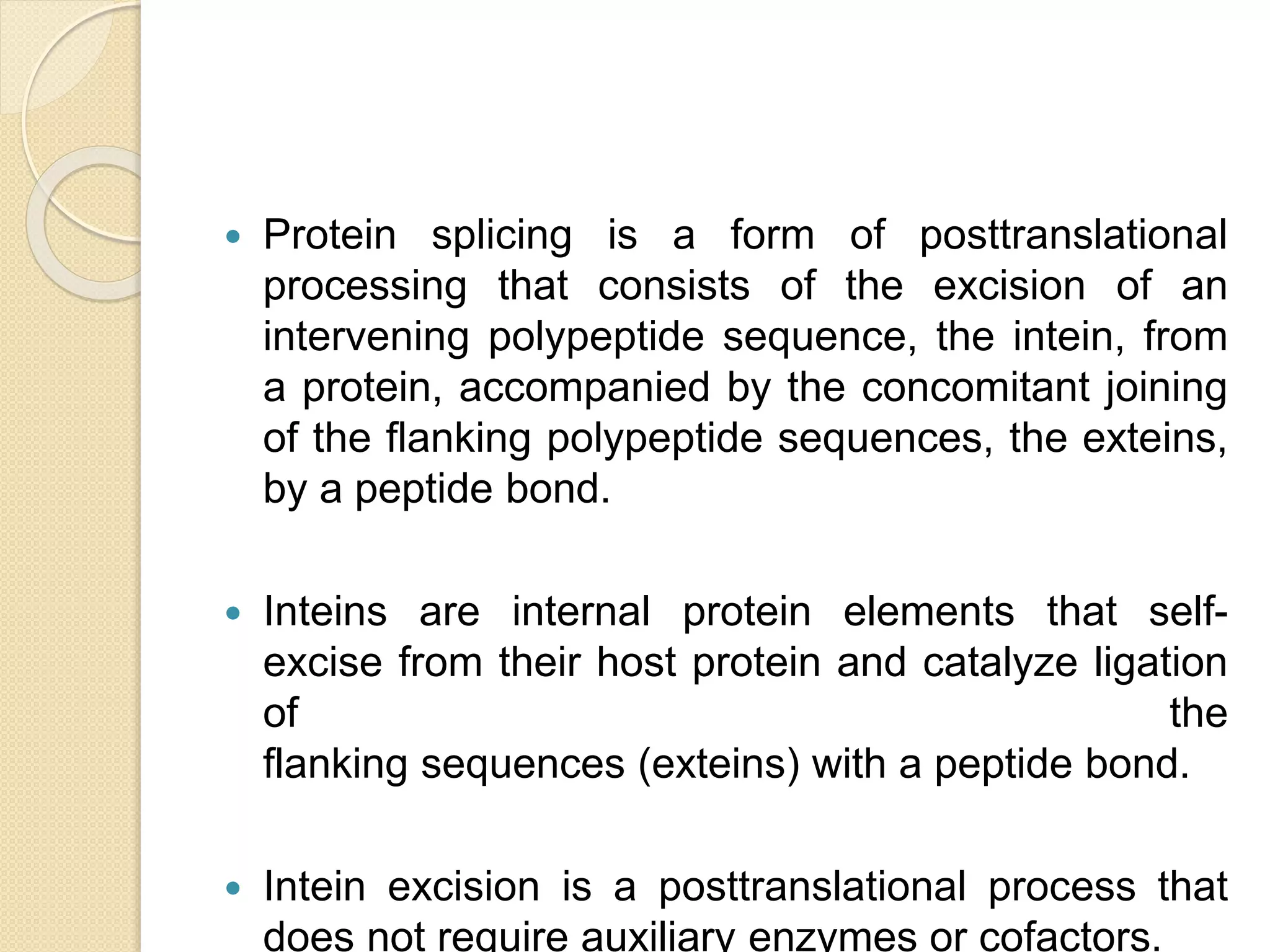
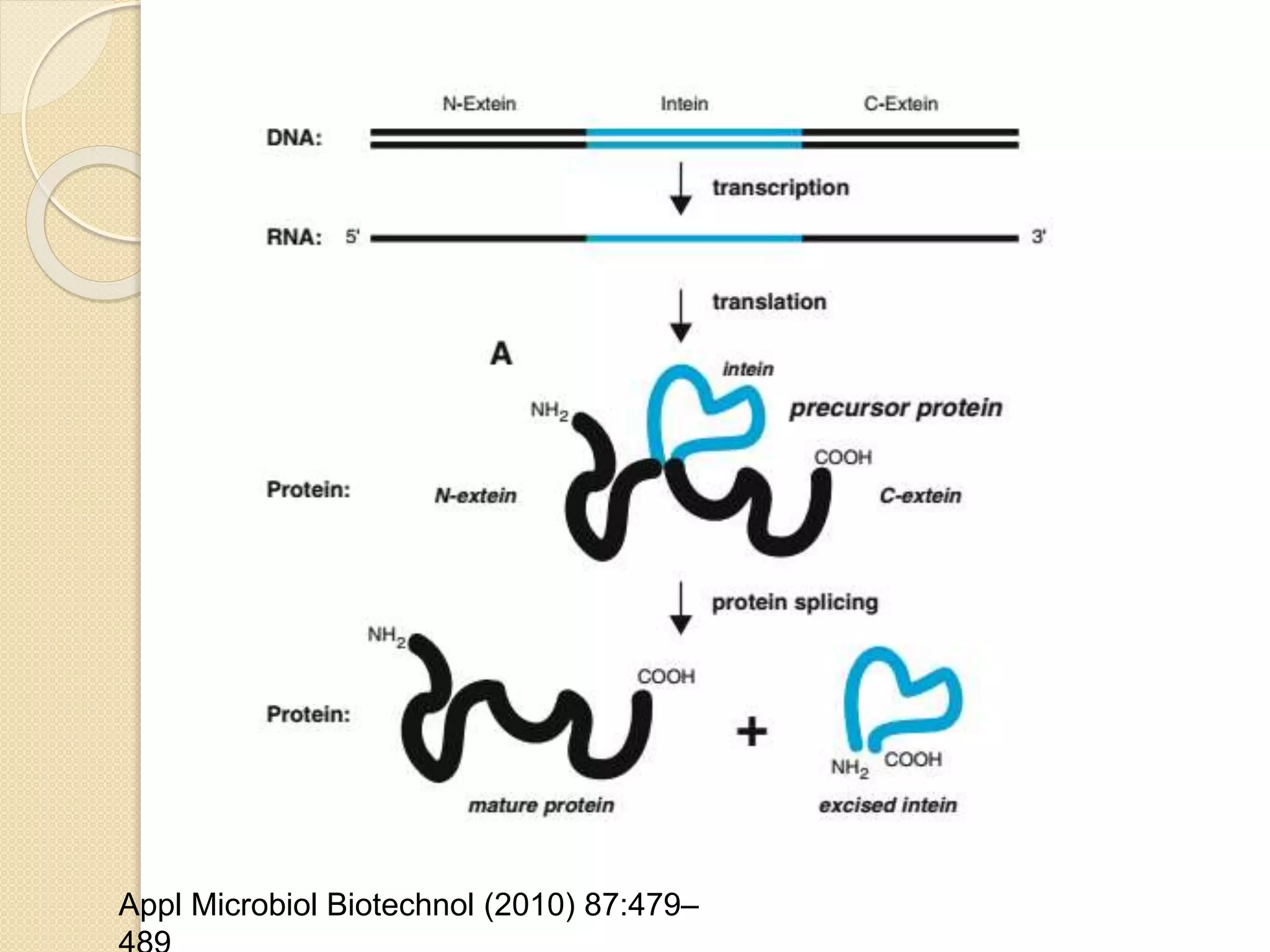
 Protein splicing is a form of posttranslational
processing that consists of the excision of an
intervening polypeptide sequence, the intein, from
a protein, accompanied by the concomitant joining
of the flanking polypeptide sequences, the exteins,
by a peptide bond.
 Inteins are internal protein elements that self-
excise from their host protein and catalyze ligation
of the
flanking sequences (exteins) with a peptide bond.
 Intein excision is a posttranslational process that
does not require auxiliary enzymes or cofactors.
Appl Microbiol Biotechnol (2010) 87:479–
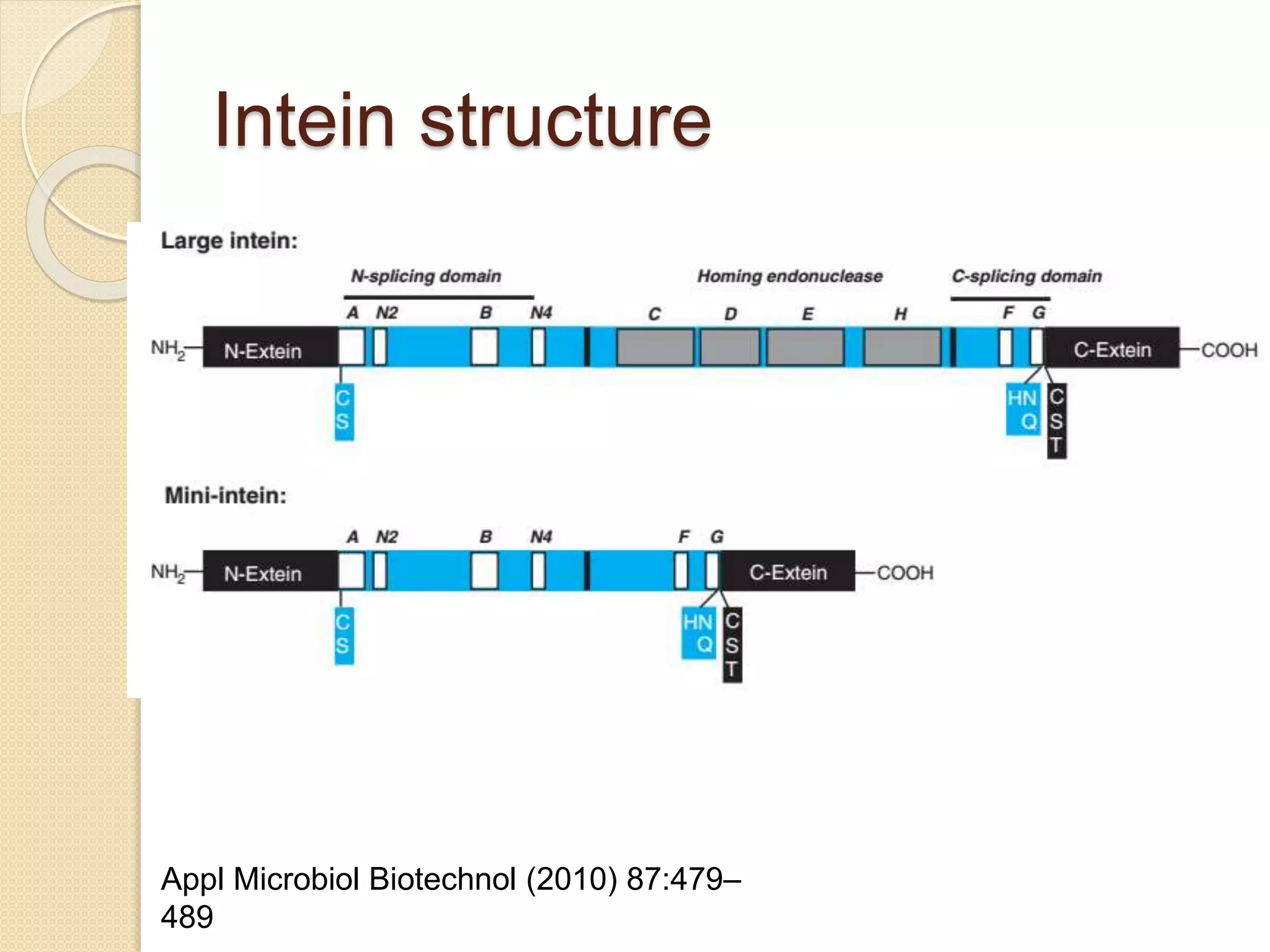
Intein structure
Appl Microbiol Biotechnol (2010) 87:479–
489
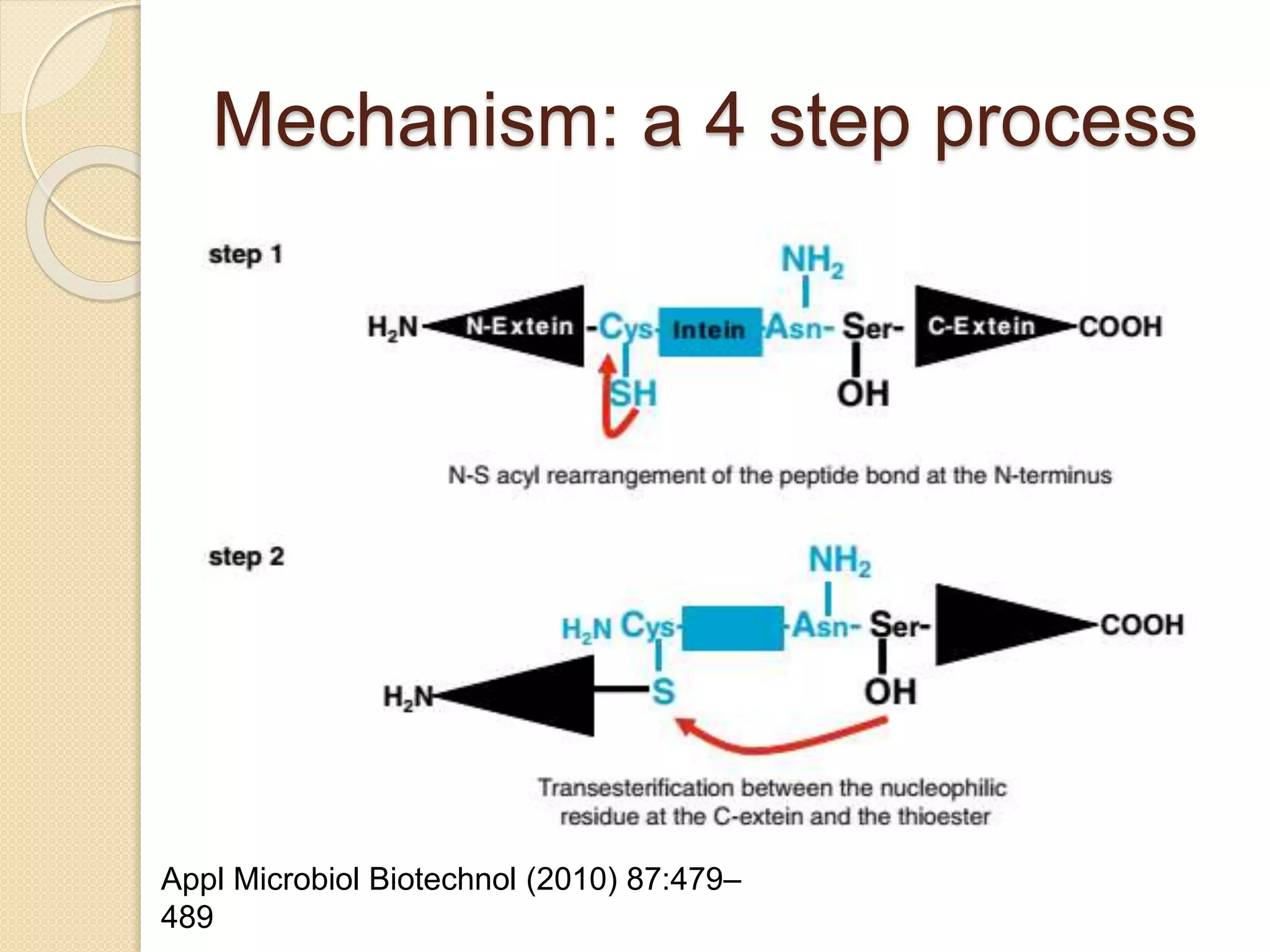
Mechanism: a 4 step process
Appl Microbiol Biotechnol (2010) 87:479–
489
Appl Microbiol Biotechnol (2010) 87:479–
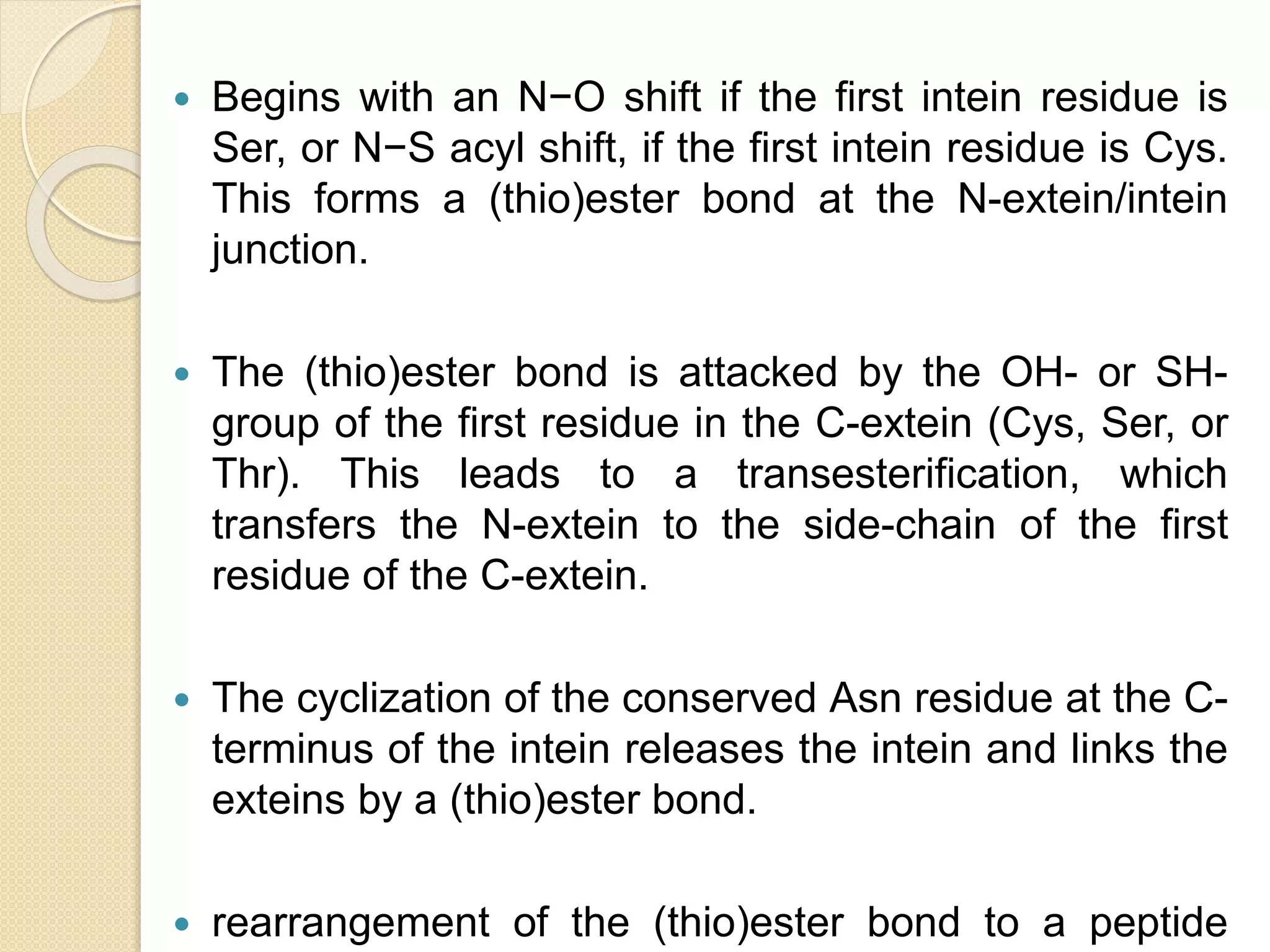
 Begins with an N−O shift if the first intein residue is
Ser, or N−S acyl shift, if the first intein residue is Cys.
This forms a (thio)ester bond at the N-extein/intein
junction.
 The (thio)ester bond is attacked by the OH- or SH-
group of the first residue in the C-extein (Cys, Ser, or
Thr). This leads to a transesterification, which
transfers the N-extein to the side-chain of the first
residue of the C-extein.
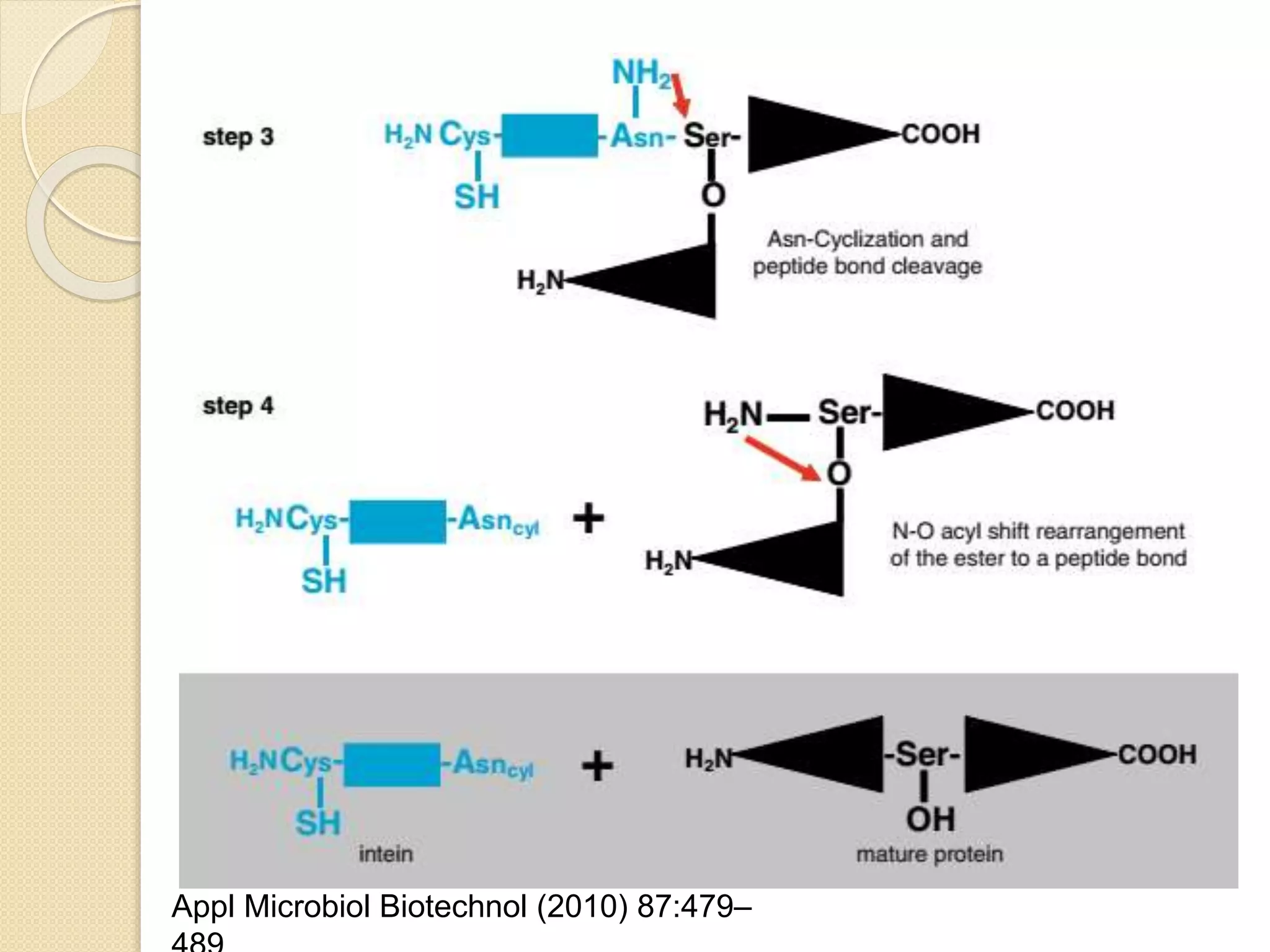
 The cyclization of the conserved Asn residue at the C-
terminus of the intein releases the intein and links the
exteins by a (thio)ester bond.
 rearrangement of the (thio)ester bond to a peptide
Codon Bias
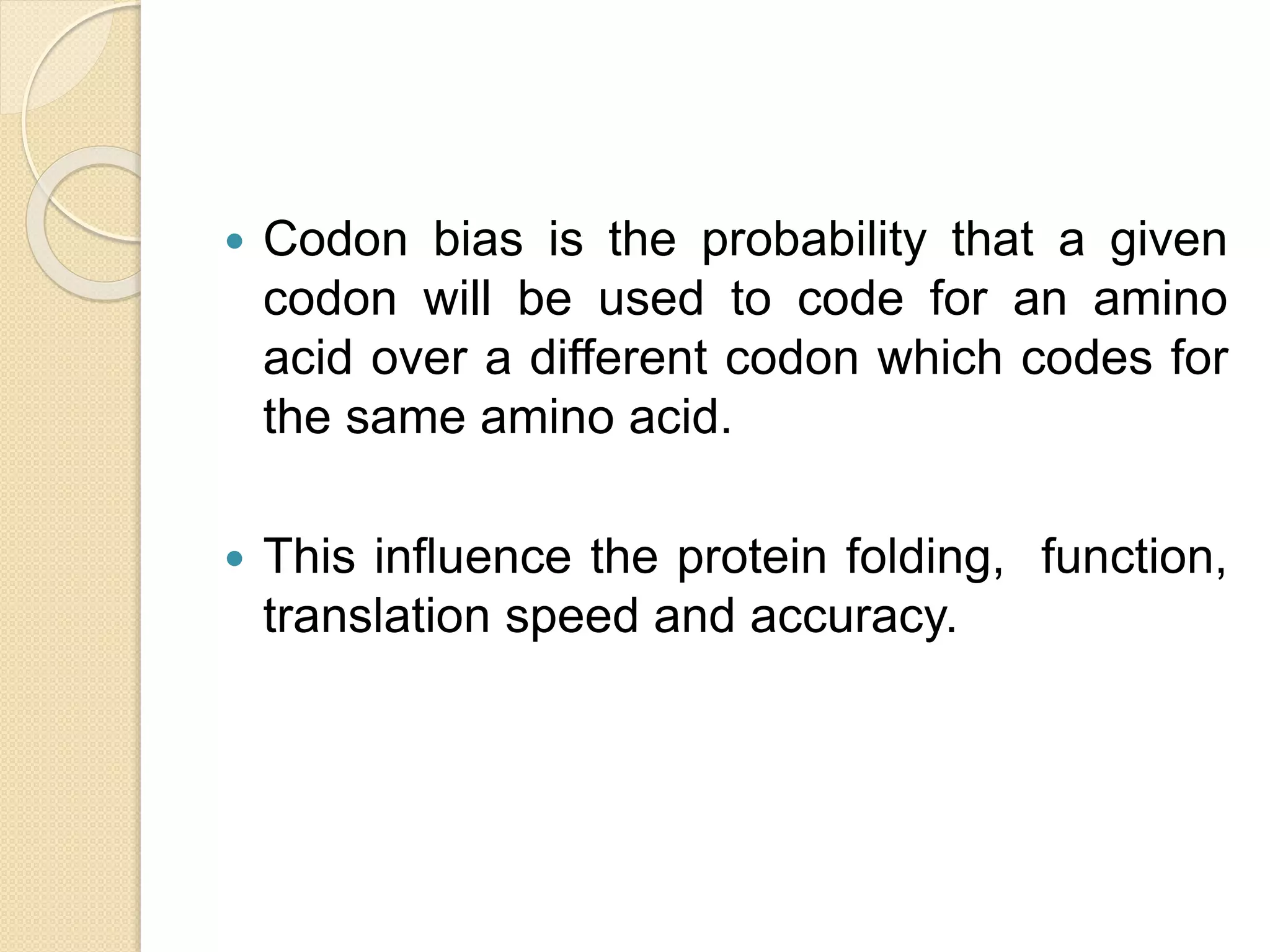
 Codon bias is the probability that a given
codon will be used to code for an amino
acid over a different codon which codes for
the same amino acid.
 This influence the protein folding, function,
translation speed and accuracy.
Possible Explanations For
Codon Bias:
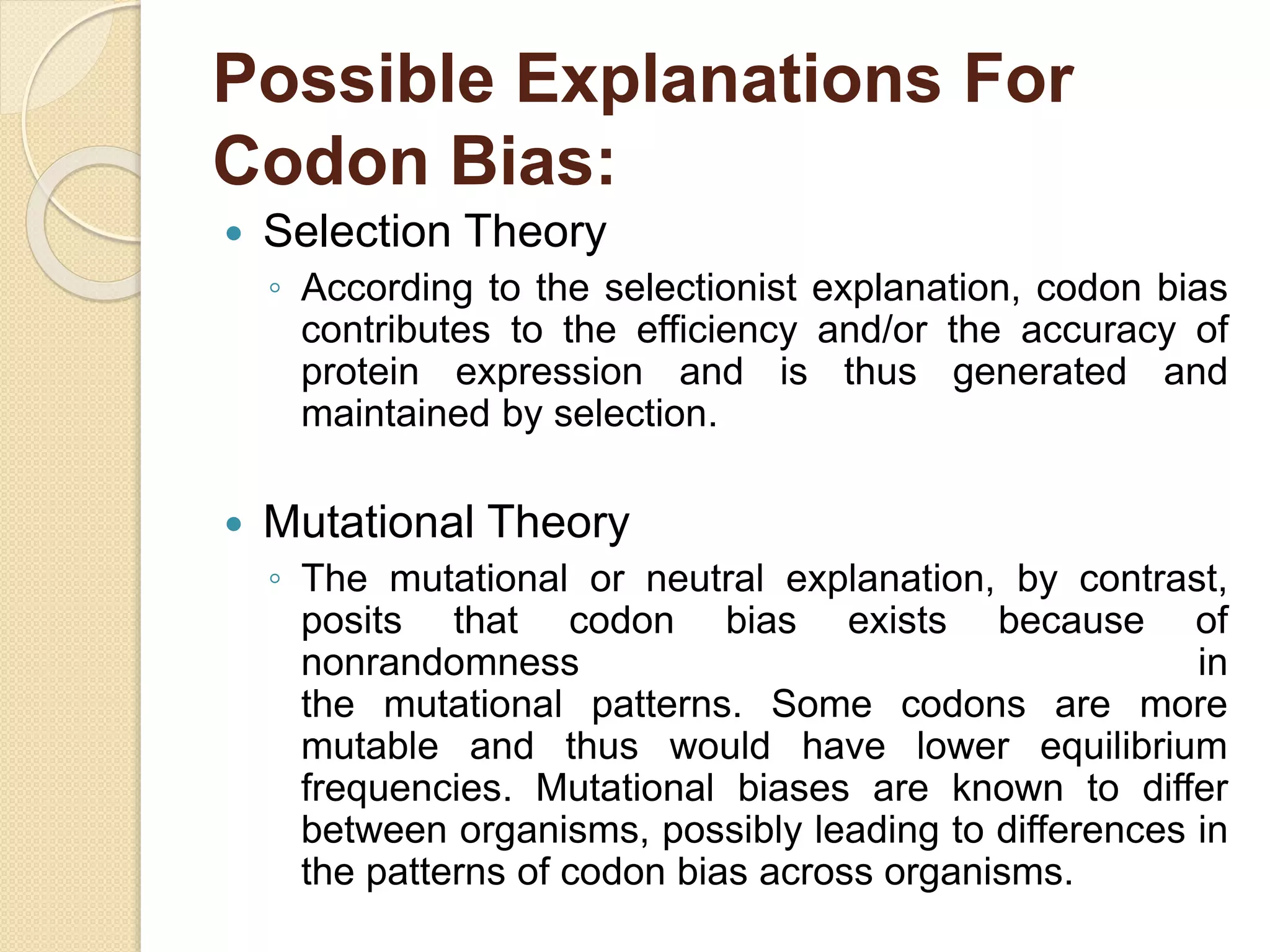
 Selection Theory
◦ According to the selectionist explanation, codon bias
contributes to the efficiency and/or the accuracy of
protein expression and is thus generated and
maintained by selection.
 Mutational Theory
◦ The mutational or neutral explanation, by contrast,
posits that codon bias exists because of
nonrandomness in
the mutational patterns. Some codons are more
mutable and thus would have lower equilibrium
frequencies. Mutational biases are known to differ
between organisms, possibly leading to differences in
the patterns of codon bias across organisms.
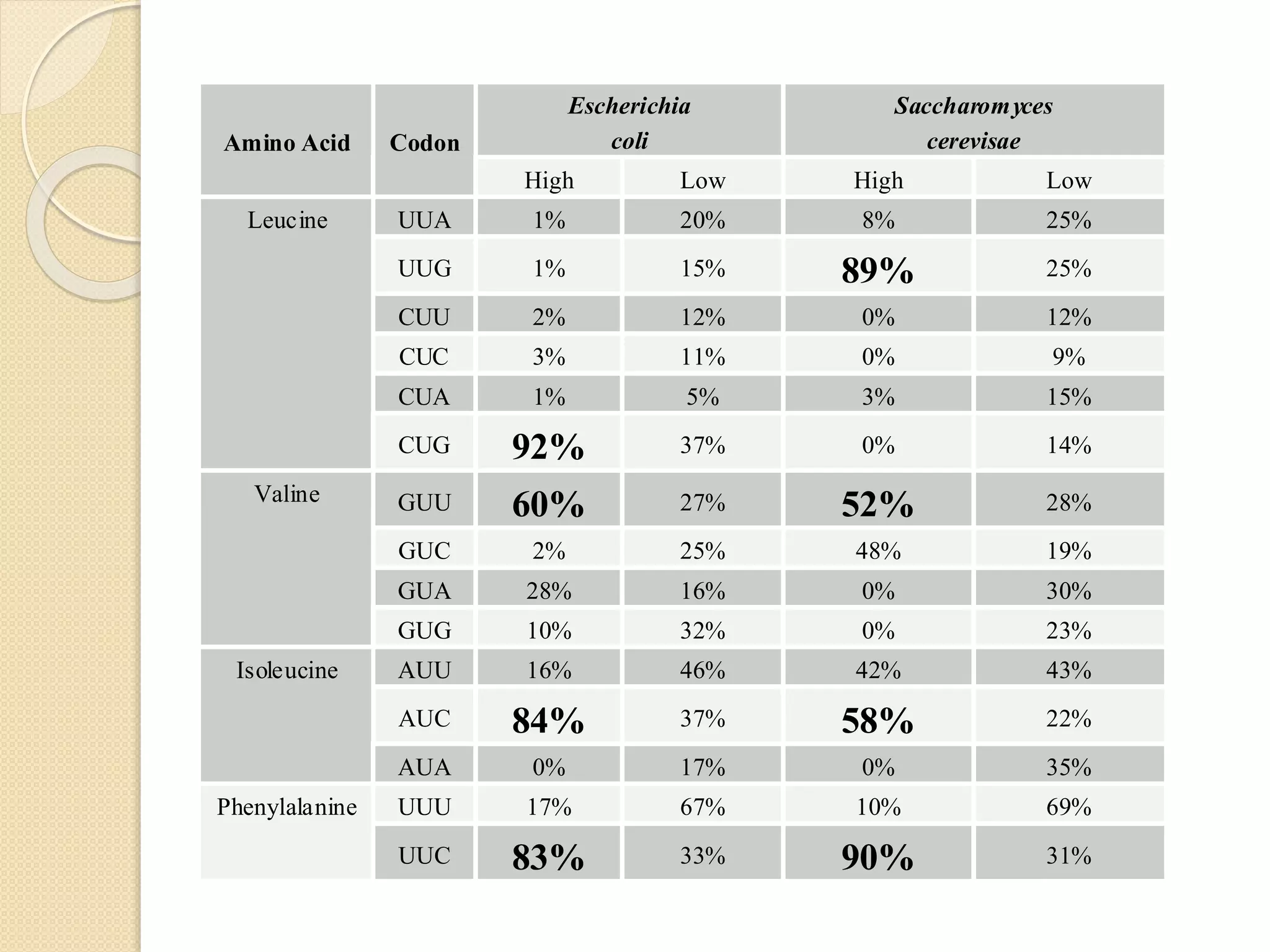
Relation to gene expression
 Genes that are always expressed at a high
rate should have a different codon bias than
those genes that are always expressed at a
low rate.
 Genes whose expression varies from low
expression to high expression as a given
environmental condition changes may have
a codon bias similar to the highly expressed
genes.
Escherichia
coli
Saccharomyces
cerevisaeAmino Acid Codon
High Low High Low
UUA 1% 20% 8% 25%
UUG 1% 15% 89% 25%
CUU 2% 12% 0% 12%
CUC 3% 11% 0% 9%
CUA 1% 5% 3% 15%
Leucine
CUG 92% 37% 0% 14%
GUU 60% 27% 52% 28%
GUC 2% 25% 48% 19%
GUA 28% 16% 0% 30%
Valine
GUG 10% 32% 0% 23%
AUU 16% 46% 42% 43%
AUC 84% 37% 58% 22%
Isoleucine
AUA 0% 17% 0% 35%
UUU 17% 67% 10% 69%Phenylalanine
UUC 83% 33% 90% 31%
Reference
 Elleuche, S., & P??ggeler, S. (2010). Inteins, valuable genetic
elements in molecular biology and biotechnology. Applied
Microbiology and Biotechnology, 87(2), 479–489.
http://doi.org/10.1007/s00253-010-2628-x
 Maas, S., & Rich, A. (2000). Changing genetic information
through RNA editing. BioEssays, 22(9), 790–802.
http://doi.org/10.1002/1521-1878(200009)22:9<790::AID-
BIES4>3.0.CO;2-0
 Hershberg, R., & Petrov, D. A. (2008). Selection on codon
bias. TL - 42. Annual Review of Genetics, 42 VN - r, 287–
299. http://doi.org/10.1146/annurev.genet.42.110807.091442

Rna editing, protein splicing & codon bias

  • 1.
  • 2.
    RNA Editing  Anyprocess, other than splicing, that results in a change in the sequence of a RNA transcript such that it differs from the sequence of the DNA template  Discovered in trypanosome mitochondria  Also common in plant mitochondria  Also occurs in a few chloroplast genes of higher plants, and at least a few nuclear genes in mammals
  • 3.
     As aconsequence of RNA editing, functionally distinct proteins can be produced from a single gene.  One gene- many proteins  Editing and modification are done post- transcriptional.  Base modification (A – I, C – U, or U – C, etc)  Insertion/Deletion
  • 4.
    Mechanism: Guide RNA dependentEditing  gRNAs are small and complementary to portions of the edited mRNA  Base-pairing of gRNA with unedited RNA gives mismatched regions, which are recognized by the editing machinery  Machinery includes an Endonuclease, a Terminal UridylylTransferase (TUTase), and a RNA ligase  Editing is directional, from 3’ to 5’
  • 6.
    C – URNA editing  Human Apolioprotein (ApoB100) essential for removal of LDL in Liver ; Tissue specific cytidyl deamination (C6666-U) introduces in-frame stop codon giving truncated ApoB48 by ApoB mRNA editing enzyme catalytic polypeptide 1 (ApoBEC1) in intestine.
  • 7.
    A – IRNA editing  Only adenosines within the context of RNA molecules are targeted by ADARs.  ADARs (Adenosine deaminases acting on RNAs) catalyze A to I only on dsRNA structures.  A-to-I RNA editing by ADARs proceeds via a hydrolytic deamination mechanism without the requirement for RNA backbone breaks.
  • 9.
  • 11.
  • 12.
     Protein splicingis a form of posttranslational processing that consists of the excision of an intervening polypeptide sequence, the intein, from a protein, accompanied by the concomitant joining of the flanking polypeptide sequences, the exteins, by a peptide bond.  Inteins are internal protein elements that self- excise from their host protein and catalyze ligation of the flanking sequences (exteins) with a peptide bond.  Intein excision is a posttranslational process that does not require auxiliary enzymes or cofactors.
  • 13.
    Appl Microbiol Biotechnol(2010) 87:479–
  • 14.
    Intein structure Appl MicrobiolBiotechnol (2010) 87:479– 489
  • 15.
    Mechanism: a 4step process Appl Microbiol Biotechnol (2010) 87:479– 489
  • 16.
    Appl Microbiol Biotechnol(2010) 87:479–
  • 17.
     Begins withan N−O shift if the first intein residue is Ser, or N−S acyl shift, if the first intein residue is Cys. This forms a (thio)ester bond at the N-extein/intein junction.  The (thio)ester bond is attacked by the OH- or SH- group of the first residue in the C-extein (Cys, Ser, or Thr). This leads to a transesterification, which transfers the N-extein to the side-chain of the first residue of the C-extein.  The cyclization of the conserved Asn residue at the C- terminus of the intein releases the intein and links the exteins by a (thio)ester bond.  rearrangement of the (thio)ester bond to a peptide
  • 18.
  • 19.
     Codon biasis the probability that a given codon will be used to code for an amino acid over a different codon which codes for the same amino acid.  This influence the protein folding, function, translation speed and accuracy.
  • 20.
    Possible Explanations For CodonBias:  Selection Theory ◦ According to the selectionist explanation, codon bias contributes to the efficiency and/or the accuracy of protein expression and is thus generated and maintained by selection.  Mutational Theory ◦ The mutational or neutral explanation, by contrast, posits that codon bias exists because of nonrandomness in the mutational patterns. Some codons are more mutable and thus would have lower equilibrium frequencies. Mutational biases are known to differ between organisms, possibly leading to differences in the patterns of codon bias across organisms.
  • 21.
    Relation to geneexpression  Genes that are always expressed at a high rate should have a different codon bias than those genes that are always expressed at a low rate.  Genes whose expression varies from low expression to high expression as a given environmental condition changes may have a codon bias similar to the highly expressed genes.
  • 22.
    Escherichia coli Saccharomyces cerevisaeAmino Acid Codon HighLow High Low UUA 1% 20% 8% 25% UUG 1% 15% 89% 25% CUU 2% 12% 0% 12% CUC 3% 11% 0% 9% CUA 1% 5% 3% 15% Leucine CUG 92% 37% 0% 14% GUU 60% 27% 52% 28% GUC 2% 25% 48% 19% GUA 28% 16% 0% 30% Valine GUG 10% 32% 0% 23% AUU 16% 46% 42% 43% AUC 84% 37% 58% 22% Isoleucine AUA 0% 17% 0% 35% UUU 17% 67% 10% 69%Phenylalanine UUC 83% 33% 90% 31%
  • 23.
    Reference  Elleuche, S.,& P??ggeler, S. (2010). Inteins, valuable genetic elements in molecular biology and biotechnology. Applied Microbiology and Biotechnology, 87(2), 479–489. http://doi.org/10.1007/s00253-010-2628-x  Maas, S., & Rich, A. (2000). Changing genetic information through RNA editing. BioEssays, 22(9), 790–802. http://doi.org/10.1002/1521-1878(200009)22:9<790::AID- BIES4>3.0.CO;2-0  Hershberg, R., & Petrov, D. A. (2008). Selection on codon bias. TL - 42. Annual Review of Genetics, 42 VN - r, 287– 299. http://doi.org/10.1146/annurev.genet.42.110807.091442