ALI RAZA
BS ZOLOGY 5th SEMESTER
ROLL #4029
Presented To
• Mr. Danish Riaz
• Lecturer of Zoology
• Govt. Postgraduate
College ,
Samanabad
Faisalabad
INTRODUCTION
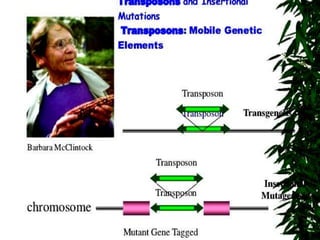
• transposon, A sequence of DNA that “jump”
to different locations within a genome.
Although these elements are frequently called
“jumping genes,” they are always maintained
in an integrated site in the genome. In
addition, most transposons eventually
become inactive and no longer move.
Contents
Introduction
Discovery of Transposons
Characteristics of Transposons
Types of Transposons
 Mechanism of transposition
Transposons and disease
Discovery
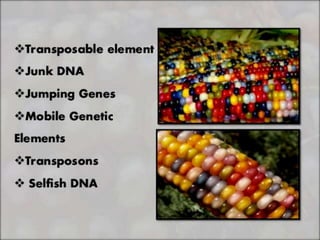
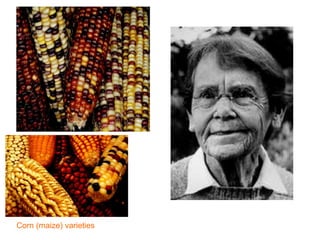
Barbara McClintock discovered the first TEs in
maize, Zea mays in 1948.
She was awarded a Nobel Prize in Medicine or
Physiology in 1983 for her discovery of TE.
She noticed insertions, deletions, and
translocations, caused by these elements. These
changes in the genome could, for example, lead to a
change in the colour of corn kernels. About 85% of
the genome of maize consists in Tes.
1. Nbarobelprize.org
BARARRADADDADAADDAFCCACFCCC
AFFAFFAFFF
KA
(1983 Nobel Prize in Physiology and
Medicine)
2. profiles.nlm.nih.gov/LL/
Barbara McClintock 1902-1992
Corn (maize) varieties
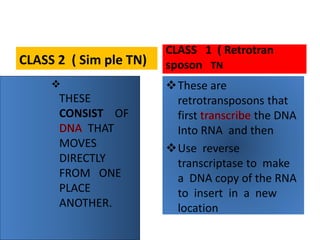
CLASS 2 ( Sim ple TN)

THESE
CONSIST OF
THAT
MOVES
DIRECTLY
FROM ONE
PLACE
ANOTHER.
CLASS 1 ( Retrotran
sposon TN
These are
retrotransposons that
first the DNA
Into RNA and then
Use reverse
transcriptase to make
a DNA copy of the RNA
to insert in a new
location
Transposition Pathways
Simple & Replicative Transposons
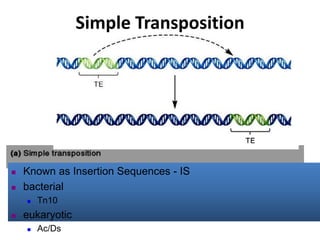
 Known as Insertion Sequences - IS
 bacterial
 Tn10
 eukaryotic
 Ac/Ds
Simple Transposition
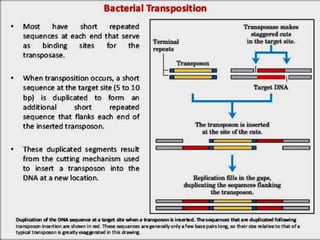
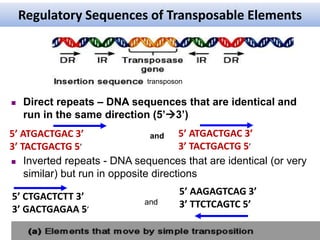
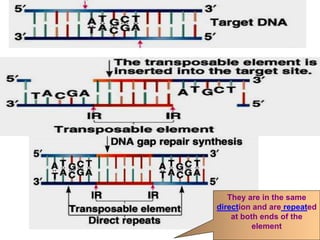
 Direct repeats – DNA sequences that are identical and
run in the same direction (5’3’)
 Inverted repeats - DNA sequences that are identical (or very
similar) but run in opposite directions
5’ CTGACTCTT 3’
3’ GACTGAGAA 5’
5’ AAGAGTCAG 3’
3’ TTCTCAGTC 5’and
Regulatory Sequences of Transposable Elements
5’ ATGACTGAC 3’
3’ TACTGACTG 5’
5’ ATGACTGAC 3’
3’ TACTGACTG 5’
and
transposon
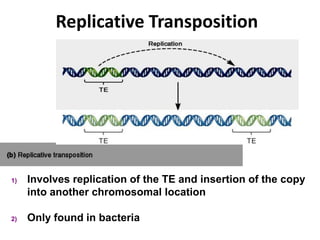
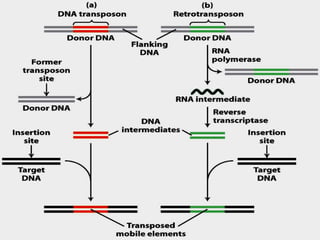
1) Involves replication of the TE and insertion of the copy
into another chromosomal location
2) Only found in bacteria
Replicative Transposition
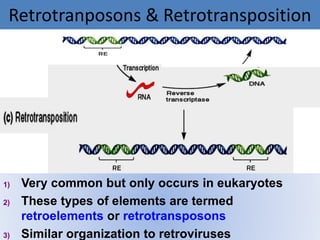
1) Very common but only occurs in eukaryotes
2) These types of elements are termed
retroelements or retrotransposons
3) Similar organization to retroviruses
Retrotranposons & Retrotransposition
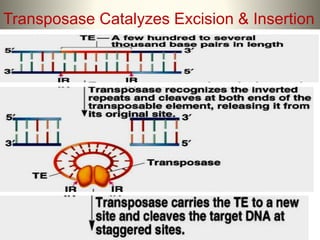
Transposase Catalyzes Excision & Insertion
17-67
They are in the same
direction and are repeated
at both ends of the
element
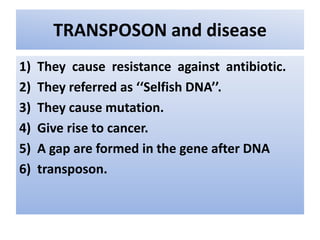
TRANSPOSON and disease
1) They cause resistance against antibiotic.
2) They referred as ‘‘Selfish DNA’’.
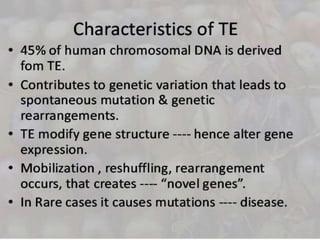
3) They cause mutation.
4) Give rise to cancer.
5) A gap are formed in the gene after DNA
6) transposon.
Transposons
Transposons
Transposons
Transposons

Transposons

  • 2.
    ALI RAZA BS ZOLOGY5th SEMESTER ROLL #4029
  • 3.
    Presented To • Mr.Danish Riaz • Lecturer of Zoology • Govt. Postgraduate College , Samanabad Faisalabad
  • 5.
    INTRODUCTION • transposon, Asequence of DNA that “jump” to different locations within a genome. Although these elements are frequently called “jumping genes,” they are always maintained in an integrated site in the genome. In addition, most transposons eventually become inactive and no longer move.
  • 6.
    Contents Introduction Discovery of Transposons Characteristicsof Transposons Types of Transposons  Mechanism of transposition Transposons and disease
  • 8.
    Discovery Barbara McClintock discoveredthe first TEs in maize, Zea mays in 1948. She was awarded a Nobel Prize in Medicine or Physiology in 1983 for her discovery of TE. She noticed insertions, deletions, and translocations, caused by these elements. These changes in the genome could, for example, lead to a change in the colour of corn kernels. About 85% of the genome of maize consists in Tes.
  • 9.
    1. Nbarobelprize.org BARARRADADDADAADDAFCCACFCCC AFFAFFAFFF KA (1983 NobelPrize in Physiology and Medicine) 2. profiles.nlm.nih.gov/LL/ Barbara McClintock 1902-1992 Corn (maize) varieties
  • 15.
    CLASS 2 (Sim ple TN)  THESE CONSIST OF THAT MOVES DIRECTLY FROM ONE PLACE ANOTHER. CLASS 1 ( Retrotran sposon TN These are retrotransposons that first the DNA Into RNA and then Use reverse transcriptase to make a DNA copy of the RNA to insert in a new location
  • 16.
  • 17.
  • 18.
     Known asInsertion Sequences - IS  bacterial  Tn10  eukaryotic  Ac/Ds Simple Transposition
  • 20.
     Direct repeats– DNA sequences that are identical and run in the same direction (5’3’)  Inverted repeats - DNA sequences that are identical (or very similar) but run in opposite directions 5’ CTGACTCTT 3’ 3’ GACTGAGAA 5’ 5’ AAGAGTCAG 3’ 3’ TTCTCAGTC 5’and Regulatory Sequences of Transposable Elements 5’ ATGACTGAC 3’ 3’ TACTGACTG 5’ 5’ ATGACTGAC 3’ 3’ TACTGACTG 5’ and transposon
  • 21.
    1) Involves replicationof the TE and insertion of the copy into another chromosomal location 2) Only found in bacteria Replicative Transposition
  • 23.
    1) Very commonbut only occurs in eukaryotes 2) These types of elements are termed retroelements or retrotransposons 3) Similar organization to retroviruses Retrotranposons & Retrotransposition
  • 24.
  • 25.
    17-67 They are inthe same direction and are repeated at both ends of the element
  • 27.
    TRANSPOSON and disease 1)They cause resistance against antibiotic. 2) They referred as ‘‘Selfish DNA’’. 3) They cause mutation. 4) Give rise to cancer. 5) A gap are formed in the gene after DNA 6) transposon.