Transposons and IS Elements
Oyetibo, G.O (PhD)
Dept. of Microbiology
University of Lagos
What are Transposons?
• Transposable element (transposon): a discrete sequence of DNA
that is
– competent to move from place to place within a genome
– sometimes a copy is made and the copy moves
– insertion requires target DNA sequences
• Other names include:
– Jumping genes
– Selfish DNAs
– Molecular parasites
– Controlling elements
• In the process, they may
– cause mutations.
– increase (or decrease) the amount of DNA in the genome.
– promote genome rearrangements.
– regulate gene expression.
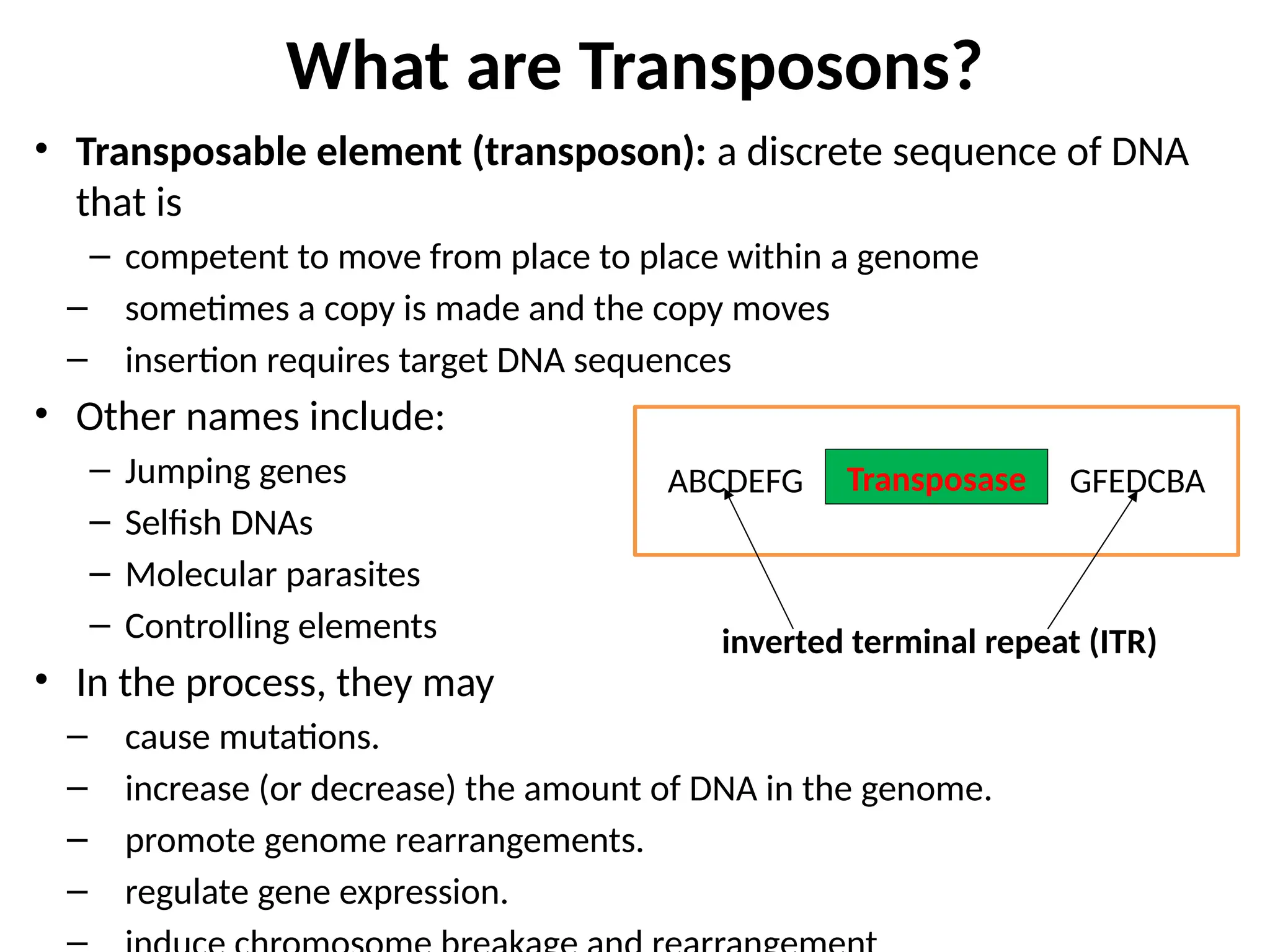
inverted terminal repeat (ITR)
Transposase GFEDCBA
ABCDEFG
• Transposons and insertion sequences are episomes.
• Capable of existing outside of the chromosome.
• Also designed to integrate into the chromosome and then move from one cell to
another.
• Transposons can carry other genetic material with them.
• In bacteria, transposons can jump from chromosomal DNA to plasmid DNA and
back.
• When the transposable elements lack additional genes, they are known as
insertion sequences.
• The smallest and simplest are insertion sequences, or IS elements, which are 1–
3 kb in length and encode the transposase protein required for transposition
and one or more additional proteins that regulate the rate of transposition
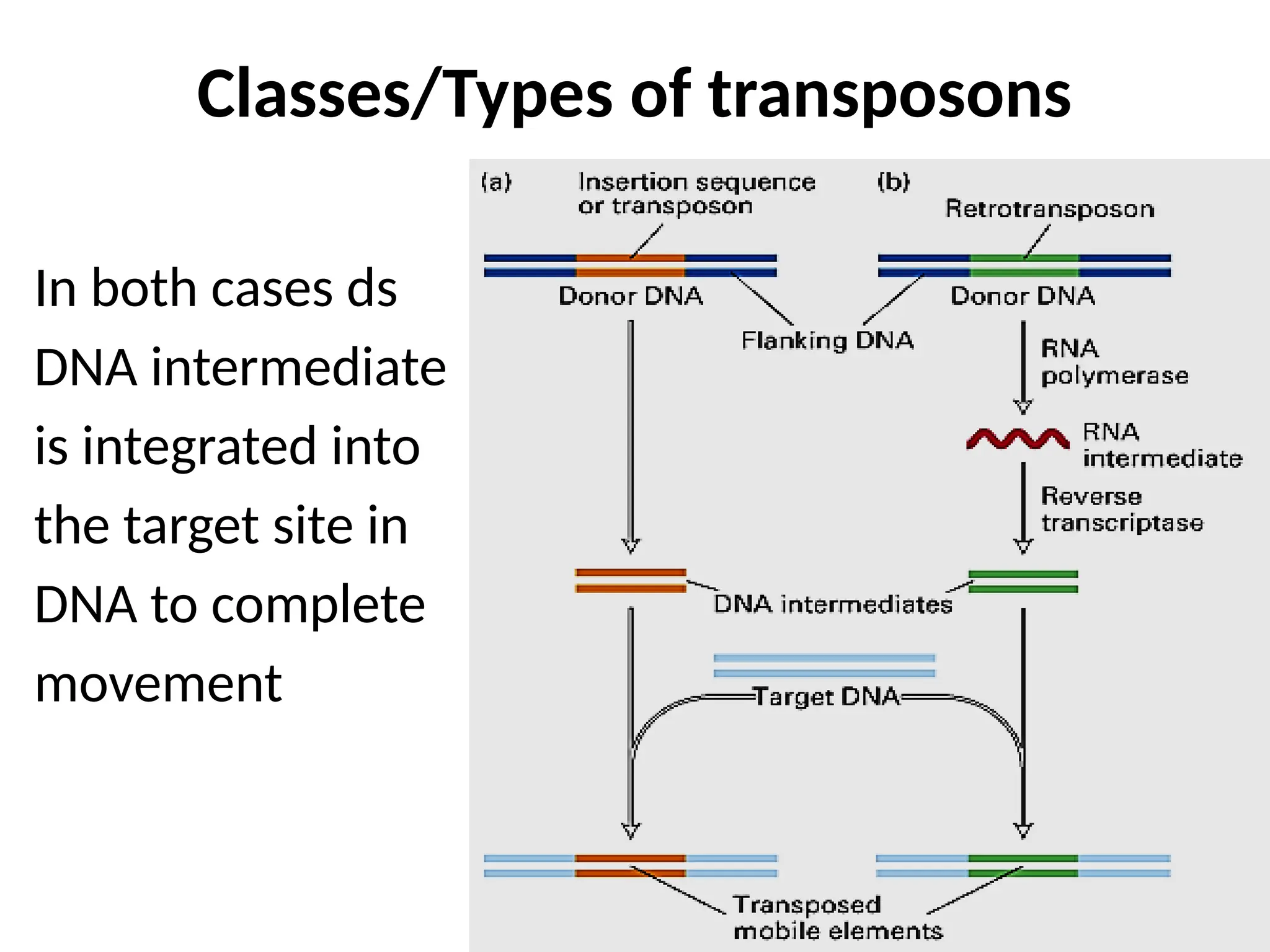
• Classes/types of transposons: there are two distinct types
– DNA transposons
• transposons consisting only of DNA that moves directly from place to place
– Retrotransposons
• first transcribe the DNA into RNA and then
• use reverse transcriptase to make a DNA copy of the RNA to insert in a new location
What are Transposons?
Classes of Transposons
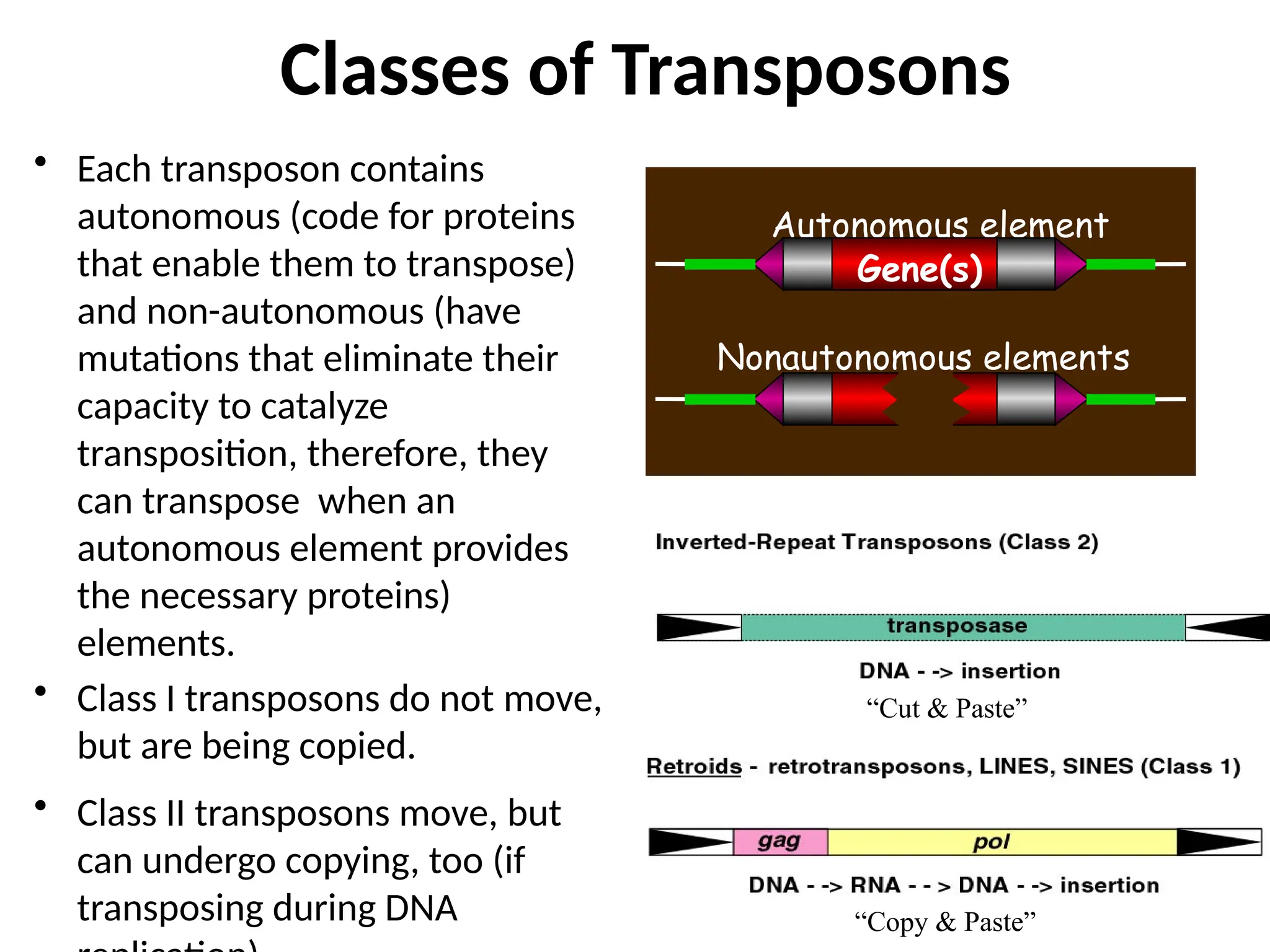
• Each transposon contains
autonomous (code for proteins
that enable them to transpose)
and non-autonomous (have
mutations that eliminate their
capacity to catalyze
transposition, therefore, they
can transpose when an
autonomous element provides
the necessary proteins)
elements.
• Class I transposons do not move,
but are being copied.
• Class II transposons move, but
can undergo copying, too (if
transposing during DNA
“Cut & Paste”
“Copy & Paste”
Autonomous element
Nonautonomous elements
Gene(s)
Classes/Types of transposons
In both cases ds
DNA intermediate
is integrated into
the target site in
DNA to complete
movement
Why study mobile genetic elements?
• They are the major forces driving evolution
• They can cause genome rearrangement
(mutation , deletion and insertion )
• They have wide range of application potentials
Evolution of Transposons
• Transposons are found in all major branches of
life.
• It arisen once and then spread to other
kingdoms by horizontal gene transfer.
• Duplications and DNA rearrangements
contributed greatly to the evolution of new
genes.
Cont…
• Mobile DNA most likely also influenced the evolution
of genes that contain multiple copies of similar exons
encoding similar protein domains (e.g., the
fibronectin gene).
• The evolution of an enormous variety of antibiotic
resistance transposons and their spread among
bacterial species.
example of genetic adaptation via natural
selection.
Transposons causing diseases
• Transposons are mutagens. They can damage the
genome of their host cell in different ways:
1. A transposon or a retroposon that inserts itself into
a functional gene will most likely disable that gene.
2.After a transposon leaves a gene, the resulting gap
will probably not be repaired correctly.
3.Multiple copies of the same sequence, such as Alu
sequences can hinder precise chromosomal pairing
during mitosis and meiosis, resulting in unequal
crossovers, one of the main reasons for chromosome
duplication.
Cont…
• Diseases caused by transposons include
-hemophilia A and B
-severe combined immunodeficiency
-Porphyria
-Cancer
-Duchenne muscular dystrophy
Applications
• The first transposon was discovered in the plant maize (Zea
mays, corn species), and is named dissociator (Ds).
• Likewise, the first transposon to be molecularly isolated was
from a plant (Snapdragon).
• Transposons have been an especially useful tool in plant
molecular biology.
• Researchers use transposons as a means of mutagenesis.
Cont…
• To identifying the mutant allele.
• To study the chemical mutagenesis methods.
• To study gene expression.
• Transposons are also a widely used tool for
mutagenesis of most experimentally tractable
organisms.
Possible Advantages of Transposable Elements
Transposable elements may:
• Create genetic diversity
• Act as promoters
• Allow recombination between plasmid
and genomic DNA when multiple copies
of the element are present
• Carry antibiotic resistance genes,
conferring an advantage on bacterial
cells
• Increase the number of copies of an
exon or gene
The discovery of transposable elements
• Barbara Mc Clintock discovered TEs in maize (1983)
• Her work on chromosome breakage began by
investigating genetic instability (1983)
• Observing variegated patterns of pigmentation in
maize plant and kernels
• New kinds of genetic instability
• She spent the next tree decades for this genetic
elements
• Controlling elements (1956)
Transposable Elements in Prokaryotes
The transposable elements in prokaryotic cells
include:
a.Insertion sequence (IS) elements.
b. Transposons (Tn), which include:
b. Composite transposons
c. Non-composite transposons (Tn3 transposon family)
c. Bacteriophage Mu (replicated by transposition)
Specific types of Bacterial Transposons
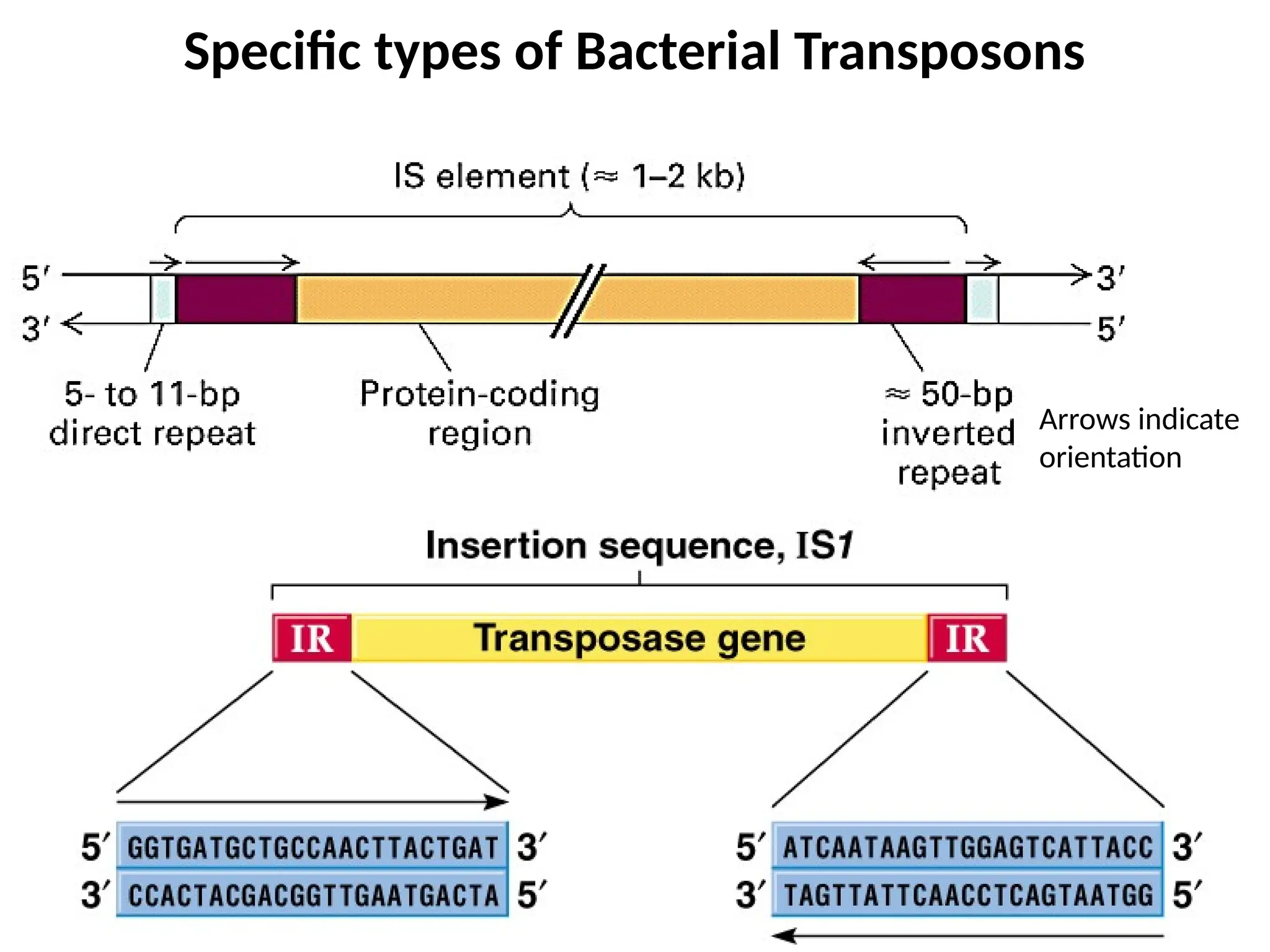
1. Insertion sequences – otherwise called molecular
parasites are the simplest transposable elements found
in prokaryotes, encoding only genes for mobilization
and insertion of its DNA. IS elements are commonly
found in bacterial chromosomes and plasmids.
– IS elements were first identified in E. coli’s galactose
operon, where some mutations’ were shown to result from
insertion of a DNA sequence now called IS1
– IS1 and IS186, present in the 50-kb segment of the E. coli
DNA, are examples of DNA transposons.
– Single E. coli genome may contain 20 of them.
– Prokaryotic IS elements range in size from 768 bp to over 5 kb. Known E. coli
IS elements include:
• IS1 is 768 bp long, and present in 4–19 copies on the E. coli chromosome.
• IS2 has 0–12 copies on the chromosome, and 1 copy on the F plasmid.
• IS10 is found in R plasmids.
Specific types of Bacterial Transposons
Insertion sequences
– Most of the sequence is taken by one or two genes for transposase
enzyme that catalyses transposition.
– IS elements transpose either replicatively or conservatively.
– Transposition of IS is very rare – one in 105
-107
cells per generation.
– Higher rates result in greater mutation rates.
– Central region encodes for one or two enzymes required for
transposition. It is flanked by inverted repeats of characteristic
sequence.
– The 5’ and 3’ short direct repeats are generated from the target-
site DNA during the insertion of mobile element.
– The length of these repeats is constant for a given IS element, but
their sequence depends upon the site of insertion and is not
characteristic for the IS element.
– The ends of all sequenced IS elements show inverted terminal
repeats (IRs) of 9–41 bp (e.g., IS1 has 23 bp of nearly identical
sequence).
Arrows indicate
orientation
Specific types of Bacterial Transposons
Insertion sequences
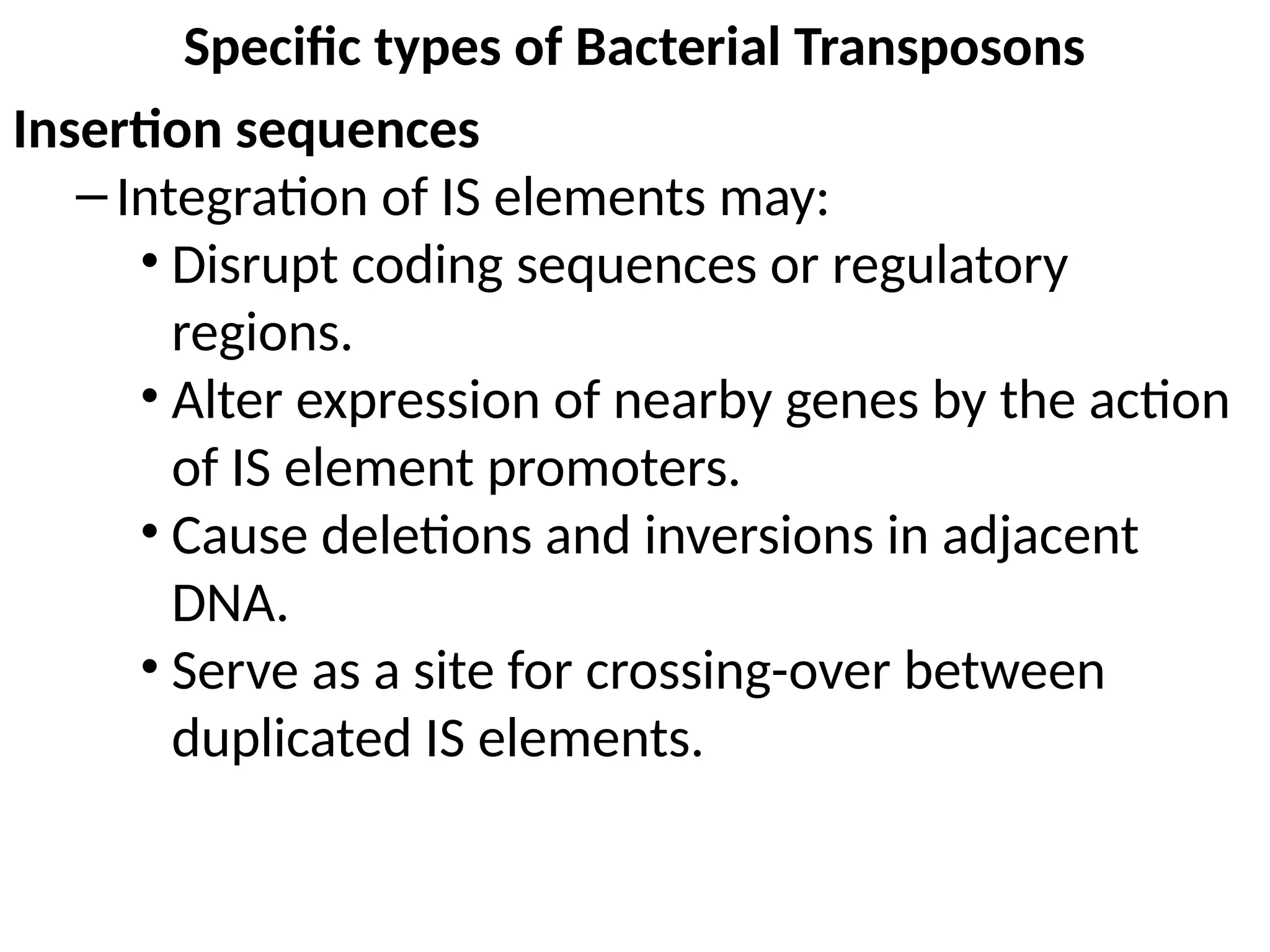
–Integration of IS elements may:
• Disrupt coding sequences or regulatory
regions.
• Alter expression of nearby genes by the action
of IS element promoters.
• Cause deletions and inversions in adjacent
DNA.
• Serve as a site for crossing-over between
duplicated IS elements.
Specific types of Bacterial Transposons
Insertion sequences
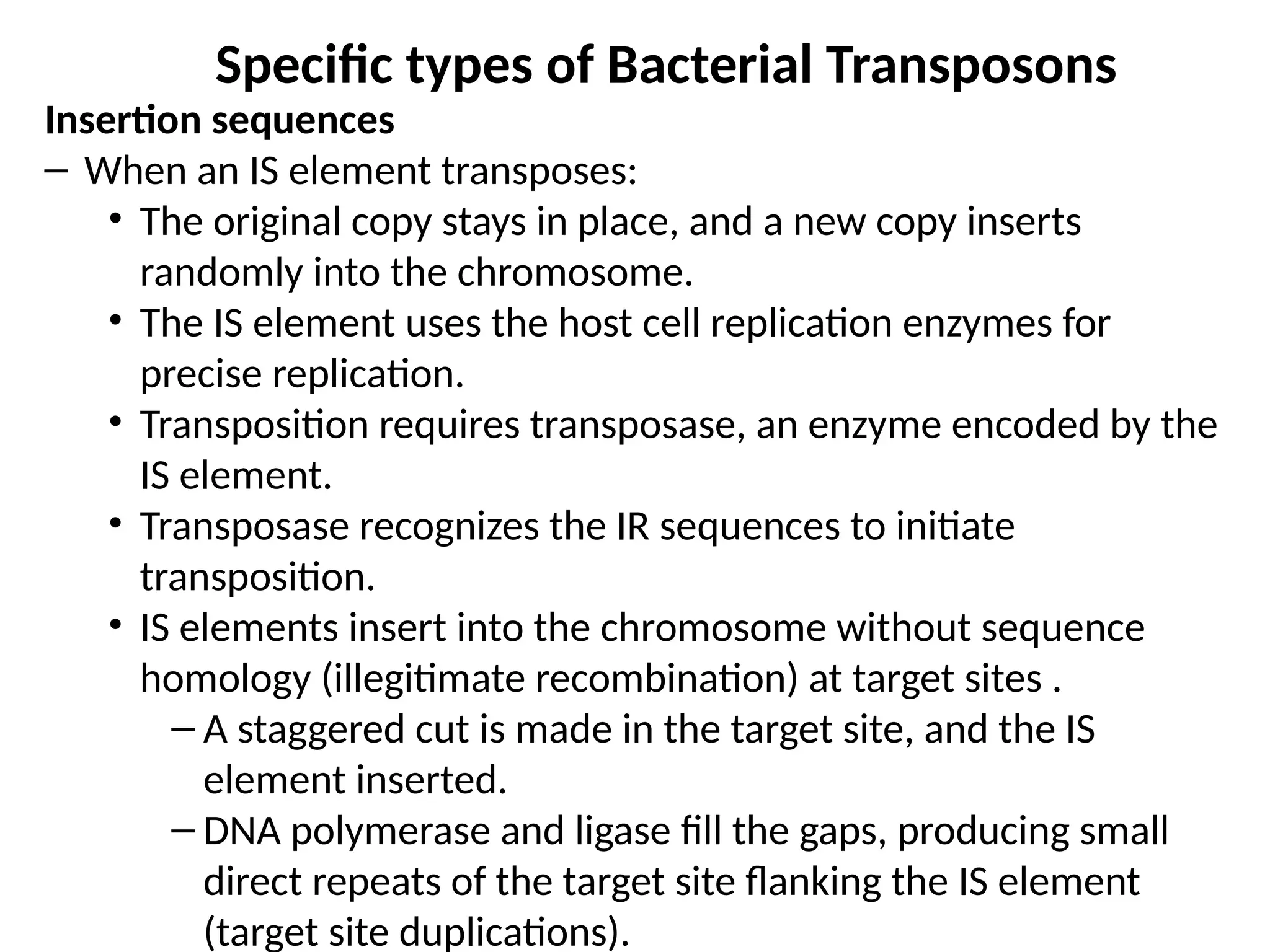
– When an IS element transposes:
• The original copy stays in place, and a new copy inserts
randomly into the chromosome.
• The IS element uses the host cell replication enzymes for
precise replication.
• Transposition requires transposase, an enzyme encoded by the
IS element.
• Transposase recognizes the IR sequences to initiate
transposition.
• IS elements insert into the chromosome without sequence
homology (illegitimate recombination) at target sites .
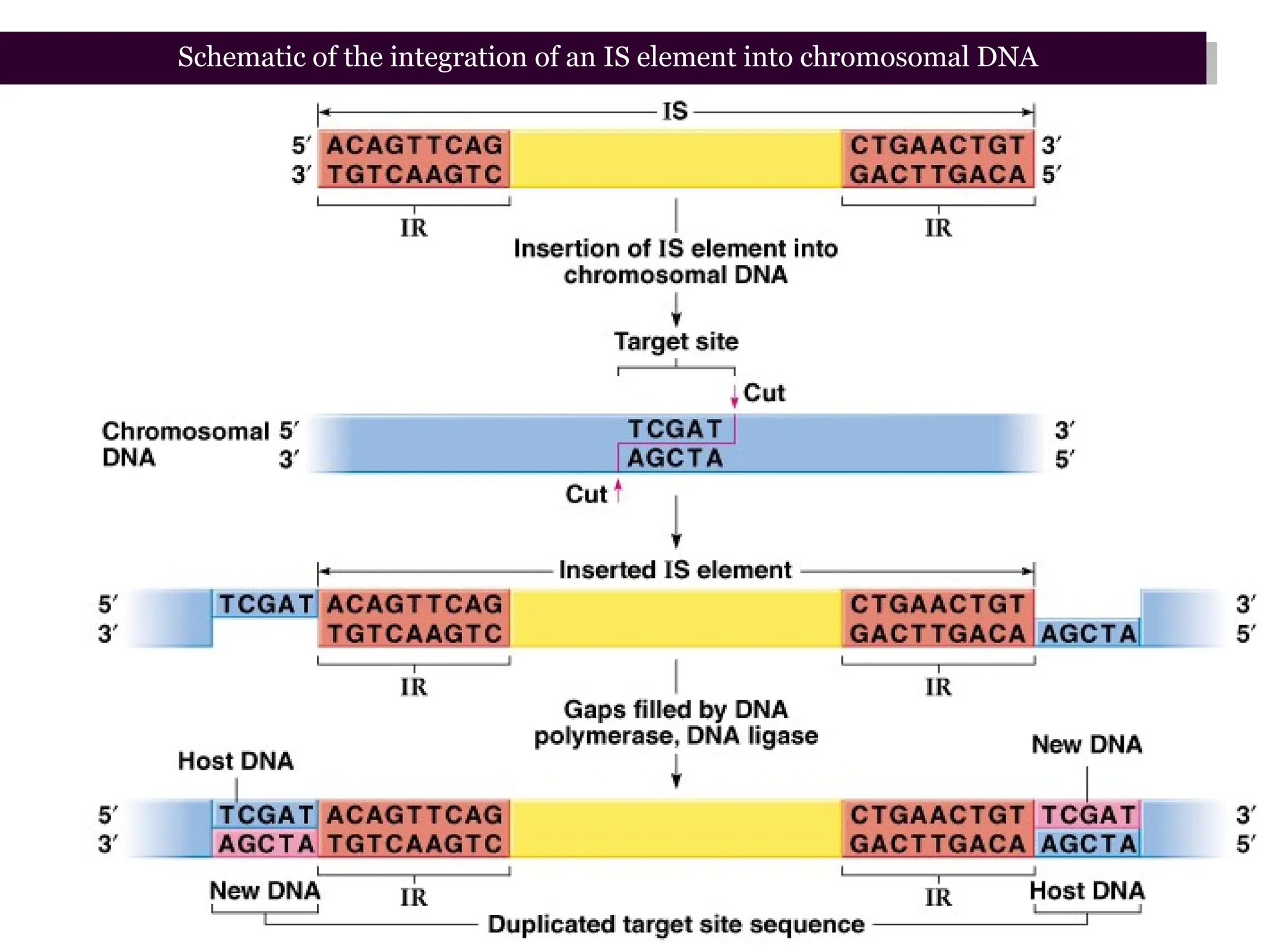
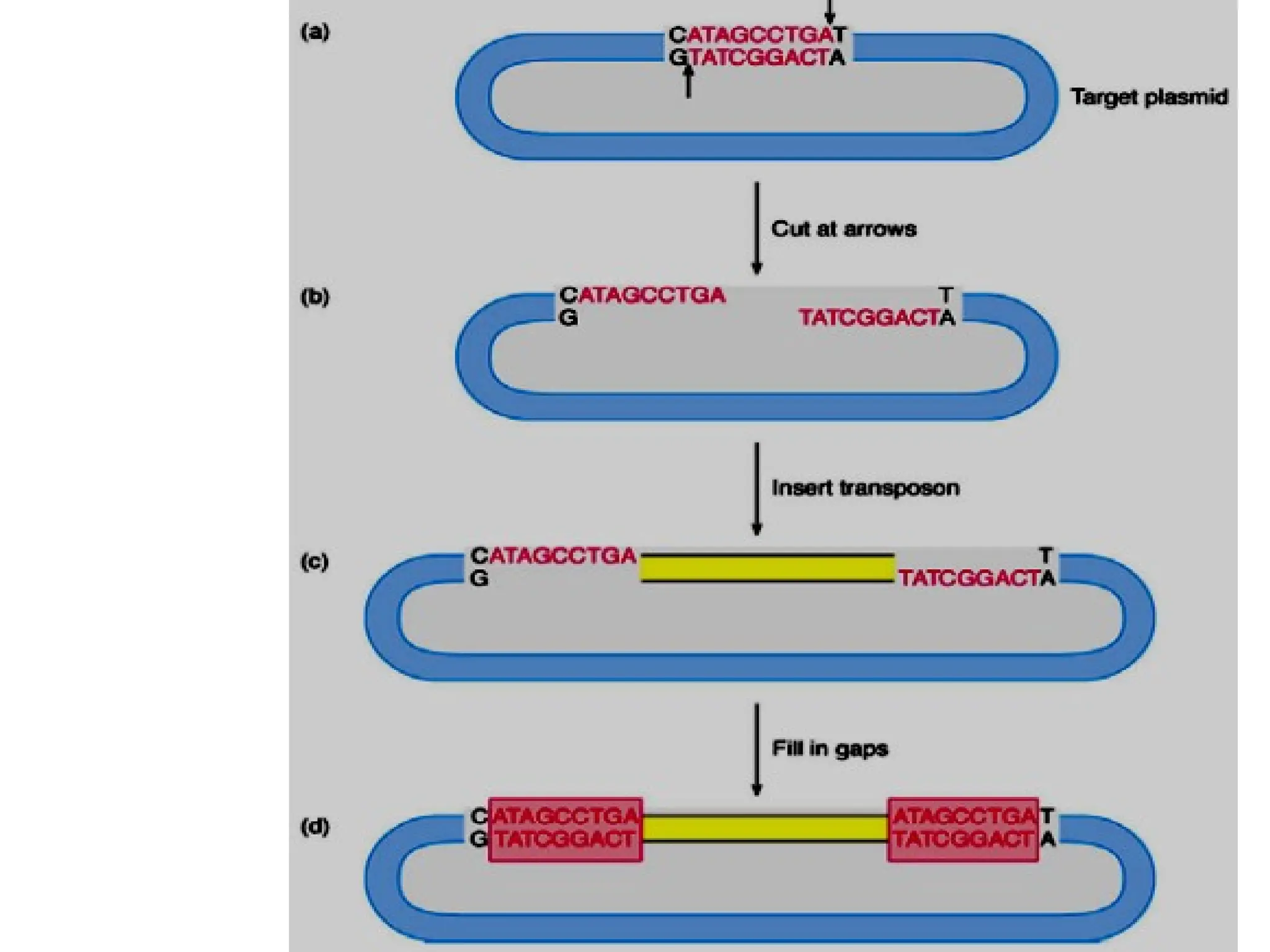
– A staggered cut is made in the target site, and the IS
element inserted.
– DNA polymerase and ligase fill the gaps, producing small
direct repeats of the target site flanking the IS element
(target site duplications).
Schematic of the integration of an IS element into chromosomal DNA
Specific types of Bacterial Transposons
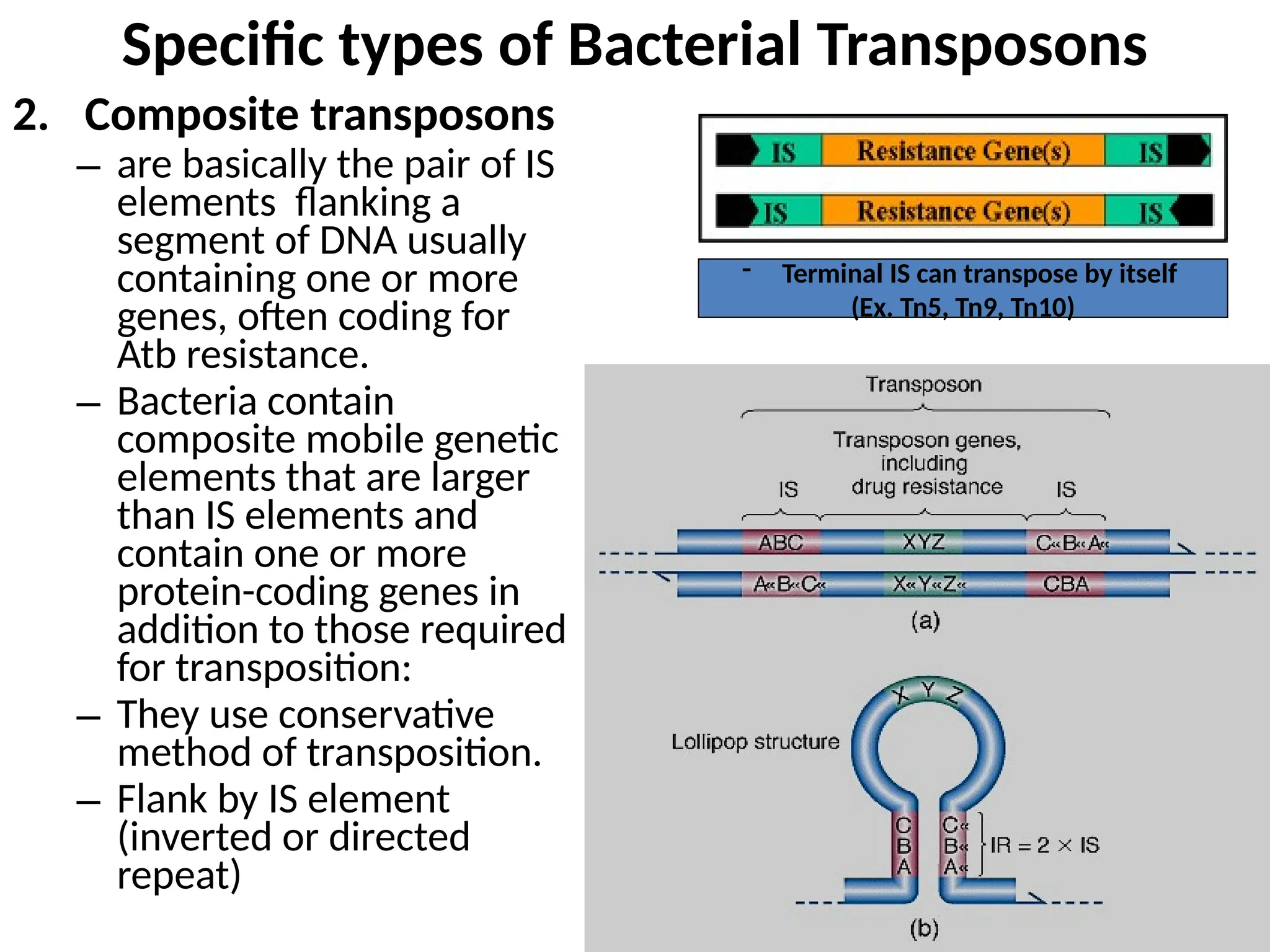
2. Composite transposons
– are basically the pair of IS
elements flanking a
segment of DNA usually
containing one or more
genes, often coding for
Atb resistance.
– Bacteria contain
composite mobile genetic
elements that are larger
than IS elements and
contain one or more
protein-coding genes in
addition to those required
for transposition:
– They use conservative
method of transposition.
– Flank by IS element
(inverted or directed
repeat)
- Terminal IS can transpose by itself
(Ex. Tn5, Tn9, Tn10)
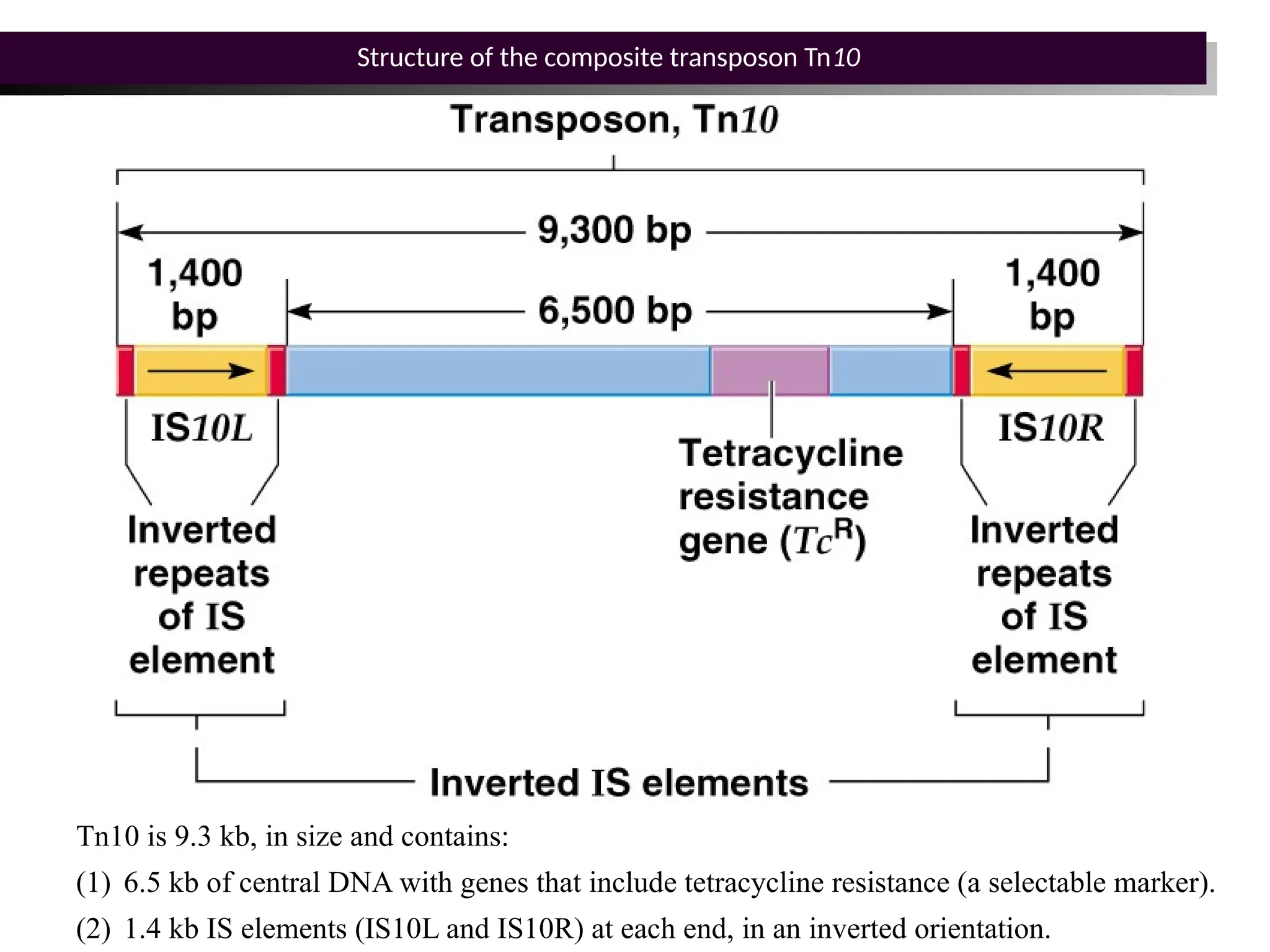
Structure of the composite transposon Tn10
Tn10 is 9.3 kb, in size and contains:
(1) 6.5 kb of central DNA with genes that include tetracycline resistance (a selectable marker).
(2) 1.4 kb IS elements (IS10L and IS10R) at each end, in an inverted orientation.
Specific types of Bacterial Transposons
3. Tn 3 transposon family (non-composite transposon)
– Noncomposite transposons also carry genes (e.g., drug resistance) but
do not terminate with IS elements.
i. Transposition proteins are encoded in the central region.
ii. The ends are repeated sequences (but not IS elements).
iii. Noncomposite transposons cause target site duplications (like composite
transposons).
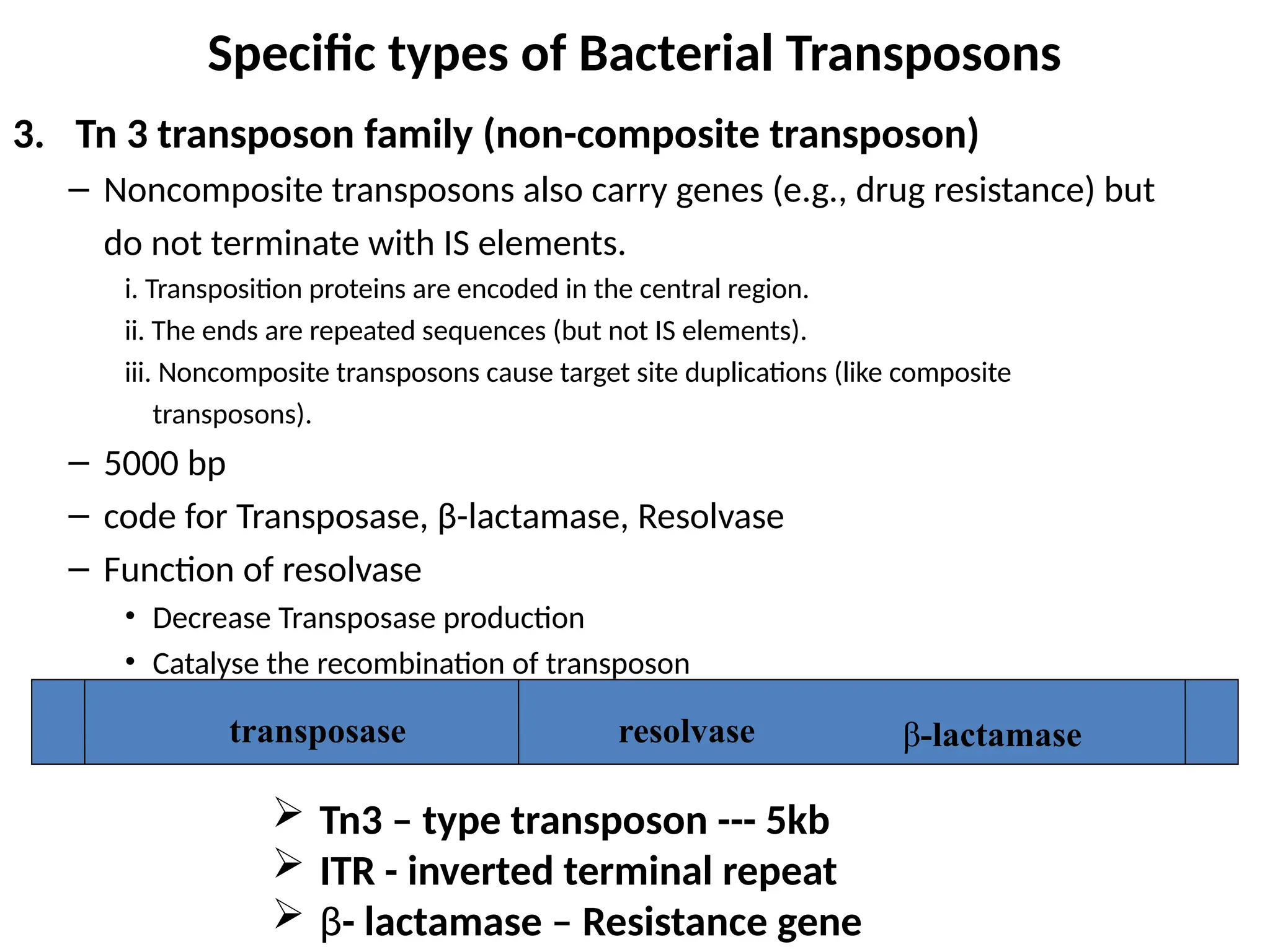
– 5000 bp
– code for Transposase, β-lactamase, Resolvase
– Function of resolvase
• Decrease Transposase production
• Catalyse the recombination of transposon
resolvase
transposase β-lactamase
 Tn3 – type transposon --- 5kb
 ITR - inverted terminal repeat
 β- lactamase – Resistance gene
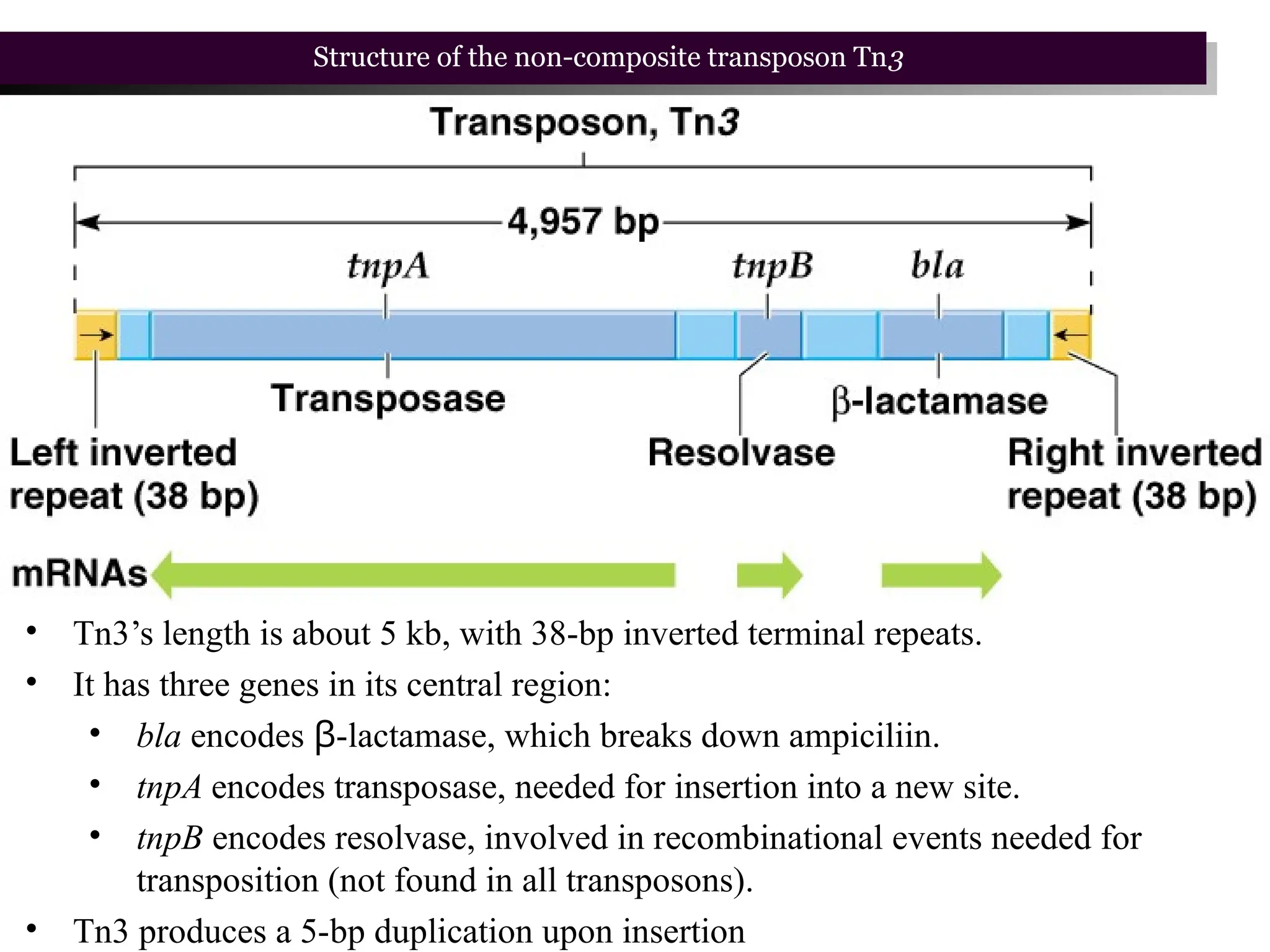
Structure of the non-composite transposon Tn3
• Tn3’s length is about 5 kb, with 38-bp inverted terminal repeats.
• It has three genes in its central region:
• bla encodes β-lactamase, which breaks down ampiciliin.
• tnpA encodes transposase, needed for insertion into a new site.
• tnpB encodes resolvase, involved in recombinational events needed for
transposition (not found in all transposons).
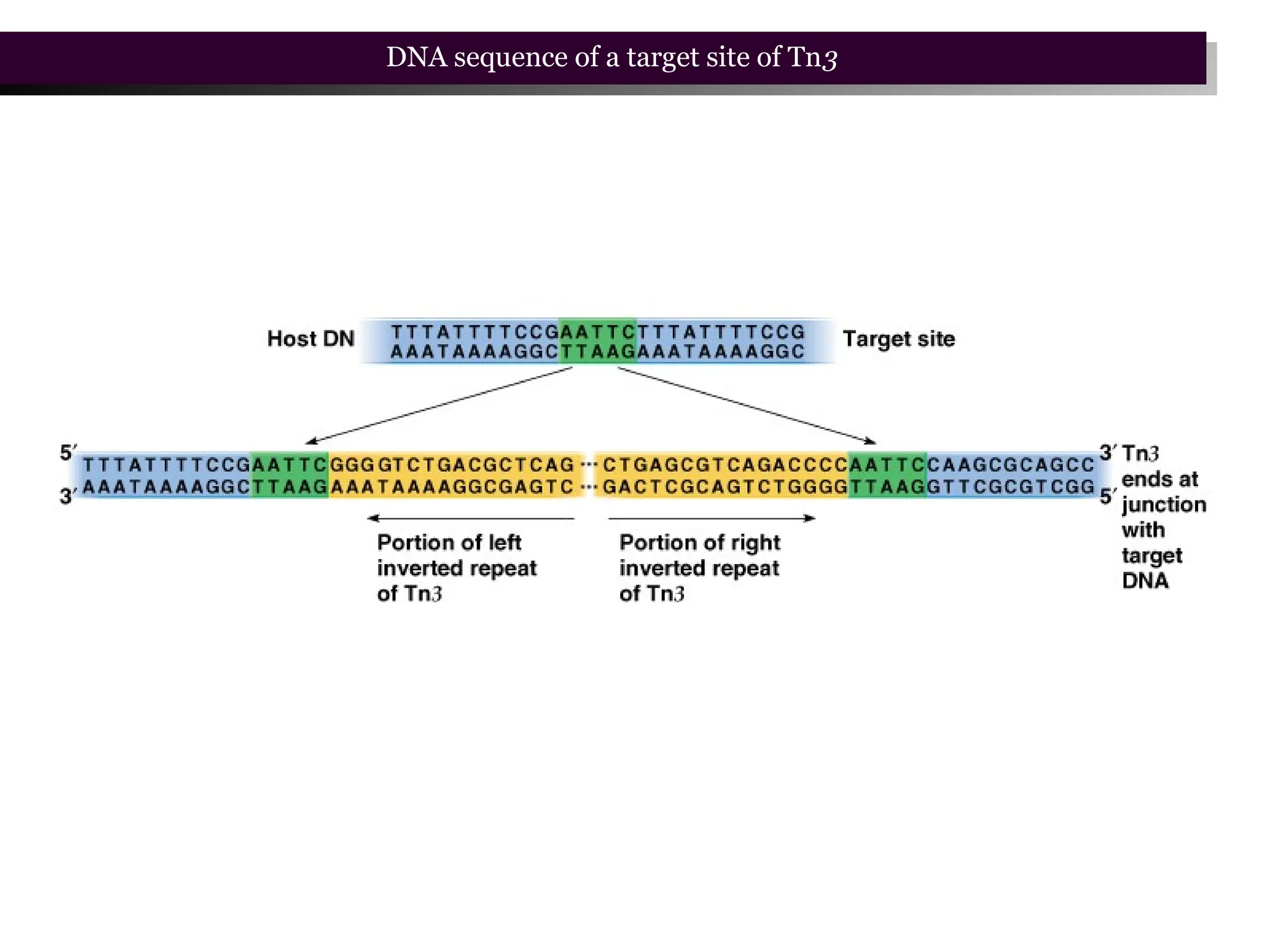
• Tn3 produces a 5-bp duplication upon insertion
DNA sequence of a target site of Tn3
Specific types of Bacterial Transposons
Tn 3 transposon family (non-composite transposon)
• Models have been generated for transposition:
a. Co-integration is an example of the replicative transposition that occurs
with Tn3 and its relatives.
i. Donor DNA containing the Tn fuses with recipient DNA.
ii. The Tn is duplicated, with one copy at each donor-recipient DNA
junction, producing a cointegrate.
iii. The cointegrate is resolved into two products, each with one copy of the
Tn.
b. Conservative (non-replicative) transposition is used by Tn10, for example.
The Tn is lost from its original position when it transposes.
• Transposons cause the same sorts of mutations caused by IS elements:
a. Insertion into a gene disrupts it.
b. Gene expression is changed by adjacent Tn promoters.
c. Deletions and insertions occur.
d. Crossing-over results from duplicated Tn sequences in the genome.
Chapter 20 slide 29
Co-integration model for transposition of a transposable element by replicative transposition
IS Elements and Transposons in Plasmids
1. Bacterial plasmids are extrachromosomal DNA capable of self-replication. Some
are episomes, able to integrate into the bacterial chromosome. The E. coli F
plasmid is an example:
a. Important genetic elements of the F plasmid are:
i. tra genes for conjugal transfer of DNA from donor to recipient.
ii. Genes for plasmid replication.
iii. 4 IS elements: 2 copies of IS3, 1 of IS2, and 1 of γδ (gammadelta). All
have homology with IS elements in the E. coli chromosome.
b. The F factor integrates by homologous recombination between IS elements,
mediated by the tra genes.
2. R plasmids have medical significance, because they carry genes for resistance to
antibiotics, and transfer them between bacteria.
a. Genetic features of R plasmids include:
i. The resistance transfer factor region (RTF), needed for conjugal transfer.
It includes a DNA region homologous to an F plasmid region, and genes
for plasmid-specific DNA replication.
ii. Differing sets of genes, such as those for resistance to antibiotics or
heavy metals. The resistance genes are transposons, flanked by IS
module-like sequences, and can replicate and insert into the bacterial
chromosome.
b. R plasmids are clinically significant, because they disseminate drug
resistance genes between bacteria.
Organizational maps of bacterial plasmids with transposable elements
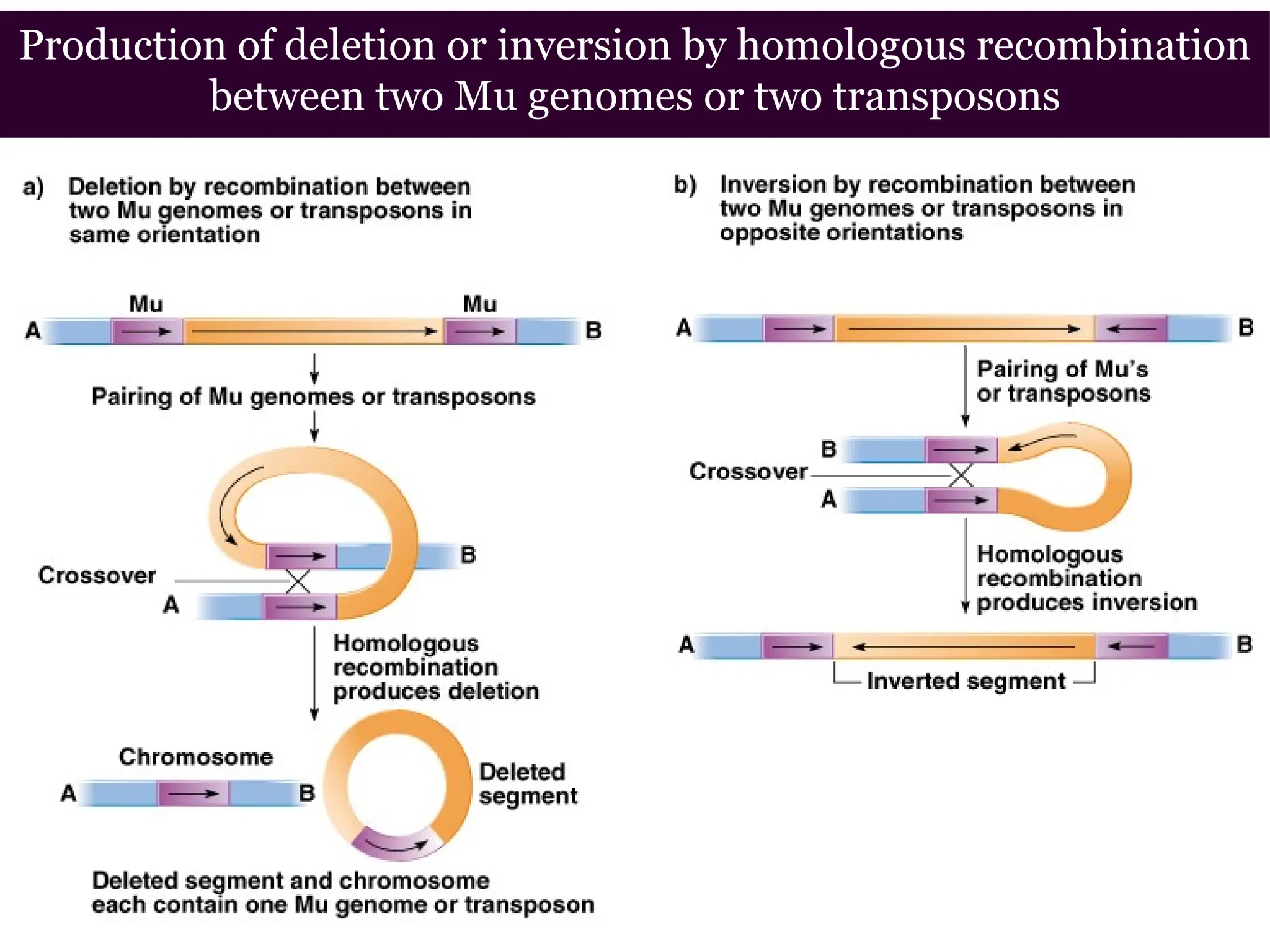
4. Bacteriophage Mu
• Temperate bacteriophage Mu (mutator) can cause
mutations when it transposes. Its structure includes:
a. A 37 kb linear DNA in the phage particle that has
central phage DNA and unequal lengths of host DNA at
the ends .
b. The DNA’s G segment can invert, and is found in both
orientations in viral DNA.
Specific types of Bacterial Transposons
Temperate bacteriophage Mu genome shown in (a) as in phage particles and
(b) as integrated into the E. coli chromosome as a prophage
Bacteriophage Mu
• Following infection, Mu integrates into the host
chromosome by conservative (non-replicative)
transposition.
a. Integration produces prophage DNA flanked by 5 bp
target site direct repeats.
b. Flanking DNA from the previous host is lost during
integration.
c. The Mu prophage now replicates only when the E. coli
chromosome replicates, due to a phage-encocled
repressor that prevents most Mu gene expression.
• Mu prophage stays integrated during the lytic cycle, and
replication of Mu’s genome is by replicative transposition.
• Mu causes insertions, deletions, inversions and
Specific types of Bacterial Transposons
Production of deletion or inversion by homologous recombination
between two Mu genomes or two transposons
Transposable Elements in Eukaryotes
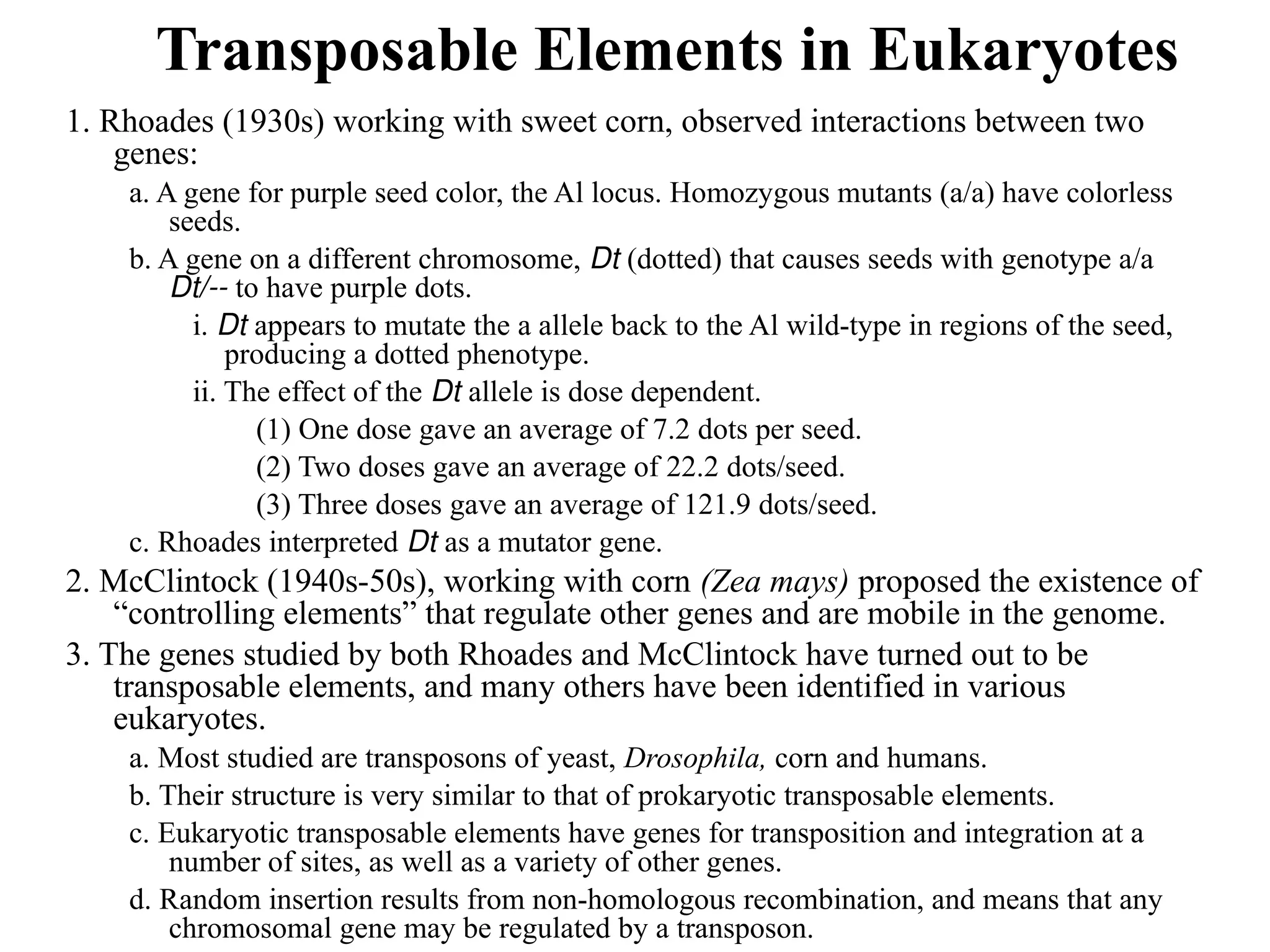
1. Rhoades (1930s) working with sweet corn, observed interactions between two
genes:
a. A gene for purple seed color, the Al locus. Homozygous mutants (a/a) have colorless
seeds.
b. A gene on a different chromosome, Dt (dotted) that causes seeds with genotype a/a
Dt/-- to have purple dots.
i. Dt appears to mutate the a allele back to the Al wild-type in regions of the seed,
producing a dotted phenotype.
ii. The effect of the Dt allele is dose dependent.
(1) One dose gave an average of 7.2 dots per seed.
(2) Two doses gave an average of 22.2 dots/seed.
(3) Three doses gave an average of 121.9 dots/seed.
c. Rhoades interpreted Dt as a mutator gene.
2. McClintock (1940s-50s), working with corn (Zea mays) proposed the existence of
“controlling elements” that regulate other genes and are mobile in the genome.
3. The genes studied by both Rhoades and McClintock have turned out to be
transposable elements, and many others have been identified in various
eukaryotes.
a. Most studied are transposons of yeast, Drosophila, corn and humans.
b. Their structure is very similar to that of prokaryotic transposable elements.
c. Eukaryotic transposable elements have genes for transposition and integration at a
number of sites, as well as a variety of other genes.
d. Random insertion results from non-homologous recombination, and means that any
chromosomal gene may be regulated by a transposon.
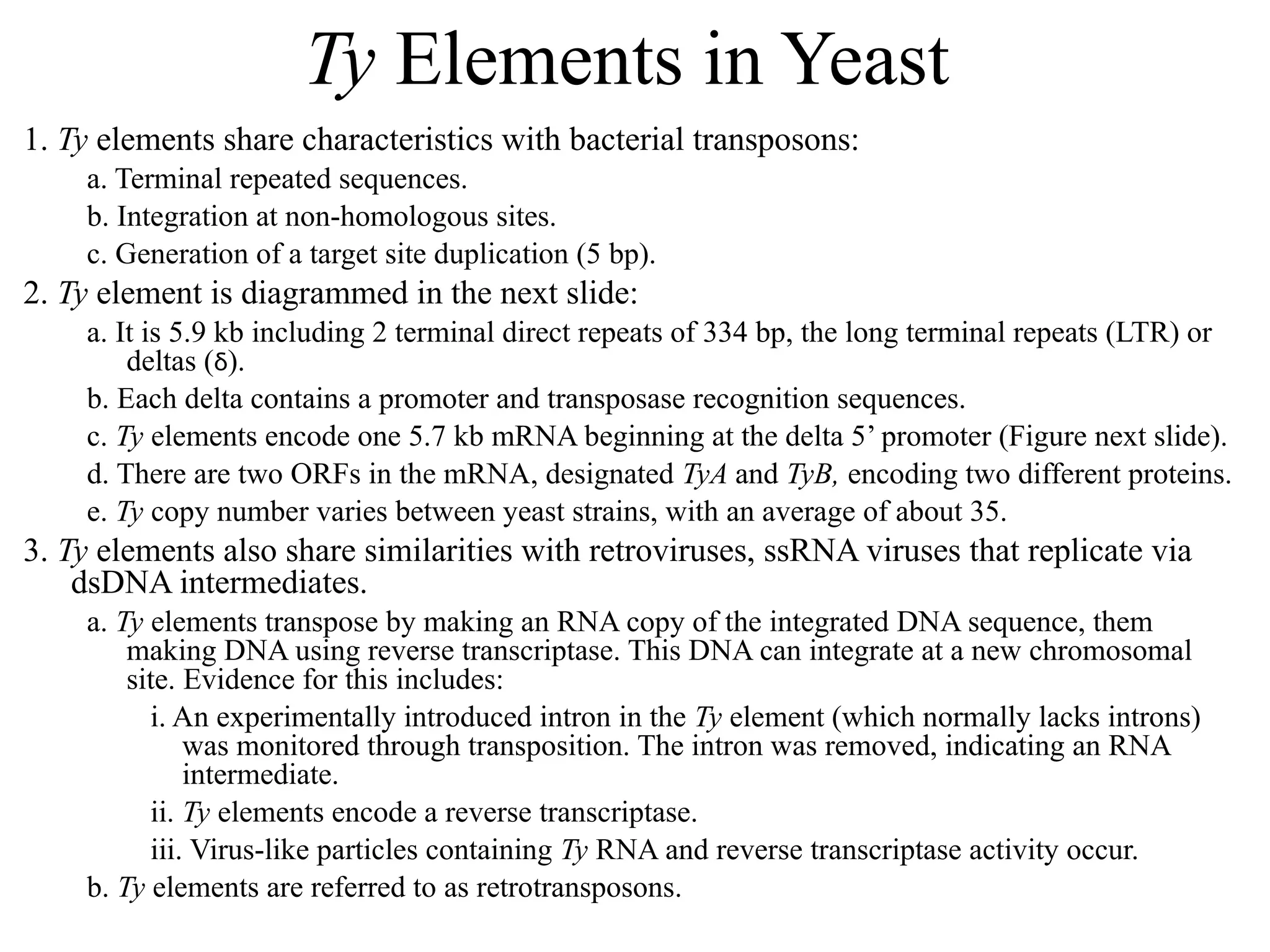
Ty Elements in Yeast
1. Ty elements share characteristics with bacterial transposons:
a. Terminal repeated sequences.
b. Integration at non-homologous sites.
c. Generation of a target site duplication (5 bp).
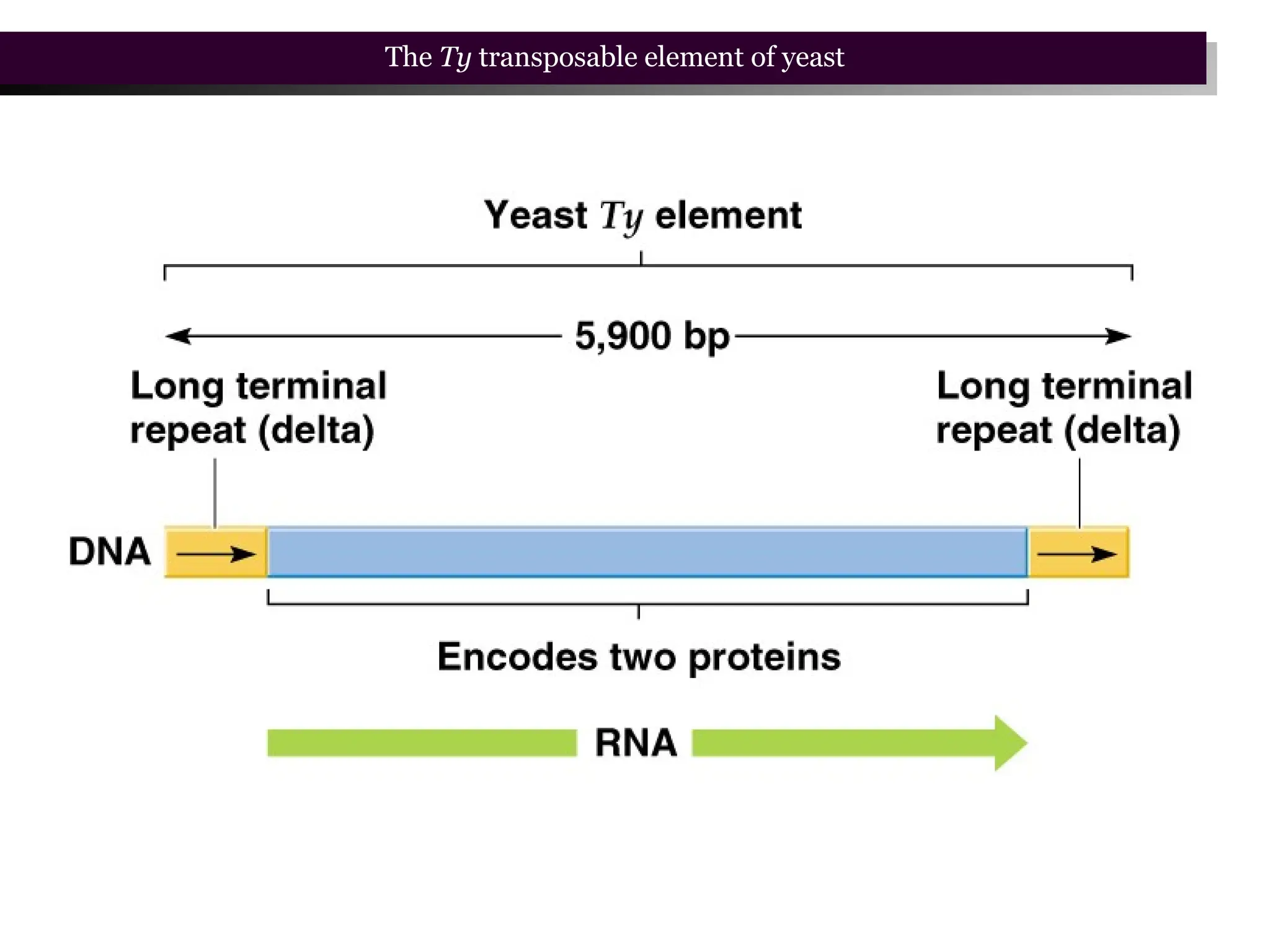
2. Ty element is diagrammed in the next slide:
a. It is 5.9 kb including 2 terminal direct repeats of 334 bp, the long terminal repeats (LTR) or
deltas (δ).
b. Each delta contains a promoter and transposase recognition sequences.
c. Ty elements encode one 5.7 kb mRNA beginning at the delta 5’ promoter (Figure next slide).
d. There are two ORFs in the mRNA, designated TyA and TyB, encoding two different proteins.
e. Ty copy number varies between yeast strains, with an average of about 35.
3. Ty elements also share similarities with retroviruses, ssRNA viruses that replicate via
dsDNA intermediates.
a. Ty elements transpose by making an RNA copy of the integrated DNA sequence, them
making DNA using reverse transcriptase. This DNA can integrate at a new chromosomal
site. Evidence for this includes:
i. An experimentally introduced intron in the Ty element (which normally lacks introns)
was monitored through transposition. The intron was removed, indicating an RNA
intermediate.
ii. Ty elements encode a reverse transcriptase.
iii. Virus-like particles containing Ty RNA and reverse transcriptase activity occur.
b. Ty elements are referred to as retrotransposons.
The Ty transposable element of yeast
39
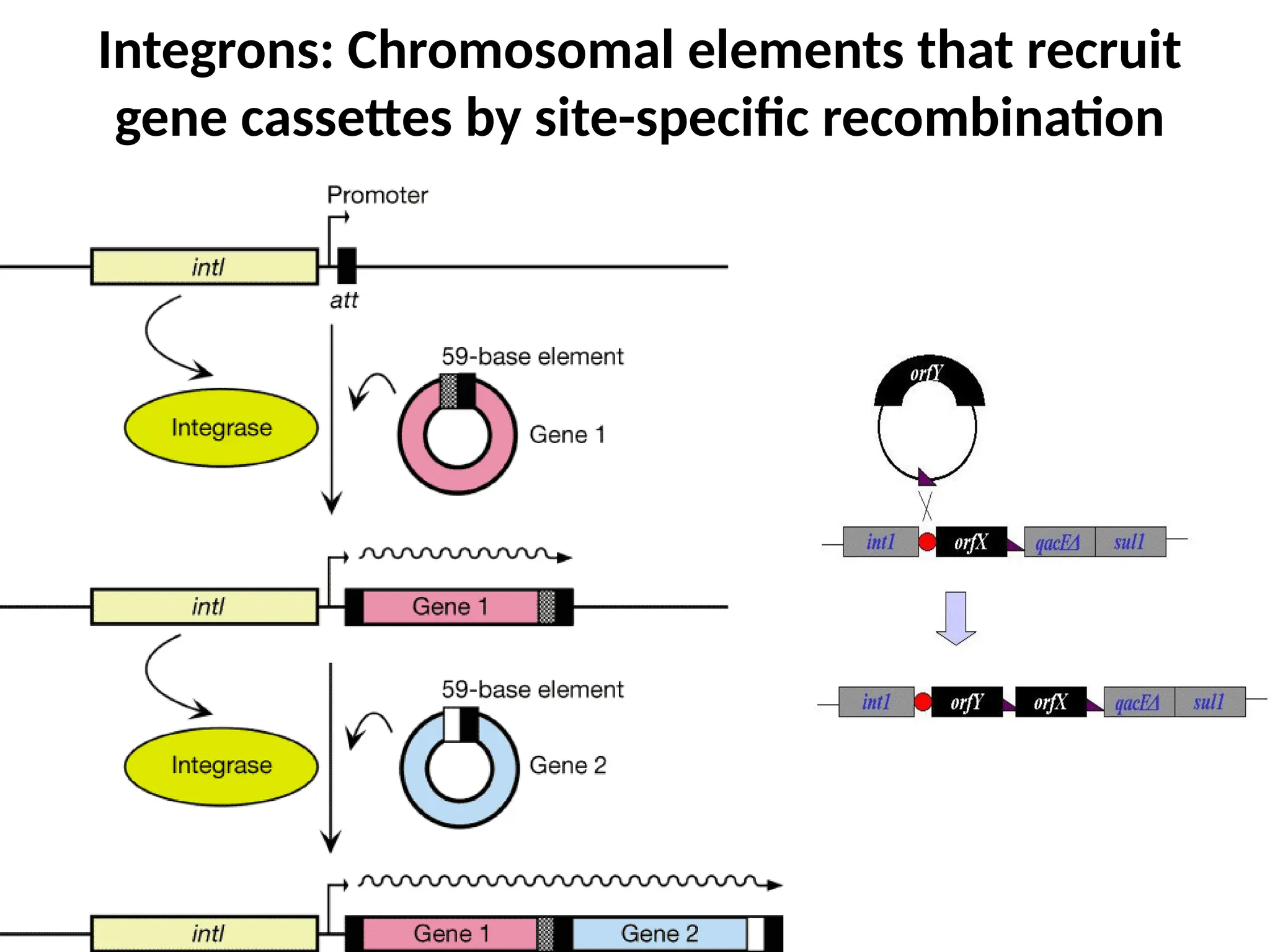
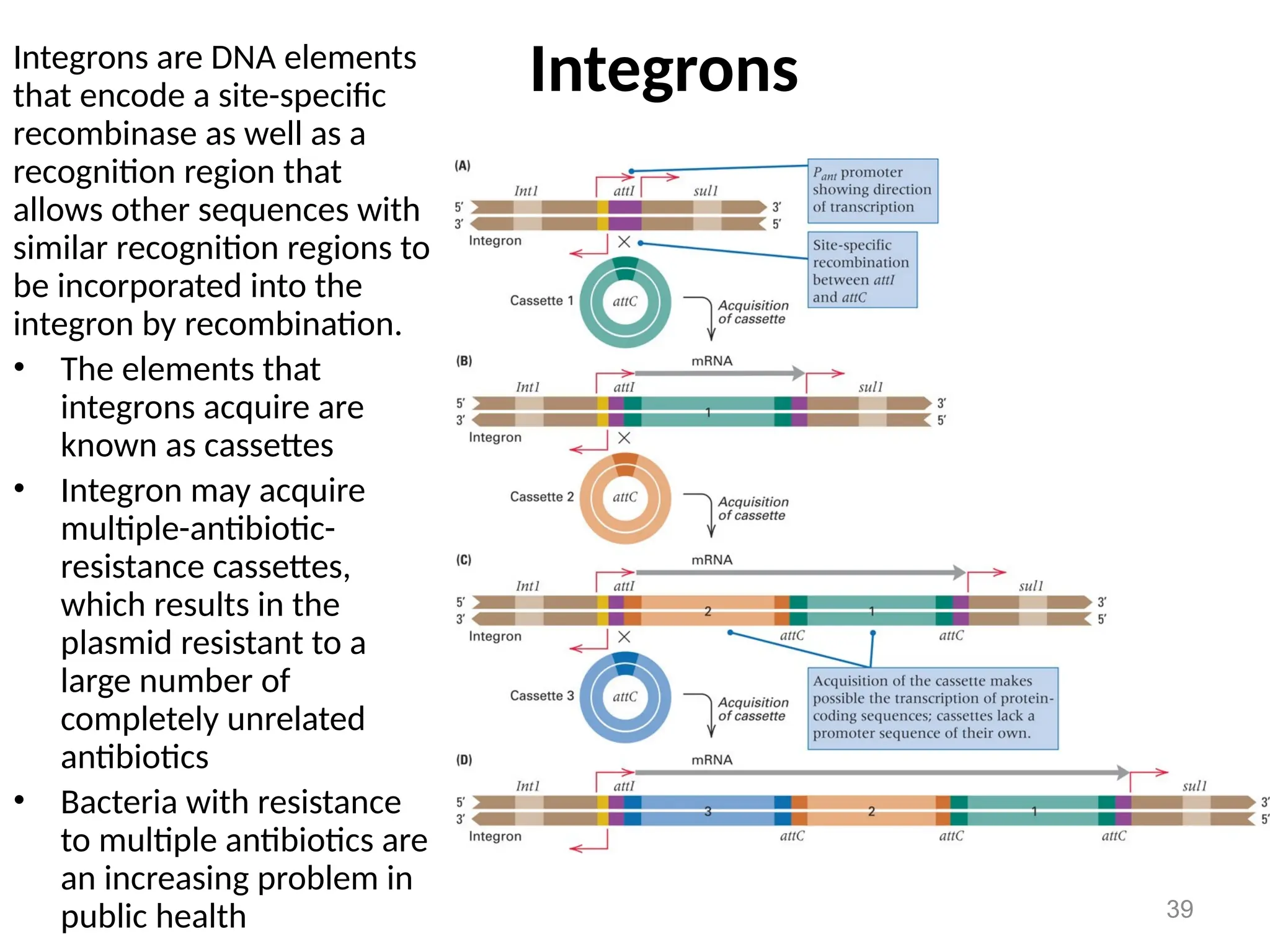
Integrons
Integrons are DNA elements
that encode a site-specific
recombinase as well as a
recognition region that
allows other sequences with
similar recognition regions to
be incorporated into the
integron by recombination.
• The elements that
integrons acquire are
known as cassettes
• Integron may acquire
multiple-antibiotic-
resistance cassettes,
which results in the
plasmid resistant to a
large number of
completely unrelated
antibiotics
• Bacteria with resistance
to multiple antibiotics are
an increasing problem in
public health
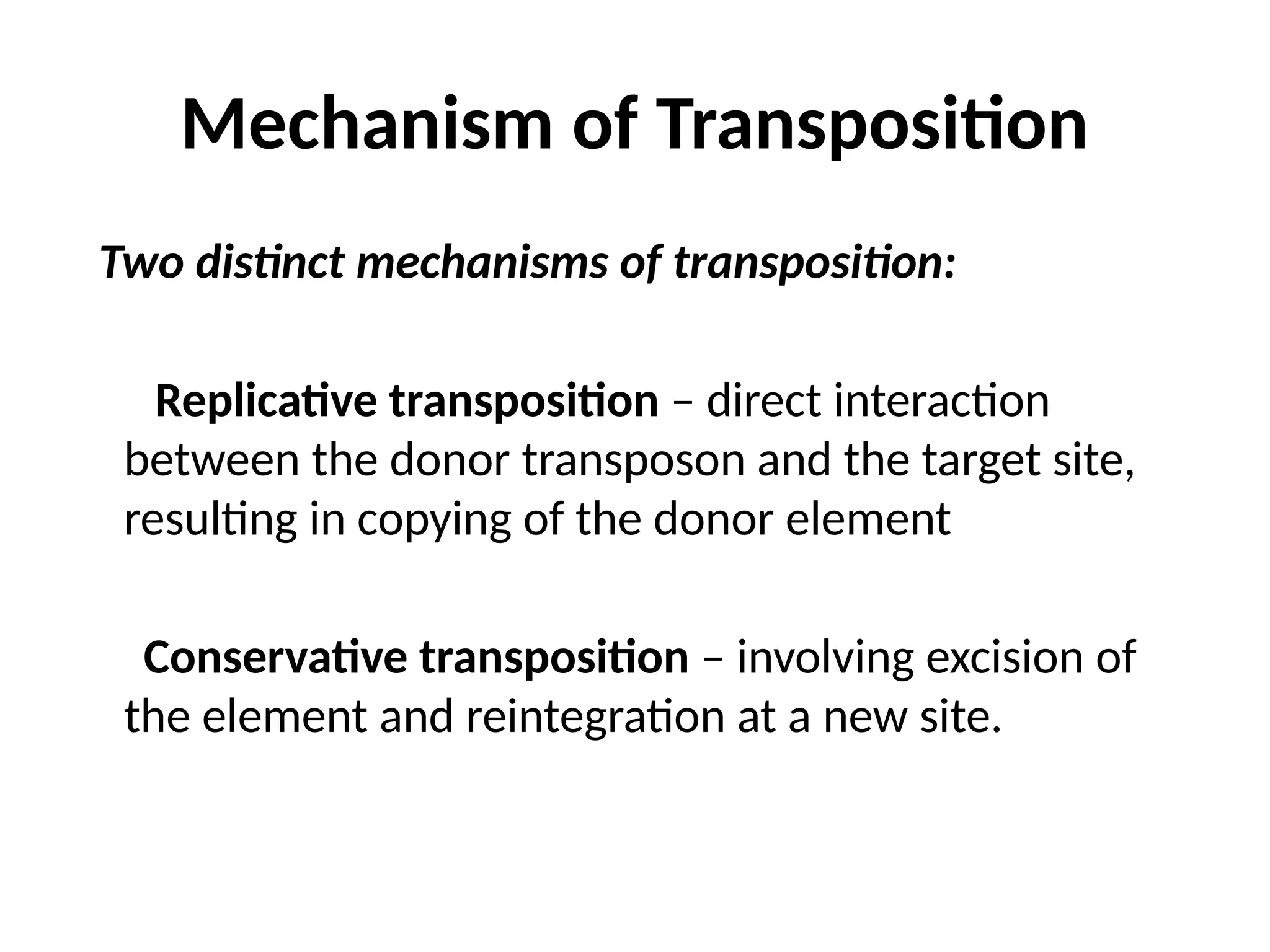
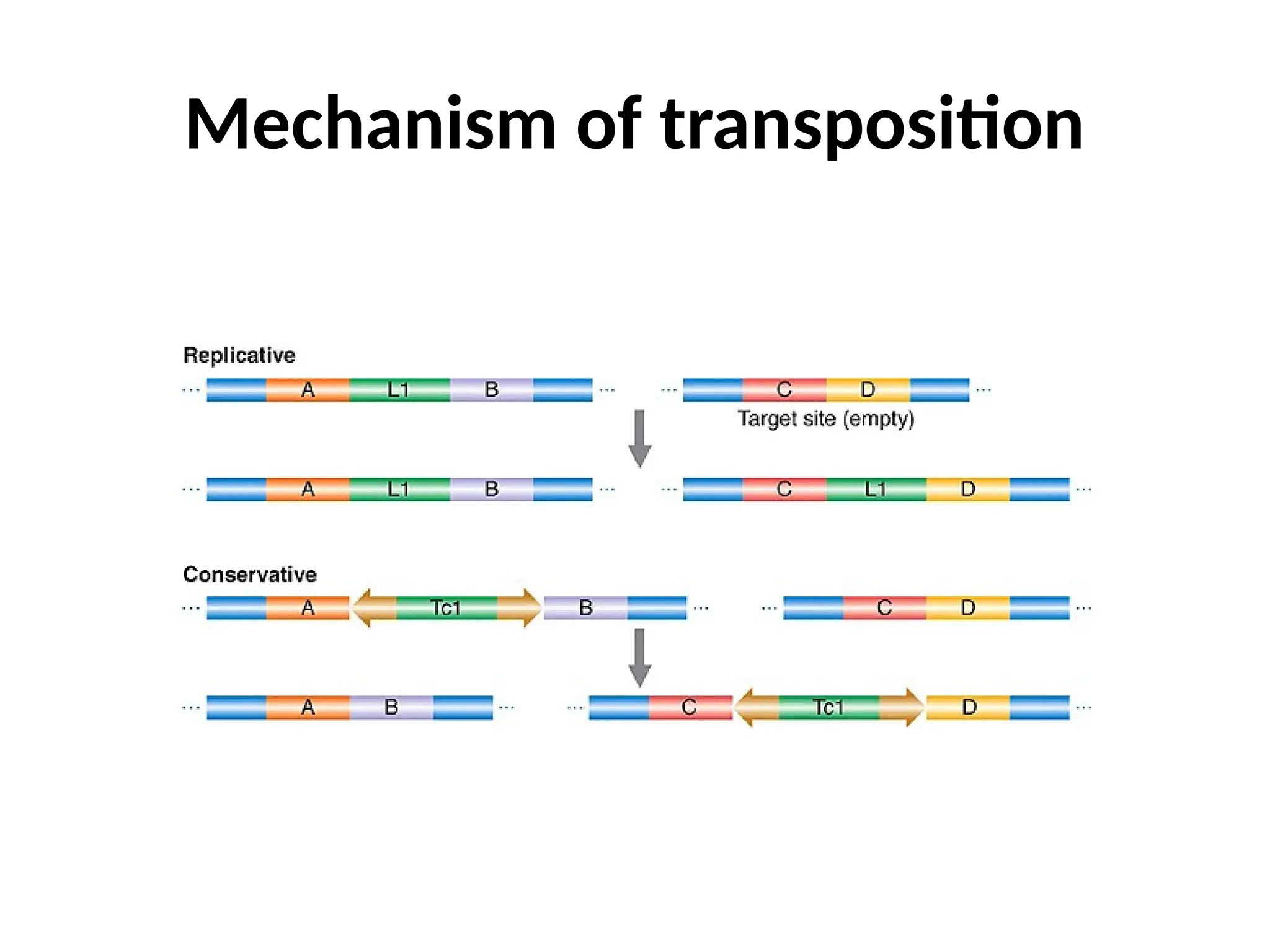
Mechanism of Transposition
Two distinct mechanisms of transposition:
Replicative transposition – direct interaction
between the donor transposon and the target site,
resulting in copying of the donor element
Conservative transposition – involving excision of
the element and reintegration at a new site.
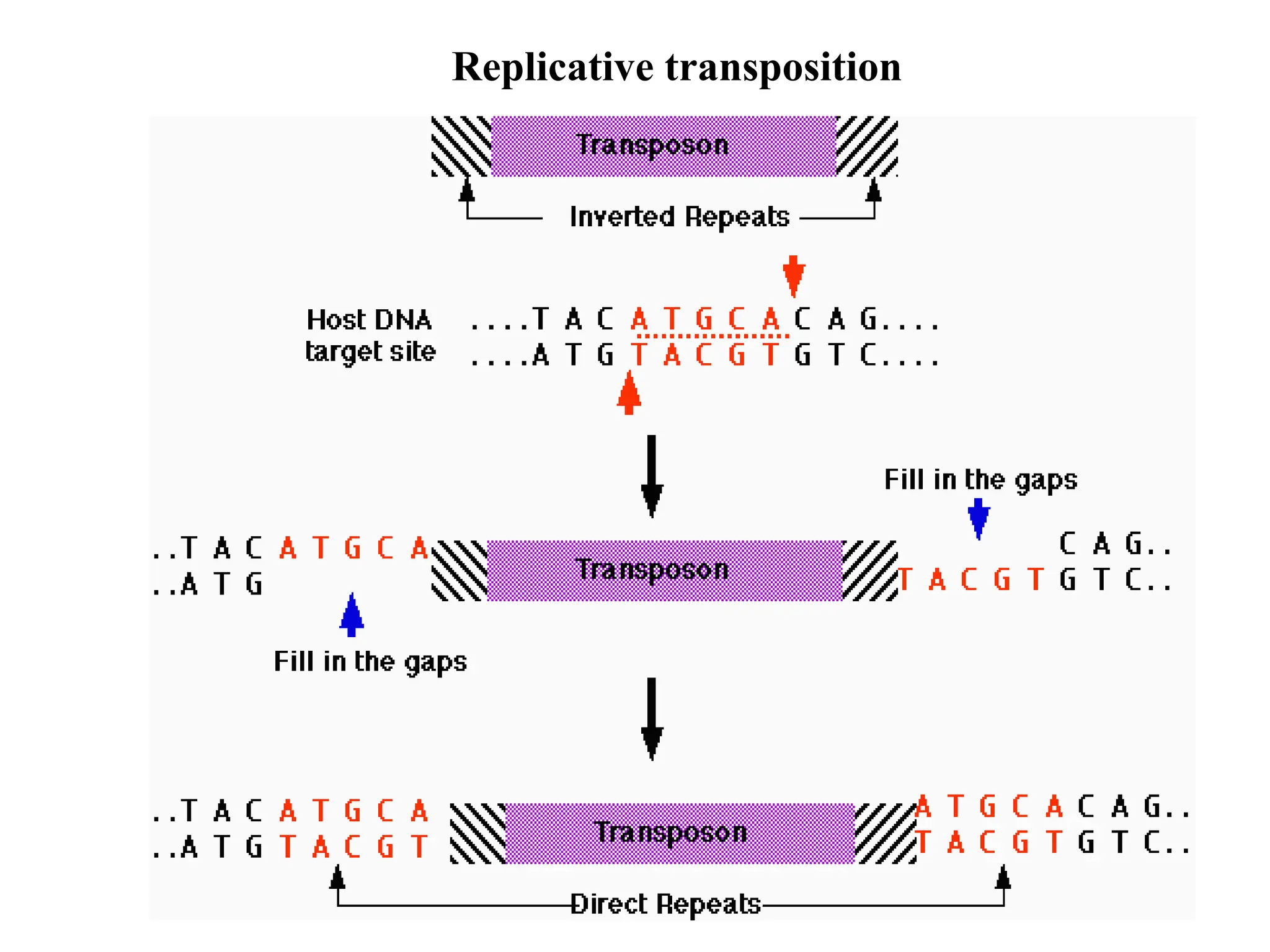
Mechanism of transposition
1. Replicative transposition
Copy of transposon sequence
Transposase enzyme cut target DNA
Transposition
Duplication of target sequence
Replicative transposition
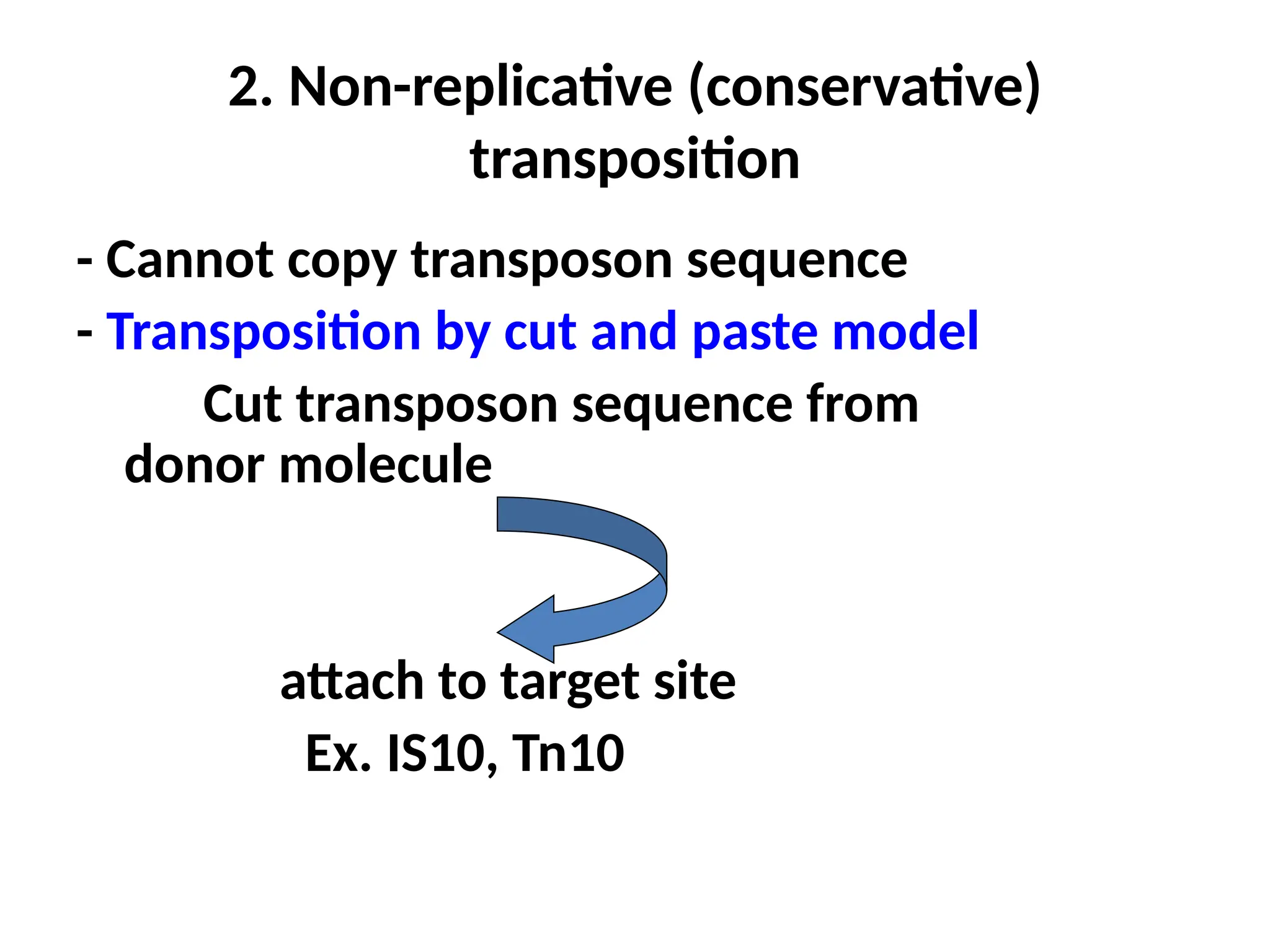
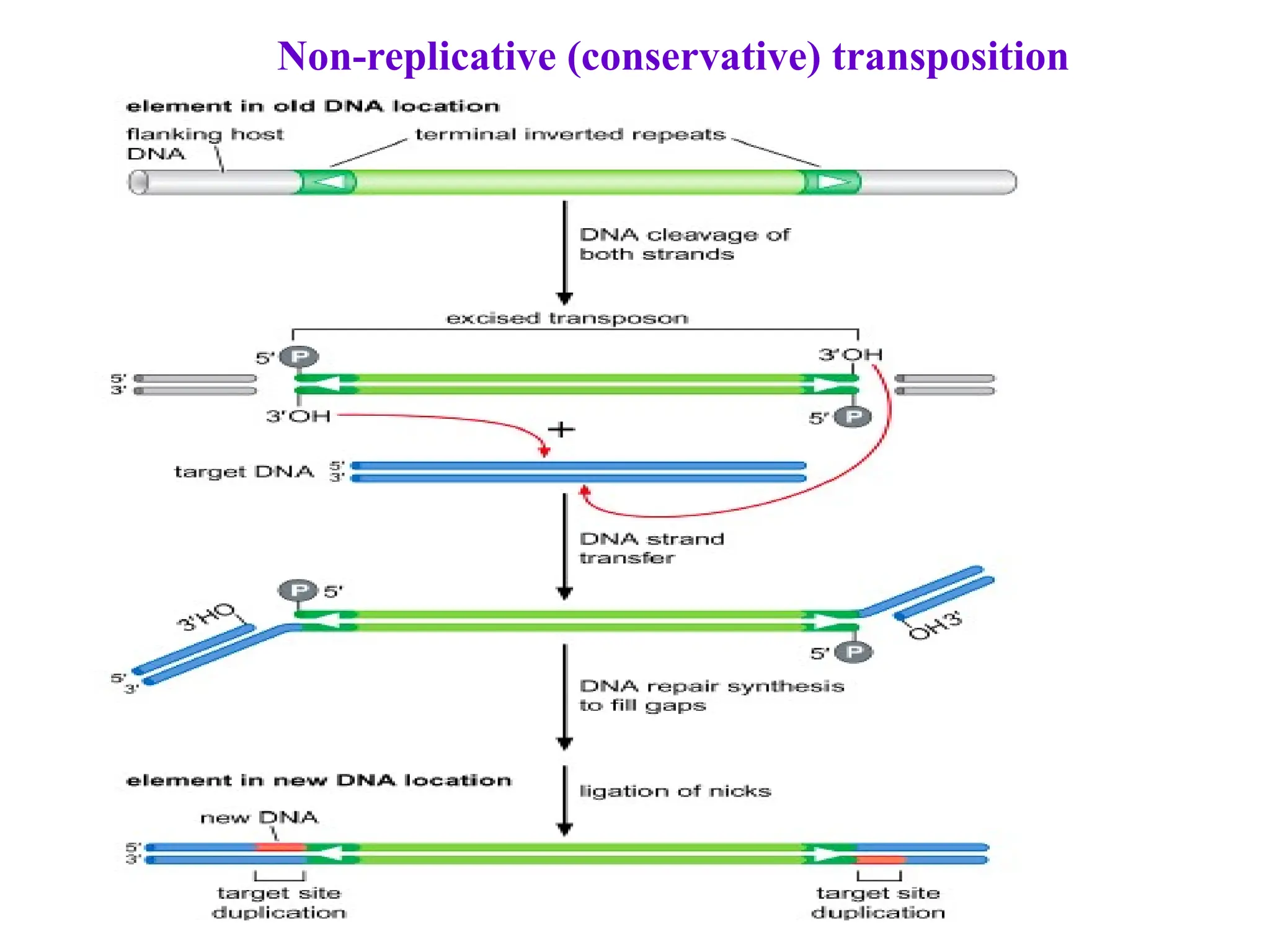
2. Non-replicative (conservative)
transposition
- Cannot copy transposon sequence
- Transposition by cut and paste model
Cut transposon sequence from
donor molecule
attach to target site
Ex. IS10, Tn10
Non-replicative (conservative) transposition
Mechanism of transposition
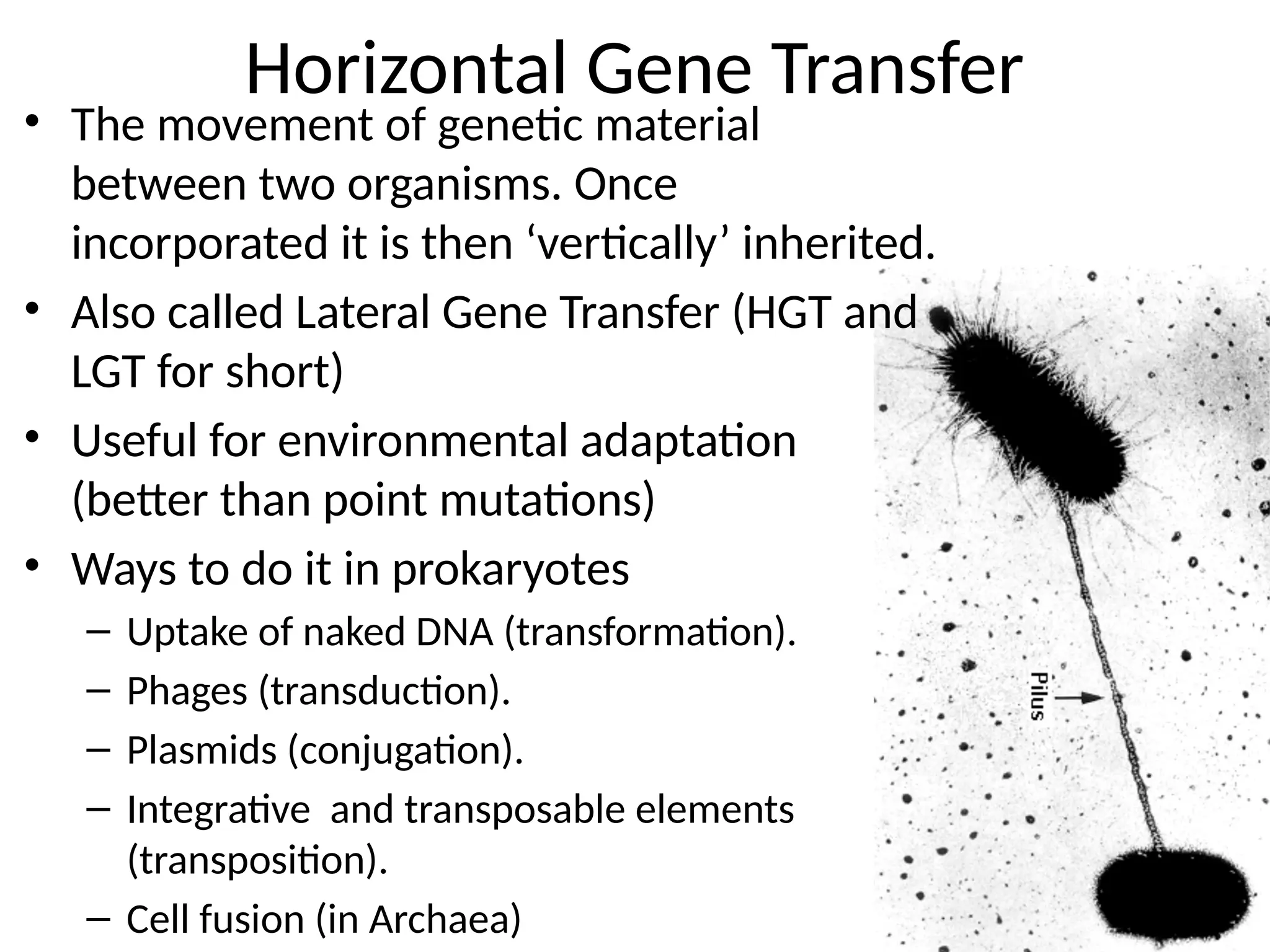
Horizontal Gene Transfer
• The movement of genetic material
between two organisms. Once
incorporated it is then ‘vertically’ inherited.
• Also called Lateral Gene Transfer (HGT and
LGT for short)
• Useful for environmental adaptation
(better than point mutations)
• Ways to do it in prokaryotes
– Uptake of naked DNA (transformation).
– Phages (transduction).
– Plasmids (conjugation).
– Integrative and transposable elements
(transposition).
– Cell fusion (in Archaea)
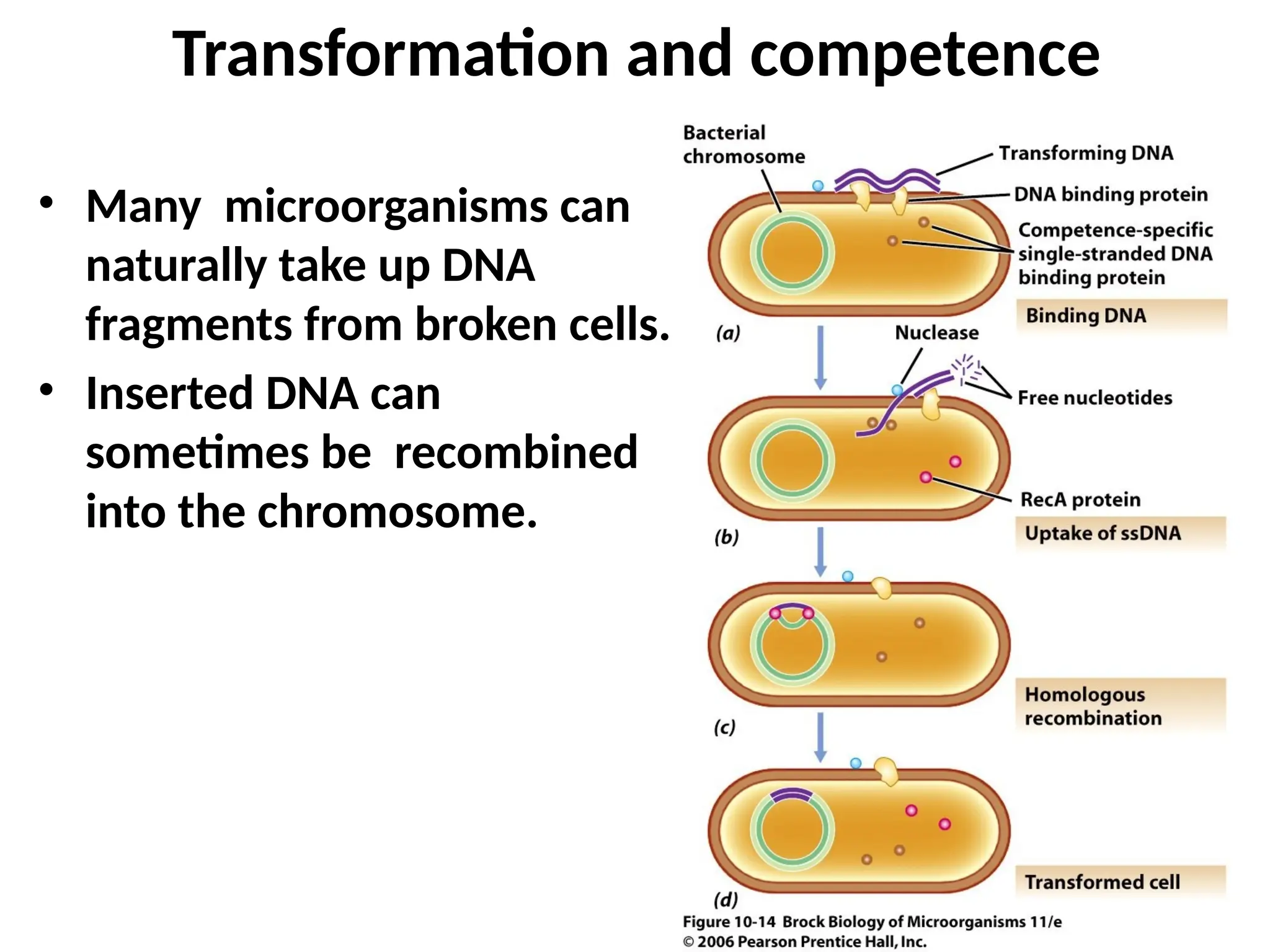
Transformation and competence
• Many microorganisms can
naturally take up DNA
fragments from broken cells.
• Inserted DNA can
sometimes be recombined
into the chromosome.
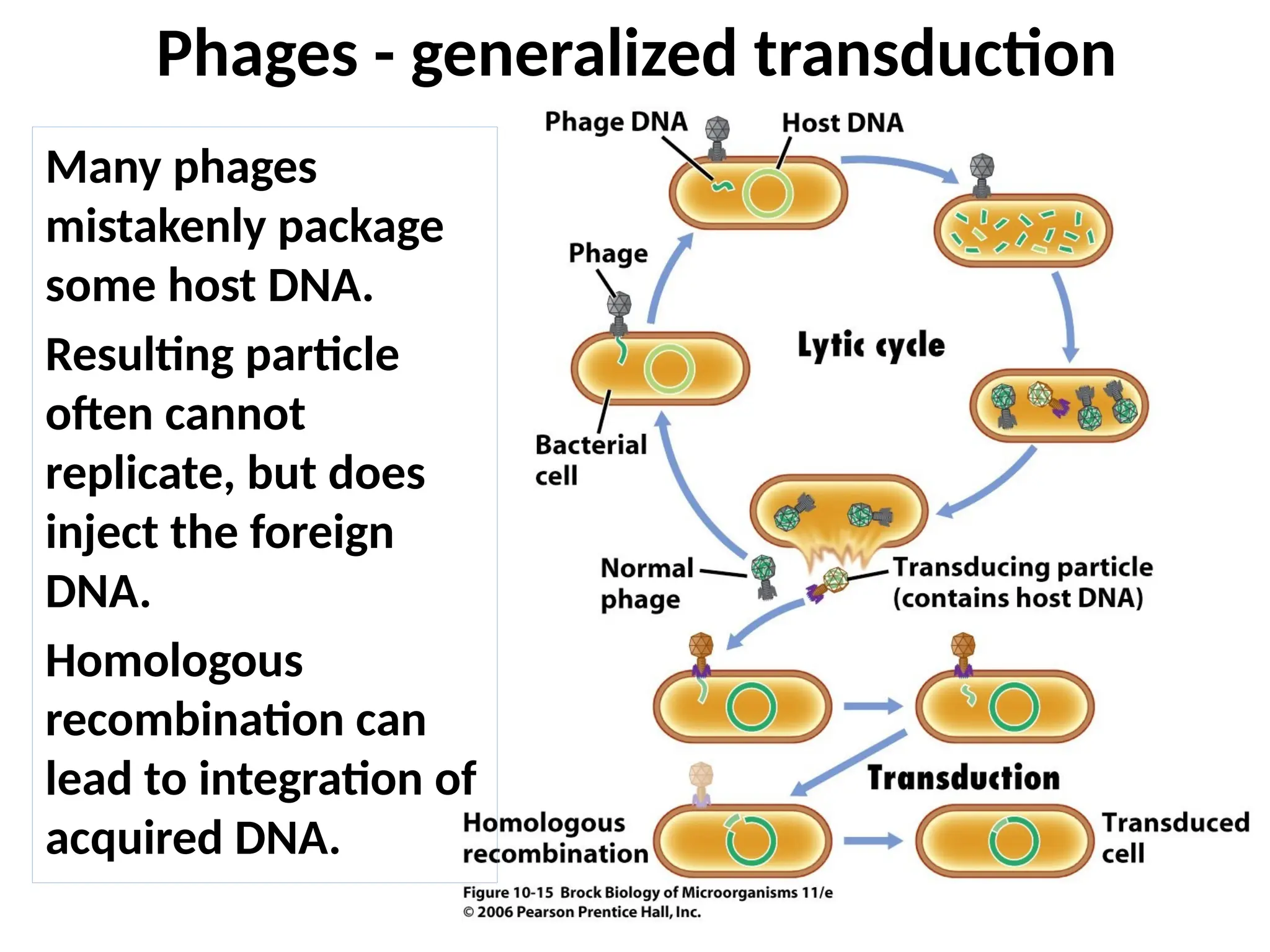
Phages - generalized transduction
Many phages
mistakenly package
some host DNA.
Resulting particle
often cannot
replicate, but does
inject the foreign
DNA.
Homologous
recombination can
lead to integration of
acquired DNA.
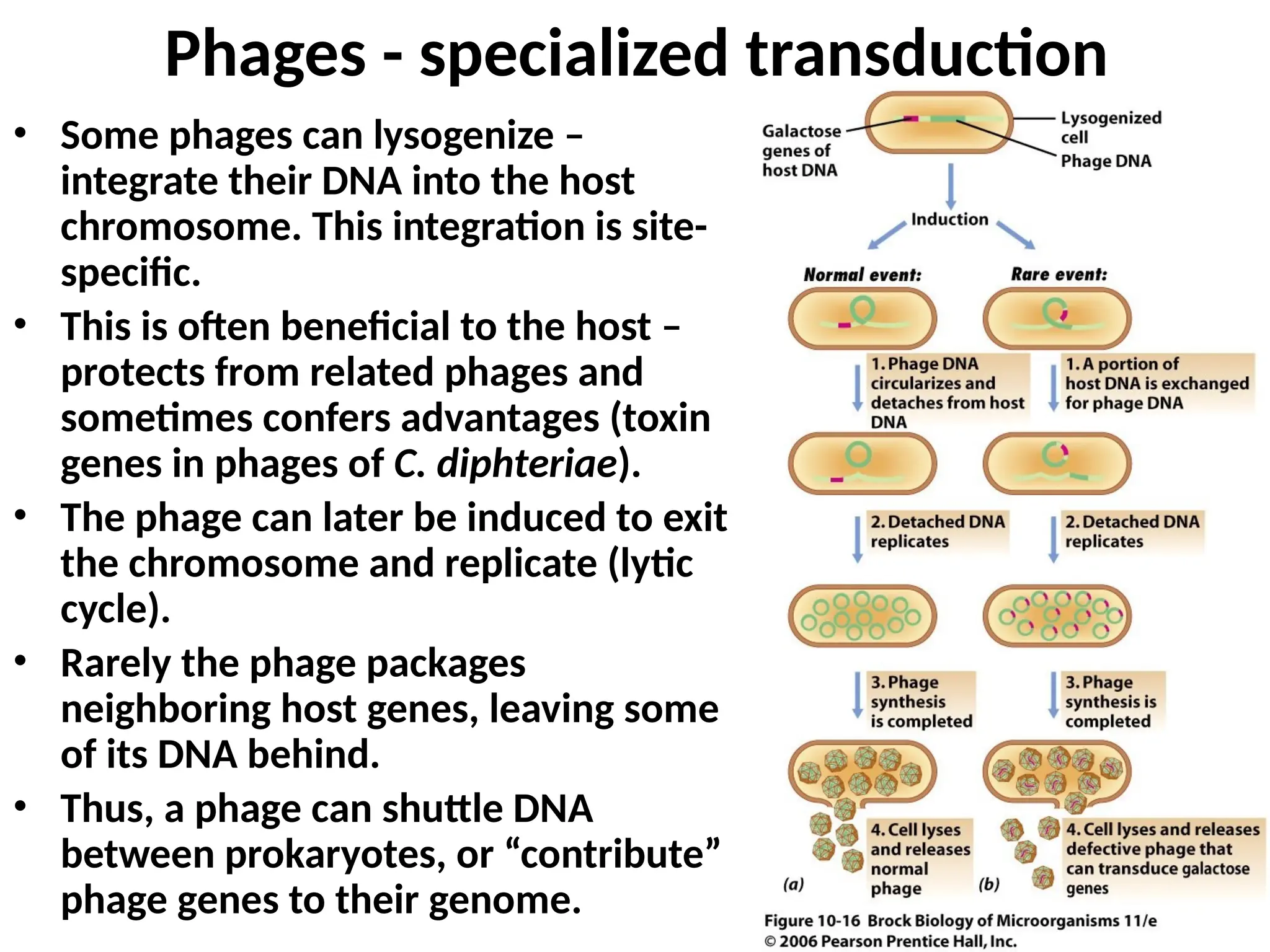
Phages - specialized transduction
• Some phages can lysogenize –
integrate their DNA into the host
chromosome. This integration is site-
specific.
• This is often beneficial to the host –
protects from related phages and
sometimes confers advantages (toxin
genes in phages of C. diphteriae).
• The phage can later be induced to exit
the chromosome and replicate (lytic
cycle).
• Rarely the phage packages
neighboring host genes, leaving some
of its DNA behind.
• Thus, a phage can shuttle DNA
between prokaryotes, or “contribute”
phage genes to their genome.
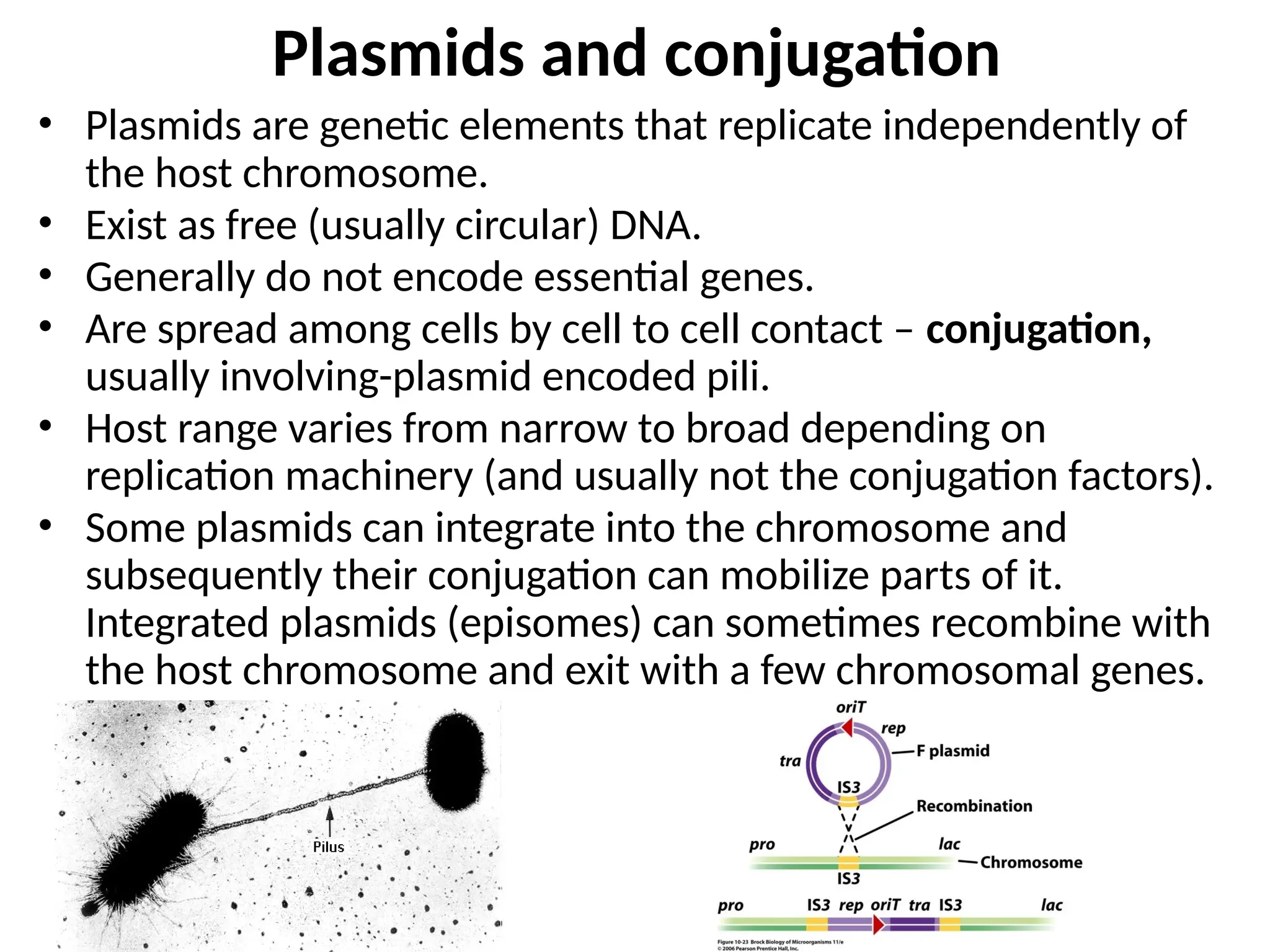
Plasmids and conjugation
• Plasmids are genetic elements that replicate independently of
the host chromosome.
• Exist as free (usually circular) DNA.
• Generally do not encode essential genes.
• Are spread among cells by cell to cell contact – conjugation,
usually involving-plasmid encoded pili.
• Host range varies from narrow to broad depending on
replication machinery (and usually not the conjugation factors).
• Some plasmids can integrate into the chromosome and
subsequently their conjugation can mobilize parts of it.
Integrated plasmids (episomes) can sometimes recombine with
the host chromosome and exit with a few chromosomal genes.
Horizontal Gene Transfer Mediated by
Plasmids
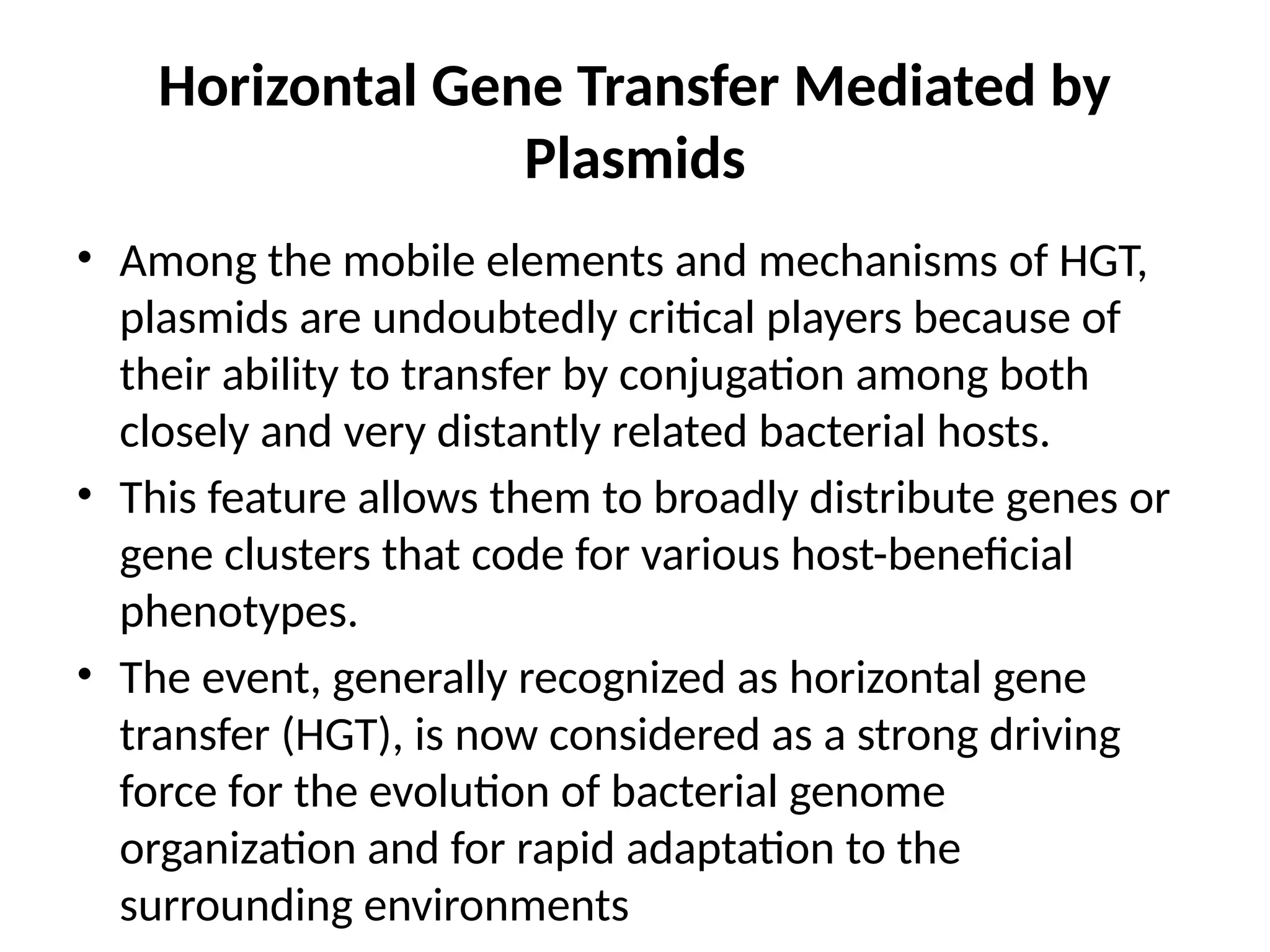
• Among the mobile elements and mechanisms of HGT,
plasmids are undoubtedly critical players because of
their ability to transfer by conjugation among both
closely and very distantly related bacterial hosts.
• This feature allows them to broadly distribute genes or
gene clusters that code for various host-beneficial
phenotypes.
• The event, generally recognized as horizontal gene
transfer (HGT), is now considered as a strong driving
force for the evolution of bacterial genome
organization and for rapid adaptation to the
surrounding environments
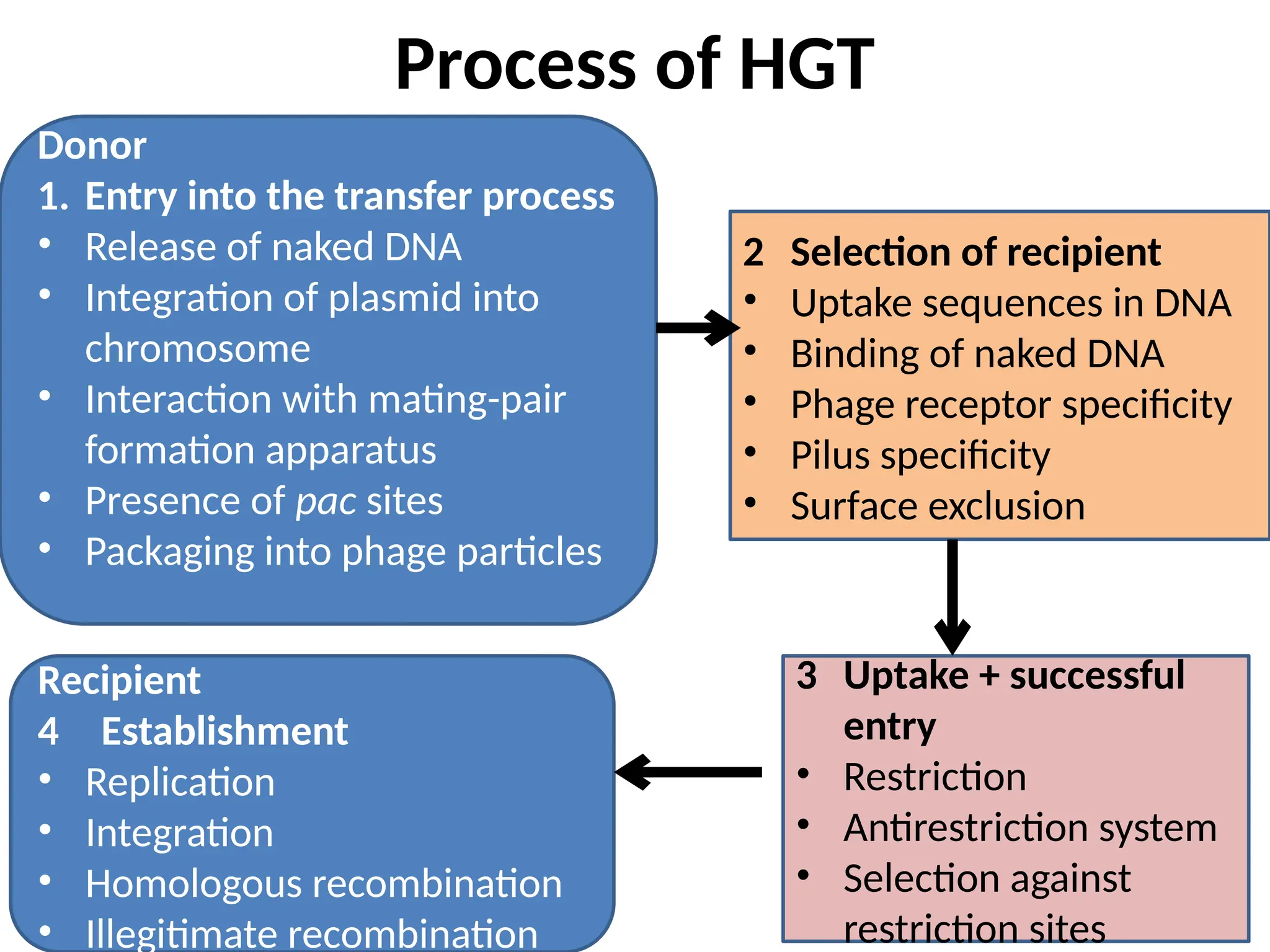
Process of HGT
Donor
1. Entry into the transfer process
• Release of naked DNA
• Integration of plasmid into
chromosome
• Interaction with mating-pair
formation apparatus
• Presence of pac sites
• Packaging into phage particles
2 Selection of recipient
• Uptake sequences in DNA
• Binding of naked DNA
• Phage receptor specificity
• Pilus specificity
• Surface exclusion
3 Uptake + successful
entry
• Restriction
• Antirestriction system
• Selection against
restriction sites
Recipient
4 Establishment
• Replication
• Integration
• Homologous recombination
• Illegitimate recombination
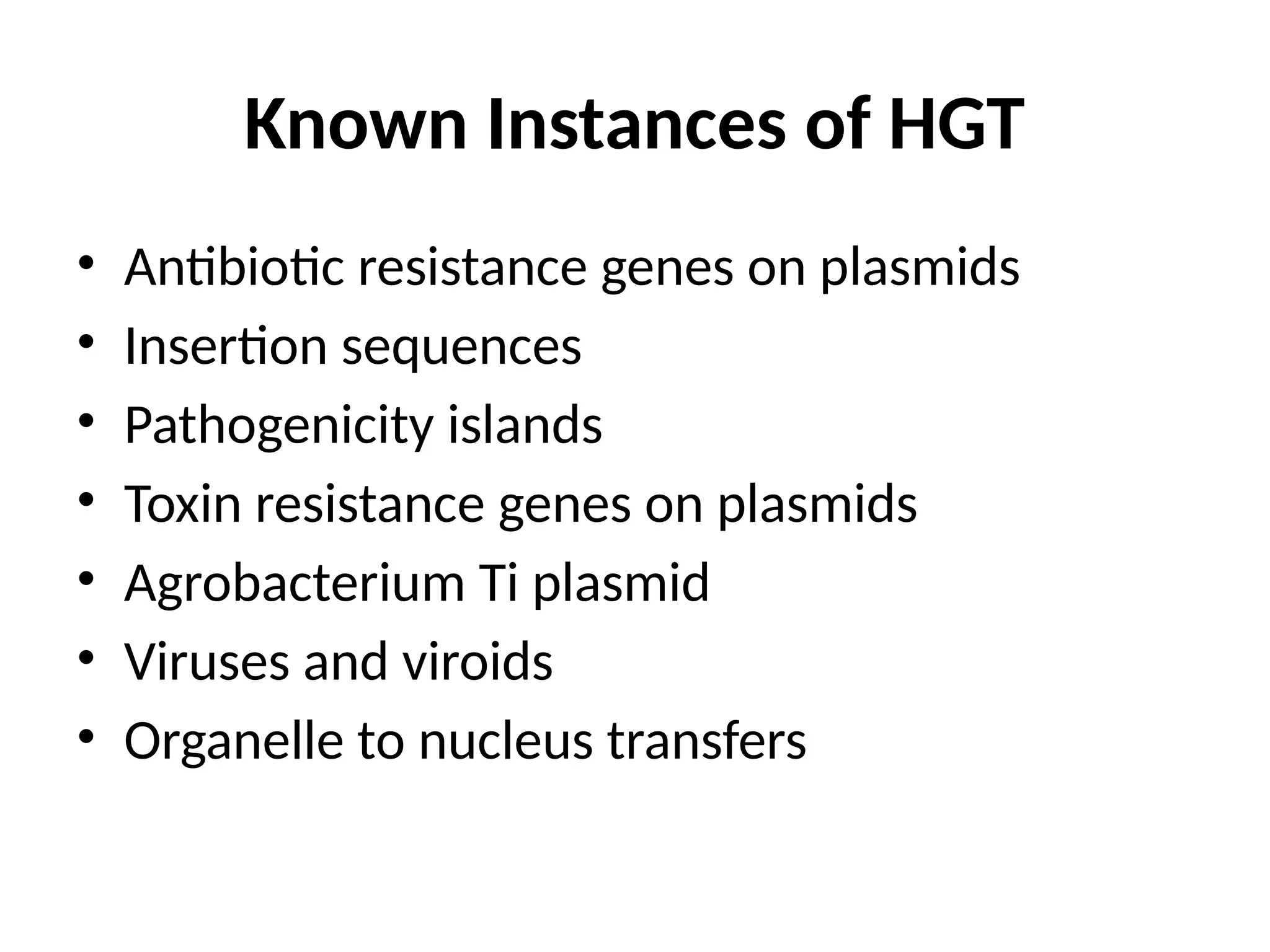
Known Instances of HGT
• Antibiotic resistance genes on plasmids
• Insertion sequences
• Pathogenicity islands
• Toxin resistance genes on plasmids
• Agrobacterium Ti plasmid
• Viruses and viroids
• Organelle to nucleus transfers
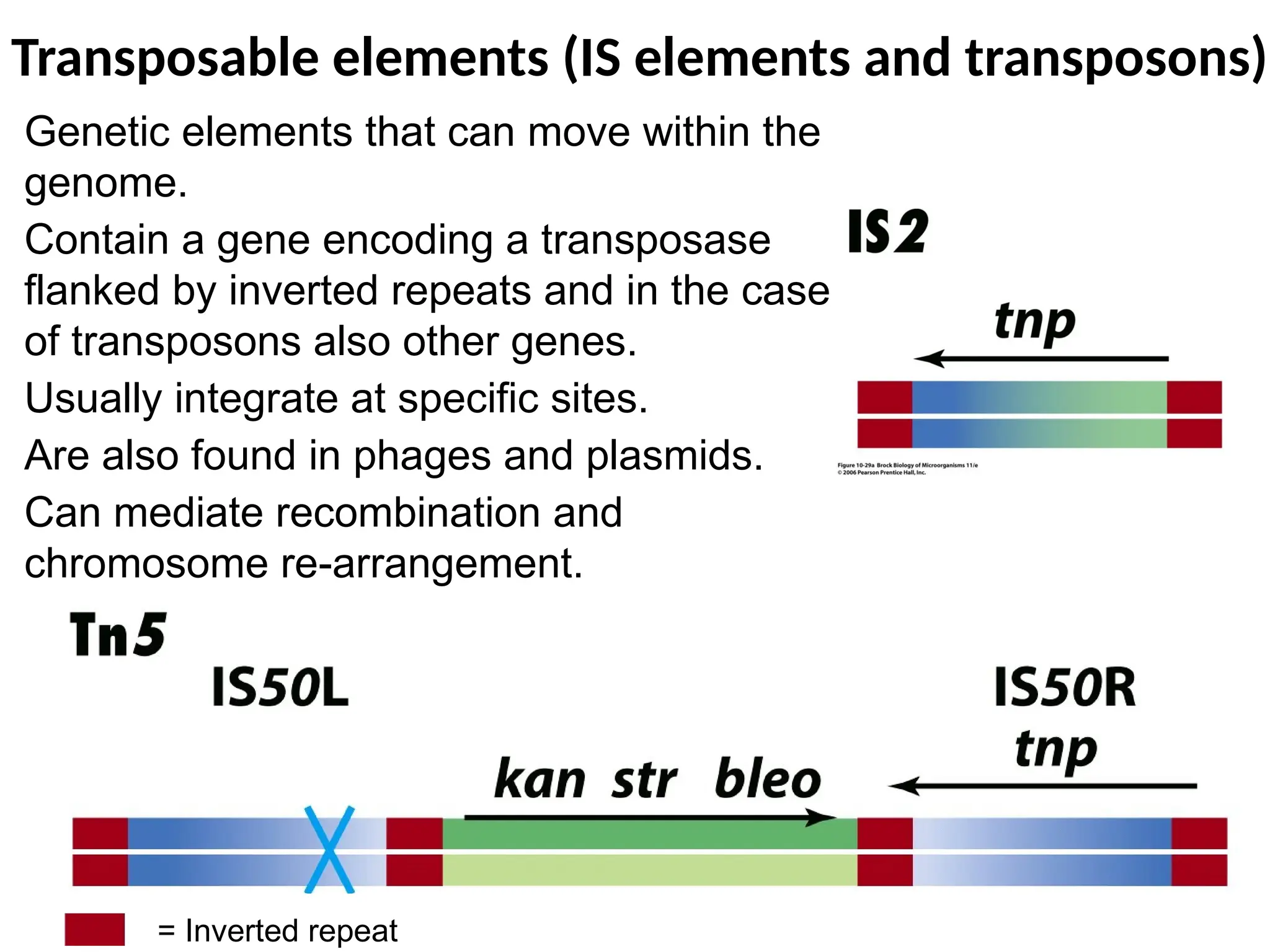
Transposable elements (IS elements and transposons)
Genetic elements that can move within the
genome.
Contain a gene encoding a transposase
flanked by inverted repeats and in the case
of transposons also other genes.
Usually integrate at specific sites.
Are also found in phages and plasmids.
Can mediate recombination and
chromosome re-arrangement.
= Inverted repeat
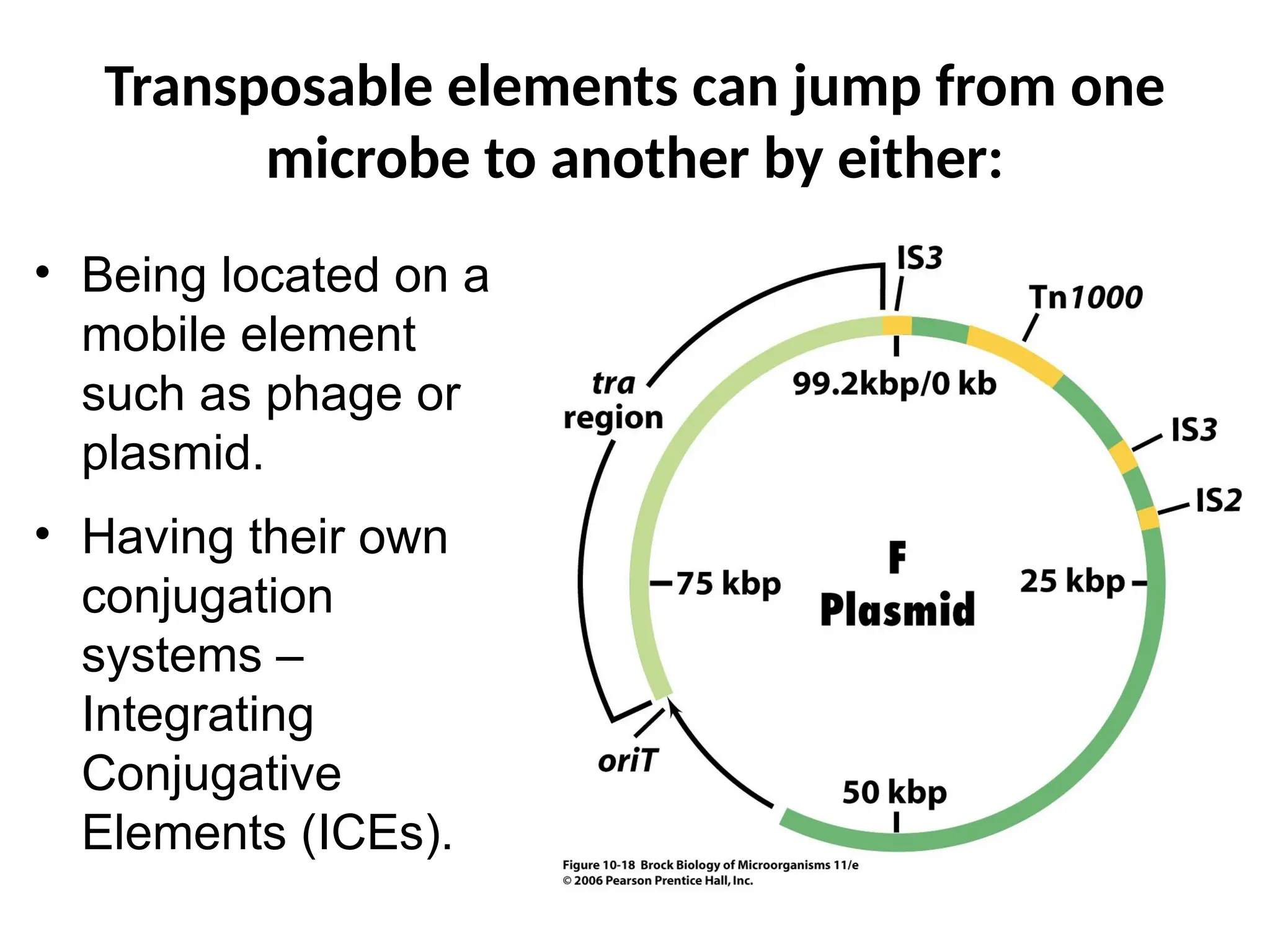
Transposable elements can jump from one
microbe to another by either:
• Being located on a
mobile element
such as phage or
plasmid.
• Having their own
conjugation
systems –
Integrating
Conjugative
Elements (ICEs).
Integrons: Chromosomal elements that recruit
gene cassettes by site-specific recombination
Genomic evidence for the clinical importance LGT:
Staphylococcus aureus as an example
• Phage-encoded toxins:
– Enterotoxin A - food poisoning.
– Exfoliative toxin A - scalded skin syndrome.
– Panton-Valentine leukocidin - severe skin infections and
necrotizing pneumonia in children (mortality rate of 40%).
• Plasmids - Antiseptic and antibiotic resistances.
• Integron- Methicillin resistance.
• Transposon-encoded vancomycin resistance (from
plasmids of enterococci!).
Based on Lindsay and Holden, 2004, (Trends Microbiol. 12:378-85)
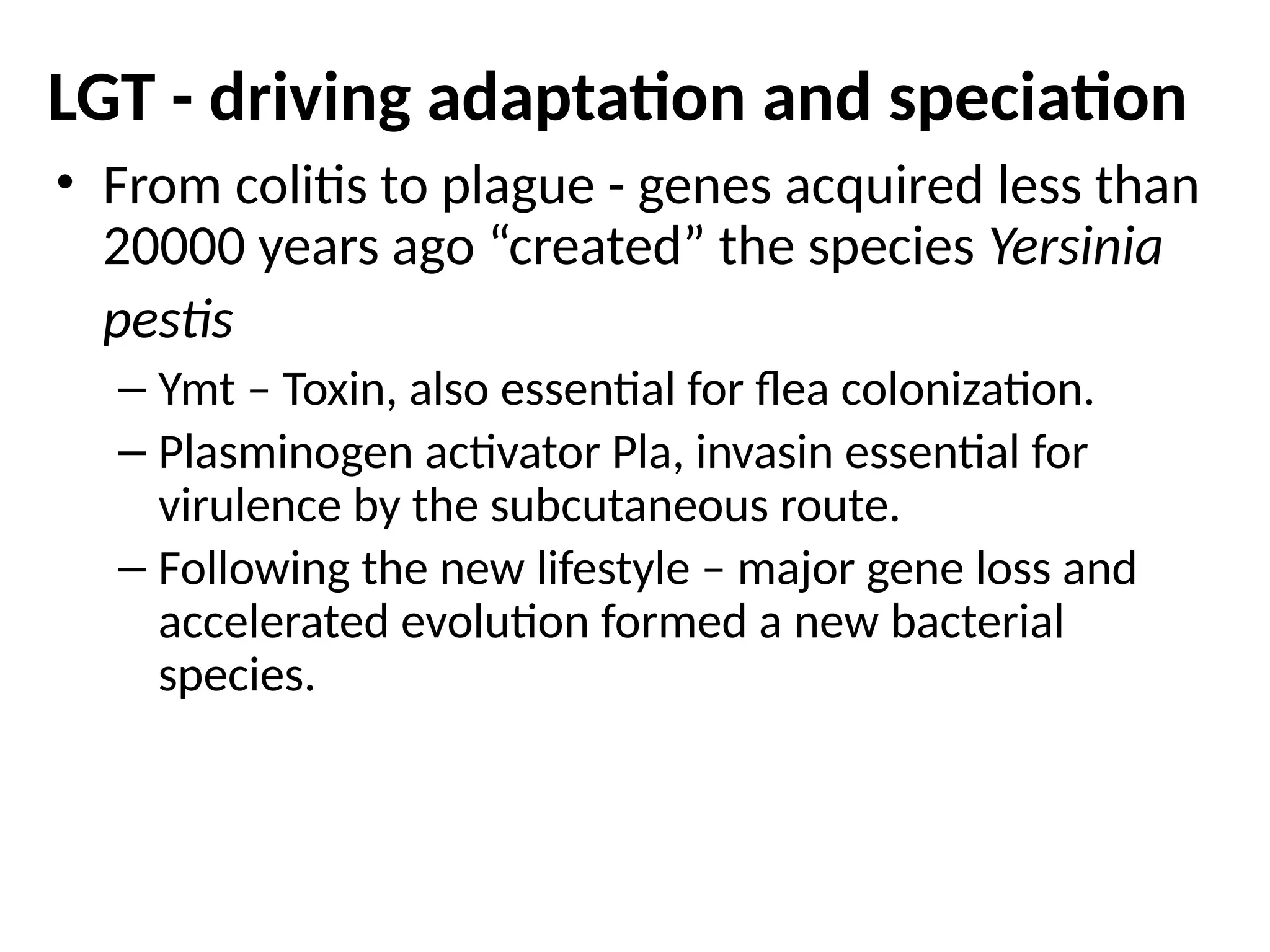
LGT - driving adaptation and speciation
• From colitis to plague - genes acquired less than
20000 years ago “created” the species Yersinia
pestis
– Ymt – Toxin, also essential for flea colonization.
– Plasminogen activator Pla, invasin essential for
virulence by the subcutaneous route.
– Following the new lifestyle – major gene loss and
accelerated evolution formed a new bacterial
species.
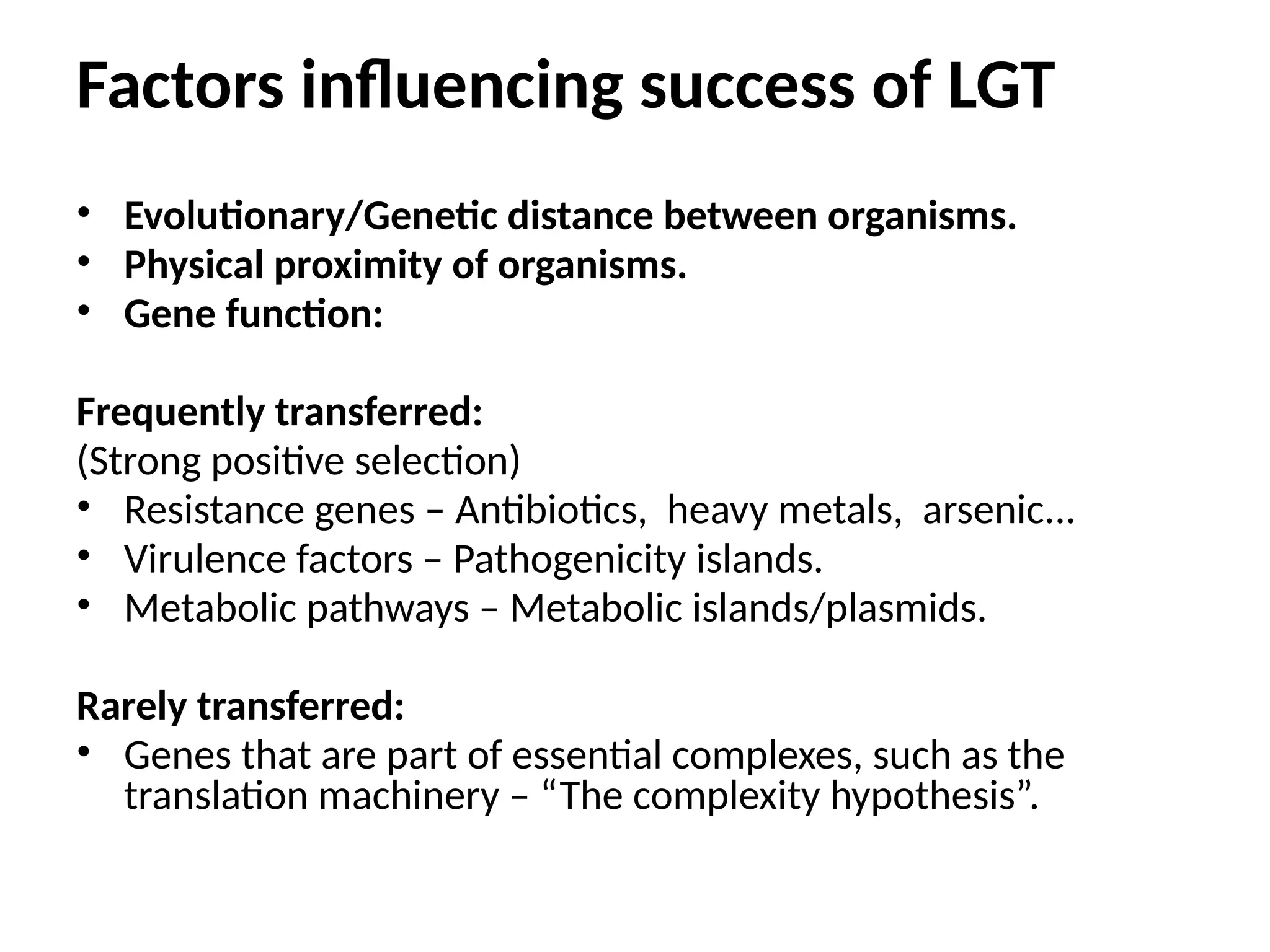
Factors influencing success of LGT
• Evolutionary/Genetic distance between organisms.
• Physical proximity of organisms.
• Gene function:
Frequently transferred:
(Strong positive selection)
• Resistance genes – Antibiotics, heavy metals, arsenic...
• Virulence factors – Pathogenicity islands.
• Metabolic pathways – Metabolic islands/plasmids.
Rarely transferred:
• Genes that are part of essential complexes, such as the
translation machinery – “The complexity hypothesis”.
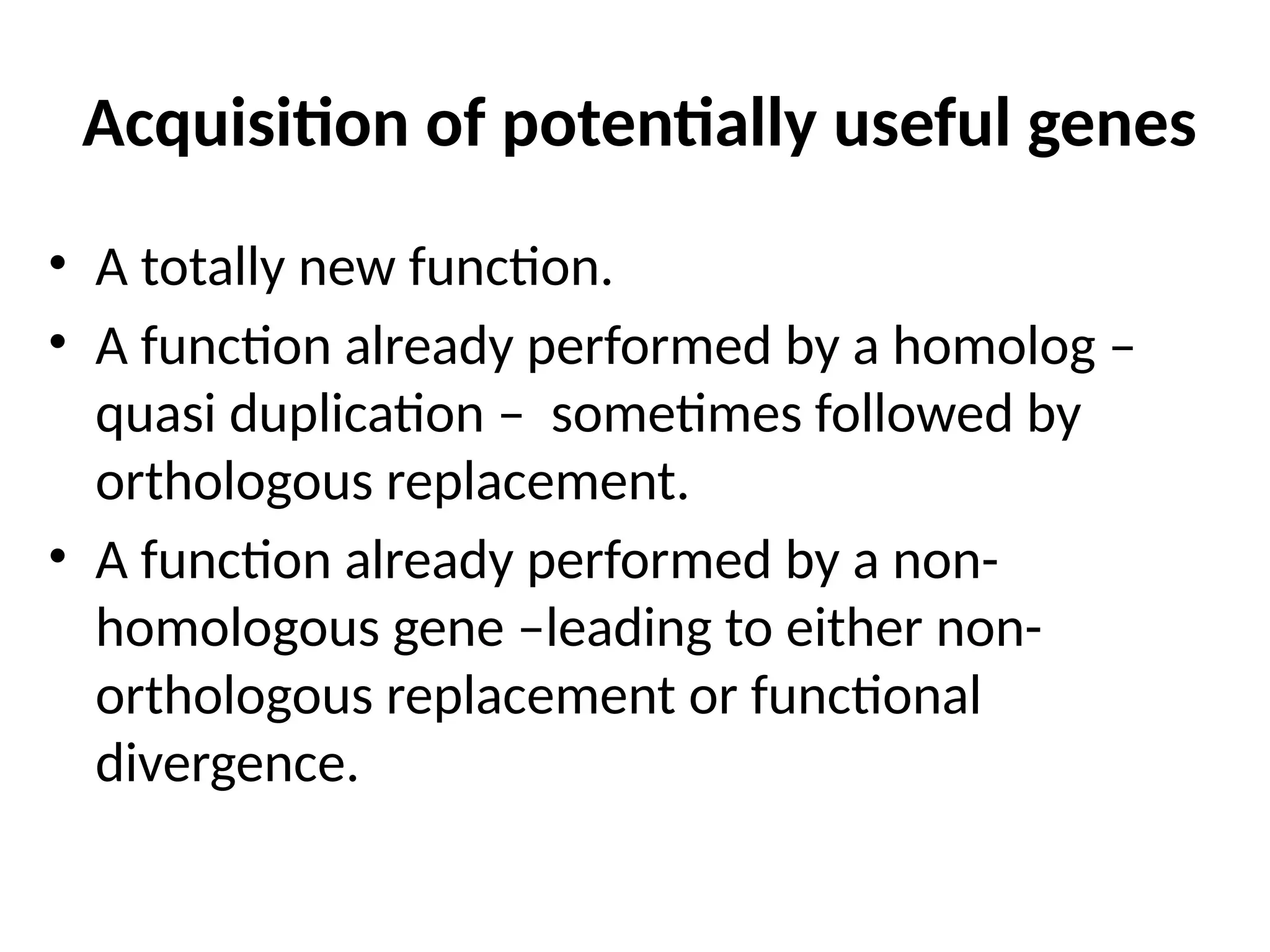
Acquisition of potentially useful genes
• A totally new function.
• A function already performed by a homolog –
quasi duplication – sometimes followed by
orthologous replacement.
• A function already performed by a non-
homologous gene –leading to either non-
orthologous replacement or functional
divergence.
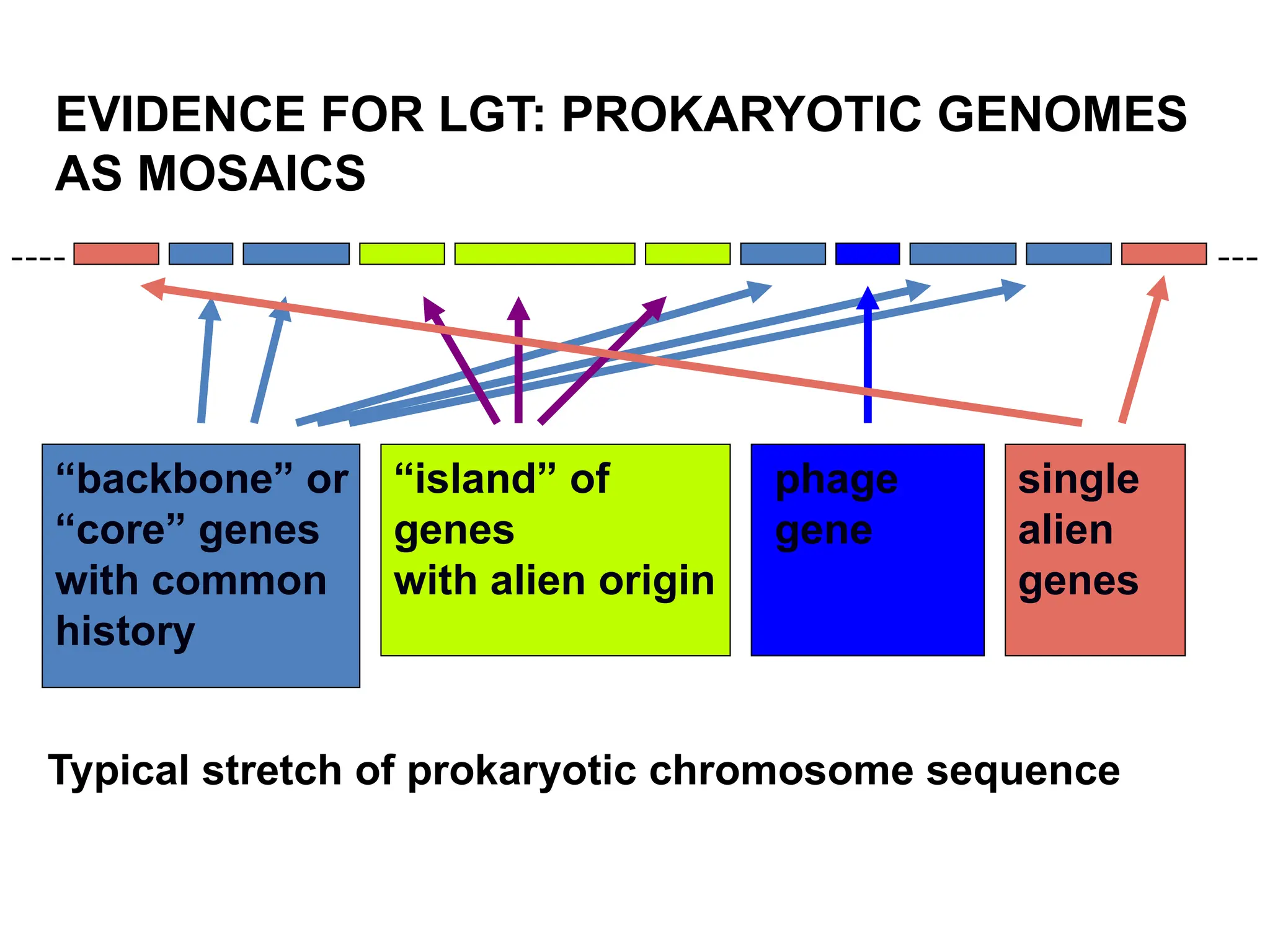
EVIDENCE FOR LGT: PROKARYOTIC GENOMES
AS MOSAICS
---
----
“backbone” or
“core” genes
with common
history
“island” of
genes
with alien origin
phage
gene
single
alien
genes
Typical stretch of prokaryotic chromosome sequence
LGT and the tree of life
estimating its evolutionary impact
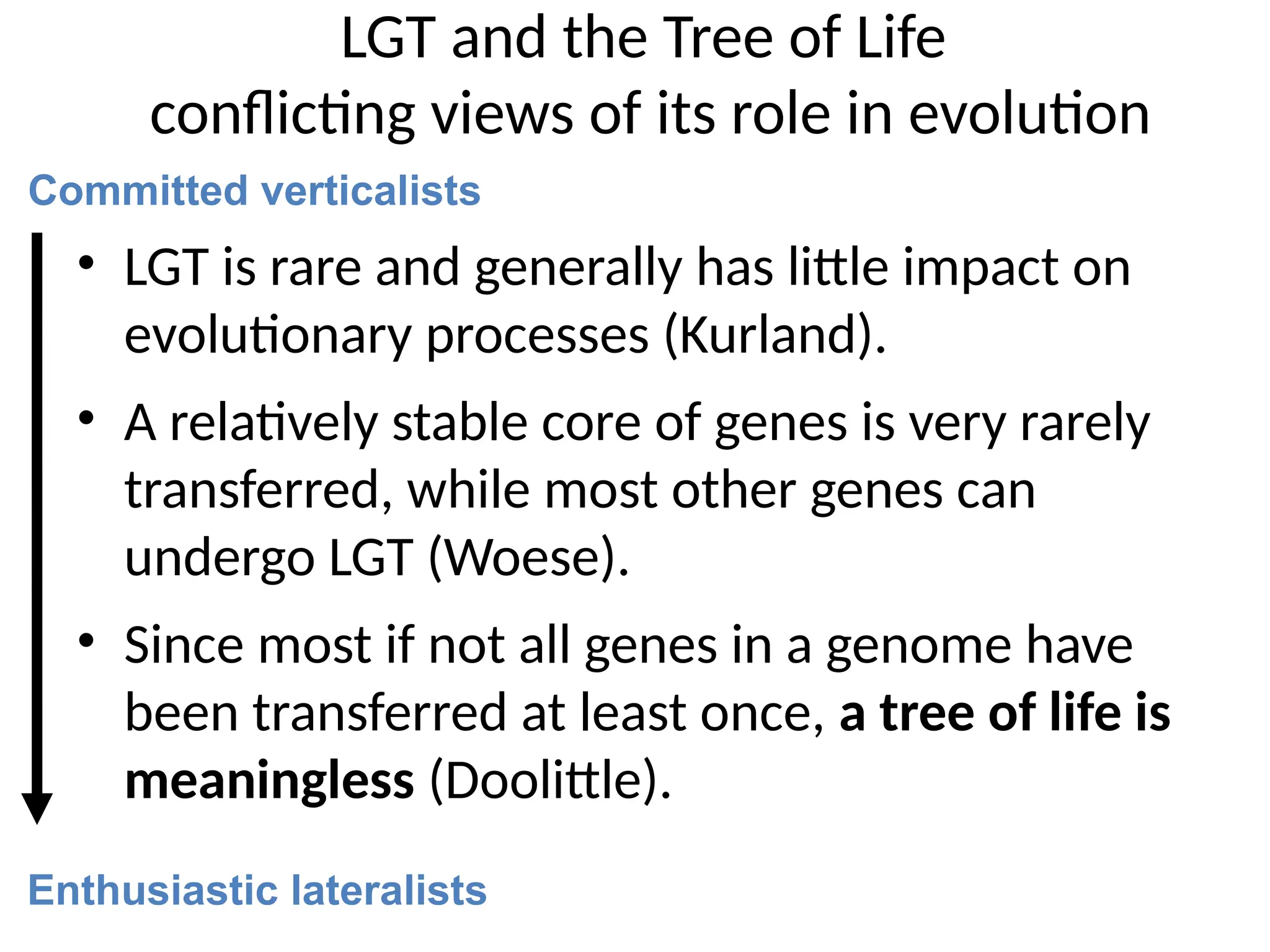
LGT and the Tree of Life
conflicting views of its role in evolution
• LGT is rare and generally has little impact on
evolutionary processes (Kurland).
• A relatively stable core of genes is very rarely
transferred, while most other genes can
undergo LGT (Woese).
• Since most if not all genes in a genome have
been transferred at least once, a tree of life is
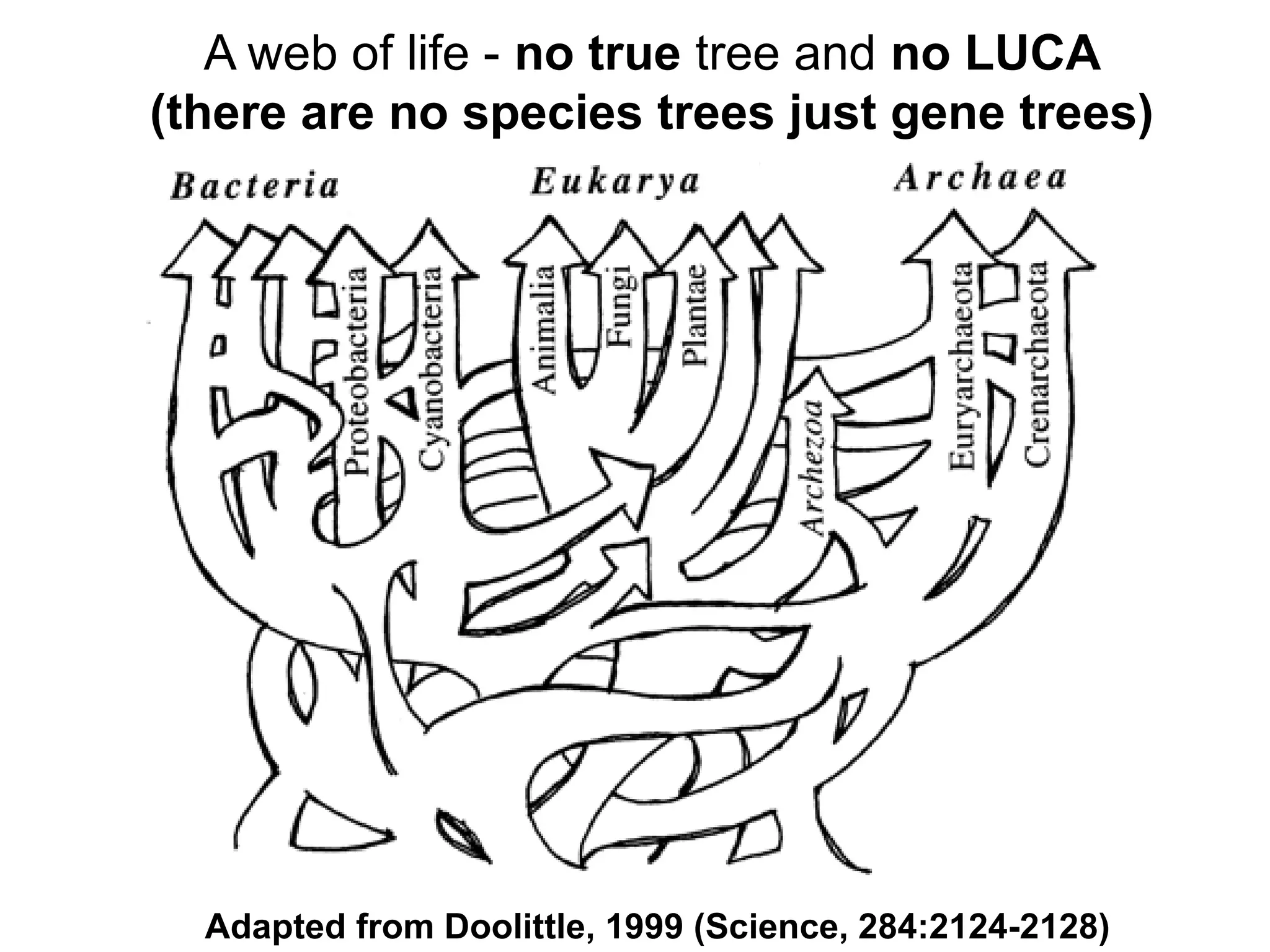
meaningless (Doolittle).
Enthusiastic lateralists
Committed verticalists
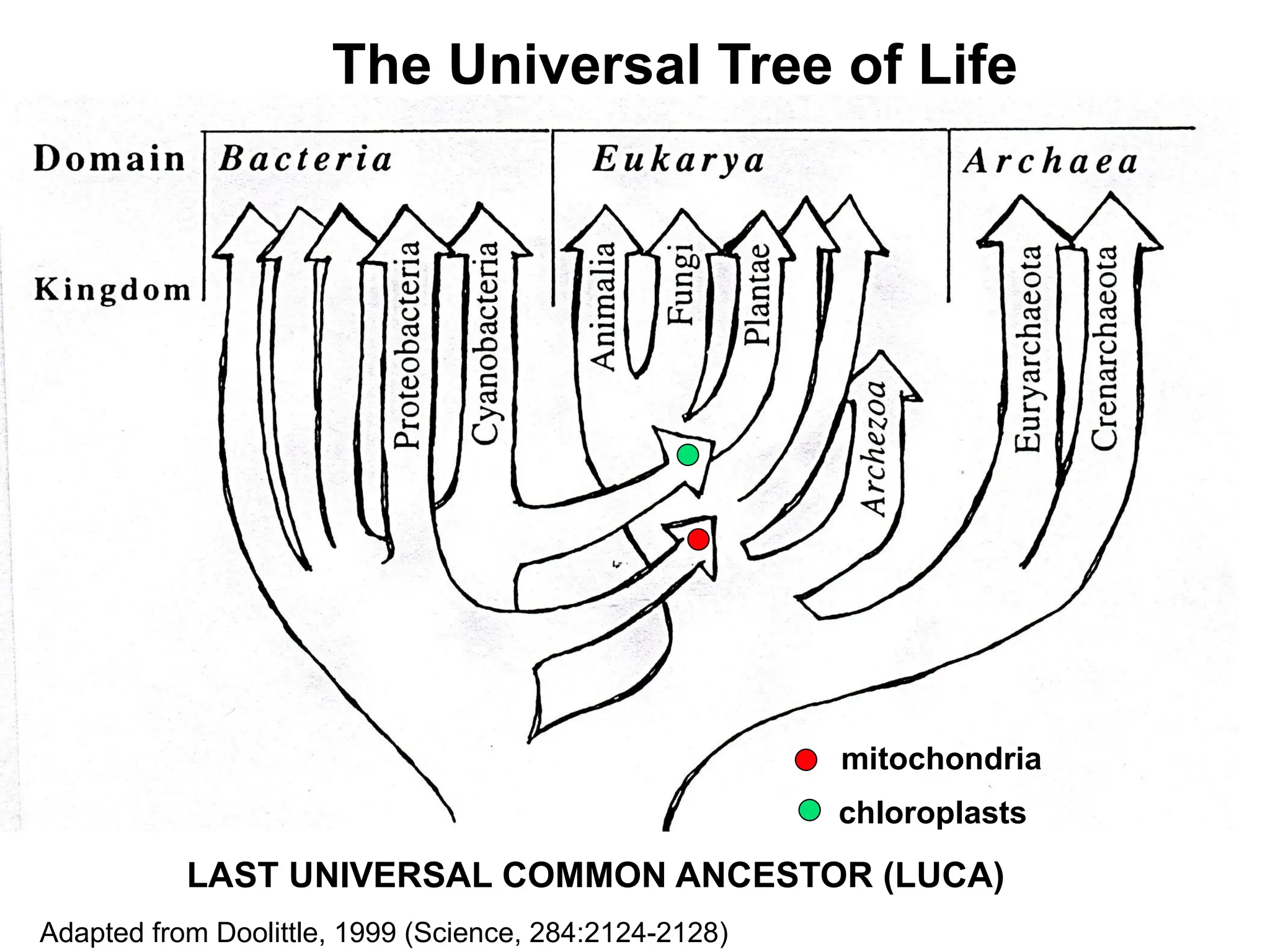
mitochondria
chloroplasts
The Universal Tree of Life
LAST UNIVERSAL COMMON ANCESTOR (LUCA)
Adapted from Doolittle, 1999 (Science, 284:2124-2128)
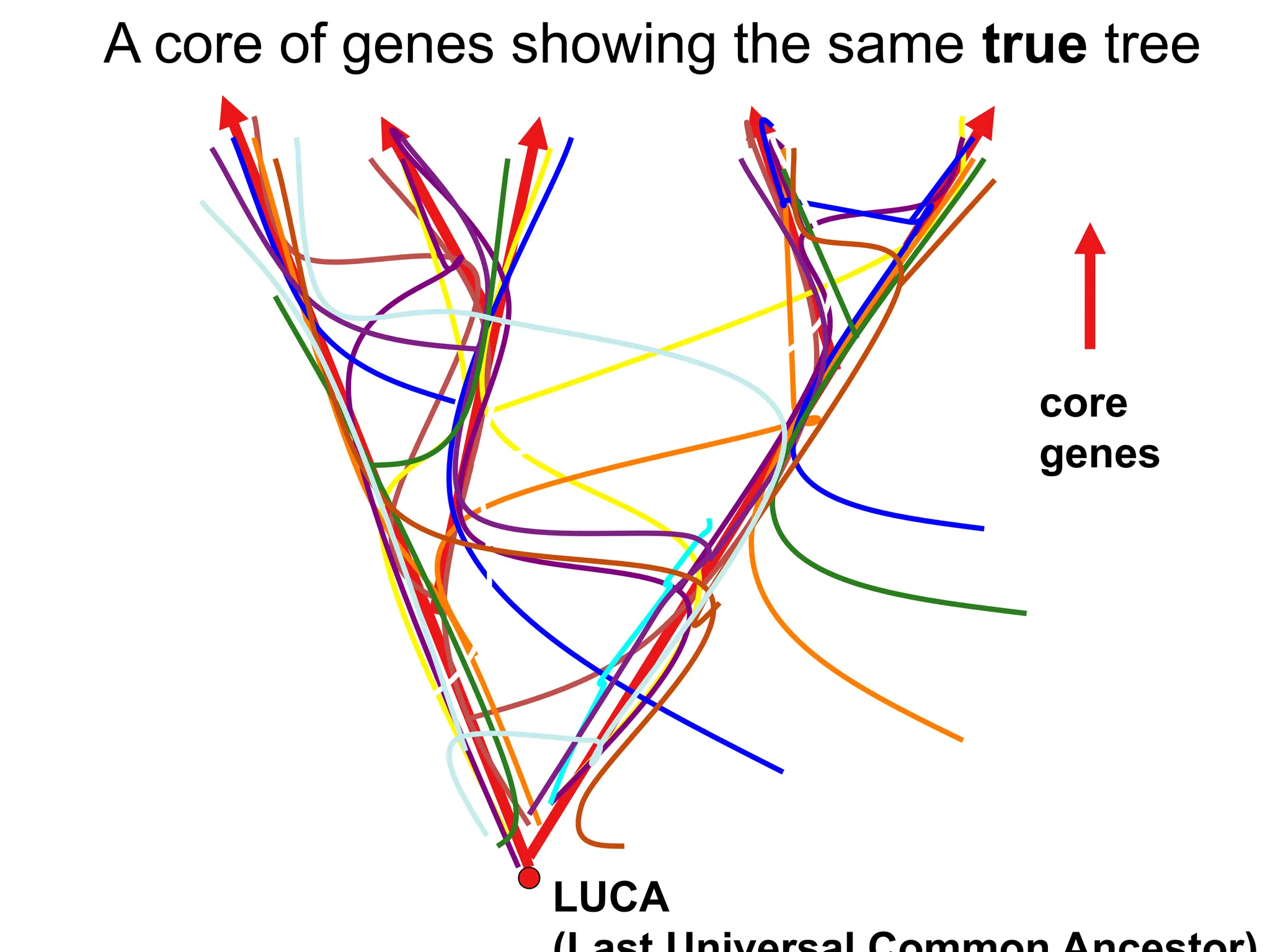
core
genes
LUCA
A core of genes showing the same true tree
Adapted from Doolittle, 1999 (Science, 284:2124-2128)
A web of life - no true tree and no LUCA
(there are no species trees just gene trees)
How can we detect LGT?
• Phylogenetic trees.
• Composition-based methods: G+C content,
codon usage.
• Phylogenetic discordance – atypical patterns
of similarity to different organisms.
• Distributional profiles.
Salmonella
Sinorhizobium
Species Tree (usually 16S)
Brucella
Caulobacter
Escherichia
Yersinia
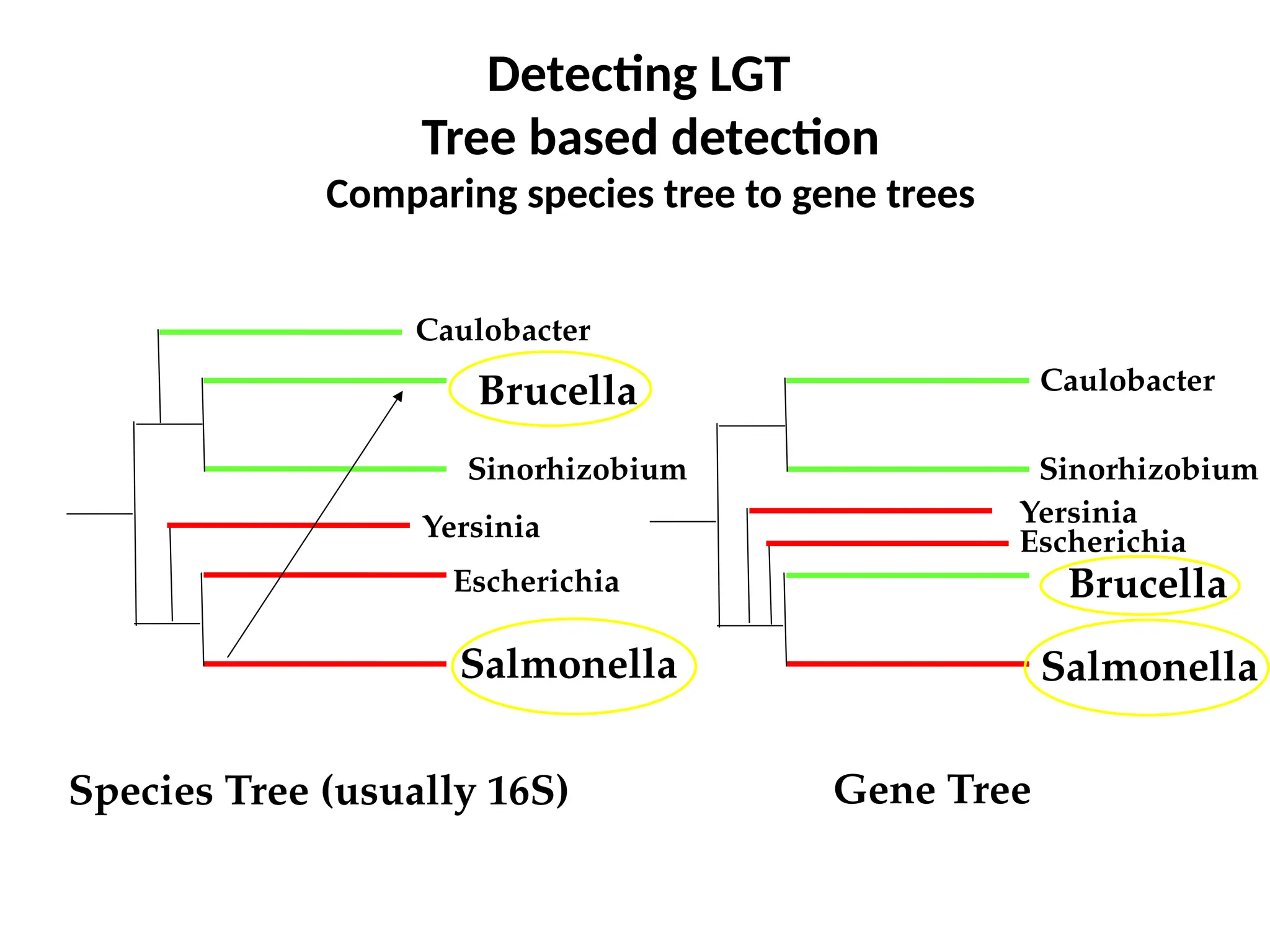
Detecting LGT
Tree based detection
Comparing species tree to gene trees
Salmonella
Gene Tree
Brucella
Caulobacter
Sinorhizobium
Yersinia
Escherichia
Detecting LGT
Trees are not always an option…
• Making trees for all genes in a genome requires
pipelines that are computationally intensive
and still require much human intervention –
Moore vs. Moore.
• Inferring LGT by tree reconstruction requires at
least four-five homologs.
Detecting LGT
Tree-free methods
• Composition-based methods: G+C content,
codon usage...
• Distributional profiles.
• Phylogenetic discordance – atypical patterns
of similarity to different organisms.
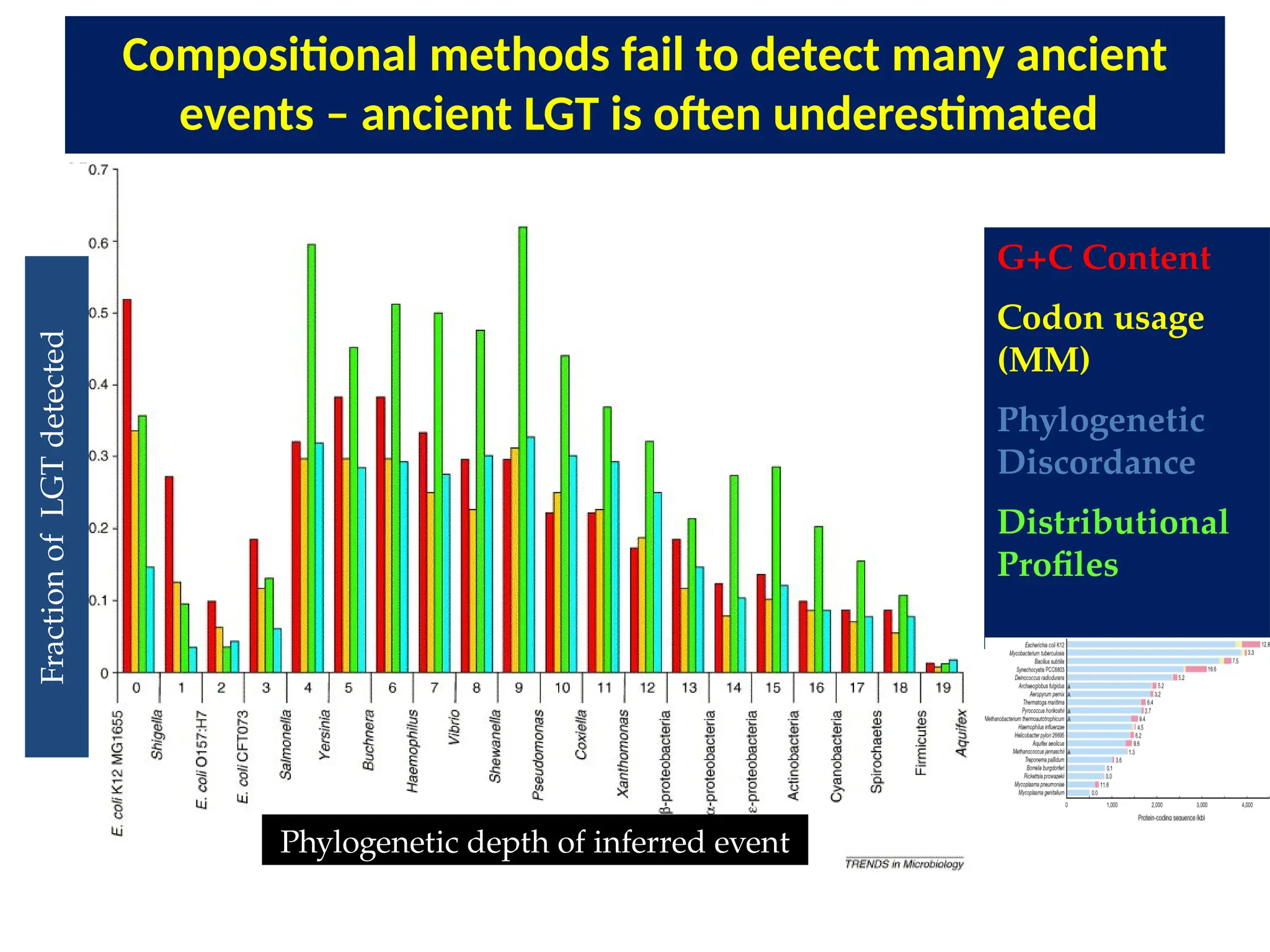
Compositional methods fail to detect many ancient
events – ancient LGT is often underestimated
Ragan, Harlow and Beiko 2006, (Trends Microbiol. 14:4-8)
G+C Content
Codon usage
(MM)
Phylogenetic
Discordance
Distributional
Profiles
Phylogenetic depth of inferred event (antiquity)
Phylogenetic depth of inferred event
Fraction
of
LGT
detected
Which laterally acquired genes tend to be
fixed in a microbial population?
• Genes under strong positive selection.
• Genes that form a functional cluster (Selfish operon
theory…).
• Genes that are not part of essential complexes.
• Genes with compatible codon usage to the new host
(Medrano-Soto et al., 2004).
• Acquiring a gene by LGT is up to six times more likely if an
enzyme that catalyses a coupled metabolite flux is already present
in the genome (Pal et al., 2005).
Known Instances of HGT
• Antibiotic resistance genes on plasmids
• Insertion sequences
• Pathogenicity islands
• Toxin resistance genes on plasmids
• Agrobacterium Ti plasmid
• Viruses and viroids
• Organelle to nucleus transfers

Transposons and Insertion Sequence Elements.pptx

  • 1.
    Transposons and ISElements Oyetibo, G.O (PhD) Dept. of Microbiology University of Lagos
  • 2.
    What are Transposons? •Transposable element (transposon): a discrete sequence of DNA that is – competent to move from place to place within a genome – sometimes a copy is made and the copy moves – insertion requires target DNA sequences • Other names include: – Jumping genes – Selfish DNAs – Molecular parasites – Controlling elements • In the process, they may – cause mutations. – increase (or decrease) the amount of DNA in the genome. – promote genome rearrangements. – regulate gene expression. inverted terminal repeat (ITR) Transposase GFEDCBA ABCDEFG
  • 3.
    • Transposons andinsertion sequences are episomes. • Capable of existing outside of the chromosome. • Also designed to integrate into the chromosome and then move from one cell to another. • Transposons can carry other genetic material with them. • In bacteria, transposons can jump from chromosomal DNA to plasmid DNA and back. • When the transposable elements lack additional genes, they are known as insertion sequences. • The smallest and simplest are insertion sequences, or IS elements, which are 1– 3 kb in length and encode the transposase protein required for transposition and one or more additional proteins that regulate the rate of transposition • Classes/types of transposons: there are two distinct types – DNA transposons • transposons consisting only of DNA that moves directly from place to place – Retrotransposons • first transcribe the DNA into RNA and then • use reverse transcriptase to make a DNA copy of the RNA to insert in a new location What are Transposons?
  • 4.
    Classes of Transposons •Each transposon contains autonomous (code for proteins that enable them to transpose) and non-autonomous (have mutations that eliminate their capacity to catalyze transposition, therefore, they can transpose when an autonomous element provides the necessary proteins) elements. • Class I transposons do not move, but are being copied. • Class II transposons move, but can undergo copying, too (if transposing during DNA “Cut & Paste” “Copy & Paste” Autonomous element Nonautonomous elements Gene(s)
  • 5.
    Classes/Types of transposons Inboth cases ds DNA intermediate is integrated into the target site in DNA to complete movement
  • 6.
    Why study mobilegenetic elements? • They are the major forces driving evolution • They can cause genome rearrangement (mutation , deletion and insertion ) • They have wide range of application potentials
  • 7.
    Evolution of Transposons •Transposons are found in all major branches of life. • It arisen once and then spread to other kingdoms by horizontal gene transfer. • Duplications and DNA rearrangements contributed greatly to the evolution of new genes.
  • 8.
    Cont… • Mobile DNAmost likely also influenced the evolution of genes that contain multiple copies of similar exons encoding similar protein domains (e.g., the fibronectin gene). • The evolution of an enormous variety of antibiotic resistance transposons and their spread among bacterial species. example of genetic adaptation via natural selection.
  • 9.
    Transposons causing diseases •Transposons are mutagens. They can damage the genome of their host cell in different ways: 1. A transposon or a retroposon that inserts itself into a functional gene will most likely disable that gene. 2.After a transposon leaves a gene, the resulting gap will probably not be repaired correctly. 3.Multiple copies of the same sequence, such as Alu sequences can hinder precise chromosomal pairing during mitosis and meiosis, resulting in unequal crossovers, one of the main reasons for chromosome duplication.
  • 10.
    Cont… • Diseases causedby transposons include -hemophilia A and B -severe combined immunodeficiency -Porphyria -Cancer -Duchenne muscular dystrophy
  • 11.
    Applications • The firsttransposon was discovered in the plant maize (Zea mays, corn species), and is named dissociator (Ds). • Likewise, the first transposon to be molecularly isolated was from a plant (Snapdragon). • Transposons have been an especially useful tool in plant molecular biology. • Researchers use transposons as a means of mutagenesis.
  • 12.
    Cont… • To identifyingthe mutant allele. • To study the chemical mutagenesis methods. • To study gene expression. • Transposons are also a widely used tool for mutagenesis of most experimentally tractable organisms.
  • 13.
    Possible Advantages ofTransposable Elements Transposable elements may: • Create genetic diversity • Act as promoters • Allow recombination between plasmid and genomic DNA when multiple copies of the element are present • Carry antibiotic resistance genes, conferring an advantage on bacterial cells • Increase the number of copies of an exon or gene
  • 14.
    The discovery oftransposable elements • Barbara Mc Clintock discovered TEs in maize (1983) • Her work on chromosome breakage began by investigating genetic instability (1983) • Observing variegated patterns of pigmentation in maize plant and kernels • New kinds of genetic instability • She spent the next tree decades for this genetic elements • Controlling elements (1956)
  • 15.
    Transposable Elements inProkaryotes The transposable elements in prokaryotic cells include: a.Insertion sequence (IS) elements. b. Transposons (Tn), which include: b. Composite transposons c. Non-composite transposons (Tn3 transposon family) c. Bacteriophage Mu (replicated by transposition)
  • 16.
    Specific types ofBacterial Transposons 1. Insertion sequences – otherwise called molecular parasites are the simplest transposable elements found in prokaryotes, encoding only genes for mobilization and insertion of its DNA. IS elements are commonly found in bacterial chromosomes and plasmids. – IS elements were first identified in E. coli’s galactose operon, where some mutations’ were shown to result from insertion of a DNA sequence now called IS1 – IS1 and IS186, present in the 50-kb segment of the E. coli DNA, are examples of DNA transposons. – Single E. coli genome may contain 20 of them. – Prokaryotic IS elements range in size from 768 bp to over 5 kb. Known E. coli IS elements include: • IS1 is 768 bp long, and present in 4–19 copies on the E. coli chromosome. • IS2 has 0–12 copies on the chromosome, and 1 copy on the F plasmid. • IS10 is found in R plasmids.
  • 17.
    Specific types ofBacterial Transposons Insertion sequences – Most of the sequence is taken by one or two genes for transposase enzyme that catalyses transposition. – IS elements transpose either replicatively or conservatively. – Transposition of IS is very rare – one in 105 -107 cells per generation. – Higher rates result in greater mutation rates. – Central region encodes for one or two enzymes required for transposition. It is flanked by inverted repeats of characteristic sequence. – The 5’ and 3’ short direct repeats are generated from the target- site DNA during the insertion of mobile element. – The length of these repeats is constant for a given IS element, but their sequence depends upon the site of insertion and is not characteristic for the IS element. – The ends of all sequenced IS elements show inverted terminal repeats (IRs) of 9–41 bp (e.g., IS1 has 23 bp of nearly identical sequence).
  • 18.
  • 19.
    Specific types ofBacterial Transposons Insertion sequences –Integration of IS elements may: • Disrupt coding sequences or regulatory regions. • Alter expression of nearby genes by the action of IS element promoters. • Cause deletions and inversions in adjacent DNA. • Serve as a site for crossing-over between duplicated IS elements.
  • 20.
    Specific types ofBacterial Transposons Insertion sequences – When an IS element transposes: • The original copy stays in place, and a new copy inserts randomly into the chromosome. • The IS element uses the host cell replication enzymes for precise replication. • Transposition requires transposase, an enzyme encoded by the IS element. • Transposase recognizes the IR sequences to initiate transposition. • IS elements insert into the chromosome without sequence homology (illegitimate recombination) at target sites . – A staggered cut is made in the target site, and the IS element inserted. – DNA polymerase and ligase fill the gaps, producing small direct repeats of the target site flanking the IS element (target site duplications).
  • 21.
    Schematic of theintegration of an IS element into chromosomal DNA
  • 23.
    Specific types ofBacterial Transposons 2. Composite transposons – are basically the pair of IS elements flanking a segment of DNA usually containing one or more genes, often coding for Atb resistance. – Bacteria contain composite mobile genetic elements that are larger than IS elements and contain one or more protein-coding genes in addition to those required for transposition: – They use conservative method of transposition. – Flank by IS element (inverted or directed repeat) - Terminal IS can transpose by itself (Ex. Tn5, Tn9, Tn10)
  • 24.
    Structure of thecomposite transposon Tn10 Tn10 is 9.3 kb, in size and contains: (1) 6.5 kb of central DNA with genes that include tetracycline resistance (a selectable marker). (2) 1.4 kb IS elements (IS10L and IS10R) at each end, in an inverted orientation.
  • 25.
    Specific types ofBacterial Transposons 3. Tn 3 transposon family (non-composite transposon) – Noncomposite transposons also carry genes (e.g., drug resistance) but do not terminate with IS elements. i. Transposition proteins are encoded in the central region. ii. The ends are repeated sequences (but not IS elements). iii. Noncomposite transposons cause target site duplications (like composite transposons). – 5000 bp – code for Transposase, β-lactamase, Resolvase – Function of resolvase • Decrease Transposase production • Catalyse the recombination of transposon resolvase transposase β-lactamase  Tn3 – type transposon --- 5kb  ITR - inverted terminal repeat  β- lactamase – Resistance gene
  • 26.
    Structure of thenon-composite transposon Tn3 • Tn3’s length is about 5 kb, with 38-bp inverted terminal repeats. • It has three genes in its central region: • bla encodes β-lactamase, which breaks down ampiciliin. • tnpA encodes transposase, needed for insertion into a new site. • tnpB encodes resolvase, involved in recombinational events needed for transposition (not found in all transposons). • Tn3 produces a 5-bp duplication upon insertion
  • 27.
    DNA sequence ofa target site of Tn3
  • 28.
    Specific types ofBacterial Transposons Tn 3 transposon family (non-composite transposon) • Models have been generated for transposition: a. Co-integration is an example of the replicative transposition that occurs with Tn3 and its relatives. i. Donor DNA containing the Tn fuses with recipient DNA. ii. The Tn is duplicated, with one copy at each donor-recipient DNA junction, producing a cointegrate. iii. The cointegrate is resolved into two products, each with one copy of the Tn. b. Conservative (non-replicative) transposition is used by Tn10, for example. The Tn is lost from its original position when it transposes. • Transposons cause the same sorts of mutations caused by IS elements: a. Insertion into a gene disrupts it. b. Gene expression is changed by adjacent Tn promoters. c. Deletions and insertions occur. d. Crossing-over results from duplicated Tn sequences in the genome.
  • 29.
    Chapter 20 slide29 Co-integration model for transposition of a transposable element by replicative transposition
  • 30.
    IS Elements andTransposons in Plasmids 1. Bacterial plasmids are extrachromosomal DNA capable of self-replication. Some are episomes, able to integrate into the bacterial chromosome. The E. coli F plasmid is an example: a. Important genetic elements of the F plasmid are: i. tra genes for conjugal transfer of DNA from donor to recipient. ii. Genes for plasmid replication. iii. 4 IS elements: 2 copies of IS3, 1 of IS2, and 1 of γδ (gammadelta). All have homology with IS elements in the E. coli chromosome. b. The F factor integrates by homologous recombination between IS elements, mediated by the tra genes. 2. R plasmids have medical significance, because they carry genes for resistance to antibiotics, and transfer them between bacteria. a. Genetic features of R plasmids include: i. The resistance transfer factor region (RTF), needed for conjugal transfer. It includes a DNA region homologous to an F plasmid region, and genes for plasmid-specific DNA replication. ii. Differing sets of genes, such as those for resistance to antibiotics or heavy metals. The resistance genes are transposons, flanked by IS module-like sequences, and can replicate and insert into the bacterial chromosome. b. R plasmids are clinically significant, because they disseminate drug resistance genes between bacteria.
  • 31.
    Organizational maps ofbacterial plasmids with transposable elements
  • 32.
    4. Bacteriophage Mu •Temperate bacteriophage Mu (mutator) can cause mutations when it transposes. Its structure includes: a. A 37 kb linear DNA in the phage particle that has central phage DNA and unequal lengths of host DNA at the ends . b. The DNA’s G segment can invert, and is found in both orientations in viral DNA. Specific types of Bacterial Transposons
  • 33.
    Temperate bacteriophage Mugenome shown in (a) as in phage particles and (b) as integrated into the E. coli chromosome as a prophage
  • 34.
    Bacteriophage Mu • Followinginfection, Mu integrates into the host chromosome by conservative (non-replicative) transposition. a. Integration produces prophage DNA flanked by 5 bp target site direct repeats. b. Flanking DNA from the previous host is lost during integration. c. The Mu prophage now replicates only when the E. coli chromosome replicates, due to a phage-encocled repressor that prevents most Mu gene expression. • Mu prophage stays integrated during the lytic cycle, and replication of Mu’s genome is by replicative transposition. • Mu causes insertions, deletions, inversions and Specific types of Bacterial Transposons
  • 35.
    Production of deletionor inversion by homologous recombination between two Mu genomes or two transposons
  • 36.
    Transposable Elements inEukaryotes 1. Rhoades (1930s) working with sweet corn, observed interactions between two genes: a. A gene for purple seed color, the Al locus. Homozygous mutants (a/a) have colorless seeds. b. A gene on a different chromosome, Dt (dotted) that causes seeds with genotype a/a Dt/-- to have purple dots. i. Dt appears to mutate the a allele back to the Al wild-type in regions of the seed, producing a dotted phenotype. ii. The effect of the Dt allele is dose dependent. (1) One dose gave an average of 7.2 dots per seed. (2) Two doses gave an average of 22.2 dots/seed. (3) Three doses gave an average of 121.9 dots/seed. c. Rhoades interpreted Dt as a mutator gene. 2. McClintock (1940s-50s), working with corn (Zea mays) proposed the existence of “controlling elements” that regulate other genes and are mobile in the genome. 3. The genes studied by both Rhoades and McClintock have turned out to be transposable elements, and many others have been identified in various eukaryotes. a. Most studied are transposons of yeast, Drosophila, corn and humans. b. Their structure is very similar to that of prokaryotic transposable elements. c. Eukaryotic transposable elements have genes for transposition and integration at a number of sites, as well as a variety of other genes. d. Random insertion results from non-homologous recombination, and means that any chromosomal gene may be regulated by a transposon.
  • 37.
    Ty Elements inYeast 1. Ty elements share characteristics with bacterial transposons: a. Terminal repeated sequences. b. Integration at non-homologous sites. c. Generation of a target site duplication (5 bp). 2. Ty element is diagrammed in the next slide: a. It is 5.9 kb including 2 terminal direct repeats of 334 bp, the long terminal repeats (LTR) or deltas (δ). b. Each delta contains a promoter and transposase recognition sequences. c. Ty elements encode one 5.7 kb mRNA beginning at the delta 5’ promoter (Figure next slide). d. There are two ORFs in the mRNA, designated TyA and TyB, encoding two different proteins. e. Ty copy number varies between yeast strains, with an average of about 35. 3. Ty elements also share similarities with retroviruses, ssRNA viruses that replicate via dsDNA intermediates. a. Ty elements transpose by making an RNA copy of the integrated DNA sequence, them making DNA using reverse transcriptase. This DNA can integrate at a new chromosomal site. Evidence for this includes: i. An experimentally introduced intron in the Ty element (which normally lacks introns) was monitored through transposition. The intron was removed, indicating an RNA intermediate. ii. Ty elements encode a reverse transcriptase. iii. Virus-like particles containing Ty RNA and reverse transcriptase activity occur. b. Ty elements are referred to as retrotransposons.
  • 38.
    The Ty transposableelement of yeast
  • 39.
    39 Integrons Integrons are DNAelements that encode a site-specific recombinase as well as a recognition region that allows other sequences with similar recognition regions to be incorporated into the integron by recombination. • The elements that integrons acquire are known as cassettes • Integron may acquire multiple-antibiotic- resistance cassettes, which results in the plasmid resistant to a large number of completely unrelated antibiotics • Bacteria with resistance to multiple antibiotics are an increasing problem in public health
  • 40.
    Mechanism of Transposition Twodistinct mechanisms of transposition: Replicative transposition – direct interaction between the donor transposon and the target site, resulting in copying of the donor element Conservative transposition – involving excision of the element and reintegration at a new site.
  • 41.
    Mechanism of transposition 1.Replicative transposition Copy of transposon sequence Transposase enzyme cut target DNA Transposition Duplication of target sequence
  • 42.
  • 43.
    2. Non-replicative (conservative) transposition -Cannot copy transposon sequence - Transposition by cut and paste model Cut transposon sequence from donor molecule attach to target site Ex. IS10, Tn10
  • 44.
  • 45.
  • 46.
    Horizontal Gene Transfer •The movement of genetic material between two organisms. Once incorporated it is then ‘vertically’ inherited. • Also called Lateral Gene Transfer (HGT and LGT for short) • Useful for environmental adaptation (better than point mutations) • Ways to do it in prokaryotes – Uptake of naked DNA (transformation). – Phages (transduction). – Plasmids (conjugation). – Integrative and transposable elements (transposition). – Cell fusion (in Archaea)
  • 47.
    Transformation and competence •Many microorganisms can naturally take up DNA fragments from broken cells. • Inserted DNA can sometimes be recombined into the chromosome.
  • 48.
    Phages - generalizedtransduction Many phages mistakenly package some host DNA. Resulting particle often cannot replicate, but does inject the foreign DNA. Homologous recombination can lead to integration of acquired DNA.
  • 49.
    Phages - specializedtransduction • Some phages can lysogenize – integrate their DNA into the host chromosome. This integration is site- specific. • This is often beneficial to the host – protects from related phages and sometimes confers advantages (toxin genes in phages of C. diphteriae). • The phage can later be induced to exit the chromosome and replicate (lytic cycle). • Rarely the phage packages neighboring host genes, leaving some of its DNA behind. • Thus, a phage can shuttle DNA between prokaryotes, or “contribute” phage genes to their genome.
  • 50.
    Plasmids and conjugation •Plasmids are genetic elements that replicate independently of the host chromosome. • Exist as free (usually circular) DNA. • Generally do not encode essential genes. • Are spread among cells by cell to cell contact – conjugation, usually involving-plasmid encoded pili. • Host range varies from narrow to broad depending on replication machinery (and usually not the conjugation factors). • Some plasmids can integrate into the chromosome and subsequently their conjugation can mobilize parts of it. Integrated plasmids (episomes) can sometimes recombine with the host chromosome and exit with a few chromosomal genes.
  • 51.
    Horizontal Gene TransferMediated by Plasmids • Among the mobile elements and mechanisms of HGT, plasmids are undoubtedly critical players because of their ability to transfer by conjugation among both closely and very distantly related bacterial hosts. • This feature allows them to broadly distribute genes or gene clusters that code for various host-beneficial phenotypes. • The event, generally recognized as horizontal gene transfer (HGT), is now considered as a strong driving force for the evolution of bacterial genome organization and for rapid adaptation to the surrounding environments
  • 52.
    Process of HGT Donor 1.Entry into the transfer process • Release of naked DNA • Integration of plasmid into chromosome • Interaction with mating-pair formation apparatus • Presence of pac sites • Packaging into phage particles 2 Selection of recipient • Uptake sequences in DNA • Binding of naked DNA • Phage receptor specificity • Pilus specificity • Surface exclusion 3 Uptake + successful entry • Restriction • Antirestriction system • Selection against restriction sites Recipient 4 Establishment • Replication • Integration • Homologous recombination • Illegitimate recombination
  • 53.
    Known Instances ofHGT • Antibiotic resistance genes on plasmids • Insertion sequences • Pathogenicity islands • Toxin resistance genes on plasmids • Agrobacterium Ti plasmid • Viruses and viroids • Organelle to nucleus transfers
  • 55.
    Transposable elements (ISelements and transposons) Genetic elements that can move within the genome. Contain a gene encoding a transposase flanked by inverted repeats and in the case of transposons also other genes. Usually integrate at specific sites. Are also found in phages and plasmids. Can mediate recombination and chromosome re-arrangement. = Inverted repeat
  • 56.
    Transposable elements canjump from one microbe to another by either: • Being located on a mobile element such as phage or plasmid. • Having their own conjugation systems – Integrating Conjugative Elements (ICEs).
  • 57.
    Integrons: Chromosomal elementsthat recruit gene cassettes by site-specific recombination
  • 58.
    Genomic evidence forthe clinical importance LGT: Staphylococcus aureus as an example • Phage-encoded toxins: – Enterotoxin A - food poisoning. – Exfoliative toxin A - scalded skin syndrome. – Panton-Valentine leukocidin - severe skin infections and necrotizing pneumonia in children (mortality rate of 40%). • Plasmids - Antiseptic and antibiotic resistances. • Integron- Methicillin resistance. • Transposon-encoded vancomycin resistance (from plasmids of enterococci!). Based on Lindsay and Holden, 2004, (Trends Microbiol. 12:378-85)
  • 59.
    LGT - drivingadaptation and speciation • From colitis to plague - genes acquired less than 20000 years ago “created” the species Yersinia pestis – Ymt – Toxin, also essential for flea colonization. – Plasminogen activator Pla, invasin essential for virulence by the subcutaneous route. – Following the new lifestyle – major gene loss and accelerated evolution formed a new bacterial species.
  • 60.
    Factors influencing successof LGT • Evolutionary/Genetic distance between organisms. • Physical proximity of organisms. • Gene function: Frequently transferred: (Strong positive selection) • Resistance genes – Antibiotics, heavy metals, arsenic... • Virulence factors – Pathogenicity islands. • Metabolic pathways – Metabolic islands/plasmids. Rarely transferred: • Genes that are part of essential complexes, such as the translation machinery – “The complexity hypothesis”.
  • 61.
    Acquisition of potentiallyuseful genes • A totally new function. • A function already performed by a homolog – quasi duplication – sometimes followed by orthologous replacement. • A function already performed by a non- homologous gene –leading to either non- orthologous replacement or functional divergence.
  • 62.
    EVIDENCE FOR LGT:PROKARYOTIC GENOMES AS MOSAICS --- ---- “backbone” or “core” genes with common history “island” of genes with alien origin phage gene single alien genes Typical stretch of prokaryotic chromosome sequence
  • 63.
    LGT and thetree of life estimating its evolutionary impact
  • 64.
    LGT and theTree of Life conflicting views of its role in evolution • LGT is rare and generally has little impact on evolutionary processes (Kurland). • A relatively stable core of genes is very rarely transferred, while most other genes can undergo LGT (Woese). • Since most if not all genes in a genome have been transferred at least once, a tree of life is meaningless (Doolittle). Enthusiastic lateralists Committed verticalists
  • 65.
    mitochondria chloroplasts The Universal Treeof Life LAST UNIVERSAL COMMON ANCESTOR (LUCA) Adapted from Doolittle, 1999 (Science, 284:2124-2128)
  • 66.
    core genes LUCA A core ofgenes showing the same true tree
  • 67.
    Adapted from Doolittle,1999 (Science, 284:2124-2128) A web of life - no true tree and no LUCA (there are no species trees just gene trees)
  • 68.
    How can wedetect LGT? • Phylogenetic trees. • Composition-based methods: G+C content, codon usage. • Phylogenetic discordance – atypical patterns of similarity to different organisms. • Distributional profiles.
  • 69.
    Salmonella Sinorhizobium Species Tree (usually16S) Brucella Caulobacter Escherichia Yersinia Detecting LGT Tree based detection Comparing species tree to gene trees Salmonella Gene Tree Brucella Caulobacter Sinorhizobium Yersinia Escherichia
  • 70.
    Detecting LGT Trees arenot always an option… • Making trees for all genes in a genome requires pipelines that are computationally intensive and still require much human intervention – Moore vs. Moore. • Inferring LGT by tree reconstruction requires at least four-five homologs.
  • 71.
    Detecting LGT Tree-free methods •Composition-based methods: G+C content, codon usage... • Distributional profiles. • Phylogenetic discordance – atypical patterns of similarity to different organisms.
  • 72.
    Compositional methods failto detect many ancient events – ancient LGT is often underestimated Ragan, Harlow and Beiko 2006, (Trends Microbiol. 14:4-8) G+C Content Codon usage (MM) Phylogenetic Discordance Distributional Profiles Phylogenetic depth of inferred event (antiquity) Phylogenetic depth of inferred event Fraction of LGT detected
  • 73.
    Which laterally acquiredgenes tend to be fixed in a microbial population? • Genes under strong positive selection. • Genes that form a functional cluster (Selfish operon theory…). • Genes that are not part of essential complexes. • Genes with compatible codon usage to the new host (Medrano-Soto et al., 2004). • Acquiring a gene by LGT is up to six times more likely if an enzyme that catalyses a coupled metabolite flux is already present in the genome (Pal et al., 2005).
  • 74.
    Known Instances ofHGT • Antibiotic resistance genes on plasmids • Insertion sequences • Pathogenicity islands • Toxin resistance genes on plasmids • Agrobacterium Ti plasmid • Viruses and viroids • Organelle to nucleus transfers

Editor's Notes

  • #64 Hopefully by the end of this talk I will have convinced you that there considerable evidence supporting this end of the spectrum…
  • #69 The most reliable way to infer LGT is by comparing a gene tree to the species tree – if they are incongruent this can imply LGT. In this example Brucella and Salmonella are not closely related, as can be seen from their 16S tree, but the a tree for a particular virulence factor may have them close together, implying lateral gene transfer.