BY DR. SREEREMYA
DIRECT LEARNING METHOD
 A balanced diet is a necessity if one wants to
lead a healthy life. This balanced diet involves
different carbohydrates, minerals, vitamins,
fats and so on.
 The first step is to know where do they come
from so that we can understand the
different nutrients provided by that particular
item of food.
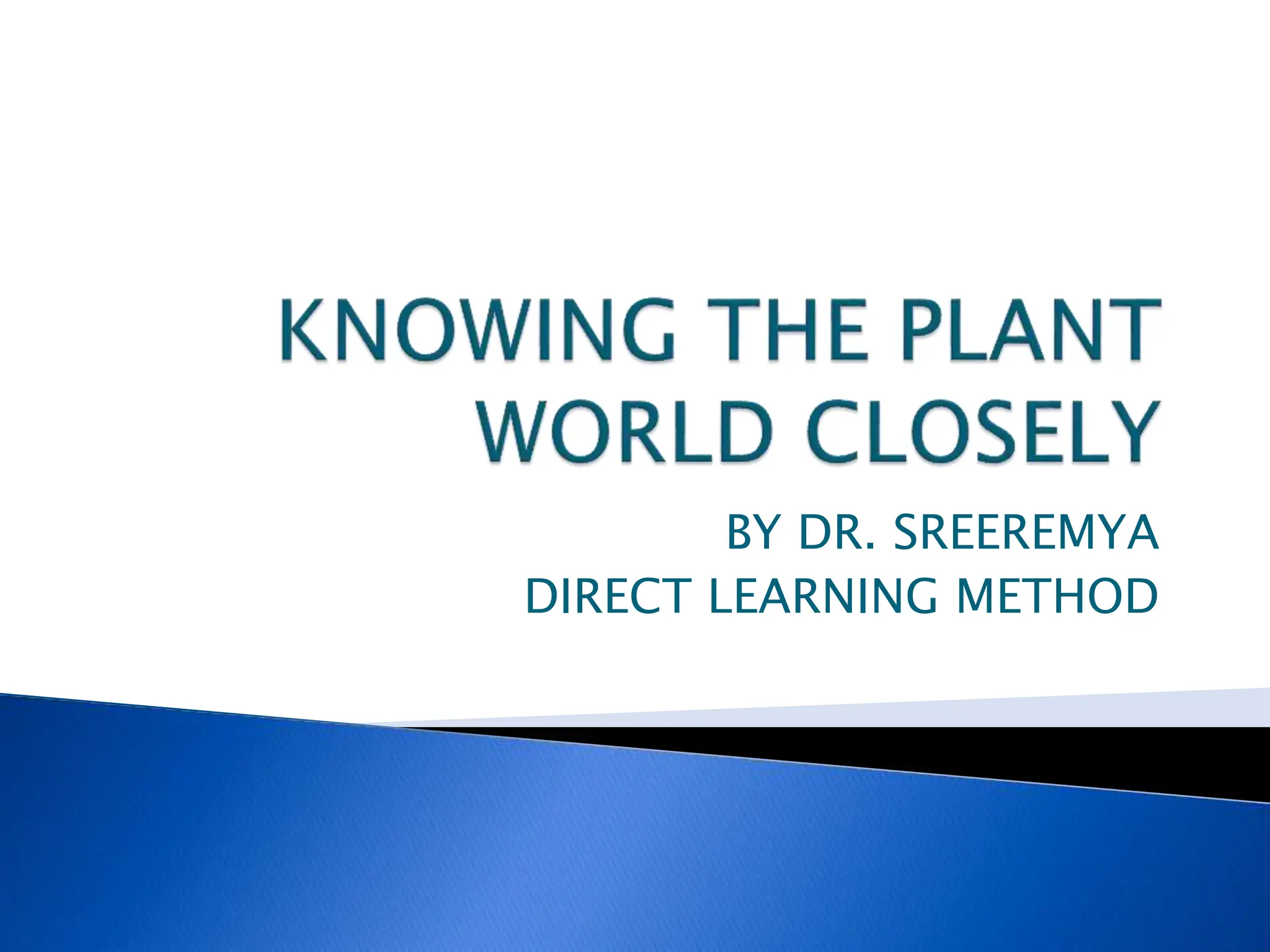
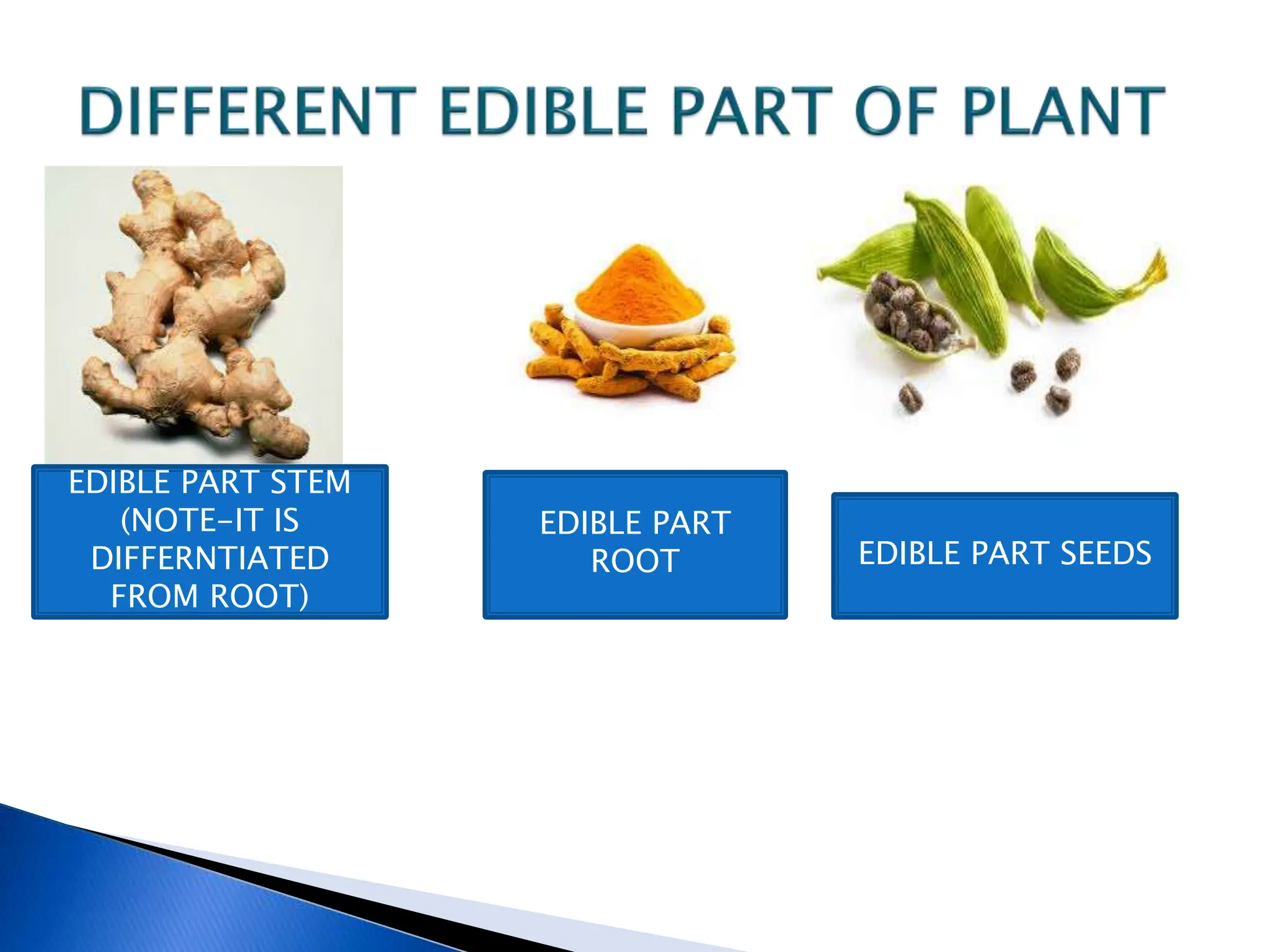
 EDIBLE PART IN EACH FOOD IS DIFFERENT
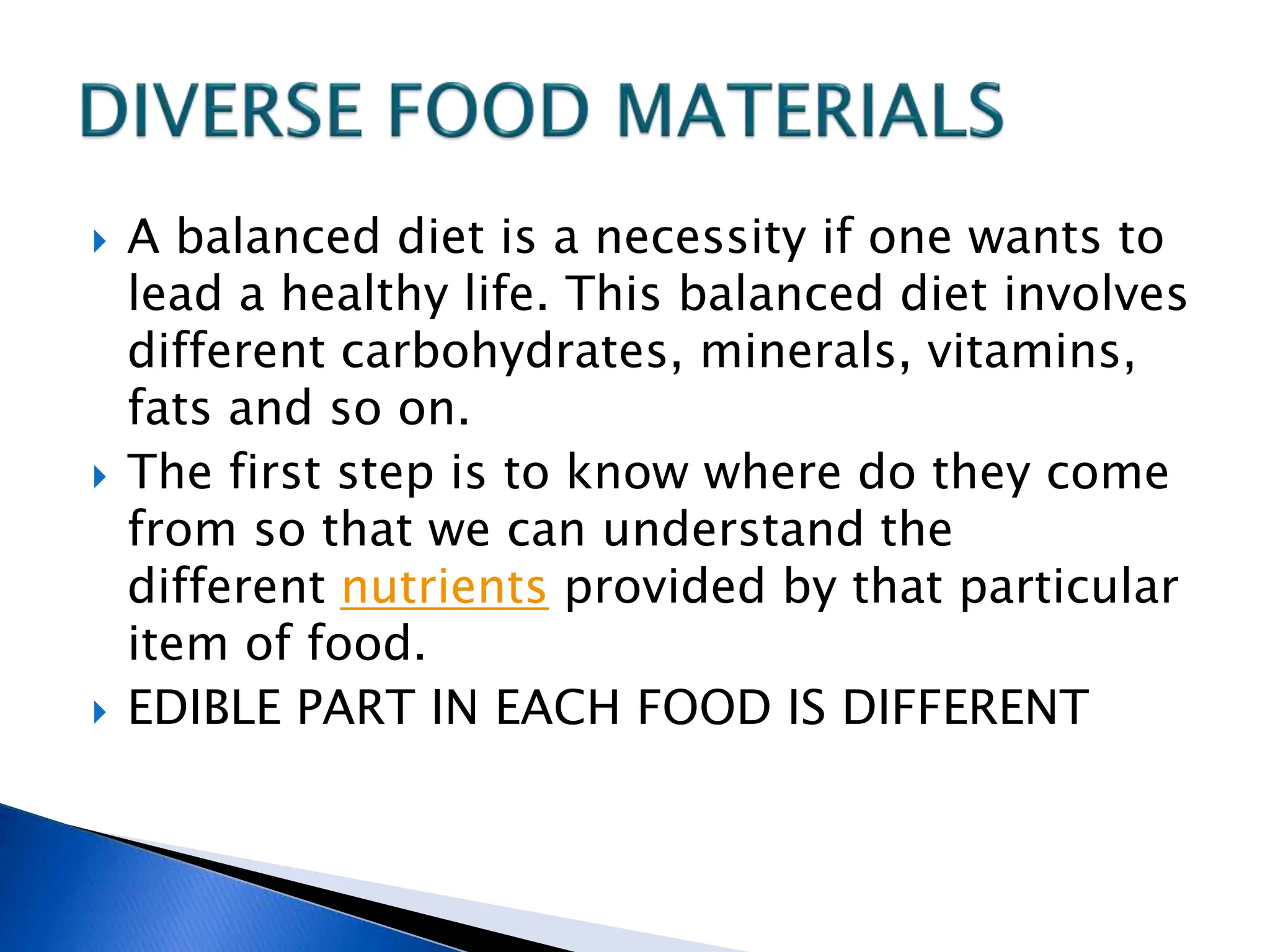
AMARANTHUS(CHEERA)
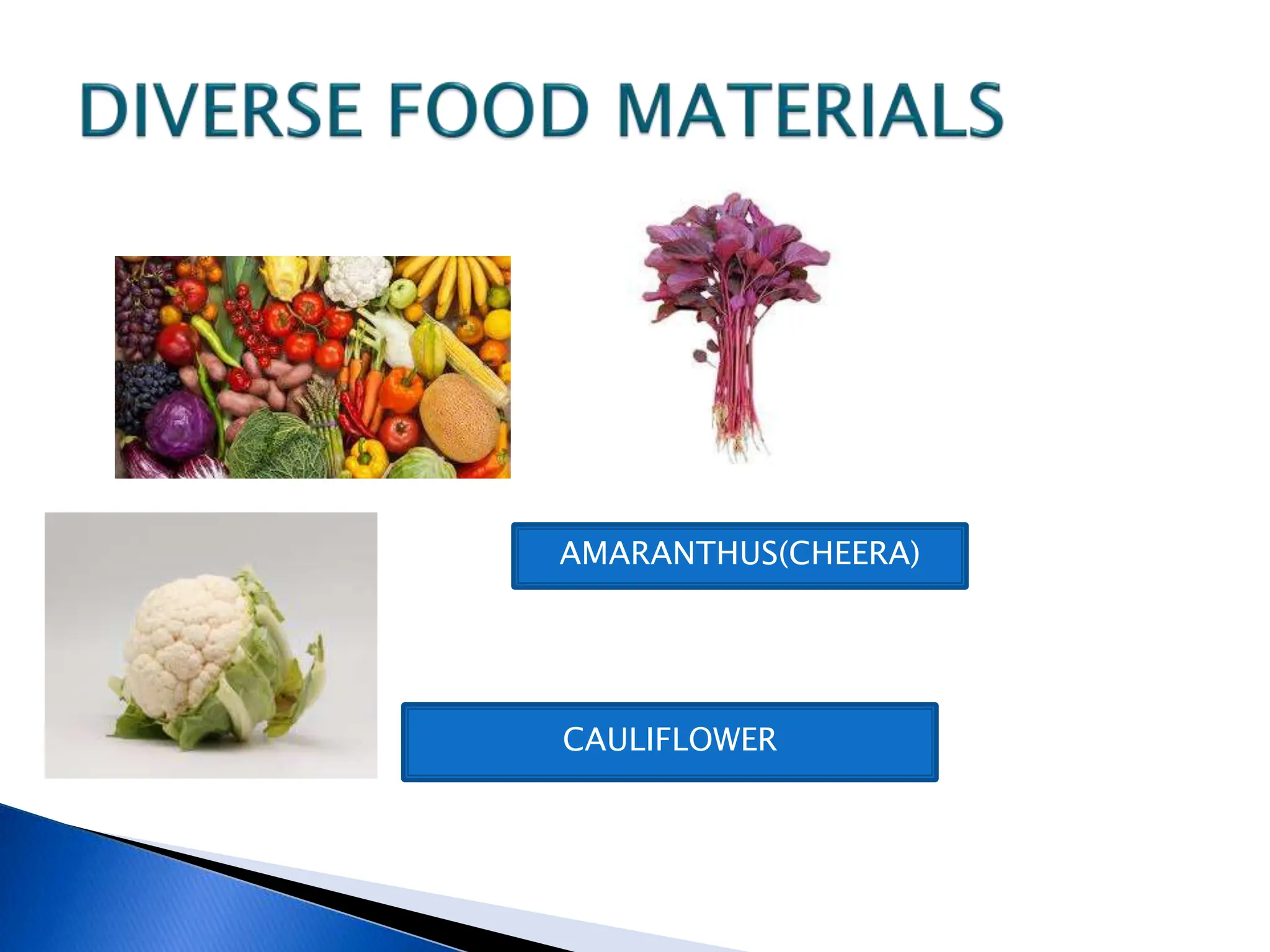
CAULIFLOWER
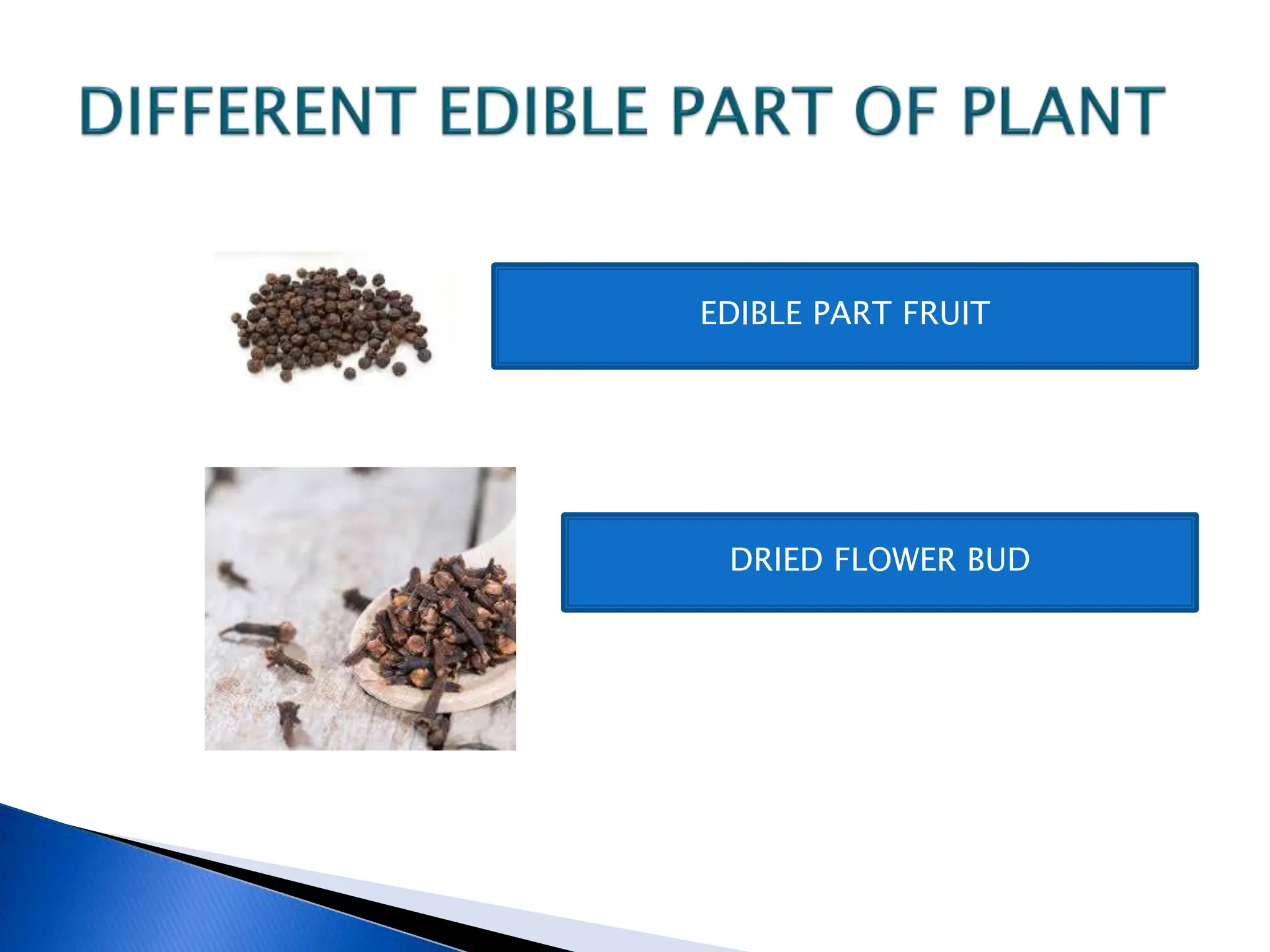
EDIBLE PART FRUIT
DRIED FLOWER BUD
EDIBLE PART STEM
(NOTE-IT IS
DIFFERNTIATED
FROM ROOT)
EDIBLE PART
ROOT EDIBLE PART SEEDS
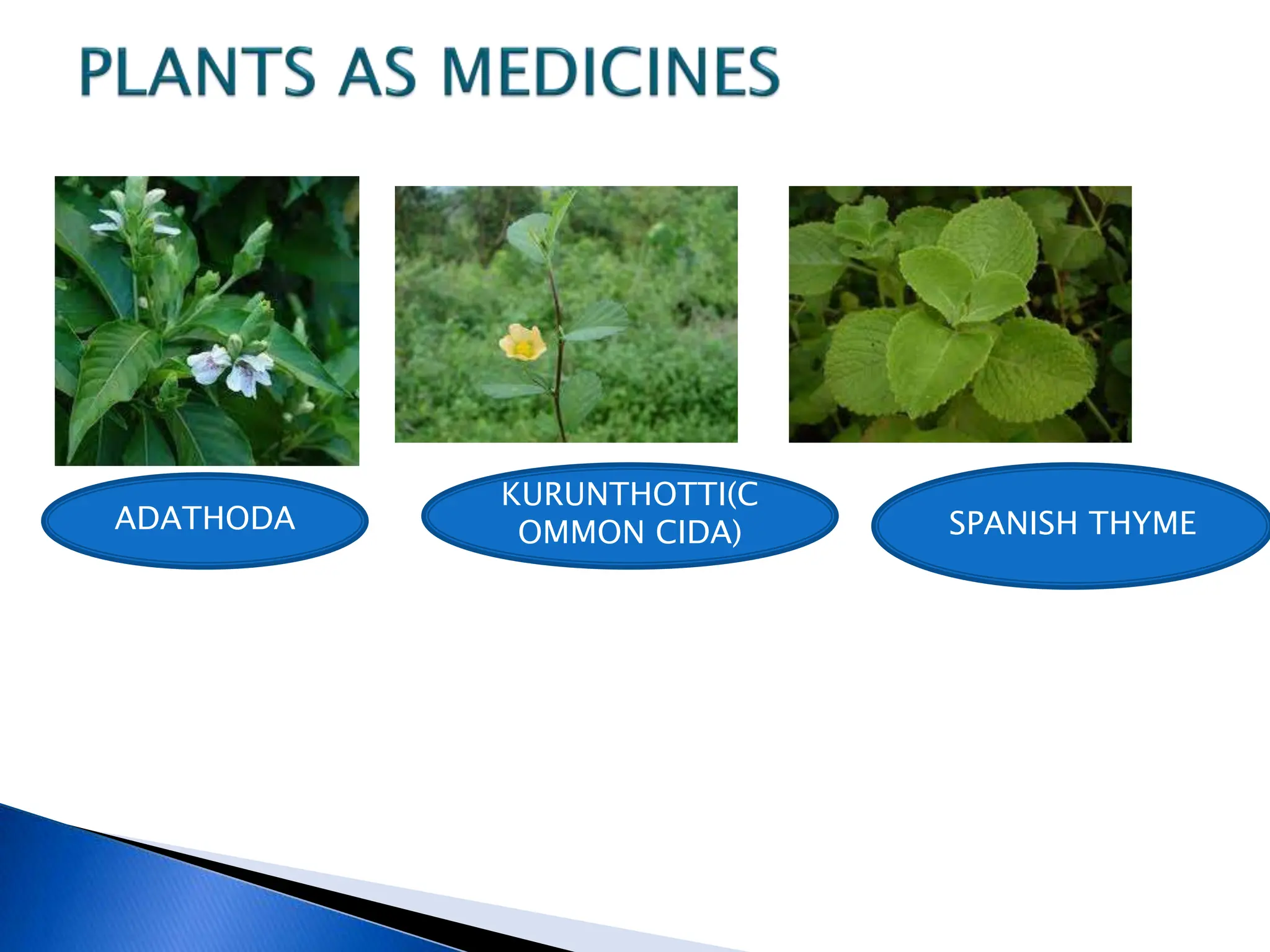
ADATHODA
KURUNTHOTTI(C
OMMON CIDA) SPANISH THYME
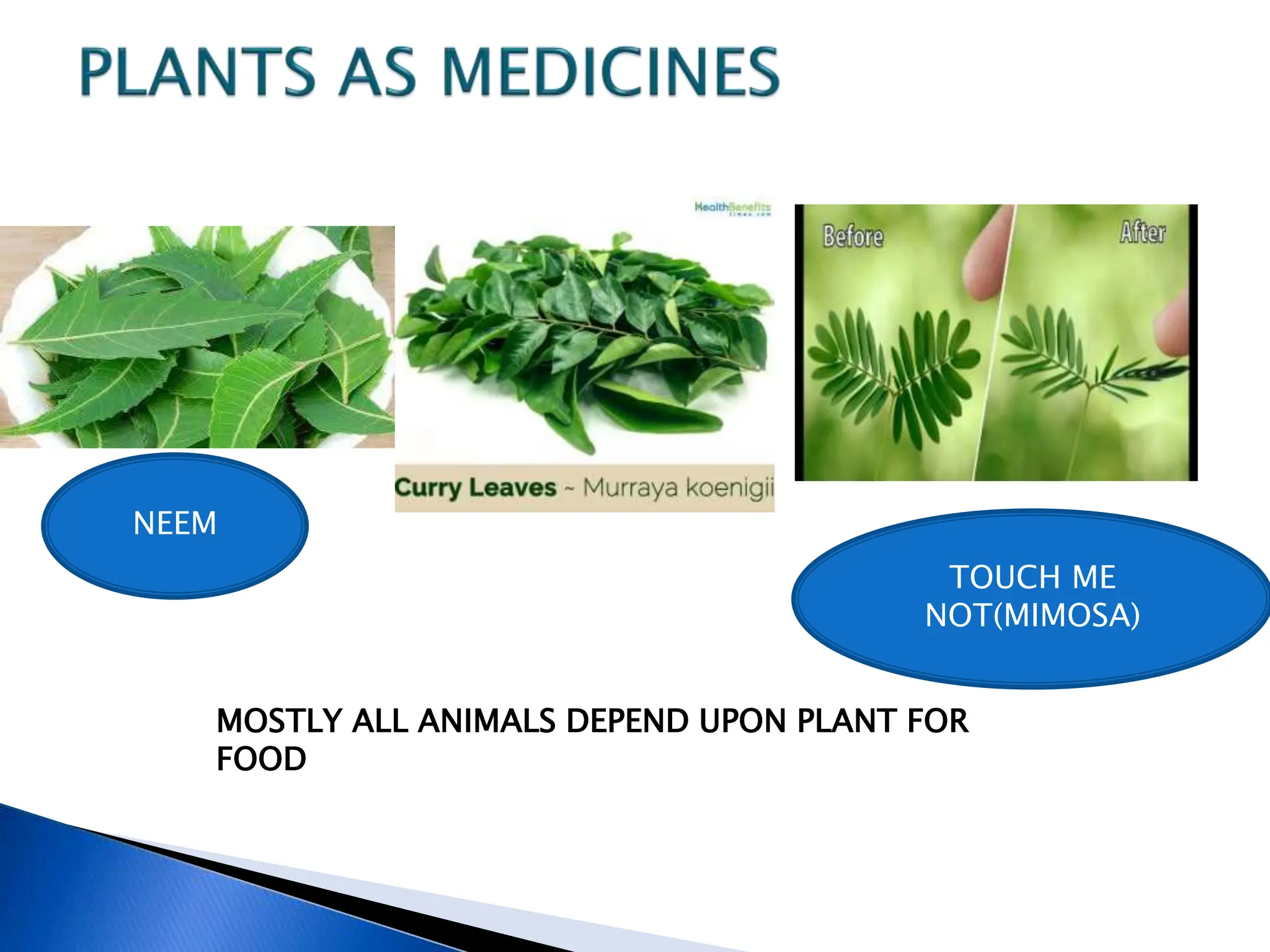
NEEM
TOUCH ME
NOT(MIMOSA)
MOSTLY ALL ANIMALS DEPEND UPON PLANT FOR
FOOD
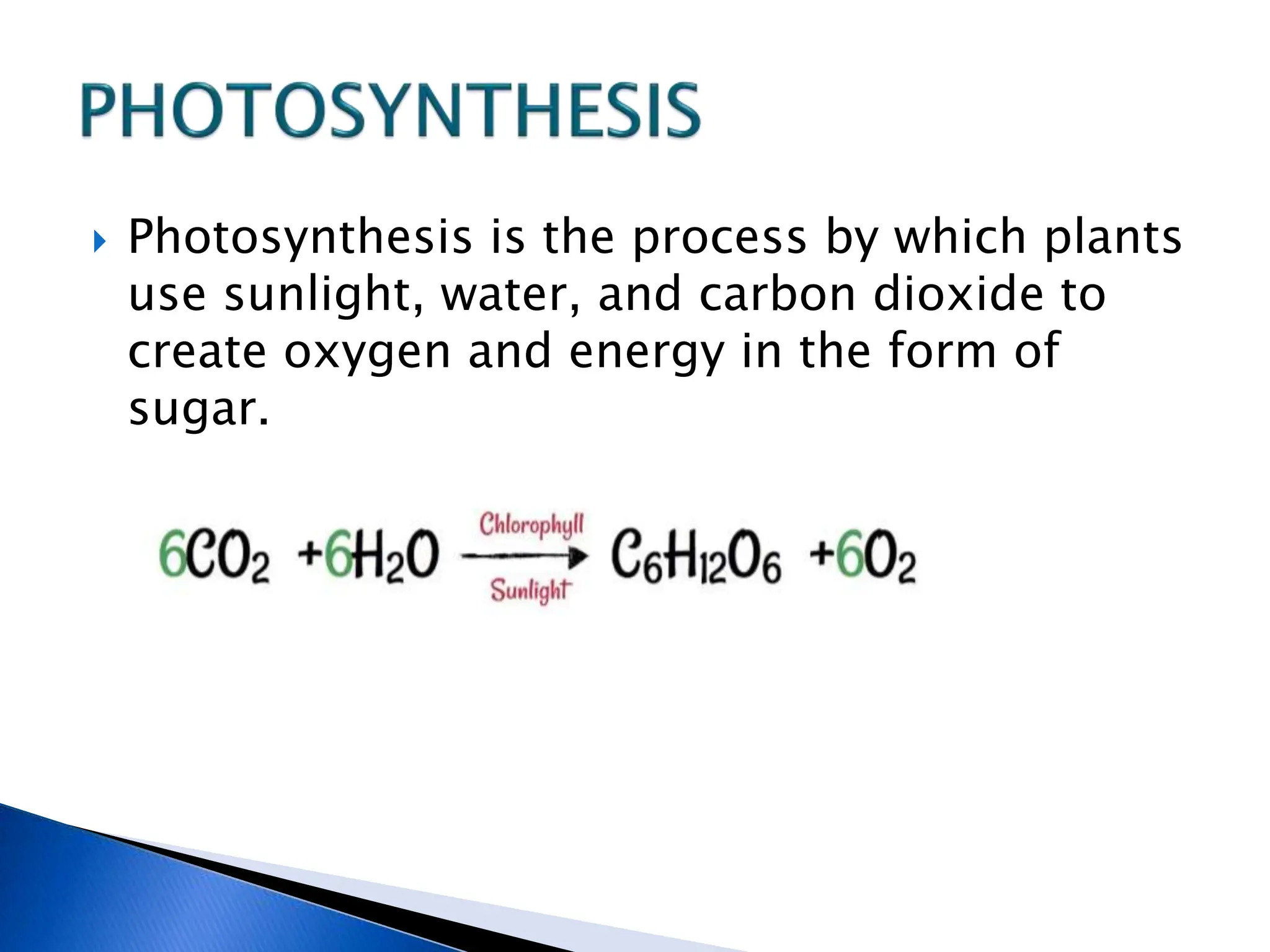
 Photosynthesis is the process by which plants
use sunlight, water, and carbon dioxide to
create oxygen and energy in the form of
sugar.
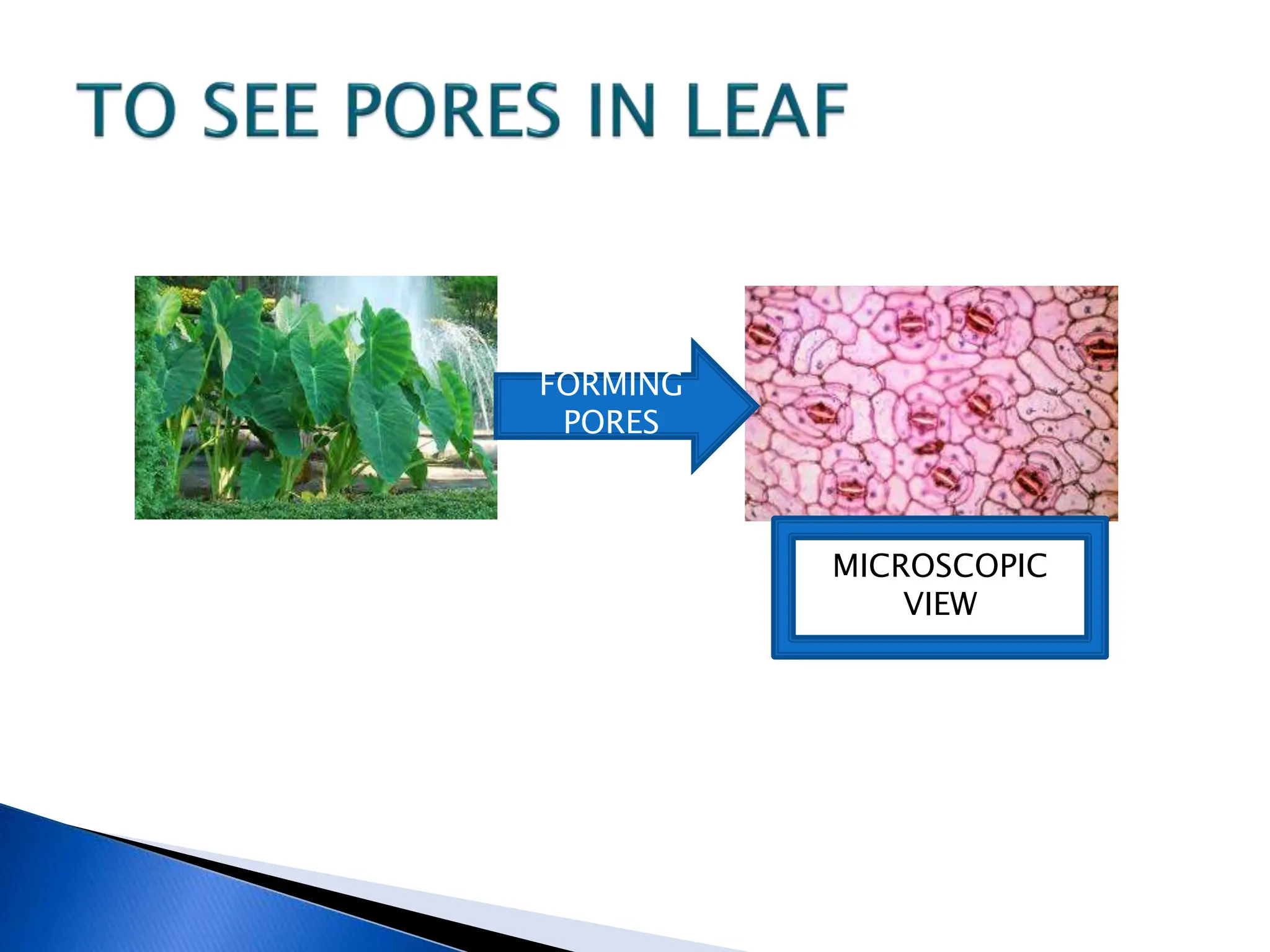
FORMING
PORES
MICROSCOPIC
VIEW
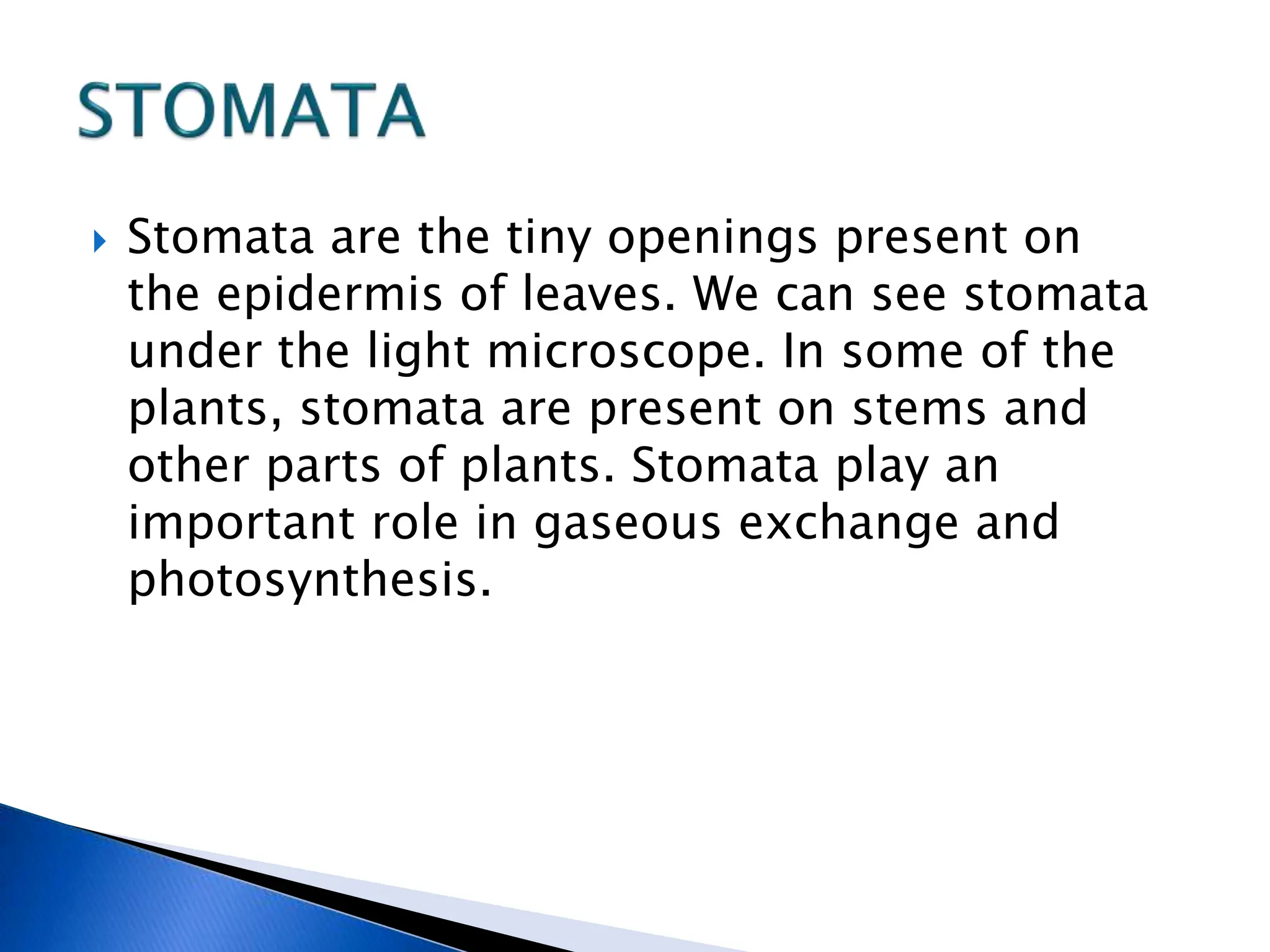
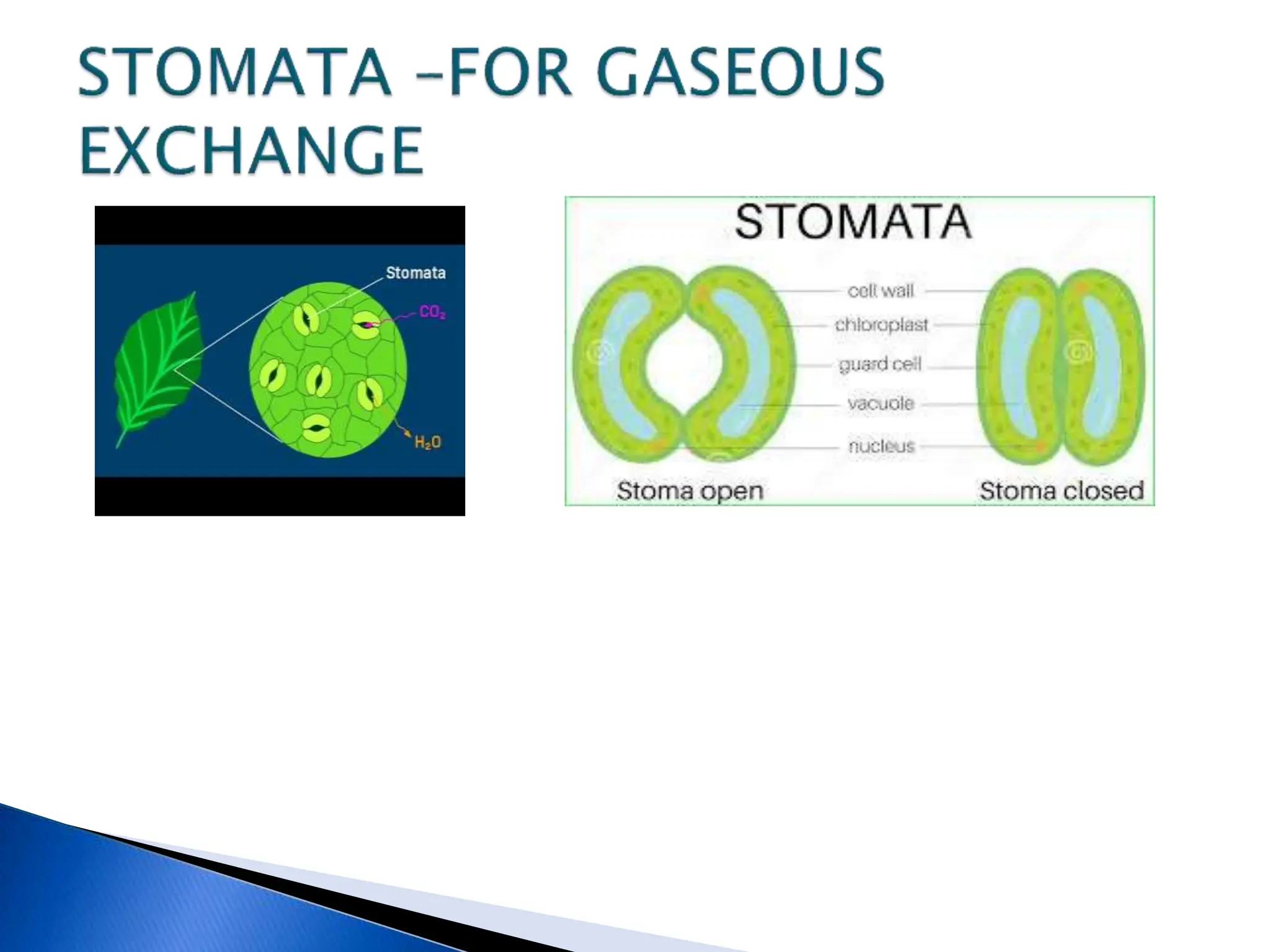
 Stomata are the tiny openings present on
the epidermis of leaves. We can see stomata
under the light microscope. In some of the
plants, stomata are present on stems and
other parts of plants. Stomata play an
important role in gaseous exchange and
photosynthesis.
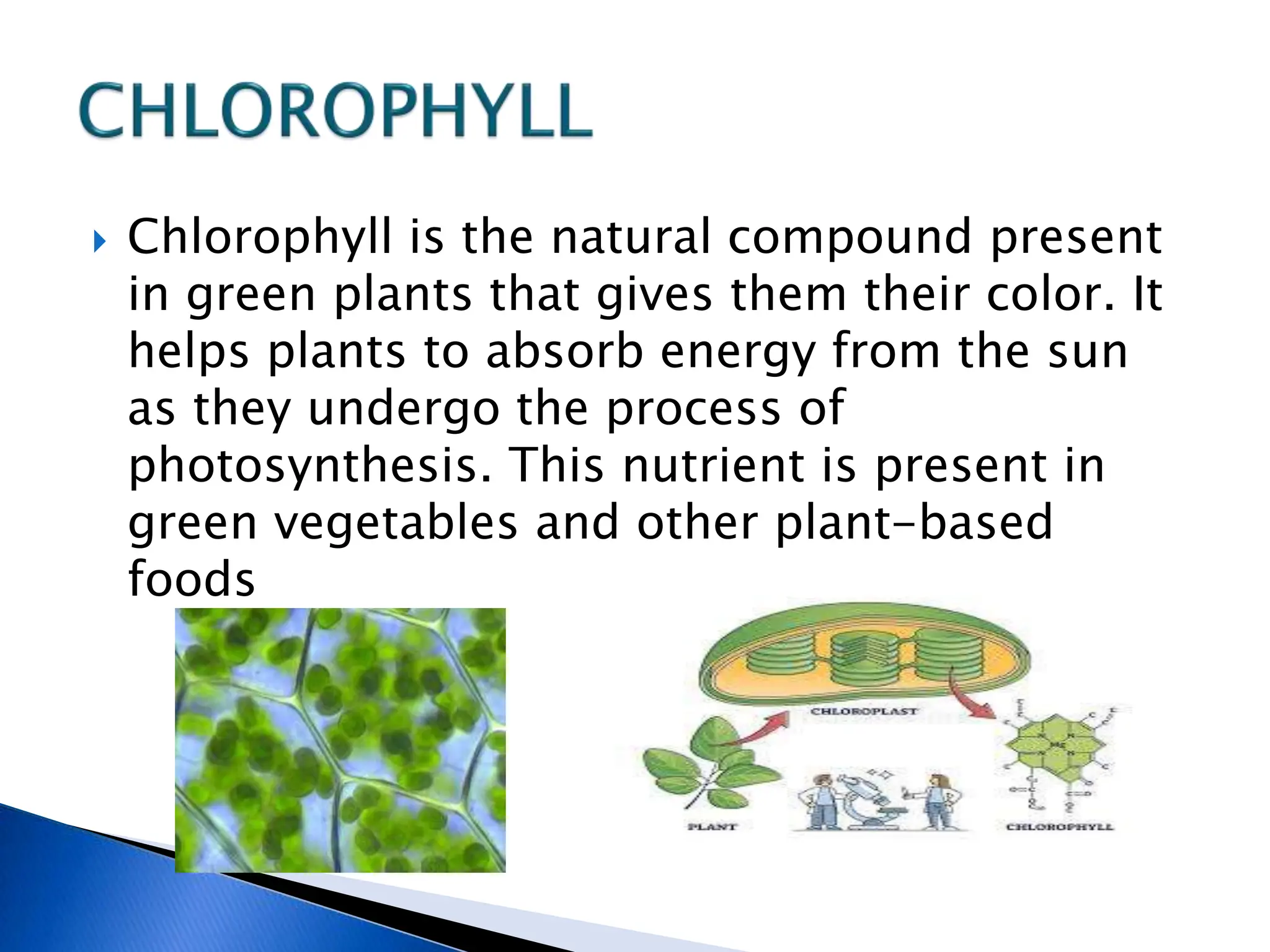
 Chlorophyll is the natural compound present
in green plants that gives them their color. It
helps plants to absorb energy from the sun
as they undergo the process of
photosynthesis. This nutrient is present in
green vegetables and other plant-based
foods
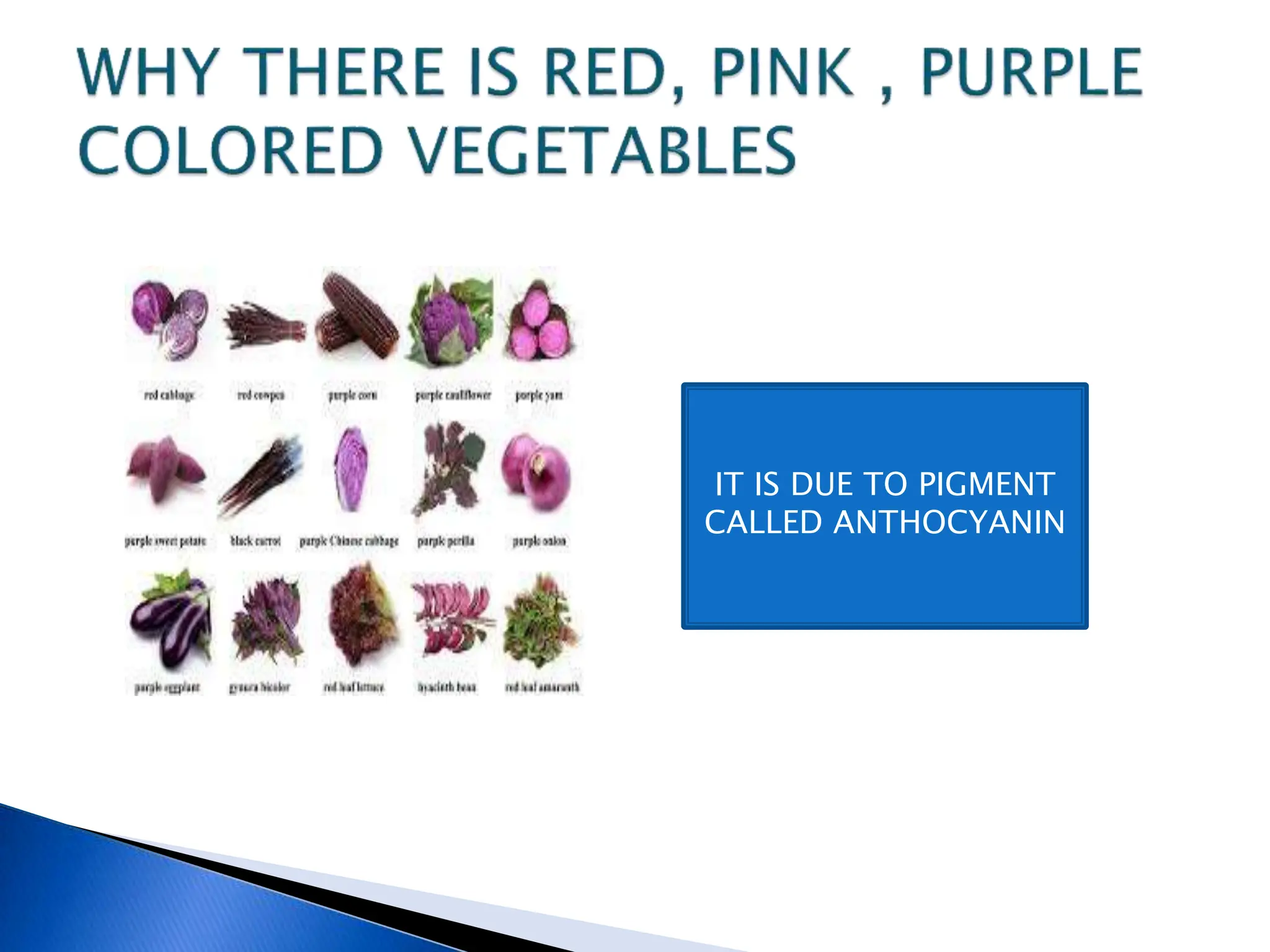
IT IS DUE TO PIGMENT
CALLED ANTHOCYANIN
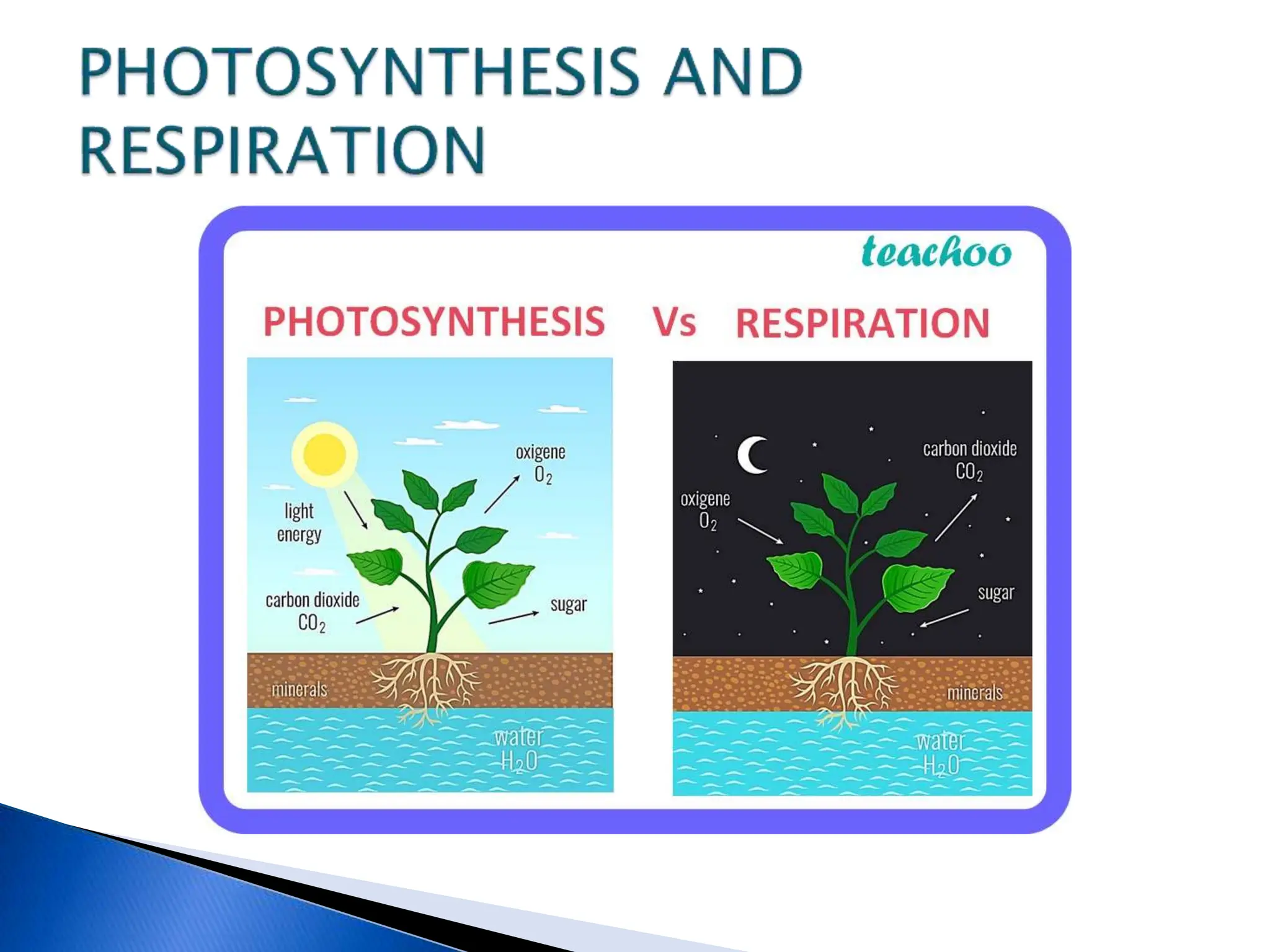
 Photosynthesis converts carbon dioxide and
water into oxygen and glucose. Glucose is
used as food by the plant and oxygen is a by-
product.
 Cellular respiration converts oxygen and
glucose into water and carbon dioxide. Water
and carbon dioxide are by- products and ATP
is energy that is transformed from the
process.
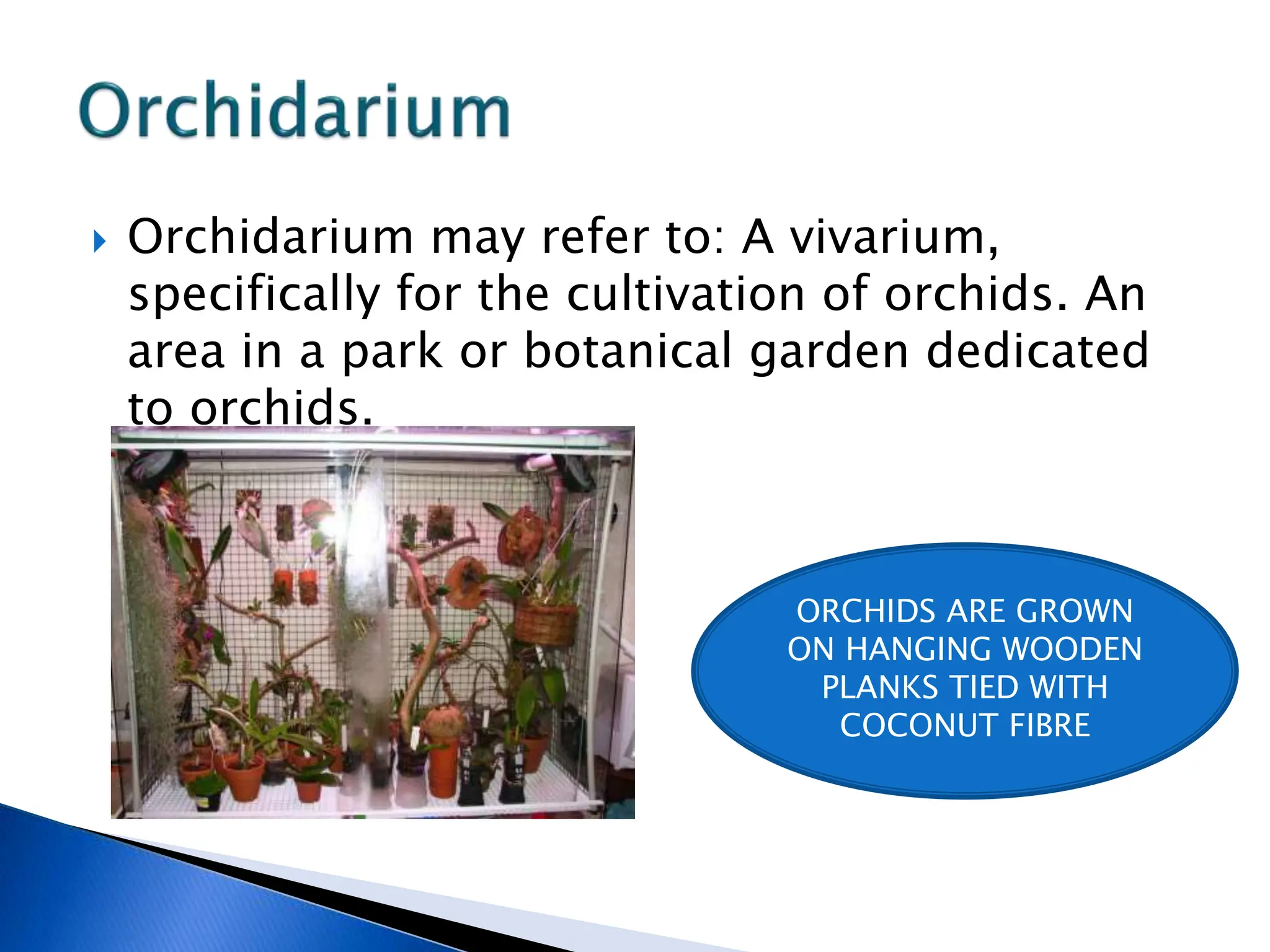
 Orchidarium may refer to: A vivarium,
specifically for the cultivation of orchids. An
area in a park or botanical garden dedicated
to orchids.
ORCHIDS ARE GROWN
ON HANGING WOODEN
PLANKS TIED WITH
COCONUT FIBRE
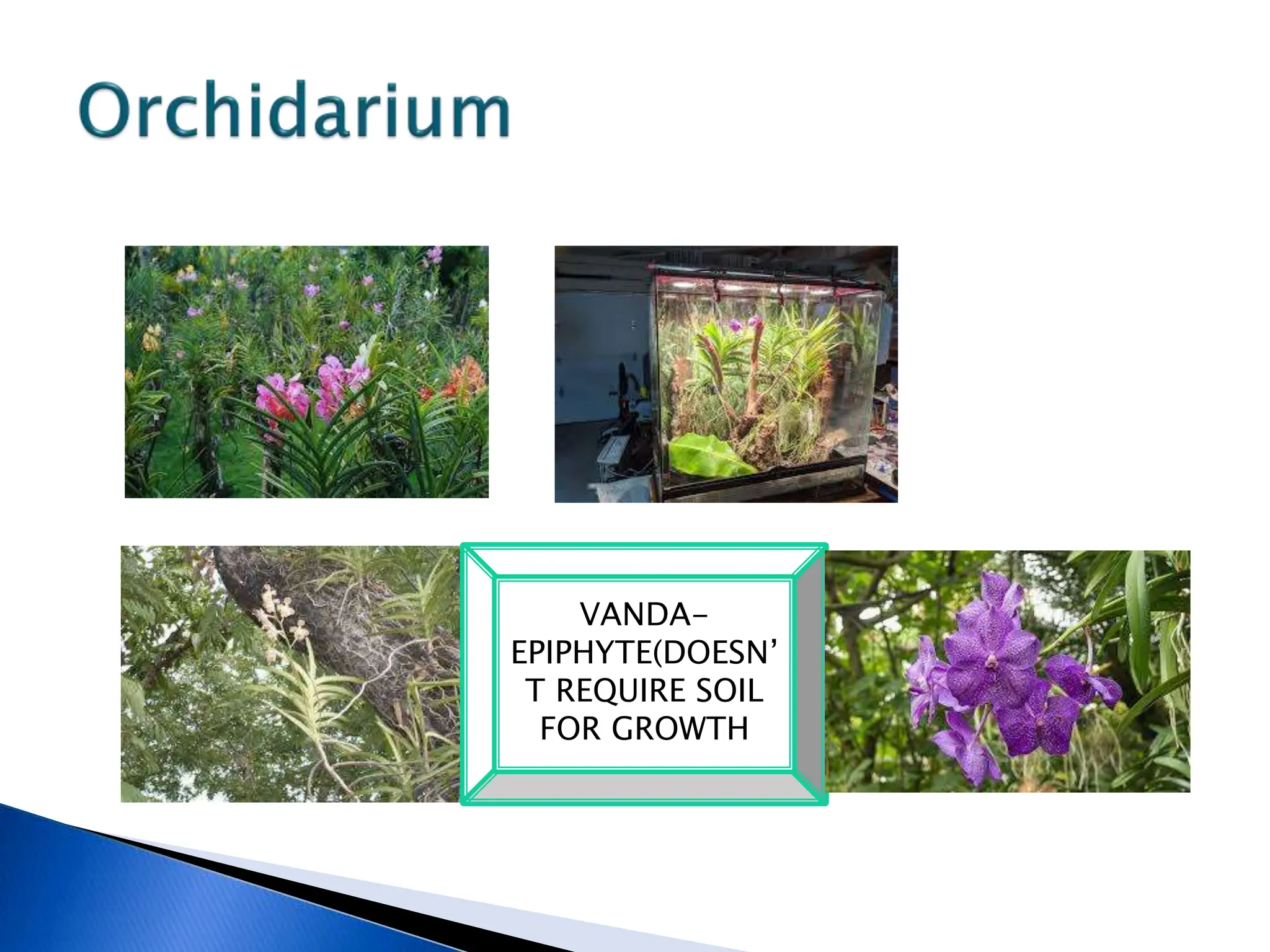
VANDA-
EPIPHYTE(DOESN’
T REQUIRE SOIL
FOR GROWTH
 An epiphyte is a plant or plant-like organism
that grows on the surface of another plant
and derives its moisture and nutrients from
the air, rain, water or from debris
accumulating around it. The plants on which
epiphytes grow are called phorophytes.
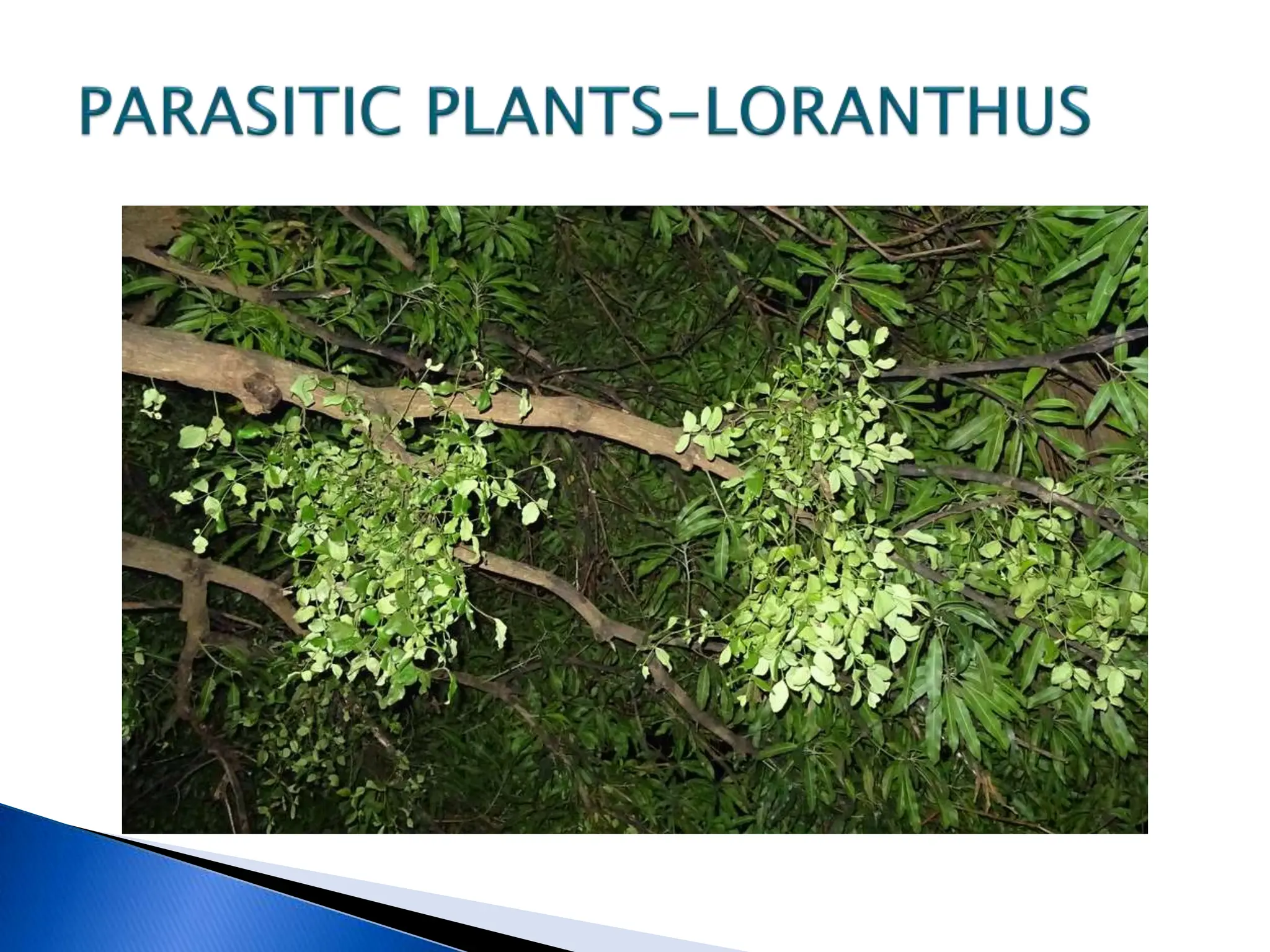
 A parasitic plant is a plant that derives some
or all of its nutritional requirements from
another living plant.
 EXAMPLE FOR PARASITIC PLANT S
LORANTHUS , CUSCUTA.
 Loranthus has roots to absorb water and
minerals from host plant and they prepare
their own food. SO THEY ARE CALLED SEMI
PARASITES.
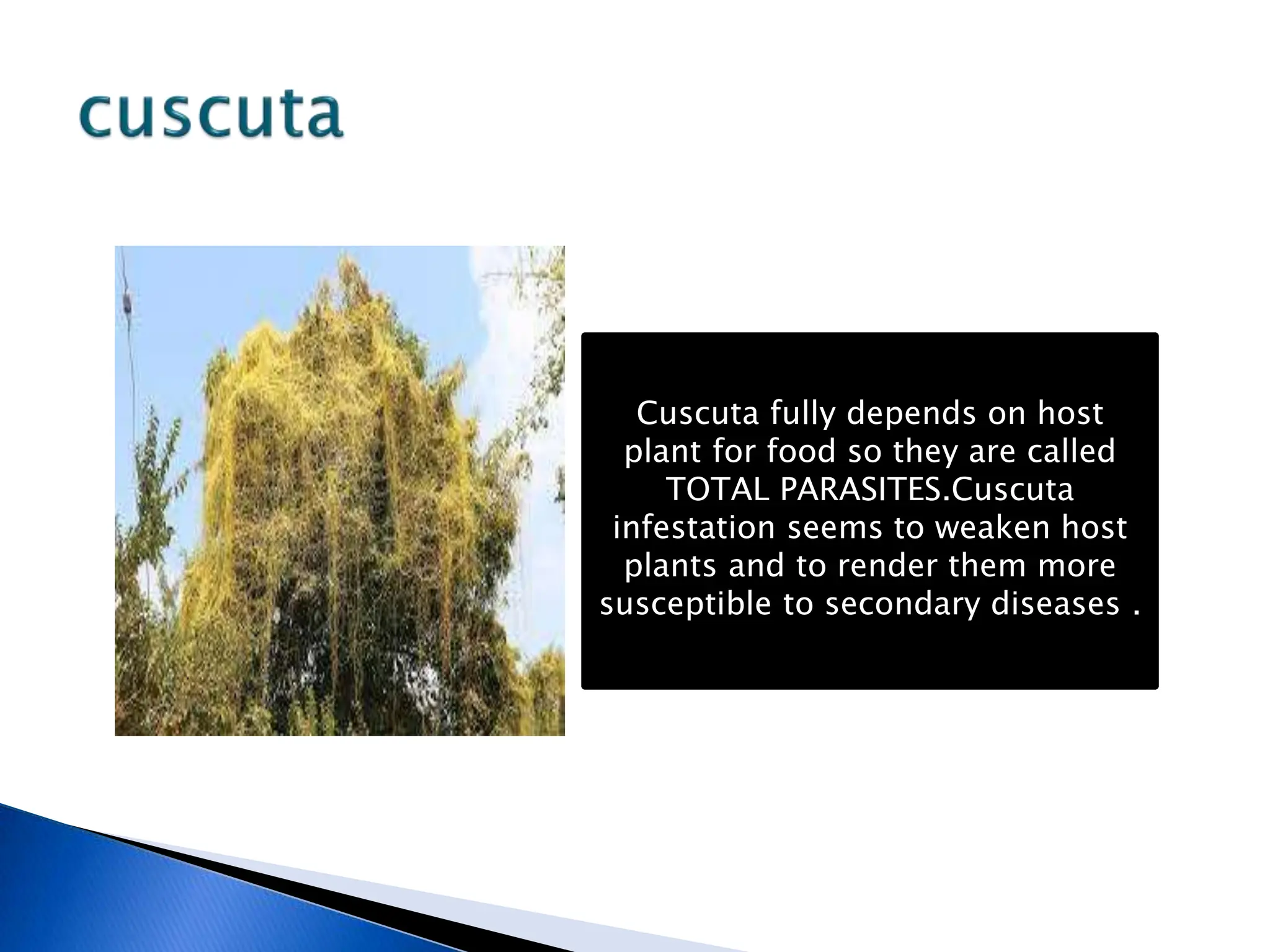
Cuscuta fully depends on host
plant for food so they are called
TOTAL PARASITES.Cuscuta
infestation seems to weaken host
plants and to render them more
susceptible to secondary diseases .
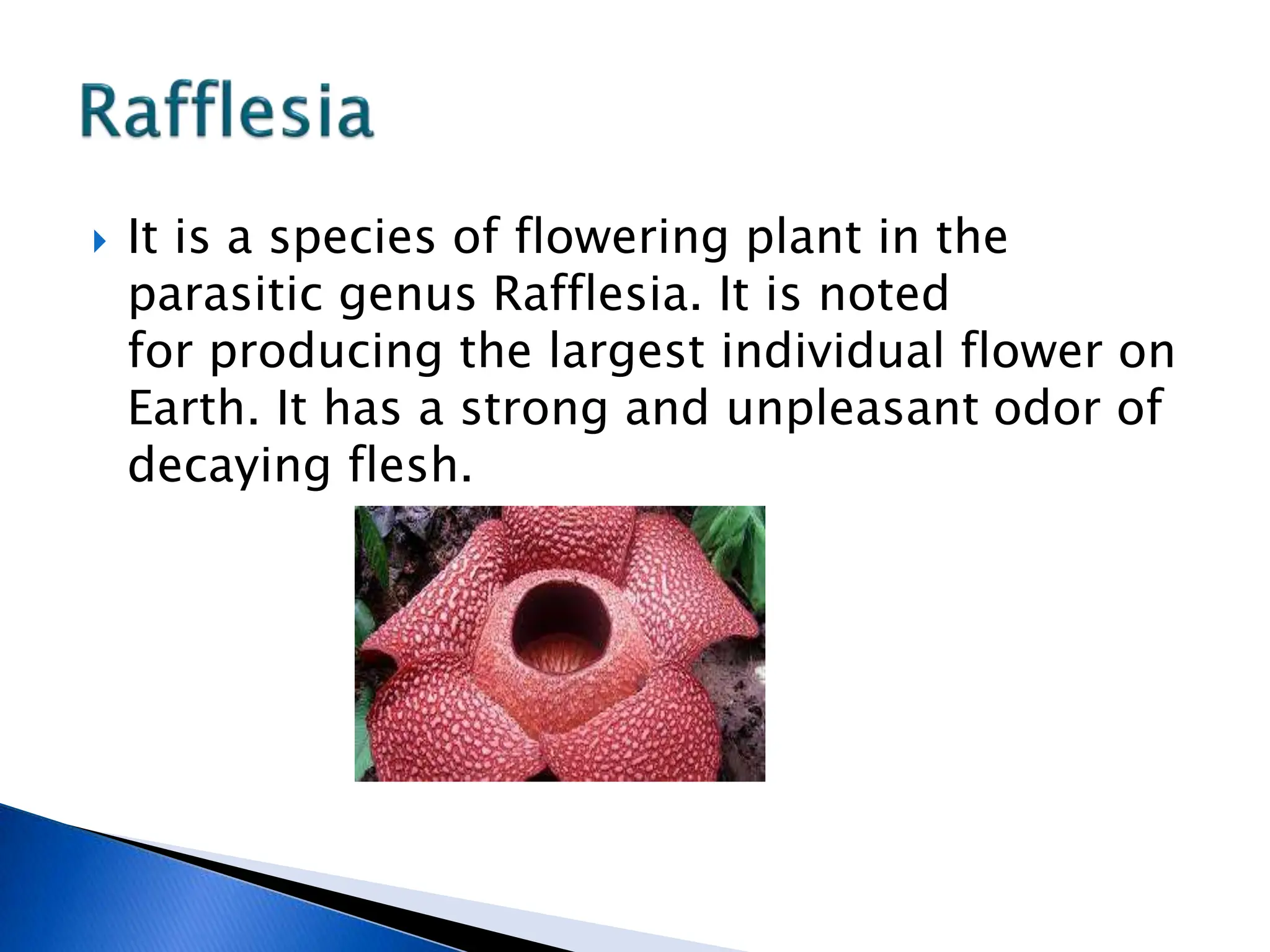
 It is a species of flowering plant in the
parasitic genus Rafflesia. It is noted
for producing the largest individual flower on
Earth. It has a strong and unpleasant odor of
decaying flesh.
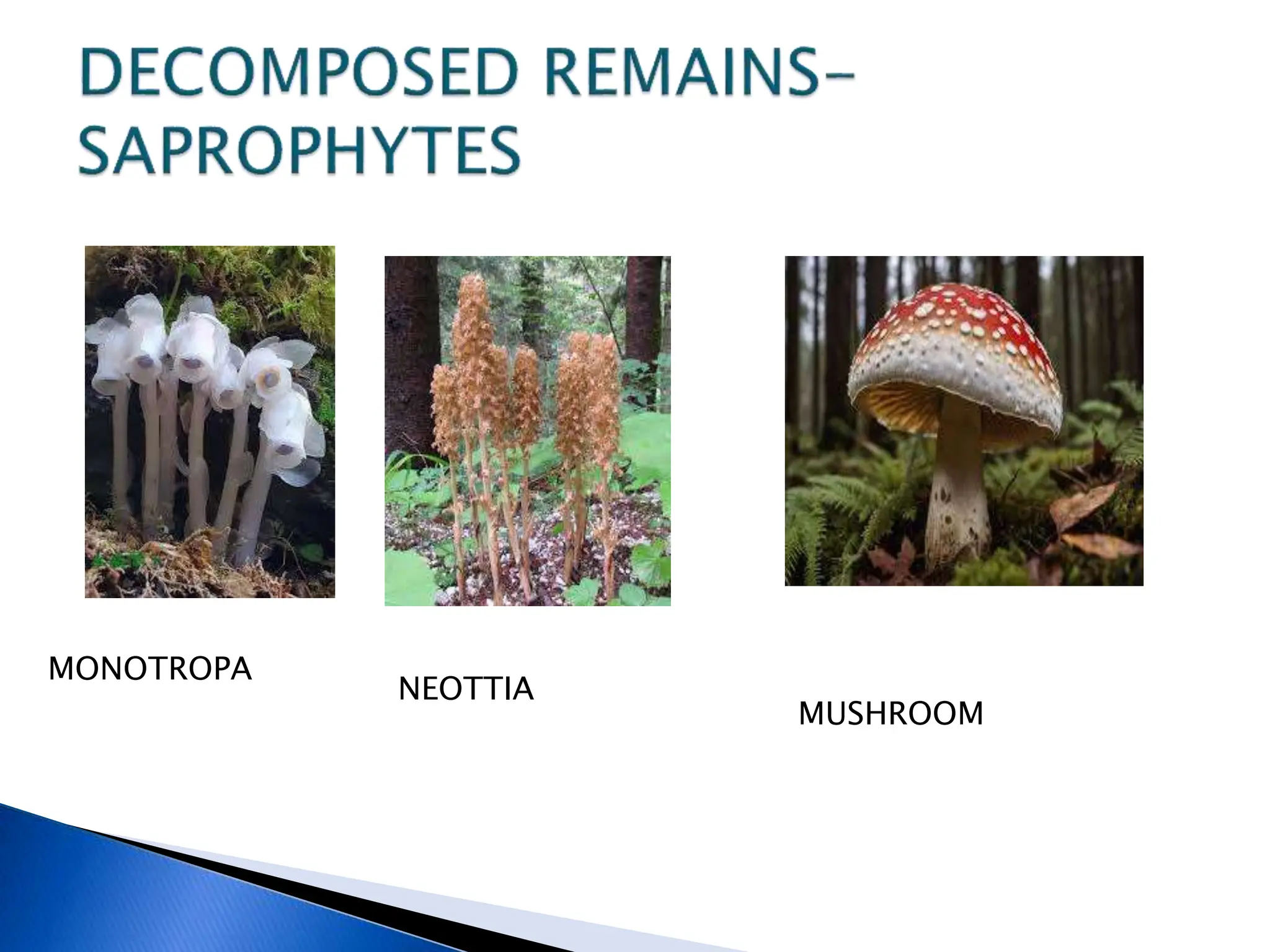
MONOTROPA
NEOTTIA
MUSHROOM
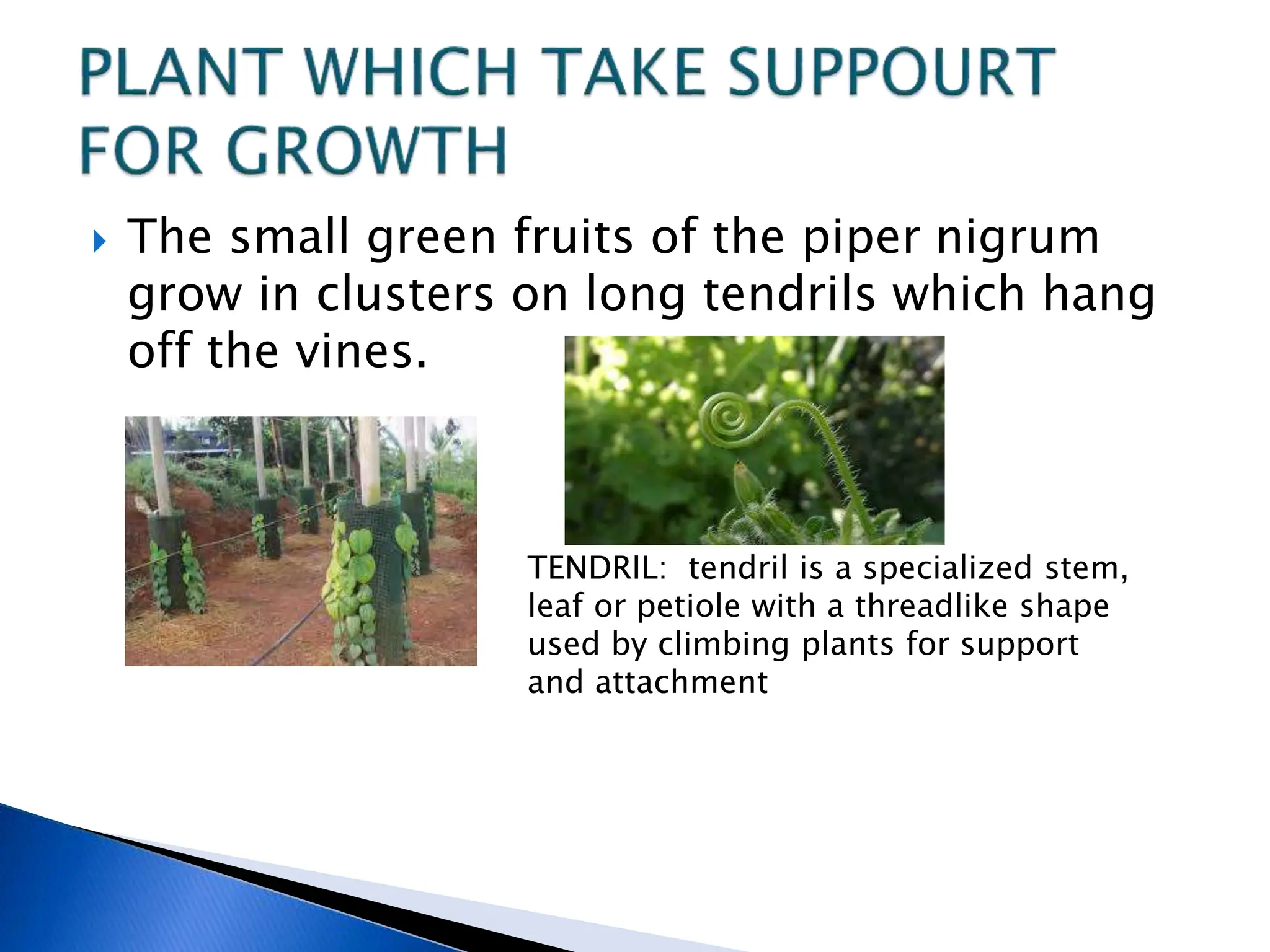
 The small green fruits of the piper nigrum
grow in clusters on long tendrils which hang
off the vines.
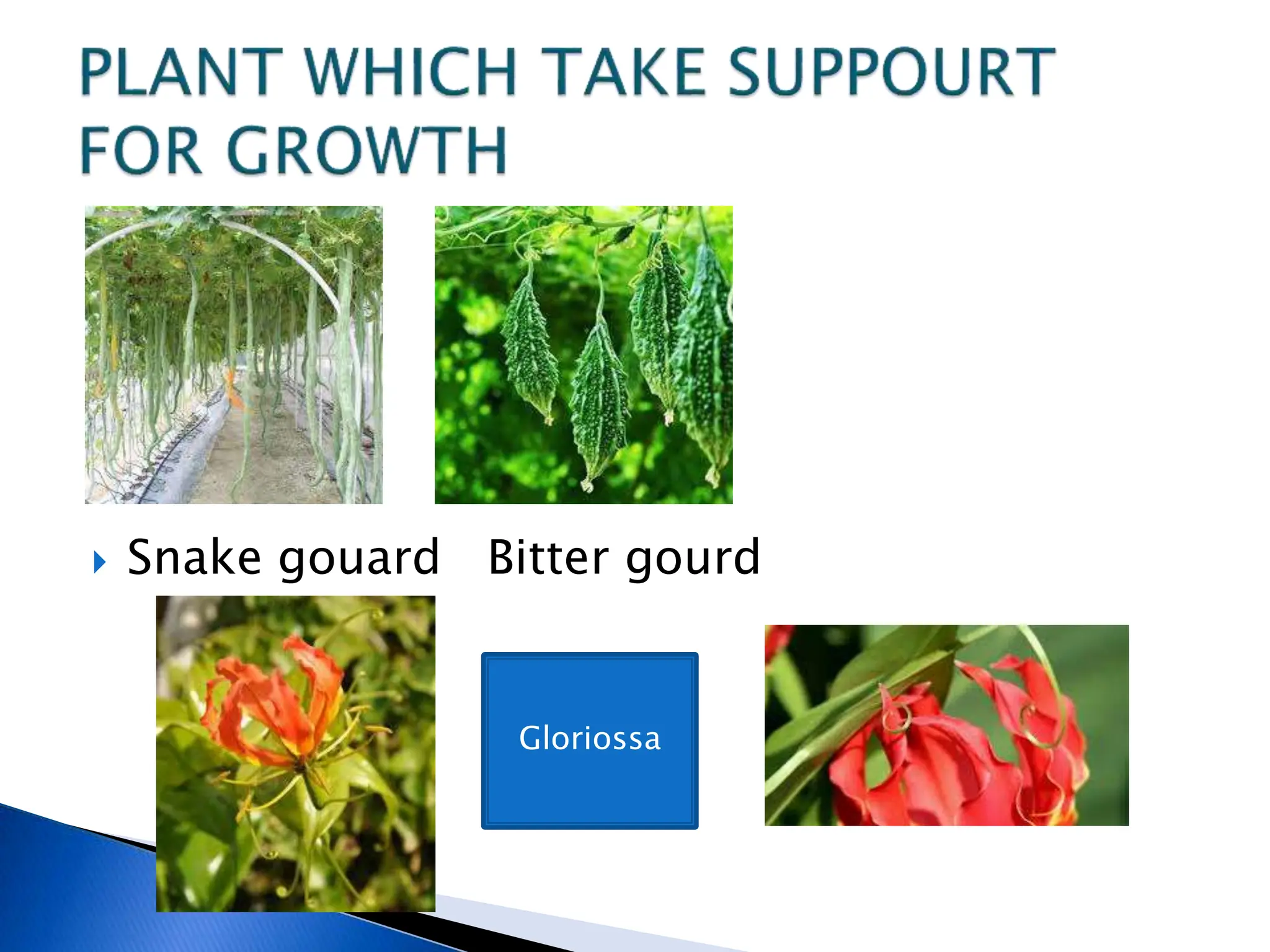
TENDRIL: tendril is a specialized stem,
leaf or petiole with a threadlike shape
used by climbing plants for support
and attachment

 Snake gouard Bitter gourd
Gloriossa
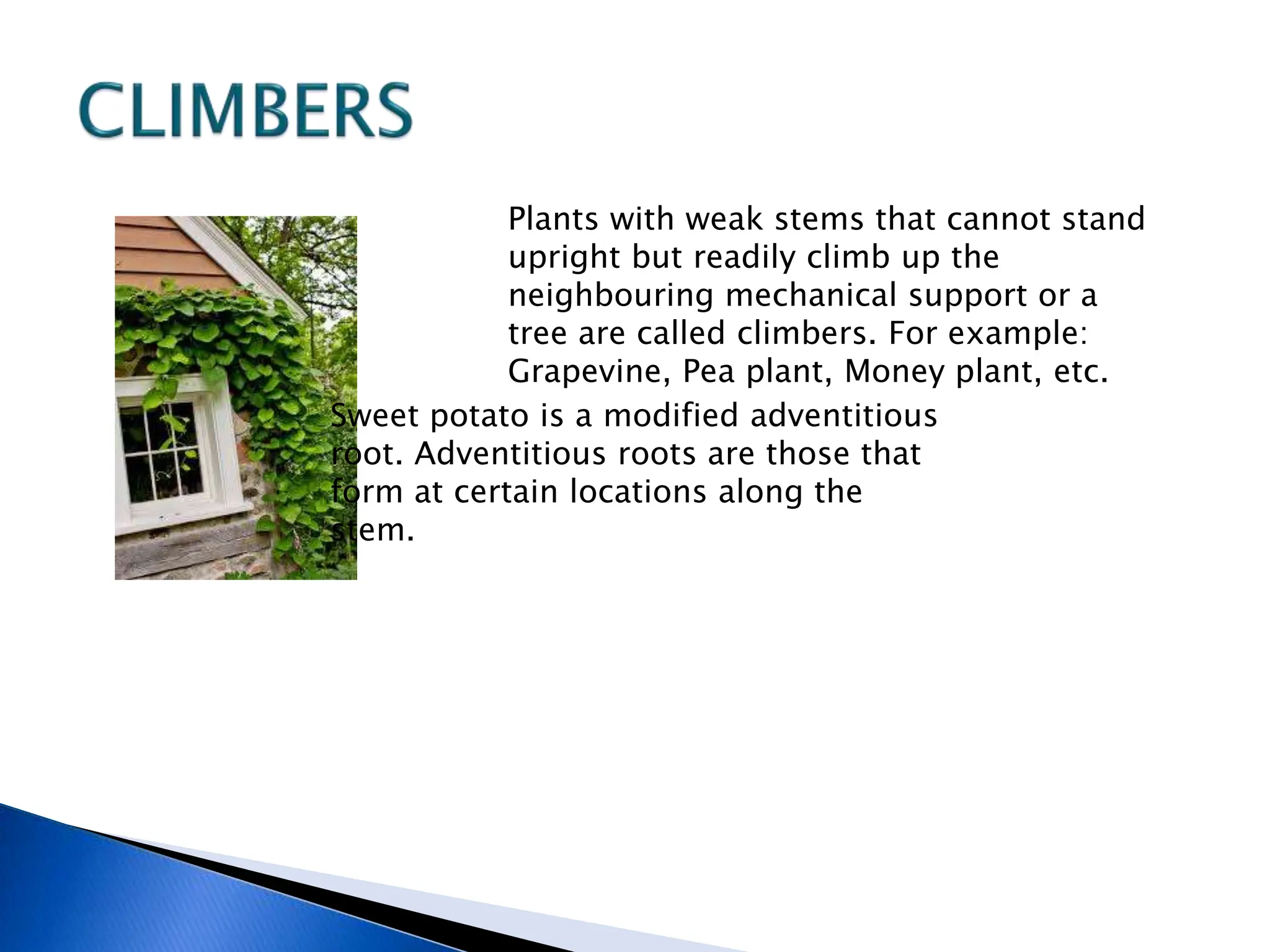
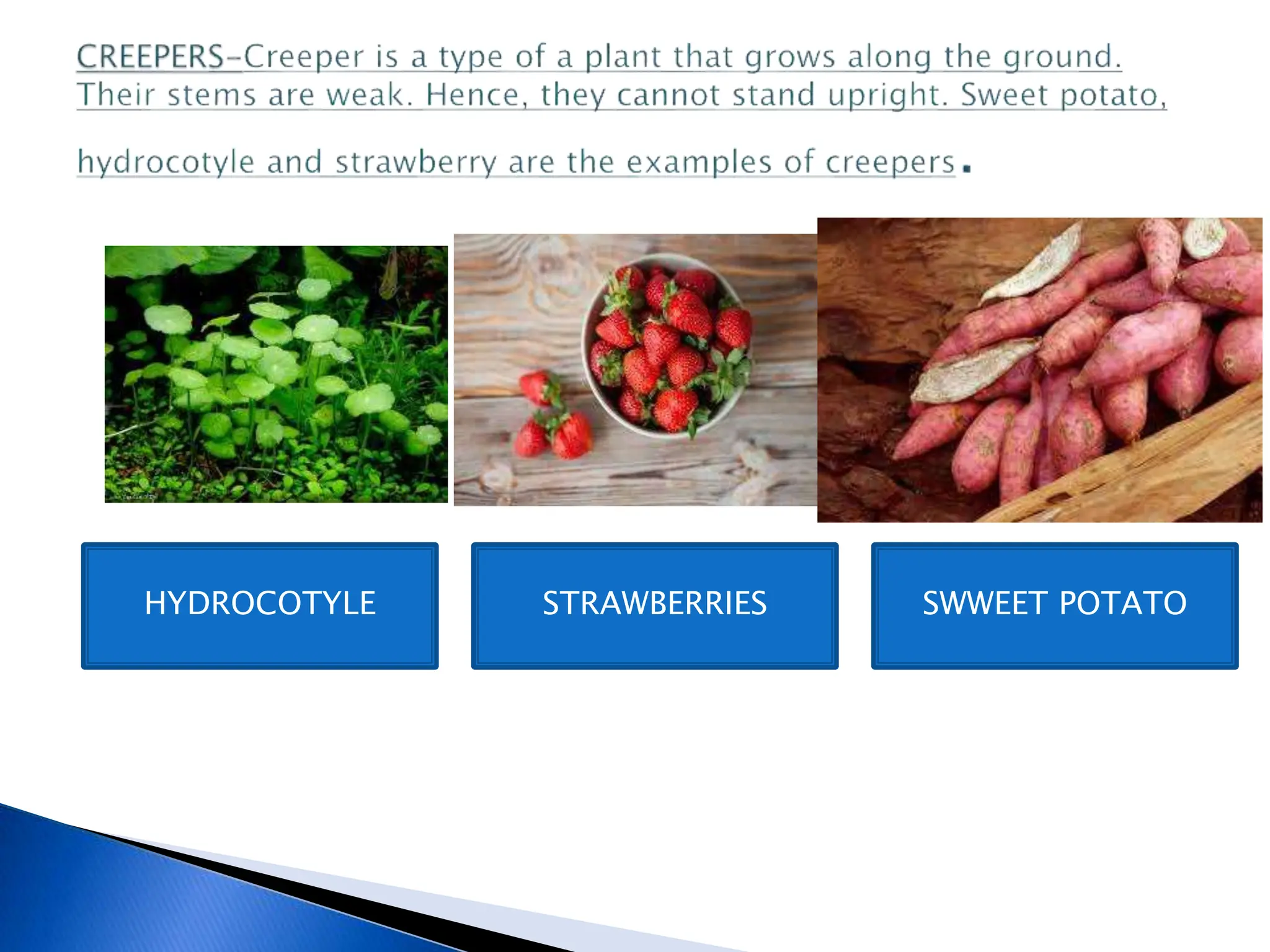
Plants with weak stems that cannot stand
upright but readily climb up the
neighbouring mechanical support or a
tree are called climbers. For example:
Grapevine, Pea plant, Money plant, etc.
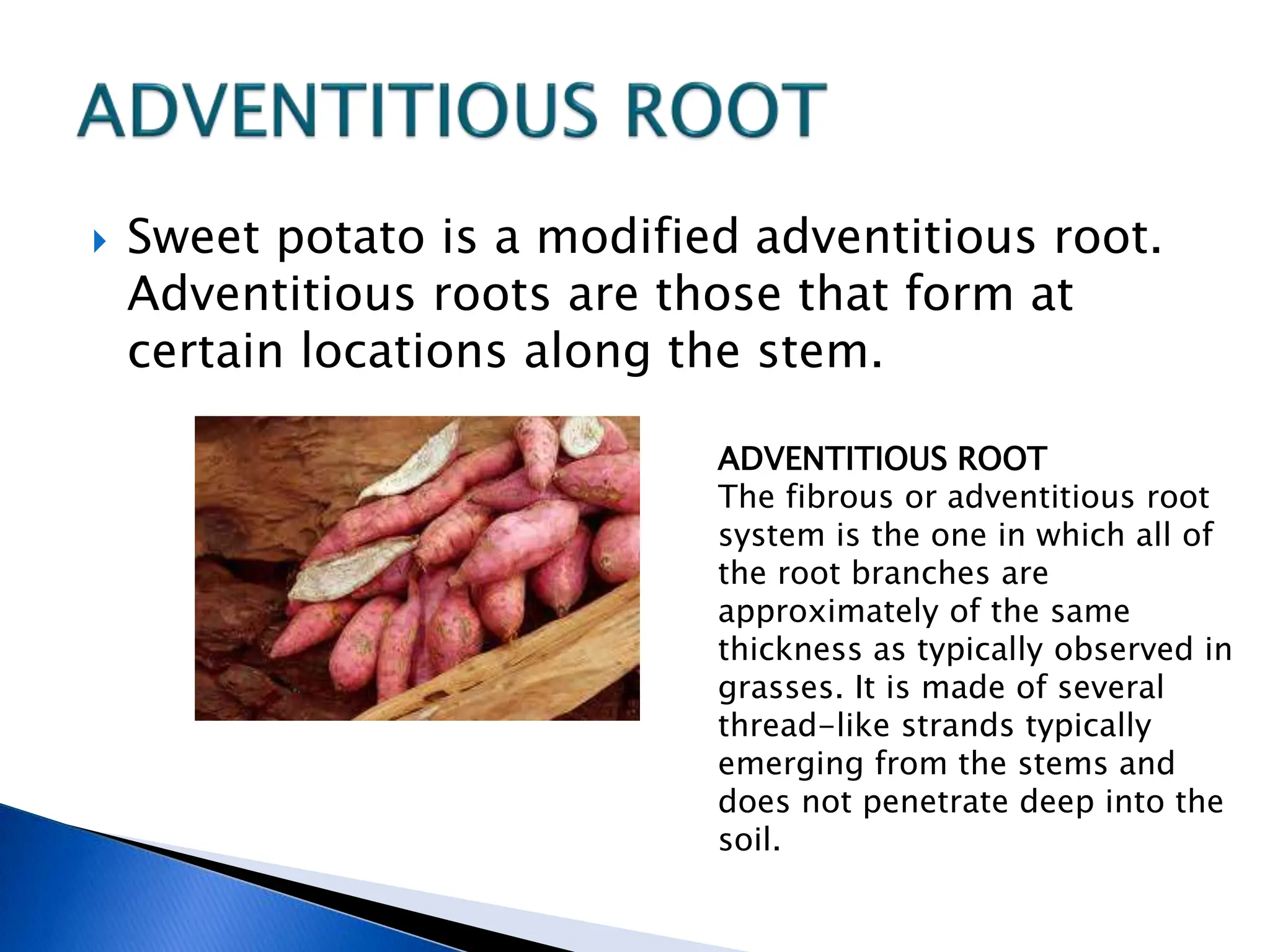
Sweet potato is a modified adventitious
root. Adventitious roots are those that
form at certain locations along the
stem.
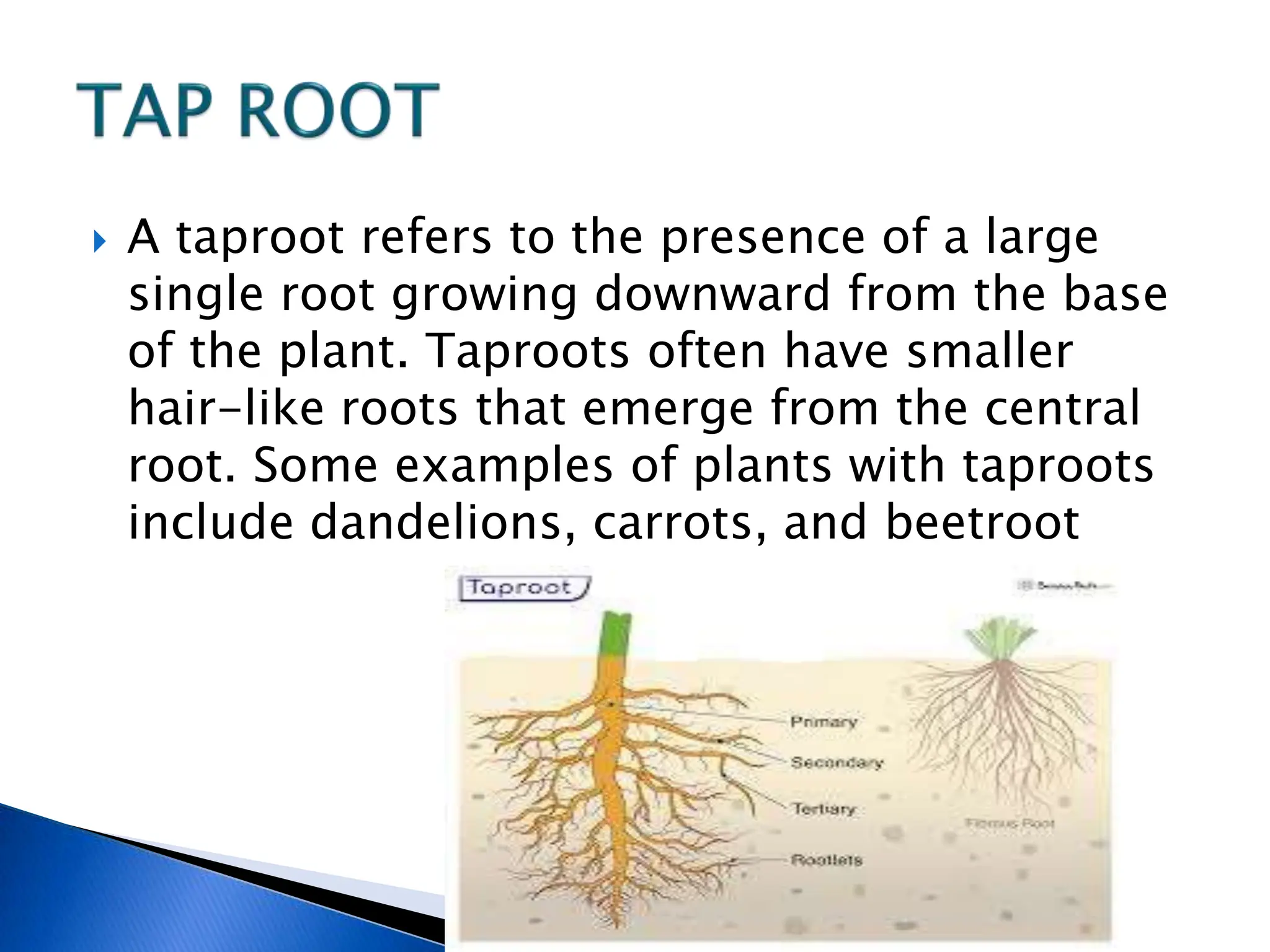
 A taproot refers to the presence of a large
single root growing downward from the base
of the plant. Taproots often have smaller
hair-like roots that emerge from the central
root. Some examples of plants with taproots
include dandelions, carrots, and beetroot
 Sweet potato is a modified adventitious root.
Adventitious roots are those that form at
certain locations along the stem.
ADVENTITIOUS ROOT
The fibrous or adventitious root
system is the one in which all of
the root branches are
approximately of the same
thickness as typically observed in
grasses. It is made of several
thread-like strands typically
emerging from the stems and
does not penetrate deep into the
soil.
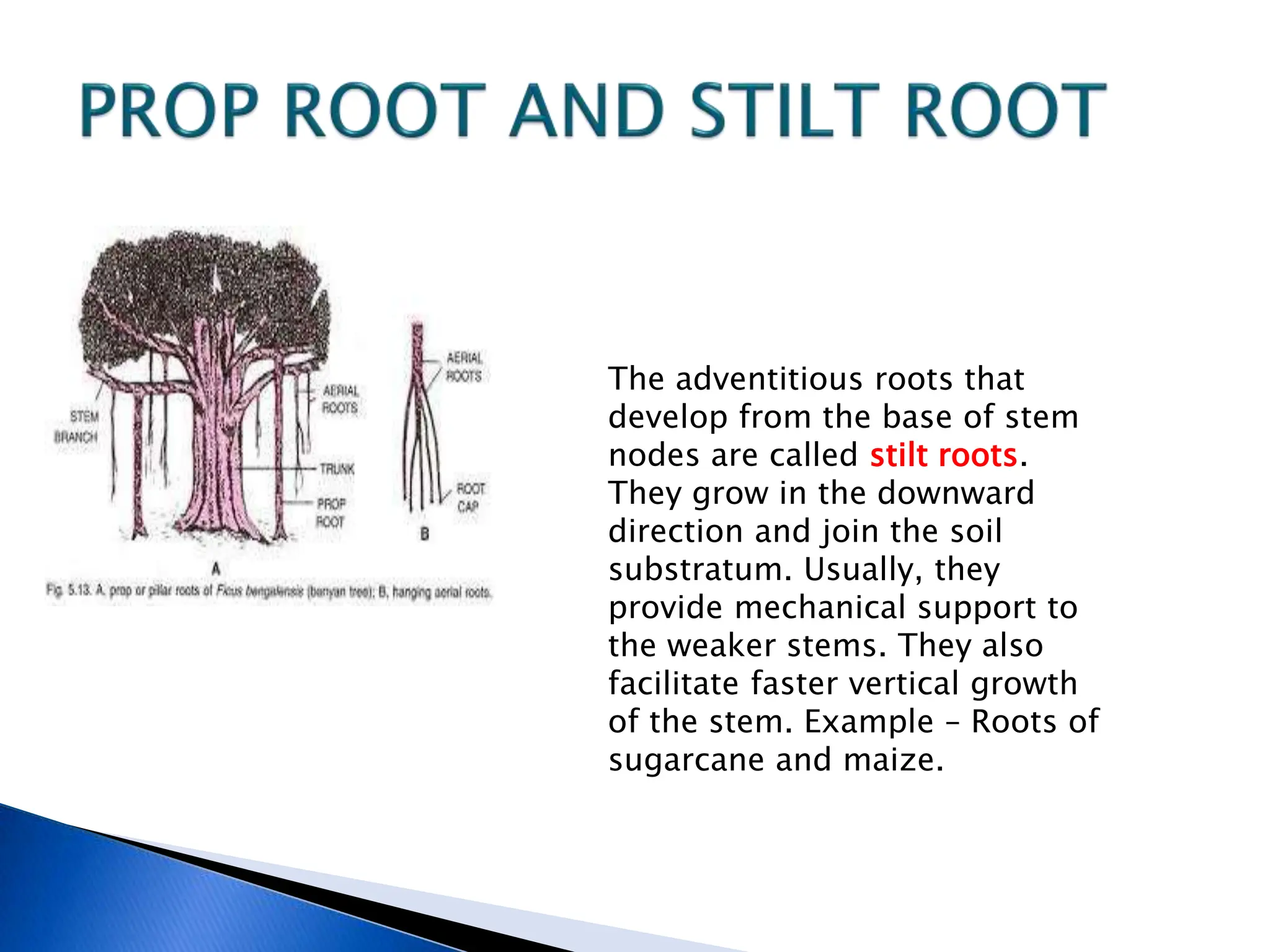
 Prop roots are modified adventitious
roots that grow downward to provide support
to the heavy branches. These roots can
absorb water when they are young and as
they grow they provide support to the plant.
The aerial roots of Ficus start as an epiphyte,
but later reach to the soil and take a firm
hold.
The adventitious roots that
develop from the base of stem
nodes are called stilt roots.
They grow in the downward
direction and join the soil
substratum. Usually, they
provide mechanical support to
the weaker stems. They also
facilitate faster vertical growth
of the stem. Example – Roots of
sugarcane and maize.
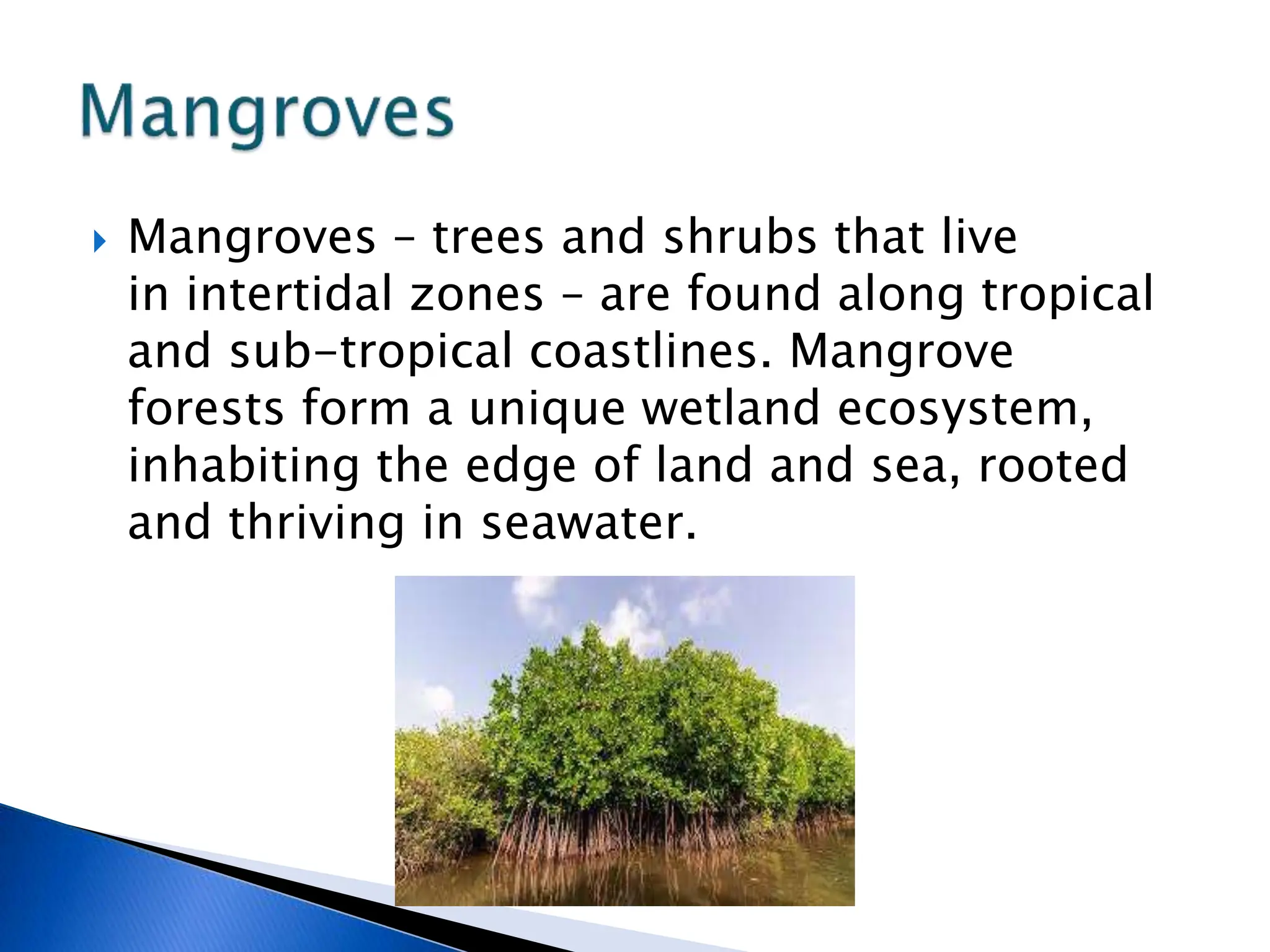
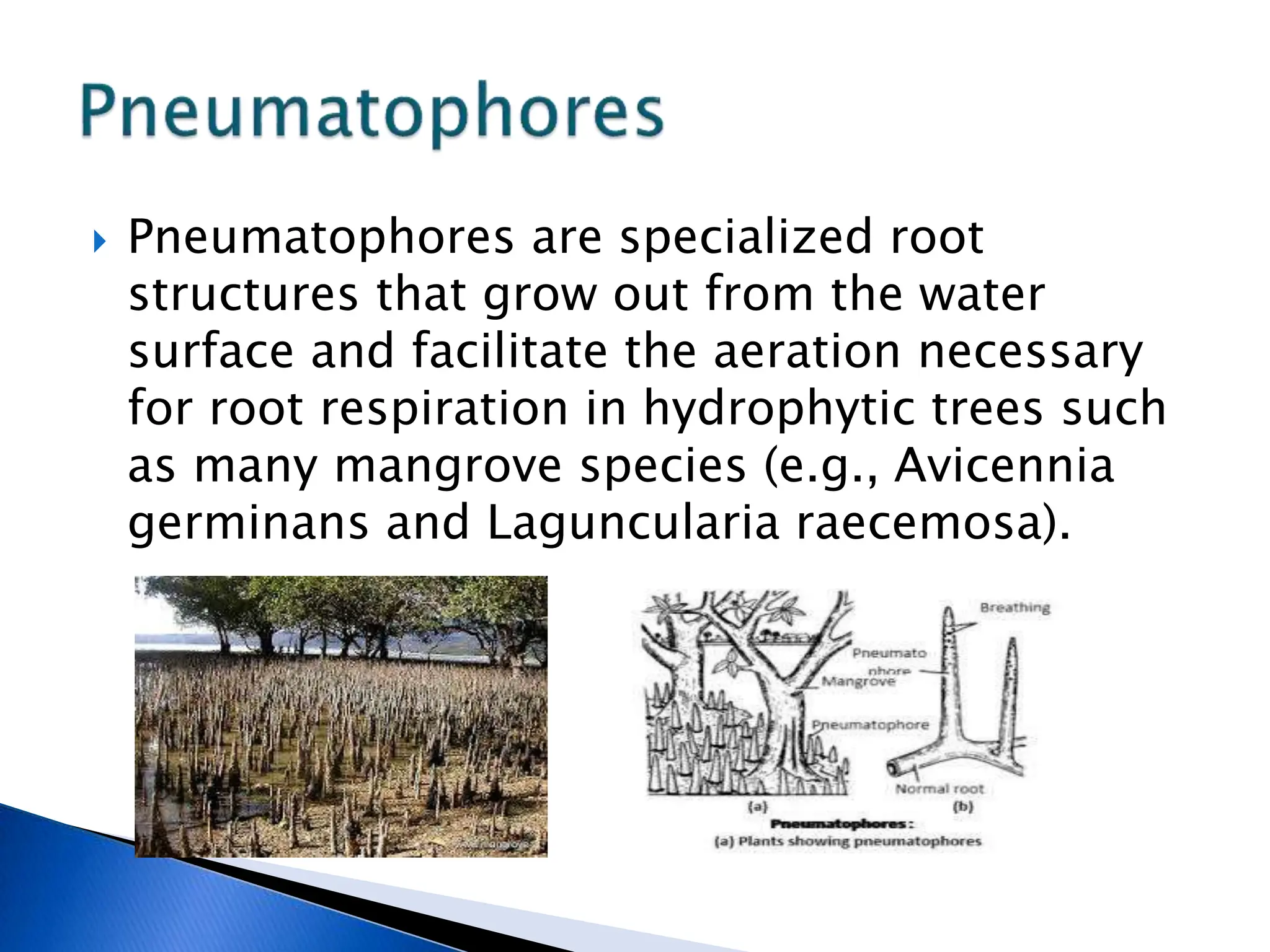
 Mangroves – trees and shrubs that live
in intertidal zones – are found along tropical
and sub-tropical coastlines. Mangrove
forests form a unique wetland ecosystem,
inhabiting the edge of land and sea, rooted
and thriving in seawater.
 Pneumatophores are specialized root
structures that grow out from the water
surface and facilitate the aeration necessary
for root respiration in hydrophytic trees such
as many mangrove species (e.g., Avicennia
germinans and Laguncularia raecemosa).
HYDROCOTYLE STRAWBERRIES SWWEET POTATO
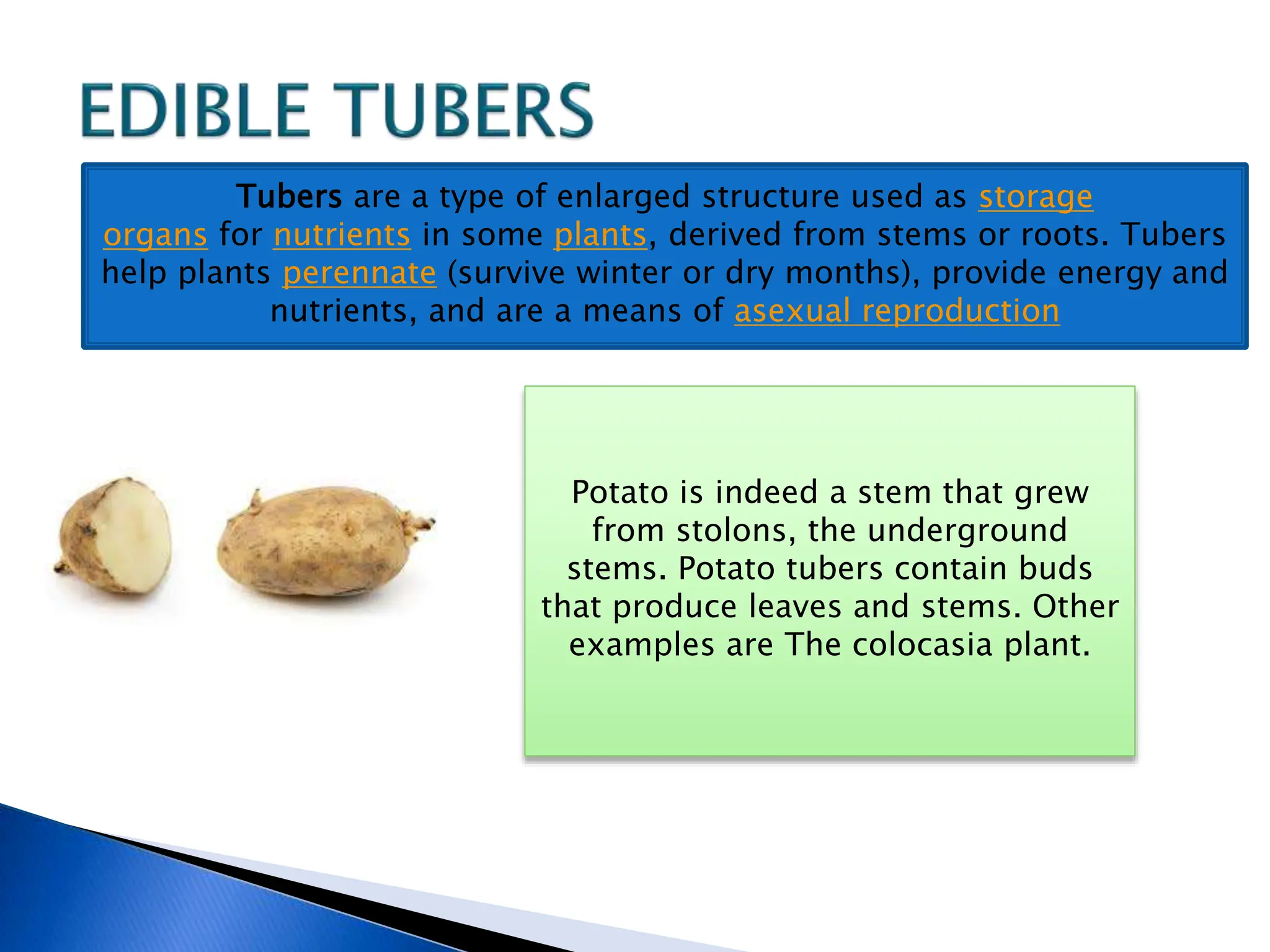
Tubers are a type of enlarged structure used as storage
organs for nutrients in some plants, derived from stems or roots. Tubers
help plants perennate (survive winter or dry months), provide energy and
nutrients, and are a means of asexual reproduction
Potato is indeed a stem that grew
from stolons, the underground
stems. Potato tubers contain buds
that produce leaves and stems. Other
examples are The colocasia plant.
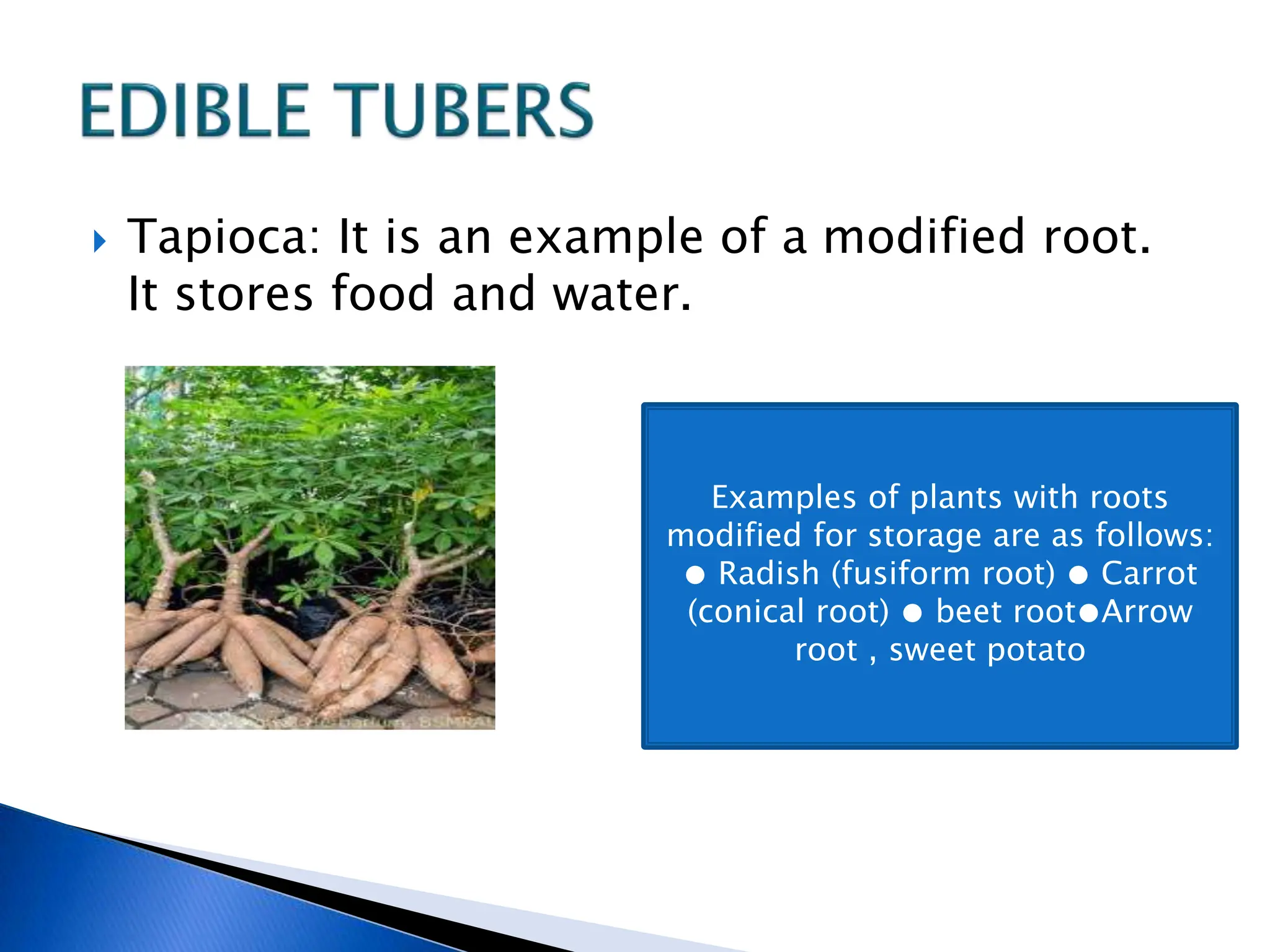
 Tapioca: It is an example of a modified root.
It stores food and water.
Examples of plants with roots
modified for storage are as follows:
● Radish (fusiform root) ● Carrot
(conical root) ● beet root●Arrow
root , sweet potato
 Being multicellular and mostly photosynthetic
organisms living both in water and on land,
plants can be found almost everywhere. Red,
brown, and green algae are among the
aquatic plants, and mosses, ferns,
gymnosperms(EG:PINE ), and
angiosperms(FLOWERING PLANTS) are among
the terrestrial plants.
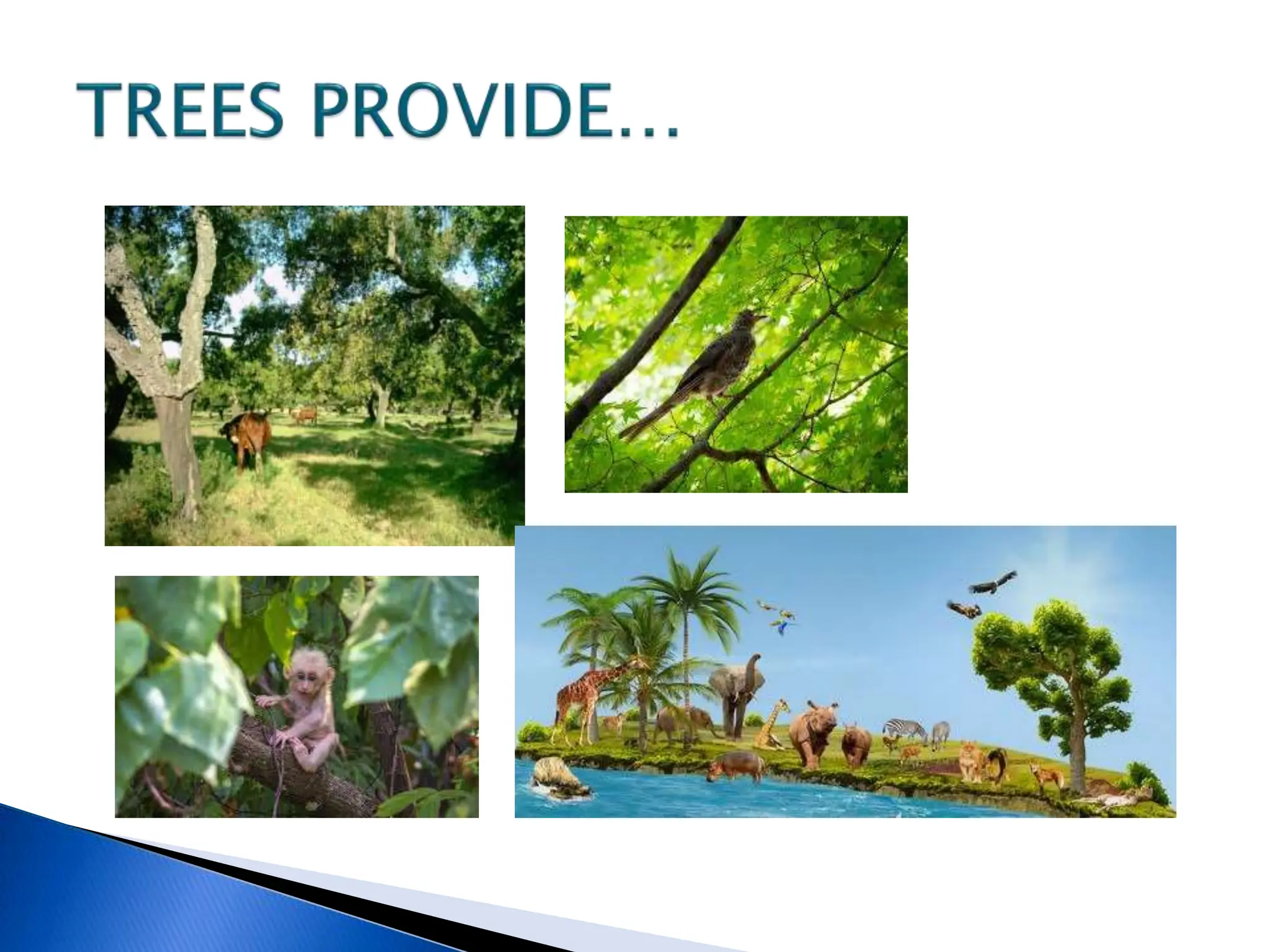
 Trees and forests provide a habitat for many
species of animals and plants. Tropical
rainforests are among the most biodiverse
habitats in the world. Trees provide shade
and shelter, timber for construction, fuel for
cooking and heating, and fruit for food as
well as having many other uses.
Direct instructions, towards hundred fold yield,layering,budding,grafting,plants,fertility

Direct instructions, towards hundred fold yield,layering,budding,grafting,plants,fertility

  • 1.
    BY DR. SREEREMYA DIRECTLEARNING METHOD
  • 2.
     A balanceddiet is a necessity if one wants to lead a healthy life. This balanced diet involves different carbohydrates, minerals, vitamins, fats and so on.  The first step is to know where do they come from so that we can understand the different nutrients provided by that particular item of food.  EDIBLE PART IN EACH FOOD IS DIFFERENT
  • 3.
  • 4.
  • 5.
    EDIBLE PART STEM (NOTE-ITIS DIFFERNTIATED FROM ROOT) EDIBLE PART ROOT EDIBLE PART SEEDS
  • 6.
  • 7.
    NEEM TOUCH ME NOT(MIMOSA) MOSTLY ALLANIMALS DEPEND UPON PLANT FOR FOOD
  • 8.
     Photosynthesis isthe process by which plants use sunlight, water, and carbon dioxide to create oxygen and energy in the form of sugar.
  • 9.
  • 10.
     Stomata arethe tiny openings present on the epidermis of leaves. We can see stomata under the light microscope. In some of the plants, stomata are present on stems and other parts of plants. Stomata play an important role in gaseous exchange and photosynthesis.
  • 12.
     Chlorophyll isthe natural compound present in green plants that gives them their color. It helps plants to absorb energy from the sun as they undergo the process of photosynthesis. This nutrient is present in green vegetables and other plant-based foods
  • 13.
    IT IS DUETO PIGMENT CALLED ANTHOCYANIN
  • 15.
     Photosynthesis convertscarbon dioxide and water into oxygen and glucose. Glucose is used as food by the plant and oxygen is a by- product.  Cellular respiration converts oxygen and glucose into water and carbon dioxide. Water and carbon dioxide are by- products and ATP is energy that is transformed from the process.
  • 17.
     Orchidarium mayrefer to: A vivarium, specifically for the cultivation of orchids. An area in a park or botanical garden dedicated to orchids. ORCHIDS ARE GROWN ON HANGING WOODEN PLANKS TIED WITH COCONUT FIBRE
  • 18.
  • 19.
     An epiphyteis a plant or plant-like organism that grows on the surface of another plant and derives its moisture and nutrients from the air, rain, water or from debris accumulating around it. The plants on which epiphytes grow are called phorophytes.
  • 20.
     A parasiticplant is a plant that derives some or all of its nutritional requirements from another living plant.  EXAMPLE FOR PARASITIC PLANT S LORANTHUS , CUSCUTA.  Loranthus has roots to absorb water and minerals from host plant and they prepare their own food. SO THEY ARE CALLED SEMI PARASITES.
  • 22.
    Cuscuta fully dependson host plant for food so they are called TOTAL PARASITES.Cuscuta infestation seems to weaken host plants and to render them more susceptible to secondary diseases .
  • 23.
     It isa species of flowering plant in the parasitic genus Rafflesia. It is noted for producing the largest individual flower on Earth. It has a strong and unpleasant odor of decaying flesh.
  • 25.
  • 27.
     The smallgreen fruits of the piper nigrum grow in clusters on long tendrils which hang off the vines. TENDRIL: tendril is a specialized stem, leaf or petiole with a threadlike shape used by climbing plants for support and attachment
  • 28.
      Snake gouardBitter gourd Gloriossa
  • 30.
    Plants with weakstems that cannot stand upright but readily climb up the neighbouring mechanical support or a tree are called climbers. For example: Grapevine, Pea plant, Money plant, etc. Sweet potato is a modified adventitious root. Adventitious roots are those that form at certain locations along the stem.
  • 32.
     A taprootrefers to the presence of a large single root growing downward from the base of the plant. Taproots often have smaller hair-like roots that emerge from the central root. Some examples of plants with taproots include dandelions, carrots, and beetroot
  • 33.
     Sweet potatois a modified adventitious root. Adventitious roots are those that form at certain locations along the stem. ADVENTITIOUS ROOT The fibrous or adventitious root system is the one in which all of the root branches are approximately of the same thickness as typically observed in grasses. It is made of several thread-like strands typically emerging from the stems and does not penetrate deep into the soil.
  • 34.
     Prop rootsare modified adventitious roots that grow downward to provide support to the heavy branches. These roots can absorb water when they are young and as they grow they provide support to the plant. The aerial roots of Ficus start as an epiphyte, but later reach to the soil and take a firm hold.
  • 35.
    The adventitious rootsthat develop from the base of stem nodes are called stilt roots. They grow in the downward direction and join the soil substratum. Usually, they provide mechanical support to the weaker stems. They also facilitate faster vertical growth of the stem. Example – Roots of sugarcane and maize.
  • 36.
     Mangroves –trees and shrubs that live in intertidal zones – are found along tropical and sub-tropical coastlines. Mangrove forests form a unique wetland ecosystem, inhabiting the edge of land and sea, rooted and thriving in seawater.
  • 37.
     Pneumatophores arespecialized root structures that grow out from the water surface and facilitate the aeration necessary for root respiration in hydrophytic trees such as many mangrove species (e.g., Avicennia germinans and Laguncularia raecemosa).
  • 38.
  • 39.
    Tubers are atype of enlarged structure used as storage organs for nutrients in some plants, derived from stems or roots. Tubers help plants perennate (survive winter or dry months), provide energy and nutrients, and are a means of asexual reproduction Potato is indeed a stem that grew from stolons, the underground stems. Potato tubers contain buds that produce leaves and stems. Other examples are The colocasia plant.
  • 40.
     Tapioca: Itis an example of a modified root. It stores food and water. Examples of plants with roots modified for storage are as follows: ● Radish (fusiform root) ● Carrot (conical root) ● beet root●Arrow root , sweet potato
  • 41.
     Being multicellularand mostly photosynthetic organisms living both in water and on land, plants can be found almost everywhere. Red, brown, and green algae are among the aquatic plants, and mosses, ferns, gymnosperms(EG:PINE ), and angiosperms(FLOWERING PLANTS) are among the terrestrial plants.
  • 42.
     Trees andforests provide a habitat for many species of animals and plants. Tropical rainforests are among the most biodiverse habitats in the world. Trees provide shade and shelter, timber for construction, fuel for cooking and heating, and fruit for food as well as having many other uses.