Downloaded 867 times
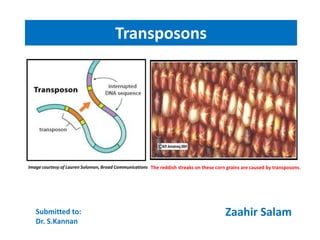

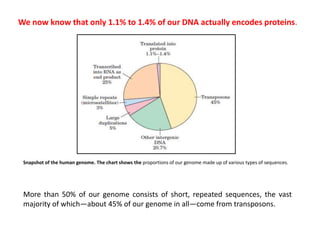
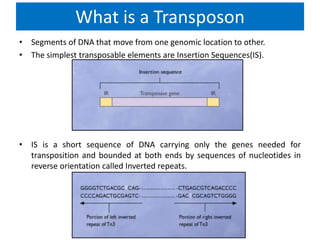
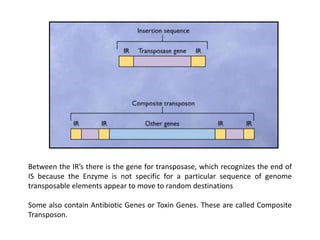
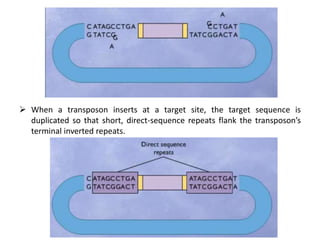
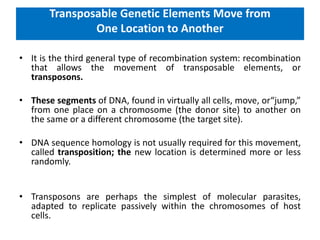

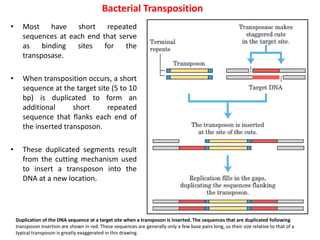
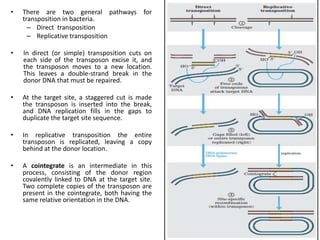


Transposons are segments of DNA that can move, or "jump", from one location in the genome to another. They were first discovered by Barbara McClintock in her studies of maize. Transposons make up over 50% of the human genome. There are two classes - Class I retrotransposons move via an RNA intermediate, while Class II transposons move directly from DNA to DNA. Transposition occurs through a "cut and paste" mechanism where the transposon is excised from one location and inserted into a new random site in the genome. While transposons can disrupt gene function, recent evidence suggests they may also help organisms adapt to environmental stress.


