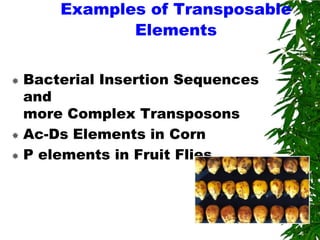
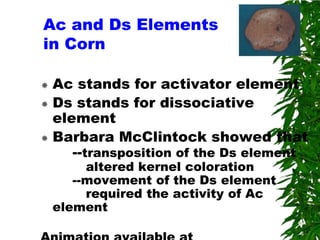
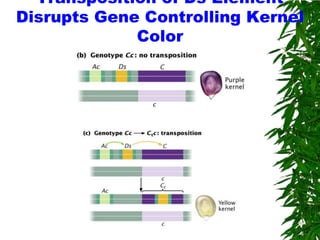
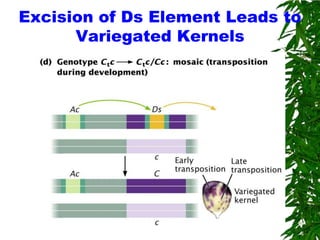
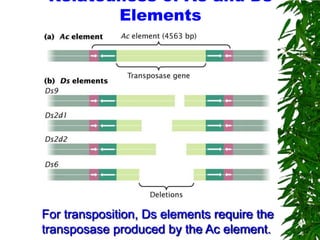
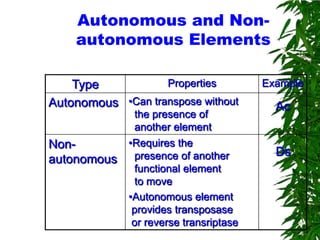
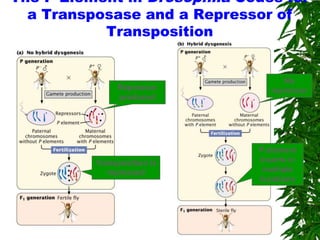
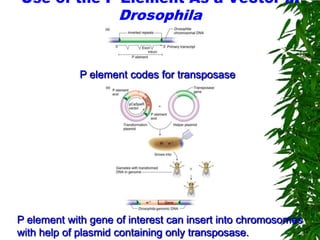
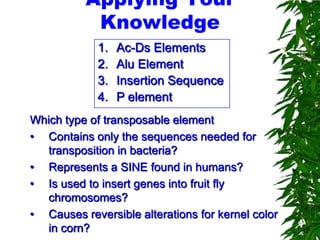
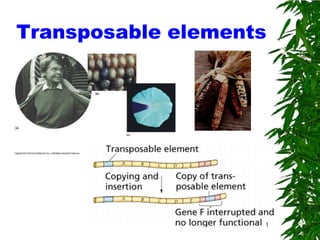
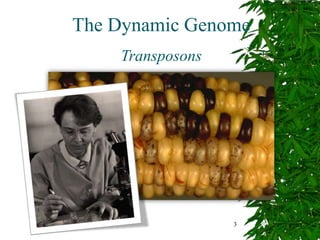
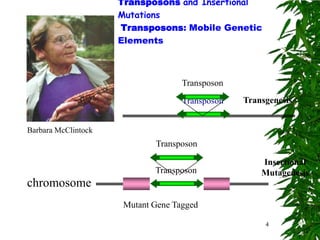
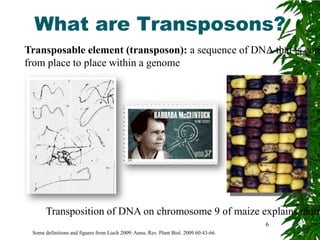
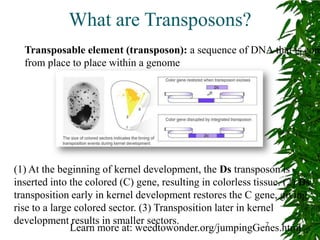
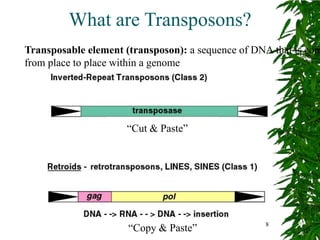
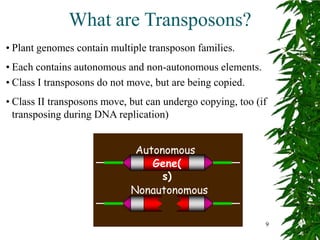
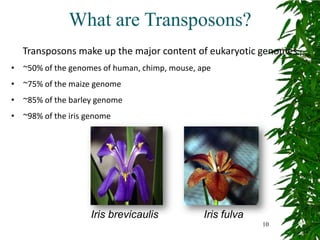
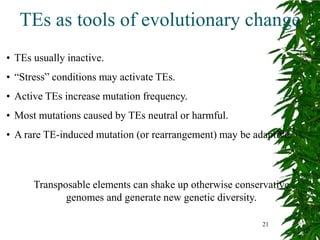
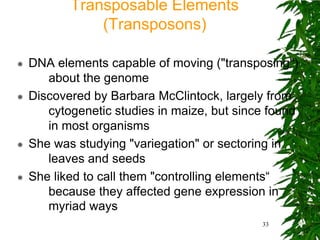
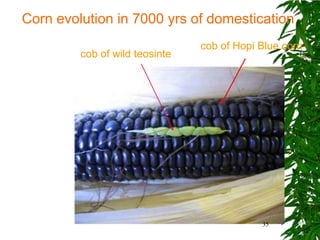
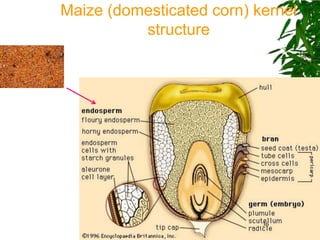
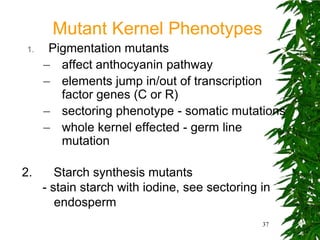
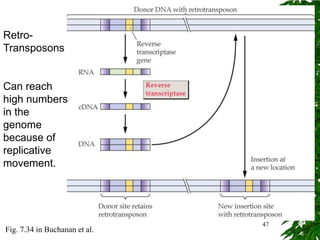
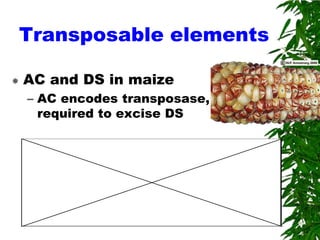
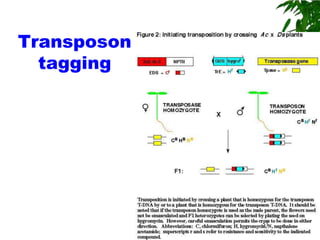
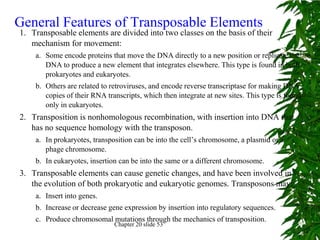
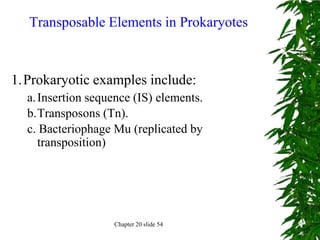
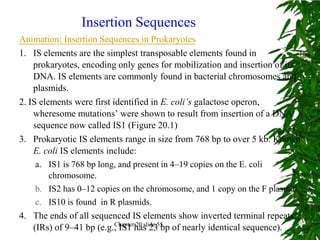
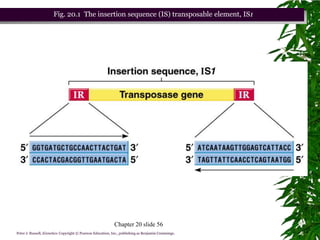
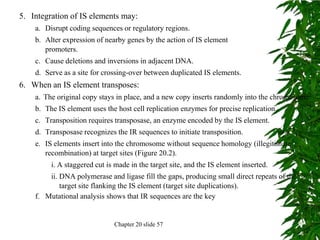
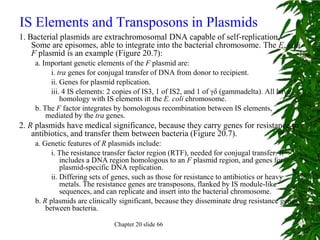
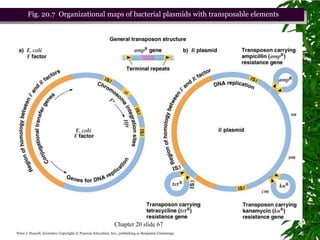
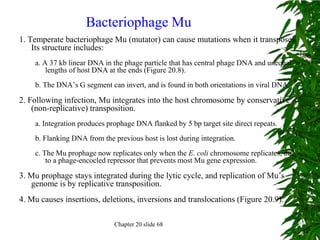
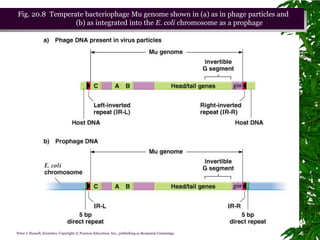
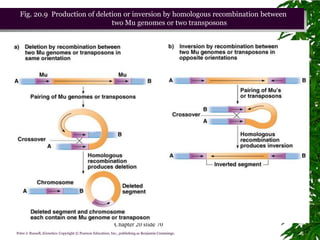
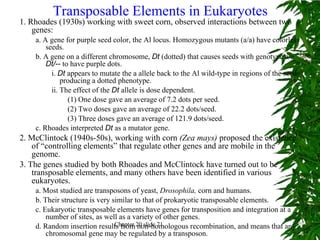
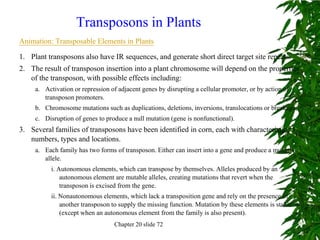
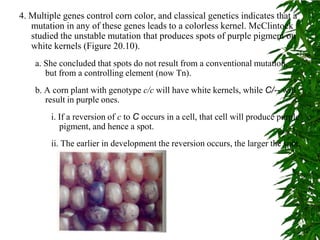
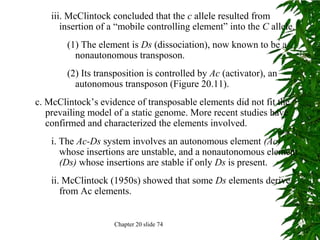
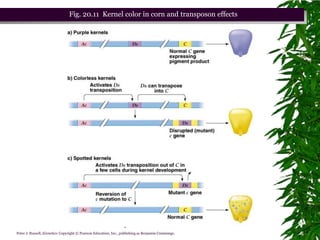
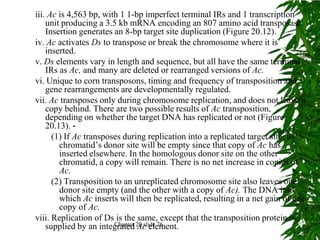
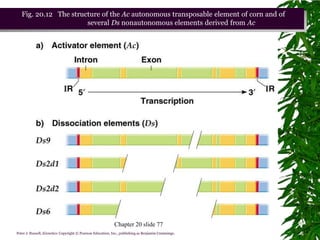
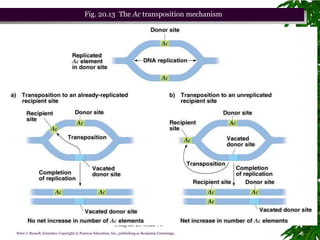
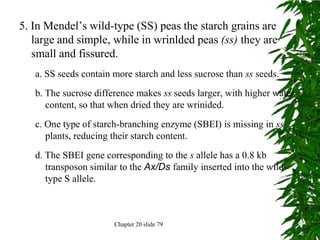
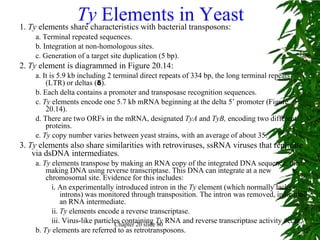
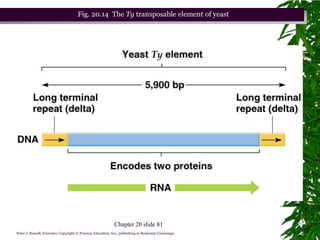
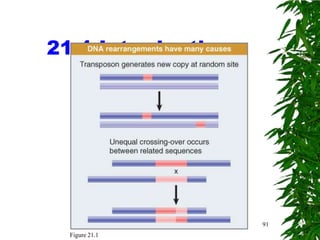
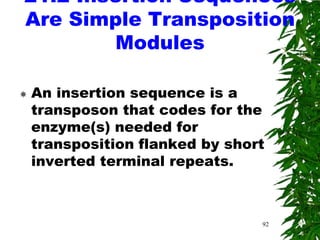
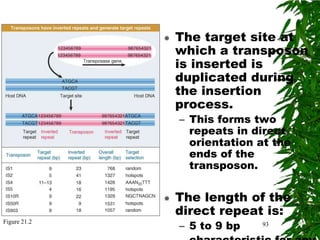
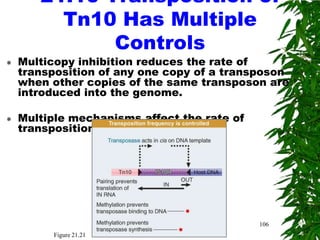
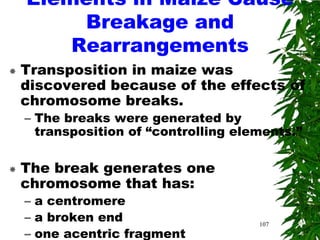
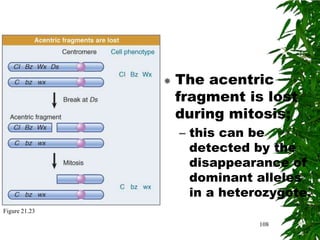
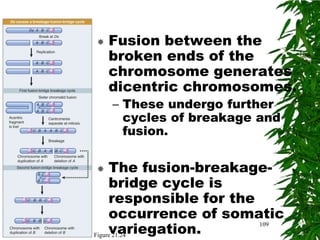
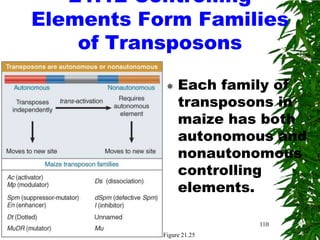
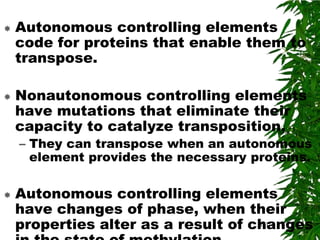
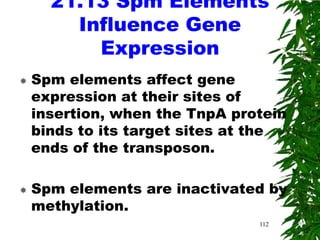
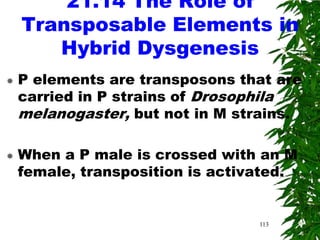
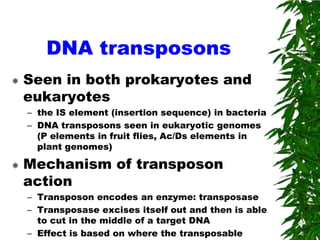
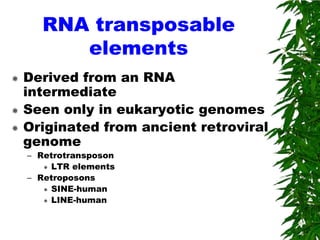
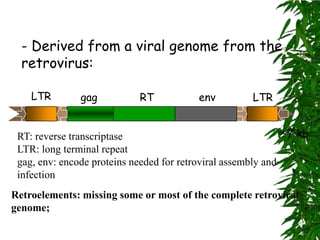
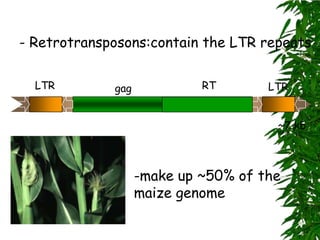
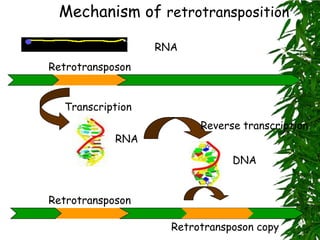
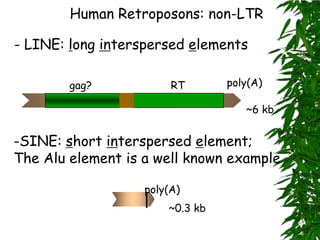
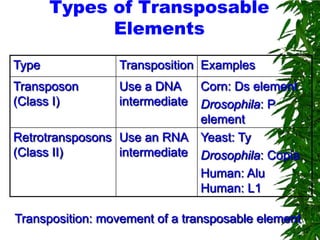
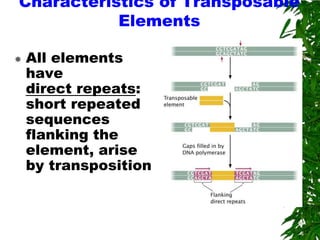
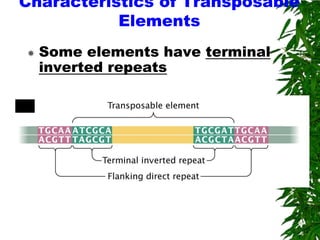
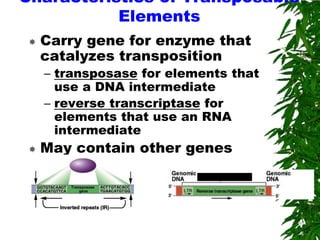
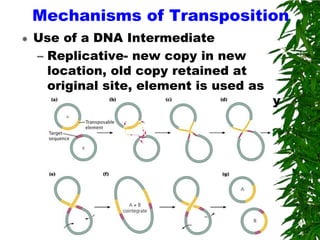
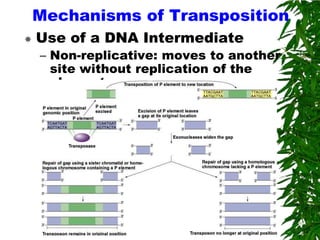
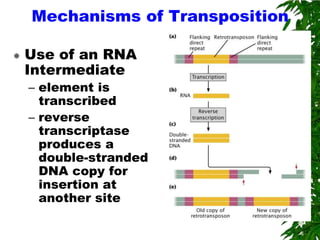
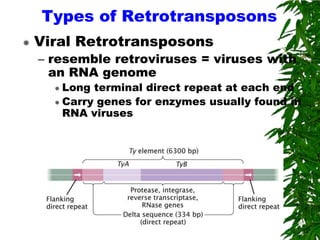
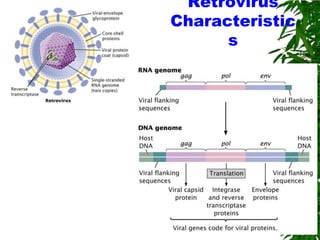
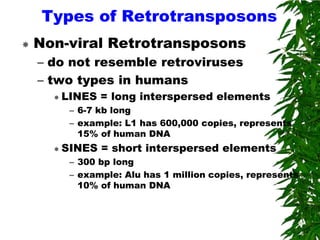
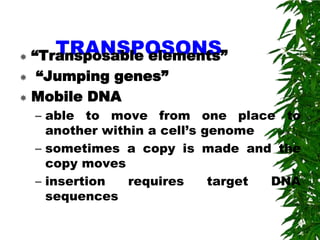
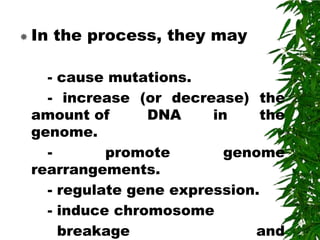
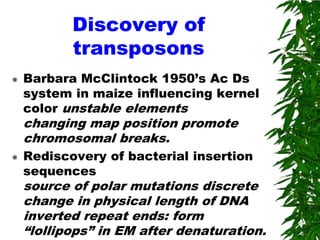
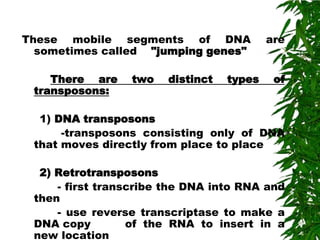
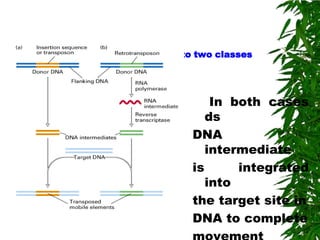
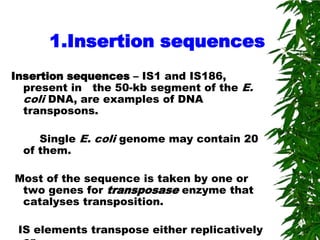
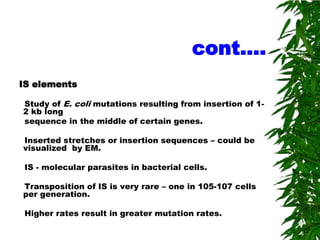
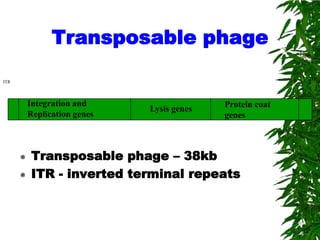
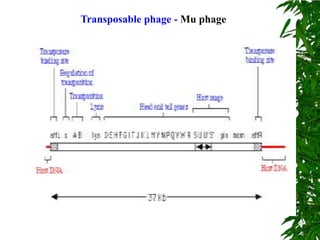
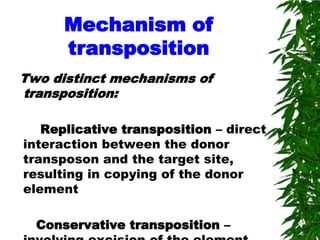
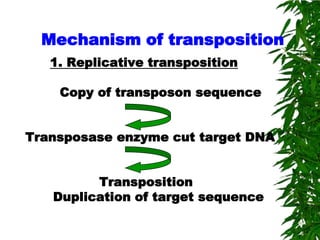
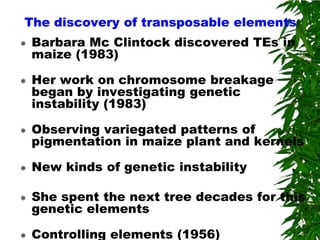
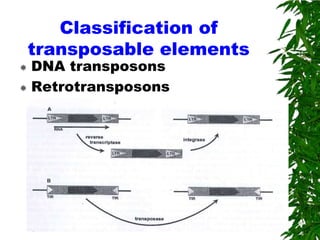
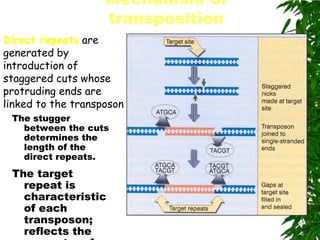
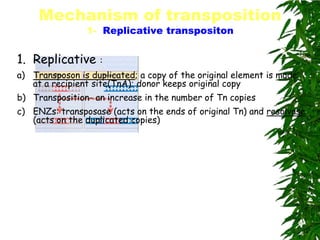
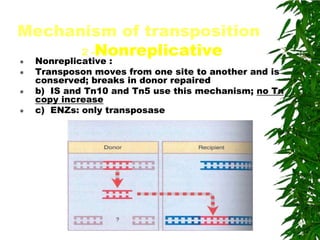
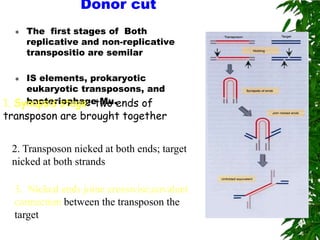
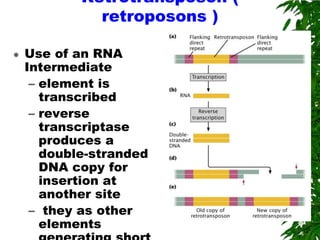
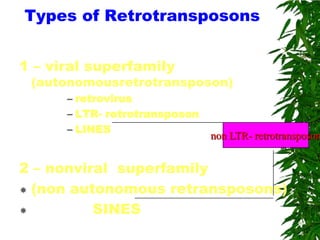
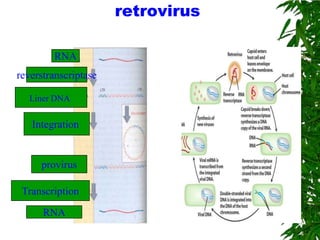
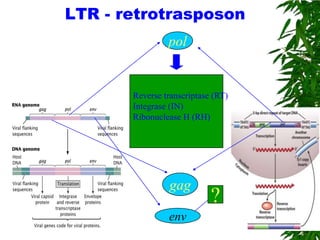
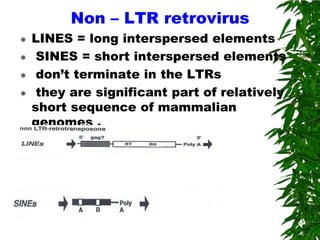
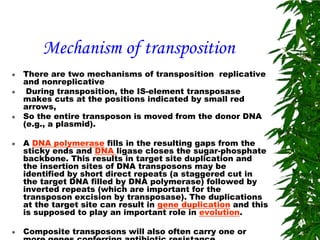
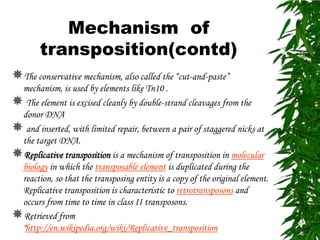
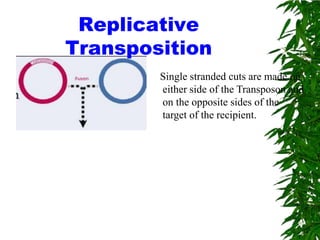
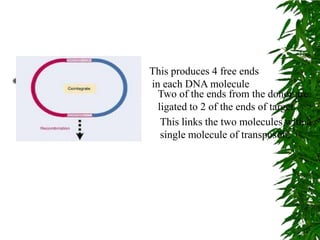
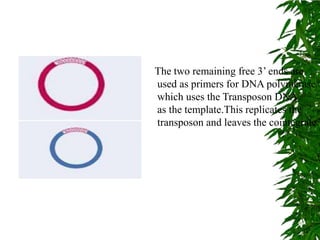
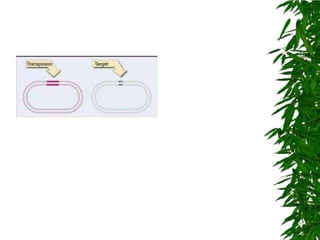
Transposable elements, or transposons, are DNA sequences that can move within genomes. There are two main classes of transposons: those that encode proteins to directly move the DNA element, and retrotransposons that move via an RNA intermediate using reverse transcriptase. Barbara McClintock discovered transposons in the 1940s and 1950s through her studies of maize, where she observed "jumping genes" that caused mosaic color patterns in kernels. Transposons are found in both prokaryotes and eukaryotes and can insert into new locations in genomes, sometimes causing mutations. They have played an important role in genome evolution and can continue to induce genetic variation.


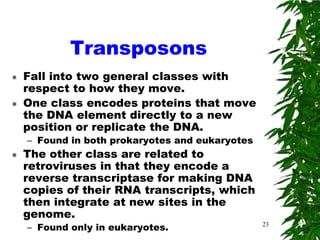

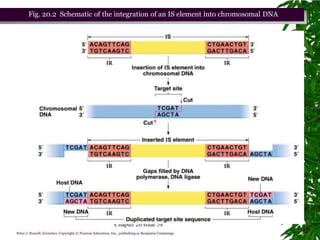
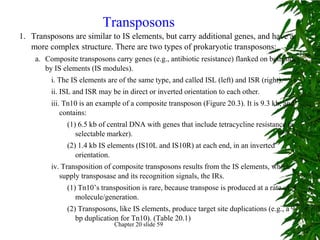
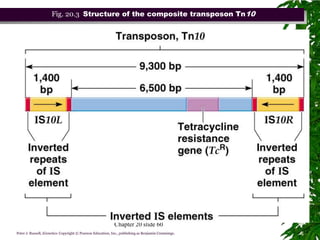
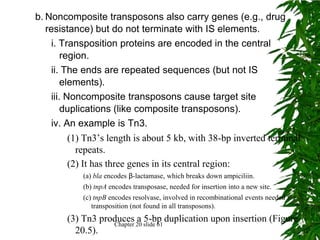
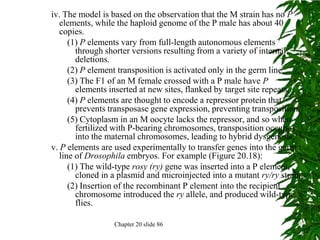
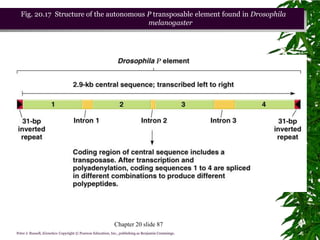
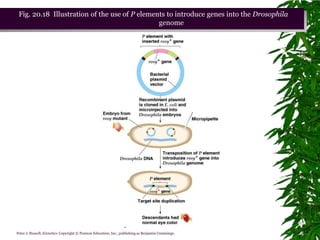
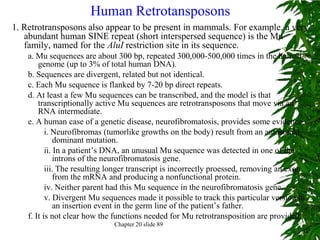
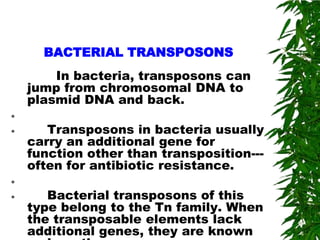
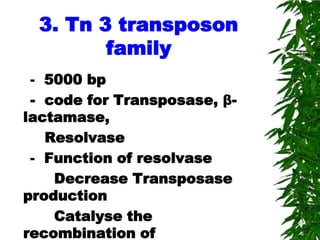
![Bacterial Transposons
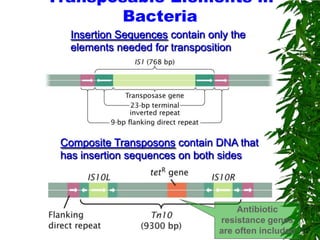
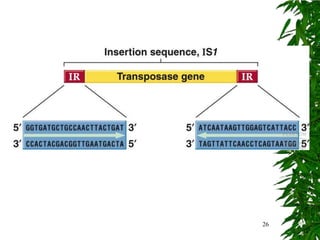
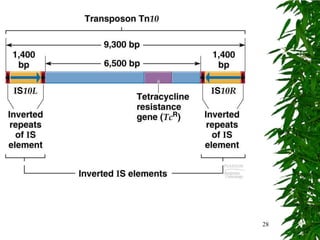
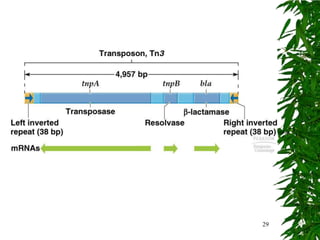
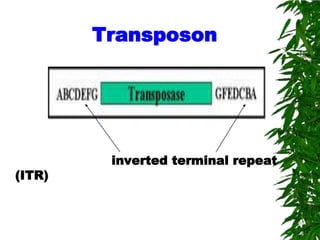
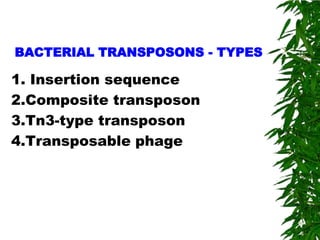
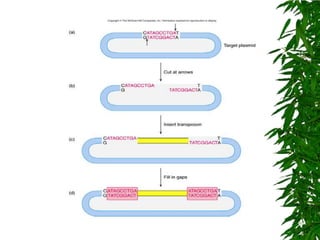
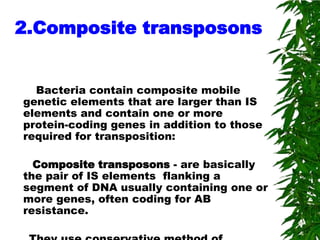
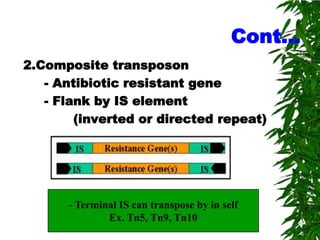
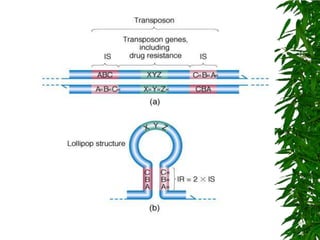
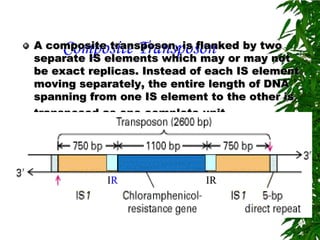
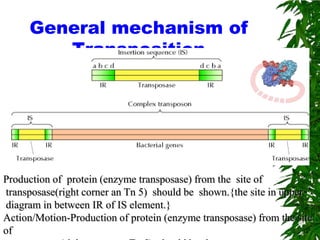
Bacteria contain two types of transposons
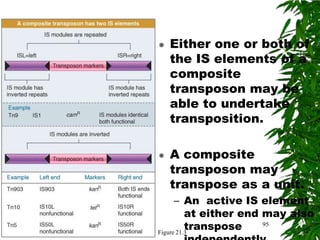
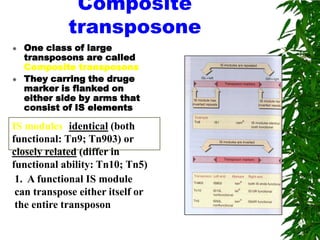
1]Composite mobile genetic elements that are larger than IS
elements and contain one or more protein-coding genes in
addition to those required for transposition.
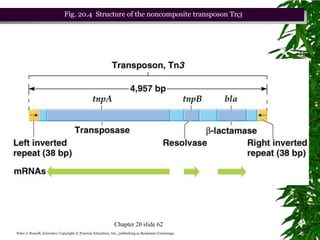
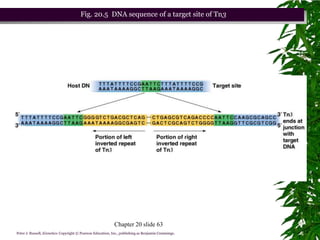
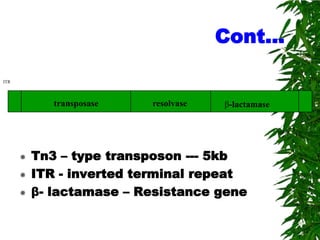
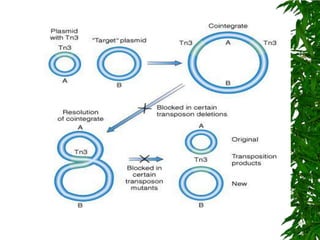
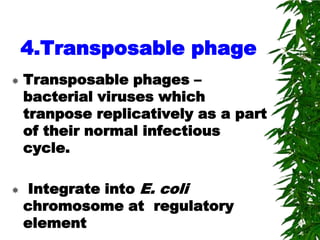
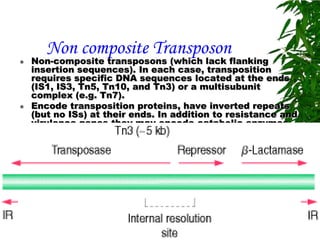
2]Non composite mobile genetic elements are those which
lack IS elements on its ends e.g. is Tn3](https://image.slidesharecdn.com/111-121025145846-phpapp01/85/transposons-complete-ppt-138-320.jpg)




![INSTRUCTIONS SLIDE
1
Questionnaire to test the user
Q1]Define tranposition?
Transposons sequences DNA
2 the genome ofaresingle cell, ofprocessthat can move around to different positions within
a a called transposition.
Q2]Give examples of non composite transposons.
IS1, IS3, Tn5, Tn10, and Tn3) or a multisubunit complex (e.g. Tn7)
Q3]Describe the general structure of bacterial transposons.
3 Ans
4
5](https://image.slidesharecdn.com/111-121025145846-phpapp01/85/transposons-complete-ppt-231-320.jpg)
![ Q4]Explain the mobile genetic elements found in bacteria.
ANS:-
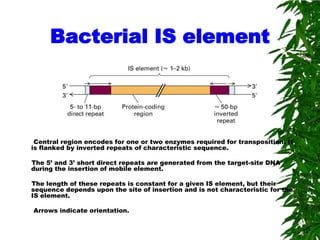
Three of the many types of mobile genetic elements found in
bacteria. Each of these DNA elements contains a gene that
encodes a transposase, an enzyme that conducts at least some of
the DNA breakage and joining reactions needed for the element to
move. Each mobile element also carries short DNA sequences
(indicated in red) that are recognized only by the transposase
encoded by that element and are necessary for movement of the
element. In addition, two of the three mobile elements shown carry
genes that encode enzymes that inactivate the antibiotics
ampicillin (ampR) and tetracycline (tetR). The transposable
element Tn10, shown in the bottom diagram, is thought to have
evolved from the chance landing of two short mobile elements on
either side of a tetracyclin-resistance gene; the wide use of
tetracycline as an antibiotic has aided the spread of this gene
through bacterial populations. The three mobile elements shown
are all examples of DNA-only transposons](https://image.slidesharecdn.com/111-121025145846-phpapp01/85/transposons-complete-ppt-233-320.jpg)
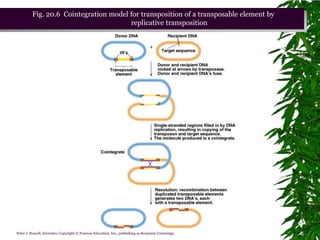
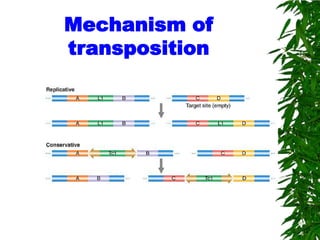
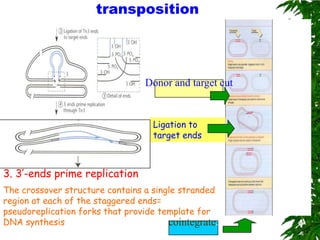
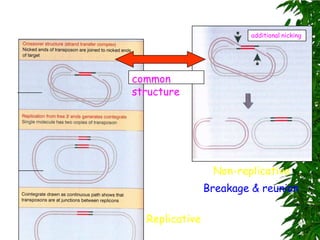
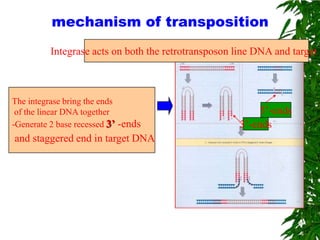
![ Q5]Illustrate the mechanism
of transposition in
transposons.
ANS:-](https://image.slidesharecdn.com/111-121025145846-phpapp01/85/transposons-complete-ppt-234-320.jpg)