The Demographic Transition ModelAS Geography
Learning ObjectivesTo learn the concepts behind the DTMDraw, label and interpret pop’n pyramidsHow population pyramids can be used to predict pop’n changeHow various pop’n structures can cause issues for countries concerned
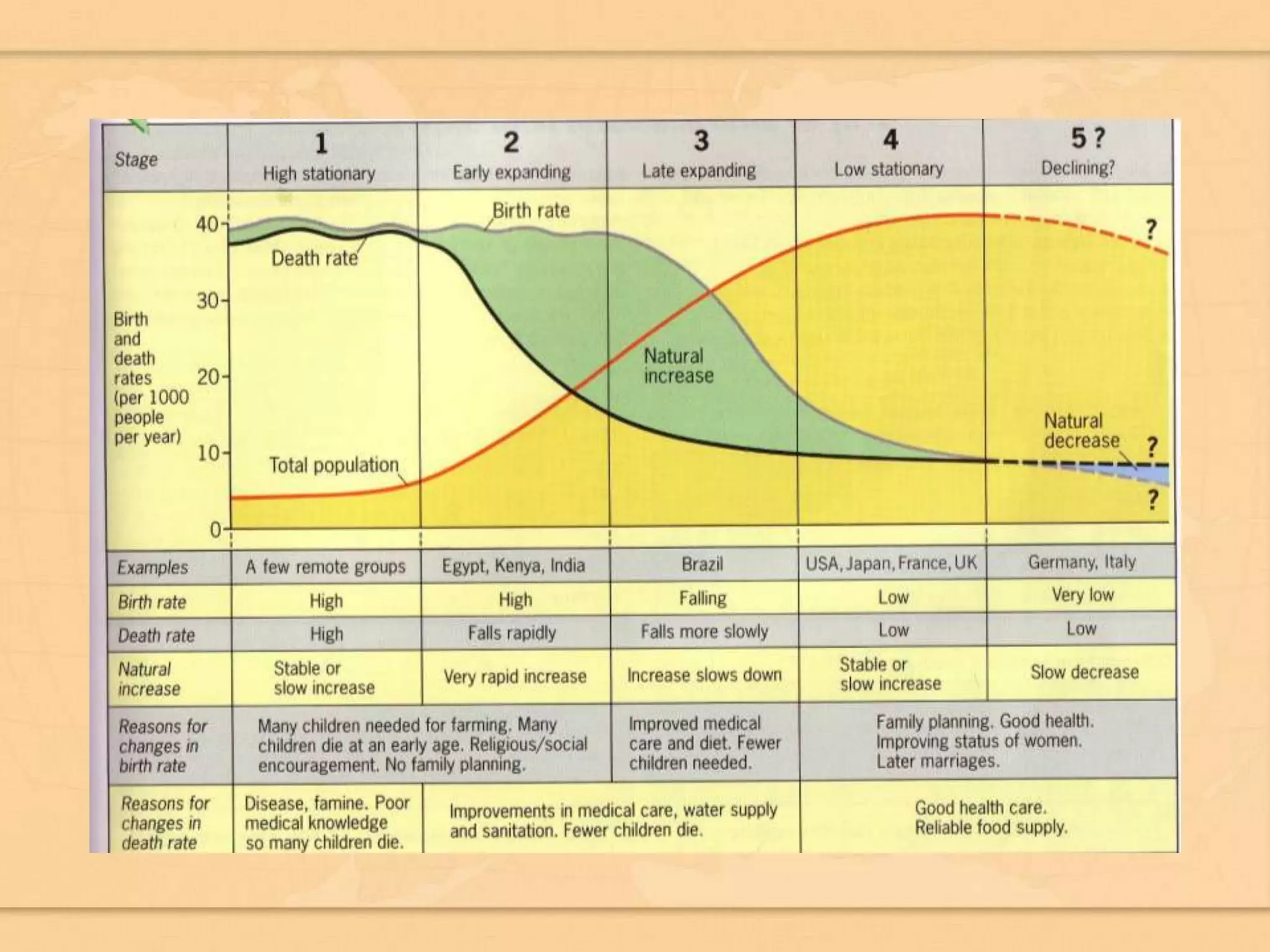
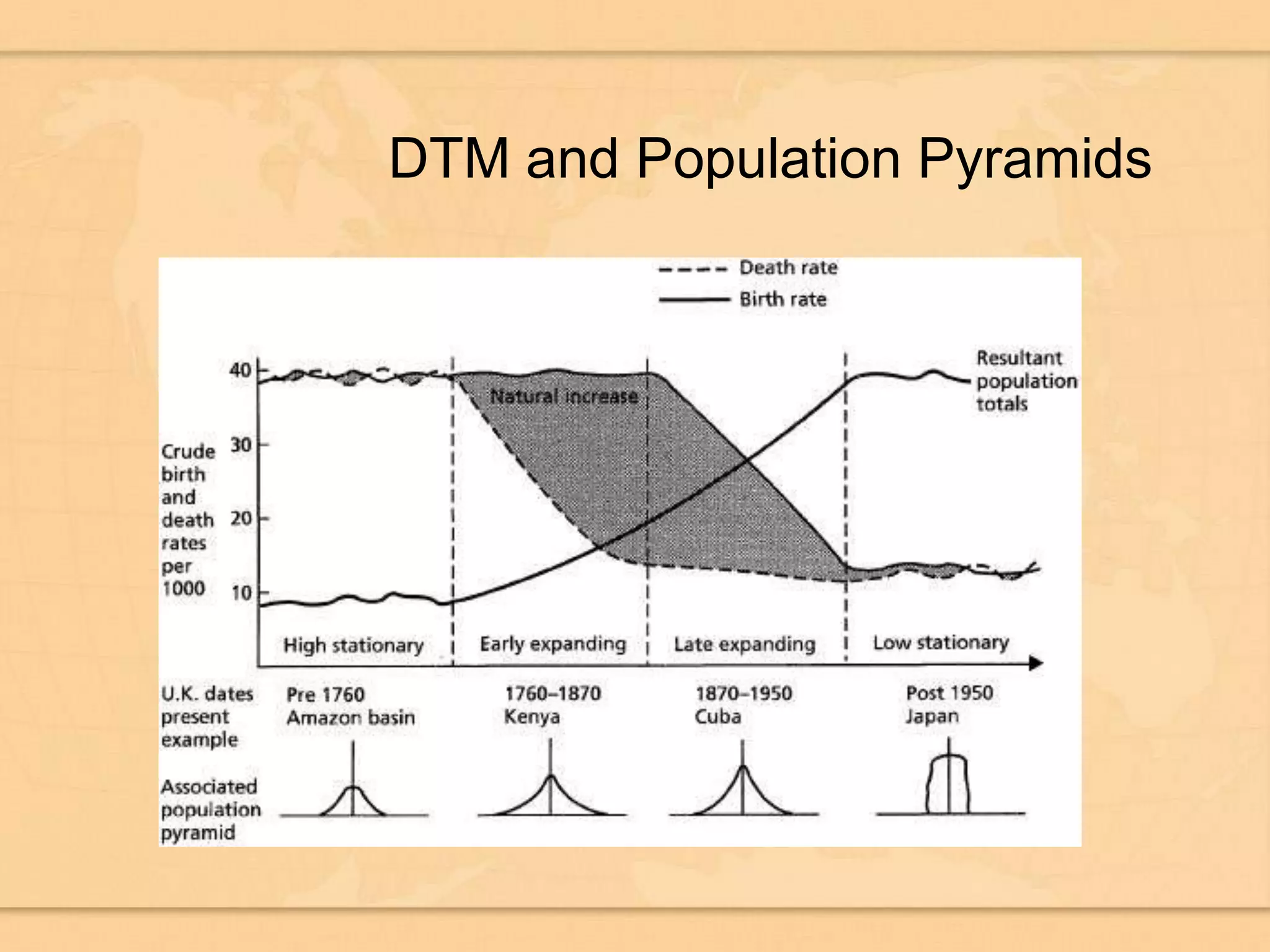
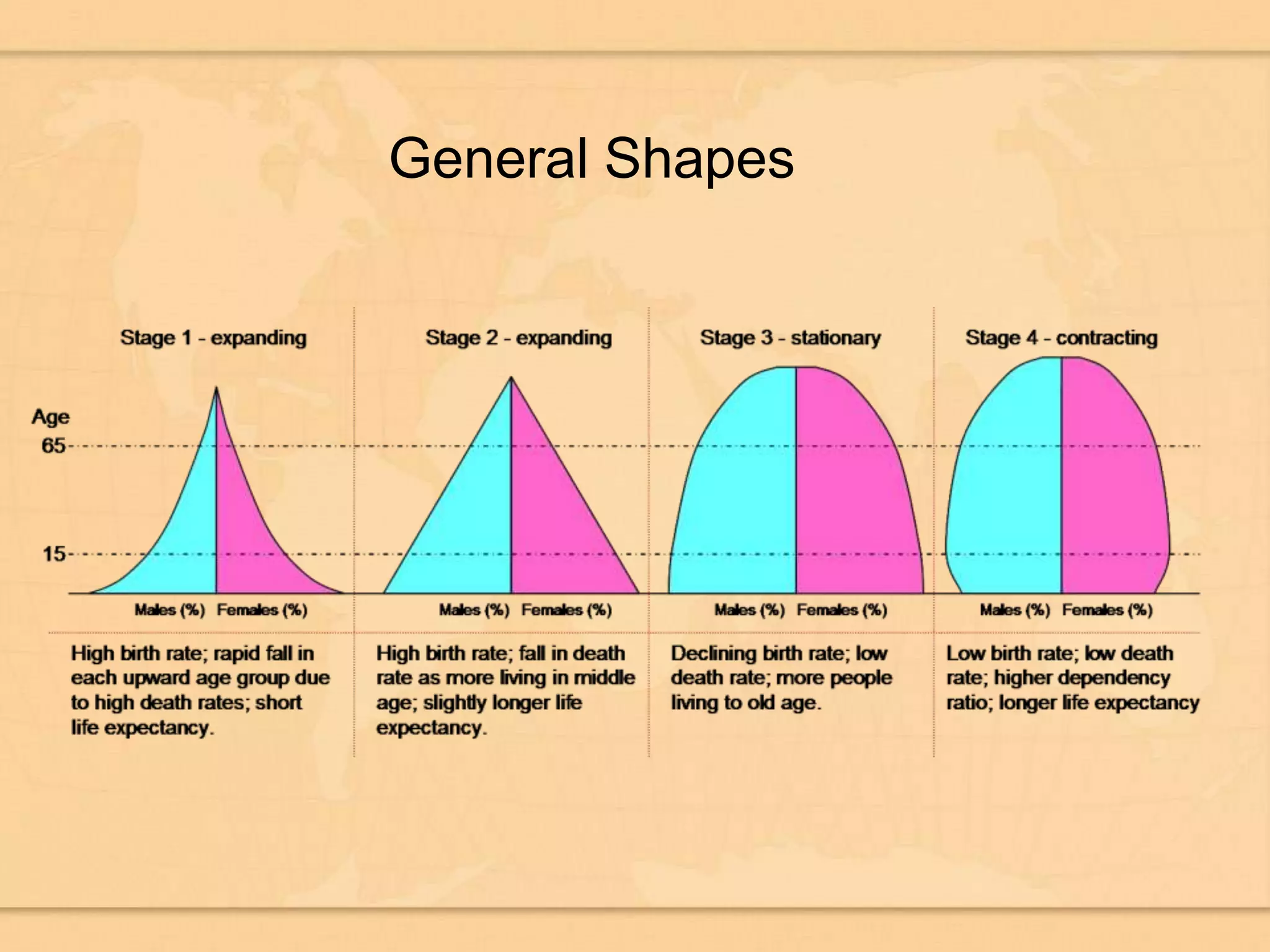
What is itThe DTM is a simple diagramIt is a model that shows pop’n change over timeIt is a simplified version of realityIt suggests all countries go through 4 – 5 stages of developmentIt can be used to predict population changes over time
StrengthsIt’s dynamic showing changes over timeIt describes effectively what happened in the UKMany industrialised countries went through similar stages in Europe and N. AmericaSome NIC’s (S. Korea, Singapore) Also seem to go through similar stages but faster than the UK didIt helps explain what happened and why in a particular sequence
WeaknessesNot very relevant to non industrialised countriesModel assumes stage 2 followed from industrialisation (For many this was not the case)The factors that caused falls in DR were often imported from EuropeAssumes stage 3 follows several decades after stage 2 and that DR fell as a consequence of changes brought about by changes in BROften the onset of stage 3 held back by attitudes to family size, birth control, status, religion
WeaknessesSome Govt’s sped up the difference between stage 2 and 3 by introducing one child policies (China)Original model only contained 4 stages now 5 to show where DR is exceeding BR (Ageing pop’n)DR risen rapidly due to diseases e.g. Africa and Aids – does not help predict this.
DTM and Population Pyramids
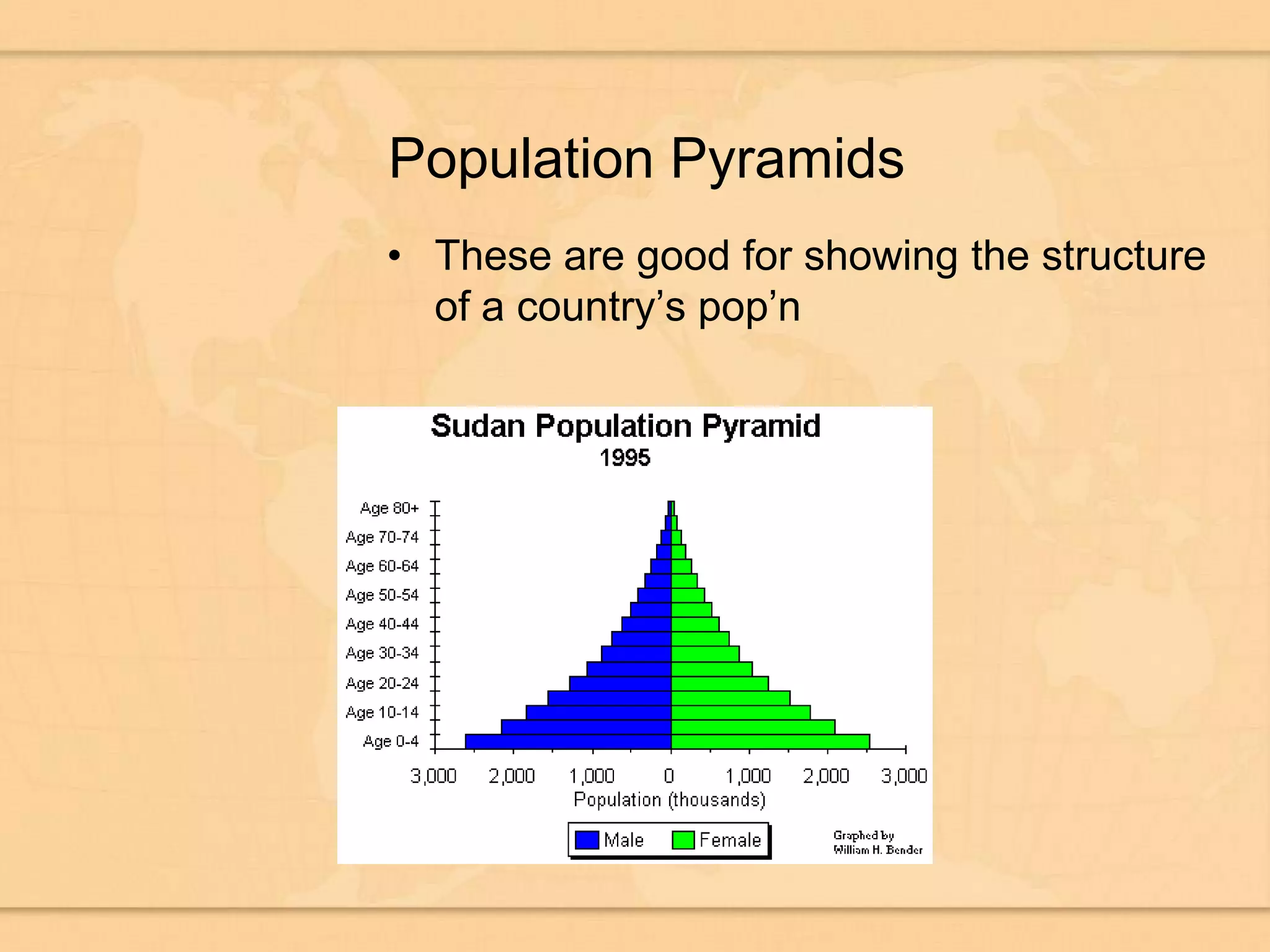
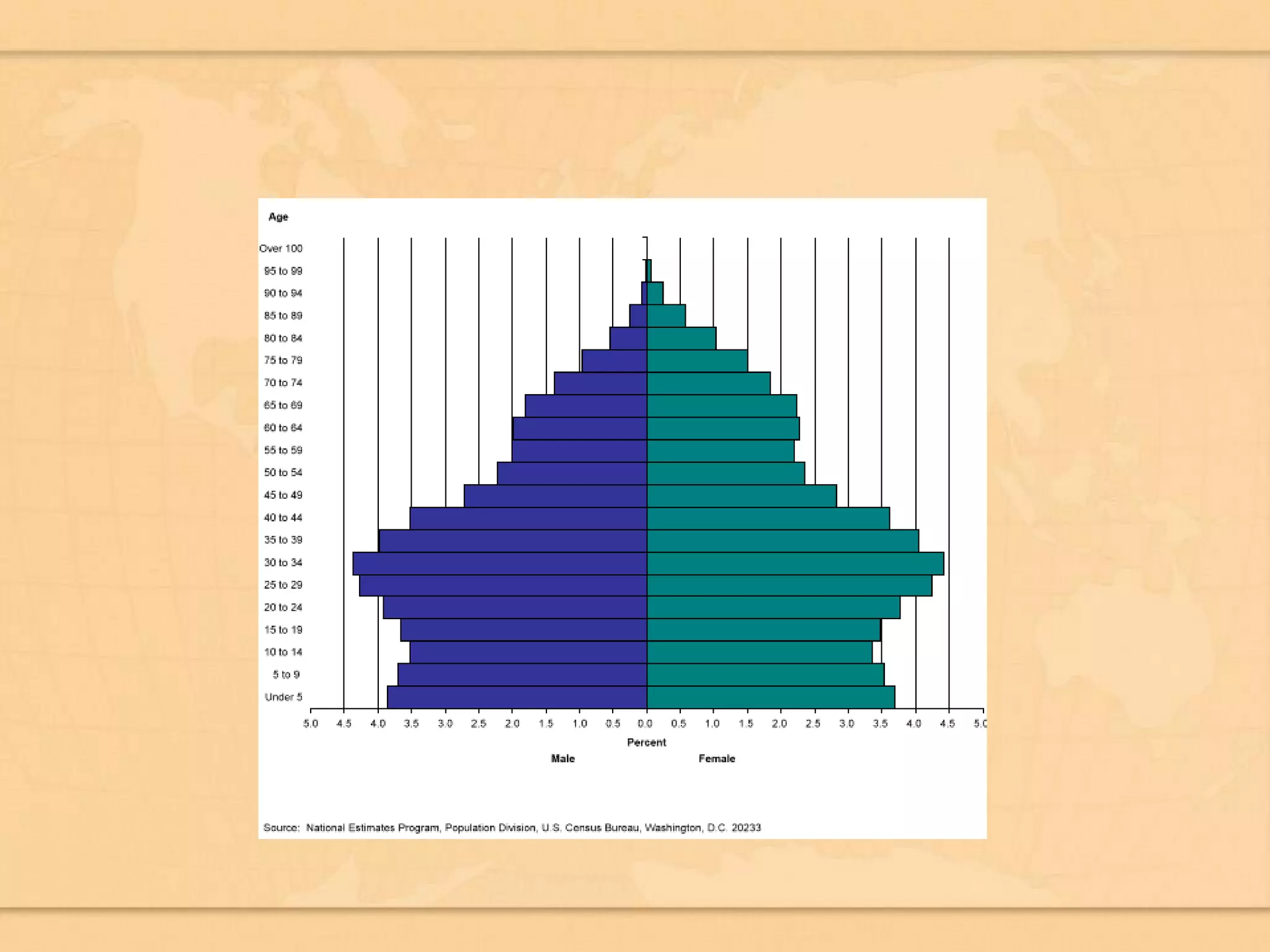
Population PyramidsThese are good for showing the structure of a country’s pop’n
Population Pyramids can show:The results of Birth minus deaths in a specific age groupThe effects of migrationThe effects of war, famine or diseaseAn indication of life expectancy
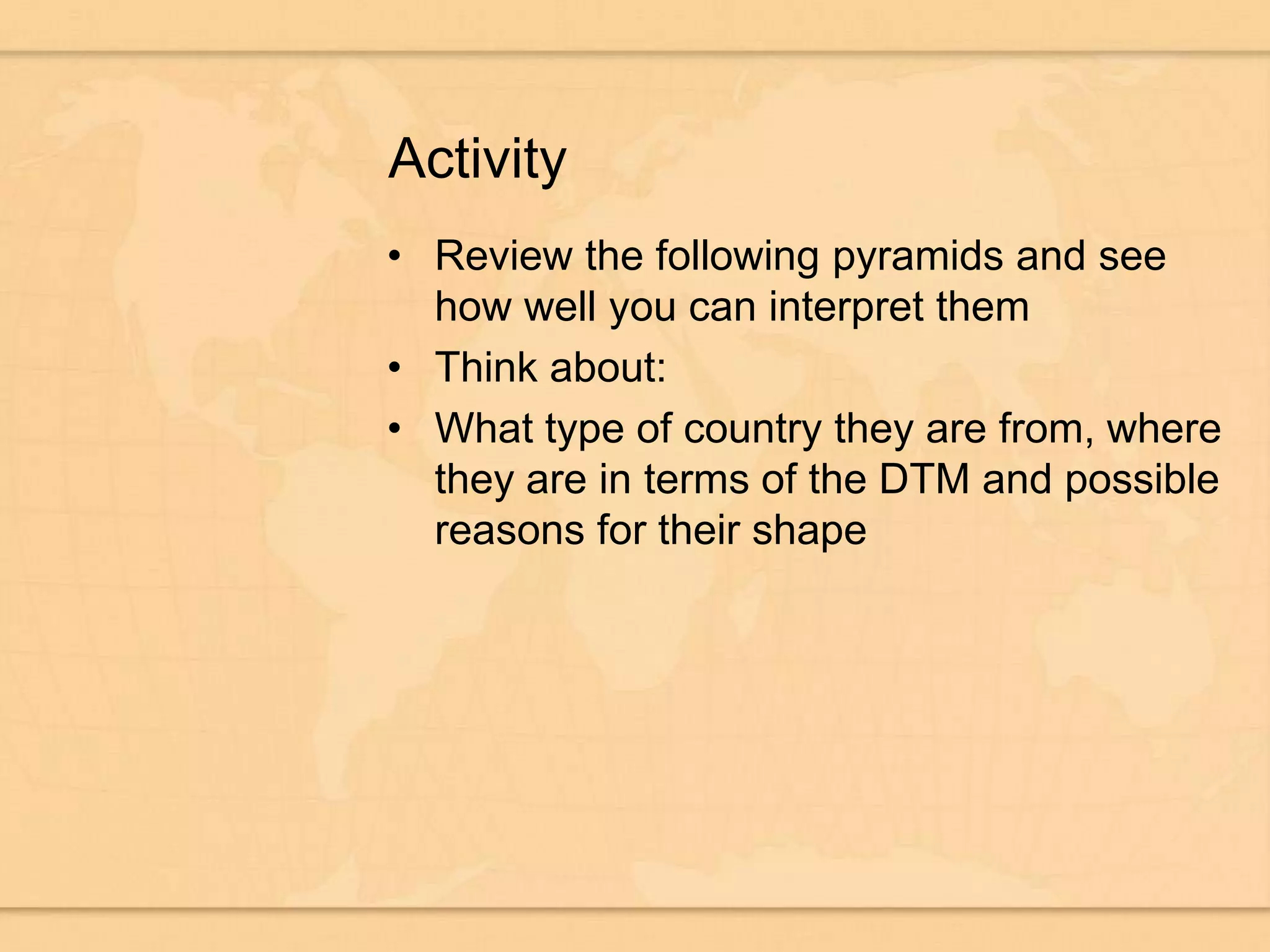
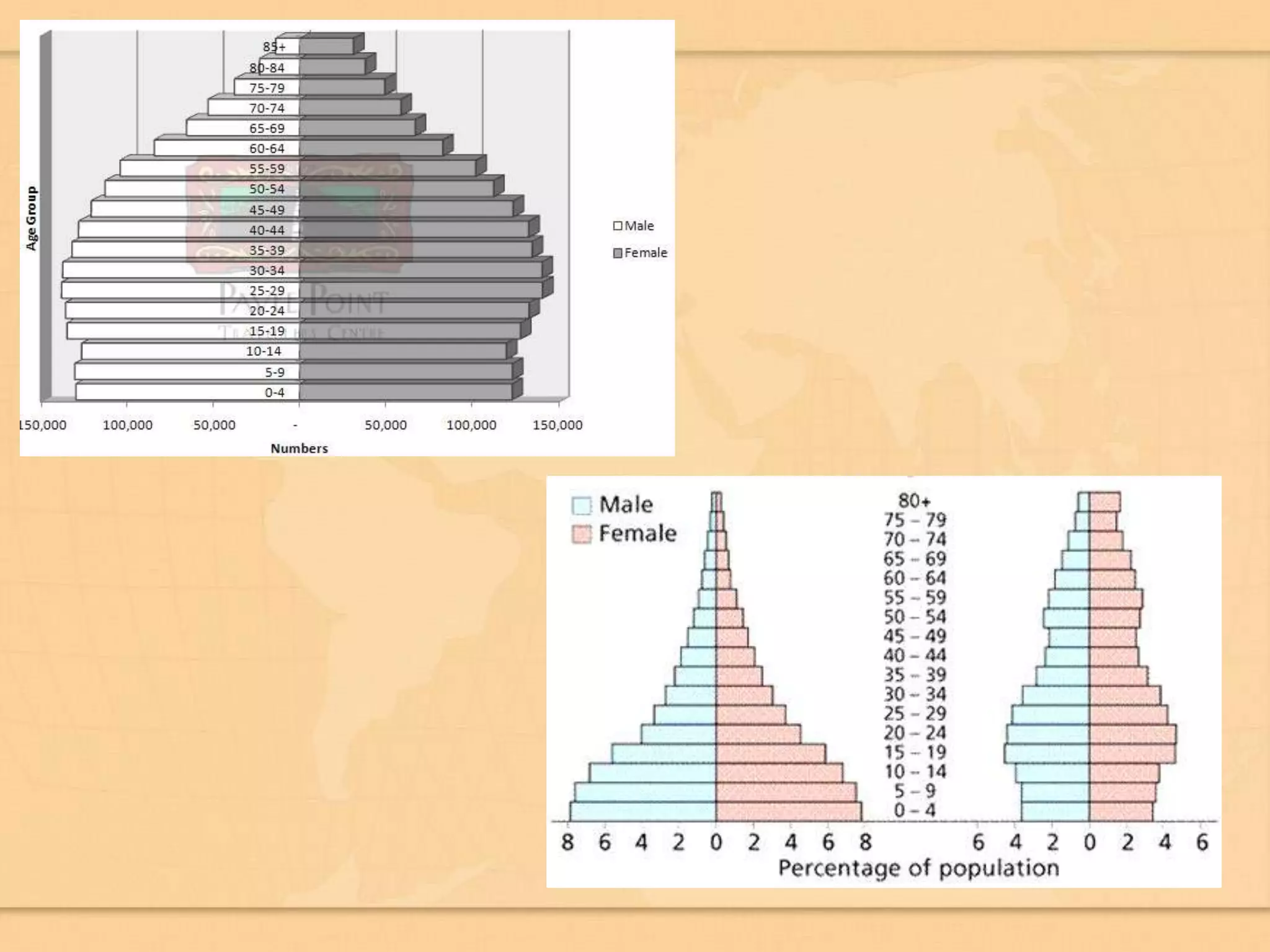
ActivityReview the following pyramids and see how well you can interpret themThink about:What type of country they are from, where they are in terms of the DTM and possible reasons for their shape
General Shapes
Age Structures and ProblemsAgeing populationYoung populationLow Life expectancy populationWhat problems can you foresee with these kind of populations?
Learning ObjectivesTo learn the concepts behind the DTM

The Demographic Transition Model

  • 1.
  • 2.
    Learning ObjectivesTo learnthe concepts behind the DTMDraw, label and interpret pop’n pyramidsHow population pyramids can be used to predict pop’n changeHow various pop’n structures can cause issues for countries concerned
  • 3.
    What is itTheDTM is a simple diagramIt is a model that shows pop’n change over timeIt is a simplified version of realityIt suggests all countries go through 4 – 5 stages of developmentIt can be used to predict population changes over time
  • 5.
    StrengthsIt’s dynamic showingchanges over timeIt describes effectively what happened in the UKMany industrialised countries went through similar stages in Europe and N. AmericaSome NIC’s (S. Korea, Singapore) Also seem to go through similar stages but faster than the UK didIt helps explain what happened and why in a particular sequence
  • 6.
    WeaknessesNot very relevantto non industrialised countriesModel assumes stage 2 followed from industrialisation (For many this was not the case)The factors that caused falls in DR were often imported from EuropeAssumes stage 3 follows several decades after stage 2 and that DR fell as a consequence of changes brought about by changes in BROften the onset of stage 3 held back by attitudes to family size, birth control, status, religion
  • 7.
    WeaknessesSome Govt’s spedup the difference between stage 2 and 3 by introducing one child policies (China)Original model only contained 4 stages now 5 to show where DR is exceeding BR (Ageing pop’n)DR risen rapidly due to diseases e.g. Africa and Aids – does not help predict this.
  • 8.
  • 9.
    Population PyramidsThese aregood for showing the structure of a country’s pop’n
  • 10.
    Population Pyramids canshow:The results of Birth minus deaths in a specific age groupThe effects of migrationThe effects of war, famine or diseaseAn indication of life expectancy
  • 11.
    ActivityReview the followingpyramids and see how well you can interpret themThink about:What type of country they are from, where they are in terms of the DTM and possible reasons for their shape
  • 14.
  • 15.
    Age Structures andProblemsAgeing populationYoung populationLow Life expectancy populationWhat problems can you foresee with these kind of populations?
  • 16.
    Learning ObjectivesTo learnthe concepts behind the DTM
  • 17.
    Draw, label andinterpret pop’n pyramids
  • 18.
    How population pyramidscan be used to predict pop’n change
  • 19.
    How various pop’nstructures can cause issues for countries concerned