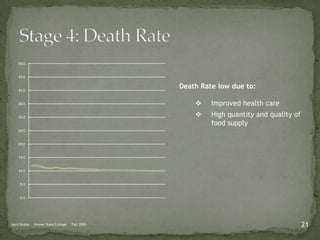
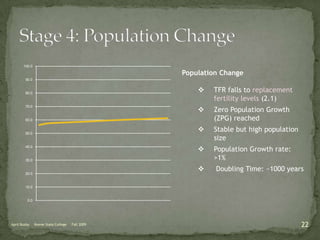
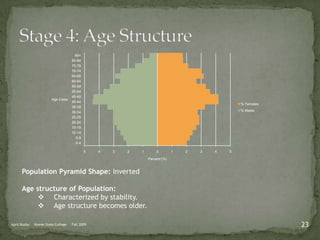
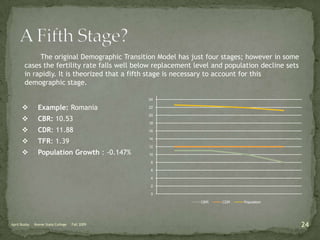
Keene State CollegeHuman Cultural MosaicISGEOG203 Fall ‘09Professor: Dr. RydantCreated by: April Buzby Supplemental InstructorThe Demographic Transition
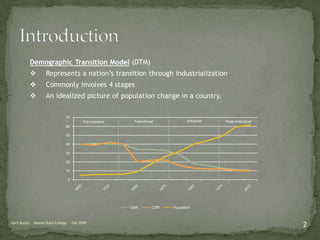
IntroductionDemographic Transition Model(DTM) Represents a nation’s transition through industrialization
Commonly involves 4 stages
An idealized picture of population change in a country. April Buzby     Keene State College     Fall 20092
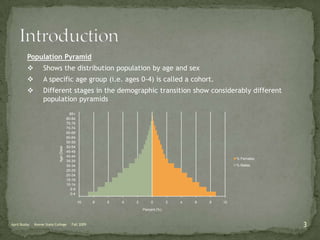
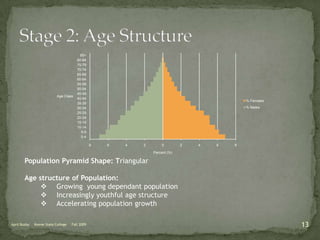
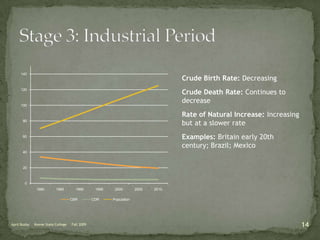
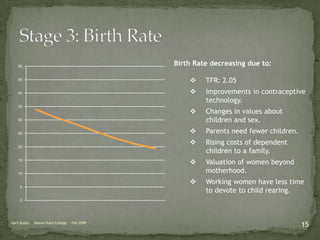
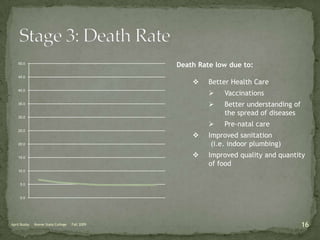
IntroductionApril Buzby     Keene State College     Fall 2009Population PyramidShows the distribution population by age and sex
A specific age group (i.e. ages 0-4) is called a cohort.
Different stages in the demographic transition show considerably different population pyramids3
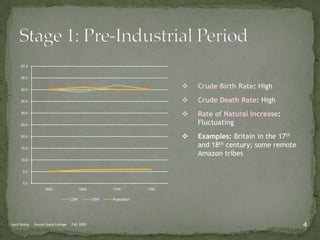
Stage 1: Pre-Industrial PeriodApril Buzby     Keene State College     Fall 2009Crude Birth Rate: High
Crude Death Rate: High
Rate of Natural Increase: Fluctuating
Examples: Britain in the 17th and 18th century; some remote Amazon tribes4
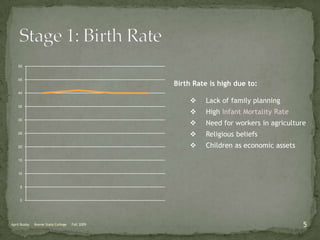
Stage 1: Birth RateApril Buzby     Keene State College     Fall 2009Birth Rate is high due to:Lack of family planning
High Infant Mortality Rate
Need for workers in agriculture
Religious beliefs
Children as economic assets5
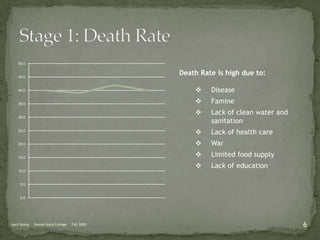
Stage 1: Death RateApril Buzby     Keene State College     Fall 2009Death Rate is high due to:Disease
Famine
Lack of clean water and sanitation
Lack of health care
War
Limited food supply
Lack of education6
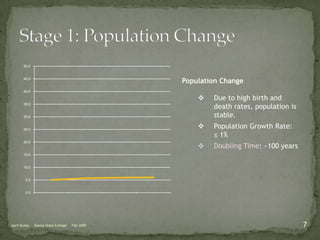
Stage 1: Population ChangePopulation ChangeDue to high birth and death rates, population is stable.
Population Growth Rate:  ≤ 1%
Doubling Time: ~100 yearsApril Buzby     Keene State College     Fall 20097
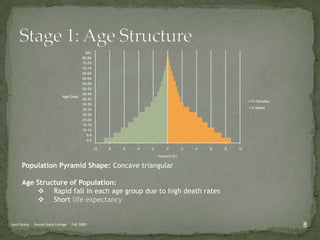
Stage 1: Age StructureApril Buzby     Keene State College     Fall 2009Population Pyramid Shape: Concave triangularAge Structure of Population:Rapid fall in each age group due to high death rates
Short life expectancy8
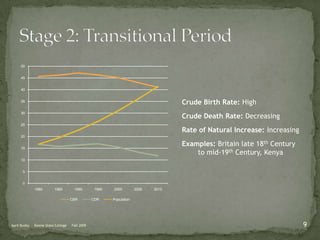
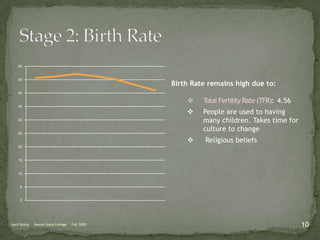
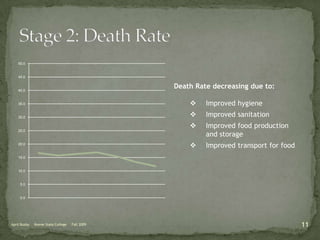
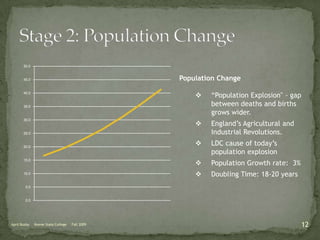
Stage 2: Transitional PeriodCrude Birth Rate: HighCrude Death Rate: DecreasingRate of Natural Increase: IncreasingExamples: Britain late 18th Century to mid-19th Century, Kenya April Buzby     Keene State College     Fall 20099

The Demographic Transition Model