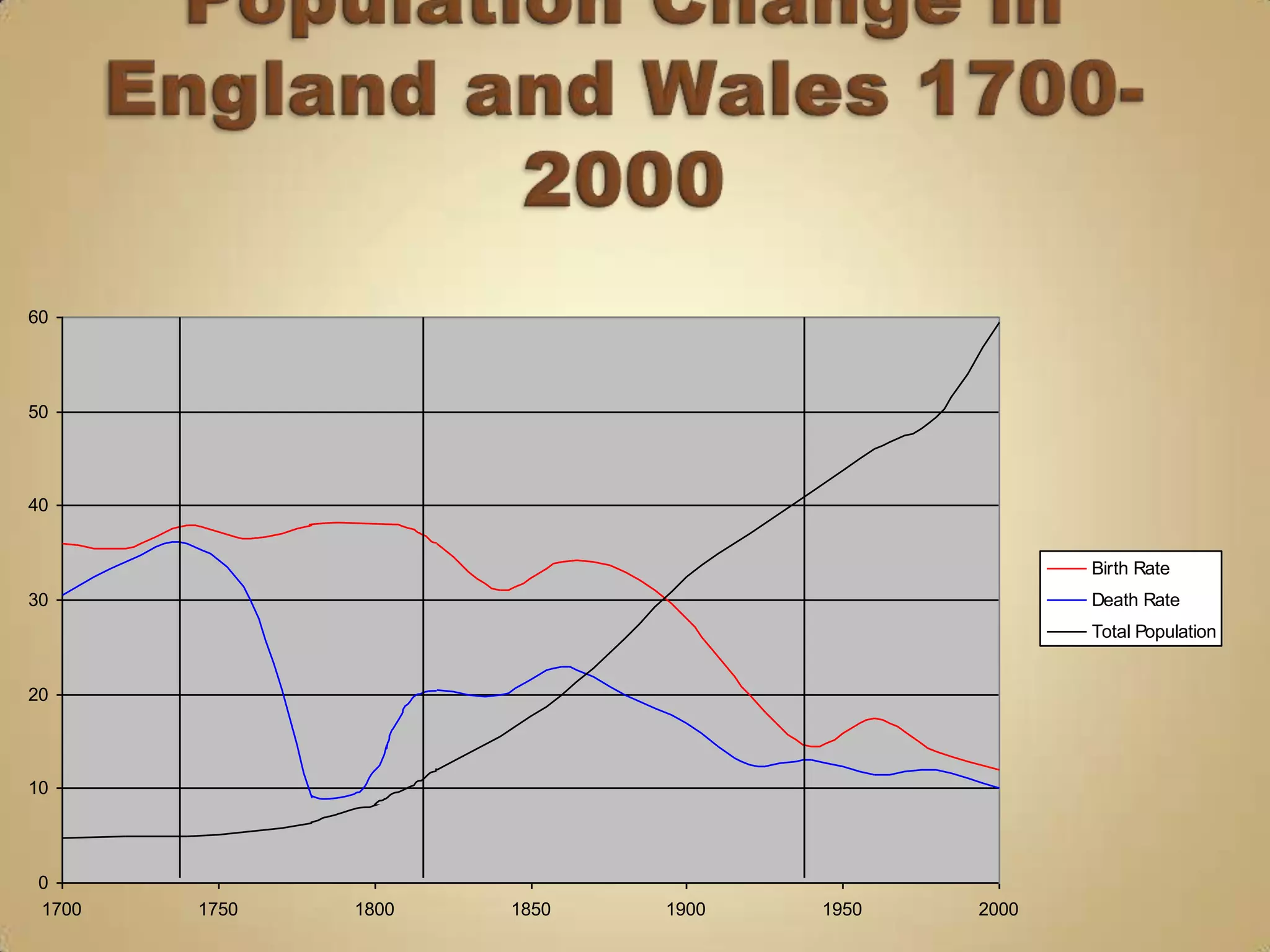
60


50


40


                                                 Birth Rate
30                                               Death Rate
                                                 Total Population


20


10


0
1700   1750   1800   1850   1900   1950   2000
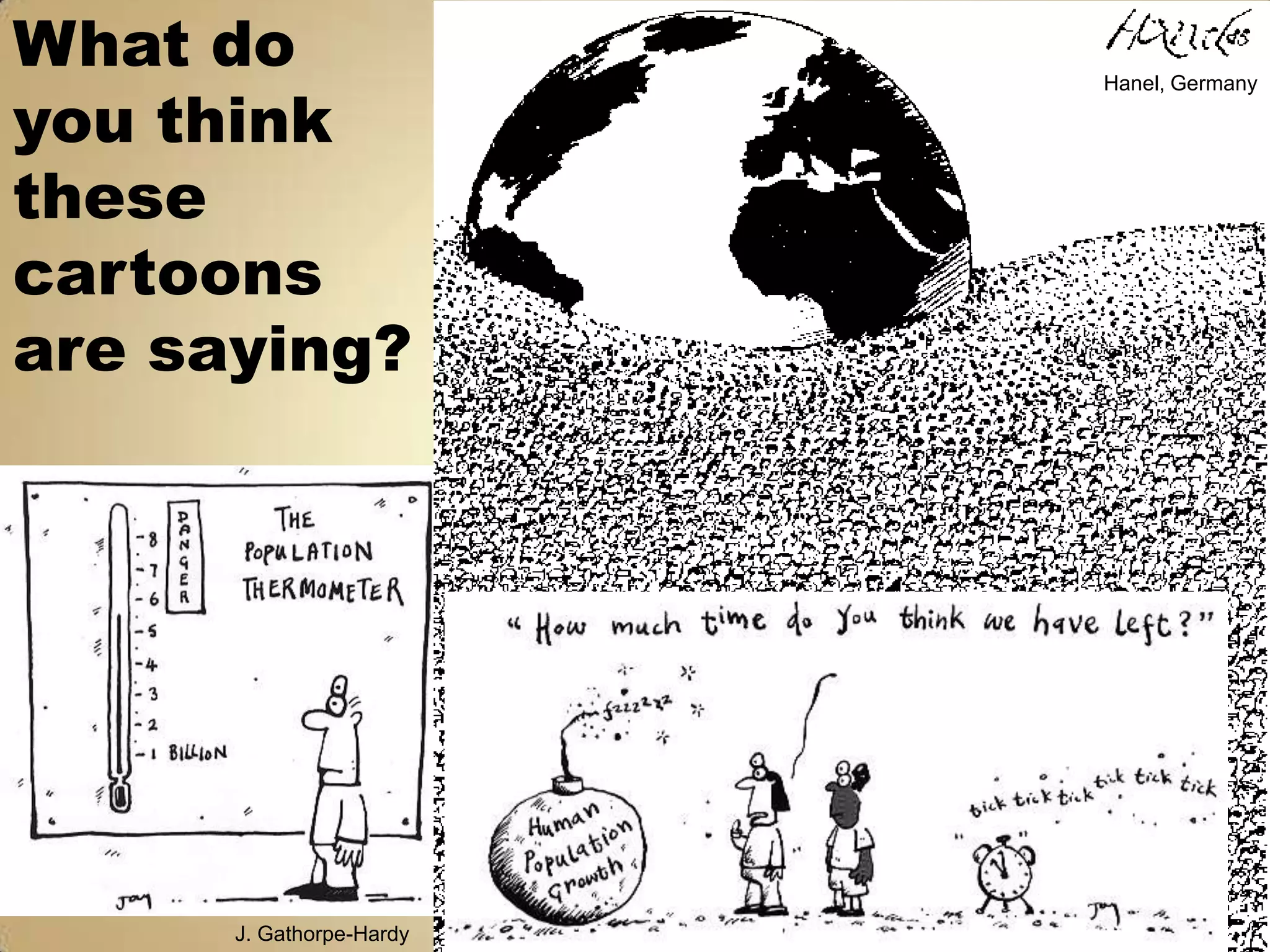
What do
you think
                          Hanel, Germany


these
cartoons
are saying?


      J. Gathorpe-Hardy
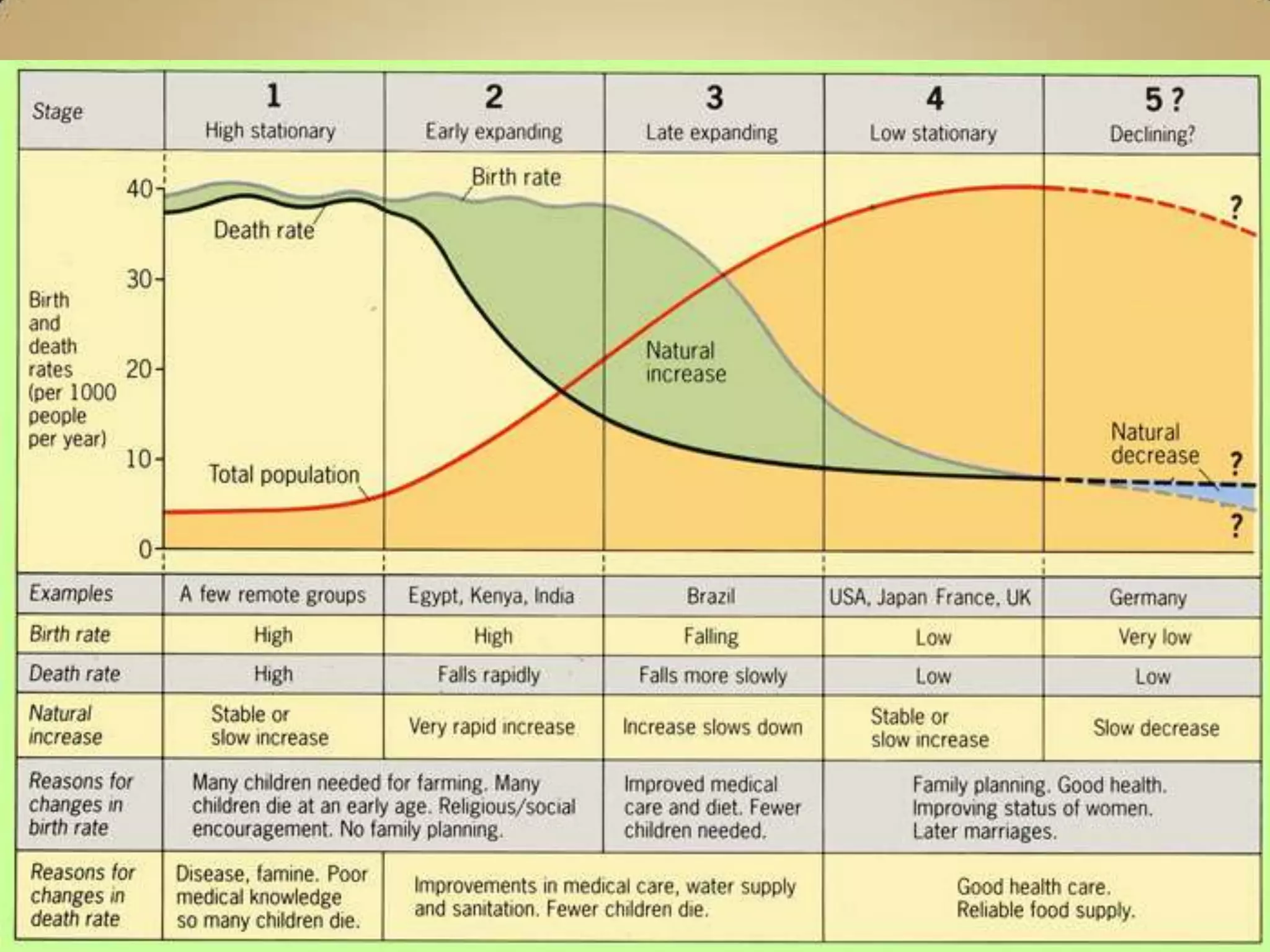
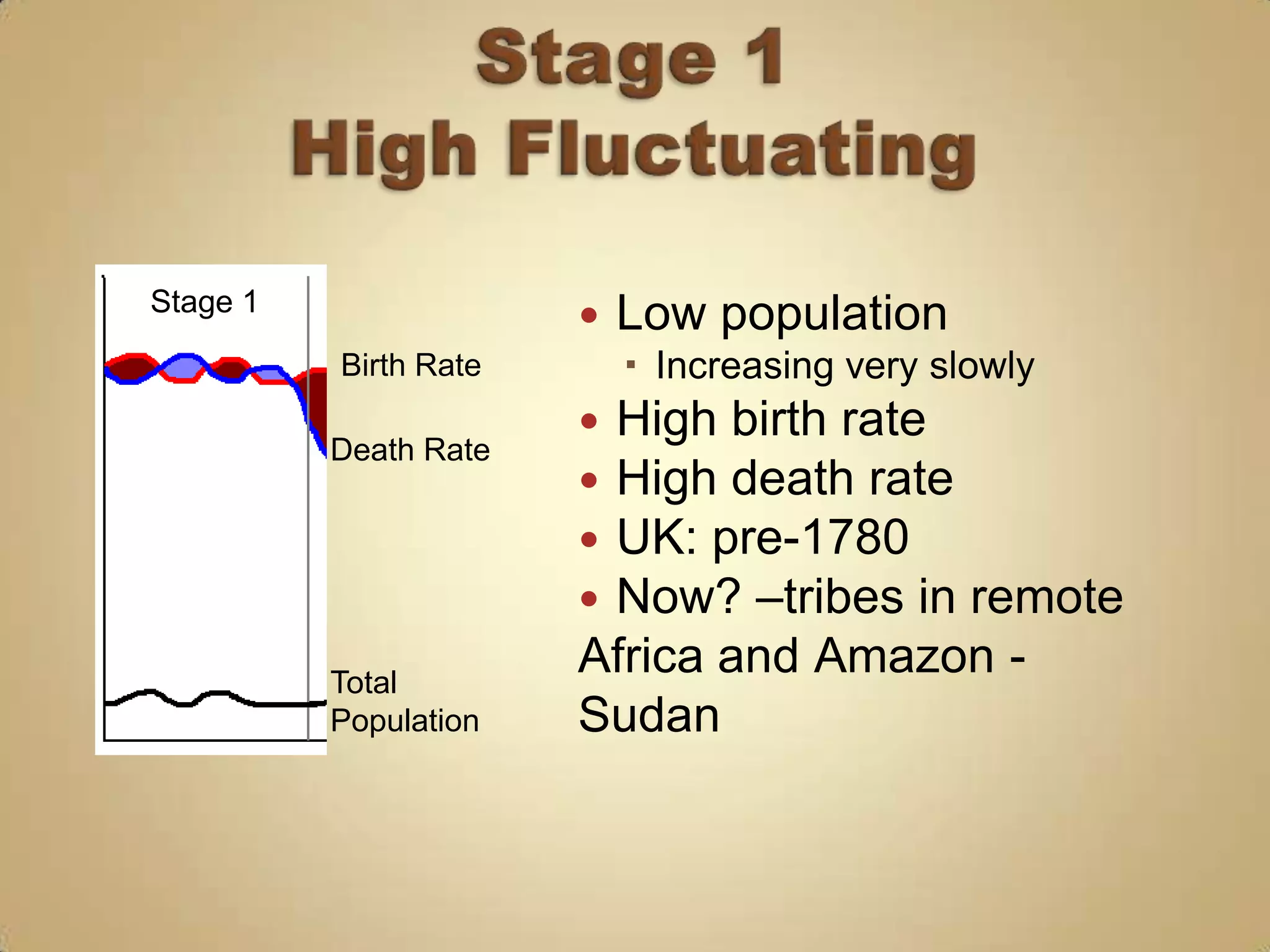
Stage 1
                          Low population
          Birth Rate        Increasing very slowly
                       High birth rate
          Death Rate
                       High death rate
                       UK: pre-1780
                       Now? –tribes in remote
          Total
                       Africa and Amazon -
          Population   Sudan
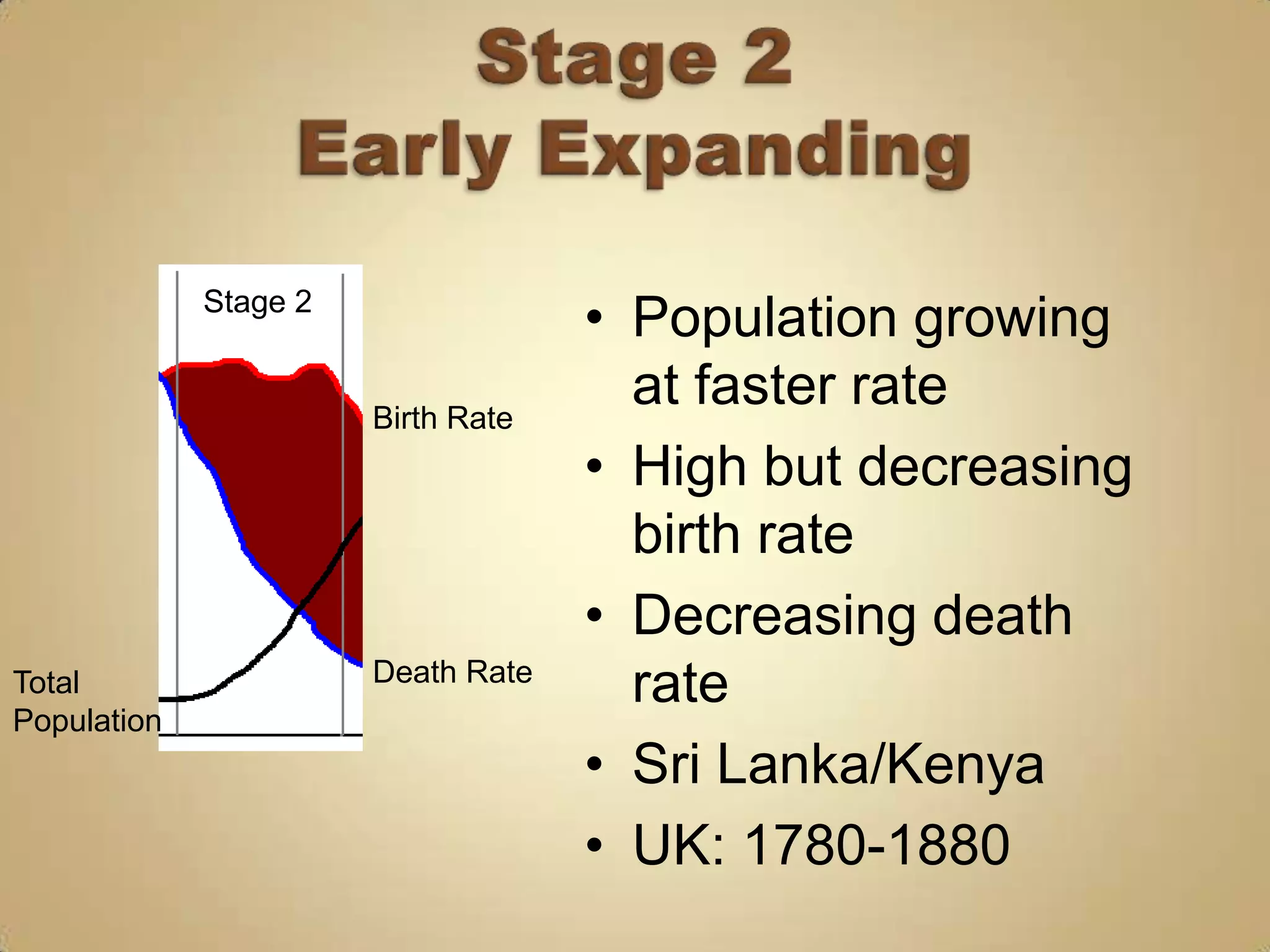
Stage 2
                                    • Population growing
                       Birth Rate
                                      at faster rate
                                    • High but decreasing
                                      birth rate
                                    • Decreasing death
                       Death Rate
Total                                 rate
Population
                                    • Sri Lanka/Kenya
                                    • UK: 1780-1880
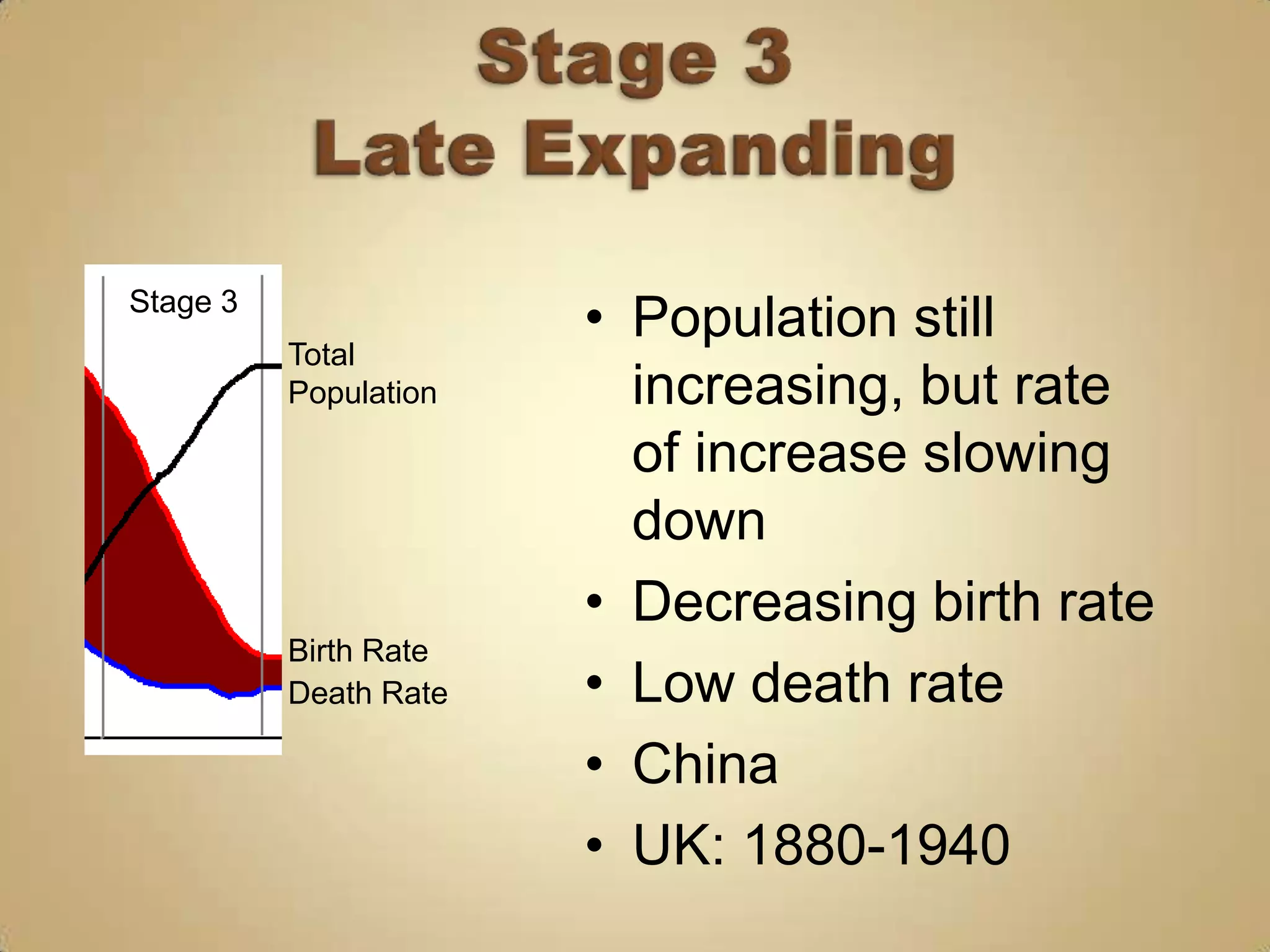
Stage 3
                       • Population still
          Total
          Population     increasing, but rate
                         of increase slowing
                         down
                       • Decreasing birth rate
          Birth Rate
          Death Rate   • Low death rate
                       • China
                       • UK: 1880-1940
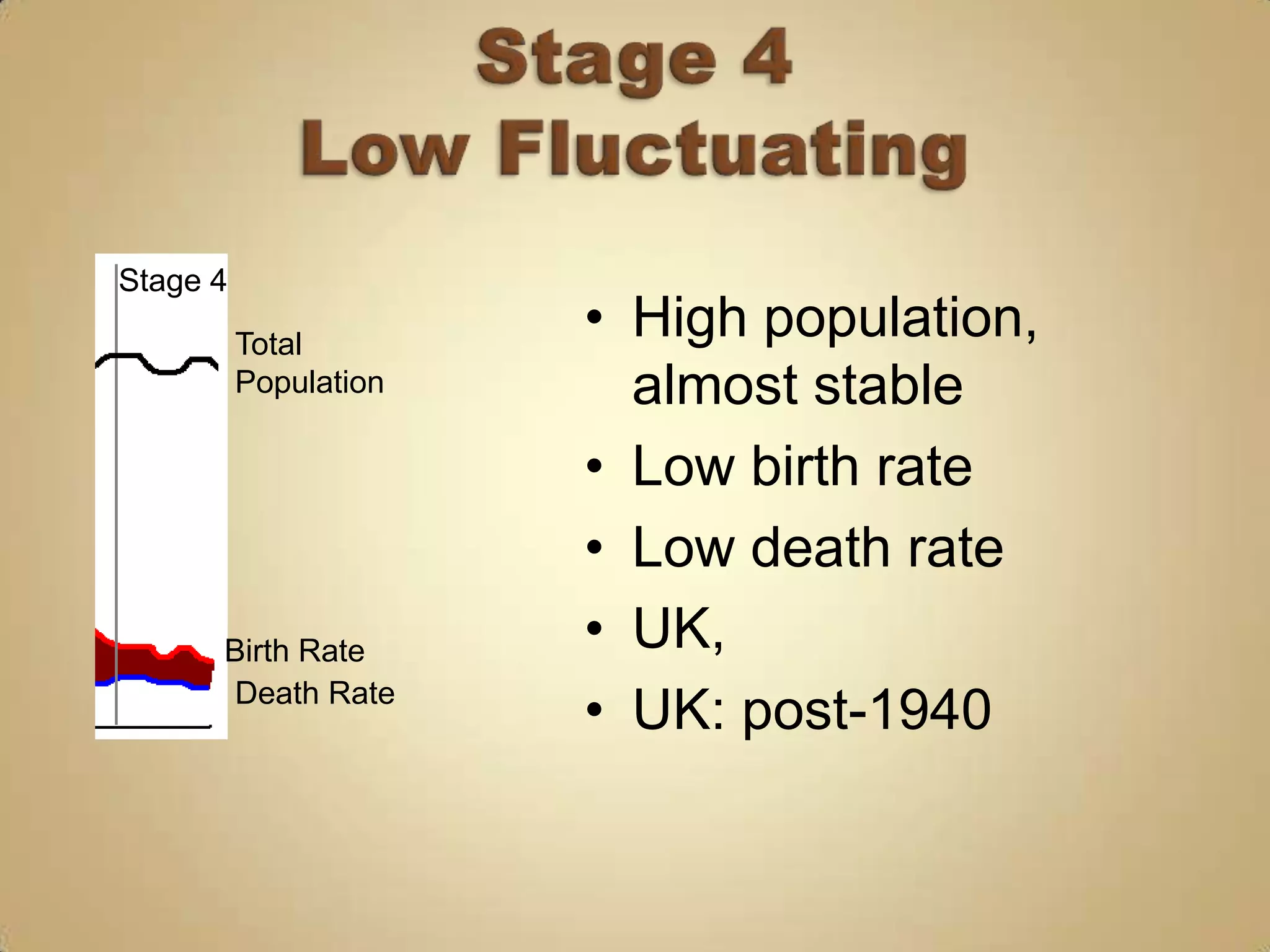
Stage 4

          Total
                       • High population,
          Population     almost stable
                       • Low birth rate
                       • Low death rate
      Birth Rate       • UK,
      Death Rate
                       • UK: post-1940
?


                        ?
                        ?


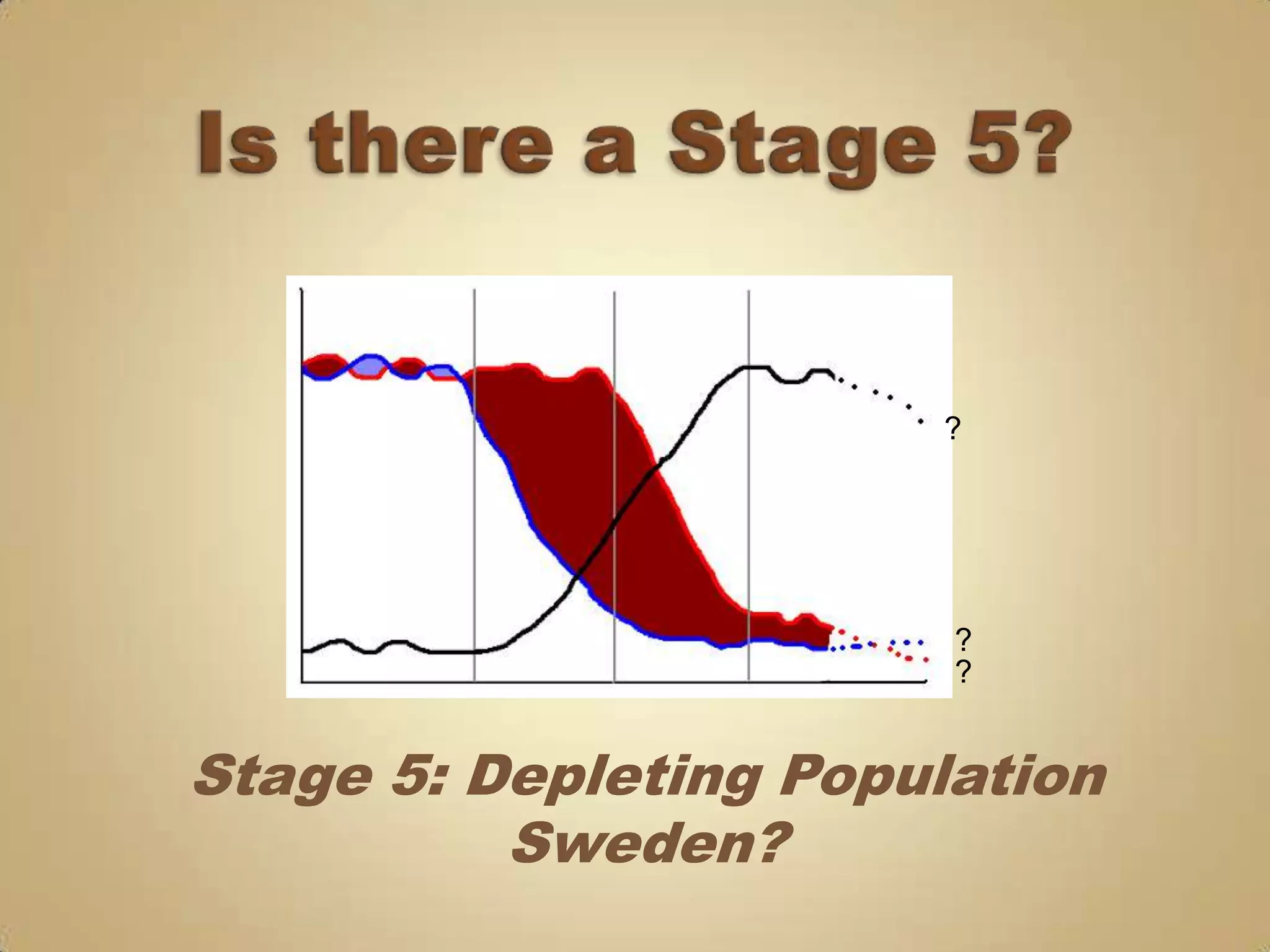
Stage 5: Depleting Population
          Sweden?
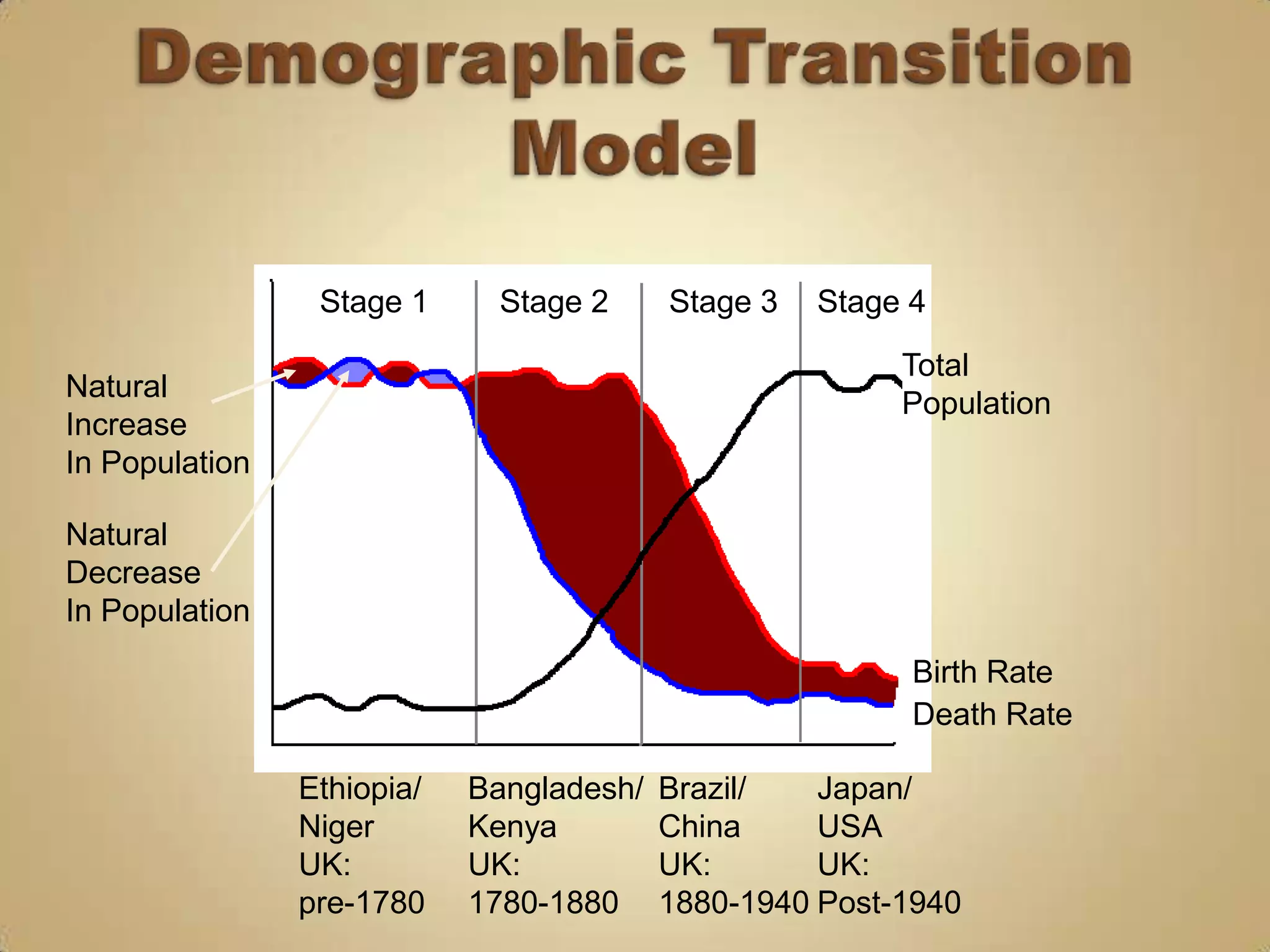
Stage 1     Stage 2      Stage 3   Stage 4

                                                         Total
Natural
                                                         Population
Increase
In Population

Natural
Decrease
In Population
                                                          Birth Rate
                                                          Death Rate

                Ethiopia/   Bangladesh/   Brazil/   Japan/
                Niger       Kenya         China     USA
                UK:         UK:           UK:       UK:
                pre-1780    1780-1880     1880-1940 Post-1940
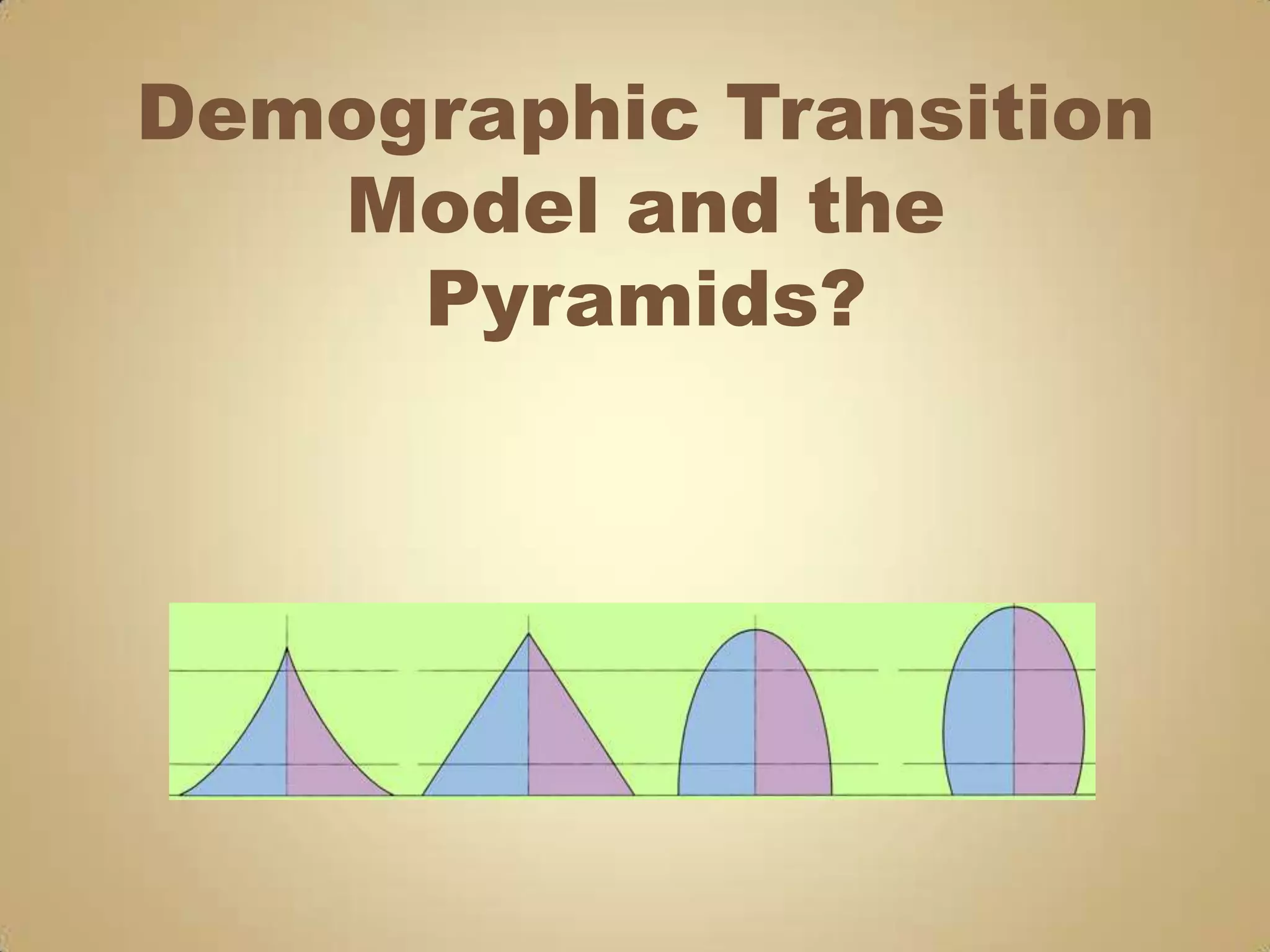
Demographic Transition
   Model and the
     Pyramids?
What do you think the reasons are
 for the changes at each stage?
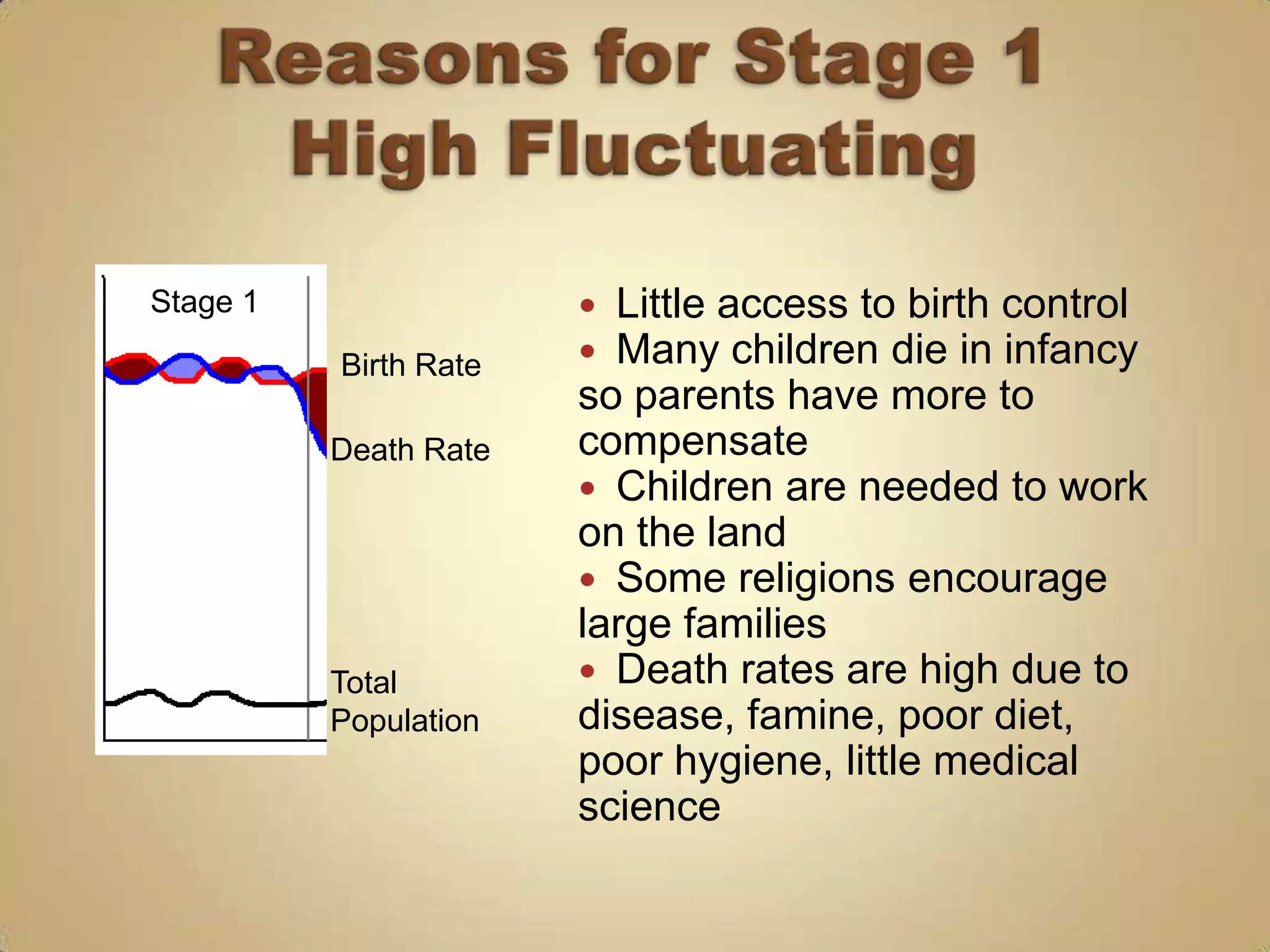
Stage 1                 Little access to birth control
          Birth Rate    Many children die in infancy
                       so parents have more to
          Death Rate   compensate
                        Children are needed to work
                       on the land
                        Some religions encourage
                       large families
          Total         Death rates are high due to
          Population   disease, famine, poor diet,
                       poor hygiene, little medical
                       science
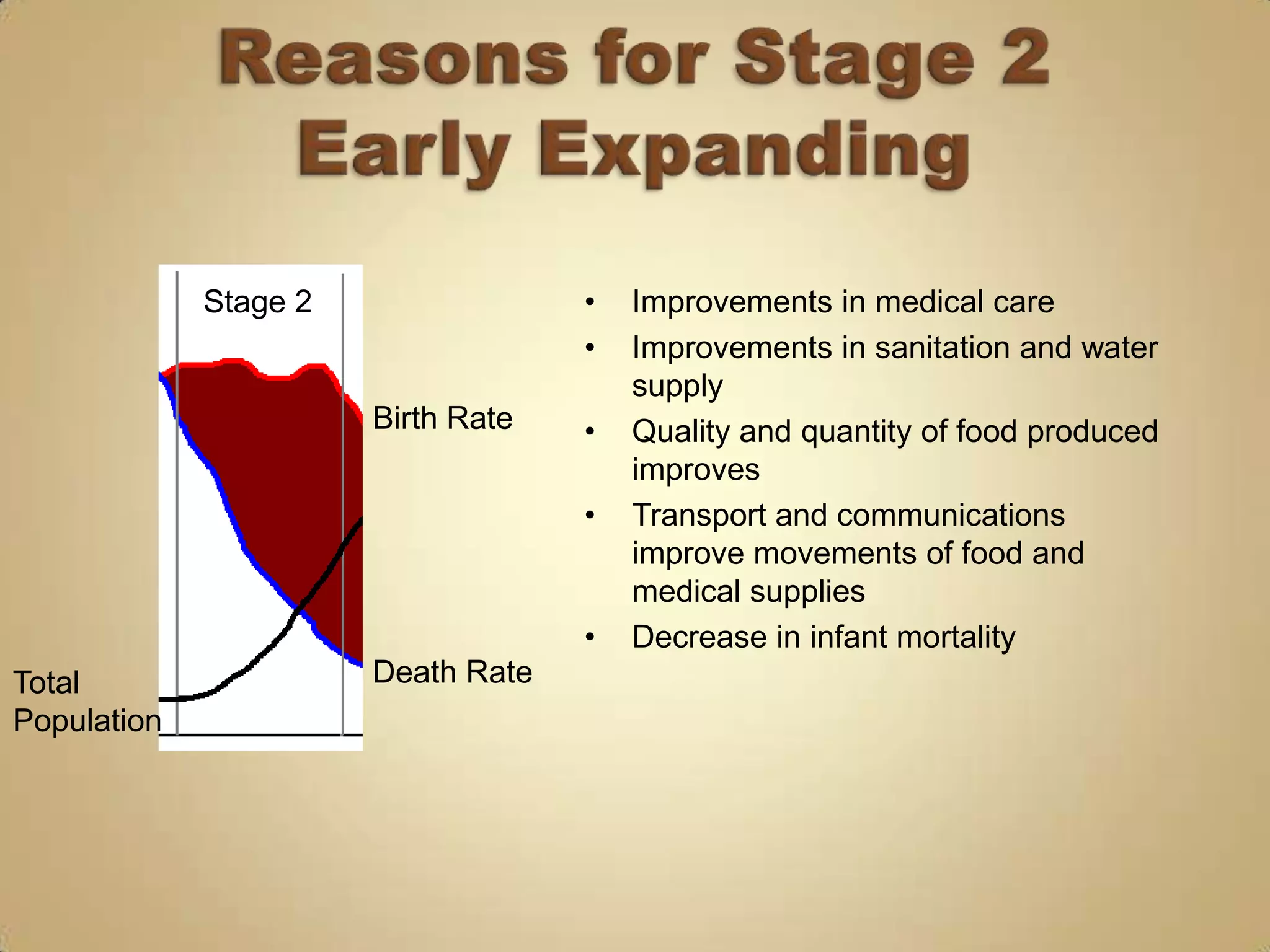
Stage 2                •   Improvements in medical care
                                    •   Improvements in sanitation and water
                                        supply
                       Birth Rate   •   Quality and quantity of food produced
                                        improves
                                    •   Transport and communications
                                        improve movements of food and
                                        medical supplies
                                    •   Decrease in infant mortality
Total                  Death Rate
Population
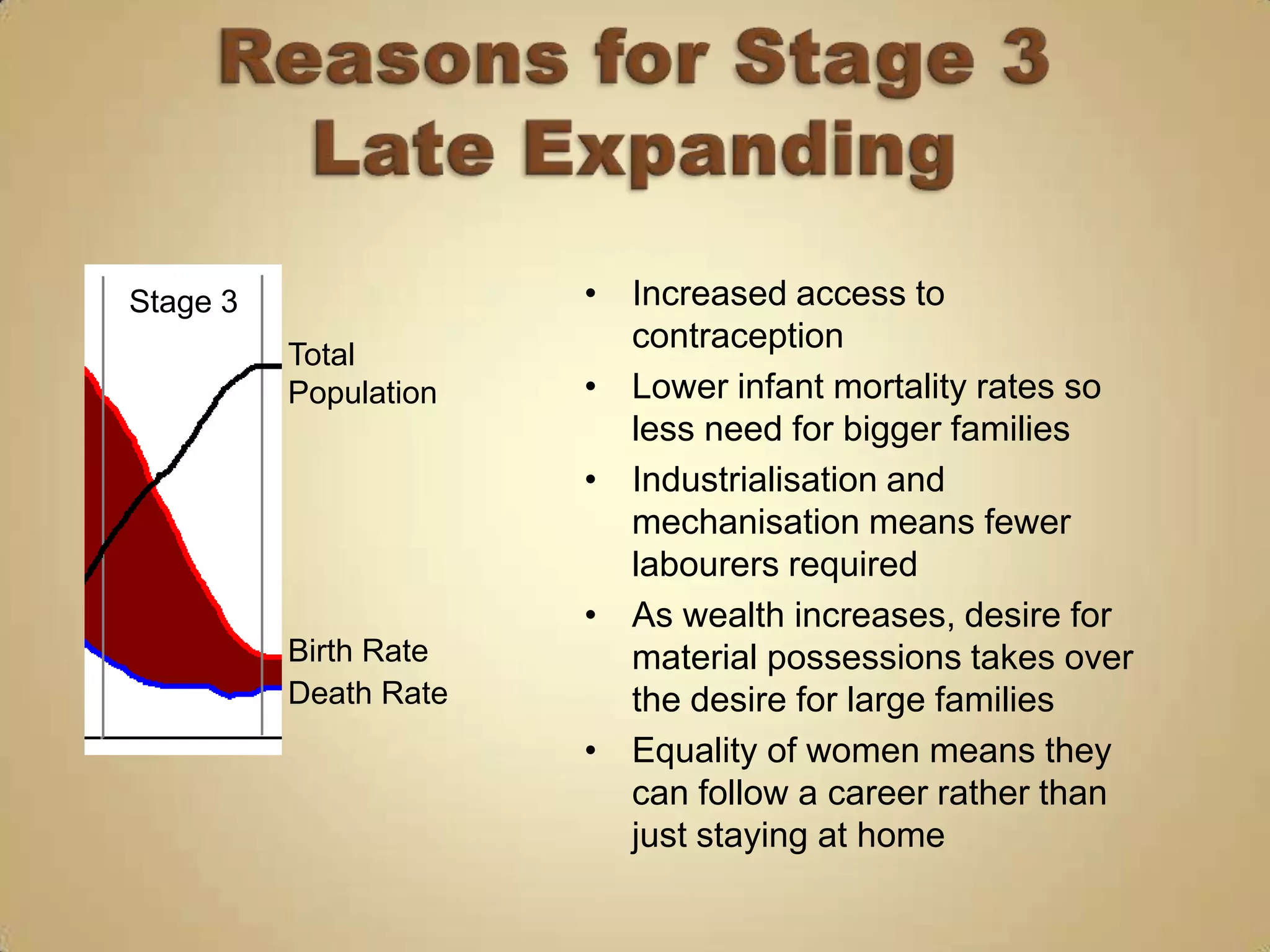
Stage 3                • Increased access to
                         contraception
          Total
          Population   • Lower infant mortality rates so
                         less need for bigger families
                       • Industrialisation and
                         mechanisation means fewer
                         labourers required
                       • As wealth increases, desire for
          Birth Rate     material possessions takes over
          Death Rate     the desire for large families
                       • Equality of women means they
                         can follow a career rather than
                         just staying at home
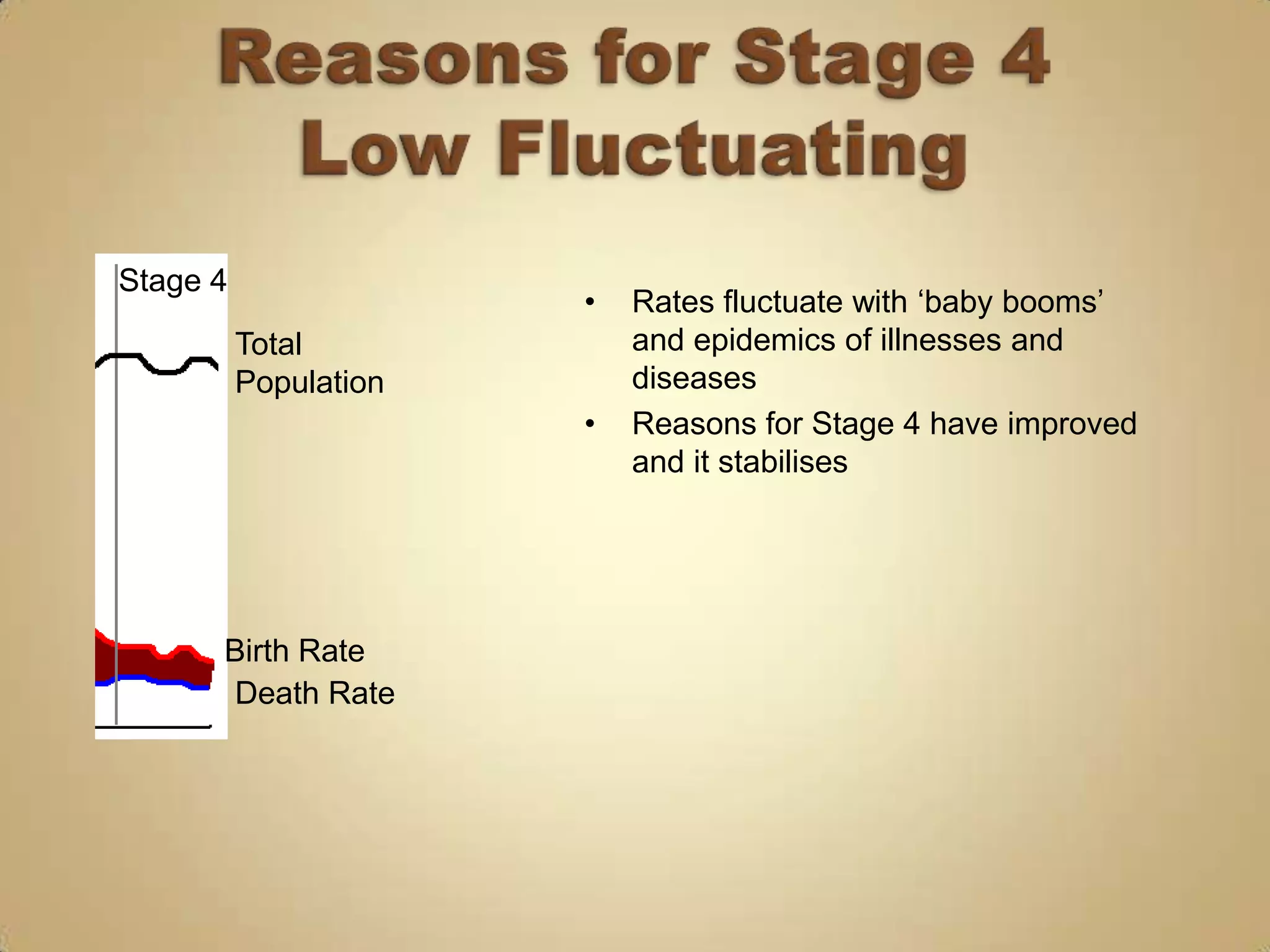
Stage 4
                       •   Rates fluctuate with ‘baby booms’
          Total            and epidemics of illnesses and
          Population       diseases
                       •   Reasons for Stage 4 have improved
                           and it stabilises


      Birth Rate
      Death Rate
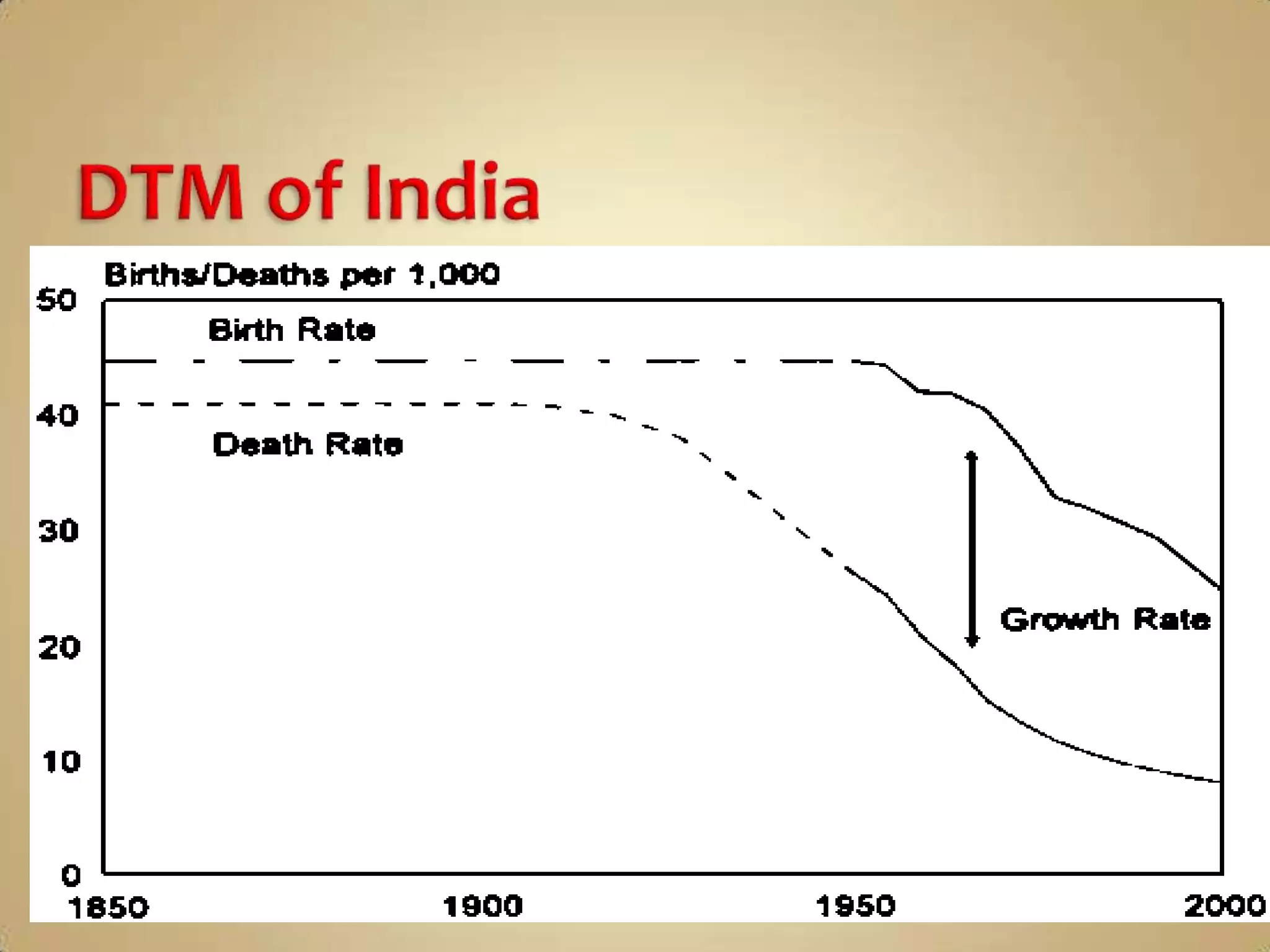
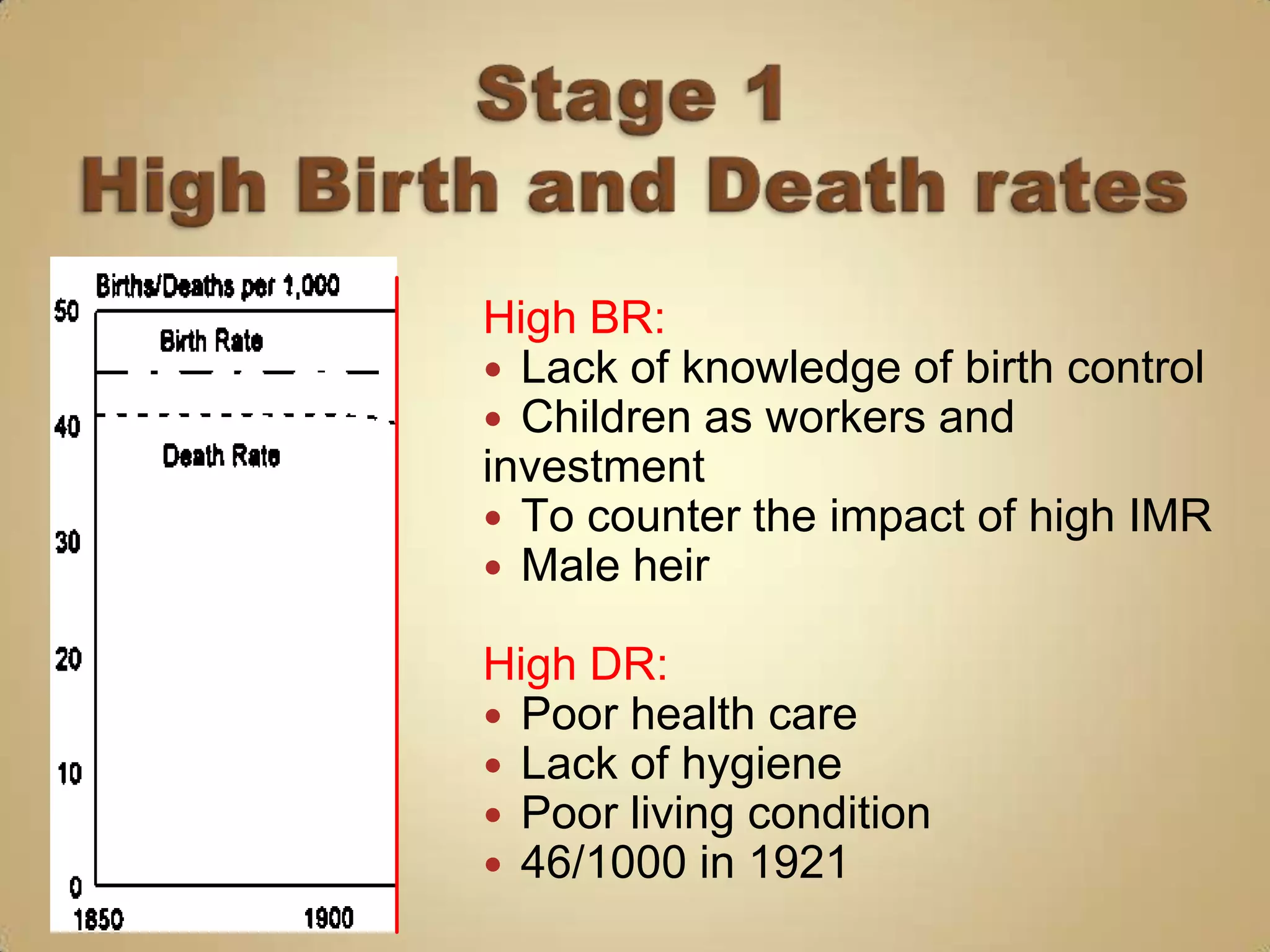
High BR:
 Lack of knowledge of birth control
 Children as workers and
investment
 To counter the impact of high IMR
 Male heir

High DR:
 Poor health care
 Lack of hygiene
 Poor living condition
 46/1000 in 1921
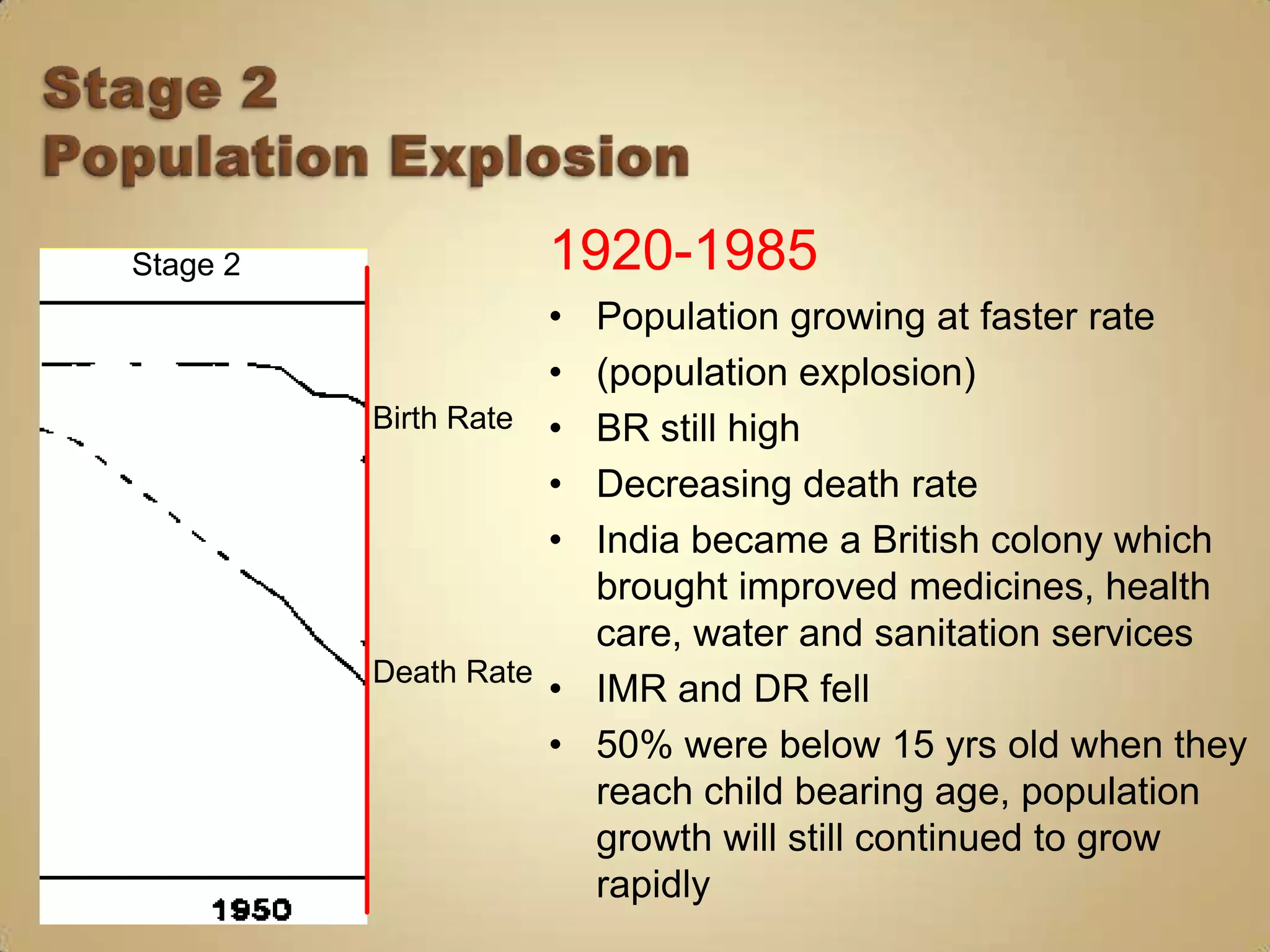
Stage 2              1920-1985
                     • Population growing at faster rate
                     • (population explosion)
          Birth Rate • BR still high
                     • Decreasing death rate
                     • India became a British colony which
                       brought improved medicines, health
                       care, water and sanitation services
          Death Rate
                     • IMR and DR fell
                     • 50% were below 15 yrs old when they
                       reach child bearing age, population
                       growth will still continued to grow
                       rapidly
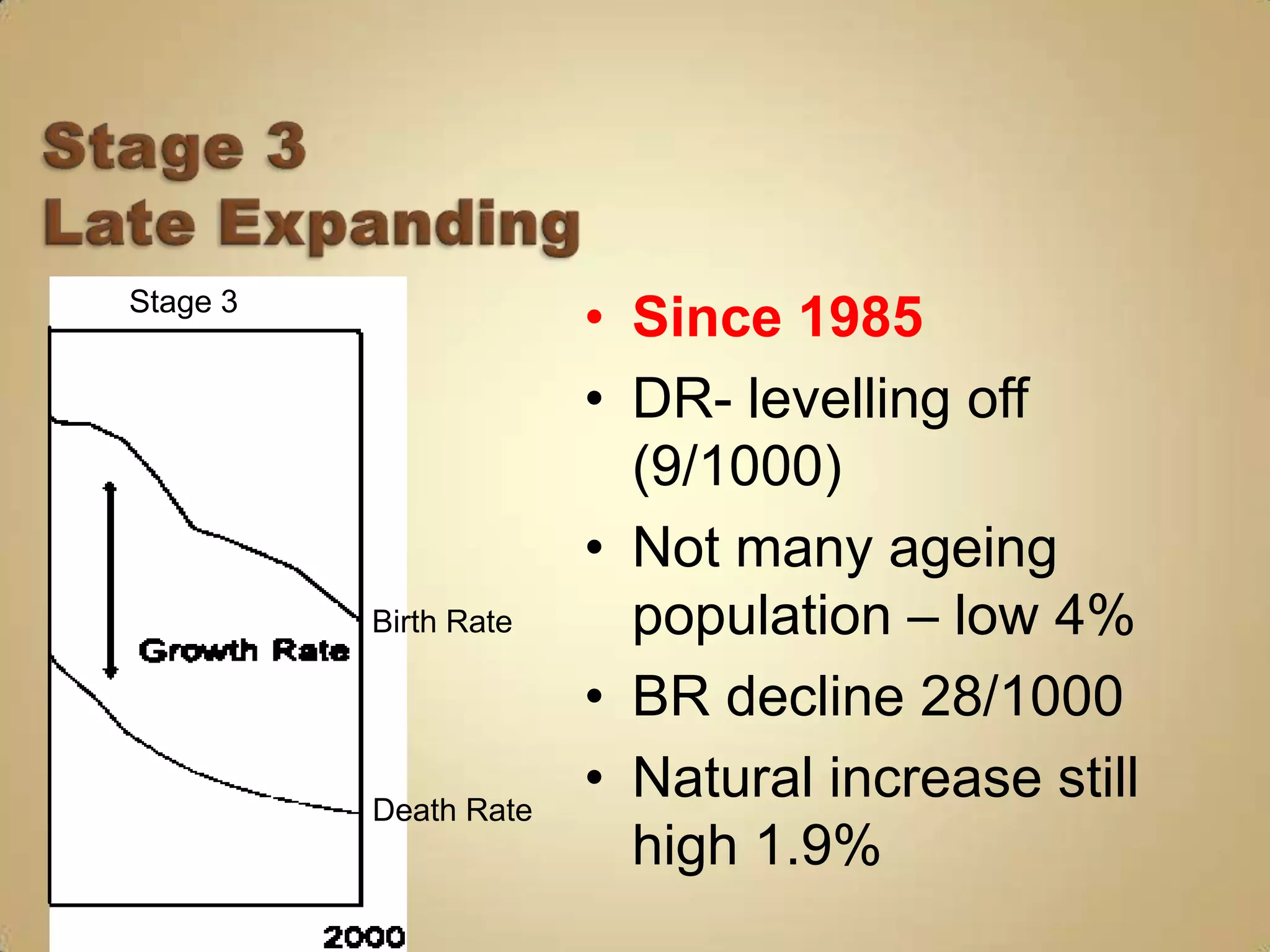
Stage 3
                       • Since 1985
                       • DR- levelling off
                         (9/1000)
                       • Not many ageing
          Birth Rate     population – low 4%
                       • BR decline 28/1000
          Death Rate
                       • Natural increase still
                         high 1.9%
 NO
 Not all countries have steady development / stages of
development
 Some countries have no proper census
 DTM based on British Countries
 Eurocentric – a very European perspectives
 Stage of development is pretty much slower
 Some LEDCs have no history of DTM until recently
 China – government is adopting ANTI-NATALIST POLICY
therefore change the DTM
 Only considered BR, DR & NI
 It does not include the influences of migration
(immigration, emigration)
 It assumes that all countries will go through the
same pattern
 There is no time scale
 Reasons for birth rates and death rates are very
different in different countries
 And finally, is there a stage 5?
Like all models, the demographic transition model has its
limitations. It failed to consider, or to predict, several
factors and events:


1. Birth rates in several MEDCs have fallen below death
rates (Germany, Sweden). This has caused, for the first
time, a population decline which suggests that perhaps the
model should have a fifth stage added to it.

2. The model assumes that in time all countries pass
through the same four stages. It now seems unlikely,
however, that many LEDCs, especially in Africa, will ever
become industrialised.
3. The model assumes that the fall in the death
rate in Stage 2 was the consequence of
industrialisation. Initially, the death rate in many
British cities rose, due to the insanitary conditions
which resulted from rapid urban growth, and it
only began to fall after advances were made in
medicine.

The delayed fall in the death rate in many
developing countries has been due mainly to their
inability to afford medical facilities. In many
countries, the fall in the birth rate in Stage
 3 has been less rapid than the model suggests due
to religious and/or political opposition to birth
control (Brazil), whereas the fall was much more
rapid, and came earlier, in China following the
government-introduced ‘onechild’ policy.

The timescale of the model, especially in several
South-east Asian countries such as Hong Kong and
Malaysia, is being squashed as they develop at a
much faster rate than did the early industrialised
countries.
4. Countries that grew as a
consequence of emigration from Europe
(USA, Canada, Australia) did not pass
through the early stages of the model.
http://www.slideshare.net/reservoirgeogs/demogra
phic-transition-presentation

Demographic transition model of uk and india

  • 3.
    60 50 40 Birth Rate 30 Death Rate Total Population 20 10 0 1700 1750 1800 1850 1900 1950 2000
  • 4.
    What do you think Hanel, Germany these cartoons are saying? J. Gathorpe-Hardy
  • 5.
    Stage 1  Low population Birth Rate  Increasing very slowly High birth rate Death Rate High death rate UK: pre-1780 Now? –tribes in remote Total Africa and Amazon - Population Sudan
  • 6.
    Stage 2 • Population growing Birth Rate at faster rate • High but decreasing birth rate • Decreasing death Death Rate Total rate Population • Sri Lanka/Kenya • UK: 1780-1880
  • 7.
    Stage 3 • Population still Total Population increasing, but rate of increase slowing down • Decreasing birth rate Birth Rate Death Rate • Low death rate • China • UK: 1880-1940
  • 8.
    Stage 4 Total • High population, Population almost stable • Low birth rate • Low death rate Birth Rate • UK, Death Rate • UK: post-1940
  • 9.
    ? ? ? Stage 5: Depleting Population Sweden?
  • 10.
    Stage 1 Stage 2 Stage 3 Stage 4 Total Natural Population Increase In Population Natural Decrease In Population Birth Rate Death Rate Ethiopia/ Bangladesh/ Brazil/ Japan/ Niger Kenya China USA UK: UK: UK: UK: pre-1780 1780-1880 1880-1940 Post-1940
  • 11.
    Demographic Transition Model and the Pyramids?
  • 12.
    What do youthink the reasons are for the changes at each stage?
  • 13.
    Stage 1  Little access to birth control Birth Rate  Many children die in infancy so parents have more to Death Rate compensate  Children are needed to work on the land  Some religions encourage large families Total  Death rates are high due to Population disease, famine, poor diet, poor hygiene, little medical science
  • 14.
    Stage 2 • Improvements in medical care • Improvements in sanitation and water supply Birth Rate • Quality and quantity of food produced improves • Transport and communications improve movements of food and medical supplies • Decrease in infant mortality Total Death Rate Population
  • 15.
    Stage 3 • Increased access to contraception Total Population • Lower infant mortality rates so less need for bigger families • Industrialisation and mechanisation means fewer labourers required • As wealth increases, desire for Birth Rate material possessions takes over Death Rate the desire for large families • Equality of women means they can follow a career rather than just staying at home
  • 16.
    Stage 4 • Rates fluctuate with ‘baby booms’ Total and epidemics of illnesses and Population diseases • Reasons for Stage 4 have improved and it stabilises Birth Rate Death Rate
  • 18.
    High BR:  Lackof knowledge of birth control  Children as workers and investment  To counter the impact of high IMR  Male heir High DR:  Poor health care  Lack of hygiene  Poor living condition  46/1000 in 1921
  • 19.
    Stage 2 1920-1985 • Population growing at faster rate • (population explosion) Birth Rate • BR still high • Decreasing death rate • India became a British colony which brought improved medicines, health care, water and sanitation services Death Rate • IMR and DR fell • 50% were below 15 yrs old when they reach child bearing age, population growth will still continued to grow rapidly
  • 20.
    Stage 3 • Since 1985 • DR- levelling off (9/1000) • Not many ageing Birth Rate population – low 4% • BR decline 28/1000 Death Rate • Natural increase still high 1.9%
  • 21.
     NO  Notall countries have steady development / stages of development  Some countries have no proper census  DTM based on British Countries  Eurocentric – a very European perspectives  Stage of development is pretty much slower  Some LEDCs have no history of DTM until recently  China – government is adopting ANTI-NATALIST POLICY therefore change the DTM
  • 22.
     Only consideredBR, DR & NI  It does not include the influences of migration (immigration, emigration)  It assumes that all countries will go through the same pattern  There is no time scale  Reasons for birth rates and death rates are very different in different countries  And finally, is there a stage 5?
  • 23.
    Like all models,the demographic transition model has its limitations. It failed to consider, or to predict, several factors and events: 1. Birth rates in several MEDCs have fallen below death rates (Germany, Sweden). This has caused, for the first time, a population decline which suggests that perhaps the model should have a fifth stage added to it. 2. The model assumes that in time all countries pass through the same four stages. It now seems unlikely, however, that many LEDCs, especially in Africa, will ever become industrialised.
  • 24.
    3. The modelassumes that the fall in the death rate in Stage 2 was the consequence of industrialisation. Initially, the death rate in many British cities rose, due to the insanitary conditions which resulted from rapid urban growth, and it only began to fall after advances were made in medicine. The delayed fall in the death rate in many developing countries has been due mainly to their inability to afford medical facilities. In many countries, the fall in the birth rate in Stage
  • 25.
     3 hasbeen less rapid than the model suggests due to religious and/or political opposition to birth control (Brazil), whereas the fall was much more rapid, and came earlier, in China following the government-introduced ‘onechild’ policy. The timescale of the model, especially in several South-east Asian countries such as Hong Kong and Malaysia, is being squashed as they develop at a much faster rate than did the early industrialised countries.
  • 26.
    4. Countries thatgrew as a consequence of emigration from Europe (USA, Canada, Australia) did not pass through the early stages of the model.
  • 28.