
BY
SAYANTANI SINGH
What is Demography?
• The statistical study of human population.
• It encompasses the structure, size and
distribution in a particular geographical region
or in a whole.
What is Transition?
• Transition indicates the transfer from one
condition to another condition.
Demographic Transition
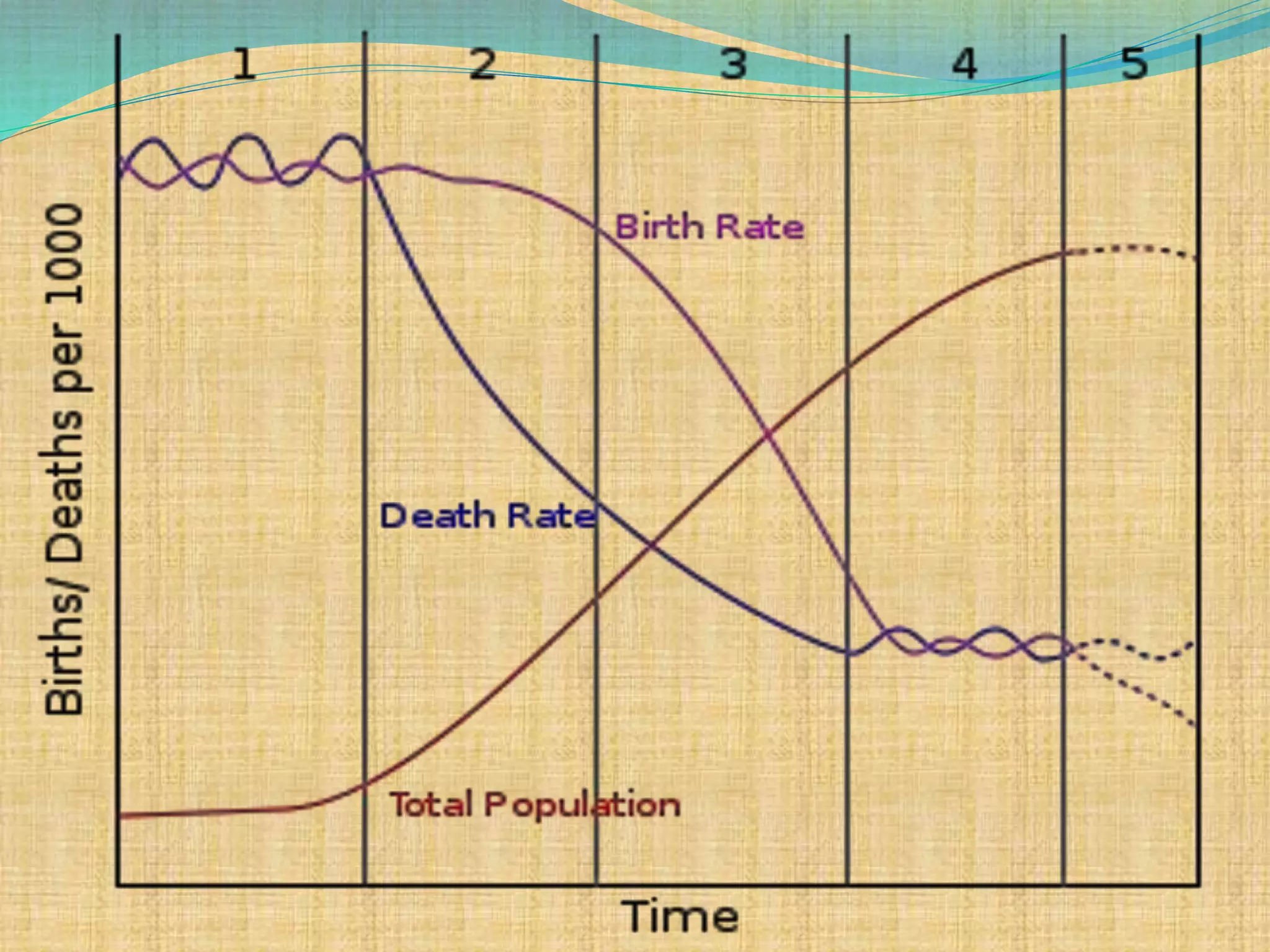
• Demographic Transition means how
birthrates and death rates changes from one
stage to another.
• Warren Thomson in 1929 observed a tradition
of birthrate and death rate which had a great
impact on the socio economic condition.
• Following his concept , Notestain and Blacker
gave his idea on demographic transition and its
impact on economics
STAGES OF DEMOGRAPHIC
TRANSITION
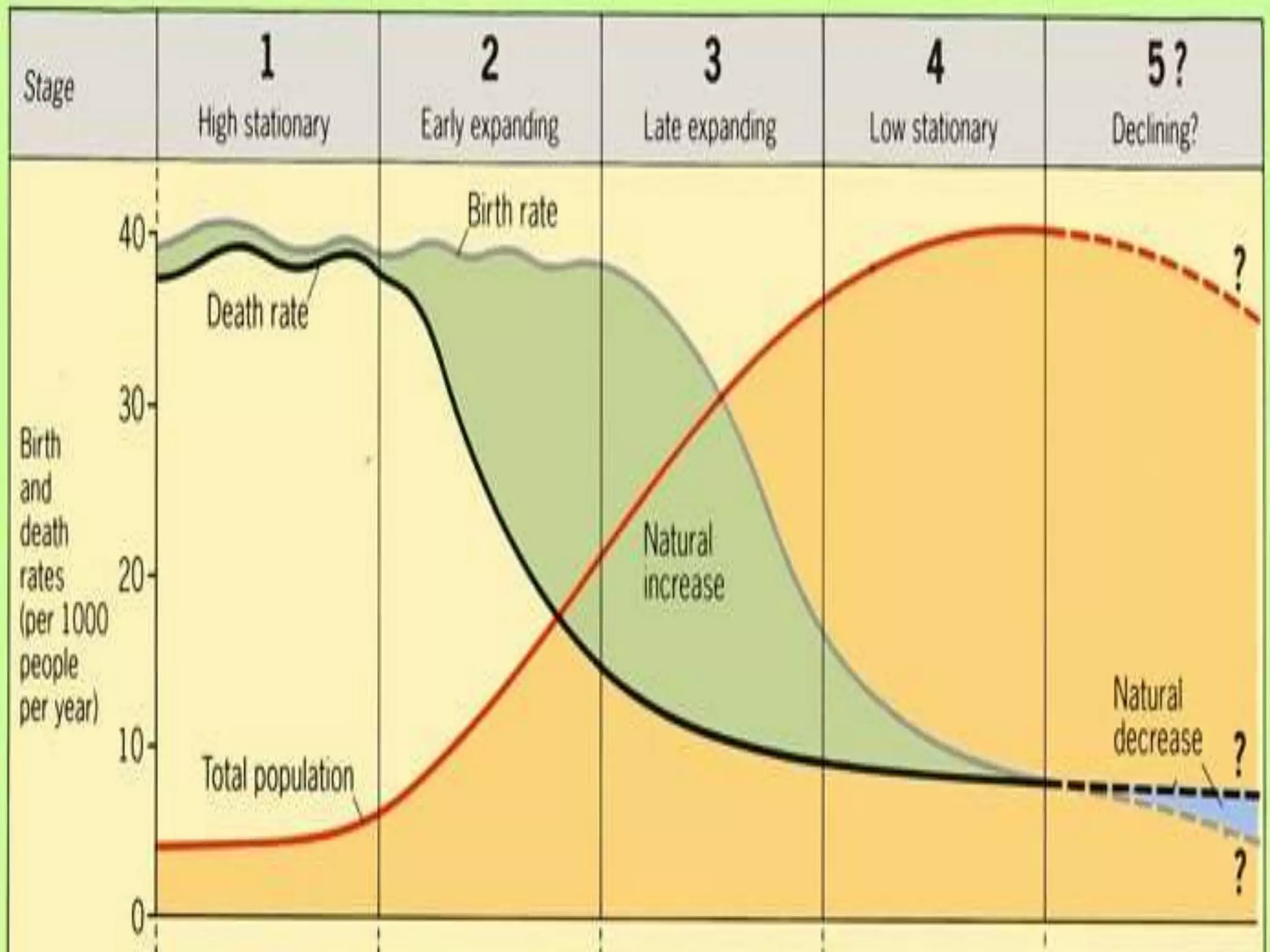
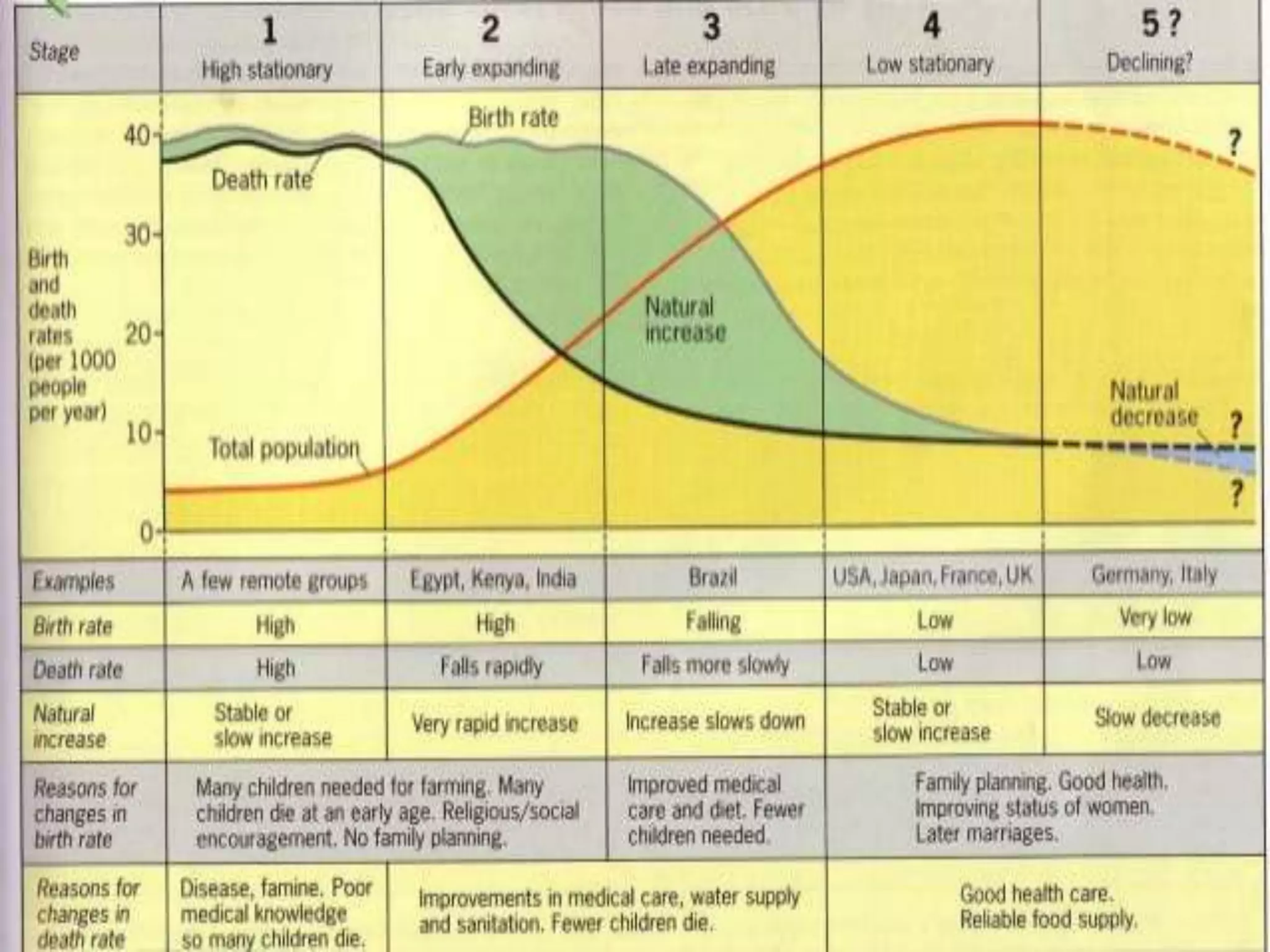
There are five stages in DTM.
• High Birth Rate and High Death Rate.
• High Birth Rate and Low Death Rate.
• Low Birth Rate and Low Death Rate.
• Low Birth Rate and Very Low Death Rate .
STAGE –1
HIGH EXPANDING
High Expanding
• High Birthrate
• High Death rate
• Natural increase is vey low
• Pre – Industrial stage
• Agriculture based society
• Weak Economy
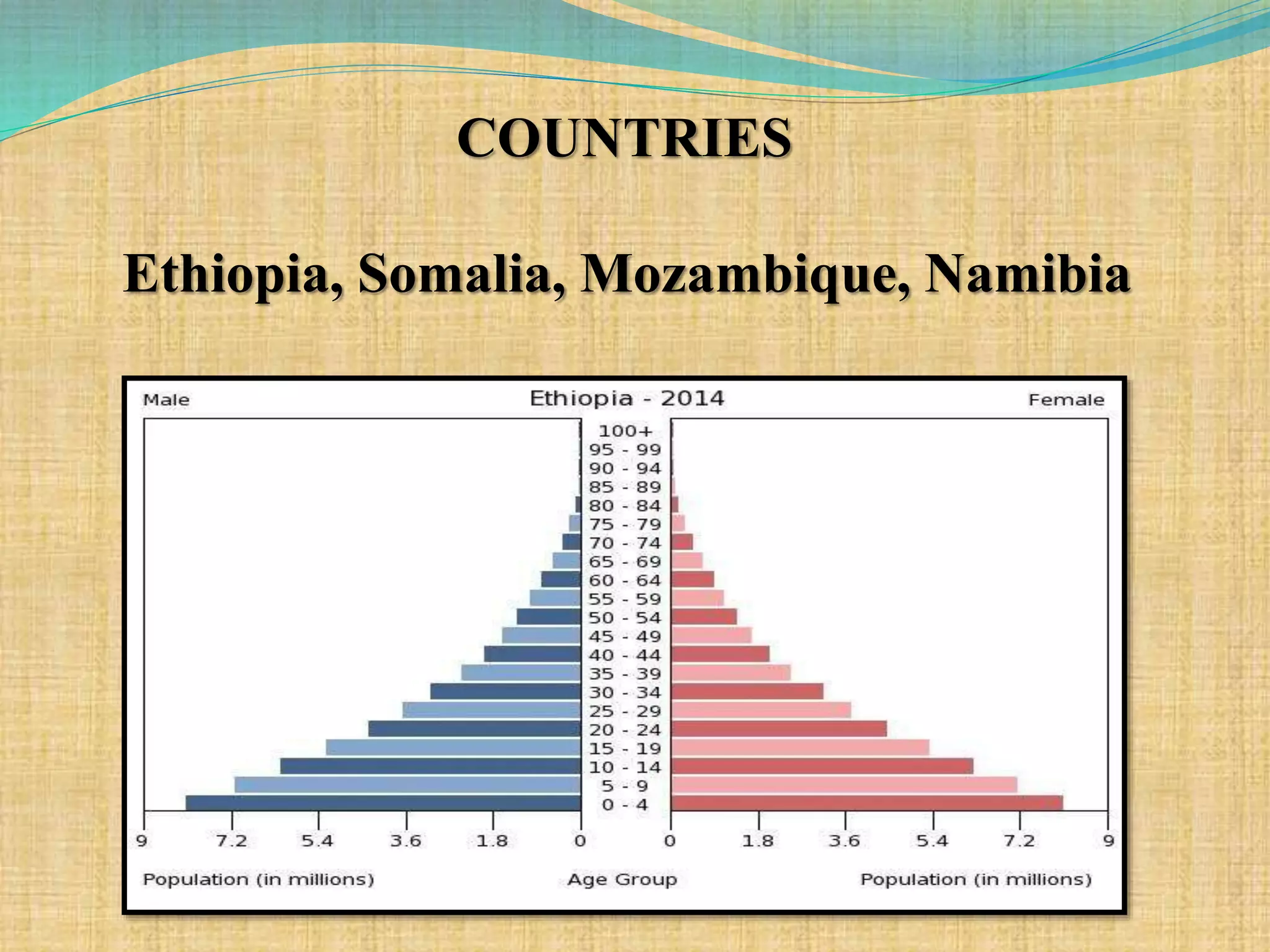
COUNTRIES
Ethiopia, Somalia, Mozambique, Namibia
Reason for the Birth rate and
Death rate
BIRTH RATE ARE
HIGH BECAUSE
•Lack of Family
Planning
•High Infant mortality
Rate
• Religious Belief
• Children as asset
DEATHRATE ARE
HIGH BECAUSE
•Lack of education
• Poor sanitation system
•Famine
•War
•Lack of health care
• High level of disease
STAGE –2
LATE EXPANDING
High Expanding
• High Birthrate
• High Death rate
• Natural increase is very high
• Industrial revolution started during this
era
• Economy is mixed type
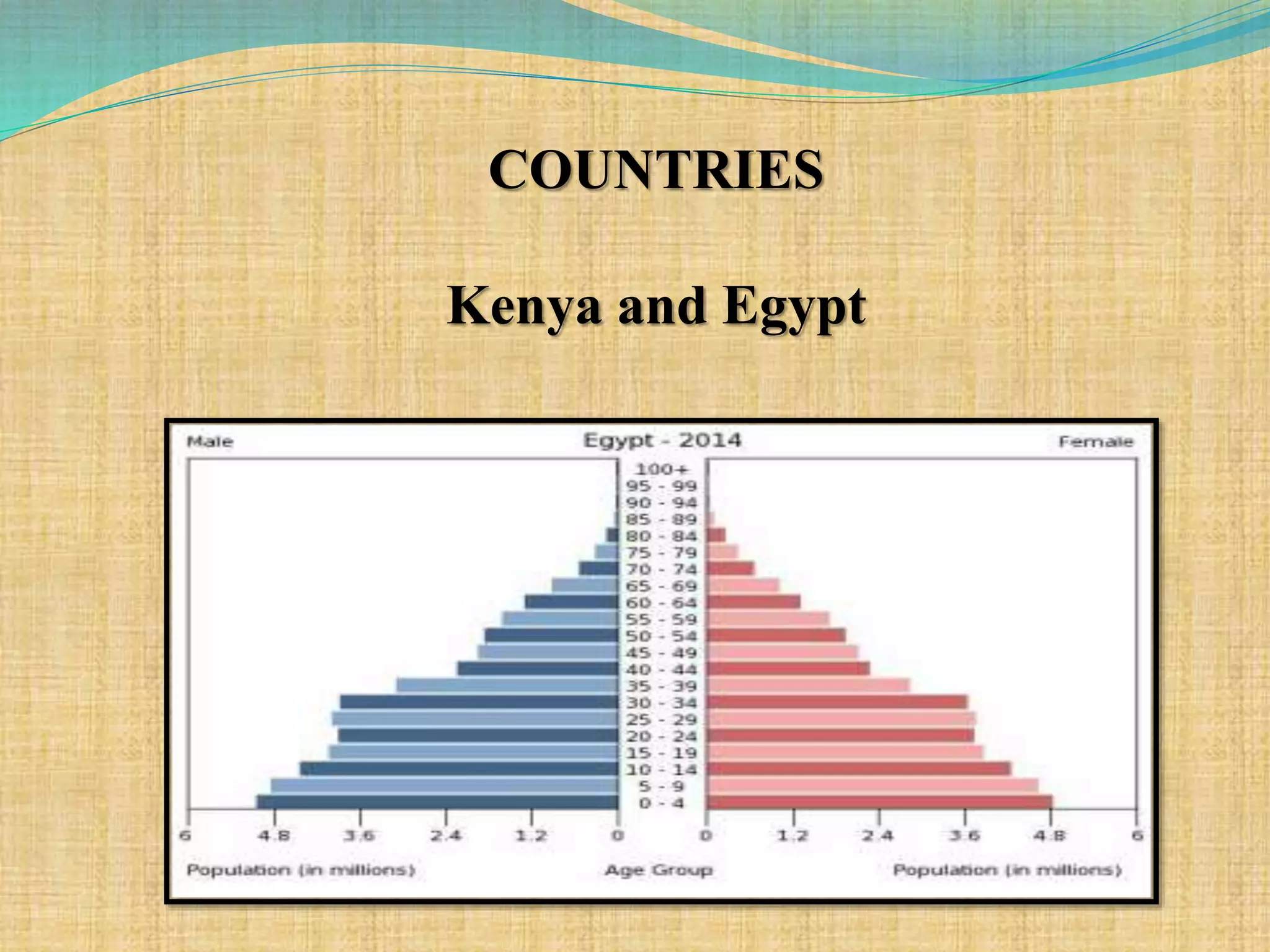
COUNTRIES
Kenya and Egypt
Reason For Decline Death Rate
• Improved medical science
• Improved health care
•Improved sanitation
•Decrease infant mortality rate
STAGE –3
LATE EXPANDING
Late Expanding
 Falling Birthrate
 Falling Death rate
 Natural increase is started to decline
 Industry introduced technology
 Economy is strong
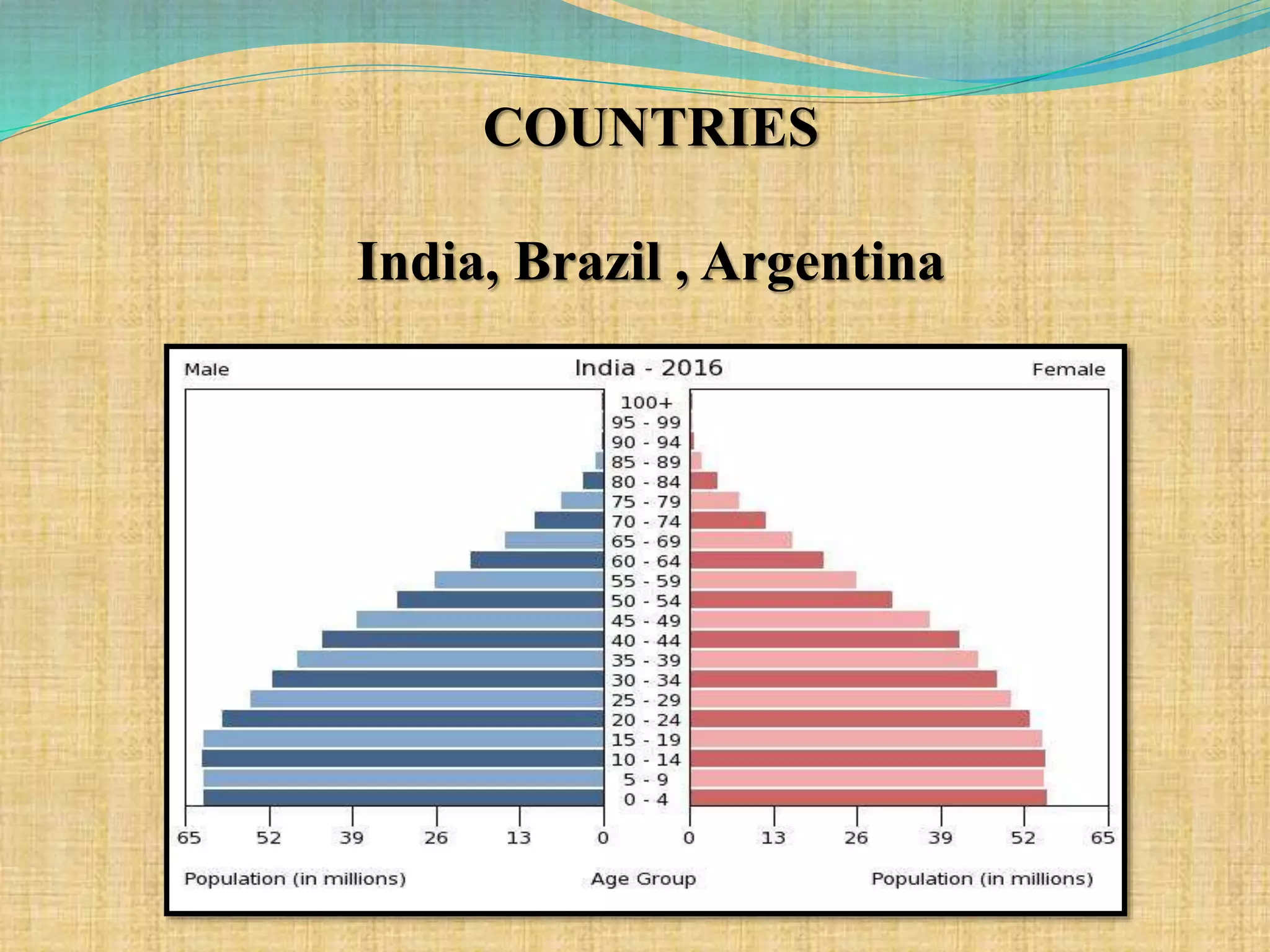
COUNTRIES
India, Brazil , Argentina
REASON BEHIND FALLINF
BIRTHRATE AND FALLING DEATH
RATE
 Started to plan family structure
 Literacy rate is high
 High standard of living
 Changing the women status
 Low infant mortality rate
STAGE –4
STATIONARY
STATIONARY
 Low Birthrate
 Low Death rate
 Natural increase is stable or slow
increase
 Technology brings a revolution in
industry
 Economy is strong
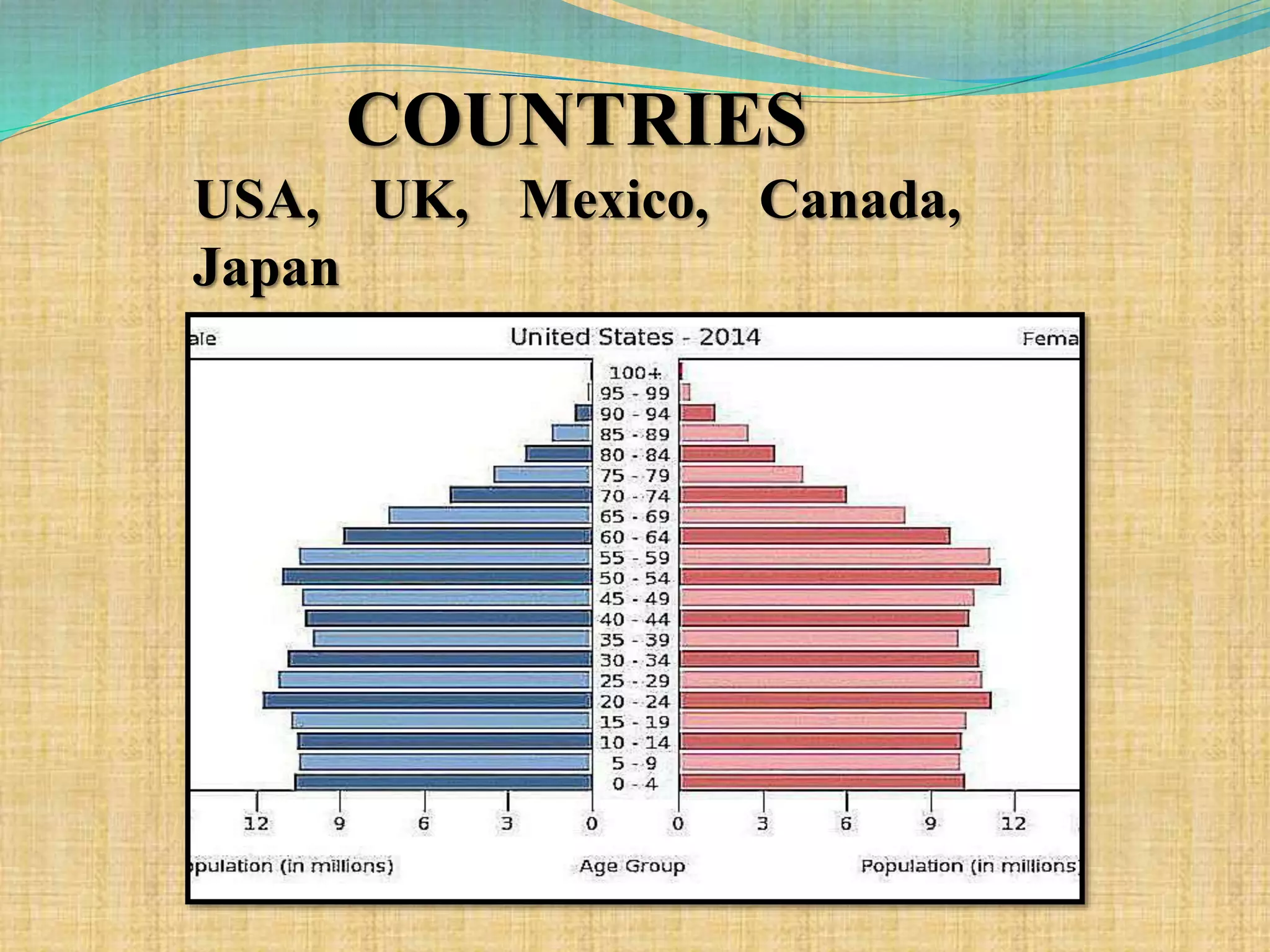
COUNTRIES
USA, UK, Mexico, Canada,
Japan
STAGE –5
DECLINE?
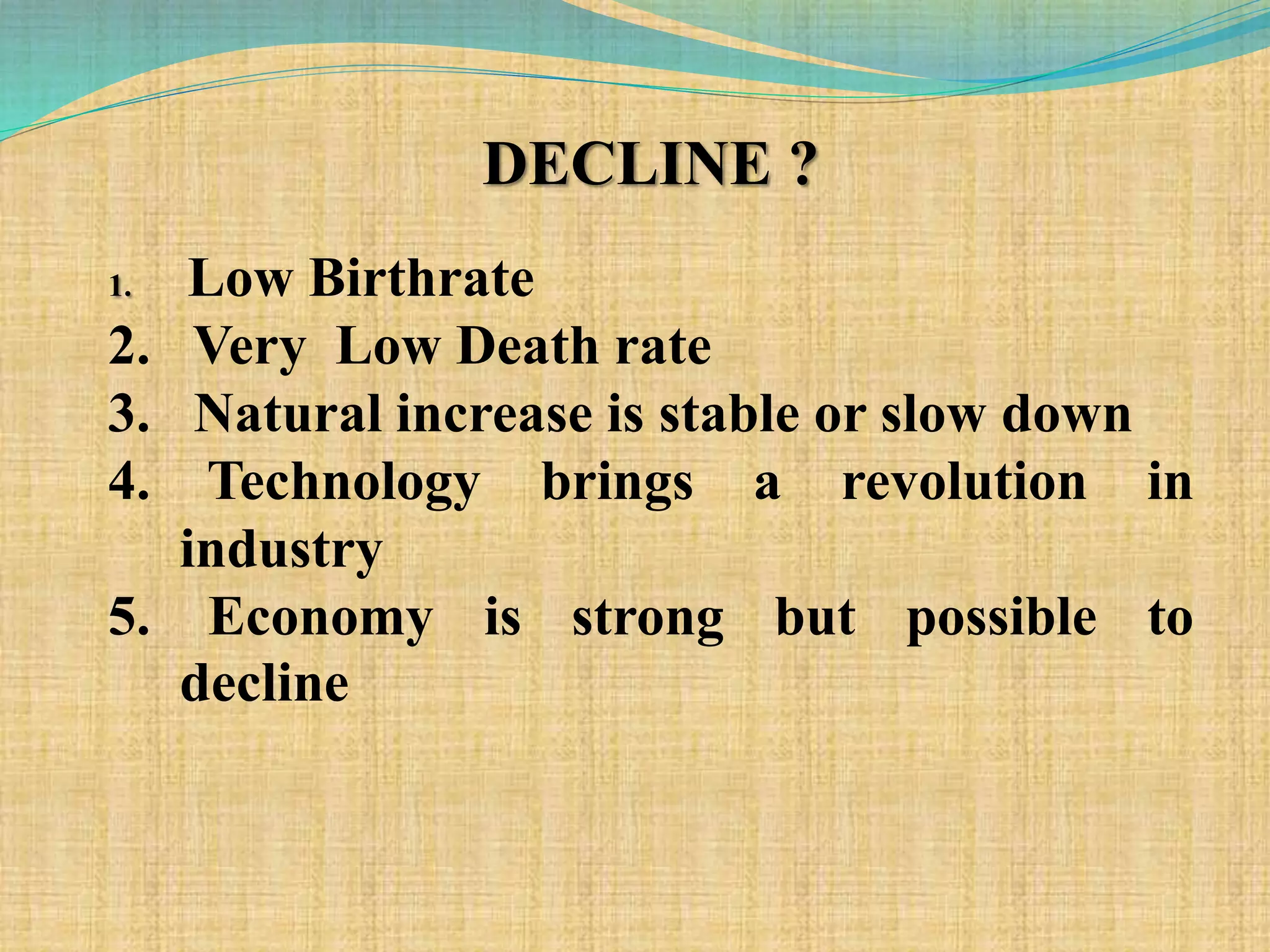
DECLINE ?
1. Low Birthrate
2. Very Low Death rate
3. Natural increase is stable or slow down
4. Technology brings a revolution in
industry
5. Economy is strong but possible to
decline
COUNTRY: GERMANY
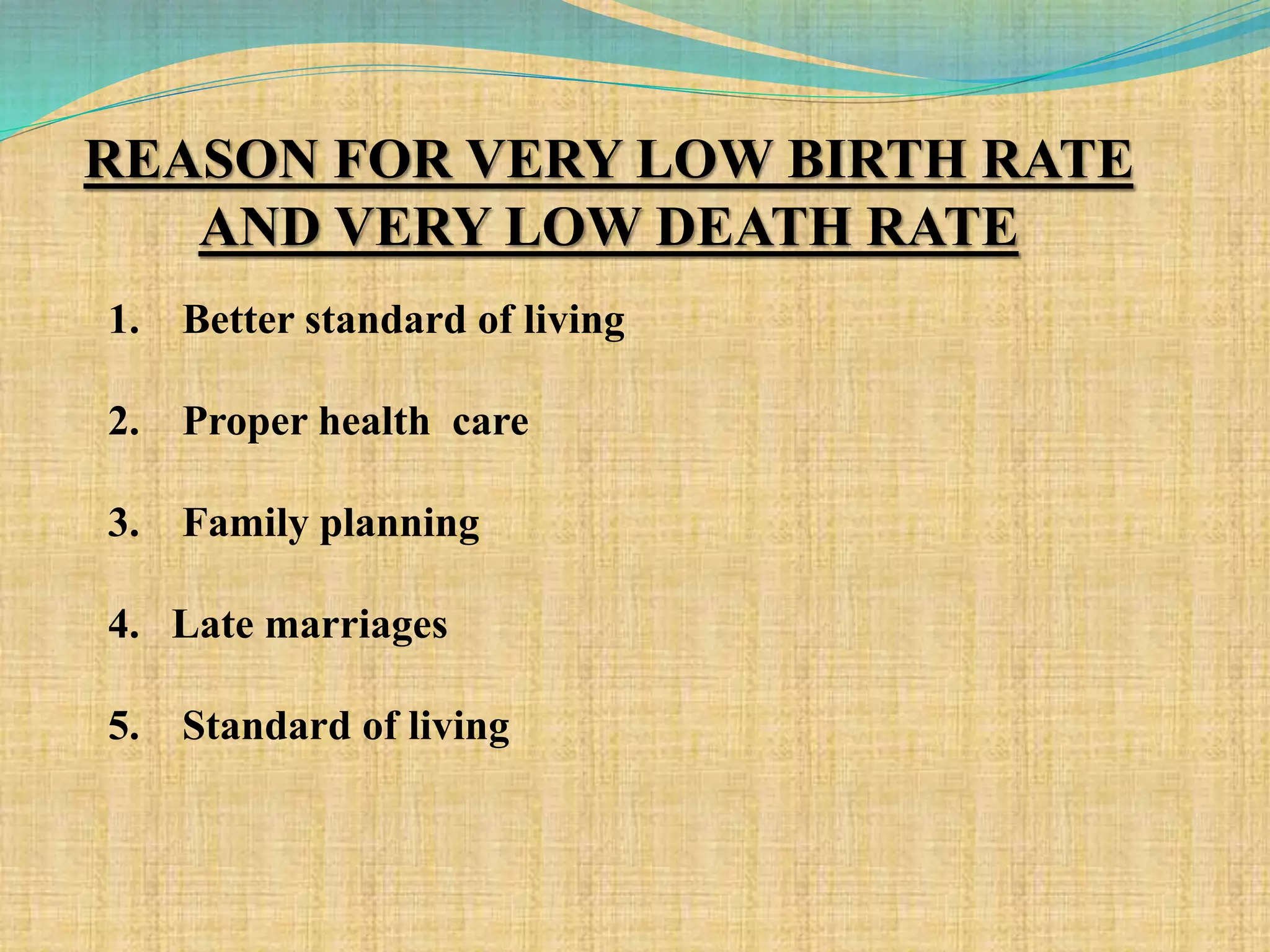
REASON FOR VERY LOW BIRTH RATE
AND VERY LOW DEATH RATE
1. Better standard of living
2. Proper health care
3. Family planning
4. Late marriages
5. Standard of living
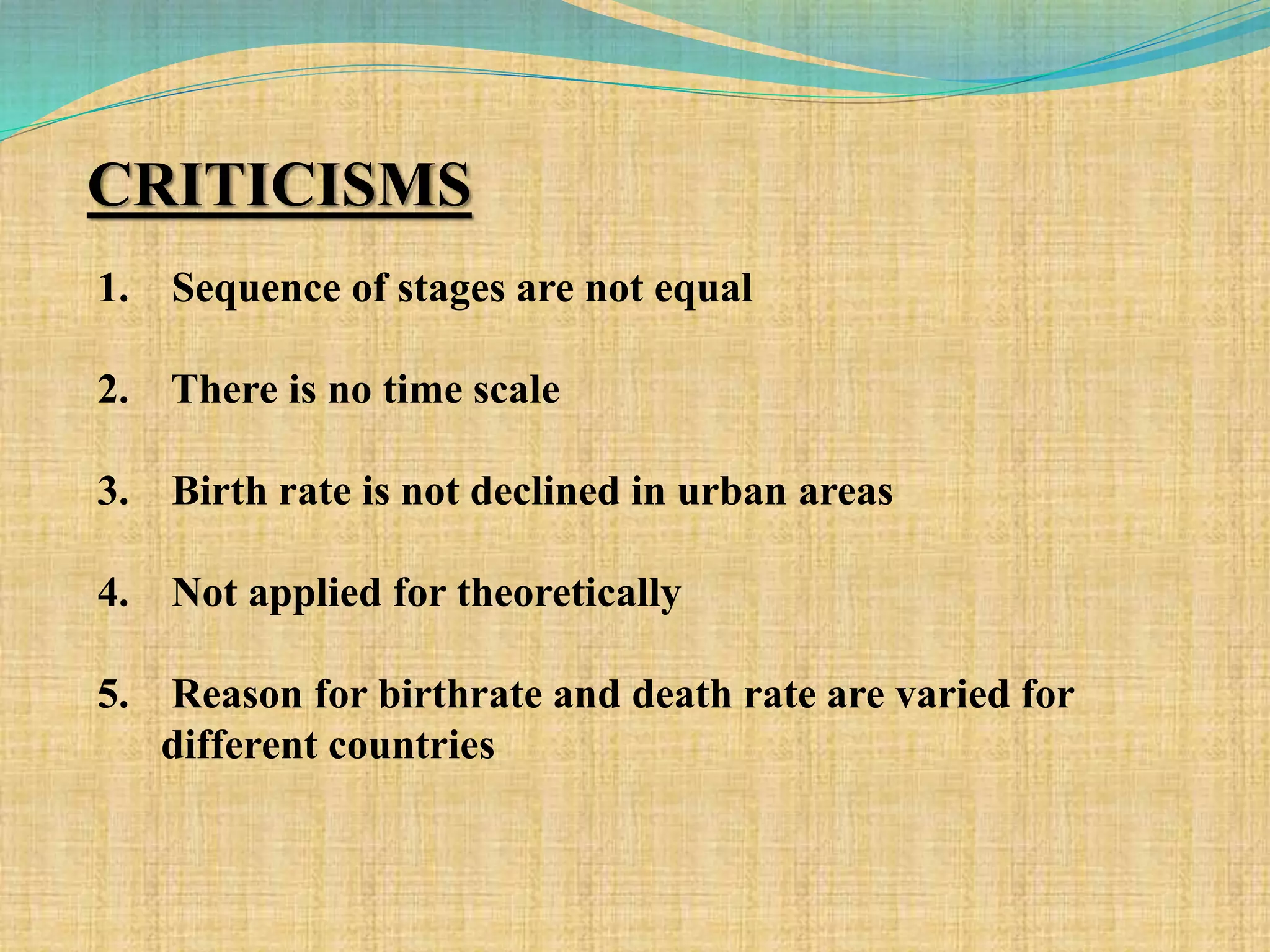
CRITICISMS
1. Sequence of stages are not equal
2. There is no time scale
3. Birth rate is not declined in urban areas
4. Not applied for theoretically
5. Reason for birthrate and death rate are varied for
different countries
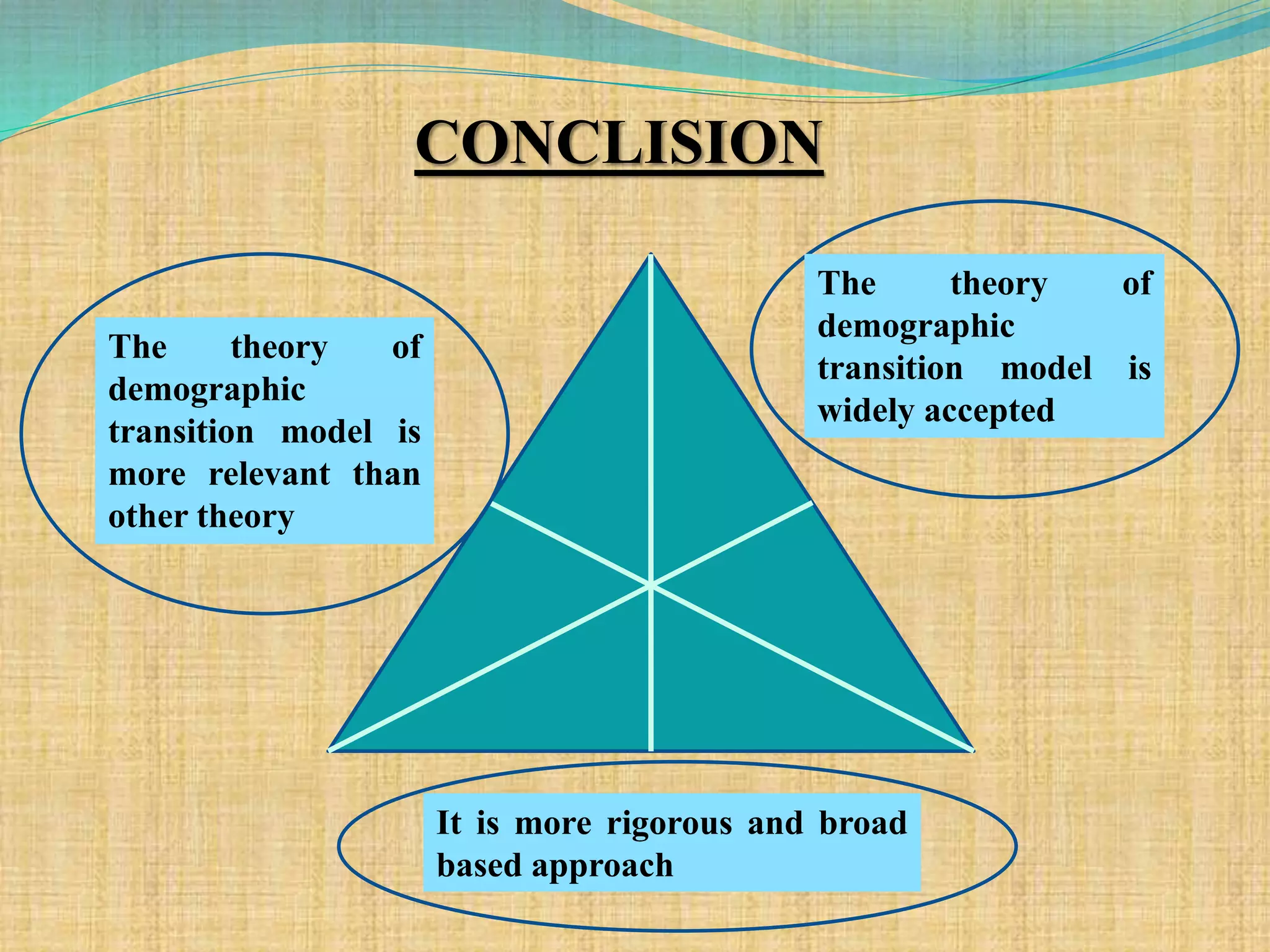
CONCLISION
The theory of
demographic
transition model is
more relevant than
other theory
It is more rigorous and broad
based approach
The theory of
demographic
transition model is
widely accepted

Demographic transition model

  • 1.
  • 2.
    What is Demography? •The statistical study of human population. • It encompasses the structure, size and distribution in a particular geographical region or in a whole.
  • 3.
    What is Transition? •Transition indicates the transfer from one condition to another condition. Demographic Transition • Demographic Transition means how birthrates and death rates changes from one stage to another.
  • 5.
    • Warren Thomsonin 1929 observed a tradition of birthrate and death rate which had a great impact on the socio economic condition. • Following his concept , Notestain and Blacker gave his idea on demographic transition and its impact on economics
  • 6.
    STAGES OF DEMOGRAPHIC TRANSITION Thereare five stages in DTM. • High Birth Rate and High Death Rate. • High Birth Rate and Low Death Rate. • Low Birth Rate and Low Death Rate. • Low Birth Rate and Very Low Death Rate .
  • 8.
  • 9.
    High Expanding • HighBirthrate • High Death rate • Natural increase is vey low • Pre – Industrial stage • Agriculture based society • Weak Economy
  • 10.
  • 11.
    Reason for theBirth rate and Death rate BIRTH RATE ARE HIGH BECAUSE •Lack of Family Planning •High Infant mortality Rate • Religious Belief • Children as asset DEATHRATE ARE HIGH BECAUSE •Lack of education • Poor sanitation system •Famine •War •Lack of health care • High level of disease
  • 12.
  • 13.
    High Expanding • HighBirthrate • High Death rate • Natural increase is very high • Industrial revolution started during this era • Economy is mixed type
  • 14.
  • 15.
    Reason For DeclineDeath Rate • Improved medical science • Improved health care •Improved sanitation •Decrease infant mortality rate
  • 16.
  • 17.
    Late Expanding  FallingBirthrate  Falling Death rate  Natural increase is started to decline  Industry introduced technology  Economy is strong
  • 18.
  • 19.
    REASON BEHIND FALLINF BIRTHRATEAND FALLING DEATH RATE  Started to plan family structure  Literacy rate is high  High standard of living  Changing the women status  Low infant mortality rate
  • 20.
  • 21.
    STATIONARY  Low Birthrate Low Death rate  Natural increase is stable or slow increase  Technology brings a revolution in industry  Economy is strong
  • 22.
  • 23.
  • 24.
    DECLINE ? 1. LowBirthrate 2. Very Low Death rate 3. Natural increase is stable or slow down 4. Technology brings a revolution in industry 5. Economy is strong but possible to decline
  • 25.
  • 26.
    REASON FOR VERYLOW BIRTH RATE AND VERY LOW DEATH RATE 1. Better standard of living 2. Proper health care 3. Family planning 4. Late marriages 5. Standard of living
  • 28.
    CRITICISMS 1. Sequence ofstages are not equal 2. There is no time scale 3. Birth rate is not declined in urban areas 4. Not applied for theoretically 5. Reason for birthrate and death rate are varied for different countries
  • 29.
    CONCLISION The theory of demographic transitionmodel is more relevant than other theory It is more rigorous and broad based approach The theory of demographic transition model is widely accepted