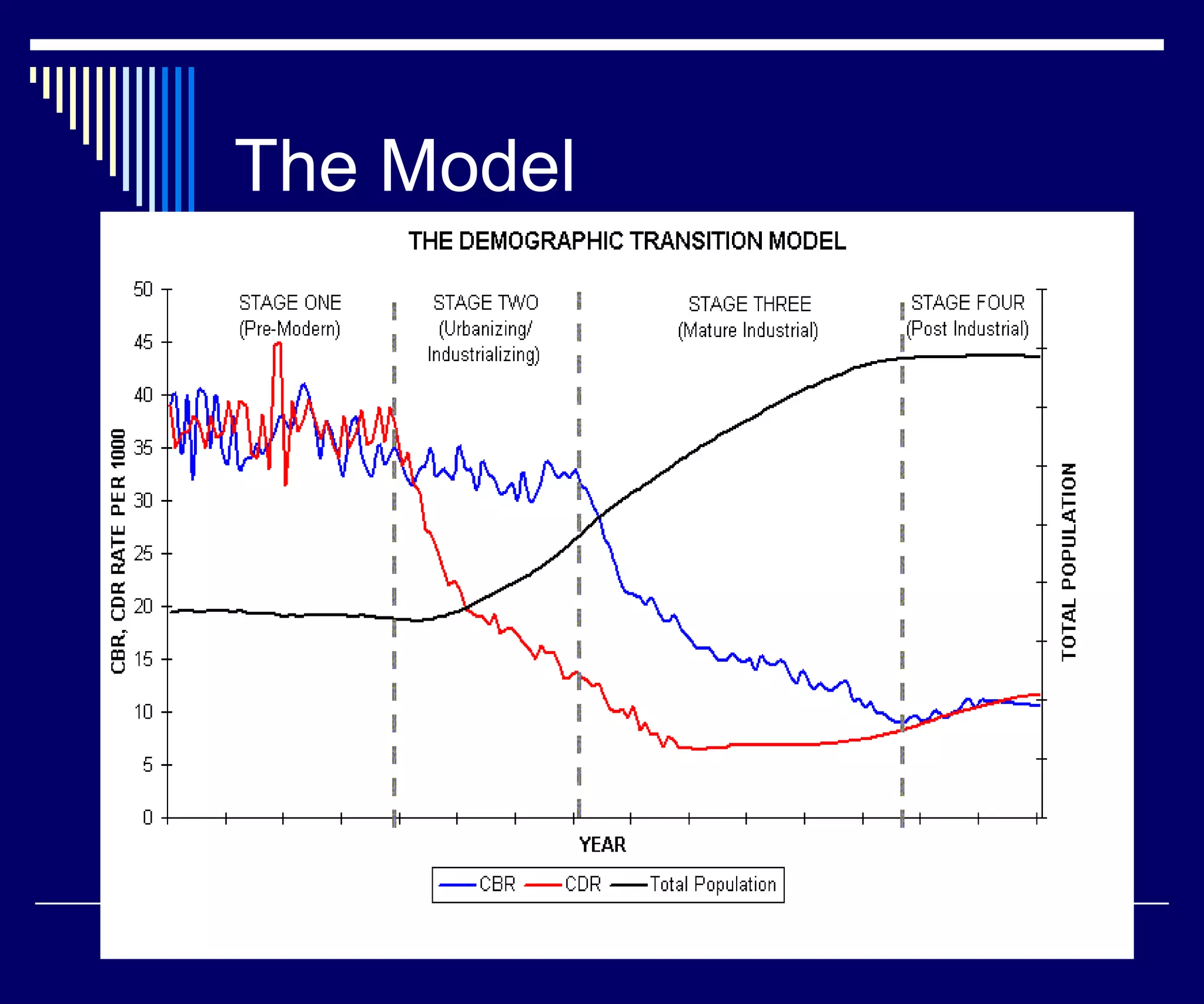
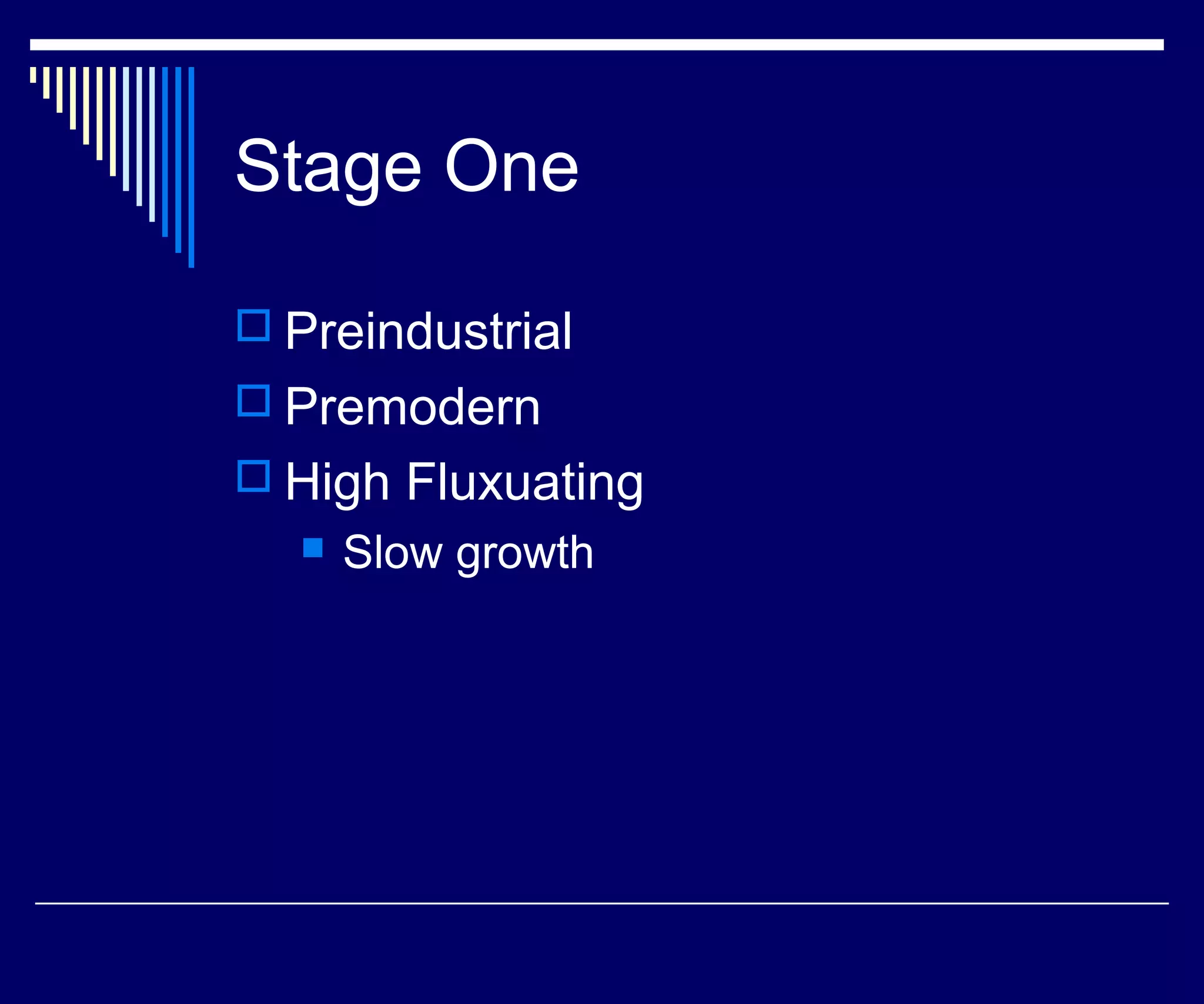
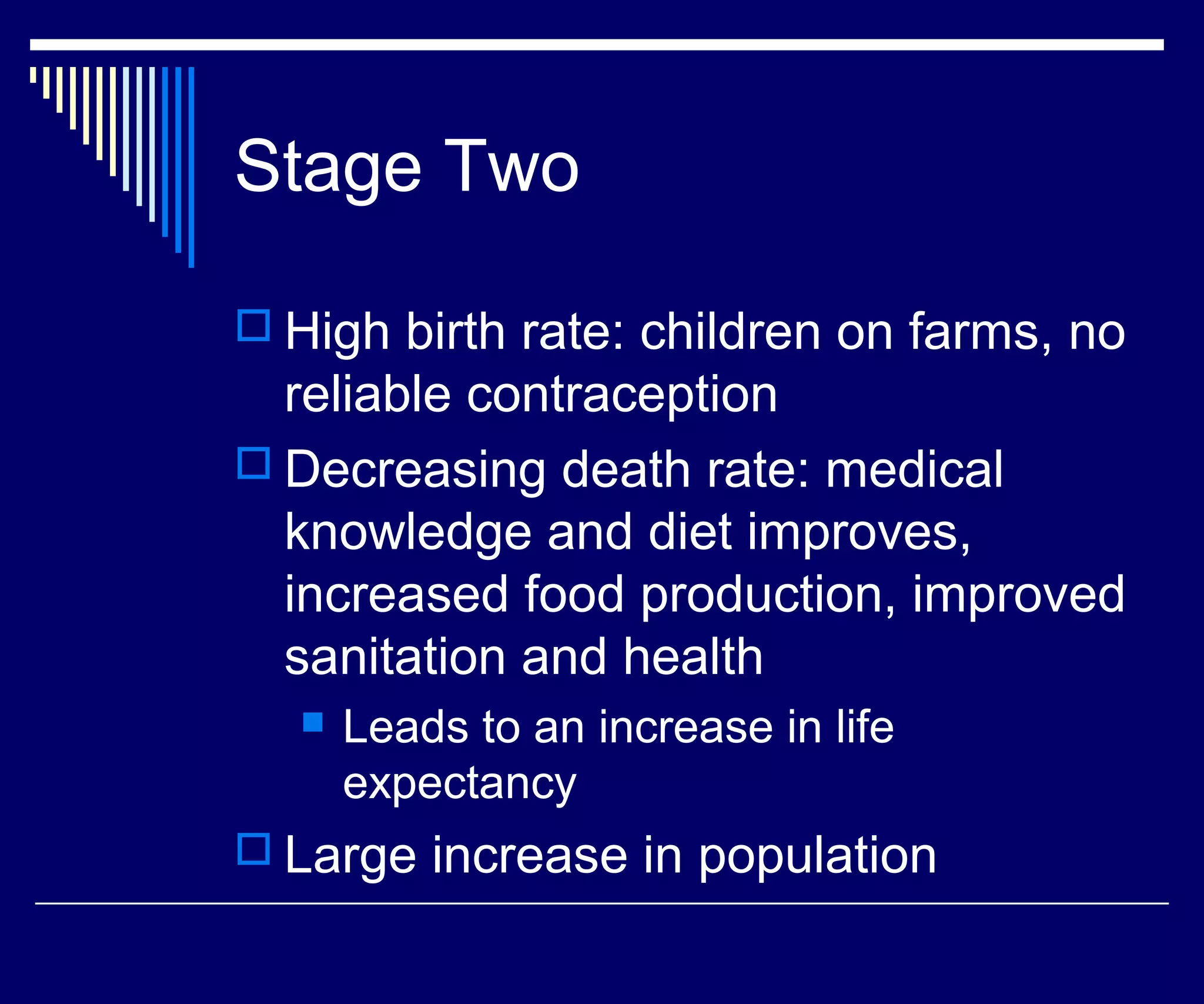
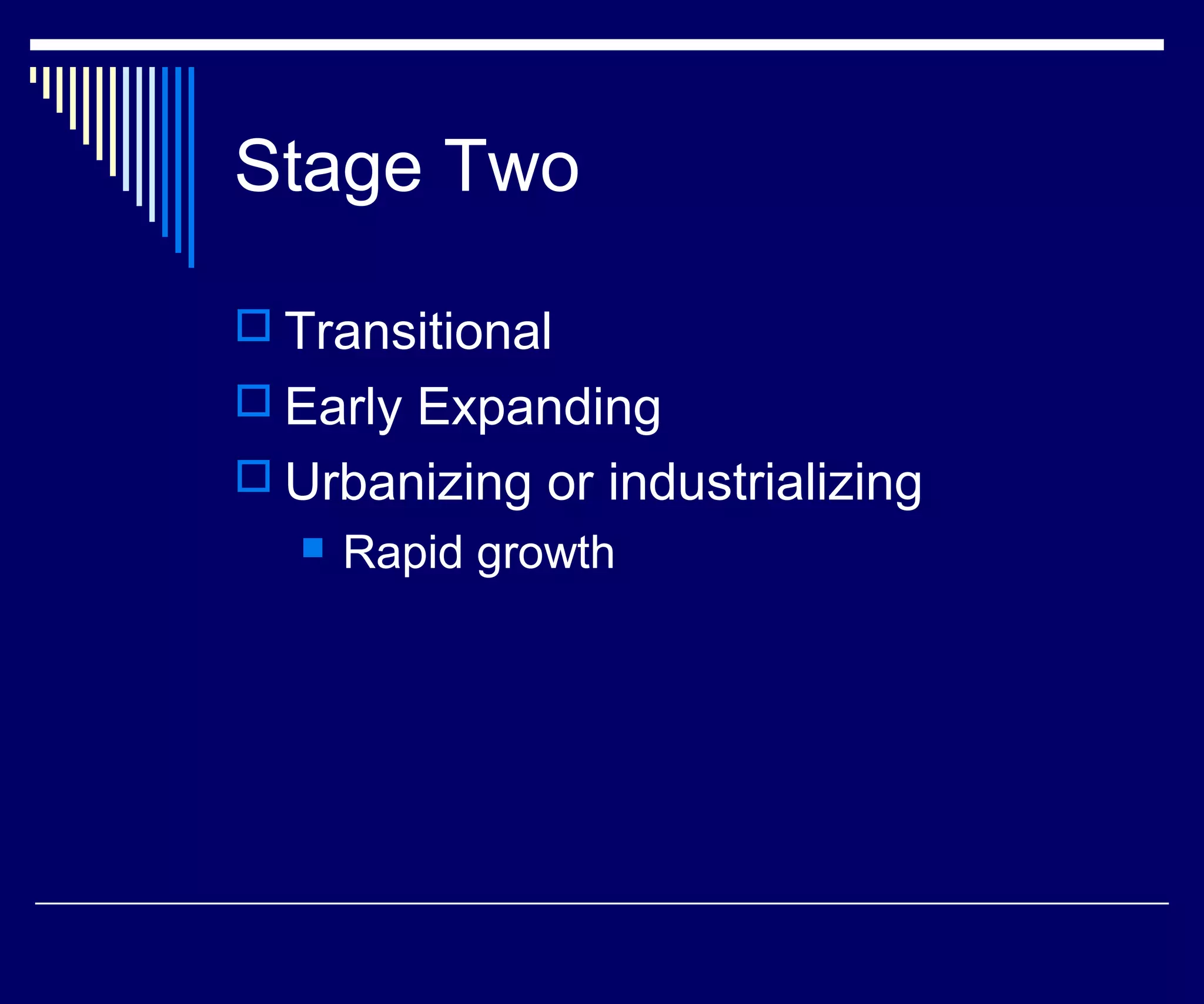
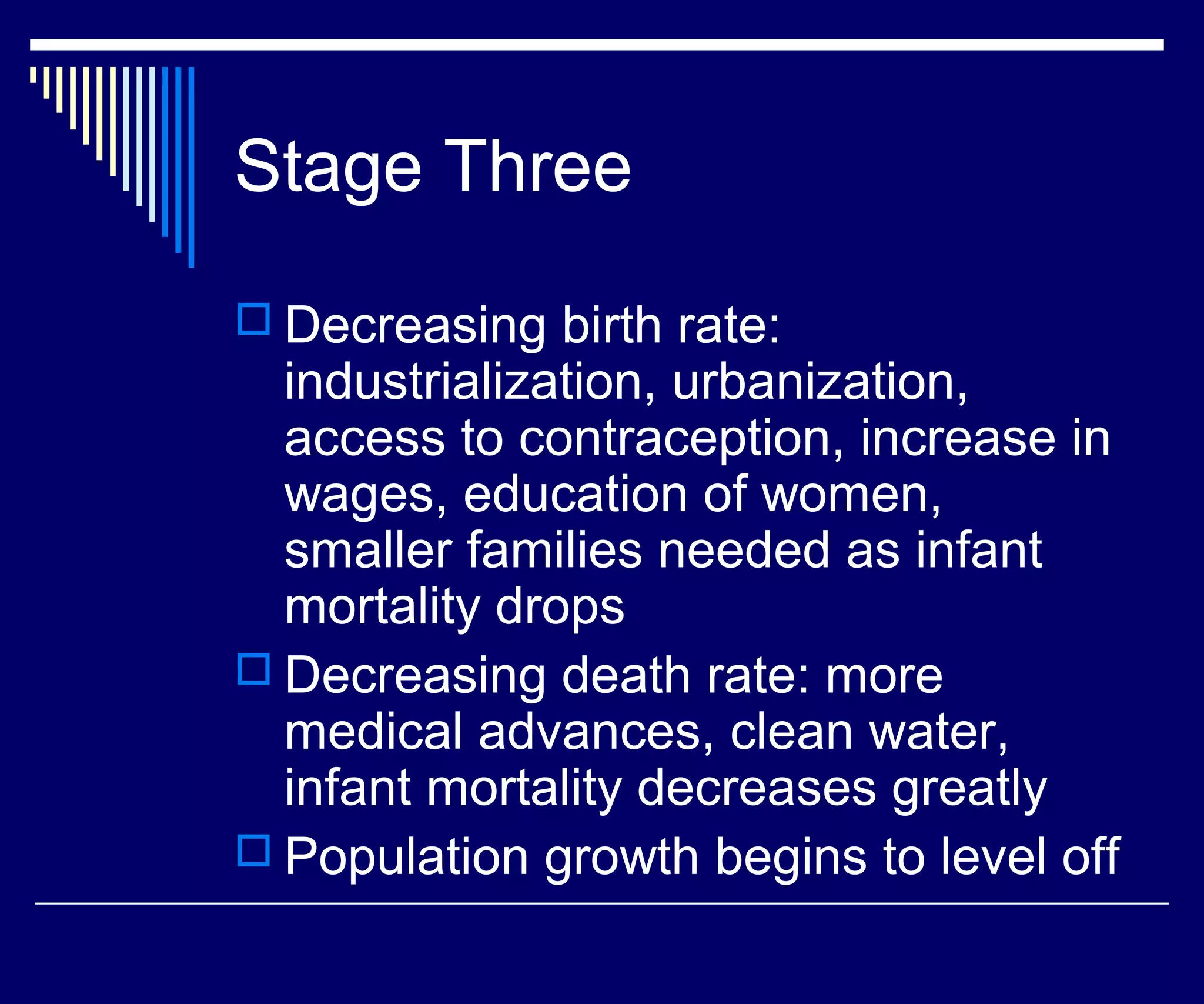
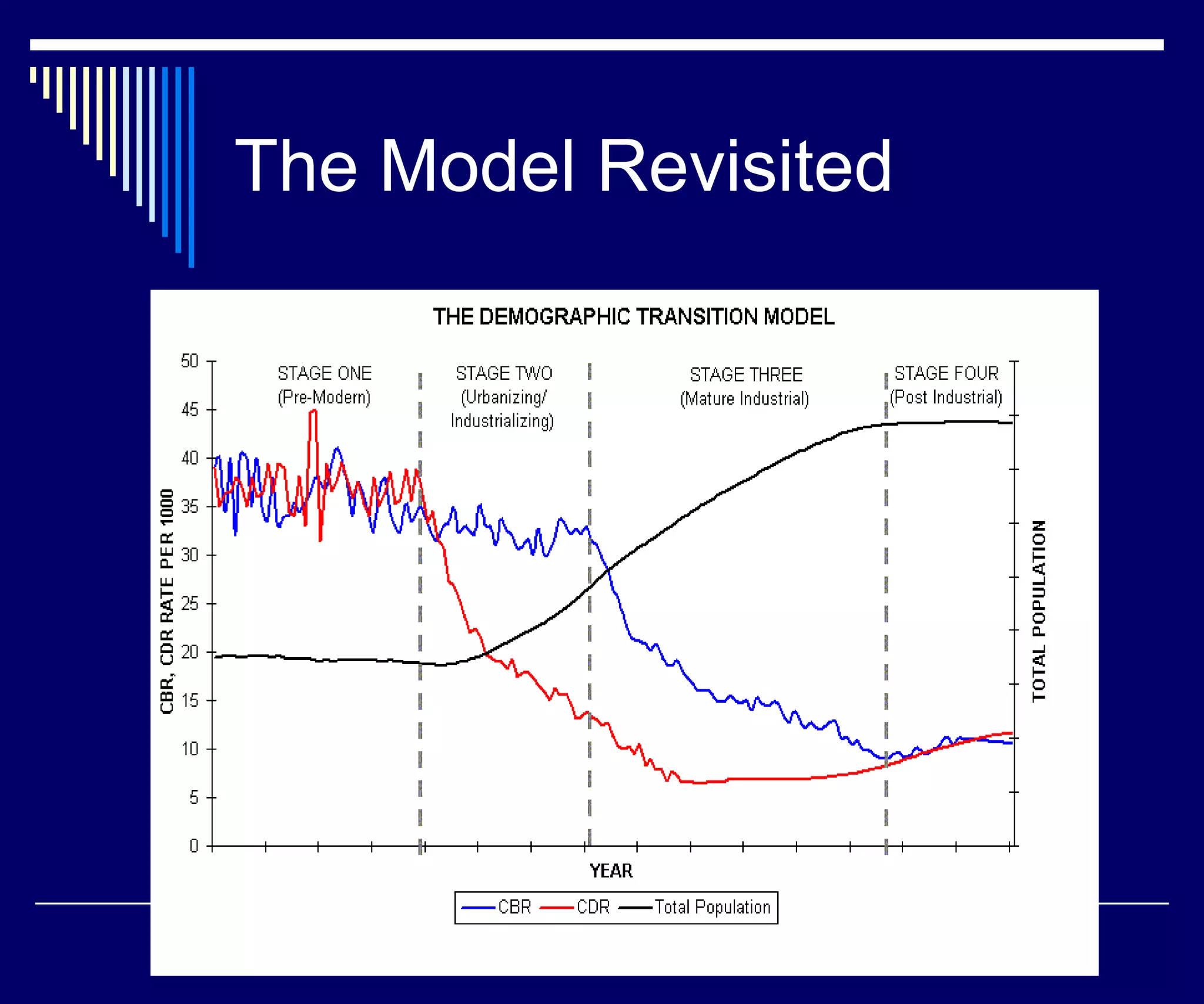
The demographic transition model describes population change over time in four stages:
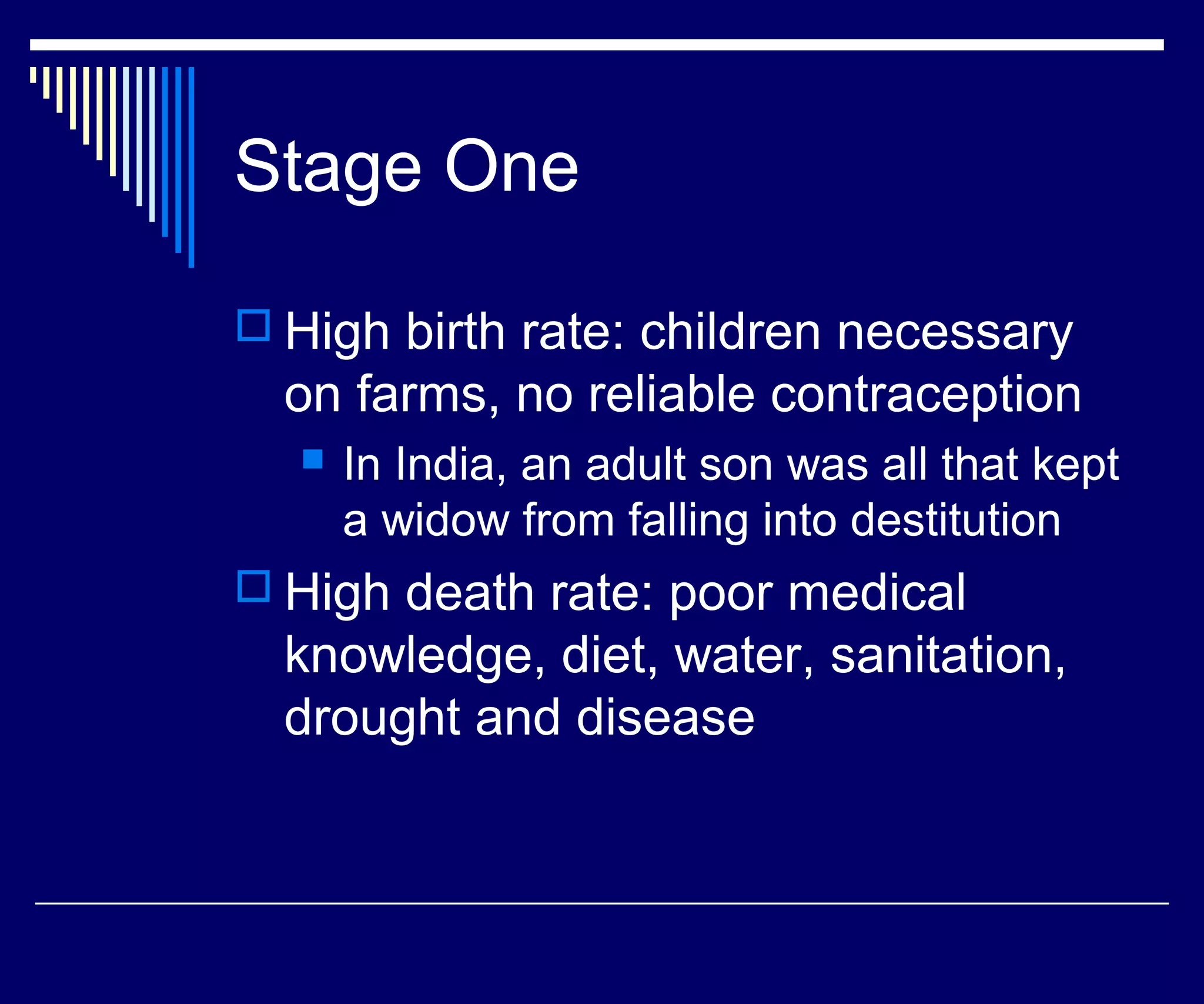
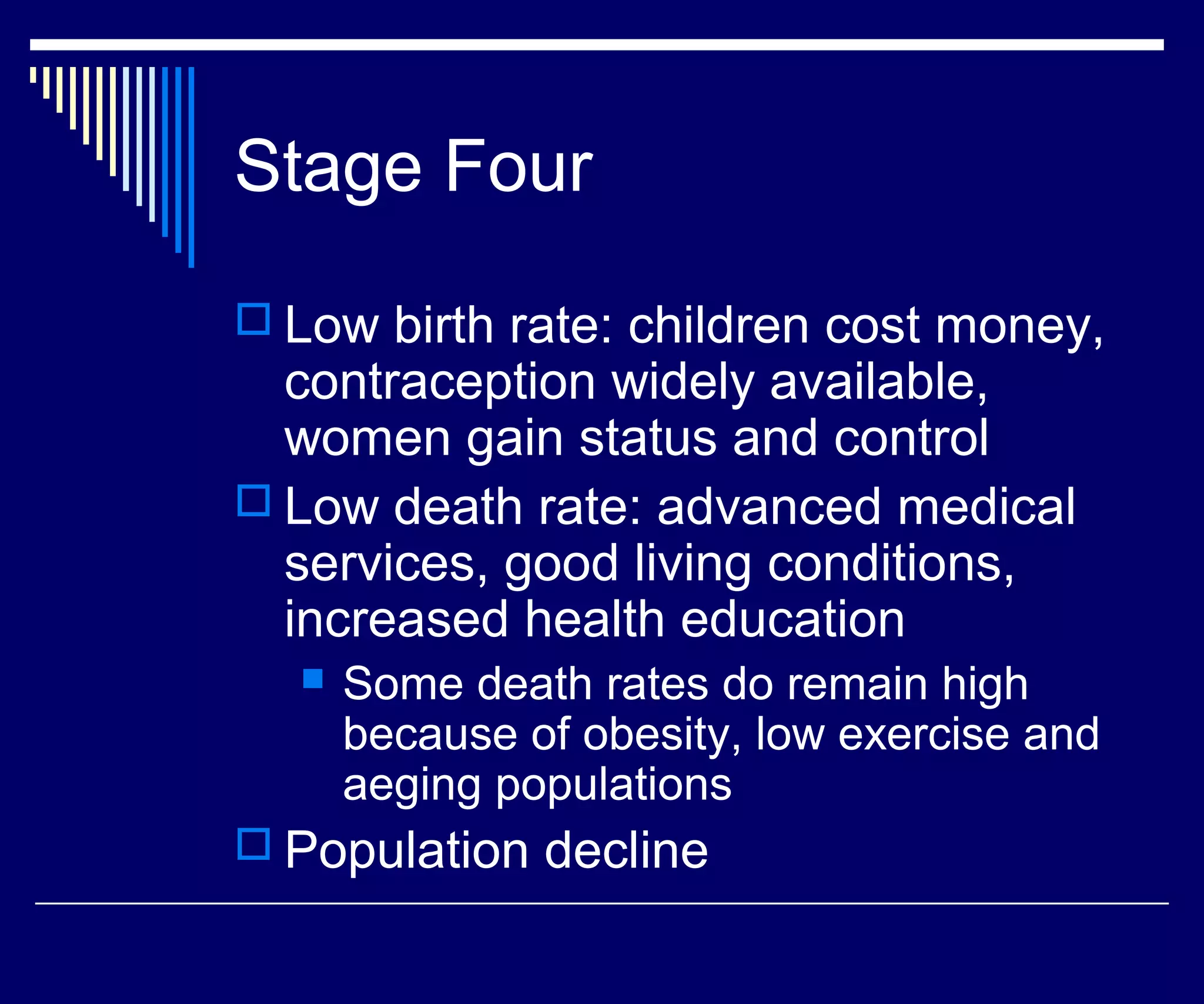
Stage one is characterized by high birth and death rates in preindustrial societies. Stage two sees a decreasing death rate due to improved health and sanitation, while the birth rate remains high, leading to rapid population growth. In stage three, as societies industrialize, the birth rate decreases as families choose to have fewer children, while the death rate continues to decline steadily. Finally, in stage four, populations experience low birth and death rates, with some populations even declining as women have greater control over family planning. The model attempts to generalize population trends in industrialized nations over the last 200 years.