Synapse india 
Reviews 
Networking Concepts 
1
What is Networking? 
Connecting computers 
to form a 
Local Area Network 
( LAN ) 
1
Device Sharing 
Sharing of: 
•Hardware 
•Software 
•Information 
1
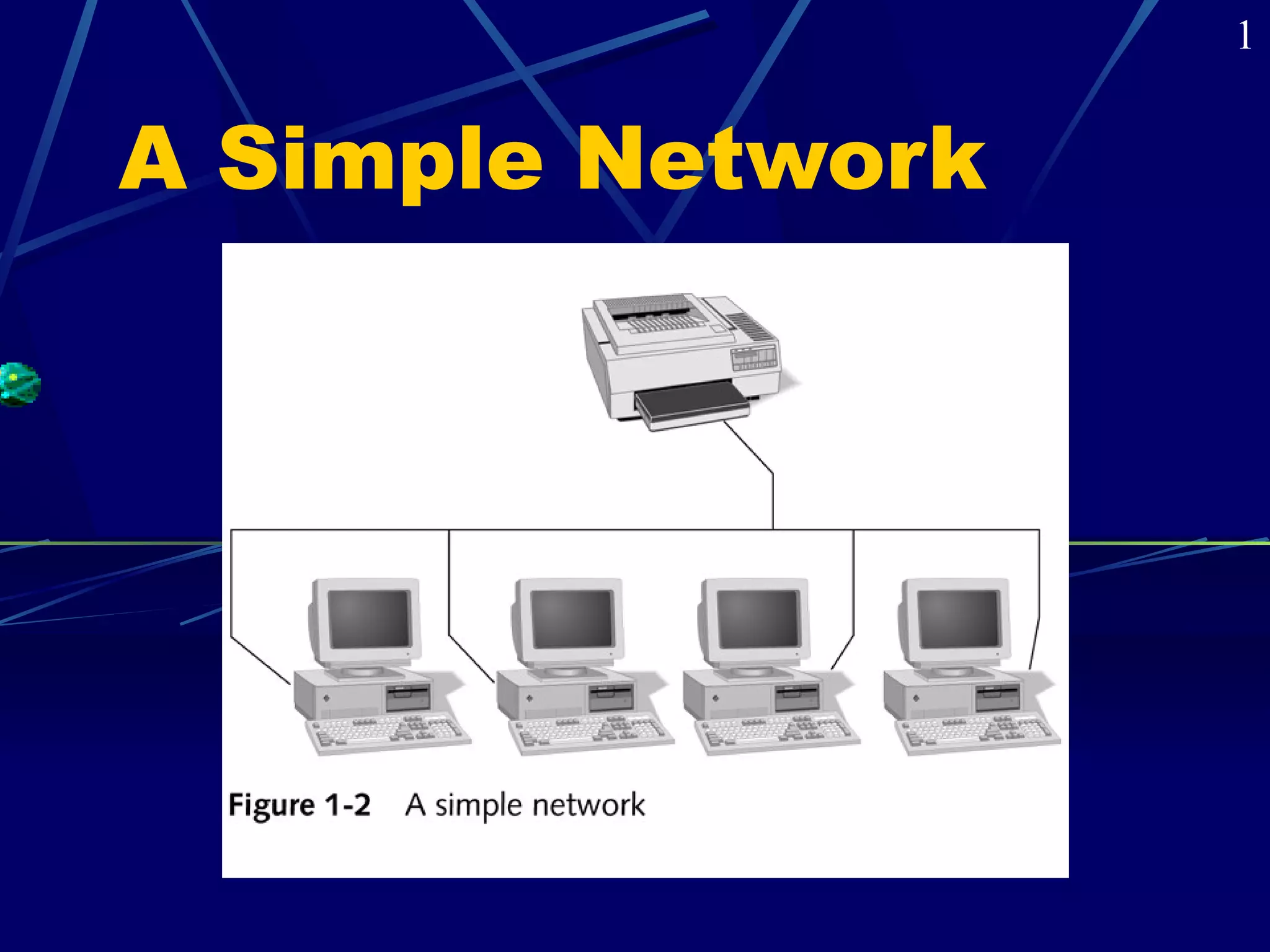
A Simple Network 
1
Local & Wide Area 
Networks 
Early networks were custom built 
Connecting a dozen computers 
Only 1 or 2 peripherals 
Early Ethernet 
30 users 
total span of 601 feet 
1
Local Area Network 
(LAN) 
A single collection of machines & 
peripherals 
Generally less than 1000 computers 
“Spanned” generally less than 250 
meters feet 
Basic building block for larger 
networks-Internetworks 
1
InterNetworks 
IntraNetworks 
A network of networks 
A networked collection of LANs 
More than one floor in a 
business (intranetwork) 
Multiple buildings 
Campus environment 
1
Wide Area Networks 
(WAN) 
Spans miles of distance 
Two or more separate locations 
Down the road or across the 
world 
Microsoft, Federal Express 
1
The Internet 
A WAN internetwork 
Millions of machines worldwide 
The World Wide Web (WWW) 
1
Networking 
Terminology 
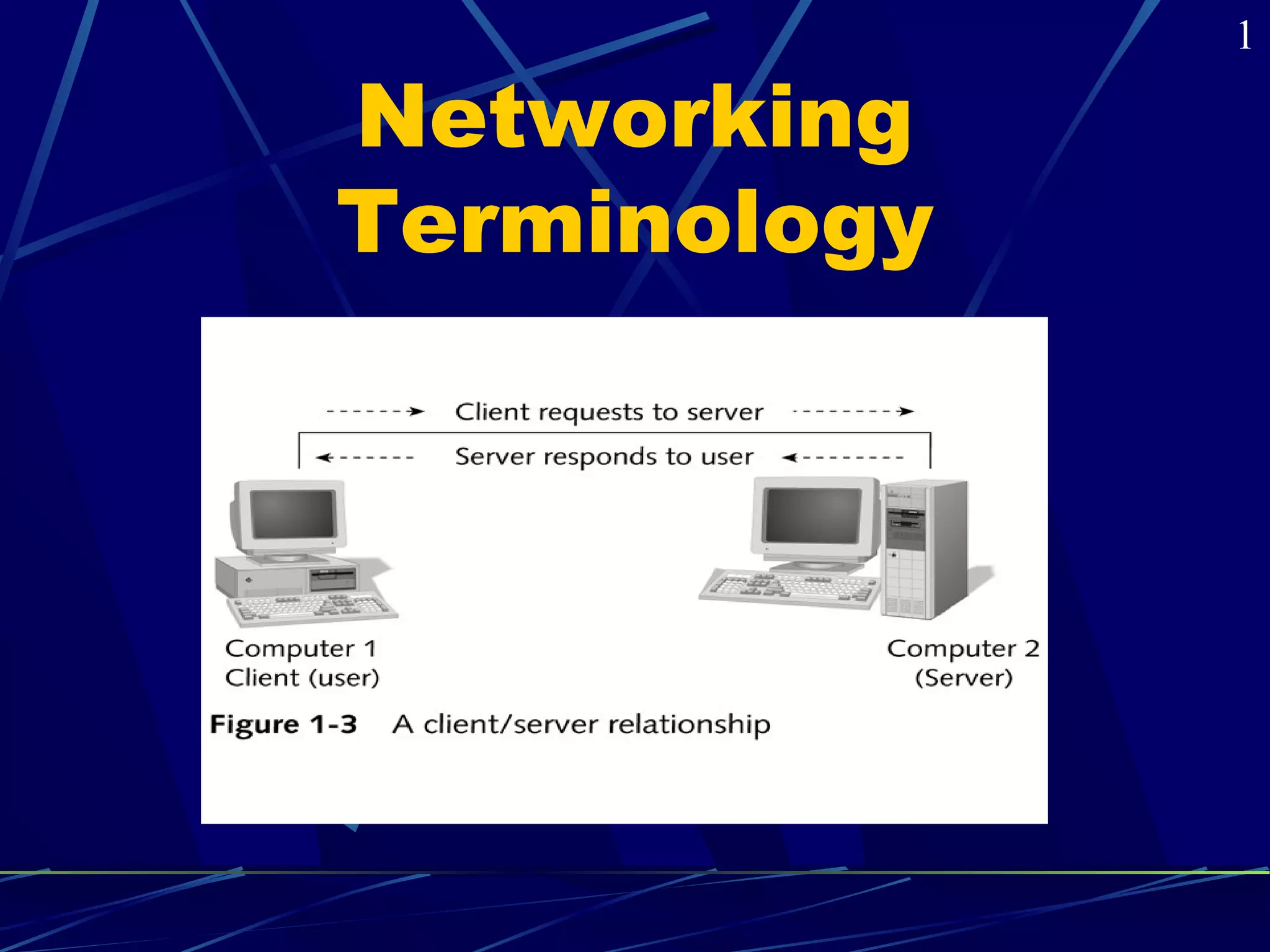
Client/Server relationship 
Client requests shared 
resources 
Server responds & shares 
resources 
1
Networking 
Terminology 
1
Client Server 
Networks 
Concentrate CPU power & storage 
capacity 
Windows NT Server / Server 2000 
Peer to Peer 
Client/Server role interchanges 
Windows 95/98/2000/XP 
1
Simple Network Needs 
Medium to carry data 
Adapter (NIC) 
Protocol 
Client / Server Software
Local Network 
Medium (media) 
Carries network messages 
Connects machines together on 
network 
Four types: 
Metallic cable coaxial - dated 
Twisted pair 
Fiber optic cable 
Wireless 
1
Network Interface 
Card 
(NIC) 
Physical link between machine 
& network 
Connection between machine & 
medium 
Also known as network adapter 
1
1 
Network Protocols 
Common set of communication rules 
Identify ‘oneself” & others on network 
Interpret signals 
Begin & end network communication 
Manage network information exchange
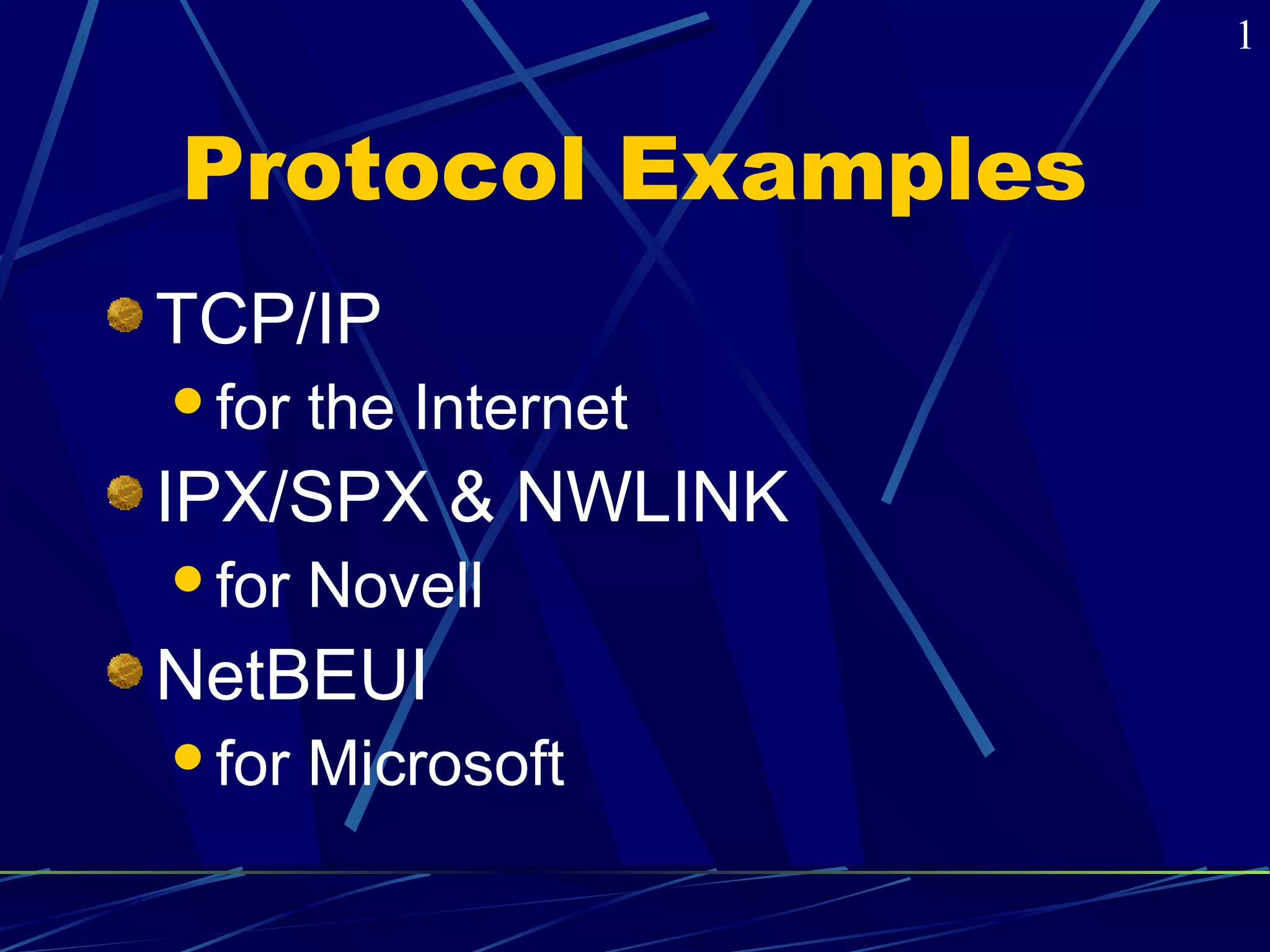
Protocol Examples 
TCP/IP 
for the Internet 
IPX/SPX & NWLINK 
for Novell 
NetBEUI 
for Microsoft 
1
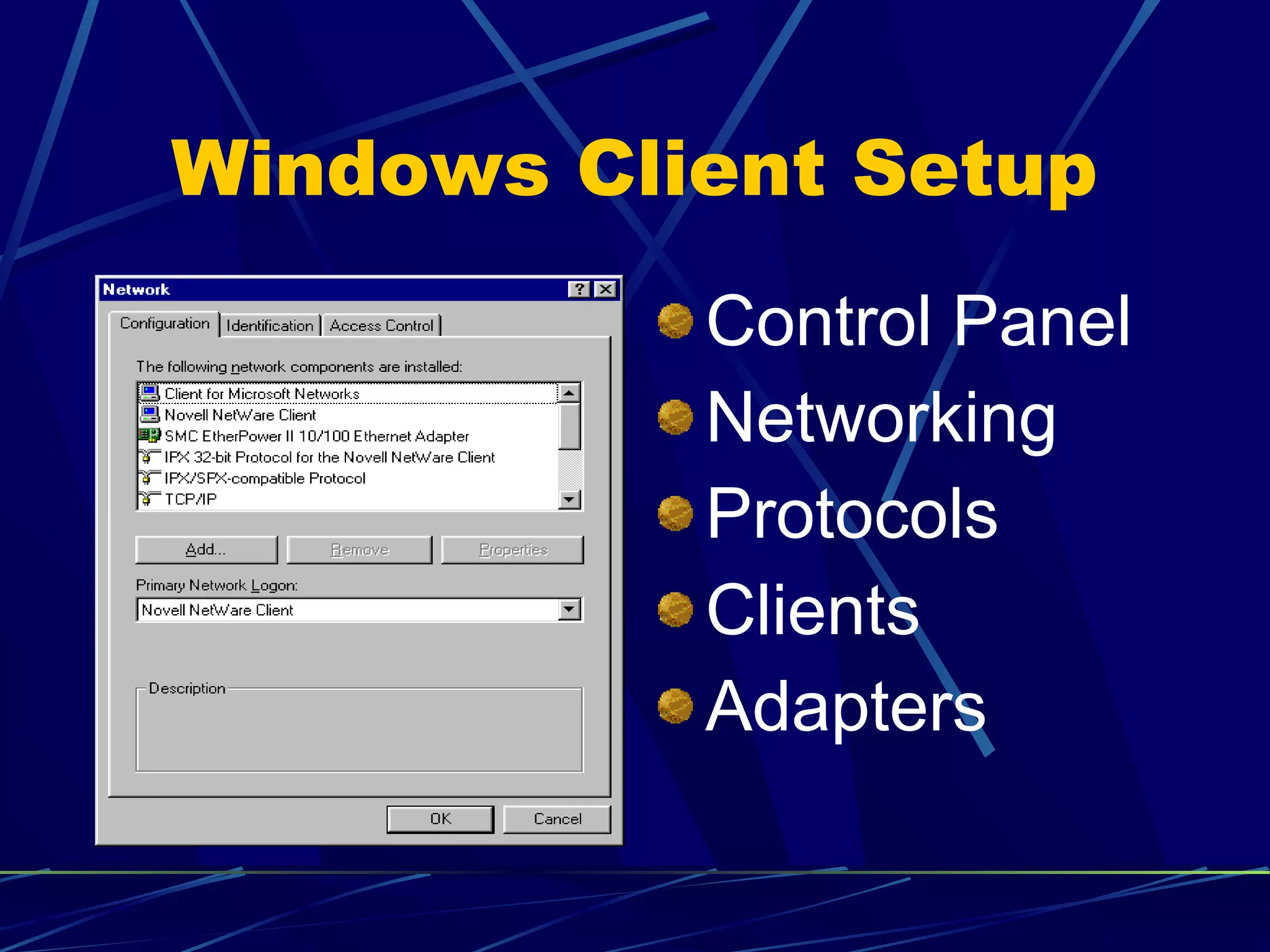
Windows Client Setup 
Control Panel 
Networking 
Protocols 
Clients 
Adapters
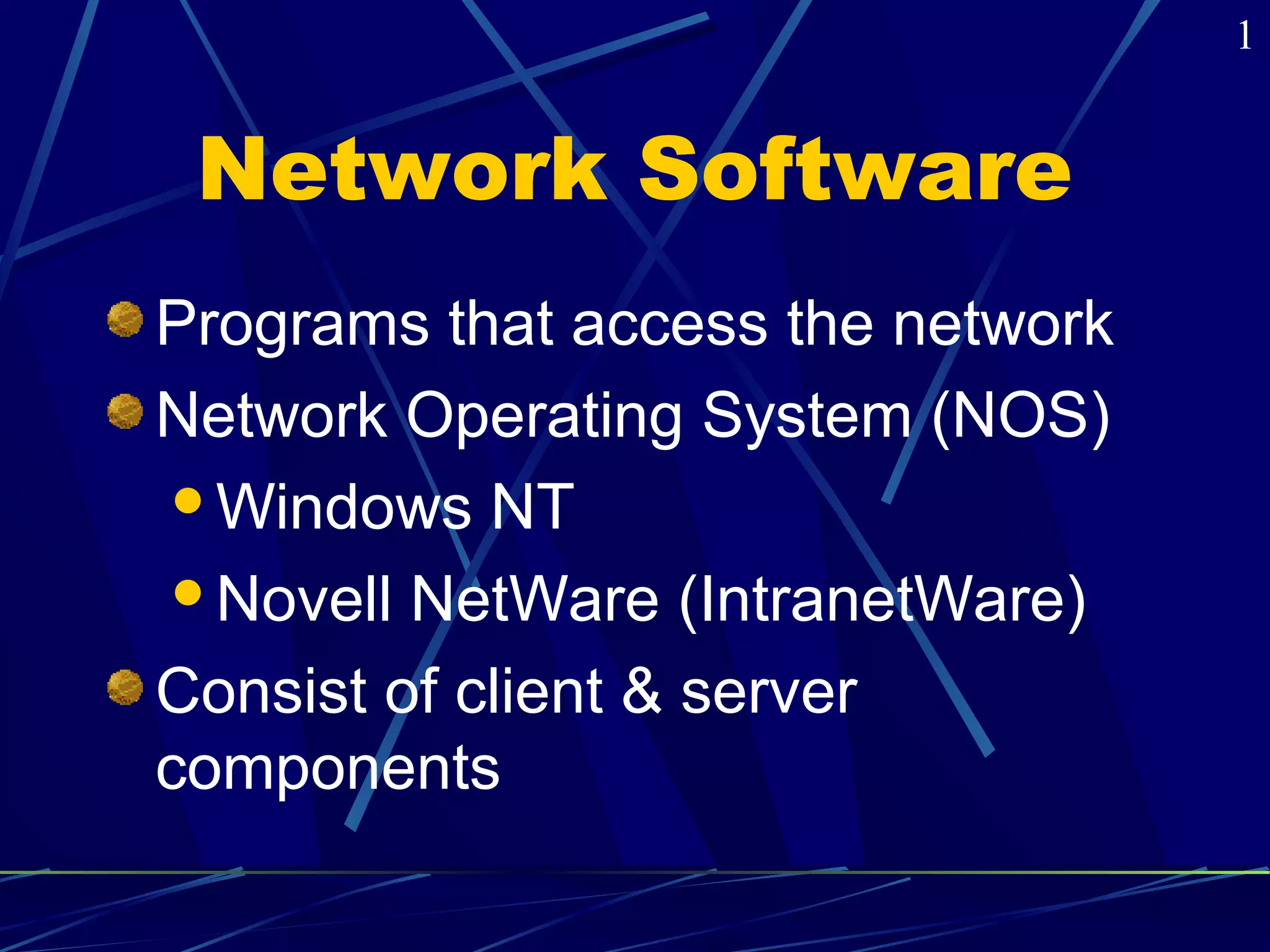
Network Software 
Programs that access the network 
Network Operating System (NOS) 
Windows NT 
Novell NetWare (IntranetWare) 
Consist of client & server 
components 
1
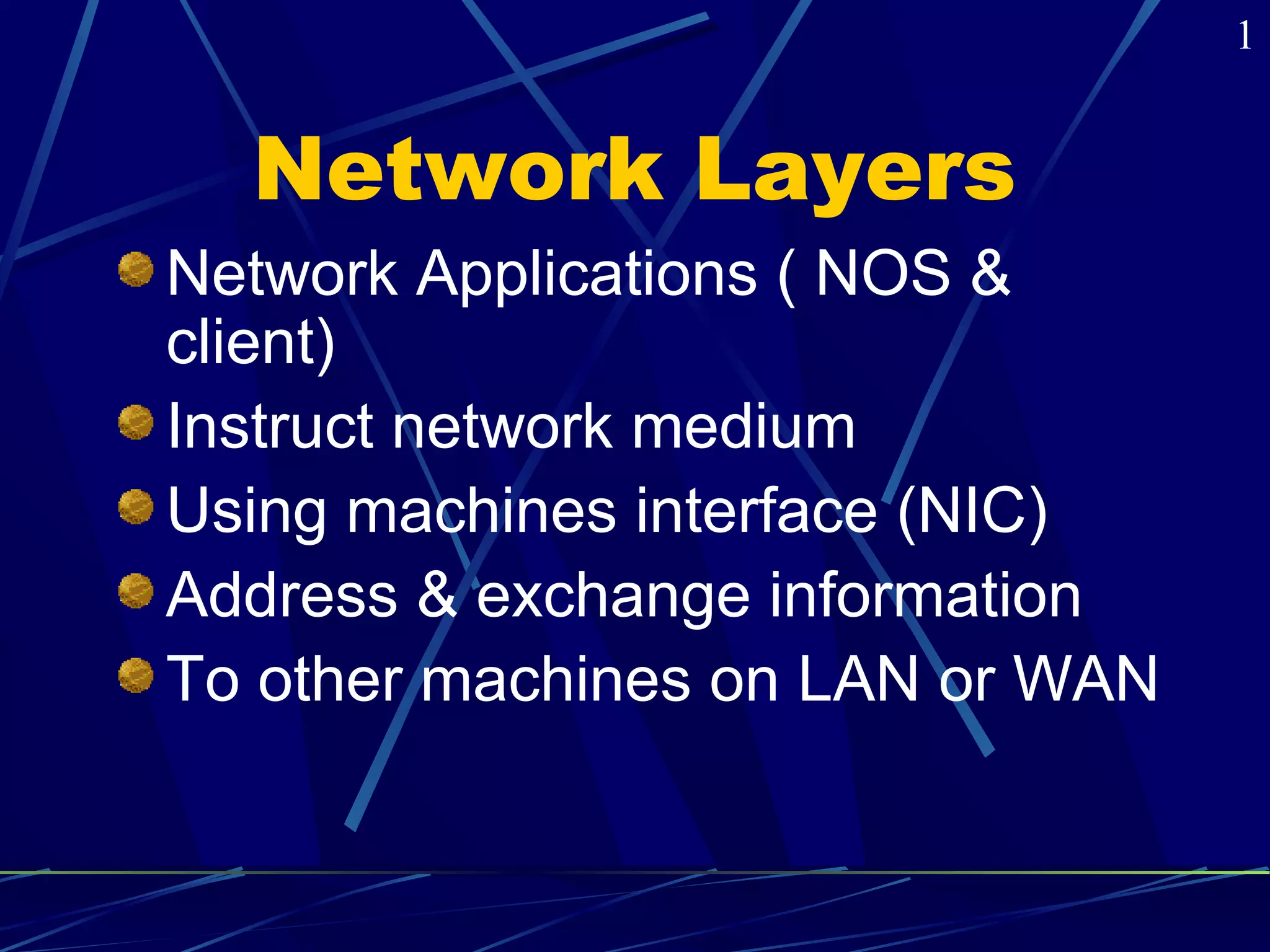
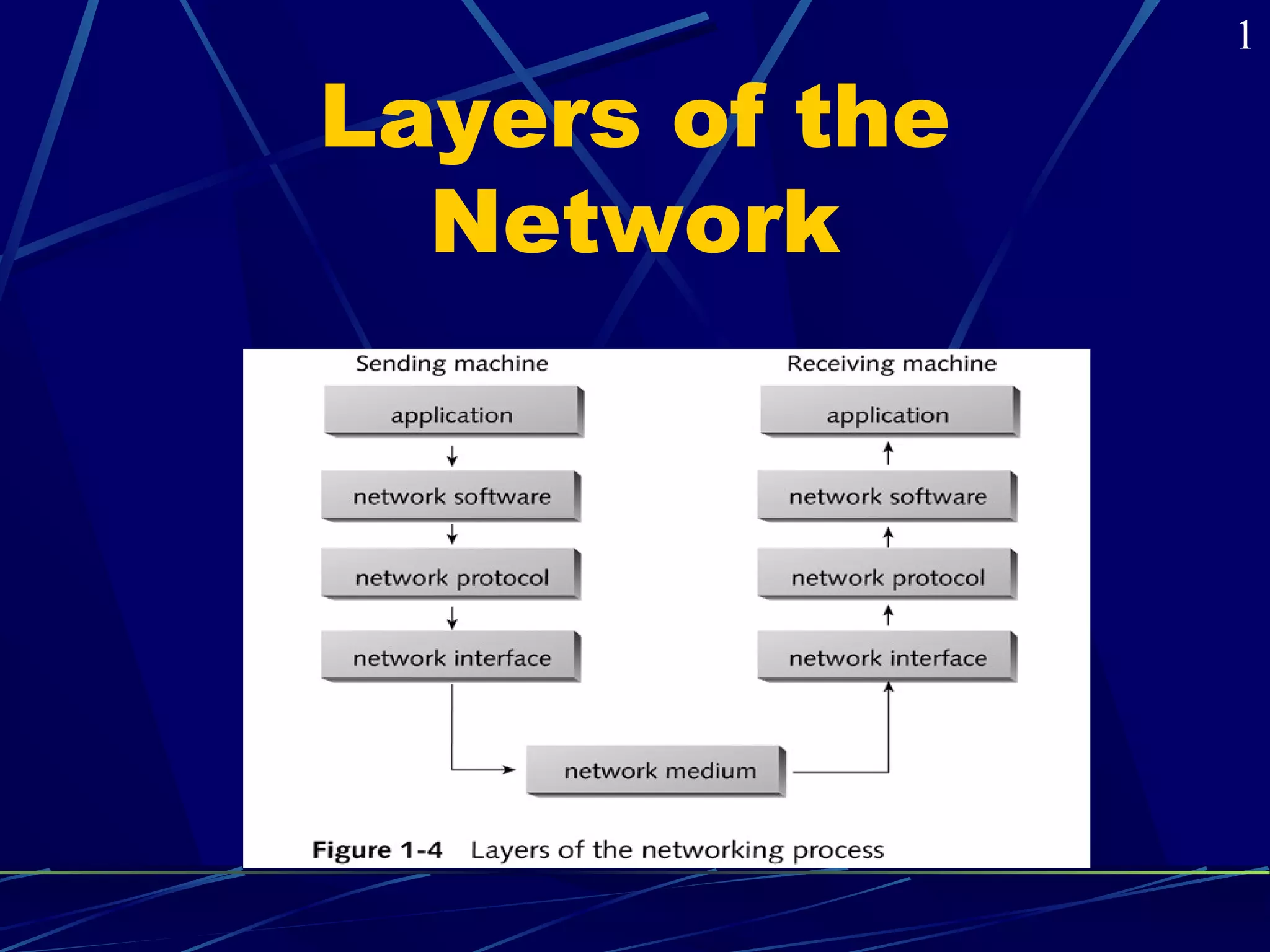
Network Layers 
Network Applications ( NOS & 
client) 
Instruct network medium 
Using machines interface (NIC) 
Address & exchange information 
To other machines on LAN or WAN 
1
Layers of the 
Network 
1
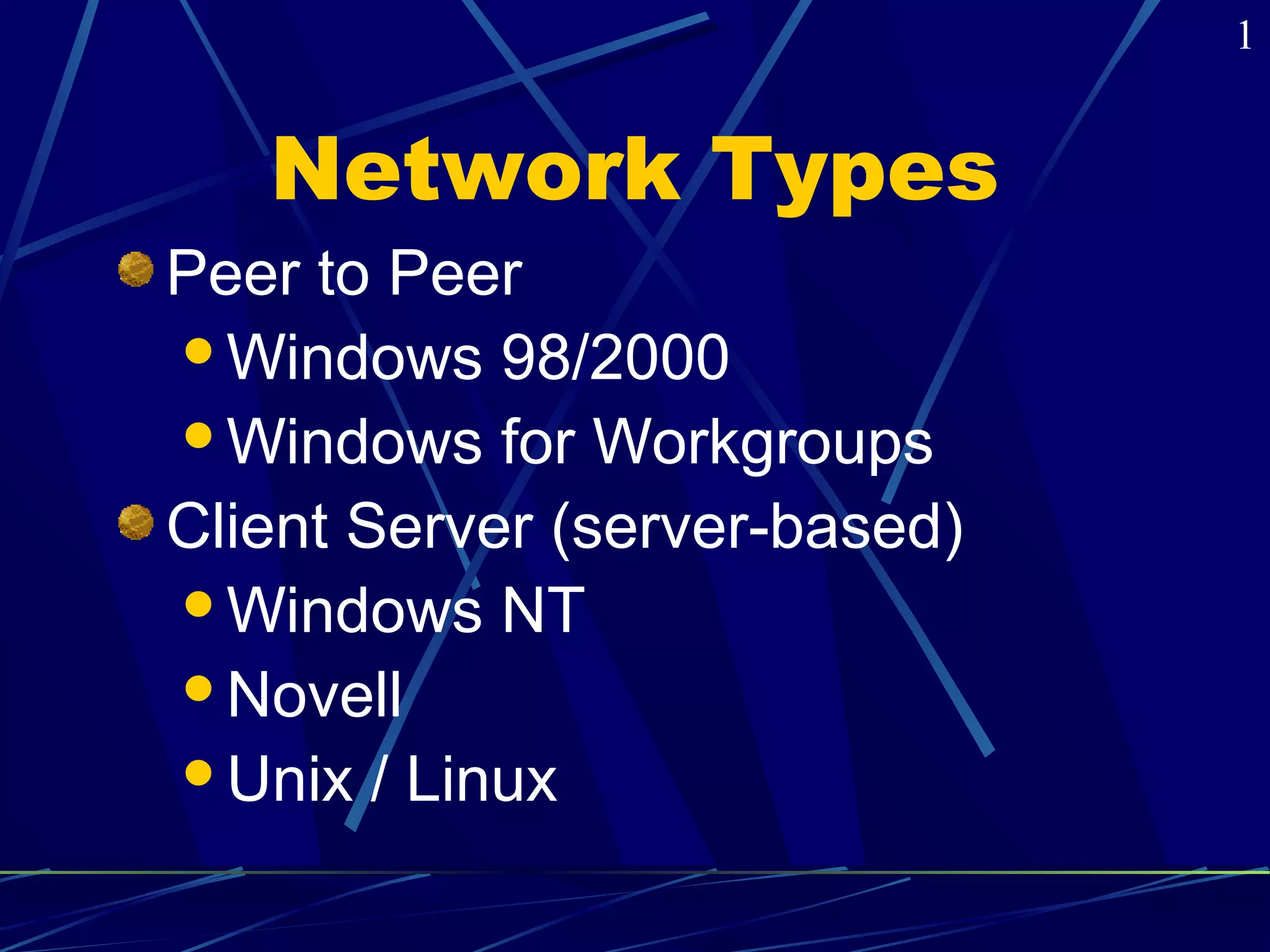
Network Types 
Peer to Peer 
Windows 98/2000 
Windows for Workgroups 
Client Server (server-based) 
Windows NT 
Novell 
Unix / Linux 
1
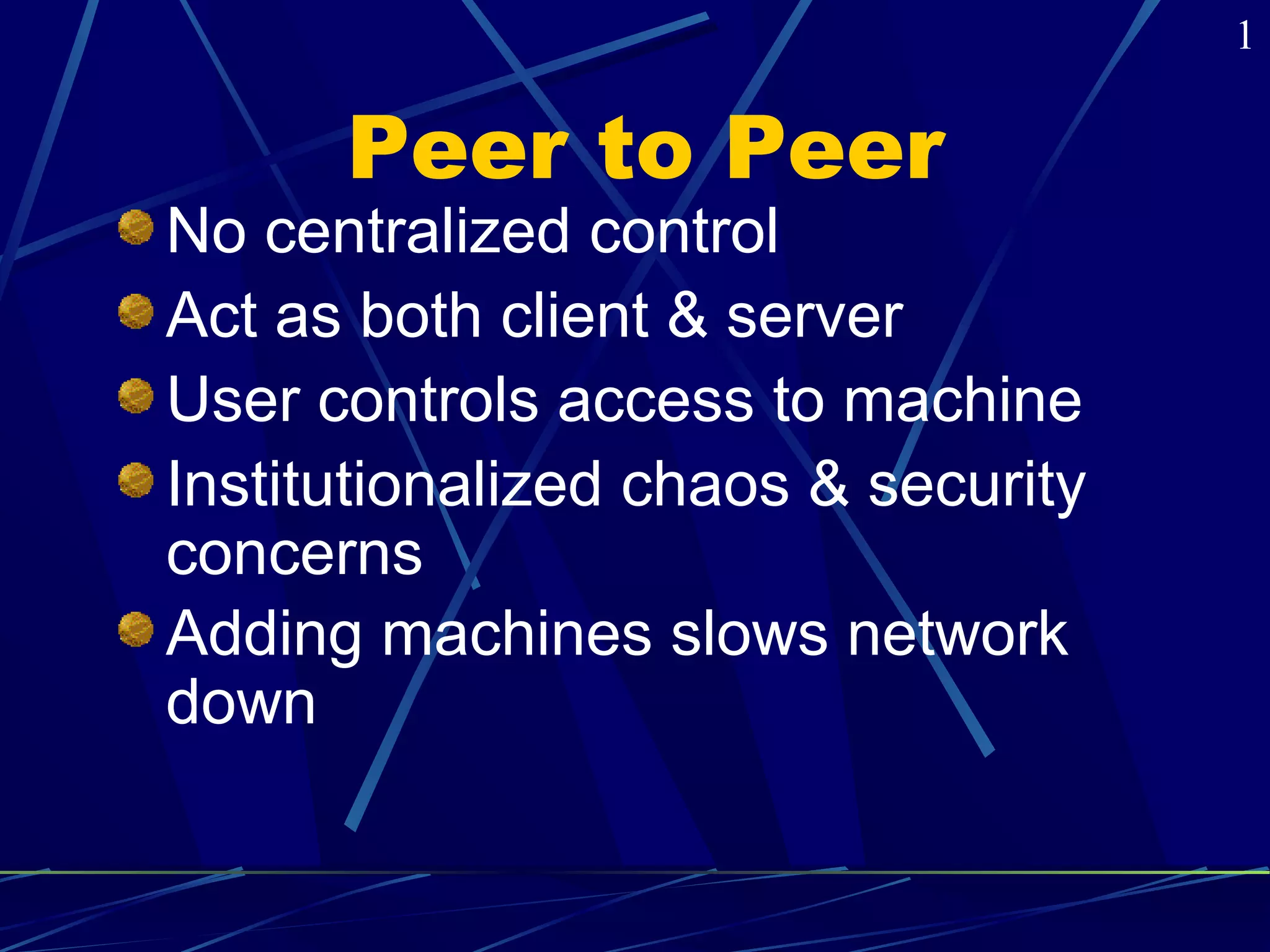
Peer to Peer 
No centralized control 
Act as both client & server 
User controls access to machine 
Institutionalized chaos & security 
concerns 
Adding machines slows network 
down 
1
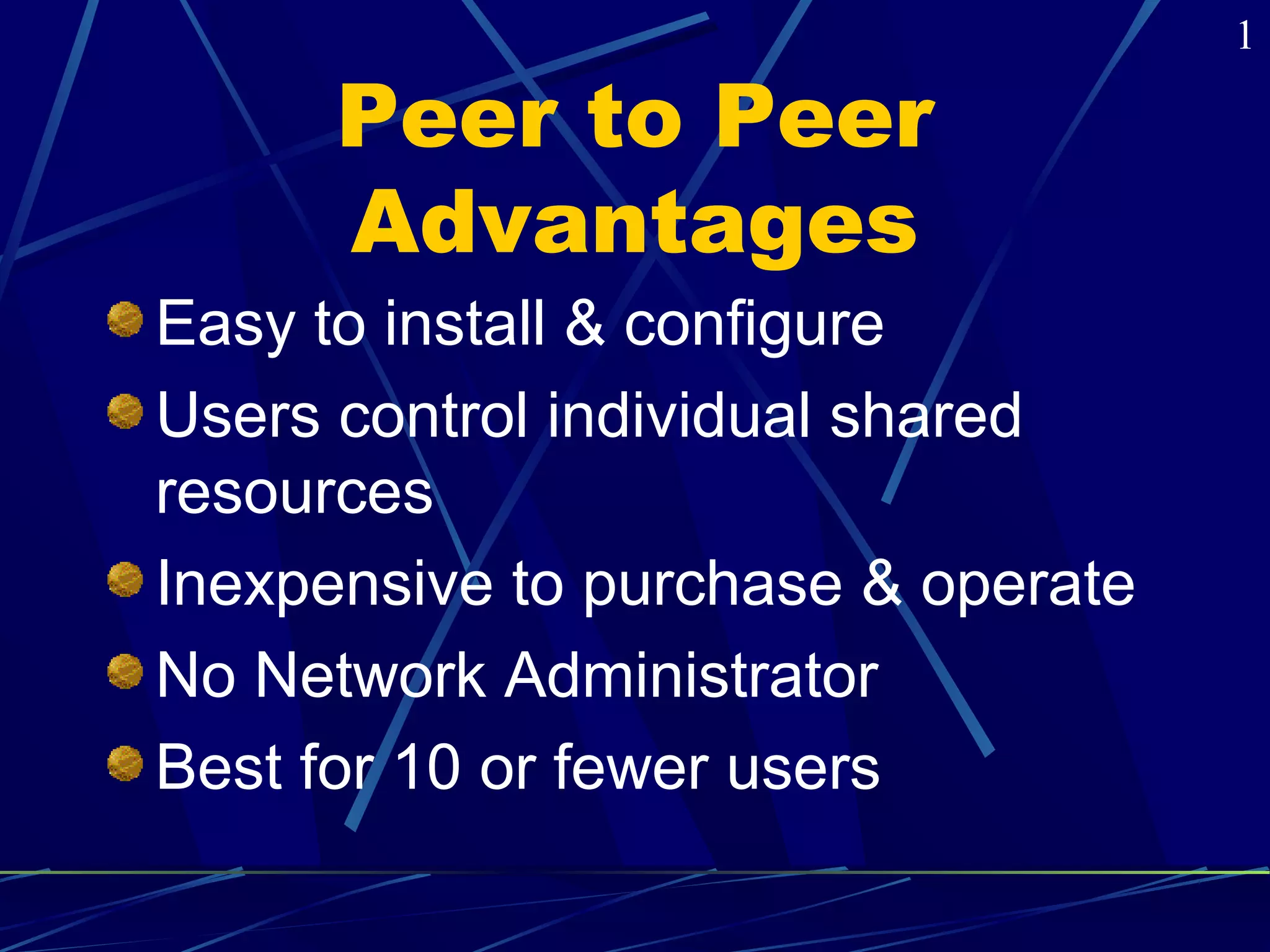
Peer to Peer 
Advantages 
Easy to install & configure 
Users control individual shared 
resources 
Inexpensive to purchase & operate 
No Network Administrator 
Best for 10 or fewer users 
1
Peer to Peer 
Disadvantages 
Security for only a single resource 
at a time 
Users may need to know many 
passwords 
Individual machine backups 
Speed decreases while sharing 
No central location/access of data 
1
Server Based 
Networks 
Server is the key to this type 
Centralized control of resources 
Utilize faster processors 
More memory 
Extra peripherals 
1
Server Security 
Physical access to the server 
Specialized sentry servers 
Domain model 
Account names 
Passwords 
Firewalls 
1
Server Based 
Advantages 
Central security/ accounts/ access 
Simplify network administration 
Powerful/ efficient access to 
resources 
Single password for each user 
Best for high use, user, networks 
1
Server Based 
Disadvantages 
1 
Server failure results in unusable network 
Server failure results in loss of resources 
Expert staff to manage increases cost 
Dedicated hardware increases cost 
Dedicated software increases cost 
All disadvantages may be overcome 
with $$$
Hybrid Networks 
Combination networks 
Windows 95/98/2000 
Windows NT Server/Server 
2000 
Windows NT Workstation 
1
Server Hardware 
Requirements 
High Speed Drives –Mirrored or 
RAID 
512 MB Memory Minimum 
High Quality NIC(s) 
High-end Processor(s) 
1
Specialized Servers 
Individual services supplied 
Application Servers 
Communication Servers 
Domain Controllers/Directory 
Servers 
Fax Servers 
1
Specialized Servers 
(cont.) 
Mail Servers 
Web Servers 
File & Print Servers 
1
Application Servers 
Server side of Client/Server 
applications 
Supply application services and 
data 
Provide processing services 
Microsoft SQL Server runs on 
Windows NT Server 
1
Communication 
Servers 
Access beyond networks local scope 
Inbound & outbound resource access 
Dial in via modem 
Windows NT server Remote Access 
Server 
(RAS) manages dial in network 
connections 
1
Domain Controllers/ 
Directory Servers 
Locate, store, & secure information 
about network 
Allows computers, users, groups, & 
resources to be combined into 
domains 
Domain access allows single login 
to all allowed resources 
1
Fax Servers 
Manage network fax traffic 
Receive incoming telephone 
faxes 
Distribute to network users 
Collect outgoing network faxes 
Send outgoing telephone faxes 
1
File and Print Servers 
File storage & File retrieval 
Access to network printers 
Applications run locally 
Store data on server 
Window NT server is capable 
1
Mail Servers 
E-mail for network users 
Allow local exchange of messages 
Permit server based storage of 
messages 
Forward user messages to 
destination 
Microsoft Exchange Server 
1
Web Servers 
World Wide Web (WWW) 
File Transfer Protocol (FTP) 
Gopher services 
Intranets 
NT Server Internet Information 
Server (IIS) 
1
Selecting the Right 
Network 
Budget considerations, number of 
users? 
Physical span of the network? 
Specialized servers, services desired? 
Internetwork or WAN access? 
Future growth? 
1
Summary 
Basic elements to build a network 
Medium, physical interface, protocol 
Networking software-client & server 
Basic network types 
Peer to Peer 
Server based 
1

Synapse india reviews abot Networking Concept

  • 1.
    Synapse india Reviews Networking Concepts 1
  • 2.
    What is Networking? Connecting computers to form a Local Area Network ( LAN ) 1
  • 3.
    Device Sharing Sharingof: •Hardware •Software •Information 1
  • 4.
  • 5.
    Local & WideArea Networks Early networks were custom built Connecting a dozen computers Only 1 or 2 peripherals Early Ethernet 30 users total span of 601 feet 1
  • 6.
    Local Area Network (LAN) A single collection of machines & peripherals Generally less than 1000 computers “Spanned” generally less than 250 meters feet Basic building block for larger networks-Internetworks 1
  • 7.
    InterNetworks IntraNetworks Anetwork of networks A networked collection of LANs More than one floor in a business (intranetwork) Multiple buildings Campus environment 1
  • 8.
    Wide Area Networks (WAN) Spans miles of distance Two or more separate locations Down the road or across the world Microsoft, Federal Express 1
  • 9.
    The Internet AWAN internetwork Millions of machines worldwide The World Wide Web (WWW) 1
  • 10.
    Networking Terminology Client/Serverrelationship Client requests shared resources Server responds & shares resources 1
  • 11.
  • 12.
    Client Server Networks Concentrate CPU power & storage capacity Windows NT Server / Server 2000 Peer to Peer Client/Server role interchanges Windows 95/98/2000/XP 1
  • 13.
    Simple Network Needs Medium to carry data Adapter (NIC) Protocol Client / Server Software
  • 14.
    Local Network Medium(media) Carries network messages Connects machines together on network Four types: Metallic cable coaxial - dated Twisted pair Fiber optic cable Wireless 1
  • 15.
    Network Interface Card (NIC) Physical link between machine & network Connection between machine & medium Also known as network adapter 1
  • 16.
    1 Network Protocols Common set of communication rules Identify ‘oneself” & others on network Interpret signals Begin & end network communication Manage network information exchange
  • 17.
    Protocol Examples TCP/IP for the Internet IPX/SPX & NWLINK for Novell NetBEUI for Microsoft 1
  • 18.
    Windows Client Setup Control Panel Networking Protocols Clients Adapters
  • 19.
    Network Software Programsthat access the network Network Operating System (NOS) Windows NT Novell NetWare (IntranetWare) Consist of client & server components 1
  • 20.
    Network Layers NetworkApplications ( NOS & client) Instruct network medium Using machines interface (NIC) Address & exchange information To other machines on LAN or WAN 1
  • 21.
    Layers of the Network 1
  • 22.
    Network Types Peerto Peer Windows 98/2000 Windows for Workgroups Client Server (server-based) Windows NT Novell Unix / Linux 1
  • 23.
    Peer to Peer No centralized control Act as both client & server User controls access to machine Institutionalized chaos & security concerns Adding machines slows network down 1
  • 24.
    Peer to Peer Advantages Easy to install & configure Users control individual shared resources Inexpensive to purchase & operate No Network Administrator Best for 10 or fewer users 1
  • 25.
    Peer to Peer Disadvantages Security for only a single resource at a time Users may need to know many passwords Individual machine backups Speed decreases while sharing No central location/access of data 1
  • 26.
    Server Based Networks Server is the key to this type Centralized control of resources Utilize faster processors More memory Extra peripherals 1
  • 27.
    Server Security Physicalaccess to the server Specialized sentry servers Domain model Account names Passwords Firewalls 1
  • 28.
    Server Based Advantages Central security/ accounts/ access Simplify network administration Powerful/ efficient access to resources Single password for each user Best for high use, user, networks 1
  • 29.
    Server Based Disadvantages 1 Server failure results in unusable network Server failure results in loss of resources Expert staff to manage increases cost Dedicated hardware increases cost Dedicated software increases cost All disadvantages may be overcome with $$$
  • 30.
    Hybrid Networks Combinationnetworks Windows 95/98/2000 Windows NT Server/Server 2000 Windows NT Workstation 1
  • 31.
    Server Hardware Requirements High Speed Drives –Mirrored or RAID 512 MB Memory Minimum High Quality NIC(s) High-end Processor(s) 1
  • 32.
    Specialized Servers Individualservices supplied Application Servers Communication Servers Domain Controllers/Directory Servers Fax Servers 1
  • 33.
    Specialized Servers (cont.) Mail Servers Web Servers File & Print Servers 1
  • 34.
    Application Servers Serverside of Client/Server applications Supply application services and data Provide processing services Microsoft SQL Server runs on Windows NT Server 1
  • 35.
    Communication Servers Accessbeyond networks local scope Inbound & outbound resource access Dial in via modem Windows NT server Remote Access Server (RAS) manages dial in network connections 1
  • 36.
    Domain Controllers/ DirectoryServers Locate, store, & secure information about network Allows computers, users, groups, & resources to be combined into domains Domain access allows single login to all allowed resources 1
  • 37.
    Fax Servers Managenetwork fax traffic Receive incoming telephone faxes Distribute to network users Collect outgoing network faxes Send outgoing telephone faxes 1
  • 38.
    File and PrintServers File storage & File retrieval Access to network printers Applications run locally Store data on server Window NT server is capable 1
  • 39.
    Mail Servers E-mailfor network users Allow local exchange of messages Permit server based storage of messages Forward user messages to destination Microsoft Exchange Server 1
  • 40.
    Web Servers WorldWide Web (WWW) File Transfer Protocol (FTP) Gopher services Intranets NT Server Internet Information Server (IIS) 1
  • 41.
    Selecting the Right Network Budget considerations, number of users? Physical span of the network? Specialized servers, services desired? Internetwork or WAN access? Future growth? 1
  • 42.
    Summary Basic elementsto build a network Medium, physical interface, protocol Networking software-client & server Basic network types Peer to Peer Server based 1