

Peer-to-Peer Network
Prepared by:
EILLEN IVY A. PORTUGUEZ
Peer-to-Peer Network
 Devices are connected directly to each other without any additional
networking devices between them.
 Devices has equivalent capabilities and responsibilities.
 Network has no central point of control or administration
 Allows certain files to be shared with everyone or selected users.
 Common in small offices that do not use a dedicated file server.
Example of Peer-to-Peer Network
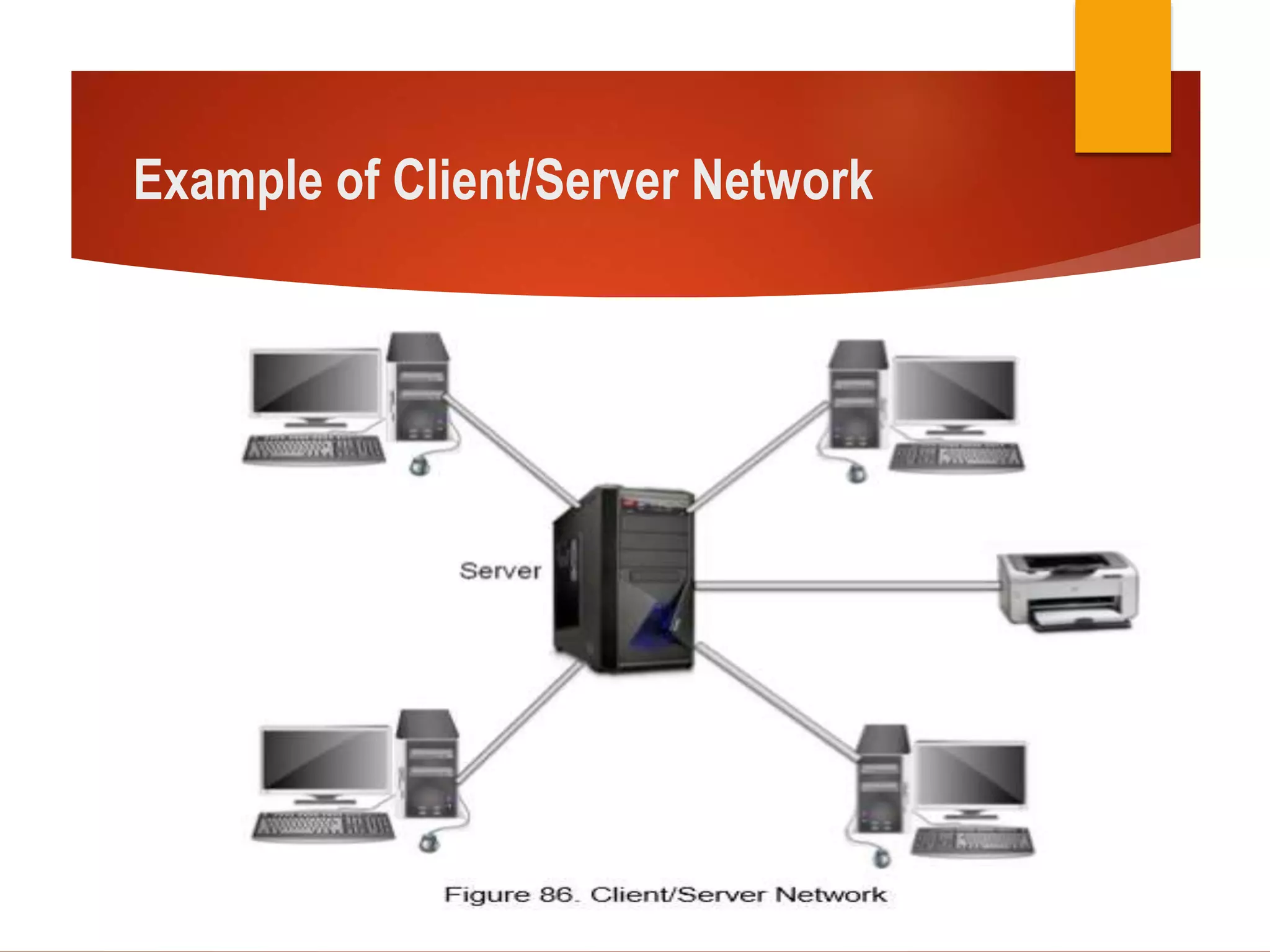
Client/Server Network
 The server provides the requested information or service
to the client.
 Servers commonly perform some of the processing work
for client machines.
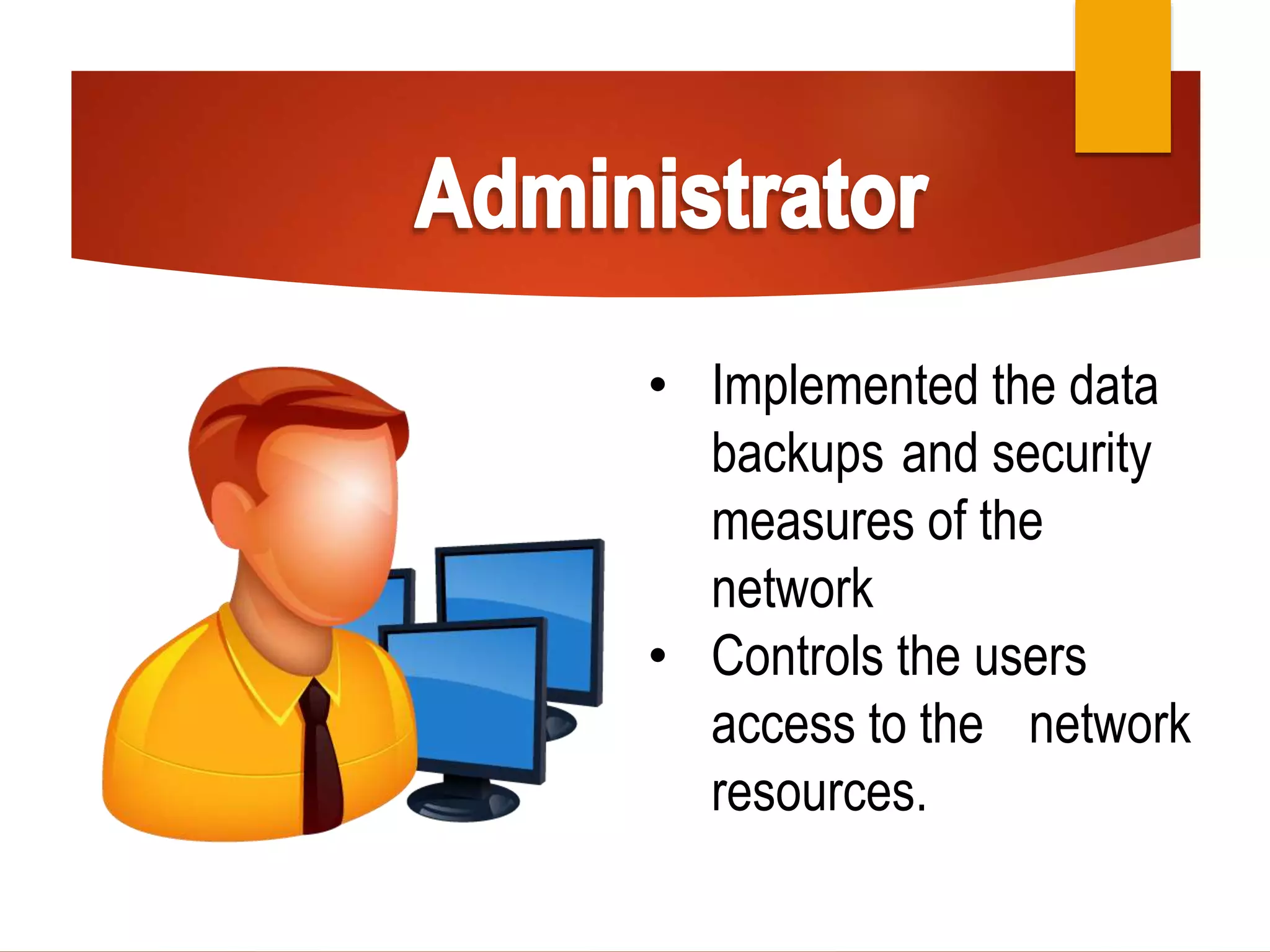
 Servers maintained by network administrator.
 All the data on the network is stored on a centralized file
server.
Client/Server Network
 Shared printers on the network are managed by a
centralized print server.
 Network users with the proper permissions can access
both the data and shared printers.
 Each user must provide an authorized username and
password to gain access to network resources that he or
she is permitted to use.
Example of Client/Server Network
• Implemented the data
backups and security
measures of the
network
• Controls the users
access to the network
resources.
Individual Task
Comparison
Direction: Using the table below, cite the features of peer-to-peer
and client /server network that describes their difference.
Peer-to-Peer Network Client/Server Network
1.
2.
3.
4.
5.
Peer-to-Peer Study
Directions: Have a partner. Using different reference available
such as articles, books, internet and publications,
investigate and search for the advantages and
disadvantages of Peer-to-peer and Client/Server
network. You will present your readings in front of
the class and you will be rated according to the
rubrics for research and rubrics for oral
presentation.
RUBRICS FOR RESEARCH STUDY
Qualities & Criteria Poor(0-
80)
Good
(80-90)
Excellen
t (90-
100)
Format/Layout (15%)
* Presentation of the text
* Structuring of the text
Content/Information (70%)
* All the elements of the topics are addressed
* The information is technically sound
* Information based on careful research
* Coherence of Information
References (15%)
* Soundness of references
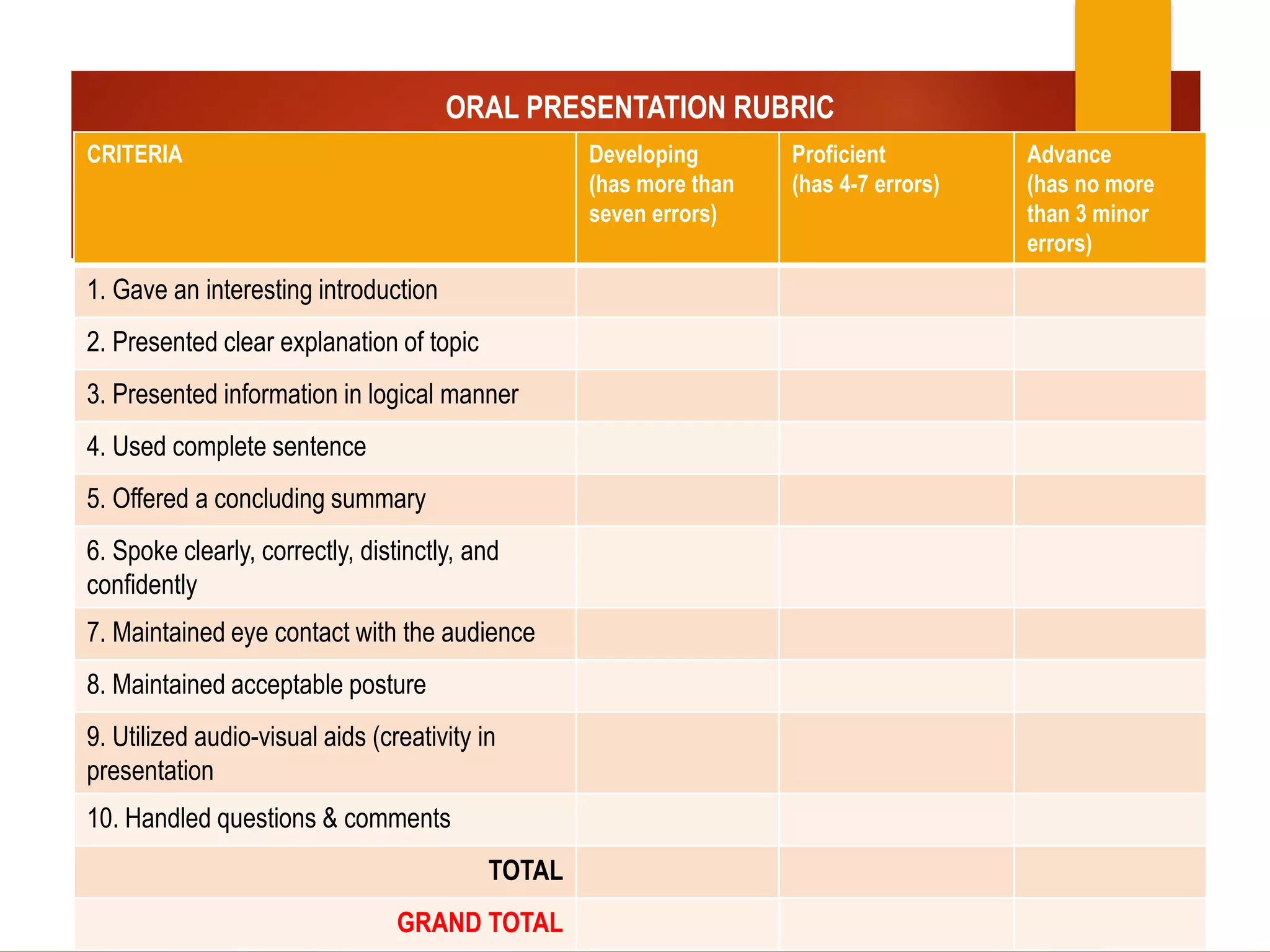
CRITERIA Developing
(has more than
seven errors)
Proficient
(has 4-7 errors)
Advance
(has no more
than 3 minor
errors)
1. Gave an interesting introduction
2. Presented clear explanation of topic
3. Presented information in logical manner
4. Used complete sentence
5. Offered a concluding summary
6. Spoke clearly, correctly, distinctly, and
confidently
7. Maintained eye contact with the audience
8. Maintained acceptable posture
9. Utilized audio-visual aids (creativity in
presentation
10. Handled questions & comments
TOTAL
GRAND TOTAL
ORAL PRESENTATION RUBRIC
-END-

Peer to-peer network

  • 1.
  • 2.
    Peer-to-Peer Network  Devicesare connected directly to each other without any additional networking devices between them.  Devices has equivalent capabilities and responsibilities.  Network has no central point of control or administration  Allows certain files to be shared with everyone or selected users.  Common in small offices that do not use a dedicated file server.
  • 3.
  • 4.
    Client/Server Network  Theserver provides the requested information or service to the client.  Servers commonly perform some of the processing work for client machines.  Servers maintained by network administrator.  All the data on the network is stored on a centralized file server.
  • 5.
    Client/Server Network  Sharedprinters on the network are managed by a centralized print server.  Network users with the proper permissions can access both the data and shared printers.  Each user must provide an authorized username and password to gain access to network resources that he or she is permitted to use.
  • 6.
  • 7.
    • Implemented thedata backups and security measures of the network • Controls the users access to the network resources.
  • 8.
  • 9.
    Comparison Direction: Using thetable below, cite the features of peer-to-peer and client /server network that describes their difference. Peer-to-Peer Network Client/Server Network 1. 2. 3. 4. 5.
  • 10.
    Peer-to-Peer Study Directions: Havea partner. Using different reference available such as articles, books, internet and publications, investigate and search for the advantages and disadvantages of Peer-to-peer and Client/Server network. You will present your readings in front of the class and you will be rated according to the rubrics for research and rubrics for oral presentation.
  • 11.
    RUBRICS FOR RESEARCHSTUDY Qualities & Criteria Poor(0- 80) Good (80-90) Excellen t (90- 100) Format/Layout (15%) * Presentation of the text * Structuring of the text Content/Information (70%) * All the elements of the topics are addressed * The information is technically sound * Information based on careful research * Coherence of Information References (15%) * Soundness of references
  • 12.
    CRITERIA Developing (has morethan seven errors) Proficient (has 4-7 errors) Advance (has no more than 3 minor errors) 1. Gave an interesting introduction 2. Presented clear explanation of topic 3. Presented information in logical manner 4. Used complete sentence 5. Offered a concluding summary 6. Spoke clearly, correctly, distinctly, and confidently 7. Maintained eye contact with the audience 8. Maintained acceptable posture 9. Utilized audio-visual aids (creativity in presentation 10. Handled questions & comments TOTAL GRAND TOTAL ORAL PRESENTATION RUBRIC
  • 13.