Downloaded 850 times

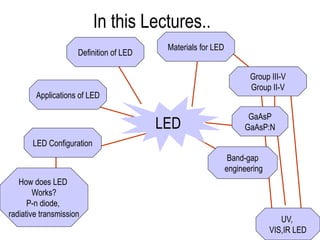

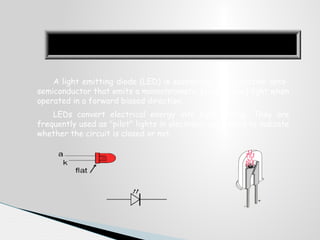
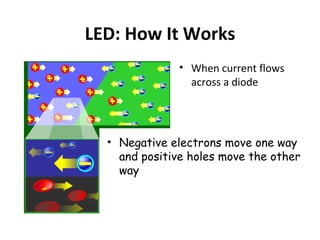


This document discusses light emitting diodes (LEDs). It explains that LEDs are semiconductors that emit light of a single color when electrically biased in the forward direction. LEDs work by converting electrical energy into light energy as electrons move between energy levels and release photons. The color of the light depends on the energy level difference of the electrons. Common LED materials include gallium arsenide and gallium phosphide alloys. The document also outlines some applications of LEDs and notes that they must have resistors in series to limit current.


