COM
M
UNITY ECOLOGY:
SPECIES
INTERACTIONS
TEXTBOOK: CHAPTER
20, SECTION
1
(PP. 399-404)
SPECIES INTERACTIONS
Community: all the interacting organisms in
one area (ecosystem)
Within a community, there are
5 Major Types of Species Interactions:
 1) Predation 3) Parasitism*
 2) Competition 4) Mutualism*
3) Commensalism*
*Symbiosis: a close, long-term relationship
between organisms of two species
PREDATION
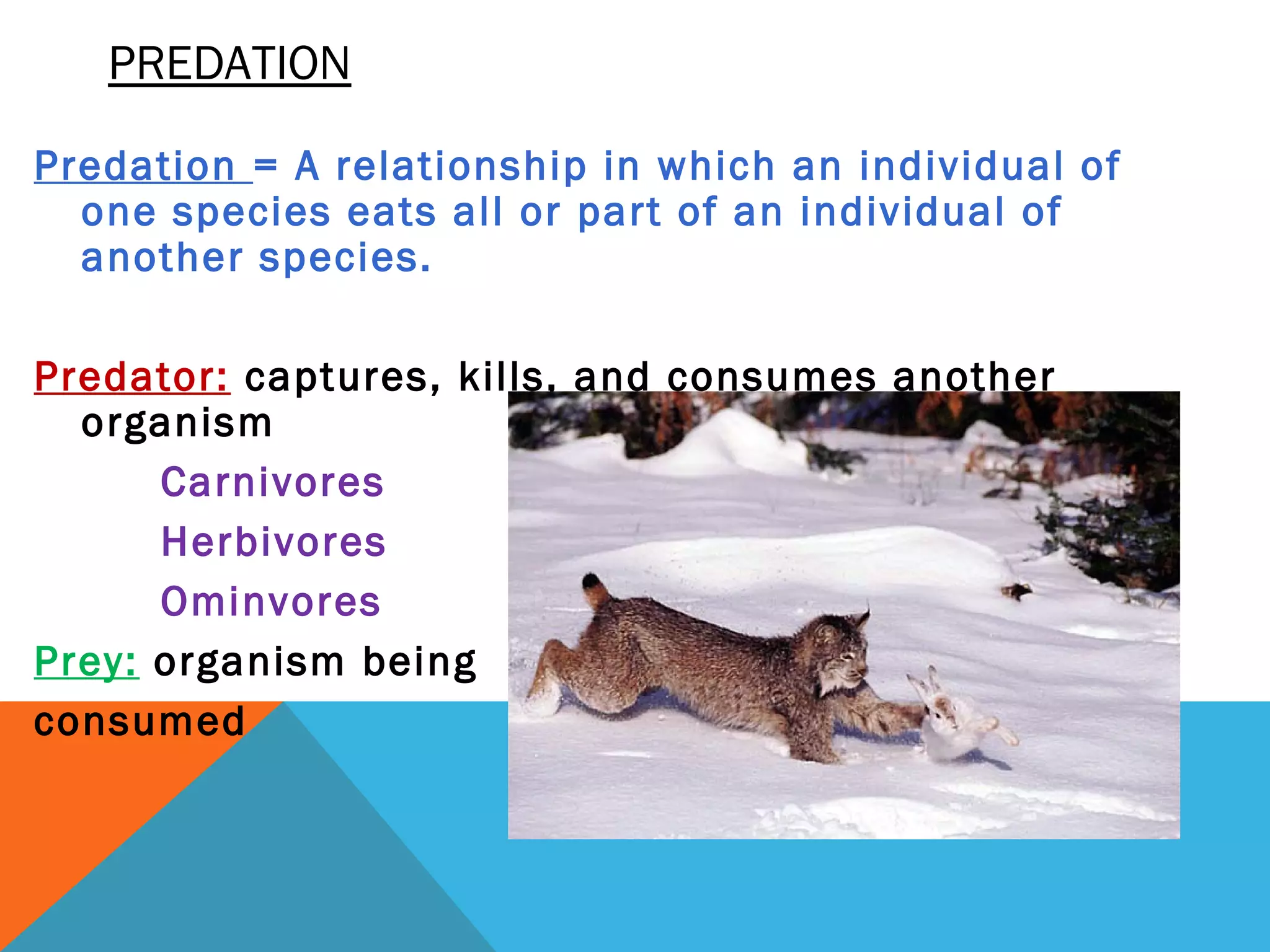
Predation = A relationship in which an individual of
one species eats all or part of an individual of
another species.
Predator: captures, kills, and consumes another
organism
Carnivores
Herbivores
Ominvores
Prey: organism being
consumed
Predatory Adaptations
include: venom, fangs,
claws, speed, camouflage
PREDATOR-PREY ADAPTATIONS
Prey Adaptations
include: speed,
camouflage,
poisons, thorns,
mimicry
Mimicry: a defense in which one organism resembles
another
Two types of
mimicry:
AP Biology
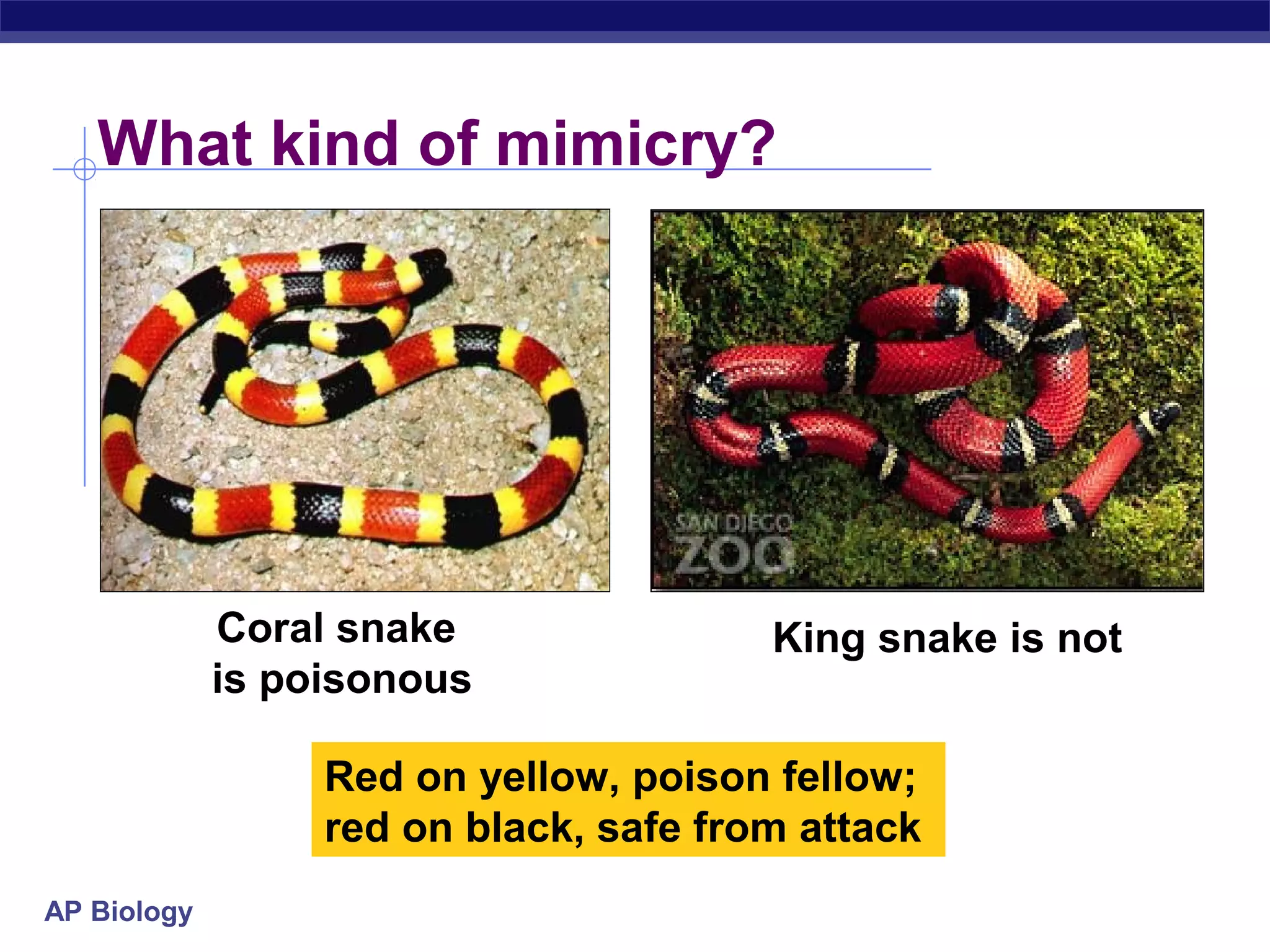
What kind of mimicry?
Coral snake
is poisonous
King snake is not
Red on yellow, poison fellow;
red on black, safe from attack
2) COMPETITION
Happens when two or more species use the
same resources
Competition results because resources are
often limited
Competition drives two key processes:
1. Competitive Exclusion
2. Character Displacement
*when one species
is eliminated due
to competition
-No two
similar species can
occupy the same
niche
= Reduced
Niche Size!
*Favors specialists
COMPETITIVE EXCLUSION
AP Biology
Character Displacement
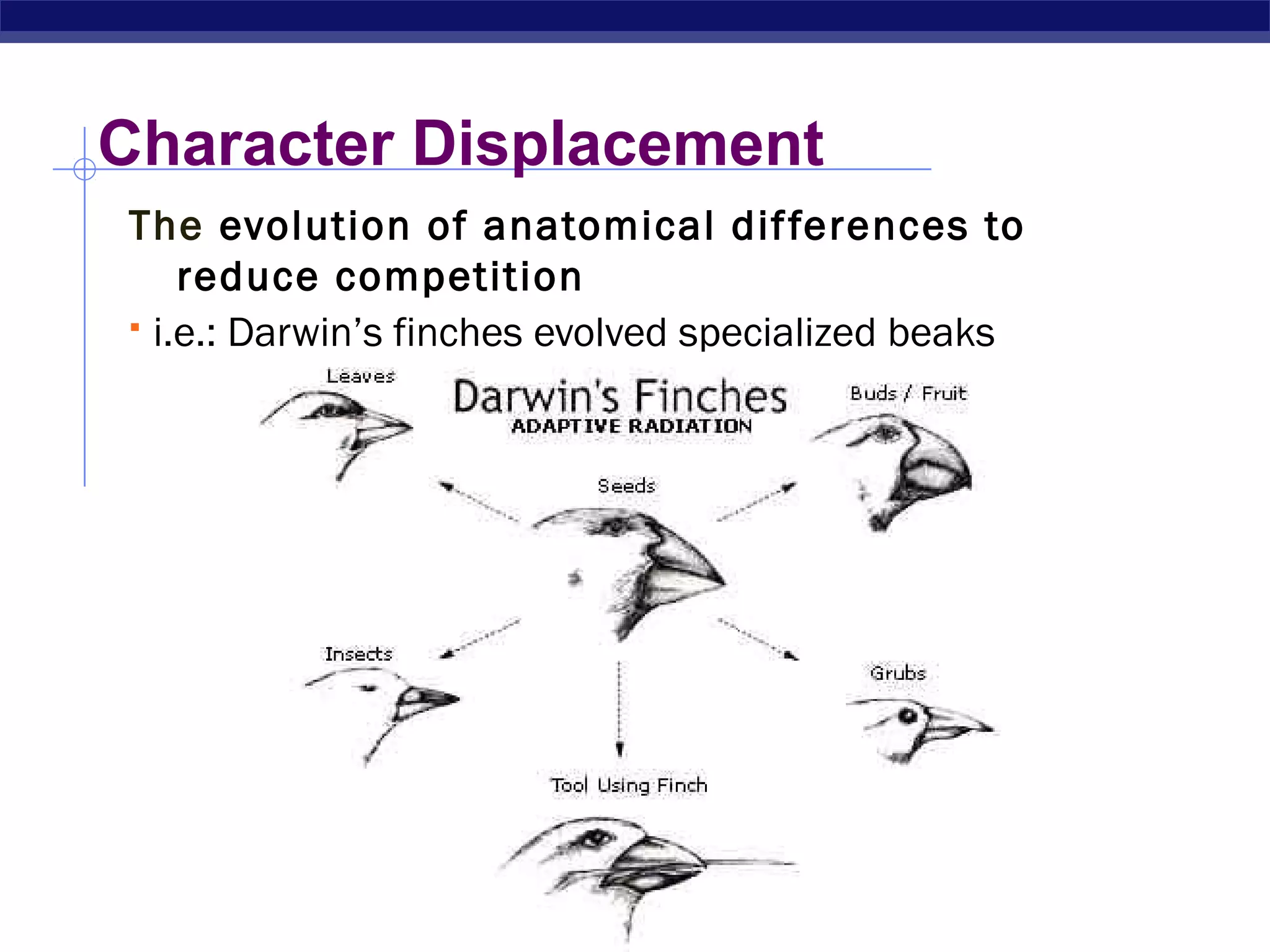
The evolution of anatomical differences to
reduce competition
 i.e.: Darwin’s finches evolved specialized beaks
SYMBIOSIS
• Non-feeding, non-competitive relationships
• Long-term
• Interspecific
• Three types:
1. Parasitism
2. Mutualism
3. Commensalism
3) PARASITISM
Parasitism: an interaction in which one
individual is harmed and the other benefits
Parasite: feeds on another individual (the
“Host”)
4) MUTUALISM
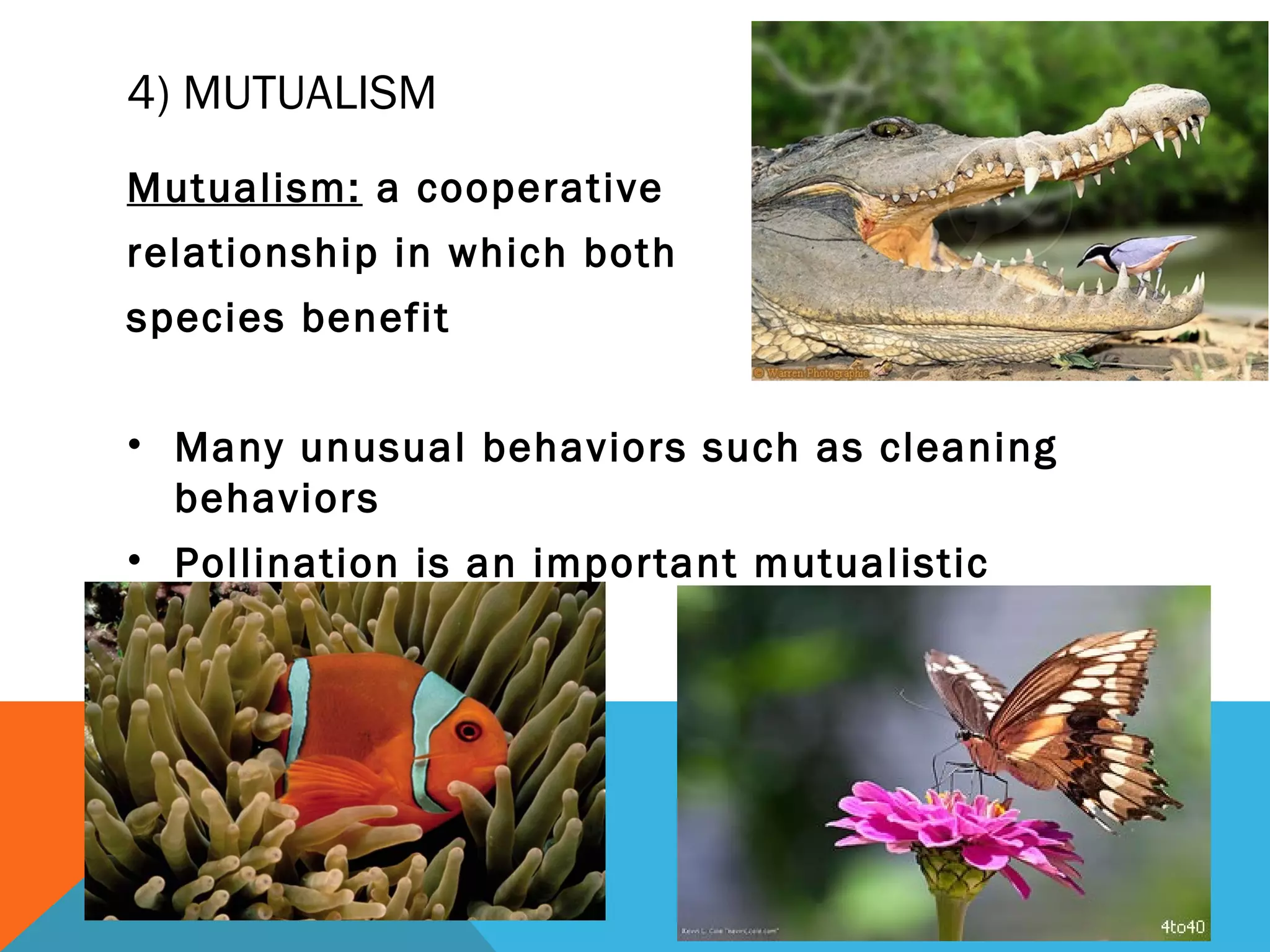
Mutualism: a cooperative
relationship in which both
species benefit
• Many unusual behaviors such as cleaning
behaviors
• Pollination is an important mutualistic
relationship
5) COMMENSALISM
Commensalism: a
relationship in which
one species benefits
and the other is not
affected

Species interactions comm ecology

  • 1.
  • 2.
    SPECIES INTERACTIONS Community: allthe interacting organisms in one area (ecosystem) Within a community, there are 5 Major Types of Species Interactions:  1) Predation 3) Parasitism*  2) Competition 4) Mutualism* 3) Commensalism* *Symbiosis: a close, long-term relationship between organisms of two species
  • 3.
    PREDATION Predation = Arelationship in which an individual of one species eats all or part of an individual of another species. Predator: captures, kills, and consumes another organism Carnivores Herbivores Ominvores Prey: organism being consumed
  • 5.
    Predatory Adaptations include: venom,fangs, claws, speed, camouflage PREDATOR-PREY ADAPTATIONS Prey Adaptations include: speed, camouflage, poisons, thorns, mimicry
  • 6.
    Mimicry: a defensein which one organism resembles another Two types of mimicry:
  • 7.
    AP Biology What kindof mimicry? Coral snake is poisonous King snake is not Red on yellow, poison fellow; red on black, safe from attack
  • 8.
    2) COMPETITION Happens whentwo or more species use the same resources Competition results because resources are often limited Competition drives two key processes: 1. Competitive Exclusion 2. Character Displacement
  • 9.
    *when one species iseliminated due to competition -No two similar species can occupy the same niche = Reduced Niche Size! *Favors specialists COMPETITIVE EXCLUSION
  • 10.
    AP Biology Character Displacement Theevolution of anatomical differences to reduce competition  i.e.: Darwin’s finches evolved specialized beaks
  • 11.
    SYMBIOSIS • Non-feeding, non-competitiverelationships • Long-term • Interspecific • Three types: 1. Parasitism 2. Mutualism 3. Commensalism
  • 12.
    3) PARASITISM Parasitism: aninteraction in which one individual is harmed and the other benefits Parasite: feeds on another individual (the “Host”)
  • 13.
    4) MUTUALISM Mutualism: acooperative relationship in which both species benefit • Many unusual behaviors such as cleaning behaviors • Pollination is an important mutualistic relationship
  • 14.
    5) COMMENSALISM Commensalism: a relationshipin which one species benefits and the other is not affected

Editor's Notes

  • #4 Predation is a powerful force in a community. The relationship between predatory and prey influences the size of each population and affects where and how each species lives. Many types of organisms can act as predators and/or prey. All heterotrophs are either predators or parasites or both.
  • #6 Predator Adaptations Natural selection favors the evolution of predator adaptations for finding, capturing, and consuming prey. Ex: Rattlesnake adaptations to help detect prey *acute sense of smell *heat-sensing pits located below each nostril Other examples *Venom – to disable or kill prey *sticky spider webs to catch prey *Flesh-cutting teeth *speed of cheetahs *striped patter of tigers *cutting and chewing mouthparts (herbivores) Prey Adaptations *A prey’s survival depends on its ability to avoid being captured/eaten. *Natural selection favors adaptations in prey that allow the prey to escape, avoid, or otherwise ward off predators. Animal Prey Adaptations Fleeing, hiding, resembling an inedible object, deceptive markings, chemical defenses, mimicry (predators avoid similar-looking individuals) Plant Prey Adaptations *Plants cannot run away from a predator Physical defenses: thorns, spines, sticky hairs, tough leaves Chemical defenses: poisons, irritants (poison ivy/oak), bad-tastes *chemical defenses are often byproducts of the plants’ metabolism (called secondary compounds) ex: strychnine, nicotine
  • #10 Resource partitioning among Dominican Republic lizards. Seven species of Anolis lizards live in close proximity, and all feed on insects and other small arthropods. However, competition for food is reduced because each lizard species has a different perch, thus occupying a distinct niche. Sympatric species often partition available resources, reducing competition between them. Analogy: Grocery store – items are on specified shelves, lined up in rows and columns (up and down the shelves) with tags marking their positions
  • #11 Analogy – Utensils in your house are each used for a specific task in the kitchen/while eating