(Chapter 16)
EVOLUTION OF
POPULATIONS
Population genetics is the study of
evolution among groups of the same
species from a genetic point of view.
Evolution at the genetic level is
sometimes called microevolution.
POPULATION GENETICS
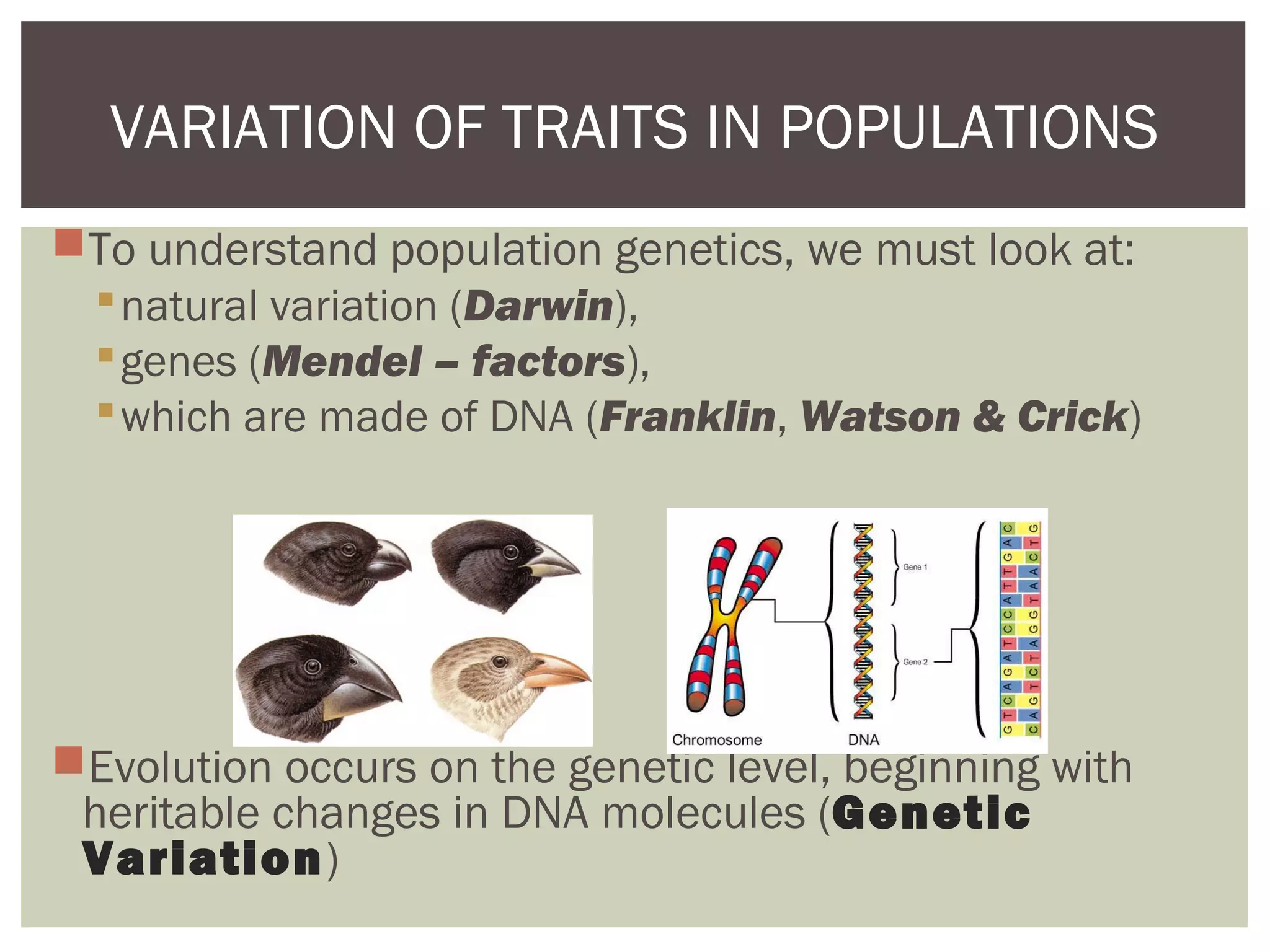
To understand population genetics, we must look at:
natural variation (Darwin),
genes (Mendel – factors),
which are made of DNA (Franklin, Watson & Crick)
Evolution occurs on the genetic level, beginning with
heritable changes in DNA molecules (Genetic
Variation)
VARIATION OF TRAITS IN POPULATIONS
1.Mutation
2.Recombination
3.Random pairing of gametes during
fertilization
4.Gene switches
5.Environmental factors
RECALL: SOURCES OF GENETIC VARIATION
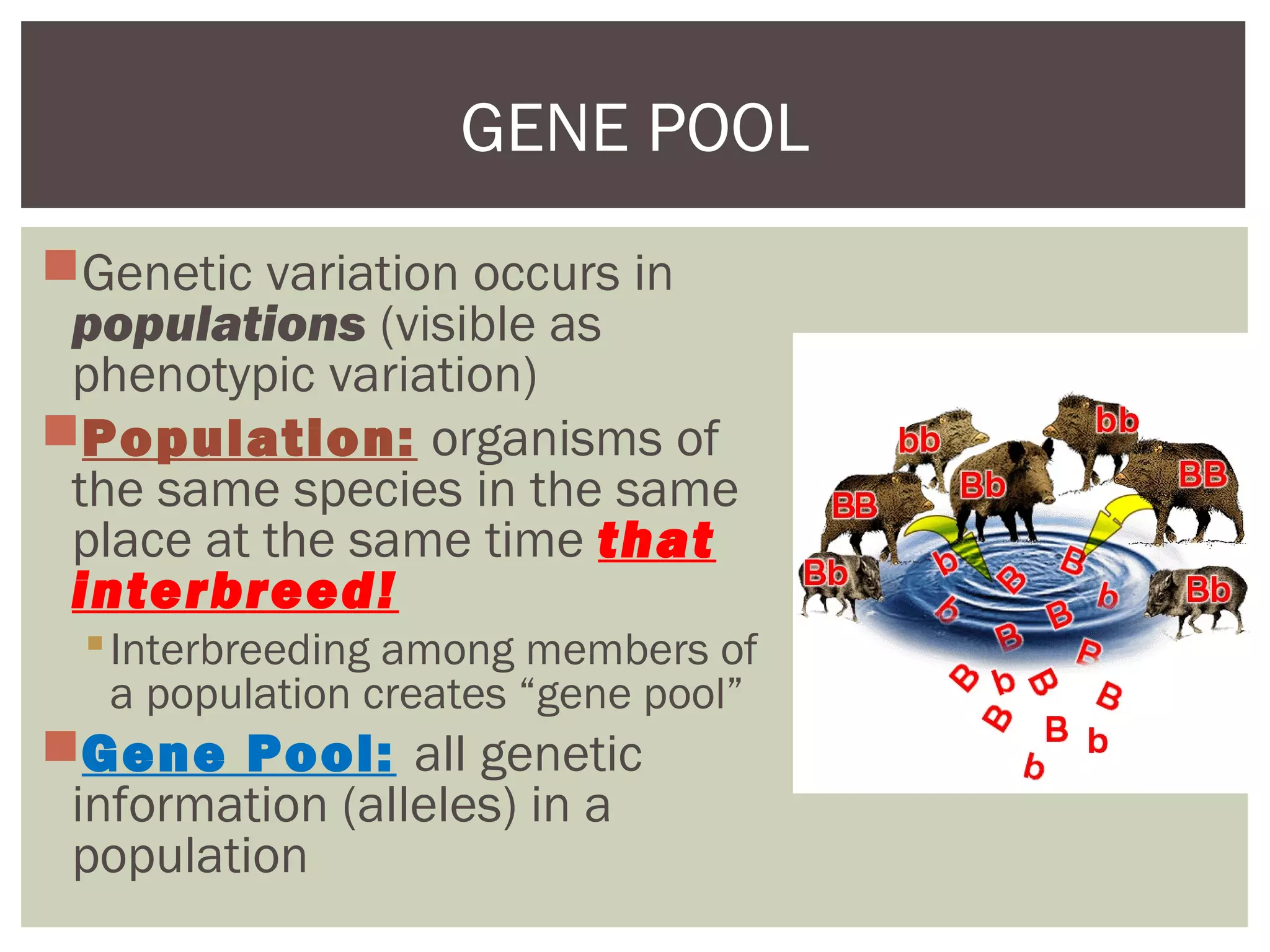
Genetic variation occurs in
populations (visible as
phenotypic variation)
Population: organisms of
the same species in the same
place at the same time that
interbreed!
Interbreeding among members of
a population creates “gene pool”
Gene Pool: all genetic
information (alleles) in a
population
GENE POOL
Phenotype frequency: the
number of individuals with a
particular phenotype out of the
total population
Black = 0.64
Brown = 0.36
Allele Frequency: number of
times allele occurs in a population
 Expressed in decimals
 Frequency isn’t related to an allele
being dominant or recessive (Inventory
of Traits)
RELATIVE FREQUENCY
BB = 16 B + 16 B = 32 B
Bb = 48 B + 48 b
bb = 36 b + 36 b = 72 b
B = 32 + 48 = 80
b = 48 + 72 = 120
B = 80/200 = 0.40
b = 120/200 = 0.60
Genetic Equilibrium: situation in which allele
frequencies do not change
 Evolution can not occur
Hardy-Weinberg Principle: allele frequencies in a
population will remain constant from generation to
generation unless acted on by outside influences
GENETIC EQUILIBRIUM
Theoretical Equilibrium
1) Extremely Large
Population Size
2) No Gene Flow
3) No Mutations
4) Random Mating
5) No Natural
Selection
**If any of these
conditions are not
met, evolution will
occur**
Real Populations
Some populations actually quite
small
Immigration, Emigration
Random DNA mutation will
always occur (over time)
Individuals prefer mates w/
certain phenotypes (sexual
selection
Survival depends on many
factors (struggle for survival)
CONDITIONS FOR HARDY-WEINBERG GENETIC
EQUILIBRIUM
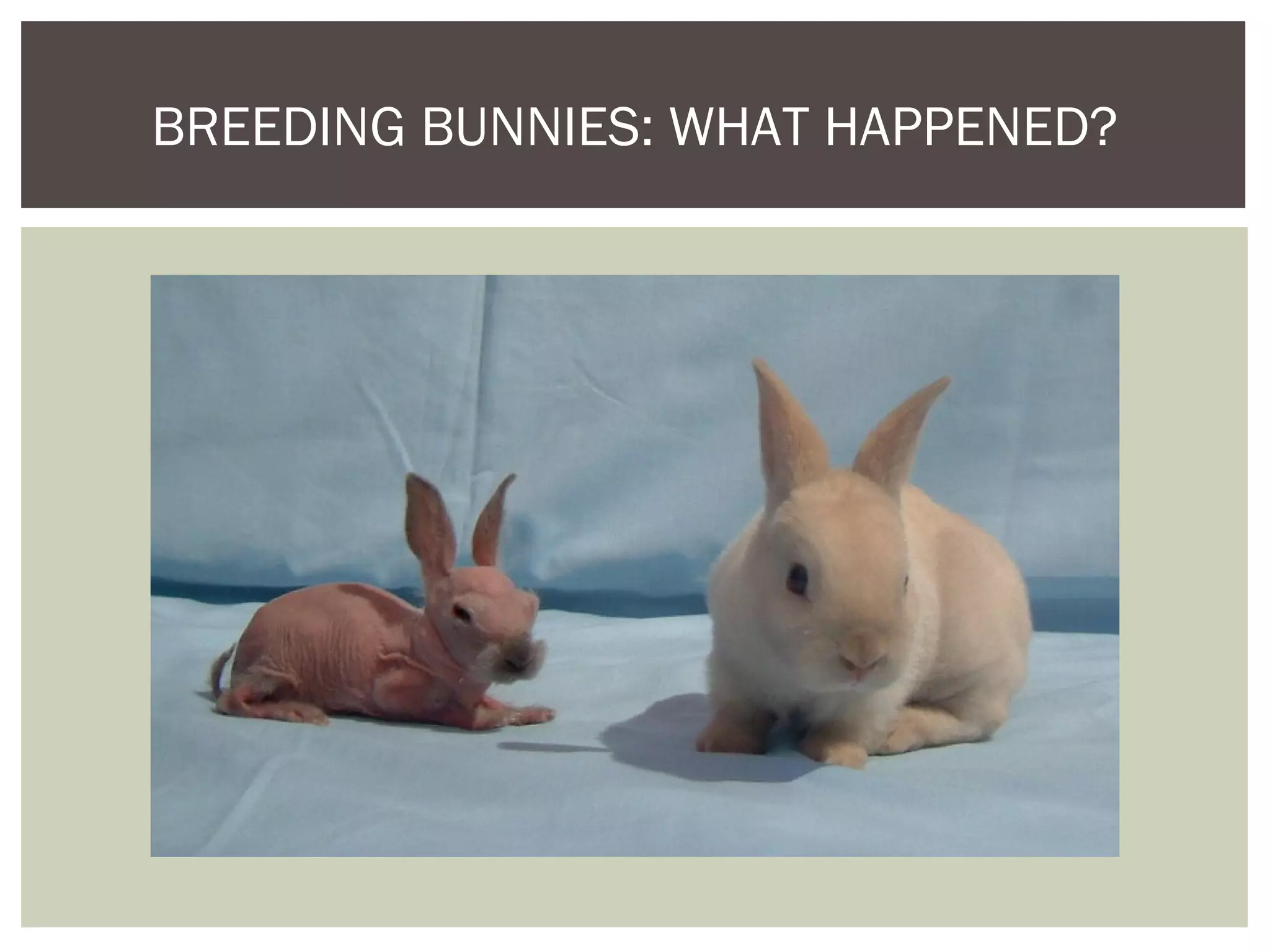
BREEDING BUNNIES: WHAT HAPPENED?
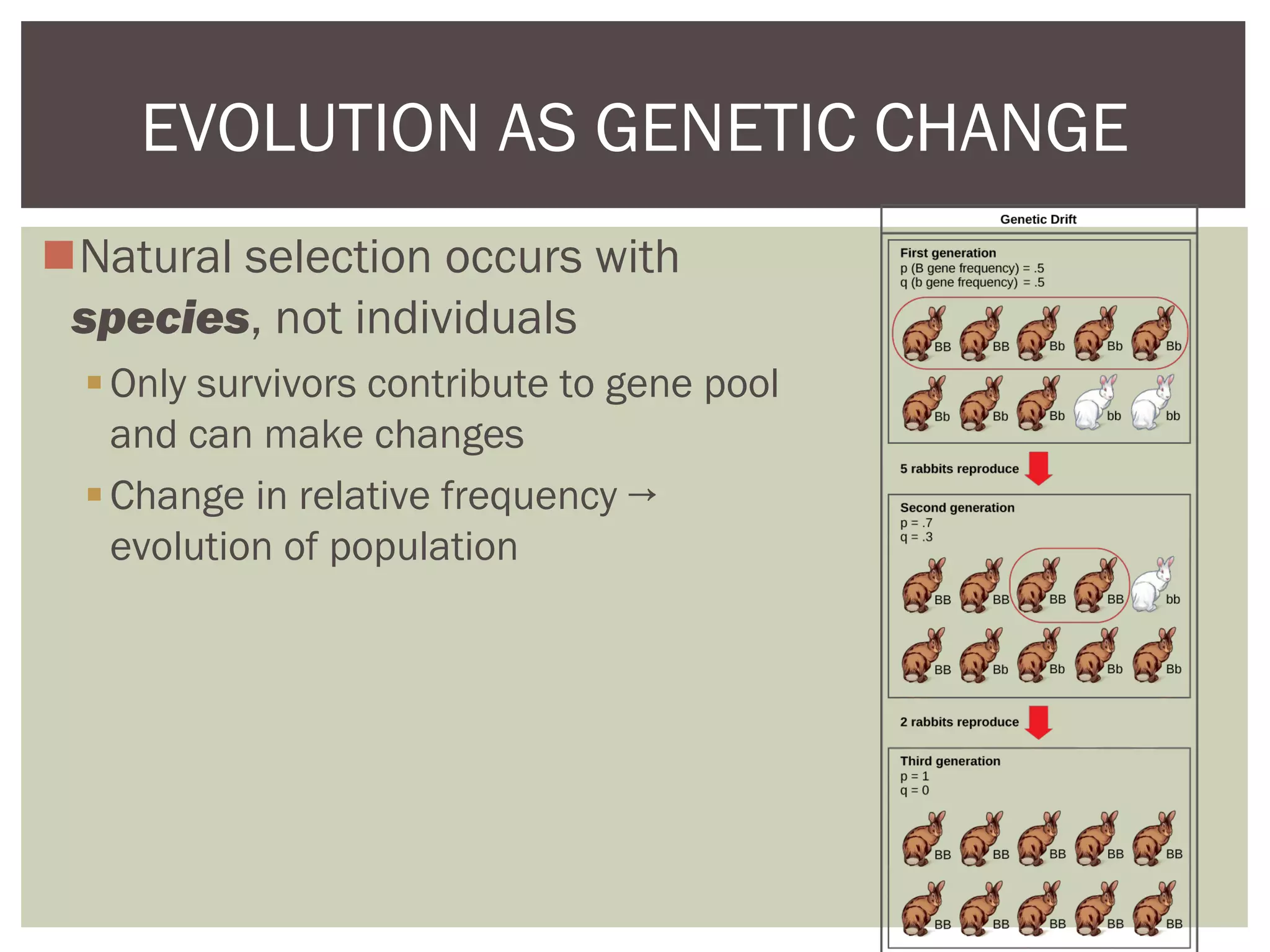
Natural selection occurs with
species, not individuals
Only survivors contribute to gene pool
and can make changes
Change in relative frequency →
evolution of population
EVOLUTION AS GENETIC CHANGE
Genetic Drift =a change in the population's allele
frequency resulting from a random variation in the
distribution of alleles from one generation to the next.
 Based on random events, or chance
THE PERILS OF SMALL POPULATIONS
Populations represent a GENE POOL.
 GENE POOL = consists of all the alleles present in a population at a specific
time and place
 Small population = small gene pool
 Descended from only a few individuals = increases the likelihood of decreased
genetic variability and inbreeding.
 Over evolutionary time, populations with low variability are less likely to adapt
to changing environmental conditions.
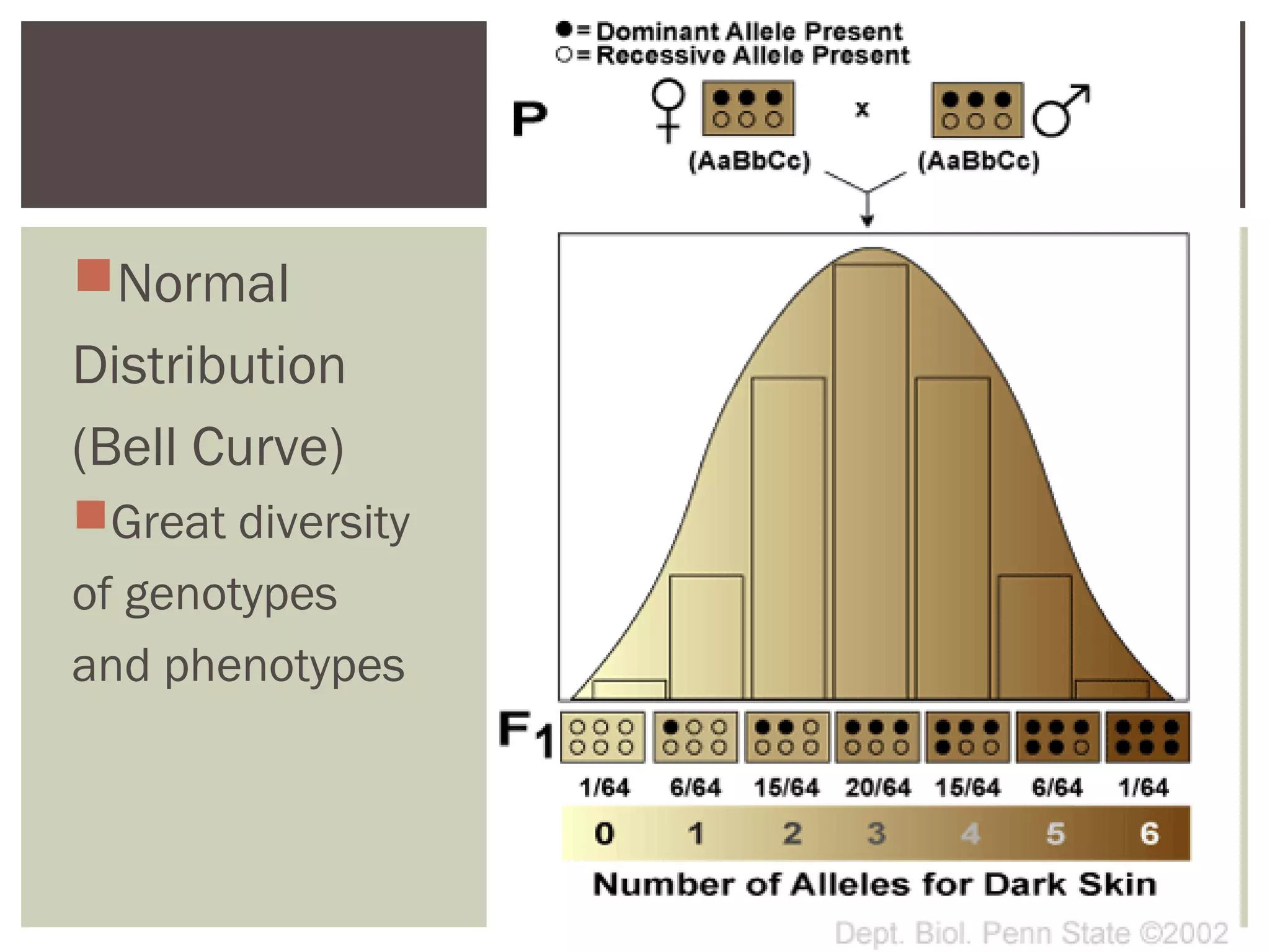
Normal
Distribution
(Bell Curve)
Great diversity
of genotypes
and phenotypes
RECALL
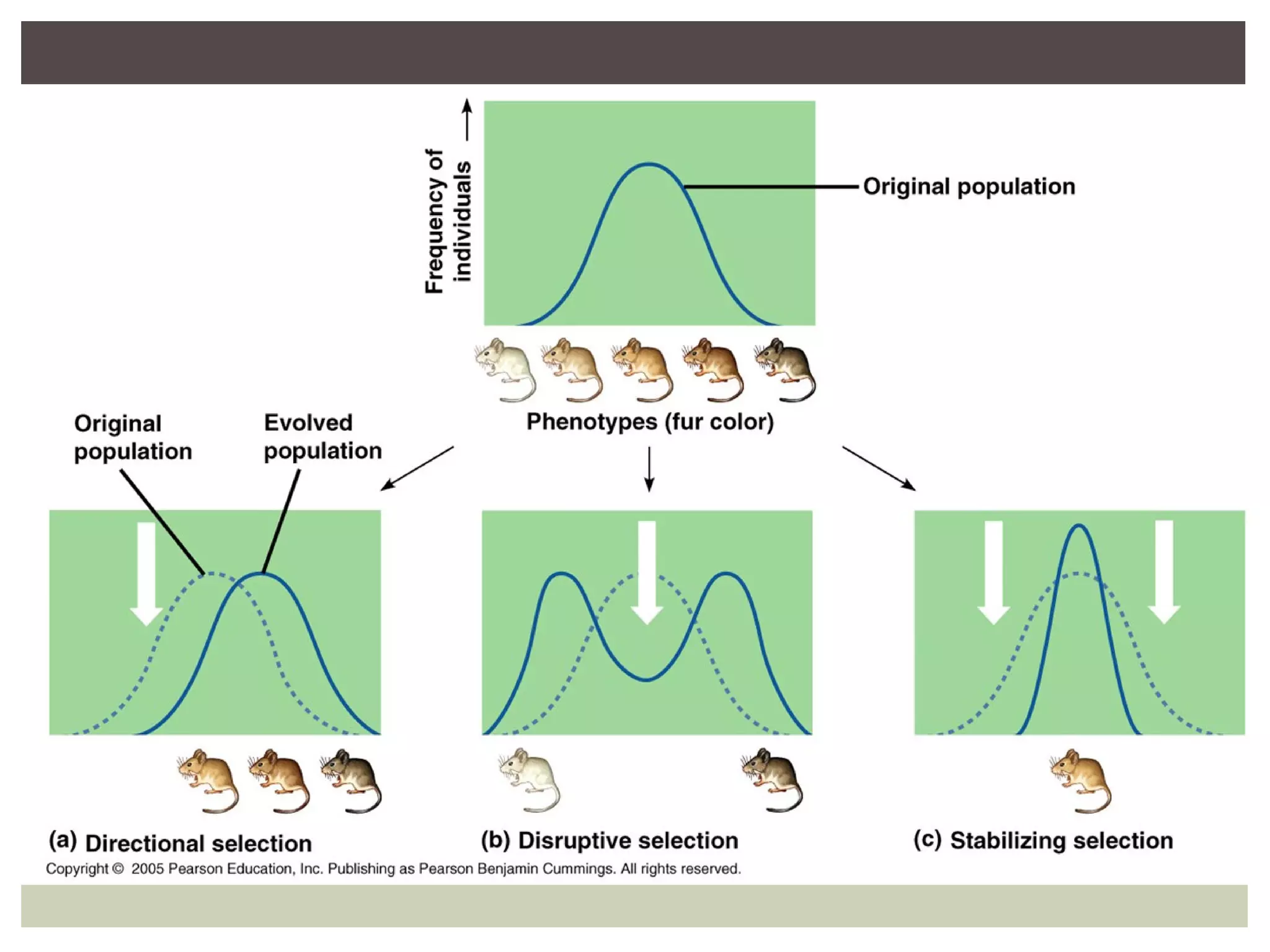
Natural selection may affect the phenotypes
of polygenic traits in 3 ways:
1) Directional Selection: range of
phenotypes shifts in 1 direction (i.e. beak size ↑
overall)
2) Disruptive Selection: phenotypes at both
ends of spectrum survive best (i.e. very big and
very small)
3) Stabilizing Selection: “average”
phenotype survives best (i.e. human baby weight)
NATURAL SELECTION ON POLYGENIC
TRAITS
Evolution of populations

Evolution of populations

  • 1.
  • 2.
    Population genetics isthe study of evolution among groups of the same species from a genetic point of view. Evolution at the genetic level is sometimes called microevolution. POPULATION GENETICS
  • 3.
    To understand populationgenetics, we must look at: natural variation (Darwin), genes (Mendel – factors), which are made of DNA (Franklin, Watson & Crick) Evolution occurs on the genetic level, beginning with heritable changes in DNA molecules (Genetic Variation) VARIATION OF TRAITS IN POPULATIONS
  • 4.
    1.Mutation 2.Recombination 3.Random pairing ofgametes during fertilization 4.Gene switches 5.Environmental factors RECALL: SOURCES OF GENETIC VARIATION
  • 5.
    Genetic variation occursin populations (visible as phenotypic variation) Population: organisms of the same species in the same place at the same time that interbreed! Interbreeding among members of a population creates “gene pool” Gene Pool: all genetic information (alleles) in a population GENE POOL
  • 6.
    Phenotype frequency: the numberof individuals with a particular phenotype out of the total population Black = 0.64 Brown = 0.36 Allele Frequency: number of times allele occurs in a population  Expressed in decimals  Frequency isn’t related to an allele being dominant or recessive (Inventory of Traits) RELATIVE FREQUENCY BB = 16 B + 16 B = 32 B Bb = 48 B + 48 b bb = 36 b + 36 b = 72 b B = 32 + 48 = 80 b = 48 + 72 = 120 B = 80/200 = 0.40 b = 120/200 = 0.60
  • 7.
    Genetic Equilibrium: situationin which allele frequencies do not change  Evolution can not occur Hardy-Weinberg Principle: allele frequencies in a population will remain constant from generation to generation unless acted on by outside influences GENETIC EQUILIBRIUM
  • 8.
    Theoretical Equilibrium 1) ExtremelyLarge Population Size 2) No Gene Flow 3) No Mutations 4) Random Mating 5) No Natural Selection **If any of these conditions are not met, evolution will occur** Real Populations Some populations actually quite small Immigration, Emigration Random DNA mutation will always occur (over time) Individuals prefer mates w/ certain phenotypes (sexual selection Survival depends on many factors (struggle for survival) CONDITIONS FOR HARDY-WEINBERG GENETIC EQUILIBRIUM
  • 9.
  • 10.
    Natural selection occurswith species, not individuals Only survivors contribute to gene pool and can make changes Change in relative frequency → evolution of population EVOLUTION AS GENETIC CHANGE
  • 11.
    Genetic Drift =achange in the population's allele frequency resulting from a random variation in the distribution of alleles from one generation to the next.  Based on random events, or chance
  • 12.
    THE PERILS OFSMALL POPULATIONS Populations represent a GENE POOL.  GENE POOL = consists of all the alleles present in a population at a specific time and place  Small population = small gene pool  Descended from only a few individuals = increases the likelihood of decreased genetic variability and inbreeding.  Over evolutionary time, populations with low variability are less likely to adapt to changing environmental conditions.
  • 13.
  • 14.
  • 15.
    Natural selection mayaffect the phenotypes of polygenic traits in 3 ways: 1) Directional Selection: range of phenotypes shifts in 1 direction (i.e. beak size ↑ overall) 2) Disruptive Selection: phenotypes at both ends of spectrum survive best (i.e. very big and very small) 3) Stabilizing Selection: “average” phenotype survives best (i.e. human baby weight) NATURAL SELECTION ON POLYGENIC TRAITS

Editor's Notes

  • #9 the smaller the population, greater effect a change will have