ECOLOGICAL
RELATIONSHIPS
Ecological communities consist of
interacting or potentially
interacting species in the same
environment.
This is what we call ecological
relationship.
TWO TYPES OF ECOLOGICAL
RELATIONSHIP
•SYMBIOTIC
RELATIONSHIP
•OPPOSITIONAL
RELATIONSHIP
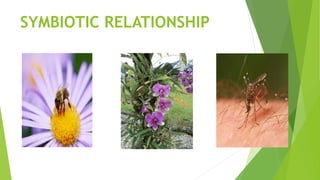
SYMBIOTIC RELATIONSHIP
 Mutualism is when two different species
have an ecological relationship that they both
benefit from.
For example, zebras and wild birds in the
grasslands of Africa.
 Commensalism describes a relationship in
which one species benefits but the other is
unaffected. This usually happen between groups
of fish and sea anemones.
For example, clownfish take refuge in sea
anemones.
Amensalism is an interaction where an
organism inflicts harm to another organism
without any costs or benefits received by itself.
For example, the black walnut tree that
secretes chemical to it’s neighboring plants.
Parasitism is when one organism in the
relationship benefits from the relationship, and
when the other organism does not.
For example, a tick on a white tailed deer.
OPPOSITIONAL RELATIONSHIP
Predation is when one organism eats another
organism to obtain nutrients. The organism that
is eaten is called the prey.
For example, lion that eats gazelles.
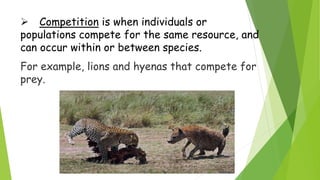
Competition is when individuals or
populations compete for the same resource, and
can occur within or between species.
For example, lions and hyenas that compete for
prey.
THANK YOU!


Ecological Relationship

  • 1.
  • 2.
    Ecological communities consistof interacting or potentially interacting species in the same environment. This is what we call ecological relationship.
  • 3.
    TWO TYPES OFECOLOGICAL RELATIONSHIP •SYMBIOTIC RELATIONSHIP •OPPOSITIONAL RELATIONSHIP
  • 4.
  • 5.
     Mutualism iswhen two different species have an ecological relationship that they both benefit from. For example, zebras and wild birds in the grasslands of Africa.
  • 6.
     Commensalism describesa relationship in which one species benefits but the other is unaffected. This usually happen between groups of fish and sea anemones. For example, clownfish take refuge in sea anemones.
  • 7.
    Amensalism is aninteraction where an organism inflicts harm to another organism without any costs or benefits received by itself. For example, the black walnut tree that secretes chemical to it’s neighboring plants.
  • 8.
    Parasitism is whenone organism in the relationship benefits from the relationship, and when the other organism does not. For example, a tick on a white tailed deer.
  • 9.
  • 10.
    Predation is whenone organism eats another organism to obtain nutrients. The organism that is eaten is called the prey. For example, lion that eats gazelles.
  • 11.
    Competition is whenindividuals or populations compete for the same resource, and can occur within or between species. For example, lions and hyenas that compete for prey.
  • 12.