P
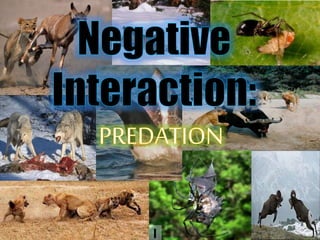
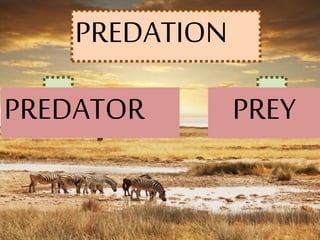
PREDATION
PREDATOR PPREY
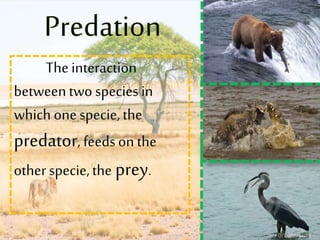
Theinteraction
betweentwo speciesin
which onespecie,the
predator, feedson the
otherspecie,the prey.
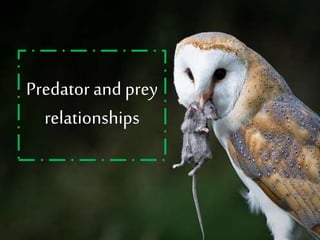
Predator and prey
relationships
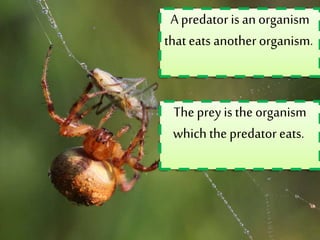
A predator is an organism
that eats another organism.
The prey is the organism
which the predator eats.
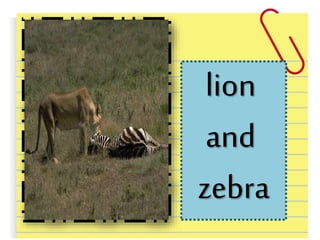
lion
and
zebra
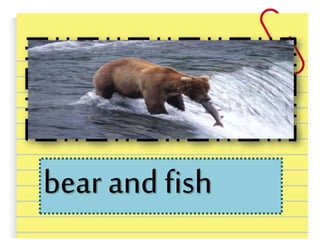
bear and fish
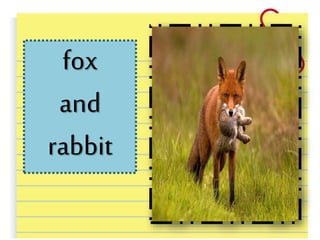
fox
and
rabbit
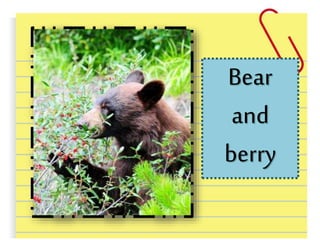
Bear
and
berry
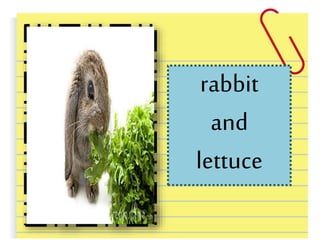
rabbit
and
lettuce
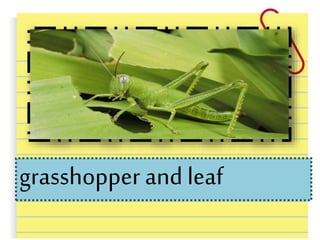
grasshopper and leaf
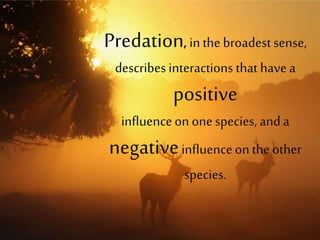
Predation, in the broadest sense,
describes interactions thathave a
positive
influenceon onespecies, anda
negativeinfluenceon the other
species.
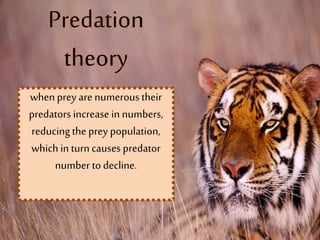
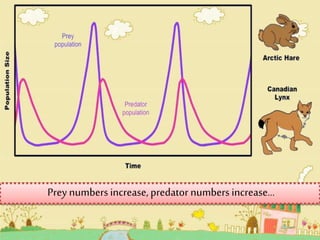
whenprey are numerous their
predators increase in numbers,
reducingthe prey population,
which in turn causes predator
number to decline.
Predator-prey
population
dynamics
Predators kill prey  affectspreydeathrate
• prey population size depends on number of predators
• withfew predators, prey population grows
• withmany predators, prey population shrinks
Predator-prey population dynamics are connected
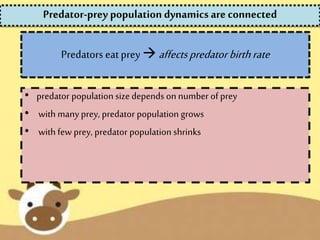
Predators eat prey  affectspredatorbirthrate
• predator population size depends on number of prey
• with many prey, predator population grows
• with few prey, predator population shrinks
Predator-prey population dynamics are connected
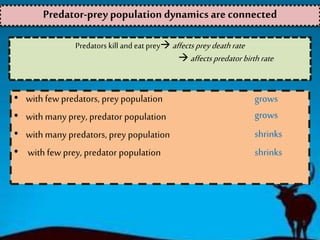
Predators kill and eat prey affectspreydeathrate
 affectspredatorbirthrate
• with few predators, prey population
• with many prey, predator population
• with many predators, prey population
• with few prey, predator population
Predator-prey population dynamics are connected
grows
grows
shrinks
shrinks
Prey numbers increase, predator numbers increase…
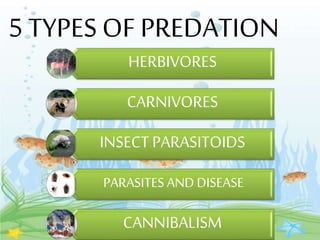
5 Types Of
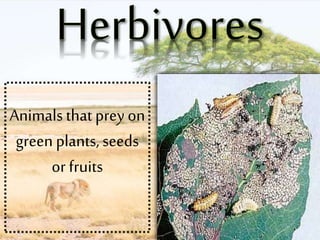
HERBIVORES
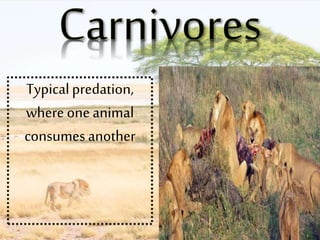
CARNIVORES
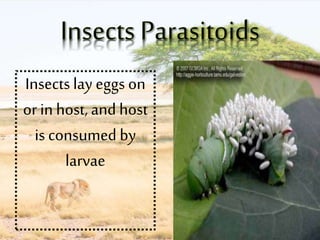
INSECT PARASITOIDS
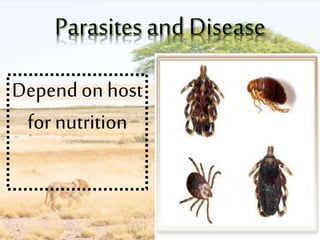
PARASITES AND DISEASE
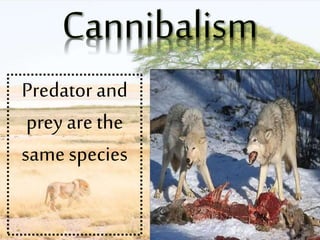
CANNIBALISM
5 TYPES OF PREDATION
Animals that prey on
green plants, seeds
or fruits
Typicalpredation,
where oneanimal
consumes another
Insects lay eggs on
or in host, and host
is consumed by
larvae
Dependon host
for nutrition
Predator and
prey are the
same species
TACTICS OF
THE
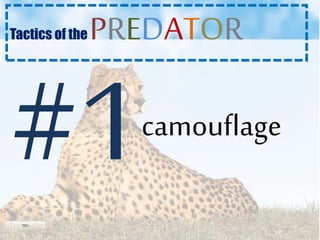
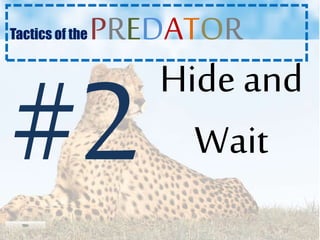
Tactics of the PREDATOR
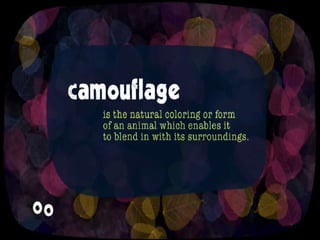
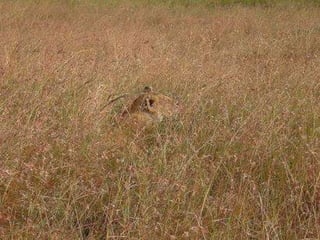
camouflage
Hide and
Wait
Tactics of the PREDATOR
POISONING
Tactics of the PREDATOR
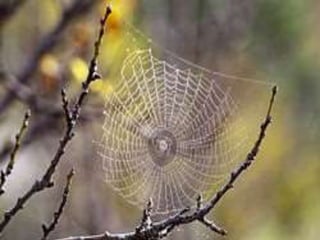
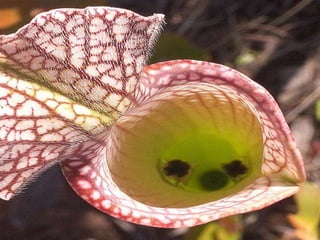
TRAP
Tactics of the PREDATOR
BIGGER,
WILDER,
FASTER
Tactics of the PREDATOR
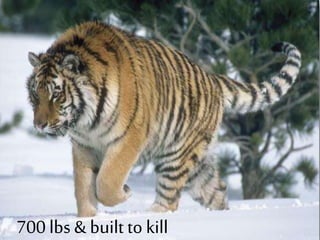
700 lbs & built to kill
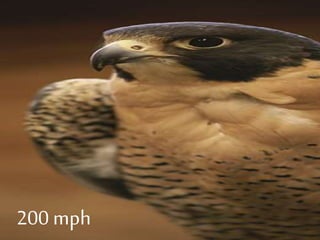
200 mph
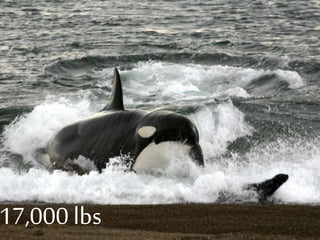
17,000lbs
RESPONSES
OF
THE PREY
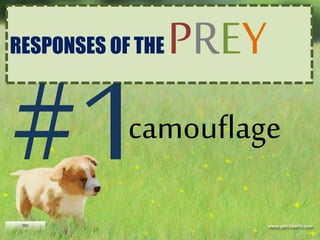
RESPONSES OF THE PREY
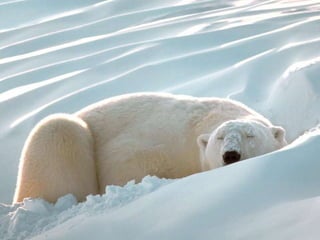
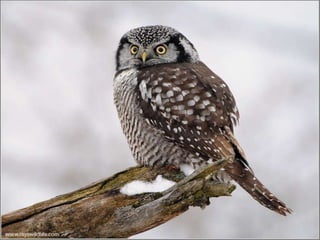
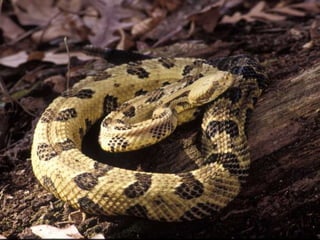
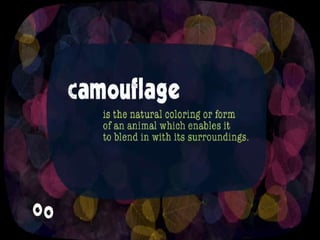
camouflage
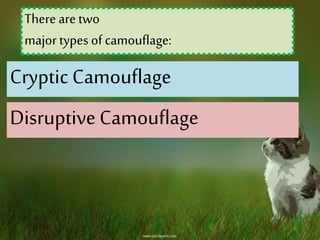
There are two
major types of camouflage:
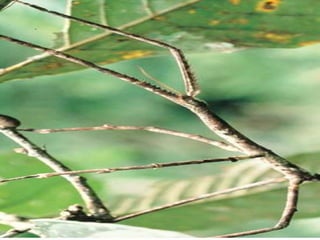
Cryptic Camouflage
Disruptive Camouflage
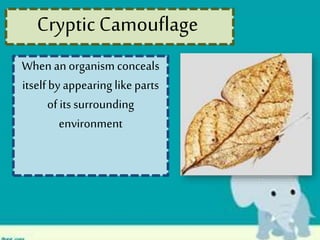
When an organism conceals
itselfby appearing like parts
of its surrounding
environment
Cryptic Camouflage
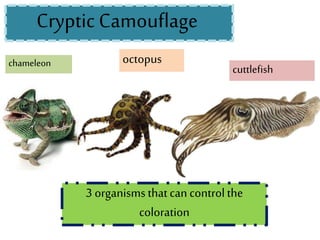
chameleon
cuttlefish
octopus
3 organismsthatcan controlthe
coloration
Cryptic Camouflage
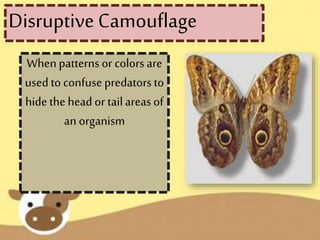
When patterns or colors are
used to confuse predatorsto
hide the head or tailareasof
an organism
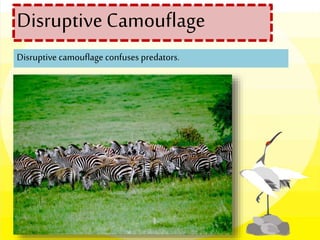
Disruptive Camouflage
Disruptive camouflage confuses predators.
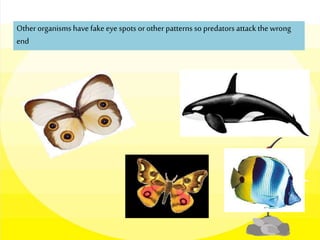
Disruptive Camouflage
Other organisms have fake eye spots orother patterns so predators attack the wrong
end
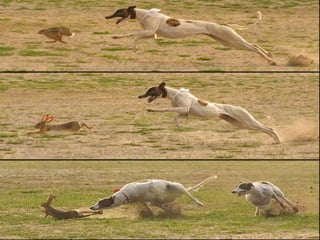
ESCAPE
RESPONSES OF THE PREY
POISON
RESPONSES OF THE PREY
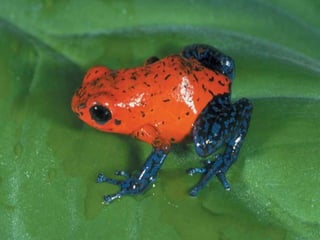
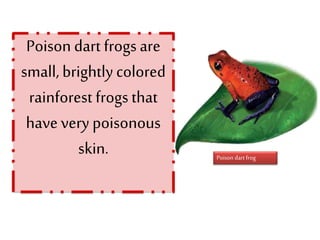
Poison dart frogs are
small, brightly colored
rainforest frogs that
have very poisonous
skin. Poison dart frog
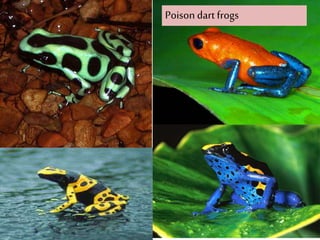
Poison dart frogs
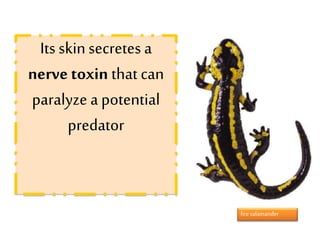
Its skinsecretes a
nervetoxin that can
paralyze a potential
predator
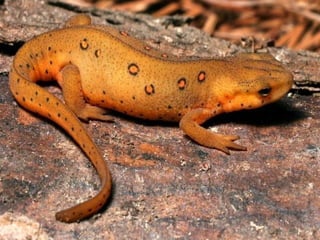
fire salamander
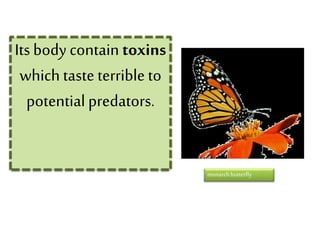
Itsbody contain toxins
which taste terrible to
potential predators.
monarchbutterfly
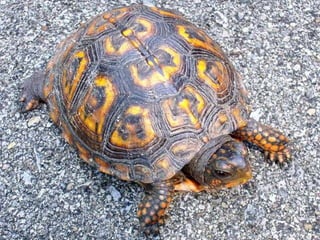
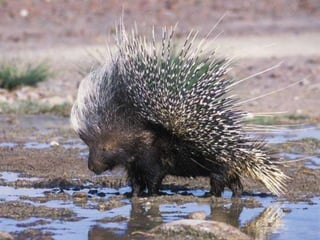
ARMOR
RESPONSES OF THE PREY
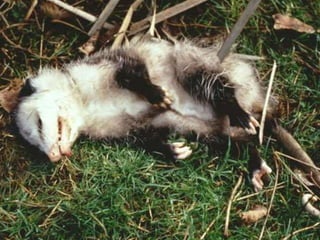
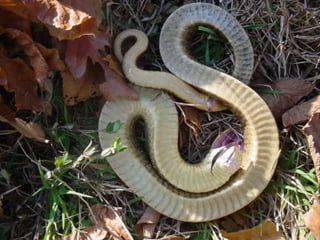
PLAY
DEAD
RESPONSES OF THE PREY
MIMICRY
RESPONSES OF THE PREY
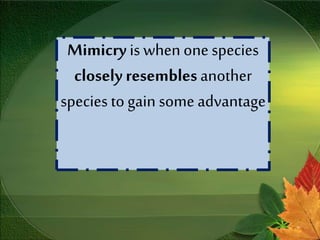
Mimicry is when one species
closely resembles another
species to gain some advantage
Therearetwo types of mimicry:
Batesian Mimicry
Muellerian Mimicry
When a speciesthat is NOT
dangerous mimicsa species
that IS dangerous
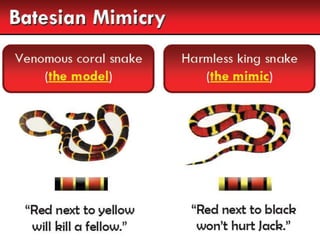
Batesian Mimicry
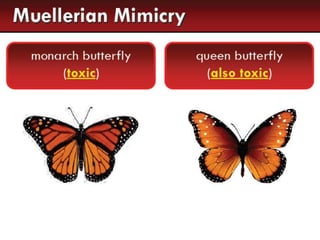
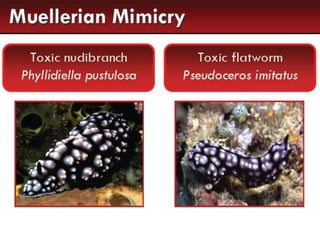
When two dangerous
speciesmimic each
other
Muellerian
Mimicry
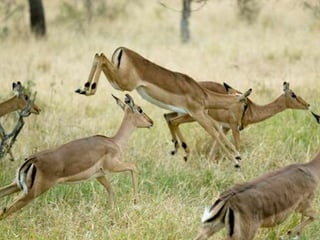
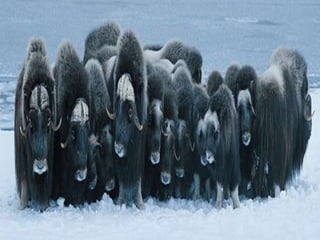
STRENGTH IN
NUMBERS
RESPONSES OF THE PREY
Thank you
for listening!