INTERACTIONS AMONG
POPULATIONS
Understanding Ecological
Relationships
Presented by Anjani Kumari
Introduction
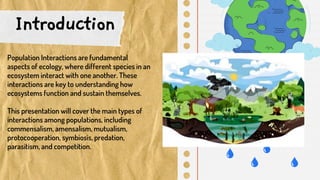
Population Interactions are fundamental
aspects of ecology, where different species in an
ecosystem interact with one another. These
interactions are key to understanding how
ecosystems function and sustain themselves.
This presentation will cover the main types of
interactions among populations, including
commensalism, amensalism, mutualism,
protocooperation, symbiosis, predation,
parasitism, and competition.
History of Ecological
Interactions
• Charles Darwin was one of the first to highlight the importance of interactions
between species in "On the Origin of Species" (1859), particularly focusing on
competition and predation.
• Early 20th century ecologists, such as Alfred Lotka and Vito Volterra, developed
mathematical models (Lotka-Volterra models) to describe population dynamics,
focusing on predator-prey and competitive relationships.
• Modern Ecology: In recent decades, ecological research has expanded to study
interactions beyond just competition and predation, incorporating more
complex relationships such as mutualism and symbiosis.
Types of Population
Interactions
Population interactions can be classified based on whether they benefit,
harm, or have no effect on the species involved:
• Positive Interactions (Both species benefit):
⚬ Mutualism, Protocooperation, Symbiosis.
• Neutral Interactions (One species benefits, the other unaffected):
⚬ Commensalism.
• Negative Interactions (One species benefits at the expense of another):
⚬ Predation, Parasitism, Amensalism, Competition.
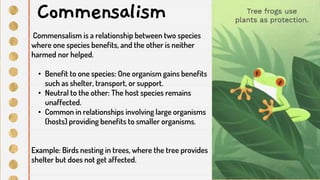
Commensalism is a relationship between two species
where one species benefits, and the other is neither
harmed nor helped.
• Benefit to one species: One organism gains benefits
such as shelter, transport, or support.
• Neutral to the other: The host species remains
unaffected.
• Common in relationships involving large organisms
(hosts) providing benefits to smaller organisms.
Example: Birds nesting in trees, where the tree provides
shelter but does not get affected.
Commensalism
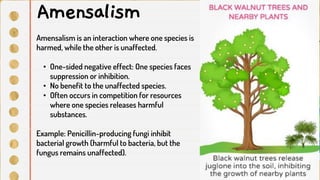
Amensalism is an interaction where one species is
harmed, while the other is unaffected.
• One-sided negative effect: One species faces
suppression or inhibition.
• No benefit to the unaffected species.
• Often occurs in competition for resources
where one species releases harmful
substances.
Example: Penicillin-producing fungi inhibit
bacterial growth (harmful to bacteria, but the
fungus remains unaffected).
Amensalism
• Definition: Mutualism is a symbiotic relationship
where both species involved benefit from the
interaction.
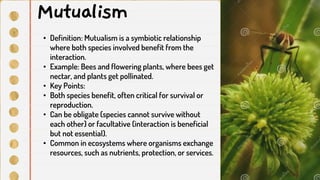
• Example: Bees and flowering plants, where bees get
nectar, and plants get pollinated.
• Key Points:
• Both species benefit, often critical for survival or
reproduction.
• Can be obligate (species cannot survive without
each other) or facultative (interaction is beneficial
but not essential).
• Common in ecosystems where organisms exchange
resources, such as nutrients, protection, or services.
Mutualism
Protocooperation is a form of mutualism where the
interaction is beneficial to both species but not essential
for their survival.
• Similar to mutualism but with no dependency.
• Both organisms benefit, but they can live
independently.
• A non-obligatory relationship that helps improve
each other's chances of success.
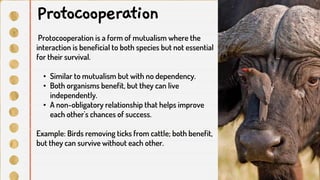
Example: Birds removing ticks from cattle; both benefit,
but they can survive without each other.
Protocooperation
Symbiosis
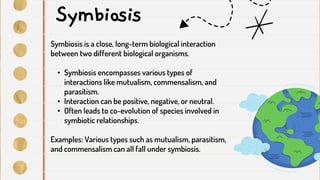
Symbiosis is a close, long-term biological interaction
between two different biological organisms.
• Symbiosis encompasses various types of
interactions like mutualism, commensalism, and
parasitism.
• Interaction can be positive, negative, or neutral.
• Often leads to co-evolution of species involved in
symbiotic relationships.
Examples: Various types such as mutualism, parasitism,
and commensalism can all fall under symbiosis.
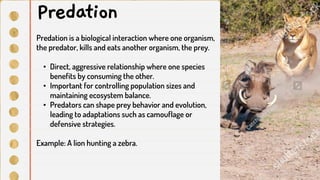
Predation is a biological interaction where one organism,
the predator, kills and eats another organism, the prey.
• Direct, aggressive relationship where one species
benefits by consuming the other.
• Important for controlling population sizes and
maintaining ecosystem balance.
• Predators can shape prey behavior and evolution,
leading to adaptations such as camouflage or
defensive strategies.
Example: A lion hunting a zebra.
Predation
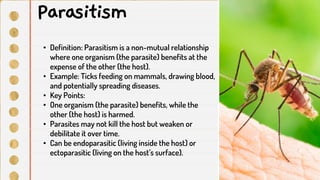
• Definition: Parasitism is a non-mutual relationship
where one organism (the parasite) benefits at the
expense of the other (the host).
• Example: Ticks feeding on mammals, drawing blood,
and potentially spreading diseases.
• Key Points:
• One organism (the parasite) benefits, while the
other (the host) is harmed.
• Parasites may not kill the host but weaken or
debilitate it over time.
• Can be endoparasitic (living inside the host) or
ectoparasitic (living on the host’s surface).
Parasitism
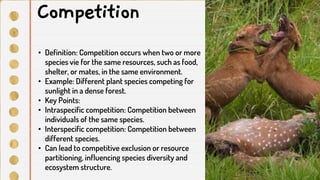
• Definition: Competition occurs when two or more
species vie for the same resources, such as food,
shelter, or mates, in the same environment.
• Example: Different plant species competing for
sunlight in a dense forest.
• Key Points:
• Intraspecific competition: Competition between
individuals of the same species.
• Interspecific competition: Competition between
different species.
• Can lead to competitive exclusion or resource
partitioning, influencing species diversity and
ecosystem structure.
Competition
Conclusion
The ecological interactions among populations, ranging from mutually
beneficial relationships like mutualism and protocooperation to competitive
or harmful relationships like parasitism and predation, shape ecosystems and
determine species survival and behavior.
• Each interaction type plays a unique role in maintaining balance and
diversity in ecosystems.
• Understanding these interactions is critical for ecological research and
environmental management.
Thank you!
www.reallygreatsite.com

Interactions Among Populations-Understanding Ecological Relationships.pdf

  • 1.
  • 3.
    Introduction Population Interactions arefundamental aspects of ecology, where different species in an ecosystem interact with one another. These interactions are key to understanding how ecosystems function and sustain themselves. This presentation will cover the main types of interactions among populations, including commensalism, amensalism, mutualism, protocooperation, symbiosis, predation, parasitism, and competition.
  • 4.
    History of Ecological Interactions •Charles Darwin was one of the first to highlight the importance of interactions between species in "On the Origin of Species" (1859), particularly focusing on competition and predation. • Early 20th century ecologists, such as Alfred Lotka and Vito Volterra, developed mathematical models (Lotka-Volterra models) to describe population dynamics, focusing on predator-prey and competitive relationships. • Modern Ecology: In recent decades, ecological research has expanded to study interactions beyond just competition and predation, incorporating more complex relationships such as mutualism and symbiosis.
  • 5.
    Types of Population Interactions Populationinteractions can be classified based on whether they benefit, harm, or have no effect on the species involved: • Positive Interactions (Both species benefit): ⚬ Mutualism, Protocooperation, Symbiosis. • Neutral Interactions (One species benefits, the other unaffected): ⚬ Commensalism. • Negative Interactions (One species benefits at the expense of another): ⚬ Predation, Parasitism, Amensalism, Competition.
  • 6.
    Commensalism is arelationship between two species where one species benefits, and the other is neither harmed nor helped. • Benefit to one species: One organism gains benefits such as shelter, transport, or support. • Neutral to the other: The host species remains unaffected. • Common in relationships involving large organisms (hosts) providing benefits to smaller organisms. Example: Birds nesting in trees, where the tree provides shelter but does not get affected. Commensalism
  • 7.
    Amensalism is aninteraction where one species is harmed, while the other is unaffected. • One-sided negative effect: One species faces suppression or inhibition. • No benefit to the unaffected species. • Often occurs in competition for resources where one species releases harmful substances. Example: Penicillin-producing fungi inhibit bacterial growth (harmful to bacteria, but the fungus remains unaffected). Amensalism
  • 8.
    • Definition: Mutualismis a symbiotic relationship where both species involved benefit from the interaction. • Example: Bees and flowering plants, where bees get nectar, and plants get pollinated. • Key Points: • Both species benefit, often critical for survival or reproduction. • Can be obligate (species cannot survive without each other) or facultative (interaction is beneficial but not essential). • Common in ecosystems where organisms exchange resources, such as nutrients, protection, or services. Mutualism
  • 9.
    Protocooperation is aform of mutualism where the interaction is beneficial to both species but not essential for their survival. • Similar to mutualism but with no dependency. • Both organisms benefit, but they can live independently. • A non-obligatory relationship that helps improve each other's chances of success. Example: Birds removing ticks from cattle; both benefit, but they can survive without each other. Protocooperation
  • 10.
    Symbiosis Symbiosis is aclose, long-term biological interaction between two different biological organisms. • Symbiosis encompasses various types of interactions like mutualism, commensalism, and parasitism. • Interaction can be positive, negative, or neutral. • Often leads to co-evolution of species involved in symbiotic relationships. Examples: Various types such as mutualism, parasitism, and commensalism can all fall under symbiosis.
  • 11.
    Predation is abiological interaction where one organism, the predator, kills and eats another organism, the prey. • Direct, aggressive relationship where one species benefits by consuming the other. • Important for controlling population sizes and maintaining ecosystem balance. • Predators can shape prey behavior and evolution, leading to adaptations such as camouflage or defensive strategies. Example: A lion hunting a zebra. Predation
  • 12.
    • Definition: Parasitismis a non-mutual relationship where one organism (the parasite) benefits at the expense of the other (the host). • Example: Ticks feeding on mammals, drawing blood, and potentially spreading diseases. • Key Points: • One organism (the parasite) benefits, while the other (the host) is harmed. • Parasites may not kill the host but weaken or debilitate it over time. • Can be endoparasitic (living inside the host) or ectoparasitic (living on the host’s surface). Parasitism
  • 13.
    • Definition: Competitionoccurs when two or more species vie for the same resources, such as food, shelter, or mates, in the same environment. • Example: Different plant species competing for sunlight in a dense forest. • Key Points: • Intraspecific competition: Competition between individuals of the same species. • Interspecific competition: Competition between different species. • Can lead to competitive exclusion or resource partitioning, influencing species diversity and ecosystem structure. Competition
  • 14.
    Conclusion The ecological interactionsamong populations, ranging from mutually beneficial relationships like mutualism and protocooperation to competitive or harmful relationships like parasitism and predation, shape ecosystems and determine species survival and behavior. • Each interaction type plays a unique role in maintaining balance and diversity in ecosystems. • Understanding these interactions is critical for ecological research and environmental management.
  • 15.