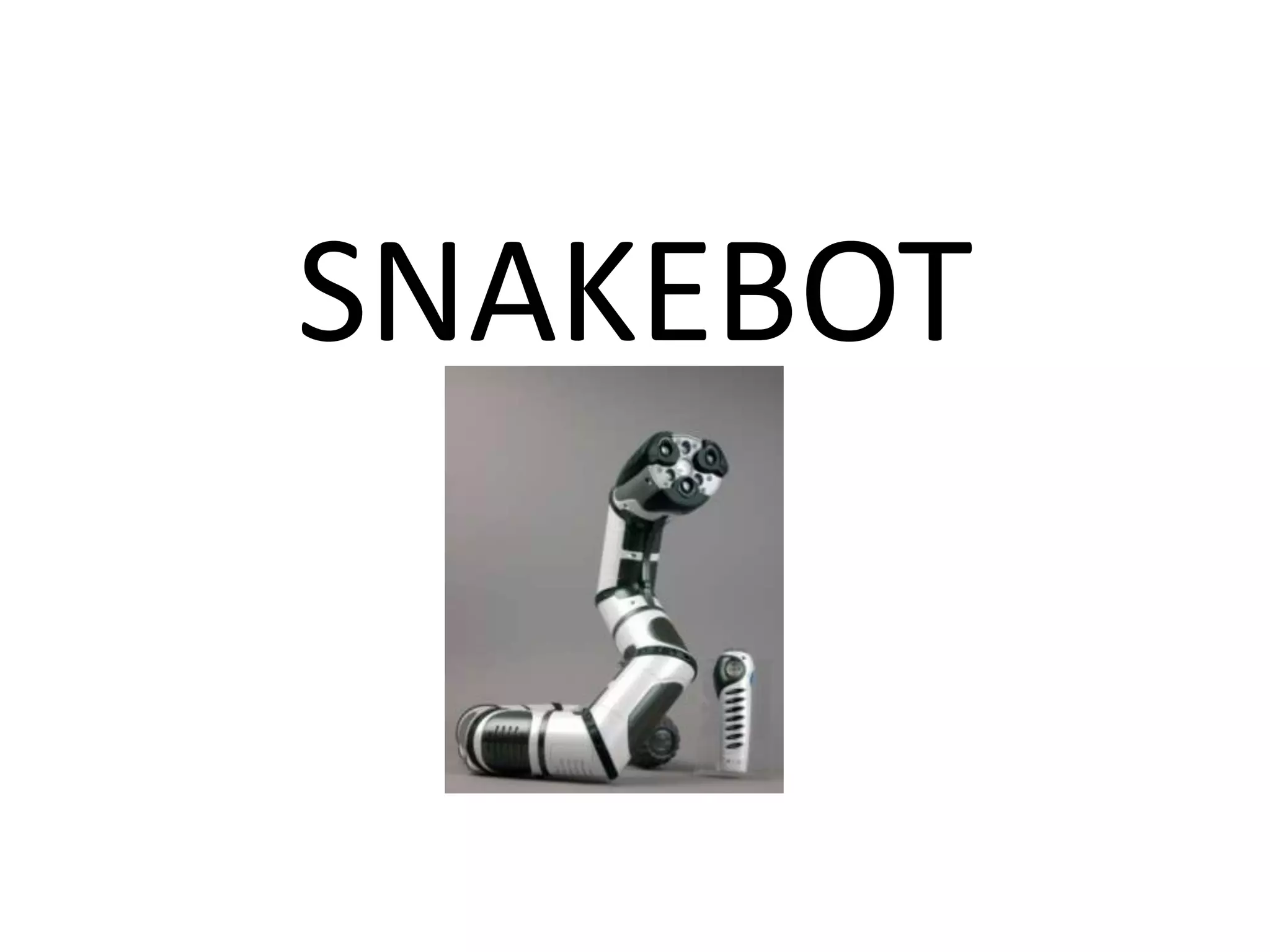
SNAKEBOT
INTRODUCTION
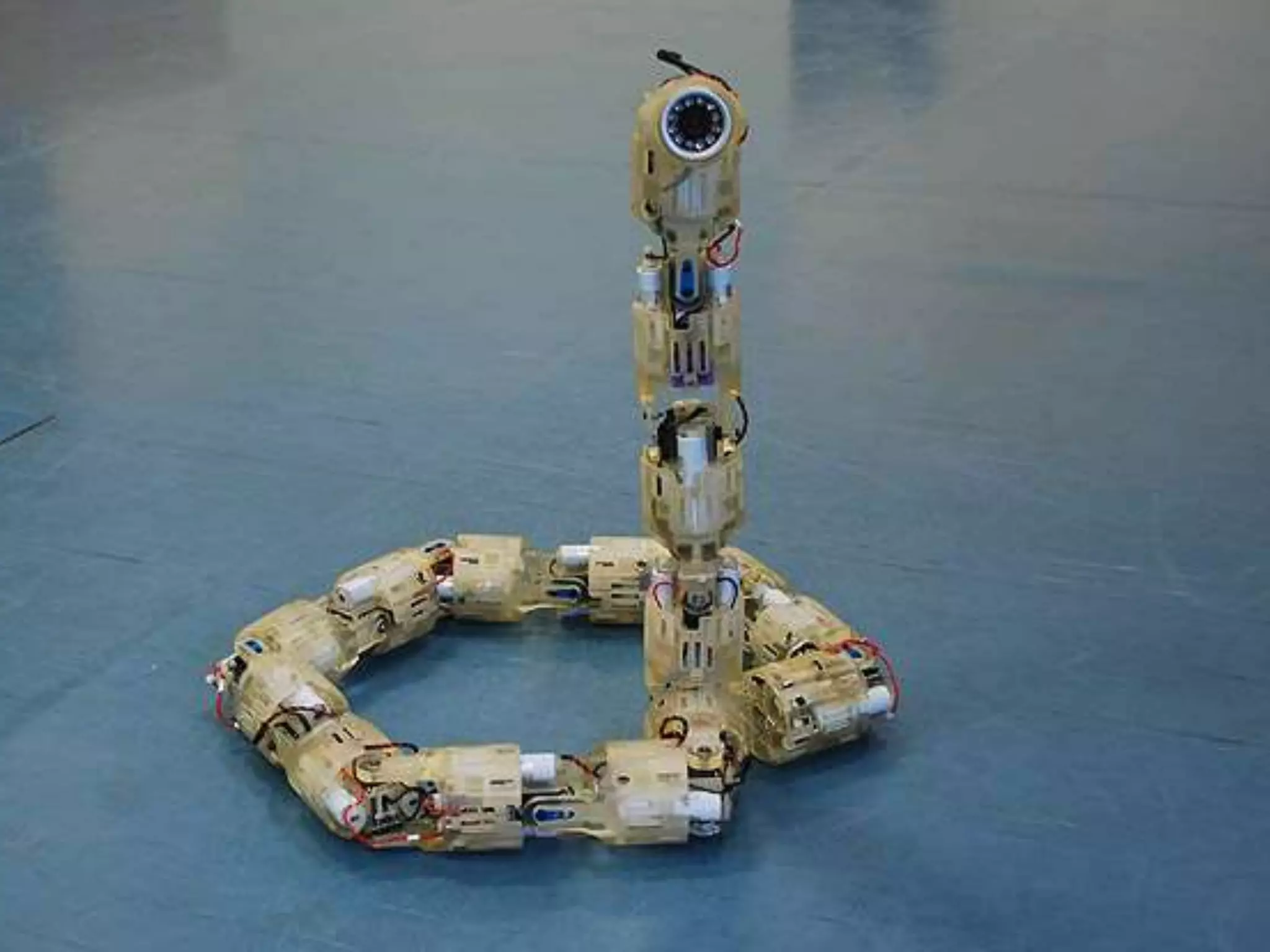
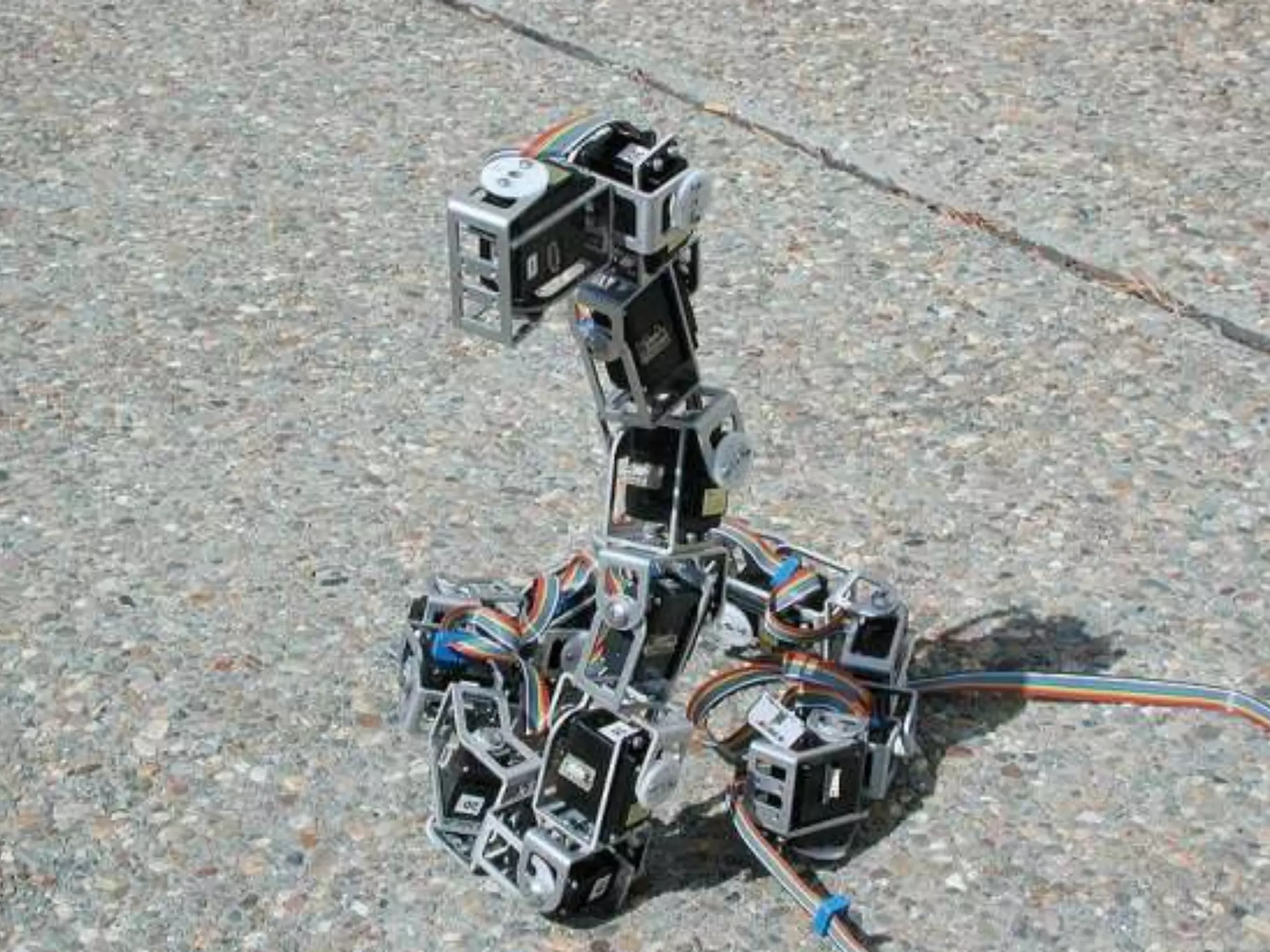
• A snakebot is a biomorphic hyper-redundant
robot that resembles a snake.
• Snakebots are constructed by chaining
together a number of independent links
• Currently being used for Space ,Military and
Medical applications
MAIN FEATURES
• Small cross section to length ratio allows
them to move into tight spaces
• Ability to change the shape of their body
allows them to perform a wide range of
behaviours
NEED FOR SNAKEBOT
• Autonomy
• High mobility
• Robustness
• Modularity
FUNCTIONS
• Utilization of robotics technology for human
assistance in any phase of rescue operations
• Snakebots will slither and dig underneath the
soil for geological surveying
• Medical Snakebots can maneuver around
organs inside a human chest cavity
BASIC PROTOTYPES DEVELOPED
• Fire fighting snakebot developed by SINTEF
• Medical snakebot developed at Carnegie
Mellon University
• Space-Snakebots developed by NASA
• Rescue-Snakebots developed by US Army
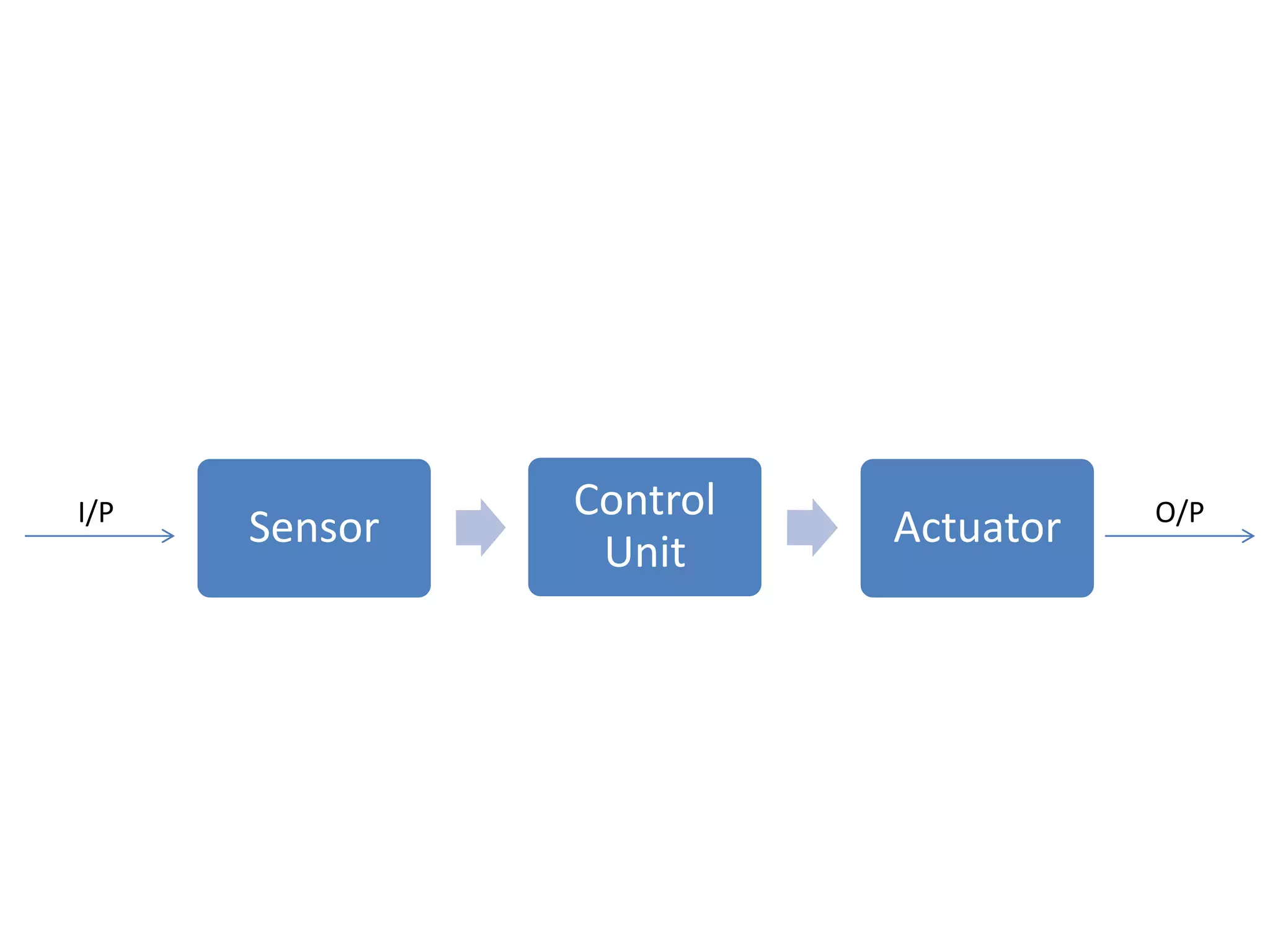
Sensor
Control
Unit
ActuatorI/P O/P
BASIC PARTS
• Central Computer
• Microcontrollers
• Motors
• Sensors
• Wheels/Conveyor Belts
• Gears
• Camera
• Connecting Rods
WORKING
• Central computer works in conjunction with
smaller computers in each module
• Microcontrollers interpret signals from the
main computer to control movement
• Sensors will indicate if the snake is in contact
with anything
• Motors move the various parts in each
module
• Wheels are responsible for transporting the
snakebot
• Gears allow movement of the hinges
• Camera for vision and recording images
• Connecting Rods will pull and activate the
section next to it
DIFFERENT TYPES OF MOVEMENT
• Move forward with rectilinear or lateral
motion.
• Move right/left with flapping motion.
• Change of direction
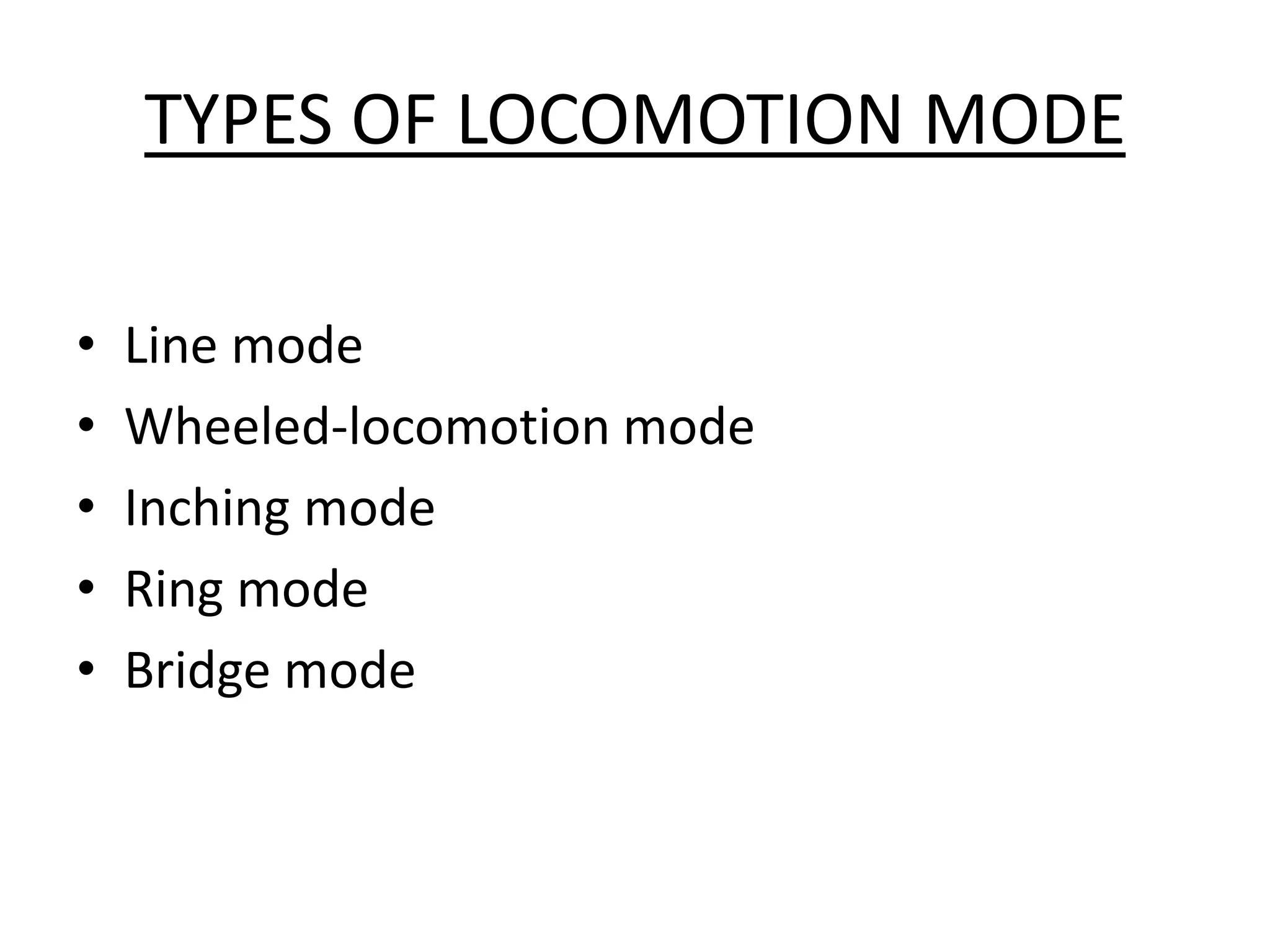
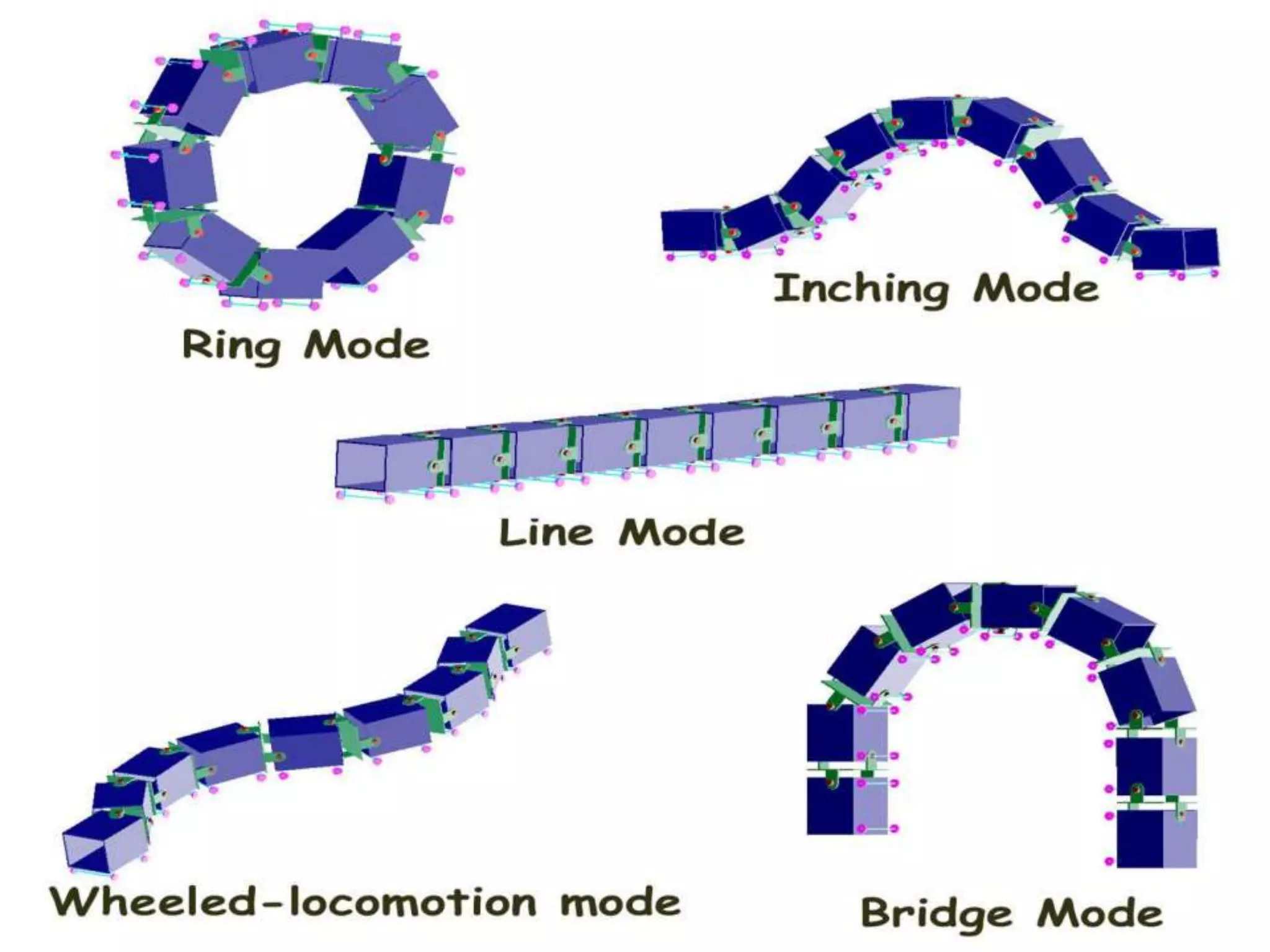
TYPES OF LOCOMOTION MODE
• Line mode
• Wheeled-locomotion mode
• Inching mode
• Ring mode
• Bridge mode
OTHER APPLICATIONS
• Bridge inspection
• Rescue operation under trench
• Spy purpose Operations
ADVANTAGES
• Small in size and weight
• Versatility
• Reliability
• Low expenses
DISADVANTAGES
• Hard to control
• Cannot optimize its own path
CONCLUSION
• Serpentine mechanisms, with their wide range
of capabilities, face major design challenge
mechanism design, path
planning, control, and sensor integration.
• The test versions of the snakebot have been
remote controlled. Eventually, scientists will
find ways to give these robots a form of
intelligence so that they can operate by its
own
REFERENCES
• Shigeo Hirose, “Biologically Inspired
Robots”, Oxford University Press, 1993, ISBN 0-
19-856261-6.
• J. P. Ostrowski and J. W. Burdick, “Gait
kinematics for a serpentine robot”, In Int.
Conf. On Robotics and Automation, 1996
• Howstuffworks.com
• Wikipedia.org
QUESTIONS??
THANK YOU

Snakebot

  • 1.
  • 2.
    INTRODUCTION • A snakebotis a biomorphic hyper-redundant robot that resembles a snake. • Snakebots are constructed by chaining together a number of independent links • Currently being used for Space ,Military and Medical applications
  • 3.
    MAIN FEATURES • Smallcross section to length ratio allows them to move into tight spaces • Ability to change the shape of their body allows them to perform a wide range of behaviours
  • 4.
    NEED FOR SNAKEBOT •Autonomy • High mobility • Robustness • Modularity
  • 6.
    FUNCTIONS • Utilization ofrobotics technology for human assistance in any phase of rescue operations • Snakebots will slither and dig underneath the soil for geological surveying • Medical Snakebots can maneuver around organs inside a human chest cavity
  • 7.
    BASIC PROTOTYPES DEVELOPED •Fire fighting snakebot developed by SINTEF • Medical snakebot developed at Carnegie Mellon University • Space-Snakebots developed by NASA • Rescue-Snakebots developed by US Army
  • 8.
  • 9.
    BASIC PARTS • CentralComputer • Microcontrollers • Motors • Sensors • Wheels/Conveyor Belts • Gears • Camera • Connecting Rods
  • 10.
    WORKING • Central computerworks in conjunction with smaller computers in each module • Microcontrollers interpret signals from the main computer to control movement • Sensors will indicate if the snake is in contact with anything • Motors move the various parts in each module
  • 11.
    • Wheels areresponsible for transporting the snakebot • Gears allow movement of the hinges • Camera for vision and recording images • Connecting Rods will pull and activate the section next to it
  • 13.
    DIFFERENT TYPES OFMOVEMENT • Move forward with rectilinear or lateral motion. • Move right/left with flapping motion. • Change of direction
  • 14.
    TYPES OF LOCOMOTIONMODE • Line mode • Wheeled-locomotion mode • Inching mode • Ring mode • Bridge mode
  • 17.
    OTHER APPLICATIONS • Bridgeinspection • Rescue operation under trench • Spy purpose Operations
  • 18.
    ADVANTAGES • Small insize and weight • Versatility • Reliability • Low expenses
  • 19.
    DISADVANTAGES • Hard tocontrol • Cannot optimize its own path
  • 20.
    CONCLUSION • Serpentine mechanisms,with their wide range of capabilities, face major design challenge mechanism design, path planning, control, and sensor integration. • The test versions of the snakebot have been remote controlled. Eventually, scientists will find ways to give these robots a form of intelligence so that they can operate by its own
  • 21.
    REFERENCES • Shigeo Hirose,“Biologically Inspired Robots”, Oxford University Press, 1993, ISBN 0- 19-856261-6. • J. P. Ostrowski and J. W. Burdick, “Gait kinematics for a serpentine robot”, In Int. Conf. On Robotics and Automation, 1996 • Howstuffworks.com • Wikipedia.org
  • 22.
  • 23.