Pneumonia
Fatima Al-Awadh
OBJECTIVES
•   Define Pneumonia.
•   Mention the classifications .
•   Explain the pathophysiology of pneumonia.
•   State the anatomy of the lung.
•   Describe the risk factors and causes.
•   Asses the relation between hypertension and pneumonia.
Definition and Epidemiology
• DEFINITION:
An inflammation of the lungs caused by an
infection.
• Epidemiology:
Pneumonia is a common illness affecting
approximately 450 million people a year and
occurring in all parts of the world. It is a
major cause of death among all age groups
resulting in 4 million deaths (7% of the
worlds yearly total).Rates are greatest in
children less than five and adults older than
75 years of age. It occurs about five times
more frequently in the developing world
versus the developed world. Viral
pneumonia accounts for about 200 million
cases.
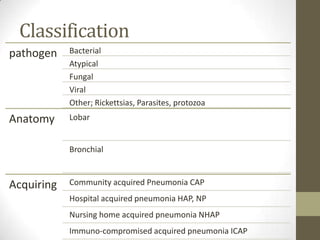
Classification
pathogen    Bacterial
            Atypical
            Fungal
            Viral
            Other; Rickettsias, Parasites, protozoa
Anatomy     Lobar


            Bronchial


Acquiring   Community acquired Pneumonia CAP
            Hospital acquired pneumonia HAP, NP
            Nursing home acquired pneumonia NHAP
            Immuno-compromised acquired pneumonia ICAP
The Lungs anatomy
Pathophysiology of pneumonia
                           Bacteria may      The macrophages and
   Bacteria enter the
                                             neutrophils inactivate
lungs (from the throat   invade the spaces
                                               the bacteria. The
   or nose, airborne     between cells and      neutrophils also
  droplets, or blood).    between alveoli.     release cytokines


The neutrophils,         Leading to the         This cause
 bacteria, and                                    general
  fluid fill the          fever, chills,     activation of the
     alveoli              and fatigue.       immune system.


Resulting in the
 consolidation
seen on chest X-
      ray.
Cause
There are over a hundred microorganisms which can cause CAP.
The most common types of microorganisms are different among
different groups of people. Newborn infants, children, and
adults are at risk for different spectrums of disease causing
microorganisms.
• Breathing infected amniotic fluid or across the
Infants      placenta.
           • Commonly caused by Streptococcus agalactiae


           • children less than five years are much less likely

Children    to have pneumonia
           • older children and teenagers are more likely to
            acquire certain types of pneumonia than adults.


           • Viruses; influenza, para-influenza.

Adults     • Bacteria; Atypical organisms, Streptococcus
             pneumonia, Hemophilus
             influenza, Pseudomonas aeruginosa.
Risk factors
• Age; If you're age 65 or older, young children.
• Obstruction of bronchi, the lung is not able to clear fluid
  when it accumulates.
• Lung disease; Diseases such as emphysema or habits such as
  smoking
• Certain diseases; AIDS , immune deficiencies , heart disease.
• Exposure to certain chemicals or pollutants.
Hypertension and Pneumonia
• High blood pressure can be caused by lifestyle habits, a
  chronic condition or a family history of it. In some cases an
  infection can also cause a dramatic rise in blood pressure. High
  blood pressure should be assessed by your physician and
  treated with lifestyle changes and medication to prevent long-
  term damage to vital organs. In addition, if an infection is
  causing your high blood pressure, it should also be diagnosed
  and treated.
References
• http://basic.shsmu.edu.cn/jpkc/rjnk/3/ppt/28.ppt
• http://en.wikipedia.org/wiki/Pneumonia
• High Blood Pressure & Infection | eHow.com
  http://www.ehow.com/about_5557093_high-blood-pressure-
  infection.html#ixzz2ChHotq1J

Pneumonia

  • 1.
  • 2.
    OBJECTIVES • Define Pneumonia. • Mention the classifications . • Explain the pathophysiology of pneumonia. • State the anatomy of the lung. • Describe the risk factors and causes. • Asses the relation between hypertension and pneumonia.
  • 3.
    Definition and Epidemiology •DEFINITION: An inflammation of the lungs caused by an infection. • Epidemiology: Pneumonia is a common illness affecting approximately 450 million people a year and occurring in all parts of the world. It is a major cause of death among all age groups resulting in 4 million deaths (7% of the worlds yearly total).Rates are greatest in children less than five and adults older than 75 years of age. It occurs about five times more frequently in the developing world versus the developed world. Viral pneumonia accounts for about 200 million cases.
  • 4.
    Classification pathogen Bacterial Atypical Fungal Viral Other; Rickettsias, Parasites, protozoa Anatomy Lobar Bronchial Acquiring Community acquired Pneumonia CAP Hospital acquired pneumonia HAP, NP Nursing home acquired pneumonia NHAP Immuno-compromised acquired pneumonia ICAP
  • 5.
  • 6.
    Pathophysiology of pneumonia Bacteria may The macrophages and Bacteria enter the neutrophils inactivate lungs (from the throat invade the spaces the bacteria. The or nose, airborne between cells and neutrophils also droplets, or blood). between alveoli. release cytokines The neutrophils, Leading to the This cause bacteria, and general fluid fill the fever, chills, activation of the alveoli and fatigue. immune system. Resulting in the consolidation seen on chest X- ray.
  • 7.
    Cause There are overa hundred microorganisms which can cause CAP. The most common types of microorganisms are different among different groups of people. Newborn infants, children, and adults are at risk for different spectrums of disease causing microorganisms.
  • 8.
    • Breathing infectedamniotic fluid or across the Infants placenta. • Commonly caused by Streptococcus agalactiae • children less than five years are much less likely Children to have pneumonia • older children and teenagers are more likely to acquire certain types of pneumonia than adults. • Viruses; influenza, para-influenza. Adults • Bacteria; Atypical organisms, Streptococcus pneumonia, Hemophilus influenza, Pseudomonas aeruginosa.
  • 9.
    Risk factors • Age;If you're age 65 or older, young children. • Obstruction of bronchi, the lung is not able to clear fluid when it accumulates. • Lung disease; Diseases such as emphysema or habits such as smoking • Certain diseases; AIDS , immune deficiencies , heart disease. • Exposure to certain chemicals or pollutants.
  • 10.
    Hypertension and Pneumonia •High blood pressure can be caused by lifestyle habits, a chronic condition or a family history of it. In some cases an infection can also cause a dramatic rise in blood pressure. High blood pressure should be assessed by your physician and treated with lifestyle changes and medication to prevent long- term damage to vital organs. In addition, if an infection is causing your high blood pressure, it should also be diagnosed and treated.
  • 11.
    References • http://basic.shsmu.edu.cn/jpkc/rjnk/3/ppt/28.ppt • http://en.wikipedia.org/wiki/Pneumonia •High Blood Pressure & Infection | eHow.com http://www.ehow.com/about_5557093_high-blood-pressure- infection.html#ixzz2ChHotq1J