BY: NIMMY ANN SHIBU
GROUP: 4

 Pneumonia is an infection in one or both lungs.
 Pneumonia causes inflammation in alveoli.
 The alveoli is filled with fluid or pus making t
difficult to breath.
 Pneumonia is the ‘ inflammation and consolidation
of lung tissue due to infectious agent’.
 CONSOLIDATION – is the inflammatory induration
of a normally aerated lung due to presence of
cellular exudative in alveoli.
INTRODUCTION

 Most of the time the body infiltrates organisms.
 This keeps the lung from becoming infected .
 But organisms sometimes enter the lungs and cause
infections .
 This is more likely occur when :
 Immune system is weak
 Organism is very strong
 Body fails to filter the organisms.
HOW DOES PNEUMONIA DEVELOP

 In developed nations, pneumonia is a serious concern in adults over age 65.
One study reported increased rates of pneumonia-associated hospitalizations in
the United States, United Kingdom, Denmark, and the Netherlands. In the
United States in 2010, approximately 1.1 million patients were hospitalized for
pneumonia and the average length of hospital stay was 5.2 days.
 Approximately 50,000 people died. In England, the number of hospitalizations
attributable to pneumonia increased by 34% during the period from 1997 to
2005.
 The increase was particularly notable in older adults. According to national
statistics, approximately 26,000 people died from pneumonia and influenza in
England and Wales in 2013.
 The increasing rate of pneumonia found in developed nations may be linked to
the aging population and to increases in other chronic diseases such as diabetes,
heart disease, and other medical conditions that weaken the immune system.
EPIDEMIOLOGY

 Advanced age
 Chronic illness
 Cigarette smoking
 Dementia
 Malnutrition
 Previous episode of pneumonia
 Spleenectomy
RISK FACTORS

 Streptococcus pneumonia
 Haemophilus influenzae
 Moraxella catarrhalis
 Staphylococcus aureus
 Kleibseilla pneumonia
 Pseudomonas aerugnosa
 Leigionella pneumophila
CAUSES OF PNEUMONAI- BACTERIA

 Influenza virus type A and B
 Adenovirus
 Coronavirus
 Respiratory syncytial virus
VIRUSES

 Cytomegalovirus
 Pneumocystis
PNEUMONIA IN IMMUNOCOMPROMISED
HOST

 Histoplasma capsulatum
 Coccidioides immitis
 Blastomyces dermatitidis
 Paracoccidioides brasiliensis
 Cryptococcus neoformans
 Candida species
 Aspergillus species
 Mucor species
FUNGI

 Toxoplasma gondii
 Strongyloides stercoralis
 Ascaris lumbricoides
 Plasmodium malariae
PARASITES

 Hospital acquired pneumonia
 Ventilator associated pneumonia
 Community acquired pneumonia
 Health care associated pneumonia
CATEGORIES

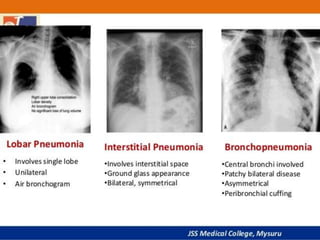
 Bronchopneumonia--inflammation of the lungs,
arising in the bronchi or bronchioles.
 Lobar pneumonia - is a form of pneumonia that
affects a large and continuous area of the lobe of a
lung.
 Interstitial pneumonia- is a form of lung disease
characterized by progressive scarring of both lungs.
The scarring (fibrosis) involves the supporting
framework (interstitium) of the lung.
TYPES
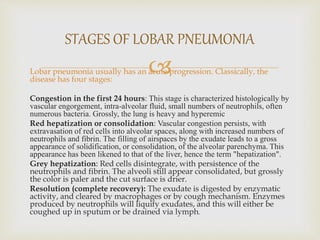
Lobar pneumonia usually has an acute progression. Classically, the
disease has four stages:
Congestion in the first 24 hours: This stage is characterized histologically by
vascular engorgement, intra-alveolar fluid, small numbers of neutrophils, often
numerous bacteria. Grossly, the lung is heavy and hyperemic
Red hepatization or consolidation: Vascular congestion persists, with
extravasation of red cells into alveolar spaces, along with increased numbers of
neutrophils and fibrin. The filling of airspaces by the exudate leads to a gross
appearance of solidification, or consolidation, of the alveolar parenchyma. This
appearance has been likened to that of the liver, hence the term "hepatization".
Grey hepatization: Red cells disintegrate, with persistence of the
neutrophils and fibrin. The alveoli still appear consolidated, but grossly
the color is paler and the cut surface is drier.
Resolution (complete recovery): The exudate is digested by enzymatic
activity, and cleared by macrophages or by cough mechanism. Enzymes
produced by neutrophils will liquify exudates, and this will either be
coughed up in sputum or be drained via lymph.
STAGES OF LOBAR PNEUMONIA

CHEST X-RAY

LOBAR PNEUMONIA

BRONCHOPNEUMONIA

INTERSTITIAL PNEUMONIA

 Chest pain when you breathe or cough
 Confusion or changes in mental awareness (in adults age
65 and older)
 Cough, which may produce phlegm
 Fatigue
 Fever, sweating and shaking chills
 Lower than normal body temperature (in adults older
than age 65 and people with weak immune systems)
 Nausea, vomiting or diarrhea
 Shortness of breath
SIGN AND SYMPTOMS

 Chest X-ray
 Full blood count
 Arterial blood gases/pulse oximetry
 Blood culture, sputum gram stain and culture,
 Urea/ Creatinine , electrolytes , sugar
LABORATORY TESTS

 Fever
 Chills
 Tachypnea
 Tachycardia
 Dullness to percussion
 Decreased breath sounds
 Crackles
 rhonchi
 Egophony
 Bronchophony
 whispered pectoriloquy
 Leukocytosis
TYPICAL FINDINGS

 Oral antibiotics, rest , simple analgesics, fluids
 Antibiotics- Amoxicillin ,doxycycline ,clarithromycin
 The duration of treatment has traditionally been seven to
ten days
 Neuraminidase inhibitors may be used to treat viral
pneumonia caused by influenza viruses (influenza A and
influenza B).
 Influenza A may be treated with rimantadine or
amantadine, while influenza A or B may be treated with
oseltamivir, zanamivir or peramivir.[11] These are of most
benefit if they are started within 48 hours of the onset of
symptoms
MANAGEMENT/ TREATMENT

 SLAPHER- (MNEUMONICS)
 S- septicemia
 L-lung abcess
 A- ARDS
 P-Para-pneumonic effusions
 H- Hypotension
 E-empyema
 R-respiratory failure
COMPLICATIONS

 Vaccination
 Smoking cessation
 Better nutrition
 Better hygiene
 Prevent malnutrition
 Avoid overcrowding
PREVENTION

THANK YOU

Pneumonia

  • 1.
    BY: NIMMY ANNSHIBU GROUP: 4
  • 2.
      Pneumonia isan infection in one or both lungs.  Pneumonia causes inflammation in alveoli.  The alveoli is filled with fluid or pus making t difficult to breath.  Pneumonia is the ‘ inflammation and consolidation of lung tissue due to infectious agent’.  CONSOLIDATION – is the inflammatory induration of a normally aerated lung due to presence of cellular exudative in alveoli. INTRODUCTION
  • 3.
      Most ofthe time the body infiltrates organisms.  This keeps the lung from becoming infected .  But organisms sometimes enter the lungs and cause infections .  This is more likely occur when :  Immune system is weak  Organism is very strong  Body fails to filter the organisms. HOW DOES PNEUMONIA DEVELOP
  • 4.
      In developednations, pneumonia is a serious concern in adults over age 65. One study reported increased rates of pneumonia-associated hospitalizations in the United States, United Kingdom, Denmark, and the Netherlands. In the United States in 2010, approximately 1.1 million patients were hospitalized for pneumonia and the average length of hospital stay was 5.2 days.  Approximately 50,000 people died. In England, the number of hospitalizations attributable to pneumonia increased by 34% during the period from 1997 to 2005.  The increase was particularly notable in older adults. According to national statistics, approximately 26,000 people died from pneumonia and influenza in England and Wales in 2013.  The increasing rate of pneumonia found in developed nations may be linked to the aging population and to increases in other chronic diseases such as diabetes, heart disease, and other medical conditions that weaken the immune system. EPIDEMIOLOGY
  • 5.
      Advanced age Chronic illness  Cigarette smoking  Dementia  Malnutrition  Previous episode of pneumonia  Spleenectomy RISK FACTORS
  • 7.
      Streptococcus pneumonia Haemophilus influenzae  Moraxella catarrhalis  Staphylococcus aureus  Kleibseilla pneumonia  Pseudomonas aerugnosa  Leigionella pneumophila CAUSES OF PNEUMONAI- BACTERIA
  • 8.
      Influenza virustype A and B  Adenovirus  Coronavirus  Respiratory syncytial virus VIRUSES
  • 9.
  • 10.
      Histoplasma capsulatum Coccidioides immitis  Blastomyces dermatitidis  Paracoccidioides brasiliensis  Cryptococcus neoformans  Candida species  Aspergillus species  Mucor species FUNGI
  • 11.
      Toxoplasma gondii Strongyloides stercoralis  Ascaris lumbricoides  Plasmodium malariae PARASITES
  • 12.
      Hospital acquiredpneumonia  Ventilator associated pneumonia  Community acquired pneumonia  Health care associated pneumonia CATEGORIES
  • 13.
      Bronchopneumonia--inflammation ofthe lungs, arising in the bronchi or bronchioles.  Lobar pneumonia - is a form of pneumonia that affects a large and continuous area of the lobe of a lung.  Interstitial pneumonia- is a form of lung disease characterized by progressive scarring of both lungs. The scarring (fibrosis) involves the supporting framework (interstitium) of the lung. TYPES
  • 14.
    Lobar pneumonia usuallyhas an acute progression. Classically, the disease has four stages: Congestion in the first 24 hours: This stage is characterized histologically by vascular engorgement, intra-alveolar fluid, small numbers of neutrophils, often numerous bacteria. Grossly, the lung is heavy and hyperemic Red hepatization or consolidation: Vascular congestion persists, with extravasation of red cells into alveolar spaces, along with increased numbers of neutrophils and fibrin. The filling of airspaces by the exudate leads to a gross appearance of solidification, or consolidation, of the alveolar parenchyma. This appearance has been likened to that of the liver, hence the term "hepatization". Grey hepatization: Red cells disintegrate, with persistence of the neutrophils and fibrin. The alveoli still appear consolidated, but grossly the color is paler and the cut surface is drier. Resolution (complete recovery): The exudate is digested by enzymatic activity, and cleared by macrophages or by cough mechanism. Enzymes produced by neutrophils will liquify exudates, and this will either be coughed up in sputum or be drained via lymph. STAGES OF LOBAR PNEUMONIA
  • 16.
  • 18.
  • 19.
  • 20.
  • 21.
      Chest painwhen you breathe or cough  Confusion or changes in mental awareness (in adults age 65 and older)  Cough, which may produce phlegm  Fatigue  Fever, sweating and shaking chills  Lower than normal body temperature (in adults older than age 65 and people with weak immune systems)  Nausea, vomiting or diarrhea  Shortness of breath SIGN AND SYMPTOMS
  • 23.
      Chest X-ray Full blood count  Arterial blood gases/pulse oximetry  Blood culture, sputum gram stain and culture,  Urea/ Creatinine , electrolytes , sugar LABORATORY TESTS
  • 24.
      Fever  Chills Tachypnea  Tachycardia  Dullness to percussion  Decreased breath sounds  Crackles  rhonchi  Egophony  Bronchophony  whispered pectoriloquy  Leukocytosis TYPICAL FINDINGS
  • 25.
      Oral antibiotics,rest , simple analgesics, fluids  Antibiotics- Amoxicillin ,doxycycline ,clarithromycin  The duration of treatment has traditionally been seven to ten days  Neuraminidase inhibitors may be used to treat viral pneumonia caused by influenza viruses (influenza A and influenza B).  Influenza A may be treated with rimantadine or amantadine, while influenza A or B may be treated with oseltamivir, zanamivir or peramivir.[11] These are of most benefit if they are started within 48 hours of the onset of symptoms MANAGEMENT/ TREATMENT
  • 26.
      SLAPHER- (MNEUMONICS) S- septicemia  L-lung abcess  A- ARDS  P-Para-pneumonic effusions  H- Hypotension  E-empyema  R-respiratory failure COMPLICATIONS
  • 27.
      Vaccination  Smokingcessation  Better nutrition  Better hygiene  Prevent malnutrition  Avoid overcrowding PREVENTION
  • 28.