Shortness of Breath during
        Exertion
         Fatima AlAwadh
Objectives


Summarize the case ( Signs & Symptoms & Findings).
Define Dyspnea.
Demonstrate the Differential Diagnosis.
Display the Anatomy of the Respiratory Tract.
Recognize the Volumes of the Lung.
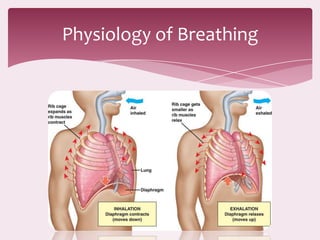
Clarify the Physiology of Breathing.
Understand the Pathophysiology of Dyspnea.
Mention the Diagnostic Investigations.
Enumerate First Aids & Treatments.
Case

                                Smoke two packs of
67-year-old man.
                                cigarettes a day.

Stopped smoking six              Retired coffee
years ago.                      salesman.


Married.                        No pets.


Drinks little alcohol.          No other illnesses.
Case Signs & Symptoms

                                No shivers, sore
                                throat, vomiting, diarr
Looks pale, feels as his        hea, and not sick.
temperature is raised.


                           Productive cough
                           with green sputum.
 Shortness of
breath due to                   Trouble breathing
       effort.                  while sitting still.
Case Findings on Physical
        Examination


                                   Trachea is
  Thin with
                Moderate SOB     positioned in
 broad chest
                                  the midline


Thorax moves                       Reduced
                Breathing rate
 up & down                       breath sound
                 is 32 per min
symmetrically                     across lung


                Wheezing on
                 expiration
Case Findings on Physical
            Examination


 Extended        BP 132/78    Heart rate 94
 expiration       mmHg          per min


   Arterial
                 Decreased      Increase
   oxygen
                 FVC & FEV1   TLC, FRC & RV
saturation 91%
Dyspnea


Dyspnea, the sensation of breathlessness or
inadequate breathing, is the most common
complaint of patients with cardiopulmonary
diseases.
Dyspnea - common complaint “shortness of
breath”.
Defined as uncomfortable breathing.
 Dyspnea on exertion is excessive or abnormal
shortness of breath on exertion.
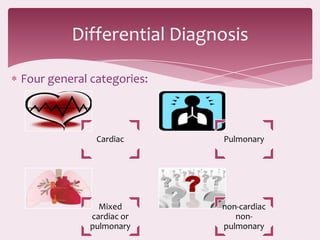
Differential Diagnosis

Four general categories:


              Cardiac      Pulmonary


               Mixed       non-cardiac
             cardiac or       non-
             pulmonary     pulmonary
Pulmonary Etiology


                              Restrictive
  COPD          Asthma          Lung
                              Disorders


Hereditary
                              Pneumo-
  Lung         Pneumonia
                               thorax
Disorders
Cardiac Etiology


                                  Recent or past
 Congestive
                Coronary Artery      history of
Heart Failure                                       Cardiomyopathy
                 Disease (CAD)      Myocardial
   (CHF)
                                  Infarction (MI)


                    Left
  Valvular
                 ventricular      Pericarditis      Arrhythmias
dysfunction
                hypertrophy
Mixed Cardiac/Pulmonary Etiology


  COPD with                       Chronic
  pulmonary                                   Pleural
 HTN and/or
                Deconditioning   pulmonary
                                             effusion
cor pulmonale                      emboli
Noncardiac or Nonpulmonary
               Etiology


  Metabolic
  conditions                        Pain                        Trauma
(e.g. acidosis)


                                       Functional
 Neuromuscular disorders                                        Chemical exposure
                           (anxiety, panic, hyperventilation)
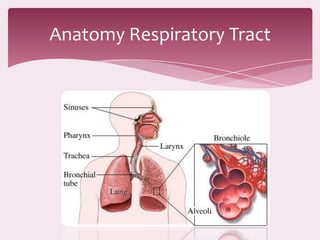
Anatomy Respiratory Tract
Pulmonary Volumes & Capacities
Pulmonary Volumes

The tidal volume
•the volume of air inspired or expired with each normal breath (about 500 ml).

The inspiratory reserve volume

•the extra volume of air that can be inspired over and above the tidal volume with full
 force (about 3000 ml).


The expiratory reserve volume

•the maximum extra volume of air that can be expired by forceful expiration after end
 of tidal expiration (about 1100 ml).


The residual volume
•the volume of air remaining in the lungs after the most forceful expiration (about 1200
 ml).
Pulmonary Capacities

The inspiratory capacity
• The amount of air a person can breathe in (about 3500 ml).

The functional residual capacity
• The amount of air remains in the lungs after normal expiration (about
  2300 ml).

The vital capacity
• The maximum amount of air that can be expelled after first filling the
  lungs to maximum and expiring to maximum (about 4600 ml).

The total lung capacity
• The maximum volume to which the lungs can be expanded with the
  greatest possible effort (about 5800 ml).
Physiology of Breathing
Pathophysiology


The pathophysiology is poorly
understood.
There are no specialized receptors for
dyspnea.
Recent MRI studies have identified a
few specific areas in the midbrain that
may mediate perception of dyspnea.
Pathophysiology

Dyspnea likely results from the complex interaction between:


 chemoreceptor      mechanical breathing     perception of
   stimulation         abnormalities       those two by the
    (Afferent)           (Efferent)              CNS
Pathophysiology

            Dyspnea results when a
           "mismatch" occurs in CNS
        between afferent & efferent
                    signaling.
        As the brain receives afferent
          ventilation information, it is
            able to compare it to the
        current level of respiration by
              the efferent signals.
          If the level of respiration is
         inappropriate for the body's
          status then dyspnea might
                      occur.
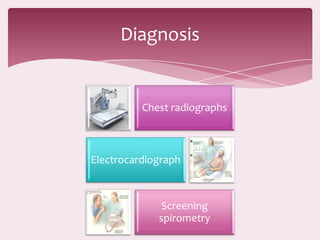
Diagnosis


          Chest radiographs


Electrocardiograph


              Screening
             spirometry
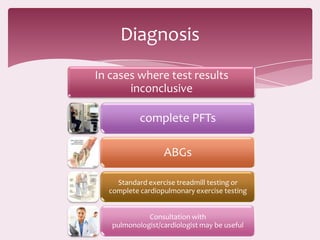
Diagnosis
In cases where test results
       inconclusive

           complete PFTs

                  ABGs

    Standard exercise treadmill testing or
  complete cardiopulmonary exercise testing


             Consultation with
   pulmonologist/cardiologist may be useful
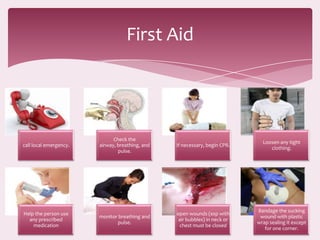
First Aid


                              Check the
                                                                              Loosen any tight
call local emergency.   airway, breathing, and   If necessary, begin CPR.
                                                                                 clothing.
                                pulse.


                                                                            Bandage the sucking
Help the person use                              open wounds (esp with
                        monitor breathing and                                wound with plastic
  any prescribed                                  air bubbles) in neck or
                               pulse.                                       wrap sealing it except
    medication                                    chest must be closed
                                                                               for one corner.
First Aid


DO NOT
Do NOT give the person food or drink.
Do NOT move the person if there has been a chest or
airway injury, unless it is absolutely necessary.
Do NOT place a pillow under the person's head. This
can close the airway.
Do NOT wait to see if the person's condition improves
before getting medical help. Get help immediately.
Treatment


The primary treatment is directed
at its underlying cause.
Examples
 if fluid is collecting in the lung, the fluid
may need to be drained to lessen the
dyspnea.
 Chemotherapy or radiation therapy may
shrink a tumor to lessen the dyspnea.
 If dyspnea is being caused by an
infection, antibiotics may be needed.
Pharmacological Treatment

Bronchodilators
open a patient's airways and decrease their dyspnea.
Steroids
help reduce swelling in the lungs that may be causing
the shortness of breath.
Anti-anxiety drugs
can help break the cycle of panic that can lead to
more breathing difficulties.
Pain medications
can make breathing easier.
References

http://www.joshcorwin.com/pa/PAC18%20-
%20Emergency%20Medicine/Test%201/DYSPNEA.PPT
http://nursingcrib.com/case-study/asthma-case-study/
Guyton and Hall Textbook of Medical Physiology
http://sciencscarter08-
28.wikispaces.com/Respiratory+System+101
Merck Manual of Diagnosis & Therapy
http://en.wikipedia.org/wiki/Dyspnea#Treatment
http://www.umm.edu/ency/article/000007trt.htm
http://www.valleyhealthlink.com/Taxonomy/RelatedDocuments.
aspx?id=0&sid=0&ContentTypeId=34&ContentID=21274-1
Thanks

Dyspnea

  • 1.
    Shortness of Breathduring Exertion Fatima AlAwadh
  • 2.
    Objectives Summarize the case( Signs & Symptoms & Findings). Define Dyspnea. Demonstrate the Differential Diagnosis. Display the Anatomy of the Respiratory Tract. Recognize the Volumes of the Lung. Clarify the Physiology of Breathing. Understand the Pathophysiology of Dyspnea. Mention the Diagnostic Investigations. Enumerate First Aids & Treatments.
  • 3.
    Case Smoke two packs of 67-year-old man. cigarettes a day. Stopped smoking six Retired coffee years ago. salesman. Married. No pets. Drinks little alcohol. No other illnesses.
  • 4.
    Case Signs &Symptoms No shivers, sore throat, vomiting, diarr Looks pale, feels as his hea, and not sick. temperature is raised. Productive cough with green sputum. Shortness of breath due to Trouble breathing effort. while sitting still.
  • 5.
    Case Findings onPhysical Examination Trachea is Thin with Moderate SOB positioned in broad chest the midline Thorax moves Reduced Breathing rate up & down breath sound is 32 per min symmetrically across lung Wheezing on expiration
  • 6.
    Case Findings onPhysical Examination Extended BP 132/78 Heart rate 94 expiration mmHg per min Arterial Decreased Increase oxygen FVC & FEV1 TLC, FRC & RV saturation 91%
  • 7.
    Dyspnea Dyspnea, the sensationof breathlessness or inadequate breathing, is the most common complaint of patients with cardiopulmonary diseases. Dyspnea - common complaint “shortness of breath”. Defined as uncomfortable breathing. Dyspnea on exertion is excessive or abnormal shortness of breath on exertion.
  • 8.
    Differential Diagnosis Four generalcategories: Cardiac Pulmonary Mixed non-cardiac cardiac or non- pulmonary pulmonary
  • 9.
    Pulmonary Etiology Restrictive COPD Asthma Lung Disorders Hereditary Pneumo- Lung Pneumonia thorax Disorders
  • 10.
    Cardiac Etiology Recent or past Congestive Coronary Artery history of Heart Failure Cardiomyopathy Disease (CAD) Myocardial (CHF) Infarction (MI) Left Valvular ventricular Pericarditis Arrhythmias dysfunction hypertrophy
  • 11.
    Mixed Cardiac/Pulmonary Etiology COPD with Chronic pulmonary Pleural HTN and/or Deconditioning pulmonary effusion cor pulmonale emboli
  • 12.
    Noncardiac or Nonpulmonary Etiology Metabolic conditions Pain Trauma (e.g. acidosis) Functional Neuromuscular disorders Chemical exposure (anxiety, panic, hyperventilation)
  • 13.
  • 14.
  • 15.
    Pulmonary Volumes The tidalvolume •the volume of air inspired or expired with each normal breath (about 500 ml). The inspiratory reserve volume •the extra volume of air that can be inspired over and above the tidal volume with full force (about 3000 ml). The expiratory reserve volume •the maximum extra volume of air that can be expired by forceful expiration after end of tidal expiration (about 1100 ml). The residual volume •the volume of air remaining in the lungs after the most forceful expiration (about 1200 ml).
  • 16.
    Pulmonary Capacities The inspiratorycapacity • The amount of air a person can breathe in (about 3500 ml). The functional residual capacity • The amount of air remains in the lungs after normal expiration (about 2300 ml). The vital capacity • The maximum amount of air that can be expelled after first filling the lungs to maximum and expiring to maximum (about 4600 ml). The total lung capacity • The maximum volume to which the lungs can be expanded with the greatest possible effort (about 5800 ml).
  • 17.
  • 18.
    Pathophysiology The pathophysiology ispoorly understood. There are no specialized receptors for dyspnea. Recent MRI studies have identified a few specific areas in the midbrain that may mediate perception of dyspnea.
  • 19.
    Pathophysiology Dyspnea likely resultsfrom the complex interaction between: chemoreceptor mechanical breathing perception of stimulation abnormalities those two by the (Afferent) (Efferent) CNS
  • 20.
    Pathophysiology Dyspnea results when a "mismatch" occurs in CNS between afferent & efferent signaling. As the brain receives afferent ventilation information, it is able to compare it to the current level of respiration by the efferent signals. If the level of respiration is inappropriate for the body's status then dyspnea might occur.
  • 21.
    Diagnosis Chest radiographs Electrocardiograph Screening spirometry
  • 22.
    Diagnosis In cases wheretest results inconclusive complete PFTs ABGs Standard exercise treadmill testing or complete cardiopulmonary exercise testing Consultation with pulmonologist/cardiologist may be useful
  • 23.
    First Aid Check the Loosen any tight call local emergency. airway, breathing, and If necessary, begin CPR. clothing. pulse. Bandage the sucking Help the person use open wounds (esp with monitor breathing and wound with plastic any prescribed air bubbles) in neck or pulse. wrap sealing it except medication chest must be closed for one corner.
  • 24.
    First Aid DO NOT DoNOT give the person food or drink. Do NOT move the person if there has been a chest or airway injury, unless it is absolutely necessary. Do NOT place a pillow under the person's head. This can close the airway. Do NOT wait to see if the person's condition improves before getting medical help. Get help immediately.
  • 25.
    Treatment The primary treatmentis directed at its underlying cause. Examples if fluid is collecting in the lung, the fluid may need to be drained to lessen the dyspnea. Chemotherapy or radiation therapy may shrink a tumor to lessen the dyspnea. If dyspnea is being caused by an infection, antibiotics may be needed.
  • 26.
    Pharmacological Treatment Bronchodilators open apatient's airways and decrease their dyspnea. Steroids help reduce swelling in the lungs that may be causing the shortness of breath. Anti-anxiety drugs can help break the cycle of panic that can lead to more breathing difficulties. Pain medications can make breathing easier.
  • 27.
    References http://www.joshcorwin.com/pa/PAC18%20- %20Emergency%20Medicine/Test%201/DYSPNEA.PPT http://nursingcrib.com/case-study/asthma-case-study/ Guyton and HallTextbook of Medical Physiology http://sciencscarter08- 28.wikispaces.com/Respiratory+System+101 Merck Manual of Diagnosis & Therapy http://en.wikipedia.org/wiki/Dyspnea#Treatment http://www.umm.edu/ency/article/000007trt.htm http://www.valleyhealthlink.com/Taxonomy/RelatedDocuments. aspx?id=0&sid=0&ContentTypeId=34&ContentID=21274-1
  • 28.