BRONCHIECTASIS
ANILKUMAR BR
LECTURER
Medical-surgical nursing
Definition
• Bronchiectasis is a chronic, irreversible
dilation of the bronchi and bronchioles. Or
• Bronchiectasis is characterized by permanent,
abnormal dilation of one or more large
bronchi
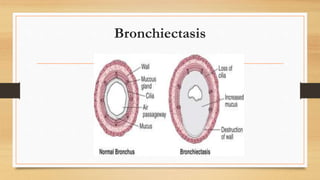
Bronchiectasis
Bronchiectasis
Etiopathophysilogy
• Bronchiectasis is characterized by permanent,
abnormal dilation of one or more large bronchi.
• The pathophysiogic change that results in dilation is
destruction of the elastic and muscular structures
supporting the bronchial wall.
• The disease process results in a reduced ability to
clear mucus from the lungs and decreased expiratory
air.
Continue… .
• The variety of pathophysiogic process can result in
bronchiectasis.
• Primary disorders of structures in the bronchi ( cartilage
defects)
• Disease of mucus clearance (cystic fibrosis) infections
• Etiologies (severe child hood bronchial infections) and
inflammatory disease (ulcerative colitis)
Bronchiectasis may be caused by a variety of
conditions :
• Airway obstruction
• Diffuse airway injury
• Pulmonary infections (complications of long term Pulmonary
infection)
• Genetic disorder (cystic fibrosis)
• Abnormal host defense
• Idiopathic cause
Clinical manifestations
• The hall mark of bronchiectasis is persistent or
recurrent cough with production of large amounts
of purlent sputum that may exceed 500ml /day.
• Many patients with this disease have Hemoptysis
• Clubbing of the fingers also common because of
respiratory insufficiency.
Others manifestations including mainly
• Dyspnea
• Wheezing and pleurtic chest pain
Assessment and diagnostic findings
• History collection and Physical Examination
• Chest x-ray
• HR CT (High – resolution computed tomography)
is gold standard for diagnostic bronchiectasis , it
will show either the presence or absence of
bronchial dilation.
Medical management
• Treatment objectives are promote bronchial
drainage to clear excessive secretions from
affected portion of the lungs and prevent
control infections.
Medical management
• Postal drainage (PD) is the part of all treatment
plans.
• Some time mocopurelent sputum are removed by
bronchoscopy.
• Chest physiotherapy (CPT) , including PD,
percussion are important to management of
secretions.
Continue
• Smoking cessation is major important because of
the smoking impairs bronchial drainage and
increasing bronchial secretions and causing
information of the mucous membrane.
• Antimicrobial therapy based on the sensitivity test
• Patient should be vaccinated against influenza and
pnemococcal pneumonia.
• Bronchodilator are the also treatment choice
• Encourage patients to perform effective coughing
and deep breathing exercises.
• Hydration of patient unless contraindicated, 3
liters /day it is help to the thicking of the
secretions.
Surgical management
• Surgical intervention although used infrequently. The
goals of surgical therapy to conserve normal
Pulmonary tissue and avoid the infectious and
complications.
• Surgical intervention depending the on the patient age
and cardio Pulmonary status and other conditions.
• Segmental resection (segment of a lobe)
• Lobectomy (removal the lung lobe)
• Pnemonectomy (removal of the entire lung)
Summary of medical management patients
with bronchiectasis
• Antibiotics and Antimicrobial therapy
• Postral drainage
• Chest physiotherapy
• Smoking cessation
• Bronchodilator
• Maintain hydration status
• Breathing exercises
Nursing management
• Nursing management of patients with bronchiectasis
focuses on alleviating and helping patients clear
Pulmonary secretions.
• Patients teaching targeted mainly smoking cessation and
breathing exercises
• Patients and family members should taught to perform
the PD and avoid expose to people with upper respiratory
tract infections.
Continue
• The patient should taught early signs and
symptoms of respiratory infections and
progression of the disorder, so that
appropriate treatment can be implemented
promptly.
• The presence of large amount of mucus may
decrease the patients appetite and results in an
inadequate dietary intake, therefore the
patients nutritional status assessed and
strategies to important ensure to adequate
nutrition.
• Maintaining the patient hydration status is major
important encourage patient to take fluid at least 3
liters per day unless contraindicated.
• Assist in PD and CPT
• Encourage patient to perform deep breathing and
effective coughing techniques
• Provide adequate rest.

Bronchiectasis

  • 1.
  • 2.
  • 3.
    Definition • Bronchiectasis isa chronic, irreversible dilation of the bronchi and bronchioles. Or • Bronchiectasis is characterized by permanent, abnormal dilation of one or more large bronchi
  • 4.
  • 5.
  • 6.
    Etiopathophysilogy • Bronchiectasis ischaracterized by permanent, abnormal dilation of one or more large bronchi. • The pathophysiogic change that results in dilation is destruction of the elastic and muscular structures supporting the bronchial wall.
  • 7.
    • The diseaseprocess results in a reduced ability to clear mucus from the lungs and decreased expiratory air.
  • 8.
    Continue… . • Thevariety of pathophysiogic process can result in bronchiectasis. • Primary disorders of structures in the bronchi ( cartilage defects) • Disease of mucus clearance (cystic fibrosis) infections • Etiologies (severe child hood bronchial infections) and inflammatory disease (ulcerative colitis)
  • 9.
    Bronchiectasis may becaused by a variety of conditions : • Airway obstruction • Diffuse airway injury • Pulmonary infections (complications of long term Pulmonary infection) • Genetic disorder (cystic fibrosis) • Abnormal host defense • Idiopathic cause
  • 10.
    Clinical manifestations • Thehall mark of bronchiectasis is persistent or recurrent cough with production of large amounts of purlent sputum that may exceed 500ml /day. • Many patients with this disease have Hemoptysis • Clubbing of the fingers also common because of respiratory insufficiency.
  • 11.
    Others manifestations includingmainly • Dyspnea • Wheezing and pleurtic chest pain
  • 12.
    Assessment and diagnosticfindings • History collection and Physical Examination • Chest x-ray • HR CT (High – resolution computed tomography) is gold standard for diagnostic bronchiectasis , it will show either the presence or absence of bronchial dilation.
  • 13.
    Medical management • Treatmentobjectives are promote bronchial drainage to clear excessive secretions from affected portion of the lungs and prevent control infections.
  • 14.
    Medical management • Postaldrainage (PD) is the part of all treatment plans. • Some time mocopurelent sputum are removed by bronchoscopy. • Chest physiotherapy (CPT) , including PD, percussion are important to management of secretions.
  • 15.
    Continue • Smoking cessationis major important because of the smoking impairs bronchial drainage and increasing bronchial secretions and causing information of the mucous membrane. • Antimicrobial therapy based on the sensitivity test • Patient should be vaccinated against influenza and pnemococcal pneumonia.
  • 16.
    • Bronchodilator arethe also treatment choice • Encourage patients to perform effective coughing and deep breathing exercises. • Hydration of patient unless contraindicated, 3 liters /day it is help to the thicking of the secretions.
  • 17.
    Surgical management • Surgicalintervention although used infrequently. The goals of surgical therapy to conserve normal Pulmonary tissue and avoid the infectious and complications. • Surgical intervention depending the on the patient age and cardio Pulmonary status and other conditions.
  • 18.
    • Segmental resection(segment of a lobe) • Lobectomy (removal the lung lobe) • Pnemonectomy (removal of the entire lung)
  • 19.
    Summary of medicalmanagement patients with bronchiectasis • Antibiotics and Antimicrobial therapy • Postral drainage • Chest physiotherapy • Smoking cessation • Bronchodilator • Maintain hydration status • Breathing exercises
  • 20.
    Nursing management • Nursingmanagement of patients with bronchiectasis focuses on alleviating and helping patients clear Pulmonary secretions. • Patients teaching targeted mainly smoking cessation and breathing exercises • Patients and family members should taught to perform the PD and avoid expose to people with upper respiratory tract infections.
  • 21.
    Continue • The patientshould taught early signs and symptoms of respiratory infections and progression of the disorder, so that appropriate treatment can be implemented promptly.
  • 22.
    • The presenceof large amount of mucus may decrease the patients appetite and results in an inadequate dietary intake, therefore the patients nutritional status assessed and strategies to important ensure to adequate nutrition.
  • 23.
    • Maintaining thepatient hydration status is major important encourage patient to take fluid at least 3 liters per day unless contraindicated. • Assist in PD and CPT • Encourage patient to perform deep breathing and effective coughing techniques • Provide adequate rest.