BRONCHITIS
PRESENTED BY-
MR. ABHAY RAJPOOT
INTRODUCTION
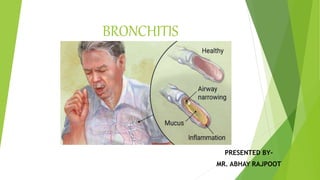
Bronchitis is an inflammation of the bronchial tubes, the airways that
carry air to your lungs. It causes a cough that often brings up mucus. It can
also cause shortness of breath, wheezing, a low fever, and chest tightness.
There are two main types of bronchitis: acute and chronic.
DEFINITION
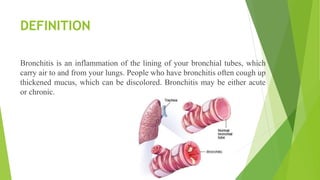
Bronchitis is an inflammation of the lining of your bronchial tubes, which
carry air to and from your lungs. People who have bronchitis often cough up
thickened mucus, which can be discolored. Bronchitis may be either acute
or chronic.
INCIDENCE
In one study, acute bronchitis affected 44 of 1000 adults annually, and
82% of episodes occurred in fall or winter. By way of comparison, 91
million cases of influenza, 66 million cases of the common cold, and 31
million cases of other acute upper respiratory tract infections occurred
that year.
RISK FACTOR
Factors that increase your risk of bronchitis include:
 Cigarette smoke. People who smoke or who live with a smoker are at
higher risk of both acute bronchitis and chronic bronchitis.
 Low resistance. This may result from another acute illness, such as a
cold, or from a chronic condition that compromises your immune system.
Older adults, infants and young children have greater vulnerability to
infection.
 Exposure to irritants on the job. Your risk of developing bronchitis is
greater if you work around certain lung irritants, such as grains or textiles,
or are exposed to chemical fumes.
 Gastric reflux. Repeated bouts of severe heartburn can irritate your
throat and make you more prone to developing bronchitis.
ETIOLOGY
 Acute bronchitis is usually caused by viruses, typically the same
viruses that cause colds and flu (influenza). Antibiotics don't kill
viruses, so this type of medication isn't useful in most cases of
bronchitis.
 The most common cause of chronic bronchitis is cigarette smoking.
Air pollution and dust or toxic gases in the environment or workplace
also can contribute to the condition.
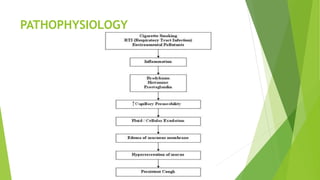
PATHOPHYSIOLOGY
CLINICAL MENIFESTATION
 Body aches and chills
 Feeling “wiped out”
 Low fever
 Runny, stuffy nose
 Sore throat
 Cough
 Production of mucus (sputum)
 Fatigue
 Shortness of breath
 Slight fever and chills
 Chest discomfort
DIAGNOSTIC EVALUATION
 Chest X-ray. A chest X-ray can help determine if you have pneumonia or
another condition that may explain your cough. This is especially important
if you ever were or currently are a smoker.
 Sputum tests. Sputum is the mucus that you cough up from your lungs. It
can be tested to see if you have illnesses that could be helped by antibiotics.
Sputum can also be tested for signs of allergies.
 Pulmonary function test. During a pulmonary function test, you blow into
a device called a spirometer, which measures how much air your lungs can
hold and how quickly you can get air out of your lungs. This test checks for
signs of asthma or emphysema.
COMPLICATIONS
Although a single episode of bronchitis usually isn't cause for concern,
it can lead to pneumonia in some people. Repeated bouts of bronchitis,
however, may mean that you have chronic obstructive pulmonary
disease (COPD).
MEDICAL MANAGEMENT
Depending upon the severity of your symptoms-
 Bronchodilators.
Example
 Salbutamol
 Albuterol
 Corticosteroids:
Example
 Prednisolone
 Antibiotic therapy
 Antiviral Drugs
. Anticholinergic:
Example
 Atropine sulphate
 Mast Cell Stabilizers :
Example
 Cromolyn sodium
 Xanthine derivatives :
Example
 Theophylline
 Aminophylline
THEREPIES
 Pulmonary rehabilitation. A pulmonary rehabilitation program can teach
you breathing exercises and techniques that may help reduce your
breathlessness and improve your ability to exercise.
 Nutrition therapy. You'll also receive advice about proper nutrition. In the
early stages of emphysema, many people need to lose weight, while people
with late-stage emphysema often need to gain weight.
 Supplemental oxygen. If you have severe emphysema with low blood
oxygen levels, using oxygen regularly at home and when you exercise may
provide some relief. Many people use oxygen 24 hours a day. It's usually
administered via narrow tubing that fits into your nostrils
PREVENTION
 Avoid cigarette smoke. Cigarette smoke increases your risk of chronic
bronchitis.
 Get vaccinated. Many cases of acute bronchitis result from influenza, a
virus. Getting a yearly flu vaccine can help protect you from getting the
flu. You may also want to consider vaccination that protects against some
types of pneumonia.
 Wash your hands. To reduce your risk of catching a viral infection,
wash your hands frequently and get in the habit of using alcohol-based
hand sanitizers.
 Wear a surgical mask. If you have COPD, you might consider wearing
a face mask at work if you're exposed to dust or fumes, and when you're
going to be among crowds, such as while traveling.
NURSING DIAGNOSIS
 Ineffective airway clearance related to excessive mucous congestion as
evidenced by shortness of breath.
 Fluid volume deficit related to fever, diaphoresis as evidenced by
reduced skin turgor.
 Altered nutrition less then body requirements related to loss of appetite
as evidenced by weight loss
 Activity intolerance related to decreased energy reserves as evidenced
by patients tired look
THANK YOU

Bronchitis

  • 1.
  • 2.
    INTRODUCTION Bronchitis is aninflammation of the bronchial tubes, the airways that carry air to your lungs. It causes a cough that often brings up mucus. It can also cause shortness of breath, wheezing, a low fever, and chest tightness. There are two main types of bronchitis: acute and chronic.
  • 3.
    DEFINITION Bronchitis is aninflammation of the lining of your bronchial tubes, which carry air to and from your lungs. People who have bronchitis often cough up thickened mucus, which can be discolored. Bronchitis may be either acute or chronic.
  • 4.
    INCIDENCE In one study,acute bronchitis affected 44 of 1000 adults annually, and 82% of episodes occurred in fall or winter. By way of comparison, 91 million cases of influenza, 66 million cases of the common cold, and 31 million cases of other acute upper respiratory tract infections occurred that year.
  • 6.
    RISK FACTOR Factors thatincrease your risk of bronchitis include:  Cigarette smoke. People who smoke or who live with a smoker are at higher risk of both acute bronchitis and chronic bronchitis.  Low resistance. This may result from another acute illness, such as a cold, or from a chronic condition that compromises your immune system. Older adults, infants and young children have greater vulnerability to infection.  Exposure to irritants on the job. Your risk of developing bronchitis is greater if you work around certain lung irritants, such as grains or textiles, or are exposed to chemical fumes.  Gastric reflux. Repeated bouts of severe heartburn can irritate your throat and make you more prone to developing bronchitis.
  • 7.
    ETIOLOGY  Acute bronchitisis usually caused by viruses, typically the same viruses that cause colds and flu (influenza). Antibiotics don't kill viruses, so this type of medication isn't useful in most cases of bronchitis.  The most common cause of chronic bronchitis is cigarette smoking. Air pollution and dust or toxic gases in the environment or workplace also can contribute to the condition.
  • 8.
  • 9.
    CLINICAL MENIFESTATION  Bodyaches and chills  Feeling “wiped out”  Low fever  Runny, stuffy nose  Sore throat  Cough  Production of mucus (sputum)  Fatigue  Shortness of breath  Slight fever and chills  Chest discomfort
  • 10.
    DIAGNOSTIC EVALUATION  ChestX-ray. A chest X-ray can help determine if you have pneumonia or another condition that may explain your cough. This is especially important if you ever were or currently are a smoker.  Sputum tests. Sputum is the mucus that you cough up from your lungs. It can be tested to see if you have illnesses that could be helped by antibiotics. Sputum can also be tested for signs of allergies.  Pulmonary function test. During a pulmonary function test, you blow into a device called a spirometer, which measures how much air your lungs can hold and how quickly you can get air out of your lungs. This test checks for signs of asthma or emphysema.
  • 11.
    COMPLICATIONS Although a singleepisode of bronchitis usually isn't cause for concern, it can lead to pneumonia in some people. Repeated bouts of bronchitis, however, may mean that you have chronic obstructive pulmonary disease (COPD).
  • 12.
    MEDICAL MANAGEMENT Depending uponthe severity of your symptoms-  Bronchodilators. Example  Salbutamol  Albuterol  Corticosteroids: Example  Prednisolone  Antibiotic therapy  Antiviral Drugs
  • 13.
    . Anticholinergic: Example  Atropinesulphate  Mast Cell Stabilizers : Example  Cromolyn sodium  Xanthine derivatives : Example  Theophylline  Aminophylline
  • 14.
    THEREPIES  Pulmonary rehabilitation.A pulmonary rehabilitation program can teach you breathing exercises and techniques that may help reduce your breathlessness and improve your ability to exercise.  Nutrition therapy. You'll also receive advice about proper nutrition. In the early stages of emphysema, many people need to lose weight, while people with late-stage emphysema often need to gain weight.  Supplemental oxygen. If you have severe emphysema with low blood oxygen levels, using oxygen regularly at home and when you exercise may provide some relief. Many people use oxygen 24 hours a day. It's usually administered via narrow tubing that fits into your nostrils
  • 15.
    PREVENTION  Avoid cigarettesmoke. Cigarette smoke increases your risk of chronic bronchitis.  Get vaccinated. Many cases of acute bronchitis result from influenza, a virus. Getting a yearly flu vaccine can help protect you from getting the flu. You may also want to consider vaccination that protects against some types of pneumonia.  Wash your hands. To reduce your risk of catching a viral infection, wash your hands frequently and get in the habit of using alcohol-based hand sanitizers.  Wear a surgical mask. If you have COPD, you might consider wearing a face mask at work if you're exposed to dust or fumes, and when you're going to be among crowds, such as while traveling.
  • 16.
    NURSING DIAGNOSIS  Ineffectiveairway clearance related to excessive mucous congestion as evidenced by shortness of breath.  Fluid volume deficit related to fever, diaphoresis as evidenced by reduced skin turgor.  Altered nutrition less then body requirements related to loss of appetite as evidenced by weight loss  Activity intolerance related to decreased energy reserves as evidenced by patients tired look
  • 17.