LOWER RESPIRATORY
 TRACT INFECTIONS


     MANALI H SOLANKI
     F.Y.M.SC.NURSING
     J G COLLEGE OF NURSING
TERMINOLOGY:
• BRONCHITIS

• PNEUMONIA

• PULMONARY TUBERCULOSIS

• HAEMOPTISIS

• HAEMATEMESIS
INTRODUCTION
• Lower respiratory tract infection
  comprises an array of diseases ranging
  from bronchitis to pneumonia.

• Non-pneumonic LRTI is described as
  lower respiratory tract symptoms in a
  patient who has no history of these or any
  other chest signs related with infection,
  by all of the major respiratory viral
  groups.
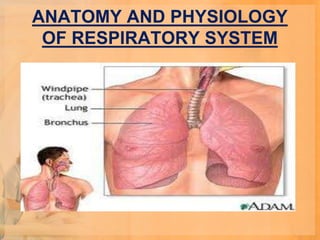
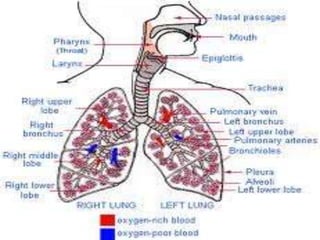
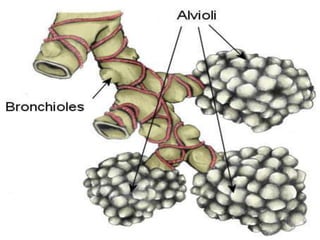
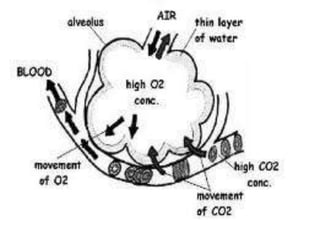
ANATOMY AND PHYSIOLOGY
 OF RESPIRATORY SYSTEM
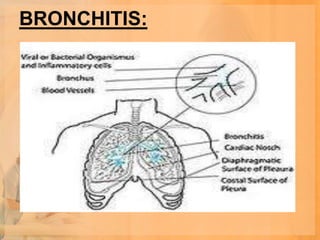
BRONCHITIS:
DEFINITION:


• Bronchitis is an inflammation
  of the bronchial tubes, the
  airways that carry air to lungs
TYPES:

• There are two types of bronchitis

1.Acute bronchitis
2.Chronic bronchitis
Acute bronchitis


• Acute (i.e. recent onset) bronchitis is
  an inflammation of the lower
  respiratory passages (bronchi).
Chronic bronchitis


• Chronic bronchitis is defined
  as a cough that occurs every
  day with sputum production
  that lasts for at least 3
  months, two years in a row.
CAUSES:


• Viral infection that causes the
  inner lining of the bronchial tubes
  to become inflamed and undergo
  the changes that occur with any
  inflammation in the body.
• Bacteria can also cause bronchitis (a
  few examples include, Mycoplasma,
  Pneumococcus, Klebsiella,
  Haemophilus).

• Chemical irritants (for example,
  tobacco smoke, gastric reflux
  solvents) can cause acute bronchitis
RISK FACTORS:

• Smokers
• People who are exposed to a lot of
  second-hand smoke
• People with weakened immune systems
• The elderly and infants
• People with gastroesophageal reflux
  disease (GERD)
• Those who are exposed to irritants at work
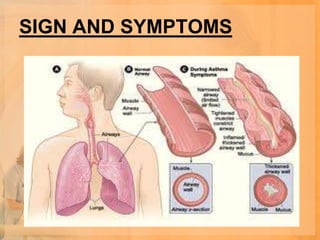
SIGN AND SYMPTOMS
• Coughing
• Production of clear, white, yellow,
  grey, or green mucus (sputum)
• Shortness of breath
• Wheezing
• Fatigue
• Fever and chills
• Chest pain or discomfort
• Blocked or runny nose
ASSESSMENT AND
     DIAGNOSTIC FINDINGS
• Patient history
Physical examination
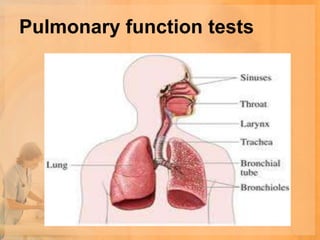
Pulmonary function tests
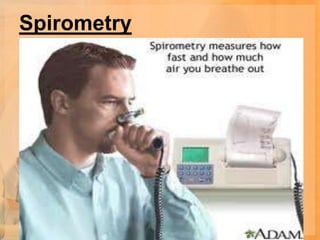
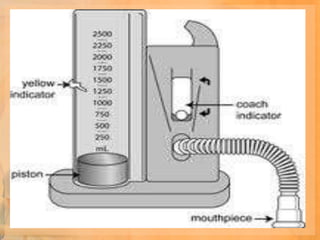
Spirometry
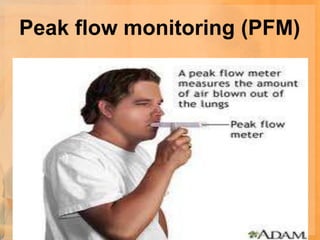
Peak flow monitoring (PFM)
Pulse oximetry
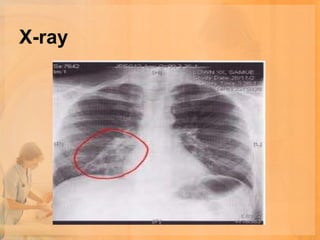
X-ray
MEDICAL MANAGEMENT:

• Ibuprofen or acetaminophen

• Cough suppressant
   E.g. Delsym, Robitussin Cough,
  Dextromethorphan

• Steroid medicine
• Nasal decongestants: like Naphazoline,
  Phenylephrine Oxymetazoline ,
  Propylhexedrine, Phenylpropanolamine

• Antiviral medicine
  Like amantadine, oseltamivir

• Antibiotics: Antibiotics may be given to
  help treat or prevent an infection caused
  by bacteria
PREVENTION:

•   Avoid alcohol
•   Avoid irritants in the air
•   Drink more liquids
•   Get more rest
•   Eat healthy foods
•   Use a humidifier or vaporizer
• Avoiding people who are sick with colds or
  the flu
• Getting a yearly flu vaccine
• Getting a pneumonia vaccine (especially
  for those over 60 years of age)
• Washing hands regularly
• Avoiding cold, damp locations or areas
  with a lot of air pollution
• Wearing a mask around people who are
  coughing and sneezing
NURSING MANAGEMENT

• Monitor for adverse effects of bronchodilators-
  tremulousness, tachycardia, cardiac
  arrhythmias, central nervous system stimulation,
  hypertension.
• Monitor oxygen saturation at rest and with
  activity.
• Eliminate all pulmonary irritants, particularly
  cigarette smoke. Smoking cessation usually
  reduces pulmonary irritation, sputum production,
  and cough. Keep the patient’s room as dust-free
  as possible.
• Use postural drainage positions to help
  clear secretions responsible for airway
  obstruction.
• Teach controlled coughing.
• Encourage high level of fluid intake (8 to
  10 glasses; 2 to 2.5 L daily) within level of
  cardiac reserve.
• Give inhalations of nebulized saline to
  humidify bronchial tree and liquefy
  sputum. Add moisture (humidifier,
  vaporizer) to indoor air.
• Avoid dairy products if these increase
  sputum production.
• Encourage the patient to assume
  comfortable position to decrease
  dyspnoea.
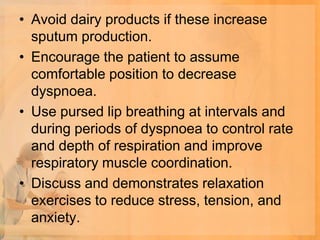
• Use pursed lip breathing at intervals and
  during periods of dyspnoea to control rate
  and depth of respiration and improve
  respiratory muscle coordination.
• Discuss and demonstrates relaxation
  exercises to reduce stress, tension, and
  anxiety.
• Encourage frequent small meals if the patient is
  dyspnoeic; en a small increase in abdominal
  contents may press on diaphragm and impede
  breathing.

• Offer liquid nutritional supplements to improve
  caloric intake and counteract weight loss.

• Avoid foods producing abdominal discomfort.

• Encourage use of portable oxygen system for
  ambulation for patients with hypoxemia and
  marked disability.
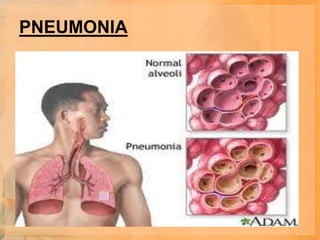
PNEUMONIA
DEFINITION
• Pneumonia is an inflammation of the
  lungs caused by bacteria, viruses, or
  chemical irritants. It is a serious
  infection or inflammation in which the
  air sacs fill with pus and other liquid.
TYPES:

• Bacterial pneumonia
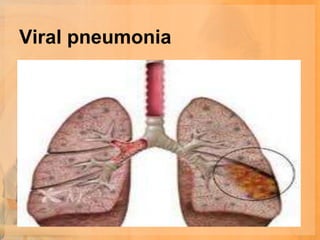
Viral pneumonia
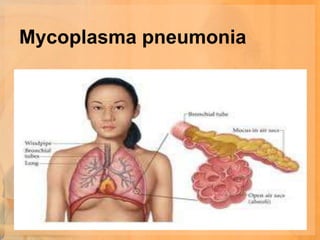
Mycoplasma pneumonia
Aspiration pneumonia
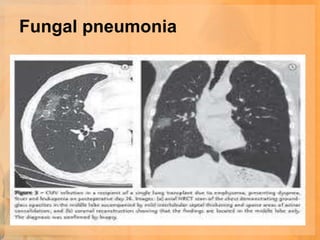
Fungal pneumonia
Hospital acquired pneumonia
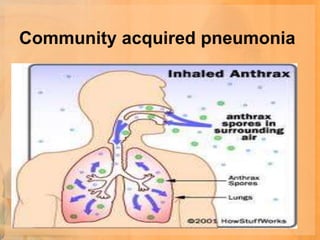
Community acquired pneumonia
CAUSES:

• Bacterial

• Viral

• Fungal

• Nosocomial and others
RISK FACTORS
• Smoke.
• Abuse alcohol.
• Have other medical conditions, such as
  chronic obstructive pulmonary disease
  (COPD), emphysema, asthma, or
  HIV/AIDS.
• Are younger than 1 year of age or older
  than 65
• Have a weakened or impaired immune system.

• Take medicines for gastroesophageal reflux
  disease (GERD).

• Have recently recovered from a cold or influenza
  infection.

• Are malnourished.

• Have been recently hospitalized in an intensive
  care unit.
• Have been exposed to certain
  chemicals or pollutants.
• Are Native Alaskan or certain Native
  American ethnicity.
• Have any increased risk of breathing
  mucus or saliva from the nose or
  mouth, liquids, or food from the
  stomach into the lungs.
SIGN AND SYMPTOMS
•   Cough
•   Rusty or green mucus (sputum) coughed up from lungs
•   Fever
•   Fast breathing and shortness of breath
•   Shaking chills
• Chest pain that usually worsens when
  taking a deep breath (pleuritic pain)
• Fast heartbeat
• Fatigue and feeling very weak
• Nausea and vomiting
• Diarrhoea
• Sweating
• Headache
• Muscle pain
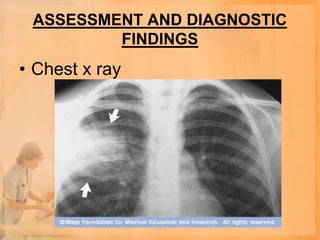
ASSESSMENT AND DIAGNOSTIC
         FINDINGS
• Chest x ray
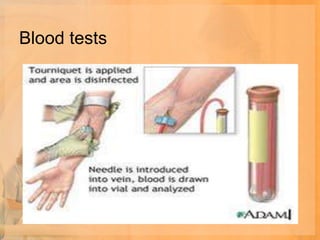
Blood tests
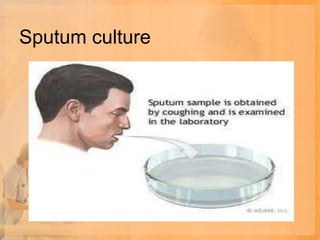
Sputum culture
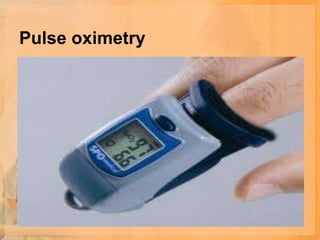
Pulse oximetry
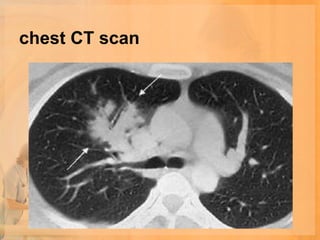
chest CT scan
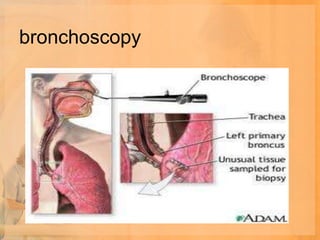
bronchoscopy
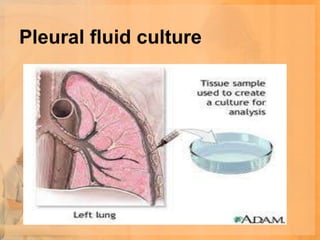
Pleural fluid culture
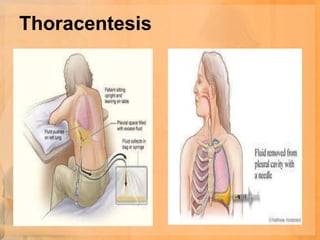
Thoracentesis
MEDICAL MANAGEMENT

• MACROLIDES

• TETRACYCLINES

• FLUOROQUINOLONES
SURGICAL MANAGEMENT
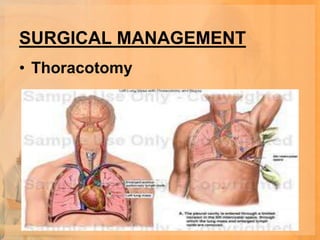
• Thoracotomy
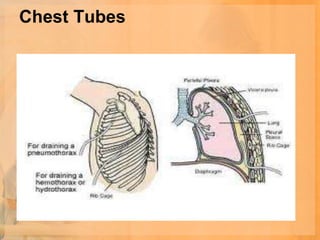
Chest Tubes
COMPLICATIONS OF PNEUMONIA:

•   Abscesses
•   Respiratory Failure
•   Bacteraemia
•   Empyema and Pleural Effusions
•   Collapsed Lung
NURSING MANAGEMENT

• Maintain a patent airway and adequate
  oxygenation.

• Obtain sputum specimens as needed.
• Use suction if the patient can’t produce a
  specimen
• Provide a high calorie, high protein diet of
  soft foods
• To prevent aspiration during
  nasogastric tube feedings, check the
  position of tube, and administer
  feedings slowly.
• To control the spread of infection,
  dispose secretions properly.
• Provide a quiet, calm environment,
  with frequent rest periods.
• Monitor the patient’s ABG levels,
  especially if he’s hypoxic.
• Assess the patient’s respiratory status.
  Auscultate breath sounds at least every 4
  hours.
• Monitor fluid and intake output.
• Evaluate the effectiveness of administered
  medications.
• Explain all procedures to the patient and
  family
PREVENTION

• Good Hygiene and Preventing
  Transmission
• Changing Hospital Practices
• Vaccines
• Viral Influenza Vaccines (Flu Shot)
• Pneumococcal Vaccines
• Vitamins
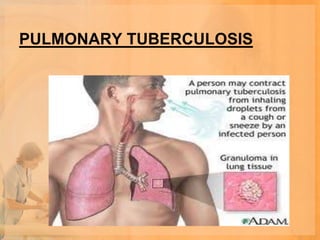
PULMONARY TUBERCULOSIS
DEFINITION
• Pulmonary tuberculosis is a chronic
  infectious inflammation of the lung, as
  well as a special pneumonia.
CAUSES AND RISK FACTORS
•   Alcoholism
•   IV drug abuse
•   Crowded living conditions
•   Homelessness
•   Poverty
• Immigration from certain countries
• Low body weight
• Certain medical treatments (such as
  corticosteroid treatment or organ
  transplants)
SIGN AND SYMPTOMS
•   Cough (usually cough up mucus)
•   Coughing up blood
•   Excessive sweating, especially at night
•   Fatigue
•   Fever
•   Unintentional weight loss
Other symptoms that may occur with
this disease:
• Breathing difficulty
• Chest pain
• Wheezing
ASSESSMENT AND DIAGNOSTIC
            FINDINGS
• Biopsy of the affected tissue (rare)
• Bronchoscopy
• Chest CT scan
• Chest x-ray
• Interferon-gamma blood test such as the
  QFT-Gold test to test for TB infection
• Sputum examination and cultures
• Thoracentesis
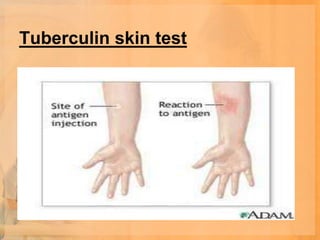
Tuberculin skin test
MEDICAL MANAGEMENT
• 1st line drugs

DRUG            DOSE
Isoniazide (INH) 300 mg/day
Rifampicin      600 mg/day
Pyrazinamide    1500 mg/day    25 mg/kg/day
Ethambutol      1200 mg/day    15-25
                               mg/kg/day
Streptomycin    0.75—1gm/day   25 mg/kg/day
2nd line drugs
Amikacin (AG)         15 mg/kg/day
Aminosalicylic acid   8-12 gm/day
Capreomycin           15 mg/kg/day
Ciprofloxacin         1500 mg/day (divided)
Clofazimine           200 mg/day
Cycloserine           500-1000       mg/day
                      (divided)
Ethionamide           500-750 mg/day
Levofloxacin          500 mg/day
Rifabutin             300 mg/day
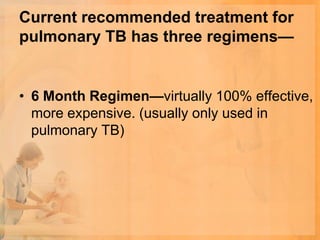
Current recommended treatment for
pulmonary TB has three regimens—


• 6 Month Regimen—virtually 100% effective,
  more expensive. (usually only used in
  pulmonary TB)
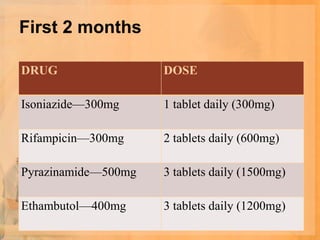
First 2 months

DRUG                 DOSE

Isoniazide—300mg     1 tablet daily (300mg)

Rifampicin—300mg     2 tablets daily (600mg)

Pyrazinamide—500mg   3 tablets daily (1500mg)

Ethambutol—400mg     3 tablets daily (1200mg)
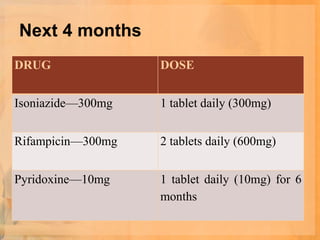
Next 4 months
DRUG               DOSE


Isoniazide—300mg   1 tablet daily (300mg)


Rifampicin—300mg   2 tablets daily (600mg)


Pyridoxine—10mg    1 tablet daily (10mg) for 6
                   months
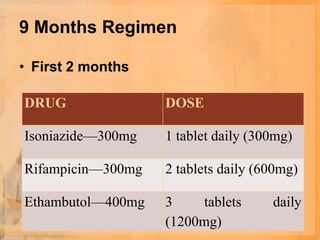
9 Months Regimen

• First 2 months

DRUG               DOSE

Isoniazide—300mg   1 tablet daily (300mg)

Rifampicin—300mg   2 tablets daily (600mg)

Ethambutol—400mg   3     tablets     daily
                   (1200mg)
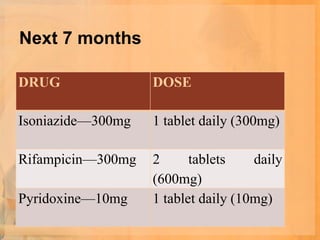
Next 7 months

DRUG               DOSE

Isoniazide—300mg   1 tablet daily (300mg)

Rifampicin—300mg   2      tablets    daily
                   (600mg)
Pyridoxine—10mg    1 tablet daily (10mg)
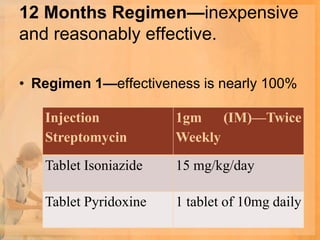
12 Months Regimen—inexpensive
and reasonably effective.

• Regimen 1—effectiveness is nearly 100%

   Injection           1gm    (IM)—Twice
   Streptomycin        Weekly
   Tablet Isoniazide   15 mg/kg/day

   Tablet Pyridoxine   1 tablet of 10mg daily
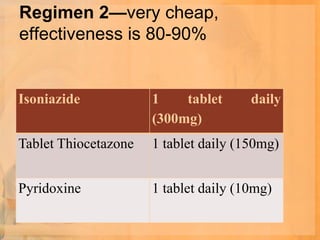
Regimen 2—very cheap,
effectiveness is 80-90%


Isoniazide            1    tablet      daily
                      (300mg)
Tablet Thiocetazone   1 tablet daily (150mg)


Pyridoxine            1 tablet daily (10mg)
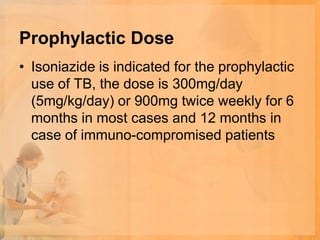
Prophylactic Dose
• Isoniazide is indicated for the prophylactic
  use of TB, the dose is 300mg/day
  (5mg/kg/day) or 900mg twice weekly for 6
  months in most cases and 12 months in
  case of immuno-compromised patients
ADVERSE EFFECT OF DRUGS
Isoniazide     Peripheral Neuropathy

Rifampicin     Cholestatic jaundice +
               renal toxicity + Flu like
               syndrome
Pyrazinamide   Hepatotoxicity + Hyper-
               Uricaemia
Ethambutol     Retinobulbar optic neuritis
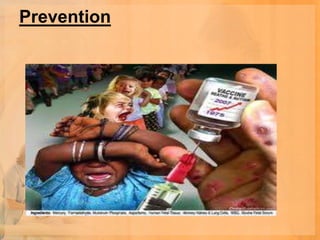
Prevention
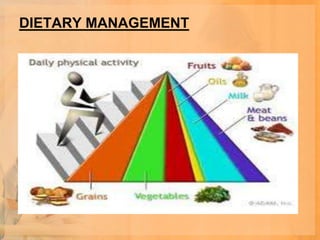
DIETARY MANAGEMENT
NURSING MANAGEMENT
• Ineffective Airway Clearance may be
  related to excessive, thickened mucous
  secretions, possibly evidenced by
  presence of rhonchi, tachypnea, and
  ineffective cough.

• Acute pain related to localized
  inflammation and persistent cough.
• Imbalance nutrition less than body
  requirement related to frequent cough,
  anorexia and fatigue.

• Risk for infection related to inadequate
  primary defences and decreased cilliary
  action

• Anxiety related to outcome of diseases as
  evidenced by poor concentration on work,
  isolation from others, rude behaviour
• Activity Intolerance related to
  imbalance between O2 supply and
  demand, possibly evidenced by
  reports of fatigue, dyspnoea, and
  abnormal vital sign response to
  activity.

• Knowledge deficit regarding the
  treatment modalities and prognosis
ABSTRACT
• Lower respiratory tract infection and rapid
  expansion of an abdominal aortic
  aneurysm: a case report
SUMMARY:
BIBLIOGRAPHY:
Lower respiratory tract infections ppt

Lower respiratory tract infections ppt

  • 1.
    LOWER RESPIRATORY TRACTINFECTIONS MANALI H SOLANKI F.Y.M.SC.NURSING J G COLLEGE OF NURSING
  • 2.
    TERMINOLOGY: • BRONCHITIS • PNEUMONIA •PULMONARY TUBERCULOSIS • HAEMOPTISIS • HAEMATEMESIS
  • 3.
    INTRODUCTION • Lower respiratorytract infection comprises an array of diseases ranging from bronchitis to pneumonia. • Non-pneumonic LRTI is described as lower respiratory tract symptoms in a patient who has no history of these or any other chest signs related with infection, by all of the major respiratory viral groups.
  • 4.
    ANATOMY AND PHYSIOLOGY OF RESPIRATORY SYSTEM
  • 10.
  • 11.
    DEFINITION: • Bronchitis isan inflammation of the bronchial tubes, the airways that carry air to lungs
  • 12.
    TYPES: • There aretwo types of bronchitis 1.Acute bronchitis 2.Chronic bronchitis
  • 13.
    Acute bronchitis • Acute(i.e. recent onset) bronchitis is an inflammation of the lower respiratory passages (bronchi).
  • 14.
    Chronic bronchitis • Chronicbronchitis is defined as a cough that occurs every day with sputum production that lasts for at least 3 months, two years in a row.
  • 15.
    CAUSES: • Viral infectionthat causes the inner lining of the bronchial tubes to become inflamed and undergo the changes that occur with any inflammation in the body.
  • 16.
    • Bacteria canalso cause bronchitis (a few examples include, Mycoplasma, Pneumococcus, Klebsiella, Haemophilus). • Chemical irritants (for example, tobacco smoke, gastric reflux solvents) can cause acute bronchitis
  • 17.
    RISK FACTORS: • Smokers •People who are exposed to a lot of second-hand smoke • People with weakened immune systems • The elderly and infants • People with gastroesophageal reflux disease (GERD) • Those who are exposed to irritants at work
  • 18.
  • 19.
    • Coughing • Productionof clear, white, yellow, grey, or green mucus (sputum) • Shortness of breath • Wheezing • Fatigue • Fever and chills • Chest pain or discomfort • Blocked or runny nose
  • 20.
    ASSESSMENT AND DIAGNOSTIC FINDINGS • Patient history
  • 21.
  • 22.
  • 23.
  • 25.
  • 26.
  • 27.
  • 28.
    MEDICAL MANAGEMENT: • Ibuprofenor acetaminophen • Cough suppressant E.g. Delsym, Robitussin Cough, Dextromethorphan • Steroid medicine
  • 29.
    • Nasal decongestants:like Naphazoline, Phenylephrine Oxymetazoline , Propylhexedrine, Phenylpropanolamine • Antiviral medicine Like amantadine, oseltamivir • Antibiotics: Antibiotics may be given to help treat or prevent an infection caused by bacteria
  • 30.
    PREVENTION: • Avoid alcohol • Avoid irritants in the air • Drink more liquids • Get more rest • Eat healthy foods • Use a humidifier or vaporizer
  • 31.
    • Avoiding peoplewho are sick with colds or the flu • Getting a yearly flu vaccine • Getting a pneumonia vaccine (especially for those over 60 years of age) • Washing hands regularly • Avoiding cold, damp locations or areas with a lot of air pollution • Wearing a mask around people who are coughing and sneezing
  • 32.
    NURSING MANAGEMENT • Monitorfor adverse effects of bronchodilators- tremulousness, tachycardia, cardiac arrhythmias, central nervous system stimulation, hypertension. • Monitor oxygen saturation at rest and with activity. • Eliminate all pulmonary irritants, particularly cigarette smoke. Smoking cessation usually reduces pulmonary irritation, sputum production, and cough. Keep the patient’s room as dust-free as possible.

  • 33.
    • Use posturaldrainage positions to help clear secretions responsible for airway obstruction. • Teach controlled coughing. • Encourage high level of fluid intake (8 to 10 glasses; 2 to 2.5 L daily) within level of cardiac reserve. • Give inhalations of nebulized saline to humidify bronchial tree and liquefy sputum. Add moisture (humidifier, vaporizer) to indoor air.
  • 34.
    • Avoid dairyproducts if these increase sputum production. • Encourage the patient to assume comfortable position to decrease dyspnoea. • Use pursed lip breathing at intervals and during periods of dyspnoea to control rate and depth of respiration and improve respiratory muscle coordination. • Discuss and demonstrates relaxation exercises to reduce stress, tension, and anxiety.
  • 35.
    • Encourage frequentsmall meals if the patient is dyspnoeic; en a small increase in abdominal contents may press on diaphragm and impede breathing. • Offer liquid nutritional supplements to improve caloric intake and counteract weight loss. • Avoid foods producing abdominal discomfort. • Encourage use of portable oxygen system for ambulation for patients with hypoxemia and marked disability.
  • 36.
  • 37.
    DEFINITION • Pneumonia isan inflammation of the lungs caused by bacteria, viruses, or chemical irritants. It is a serious infection or inflammation in which the air sacs fill with pus and other liquid.
  • 38.
  • 39.
  • 40.
  • 41.
  • 42.
  • 43.
  • 44.
  • 45.
    CAUSES: • Bacterial • Viral •Fungal • Nosocomial and others
  • 46.
    RISK FACTORS • Smoke. •Abuse alcohol. • Have other medical conditions, such as chronic obstructive pulmonary disease (COPD), emphysema, asthma, or HIV/AIDS. • Are younger than 1 year of age or older than 65
  • 47.
    • Have aweakened or impaired immune system. • Take medicines for gastroesophageal reflux disease (GERD). • Have recently recovered from a cold or influenza infection. • Are malnourished. • Have been recently hospitalized in an intensive care unit.
  • 48.
    • Have beenexposed to certain chemicals or pollutants. • Are Native Alaskan or certain Native American ethnicity. • Have any increased risk of breathing mucus or saliva from the nose or mouth, liquids, or food from the stomach into the lungs.
  • 49.
    SIGN AND SYMPTOMS • Cough • Rusty or green mucus (sputum) coughed up from lungs • Fever • Fast breathing and shortness of breath • Shaking chills
  • 50.
    • Chest painthat usually worsens when taking a deep breath (pleuritic pain) • Fast heartbeat • Fatigue and feeling very weak • Nausea and vomiting • Diarrhoea • Sweating • Headache • Muscle pain
  • 51.
    ASSESSMENT AND DIAGNOSTIC FINDINGS • Chest x ray
  • 52.
  • 53.
  • 54.
  • 55.
  • 56.
  • 57.
  • 58.
  • 59.
    MEDICAL MANAGEMENT • MACROLIDES •TETRACYCLINES • FLUOROQUINOLONES
  • 60.
  • 61.
  • 62.
    COMPLICATIONS OF PNEUMONIA: • Abscesses • Respiratory Failure • Bacteraemia • Empyema and Pleural Effusions • Collapsed Lung
  • 63.
    NURSING MANAGEMENT • Maintaina patent airway and adequate oxygenation. • Obtain sputum specimens as needed. • Use suction if the patient can’t produce a specimen • Provide a high calorie, high protein diet of soft foods
  • 64.
    • To preventaspiration during nasogastric tube feedings, check the position of tube, and administer feedings slowly. • To control the spread of infection, dispose secretions properly. • Provide a quiet, calm environment, with frequent rest periods.
  • 65.
    • Monitor thepatient’s ABG levels, especially if he’s hypoxic. • Assess the patient’s respiratory status. Auscultate breath sounds at least every 4 hours. • Monitor fluid and intake output. • Evaluate the effectiveness of administered medications. • Explain all procedures to the patient and family
  • 66.
    PREVENTION • Good Hygieneand Preventing Transmission • Changing Hospital Practices • Vaccines • Viral Influenza Vaccines (Flu Shot) • Pneumococcal Vaccines • Vitamins
  • 67.
  • 68.
    DEFINITION • Pulmonary tuberculosisis a chronic infectious inflammation of the lung, as well as a special pneumonia.
  • 69.
    CAUSES AND RISKFACTORS • Alcoholism • IV drug abuse • Crowded living conditions • Homelessness • Poverty
  • 70.
    • Immigration fromcertain countries • Low body weight • Certain medical treatments (such as corticosteroid treatment or organ transplants)
  • 71.
    SIGN AND SYMPTOMS • Cough (usually cough up mucus) • Coughing up blood • Excessive sweating, especially at night • Fatigue • Fever • Unintentional weight loss
  • 72.
    Other symptoms thatmay occur with this disease: • Breathing difficulty • Chest pain • Wheezing
  • 73.
    ASSESSMENT AND DIAGNOSTIC FINDINGS • Biopsy of the affected tissue (rare) • Bronchoscopy • Chest CT scan • Chest x-ray • Interferon-gamma blood test such as the QFT-Gold test to test for TB infection • Sputum examination and cultures • Thoracentesis
  • 74.
  • 75.
    MEDICAL MANAGEMENT • 1stline drugs DRUG DOSE Isoniazide (INH) 300 mg/day Rifampicin 600 mg/day Pyrazinamide 1500 mg/day 25 mg/kg/day Ethambutol 1200 mg/day 15-25 mg/kg/day Streptomycin 0.75—1gm/day 25 mg/kg/day
  • 76.
    2nd line drugs Amikacin(AG) 15 mg/kg/day Aminosalicylic acid 8-12 gm/day Capreomycin 15 mg/kg/day Ciprofloxacin 1500 mg/day (divided) Clofazimine 200 mg/day Cycloserine 500-1000 mg/day (divided) Ethionamide 500-750 mg/day Levofloxacin 500 mg/day Rifabutin 300 mg/day
  • 77.
    Current recommended treatmentfor pulmonary TB has three regimens— • 6 Month Regimen—virtually 100% effective, more expensive. (usually only used in pulmonary TB)
  • 78.
    First 2 months DRUG DOSE Isoniazide—300mg 1 tablet daily (300mg) Rifampicin—300mg 2 tablets daily (600mg) Pyrazinamide—500mg 3 tablets daily (1500mg) Ethambutol—400mg 3 tablets daily (1200mg)
  • 79.
    Next 4 months DRUG DOSE Isoniazide—300mg 1 tablet daily (300mg) Rifampicin—300mg 2 tablets daily (600mg) Pyridoxine—10mg 1 tablet daily (10mg) for 6 months
  • 80.
    9 Months Regimen •First 2 months DRUG DOSE Isoniazide—300mg 1 tablet daily (300mg) Rifampicin—300mg 2 tablets daily (600mg) Ethambutol—400mg 3 tablets daily (1200mg)
  • 81.
    Next 7 months DRUG DOSE Isoniazide—300mg 1 tablet daily (300mg) Rifampicin—300mg 2 tablets daily (600mg) Pyridoxine—10mg 1 tablet daily (10mg)
  • 82.
    12 Months Regimen—inexpensive andreasonably effective. • Regimen 1—effectiveness is nearly 100% Injection 1gm (IM)—Twice Streptomycin Weekly Tablet Isoniazide 15 mg/kg/day Tablet Pyridoxine 1 tablet of 10mg daily
  • 83.
    Regimen 2—very cheap, effectivenessis 80-90% Isoniazide 1 tablet daily (300mg) Tablet Thiocetazone 1 tablet daily (150mg) Pyridoxine 1 tablet daily (10mg)
  • 84.
    Prophylactic Dose • Isoniazideis indicated for the prophylactic use of TB, the dose is 300mg/day (5mg/kg/day) or 900mg twice weekly for 6 months in most cases and 12 months in case of immuno-compromised patients
  • 85.
    ADVERSE EFFECT OFDRUGS Isoniazide Peripheral Neuropathy Rifampicin Cholestatic jaundice + renal toxicity + Flu like syndrome Pyrazinamide Hepatotoxicity + Hyper- Uricaemia Ethambutol Retinobulbar optic neuritis
  • 86.
  • 87.
  • 88.
    NURSING MANAGEMENT • IneffectiveAirway Clearance may be related to excessive, thickened mucous secretions, possibly evidenced by presence of rhonchi, tachypnea, and ineffective cough. • Acute pain related to localized inflammation and persistent cough.
  • 89.
    • Imbalance nutritionless than body requirement related to frequent cough, anorexia and fatigue. • Risk for infection related to inadequate primary defences and decreased cilliary action • Anxiety related to outcome of diseases as evidenced by poor concentration on work, isolation from others, rude behaviour
  • 90.
    • Activity Intolerancerelated to imbalance between O2 supply and demand, possibly evidenced by reports of fatigue, dyspnoea, and abnormal vital sign response to activity. • Knowledge deficit regarding the treatment modalities and prognosis
  • 91.
    ABSTRACT • Lower respiratorytract infection and rapid expansion of an abdominal aortic aneurysm: a case report
  • 92.
  • 94.