Pneumonia


      9/3/2006
      ……..
      I have no concerns that this group of students are in any way
      resting on their laurels. So far the feedback from the medical staff
      has been excellent. There have been a number of preceptors who
      have noted the substantial difference between this years 4th yrs and
      last years 4th yrs. A number of their preceptors in the hospital, who
      are not easily impressed, have gone out of their way to tell me how
      impressed they have been with this group.
      …………


            Impressive….! Keep it up…..!
                                                                              1
Pneumonia

        CPC-4
       Mr. Turner is a 38 years old Vietnamese
        cane farmer living near Cairns. He is married
        to an indigenous woman and has 2 children
        aged 10 and 12. He is sent by his GP to A&E
        with high fever, shortness of breath and
        cough. He feels very unwell and is flushed
        and feeling breathless and faint.


                                                   2
Pneumonia

        CPC-4
      Questions:
           Duration, course, sputum, wt loss.
           Past history, Family
           Smoking, recent contacts/visits.
           Diabetes, sexual/venereal diseases.

      Differential diagnoses:
           Cardiovascular – MI, CCF, etc..
           Respiratory – Pneumonia, Bronchiolitis,
            aspiration/inhalation injury, Asthma, ARDS, Pulm.
            Embolism, Empyema.
           Metabolic – Acidosis, Diabetic, Septicemia – focus of
            infection? AIDS, Q fever, Legionella.
           Others: Cystic Fibrosis, Immunodeficiency.
                                                                    3
Pneumonia

        Pathogenesis of Clinical features:
     Tachypnoea, Dyspnoea, Resp Acidosis  Solid/airless lungs
      – decreased oxygenation.
     Dull percussion - Consolidation – Exudation
     Rusty sputum – RBC+WBC (LRT bleed), S.pneum,
     Greenish sputum – Pseudomonas.
     Foul smelling sputum- anaerobic.
     Current jelly sputum-Klebsiella.
     Fever – Inflammatory mediators.


                                                             4
Pneumonia


    "In the presence of greatness, pettiness
    disappears. In the absence of a great
    dream, pettiness prevails."
    Robert Fritz
    Composer, Filmmaker and Author


                                               5
Pathology of
Lung Infections

Dr. Venkatesh M. Shashidhar
 Assoc. Prof & Head of Pathology
Pneumonia

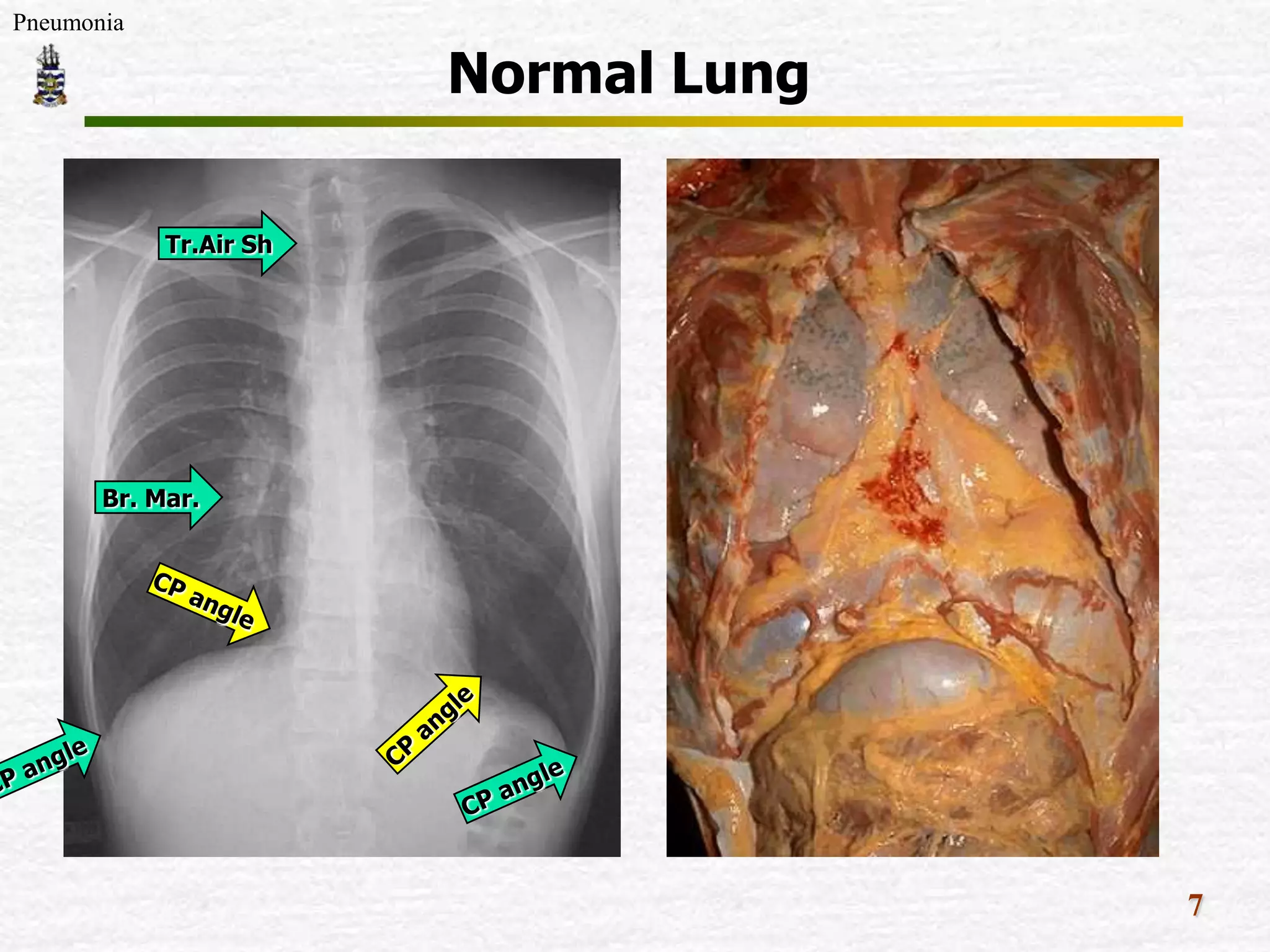
                        Normal Lung

            Tr.Air Sh


       Br. Mar.


                                      7
Normal Lung


                    Type 2

Type 1-Pneumocyte
Pneumonia

        Respiratory system: Introduction

       5000 sq meters of area….! (olympic track)
       Filters >10,000 L of air / day…!
       Normal lungs are sterile.
       Delicate, thin resp. mem – gas exch.
       Filter, humidify, sterilize, highly sensitive.
       RTI – commonest in medical practice.
       Pathology:
               Injury, Infections & Neoplasia. Acute / Chronic.
               Disorders of Airway – Bronchitis, COPD, Asthma, tumors.
               Disorders of Lung tissue –Pneumonia, Pneumoconiosis.


                                                                    9
Pneumonia

            Patterns of Lung disorders:

           Airway
                Bronchitis, Bronchiectasis, Bronchiolitis.
                Tumors / Cancer
            Parenchyma
      
                Pneumonia.                          *
                                                  Infections
                Lung abscess, TB
                Hyaline membrane dis (HMD & ARDS)
                Pneumoconiosis
                Tumors / Cancer
           Pleura:
                Pleural effusion (TB)
                Tumors / Cancer
                                                              10
Pneumonia

         Pneumonia: Definition & Etiology
           Inflammation of Lung tissue (not Bronchi)
               LRT/Distal airways – Alveoli & Terminal bronchioles
           Decreased defense / Strong Pathogen
           Immunodeficiency, damaged lung (COPD),
           Virulent infection - Lobar pneumonia
           Defective Clearing mechanism
               Cough/gag Reflex – Coma, paralysis, sick.
               Mucosal Injury – smoking, toxins, aspiration.
               Low Alveolar defense - Immunodeficiency
               Pulmonary edema – Cardiac failure, embol.
               Obstructions – foreign body, tumors, cystic fibrosis.   11
Pneumonia

        Pneumonia Types:

  Etiologic Types:         Morphologic types:
                            Lobar
   Infective
                            Broncho
           Viral
                            Interstitial
           Bacterial
           Fungal         Duration:
                            Acute
           Tuberculosis
                            Chronic
     Non Infective
                           Clinical:
           Toxins
                            Primary / secondary.
           chemical
                            Typical / Atypical
           Aspiration
                            Community a / hospital a
                                                     12
Pneumonia

        Broncho – Pneumonia - Lobar
       Extremes of age.             Middle age – 20-50
       Secondary, in sick.          Primary in a healthy adult.
       Both genders.                males common.
       Staph, Strep, H.infl.        95% pneumococcus (Klebs.)
       Patchy consolidation         Entire lobe consolidation
       Around Small Bronchi         Diffuse
       Not limited by anatomic      Limited by anatomic
        boundaries.                   boundaries.
       Usually bilateral.           Usually unilateral


                                                                13
Pneumonia


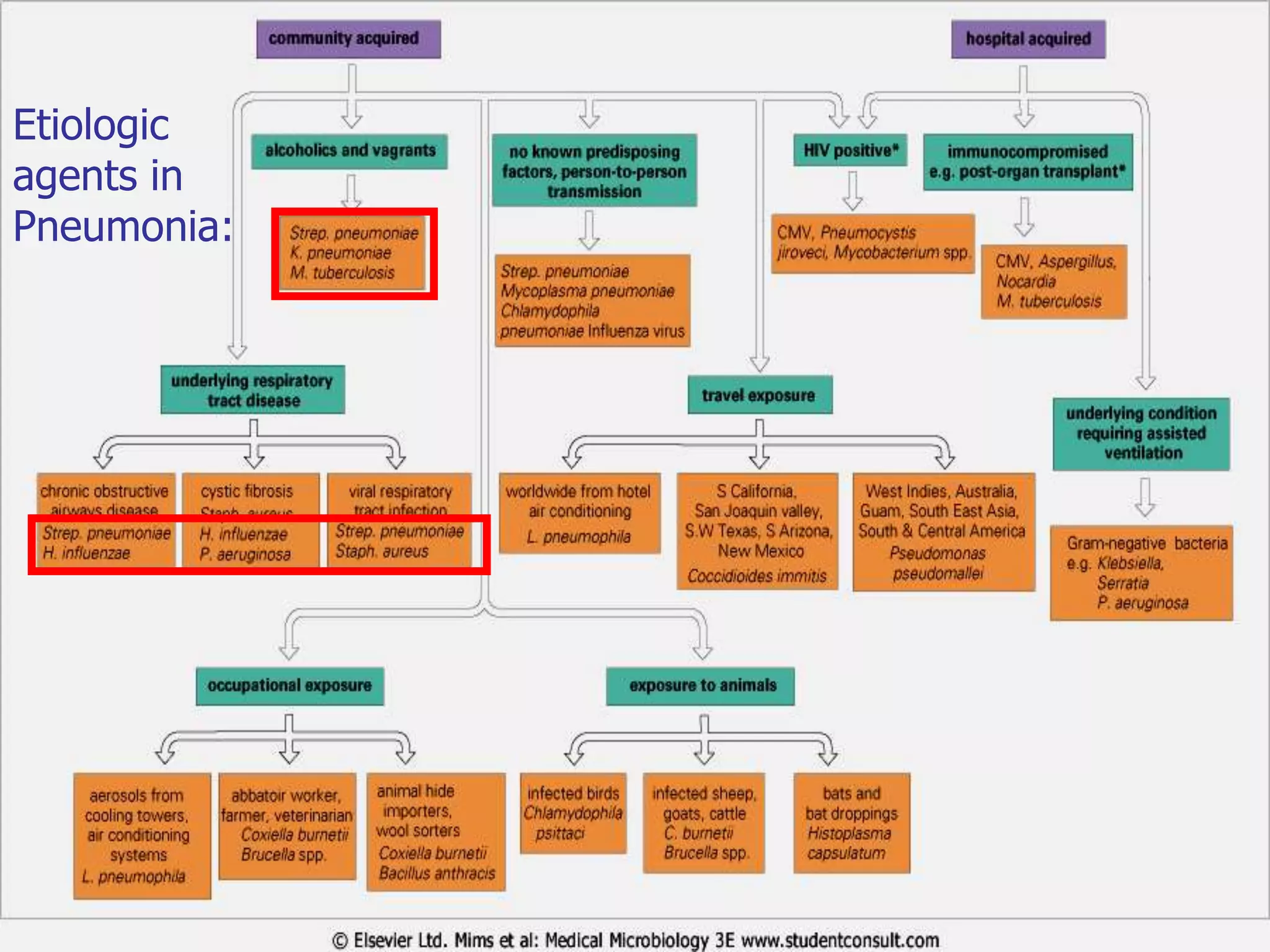
Etiologic
agents in
Pneumonia:


             14
Pneumonia

        Common Pathogens:
       Community-Acquired Acute Pneumonia:
               Strep, H.influenzae, Staph aureus, Klebsiella.
       Community-Acquired Atypical Pneumonia:
               Mycoplasma, Chlamydia, SARS*
       Nosocomial Pneumonia:
               Klebsiella spp., Serratia, E coli.
       Aspiration Pneumonia:
               Anaerobic oral flora (Bacteroides)
       Chronic Pneumonia:
               Nocardia, Actinomyces, TB, Atyp. Mycob. Fungal
       Necrotizing Pneumonia and Lung Abscess:
               Anaerobic bacteria (foreign body, tumor)
       Pneumonia in the Immunocompromised:
               CMV, Pneumocystis, Atyp. Mycob. Fungal. (candida, aspergillus).

                                                                                  15
Pneumonia

        Agar? Morphology? diagnosis? Further tests?


                                                      16
Pneumonia


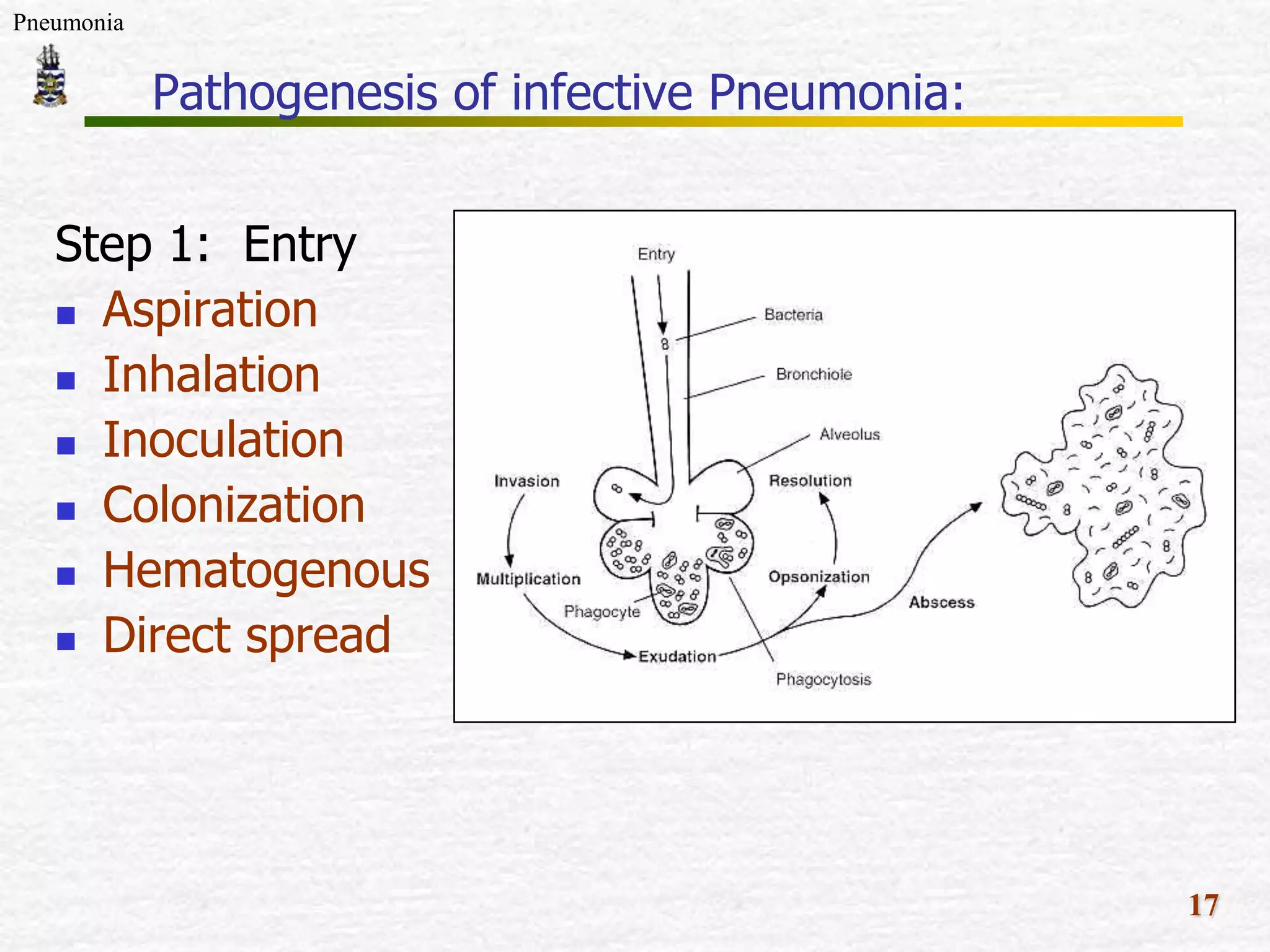
            Pathogenesis of infective Pneumonia:


   Step 1: Entry
    Aspiration

    Inhalation

    Inoculation

    Colonization

    Hematogenous

    Direct spread


                                                   17
Grey Hepatization
Resolution


    Pathogenesis
    of Pneumonia


Congestion
       Red Hepatisation
Pneumonia

       Lobar Pneumonia:

      whole lobe, exudation - consolidation
      95% - Strep pneum.(Klebsiella in
       aged, DM, alcoholics)
      High fever, rusty sputum, Pleuritic chest pain.
      Four stages: (*also in bronchopneumonia)
         Congestion – 1d – vasodilatation congestion.

         Red Hepatization 2d Exudation+RBC

         Gray Hepatizaiton 4d neutro & Macrophages.

         Resolution – 8d few macrophages, normal.


                                                     19
Pneumonia


     Lobar
     Pneumonia:


                  20
Pneumonia


     Lobar
     Pneumonia: Red
     Hepatization


                      21
Pneumonia


     Lobar
     Pneumonia:
     Grey Hepatization


                         22
Pneumonia


     Lobar
     Pneumonia:
     Grey Hepatization


                         23
Pneumonia


        Lobar
        Pneumonia:


                     24
Pneumonia


   Left lower Lobar
   Pneumonia:


                      25
Pneumonia


   Lobar
   Pneumonia:


                26
Pneumonia


   Left lower Lobar
   Pneumonia:
   Methylene blue stain:


                           27
Pneumonia

      Lobar Pneumonia – Gray hep…


                                    28
Pneumonia

      Lobar Pneumonia – Acute Fibrinous pleurisy


                                               29
Pneumonia

        Lobar Pneumonia:


                           30
Pneumonia


       Lobar Pneumonia: Microscopy:
        Congestion  red hepatization


                                        31
Pneumonia

        Lobar Pneumonia: Red hepatization.

                                   • Acute inflammatory
                                     cells & RBC Filling
                                     alveolar spaces
                                     Uniformly.

                                   • Congested capillaries
                                     in the alveolar septa


                                                           32
Pneumonia

        Lobar Pneumonia: Red hepatization.

                                   • Acute inflammatory
                                     cells. Filling alveolar
                                     spaces Uniformly.

                                   • Congested capillaries
                                     in the alveolar septa


                                                               33
Pneumonia

        Lobar Pneumonia: Red  Grey
        hepatization.


                                      34
Pneumonia

        Lobar Pneumonia: Grey hepat.


                                       35
Pneumonia

        Lobar Pneumonia:


                           36
Pneumonia

        Lobar Pneumonia:


                           37
Pneumonia

        Lobar Pneumonia: Which lobe?


                                       38
Pneumonia


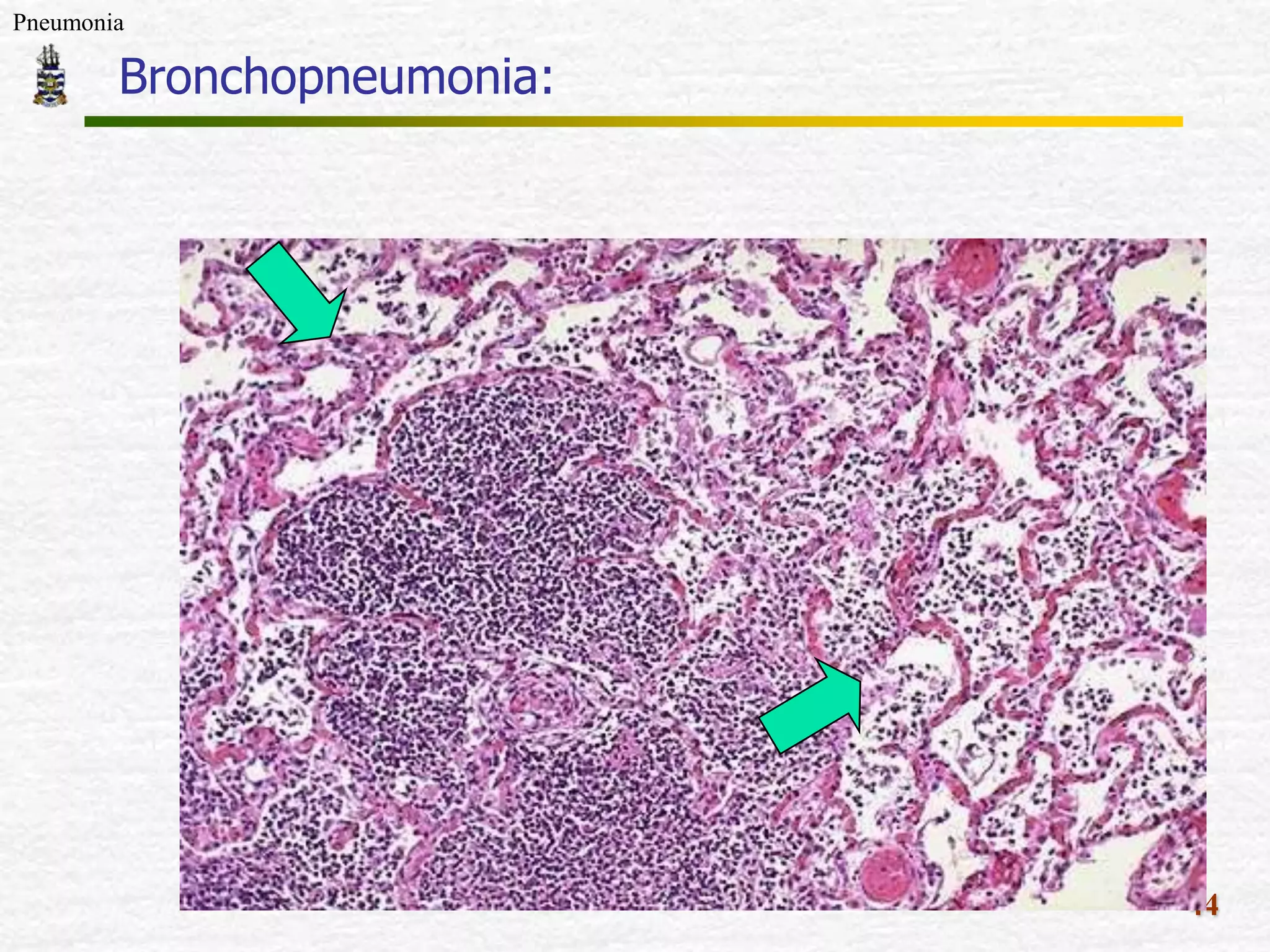
       Broncho-
       pneumonia


                   39
Pneumonia


            Broncho-
            pneumonia


                        40
Pneumonia


            Broncho-
            pneumonia


                        41
Pneumonia

         Bronchopneumonia (patchy)

           Extremes of age. (infancy and old age)
           Secondary to Risk factors.
           Staph, Strep, Pneumo & H. influenza
           Patchy consolidation – not limited to lobes.
           Suppurative inflammation
           Usually bilateral
           More in Lower lobes


                                                       42
Pneumonia


  Broncho
  Pneumonia


              43
Pneumonia

        Bronchopneumonia:


                            44
Pneumonia

            Bronchopneumonia - CT


                                    45
Pneumonia


            Bronchopneumonia


                               46
Broncho – Pneumonia - Lobar
Pneumonia

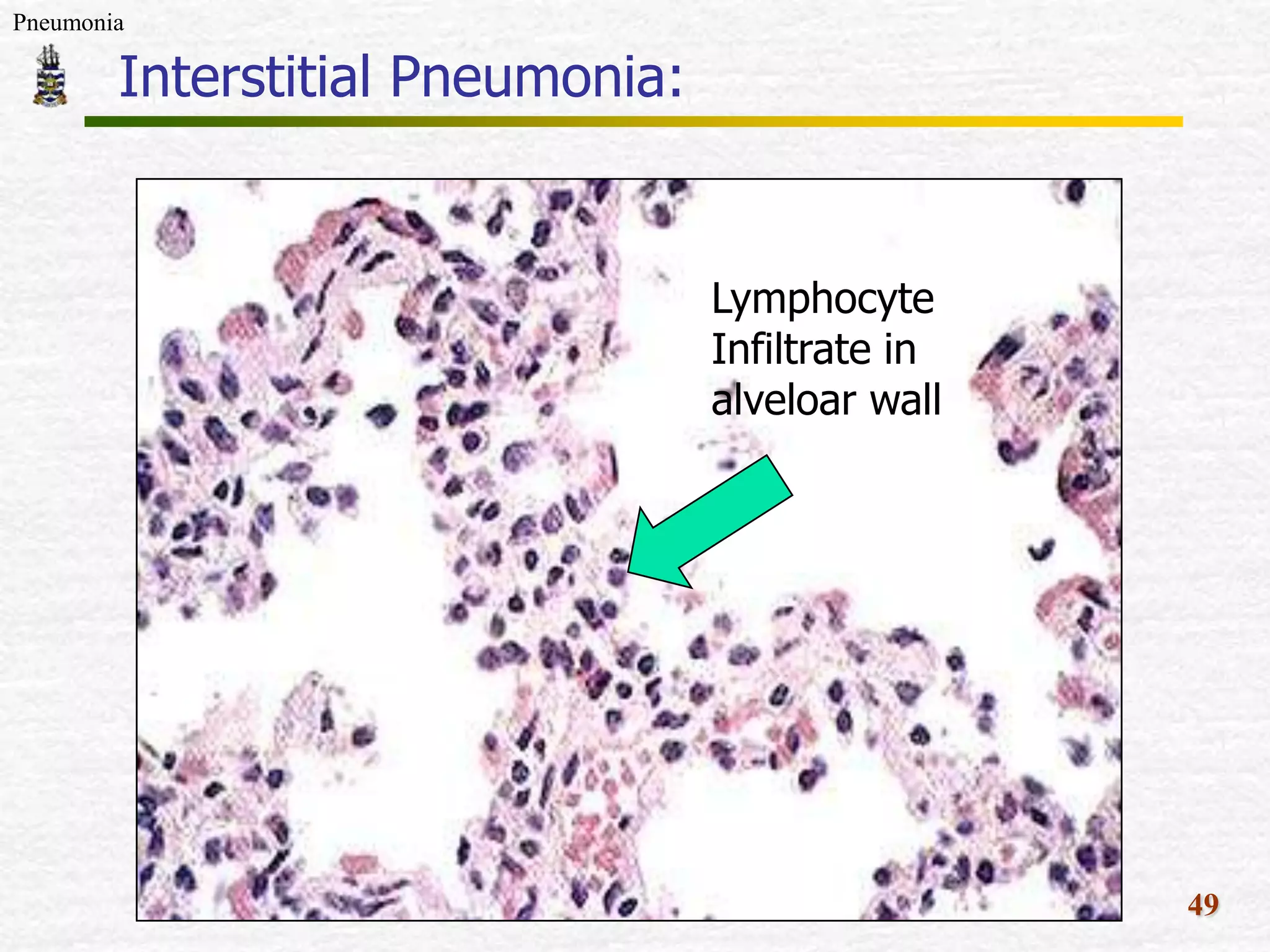
         Interstitial / atypical Pneumonia

        Primary atypical pneumonia in the
         immunocompetant host (Mycoplasma or
         Chlamydia)
        Interstitial pneumonitis
                    immunocompromised host : Pneumocystic carinii; CMV
                    Immunocompetant host: Influenza A
        Gross features:
               Lungs are heavy but not firmly consolidated
        Microscopic features:
               Septal mononuclear infiltrate
               Alveolar air spaces either ‘empty’ or filled with
                proteinaceous fluid with few or no inflammatory cells
                                                                          48
Pneumonia

        Interstitial Pneumonia:


                                  Lymphocyte
                                  Infiltrate in
                                  alveloar wall


                                                  49
Pneumonia

        Acute viral Pneumonia:

                                          Fibrin
                                       Lymphocytes


                                 B.V


                                                   50
Pneumonia

        Chronic Pneumonia
       Chronic, lymphoid infiltrate,
       No classic stages.
       Lung destruction – cavity, abscess etc.
       Organisms
               Mycobacterium tuberculosis
               Histoplasma capsulatum
               Aspergillosis
               Actinomyces


                                                  51
Pneumonia

         Complications of Pneumonia

        Abscesses
               Localized suppurative necrosis, Right side
                often in aspiration.
               Staphylococcus; Klebsiella; Pneudomonas
        Pleuritis / Pleural effusion.
               Inflammation of the pleura ( Streptococcus
                pneumoniae)
               Blood rich exudate (esp. rickettsial diseases)
        Empyema
               Pus in the pleural space.
        Septicemia
                                                                 52
Pneumonia

        Abscess formation


                            53
Pneumonia

        Lung Abscess:


                        54
Pneumonia

        Lung Abscess:


                        55
Pneumonia

        Lung Abscess:


                        56
Pneumonia

            Abscess formation


                                57
Pneumonia


      Lung Abscess:


                      58
Pneumonia

        Lung Fungal Abscess: Candida


                                       59
First step to make your dreams
      come true is to…...
       wake up!
                       — Paul Valery
Pneumonia

         CPC-1.5 – Pneum
        Pathology - Core Learning Issues:
               Pathology of pneumonia and the course of pathological changes.
               Different diagnostic modalities in the diagnosis of pneumonia
                (chest x-ray, blood gases, sputum culture, bronchial washings,
                serology)
               Histopathology of pneumonia – Lobar, Broncho.
               Complications of pneumonia, ARDS, effusions, empyema etc.,.
        Basic science - Core Learning Issues:
               Anatomy of the lobes of the lung. Why does aspiration occur on
                right side?
               Spread of infectious disease - mechanisms
               Physiology of Respiration, Blood gases and Pulse Oxymetry.
               Metabolic and respiratory acidosis.
               Importance of oxygenation and oxygen delivery
               Common respiratory pathogens

                                                                                 61
Pneumonia


     34y, M, H.Fever - Lung. ? Diagnosis
      1.    Lobar pneumonia
      2.    Broncho pneumonia
      3.    Interstitial pneumonia
      4.    Fungal pneumonia
      5.    Carcinomatous pneumonia


       0%    0%    0%   0%   0%

       1      2    3     4    5

                                           62
Pneumonia


     34y, M, H. Fever - Lung. ? Diagnosis
    1.          Lobar pneumonia
    2.          Broncho pneumonia
    3.          Interstitial pneumonia
    4.          Fungal pneumonia
    5.          Carcinomatous pneumonia


            0%      0%   0%   0%   0%

            1       2     3    4     5


                                            63
Pneumonia


     54y, M, H. dyspnoea- Lung. ? Diagnosis
    1.          Lobar pneumonia
    2.          Broncho pneumonia
    3.          Interstitial pneumonia
    4.          Fungal pneumonia
    5.          Carcinomatous pneumonia


            0%      0%   0%   0%   0%

            1       2     3    4     5


                                              64
Pneumonia


     74y, Ca prostate, Lung - lobar pneumonia.
     ? Which Lobe
     1. Left lower
     2. Left middle
     3. Right middle
     4. Left apical
     5. Right lower


       0%   0%   0%   0%   0%

       1    2    3    4     5

                                                 65
Pneumonia


     74y, Ca prostate, Lung - ? diagnosis

     1.     Lobar Pneum+Broncho Pneum.
     2.     Lobar Pneum+metastasis
     3.     Lobar pneum + Abscess
     4.     Smokers lung + Lobar pneum
     5.     COPD+Lung Abscess


       0%      0%   0%   0%   0%

       1       2     3    4    5

                                            66
Pneumonia


     39y, M chronic smoker, High fever, Lung
     ? What type of pneumonia
     1.      Lobar pneumonia
     2.      Interstitial pneumonia
     3.      Broncho pneumonia
     4.      Fungal pneumonia
     5.      Carcinomatous pneumonia


        0%     0%   0%   0%   0%

        1       2    3    4     5


                                               67
Enter question text...


1.   Enter answer
     text...
Pneumonia


  Peter is 58 years old and is a non-smoker and he suffers aspiration of
  gastric contents during cardiac resuscitation. Over the next 10 days he
  develops a non-productive cough & fever. A chest radiograph reveals a 4
  cm diameter mass with an air-fluid level in the right lung. A sputum gram
  stain reveals mixed flora.

  Of the following conditions which is he most likely to have?

                                            1.    Lobar pneumonia
                                            2.    Broncho pneumonia
                                            3.    Interstitial pneumonia
                                            4.    Fungal pneumonia
                                            5.    Lung abscess

       0%    0%     0%     0%     0%

       1     2       3      4       5

                                                                          69
Pneumonia


         59y F, Recurrent fever, cough, dyspnoea,
         Lung biopsy. ? Diagnosis
    A.          Lobar pneumonia
    B.          Broncho pneumonia
    C.          Interstitial pneumonia
    D.          Fungal pneumonia
    E.          Lung abscess


            0%      0%    0%    0%       0%

            1        2     3     4        5


                                                    70
Pneumonia

         CPC 1.5 – Pneu - KFP Questions:

        Pneumonia – types (clin, path, Broncho, lobar)
        Gross stages – congestion, red, grey, resol.
        Microscopy of pneumonia (stages)
        Complications of pneumonia – acute, chronic.
        Pathogenesis of clinical features:
               Fever, dyspnoea, tachypnoea, dull percussion, bronchial
                breathing, increase/decreased tactile and vocal
                fremitus, fine rales etc.
        Investigations:
               Clinical:
               Pathology: Blood gas, sputum mircroscopy,
                microbiological C&S,
                                                                    71
Pneumonia


      29y M, High fever, cough, dyspnoea,
      Sputum gram stain ? Possible type of pneumonia
    1.          Lobar pneumonia
    2.          Broncho pneumonia
    3.          Interstitial pneumonia
    4.          Fungal pneumonia
    5.          Lung abscess


            0%      0%    0%    0%       0%

            1        2     3     4        5

                                                       72
Pneumonia


     29y M, High fever, cough, dyspnoea,
     Sputum culture-blood agar, optochin disc. Shows ?
    1.  Alpha hemolysis
    2.  Beta hemolysis
    3.  Optochin resitance
    4.  Optochin sensitivity
    5.  No hemolysis
    Note: Multiple correct answers


       0%   0%   0%    0%    0%

        1   2     3      4     5
                                                         73
Pneumonia


        29y M, High fever, cough, dyspnoea,
        Sputum – quad ID plate. ? diagnosis
   1.        Streptococcus pneumoniae
   2.        Staphyloccous aureus
   3.        Hemophilus influenza
   4.        Escherichia coli
   5.        Pseudomonas aeruginosa


         0%      0%   0%   0%    0%
                                              74
         1       2     3     4    5
Pneumonia


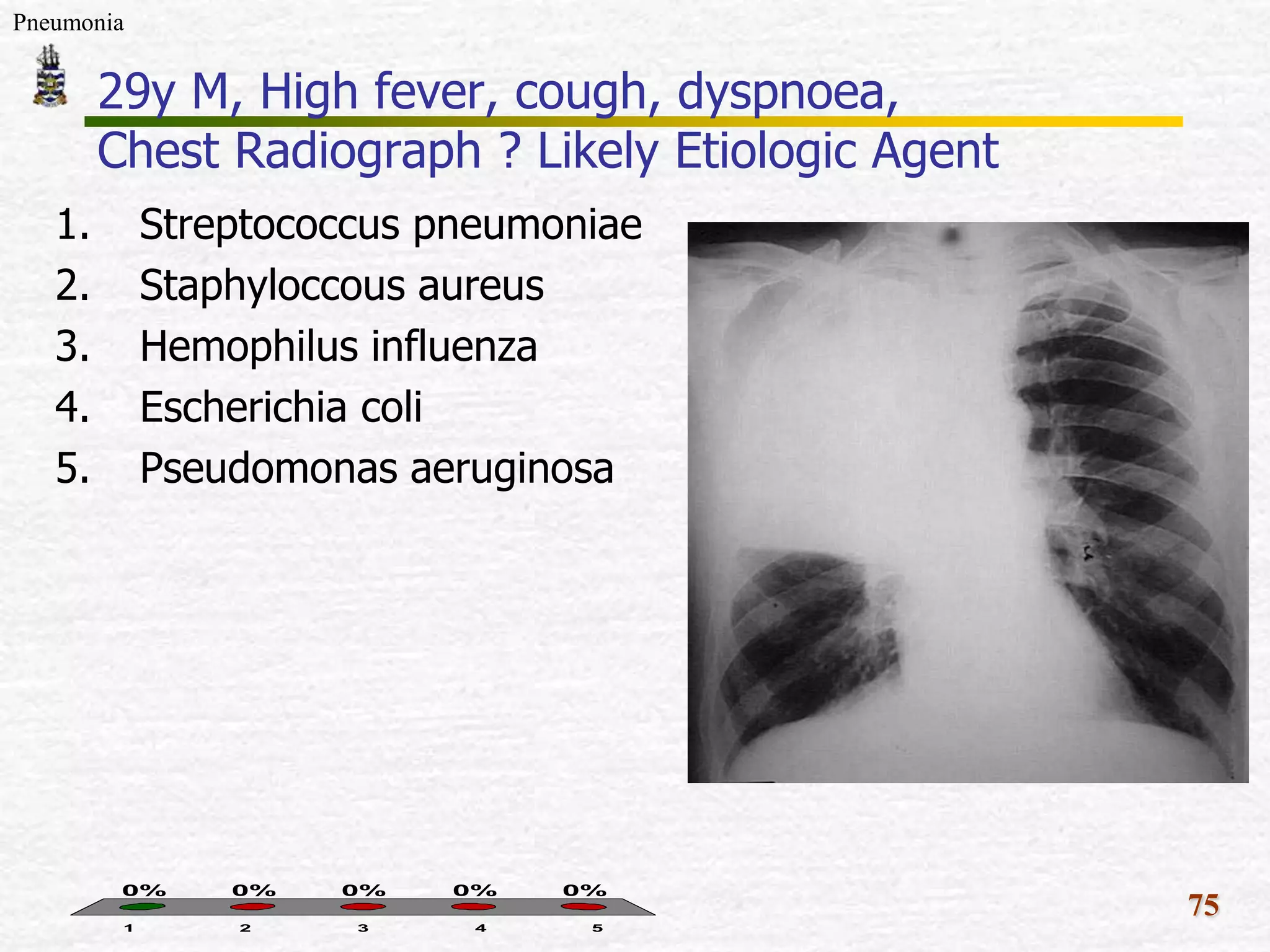
        29y M, High fever, cough, dyspnoea,
        Chest Radiograph ? Likely Etiologic Agent
   1.        Streptococcus pneumoniae
   2.        Staphyloccous aureus
   3.        Hemophilus influenza
   4.        Escherichia coli
   5.        Pseudomonas aeruginosa


         0%      0%   0%   0%    0%
                                                    75
         1       2     3     4    5
Pneumonia


    “Big Jobs usually go to the men who prove
       their ability to outgrow small ones.”
                 –Ralph Waldo Emerson


                                            76
Pneumonia


            List
            Gross features:


                              77
Pneumonia

        Aspergillus pneumonia in a HIV Patient:


                                                  78
Pneumonia

        Tuberculosis:


                        79
Pneumonia

        Non-infective pneumonias
      Bronchiolitis obliterans/organising
       pneumonia (BOOP):
           Reactive – irritants. TypeII cell hyperplasia.
      Aspiration pneumonia
           Lower lobe, sec infection, abscess.
      Lipid pneumonia
           Airway obstruction, atelectasis.
      Eosinophilic pneumonia
           Asthma, Löffler's syndrome.

                                                             80
The only place where
success comes before work is in a
          dictionary…!
             Vidal Sassoon
Case Study:
Pneumonia

        History

           49-year-old white male with a
            productive cough (green–yellow
            sputum) for the past
            3 days presents to his General
            Practitioner (GP) with progressive
            dyspnoea, which is severe upon
            minimal exertion


                                                 83
Pneumonia

        Comm – Pneumonia - Nosoc
       In healthy adults          In *sick patients.
       Gram positive.             gram-negative bacilli
       Streptococcus              Pseudomonas
        pneumoniae (90%)            aeruginosa, Escherichia
       Strep.                      coli, Enterobacter, Proteu
        Pyogenes, Staph, H.         s, and Klebsiella.
        influenzae and
        Klebsiella in elderly
        or with COPD.


                                                            84
Pneumonia

         History
           Patient’s past medical history includes:
               arterial hypertension for 5 years
               urinary tract infection 1 month previously, which
                was treated with ciprofloxacin 200 mg three-times
                daily for 5 days
           Patient has smoked 20 cigarettes/day for
            35 years, although obstructive lung disease
            is not evident
           Current medication:
               metoprolol tartrate 100 mg/day


                                                                    85
Pneumonia

        Examination

           Clinical findings:
               awake
               deteriorated clinical state
               dyspnoea during rest (32 breaths/min)
               rales (abnormal respiratory sound) over the
                left lung
               prolonged exhalation
               no pathological findings in other organs
               arterial blood pressure 100/50 mmHg
               pulse rate 108/min
               temperature 39.0°C
                                                              86
Pneumonia

Laboratory findings
            Leukocytes            19.0 x 10⁹/L (19 000/µL)
            Haemoglobin           7.1 mmol/L (11.5 g/dL)
            Haematocrit           0.35 (35 mL/dL)
            Platelets                     195 x 109/L (195 000 /µL)
            C-reactive protein    279.4 mg/dL [<5]
            Blood urea nitrogen   6.6 nmol/L (9.0 mg/dL)
            Creatinine            95 µmol/L (1.1 mg/dL)
            Sodium                135 mmol/L (135 mEq/L)
            Potassium             4.56 mmol/L (4.56 mEq/L)
            Glucose               6.8 mmol/L (121.4 mg/dL)
            PaO2                  62.1 mmHg
            PaCO2                 33.8 mmHg
            sat O2                91.2%
            pH                    7.41

                                                                      87
Pneumonia

        Additional investigations

           Chest X-ray is requested by the GP
           X-ray shows a large infiltration in the
            left upper and lower lobe of the lung,
            suggestive of pneumonia


                                                      88
Chest X-ray: findings?
Pneumonia

        Treatment decision

           Patient is admitted to hospital on the
            basis of his clinical and X-ray
            findings, together with his smoking
            history


                                                     90
Pneumonia

    lnvestigations
lnvestigations

           Diagnostic tests performed include:
               bronchoscopy with lavage of the left upper
                lobe for microbiological investigation
               blood cultures (three pairs)
               urine screening for Legionella spp. antigen


                                                              91
Pneumonia

        Initial empiric treatment

           The patient receives oral azithromycin
            500 mg once daily


                                                     92
Pneumonia

        Hospital Day 3 examination

           Clinical findings:
               clinical state has not improved. Patient is
                slightly disorientated
               respiratory rate 35 breaths/min
               blood pressure 100/65 mmHg
               pulse rate 136/min
               temperature 38.9–39.9°C


                                                              93
Pneumonia

        Hospital Day 3 laboratory findings
            Leukocytes            22.4 x 10⁹/L (22 400/µL)
            Haemoglobin           6.1 mmol/L (9.8 g/dL)
            Haematocrit           0.30 (35 mL/dL)
            Platelets             395 x 109/L (39 500/µL)
            C-reactive protein    394.2 mg/dL [<5]
            Blood urea nitrogen   16.6 nmol/L(22.7 mg/dL)
            Creatinine            145 µmol/L (1.7 mg/dL)
            Sodium                138 mmol/L (138 mEq/L)
            Potassium             3.88 mmol/L (3.88 mEq/L)
            Glucose               8.2 mmol/L (146.4 mg/dL)
            PaO2                  55.2 mmHg
            PaCO2                 30.1 mmHg
            sat O2                86.9%
            pH                            7.46

                                                             94
Pneumonia

        Hospital Day 3 investigations

           Chest X-ray is repeated:
               shows enlarged infiltration in the left upper
                and lower lobes of the lung, with possible
                pleural effusion (left)
           Microbiological tests show:
               all cultures negative (tracheal secretion, blood
                culture)
               Legionella spp. antigen negative
           What would you do now?

                                                                95
Pneumonia

        Chest X-ray: hospital Day 3


                                      96
Pneumonia

        Hospital Day 3 diagnostic and therapeutic procedures


           Bronchoscopy with bronchoalveolar lavage
            (BAL) is performed
               differential cell count: 48% granulocytes,
                10% lymphocytes, 42% macrophages
           S. pneumoniae antigen is positive in the
            urine
           Patient is switched to levofloxacin 500 mg
            IV three-times daily and is transferred to
            the intensive care unit (ICU)

                                                               97

Pathology of Pneumonia

  • 1.
    Pneumonia 9/3/2006 …….. I have no concerns that this group of students are in any way resting on their laurels. So far the feedback from the medical staff has been excellent. There have been a number of preceptors who have noted the substantial difference between this years 4th yrs and last years 4th yrs. A number of their preceptors in the hospital, who are not easily impressed, have gone out of their way to tell me how impressed they have been with this group. ………… Impressive….! Keep it up…..! 1
  • 2.
    Pneumonia CPC-4  Mr. Turner is a 38 years old Vietnamese cane farmer living near Cairns. He is married to an indigenous woman and has 2 children aged 10 and 12. He is sent by his GP to A&E with high fever, shortness of breath and cough. He feels very unwell and is flushed and feeling breathless and faint. 2
  • 3.
    Pneumonia CPC-4  Questions:  Duration, course, sputum, wt loss.  Past history, Family  Smoking, recent contacts/visits.  Diabetes, sexual/venereal diseases.  Differential diagnoses:  Cardiovascular – MI, CCF, etc..  Respiratory – Pneumonia, Bronchiolitis, aspiration/inhalation injury, Asthma, ARDS, Pulm. Embolism, Empyema.  Metabolic – Acidosis, Diabetic, Septicemia – focus of infection? AIDS, Q fever, Legionella.  Others: Cystic Fibrosis, Immunodeficiency. 3
  • 4.
    Pneumonia Pathogenesis of Clinical features:  Tachypnoea, Dyspnoea, Resp Acidosis  Solid/airless lungs – decreased oxygenation.  Dull percussion - Consolidation – Exudation  Rusty sputum – RBC+WBC (LRT bleed), S.pneum,  Greenish sputum – Pseudomonas.  Foul smelling sputum- anaerobic.  Current jelly sputum-Klebsiella.  Fever – Inflammatory mediators. 4
  • 5.
    Pneumonia "In the presence of greatness, pettiness disappears. In the absence of a great dream, pettiness prevails." Robert Fritz Composer, Filmmaker and Author 5
  • 6.
    Pathology of Lung Infections Dr.Venkatesh M. Shashidhar Assoc. Prof & Head of Pathology
  • 7.
    Pneumonia Normal Lung Tr.Air Sh Br. Mar. 7
  • 8.
    Normal Lung Type 2 Type 1-Pneumocyte
  • 9.
    Pneumonia Respiratory system: Introduction  5000 sq meters of area….! (olympic track)  Filters >10,000 L of air / day…!  Normal lungs are sterile.  Delicate, thin resp. mem – gas exch.  Filter, humidify, sterilize, highly sensitive.  RTI – commonest in medical practice.  Pathology:  Injury, Infections & Neoplasia. Acute / Chronic.  Disorders of Airway – Bronchitis, COPD, Asthma, tumors.  Disorders of Lung tissue –Pneumonia, Pneumoconiosis. 9
  • 10.
    Pneumonia Patterns of Lung disorders:  Airway  Bronchitis, Bronchiectasis, Bronchiolitis.  Tumors / Cancer Parenchyma   Pneumonia. * Infections  Lung abscess, TB  Hyaline membrane dis (HMD & ARDS)  Pneumoconiosis  Tumors / Cancer  Pleura:  Pleural effusion (TB)  Tumors / Cancer 10
  • 11.
    Pneumonia Pneumonia: Definition & Etiology  Inflammation of Lung tissue (not Bronchi)  LRT/Distal airways – Alveoli & Terminal bronchioles  Decreased defense / Strong Pathogen  Immunodeficiency, damaged lung (COPD),  Virulent infection - Lobar pneumonia  Defective Clearing mechanism  Cough/gag Reflex – Coma, paralysis, sick.  Mucosal Injury – smoking, toxins, aspiration.  Low Alveolar defense - Immunodeficiency  Pulmonary edema – Cardiac failure, embol.  Obstructions – foreign body, tumors, cystic fibrosis. 11
  • 12.
    Pneumonia Pneumonia Types: Etiologic Types: Morphologic types:  Lobar  Infective  Broncho  Viral  Interstitial  Bacterial  Fungal Duration:  Acute  Tuberculosis  Chronic  Non Infective Clinical:  Toxins  Primary / secondary.  chemical  Typical / Atypical  Aspiration  Community a / hospital a 12
  • 13.
    Pneumonia Broncho – Pneumonia - Lobar  Extremes of age.  Middle age – 20-50  Secondary, in sick.  Primary in a healthy adult.  Both genders.  males common.  Staph, Strep, H.infl.  95% pneumococcus (Klebs.)  Patchy consolidation  Entire lobe consolidation  Around Small Bronchi  Diffuse  Not limited by anatomic  Limited by anatomic boundaries. boundaries.  Usually bilateral.  Usually unilateral 13
  • 14.
  • 15.
    Pneumonia Common Pathogens:  Community-Acquired Acute Pneumonia:  Strep, H.influenzae, Staph aureus, Klebsiella.  Community-Acquired Atypical Pneumonia:  Mycoplasma, Chlamydia, SARS*  Nosocomial Pneumonia:  Klebsiella spp., Serratia, E coli.  Aspiration Pneumonia:  Anaerobic oral flora (Bacteroides)  Chronic Pneumonia:  Nocardia, Actinomyces, TB, Atyp. Mycob. Fungal  Necrotizing Pneumonia and Lung Abscess:  Anaerobic bacteria (foreign body, tumor)  Pneumonia in the Immunocompromised:  CMV, Pneumocystis, Atyp. Mycob. Fungal. (candida, aspergillus). 15
  • 16.
    Pneumonia Agar? Morphology? diagnosis? Further tests? 16
  • 17.
    Pneumonia Pathogenesis of infective Pneumonia: Step 1: Entry  Aspiration  Inhalation  Inoculation  Colonization  Hematogenous  Direct spread 17
  • 18.
    Grey Hepatization Resolution Pathogenesis of Pneumonia Congestion Red Hepatisation
  • 19.
    Pneumonia Lobar Pneumonia:  whole lobe, exudation - consolidation  95% - Strep pneum.(Klebsiella in aged, DM, alcoholics)  High fever, rusty sputum, Pleuritic chest pain.  Four stages: (*also in bronchopneumonia)  Congestion – 1d – vasodilatation congestion.  Red Hepatization 2d Exudation+RBC  Gray Hepatizaiton 4d neutro & Macrophages.  Resolution – 8d few macrophages, normal. 19
  • 20.
    Pneumonia Lobar Pneumonia: 20
  • 21.
    Pneumonia Lobar Pneumonia: Red Hepatization 21
  • 22.
    Pneumonia Lobar Pneumonia: Grey Hepatization 22
  • 23.
    Pneumonia Lobar Pneumonia: Grey Hepatization 23
  • 24.
    Pneumonia Lobar Pneumonia: 24
  • 25.
    Pneumonia Left lower Lobar Pneumonia: 25
  • 26.
    Pneumonia Lobar Pneumonia: 26
  • 27.
    Pneumonia Left lower Lobar Pneumonia: Methylene blue stain: 27
  • 28.
    Pneumonia Lobar Pneumonia – Gray hep… 28
  • 29.
    Pneumonia Lobar Pneumonia – Acute Fibrinous pleurisy 29
  • 30.
    Pneumonia Lobar Pneumonia: 30
  • 31.
    Pneumonia Lobar Pneumonia: Microscopy: Congestion  red hepatization 31
  • 32.
    Pneumonia Lobar Pneumonia: Red hepatization. • Acute inflammatory cells & RBC Filling alveolar spaces Uniformly. • Congested capillaries in the alveolar septa 32
  • 33.
    Pneumonia Lobar Pneumonia: Red hepatization. • Acute inflammatory cells. Filling alveolar spaces Uniformly. • Congested capillaries in the alveolar septa 33
  • 34.
    Pneumonia Lobar Pneumonia: Red  Grey hepatization. 34
  • 35.
    Pneumonia Lobar Pneumonia: Grey hepat. 35
  • 36.
    Pneumonia Lobar Pneumonia: 36
  • 37.
    Pneumonia Lobar Pneumonia: 37
  • 38.
    Pneumonia Lobar Pneumonia: Which lobe? 38
  • 39.
    Pneumonia Broncho- pneumonia 39
  • 40.
    Pneumonia Broncho- pneumonia 40
  • 41.
    Pneumonia Broncho- pneumonia 41
  • 42.
    Pneumonia Bronchopneumonia (patchy)  Extremes of age. (infancy and old age)  Secondary to Risk factors.  Staph, Strep, Pneumo & H. influenza  Patchy consolidation – not limited to lobes.  Suppurative inflammation  Usually bilateral  More in Lower lobes 42
  • 43.
    Pneumonia Broncho Pneumonia 43
  • 44.
    Pneumonia Bronchopneumonia: 44
  • 45.
    Pneumonia Bronchopneumonia - CT 45
  • 46.
    Pneumonia Bronchopneumonia 46
  • 47.
  • 48.
    Pneumonia Interstitial / atypical Pneumonia  Primary atypical pneumonia in the immunocompetant host (Mycoplasma or Chlamydia)  Interstitial pneumonitis  immunocompromised host : Pneumocystic carinii; CMV  Immunocompetant host: Influenza A  Gross features:  Lungs are heavy but not firmly consolidated  Microscopic features:  Septal mononuclear infiltrate  Alveolar air spaces either ‘empty’ or filled with proteinaceous fluid with few or no inflammatory cells 48
  • 49.
    Pneumonia Interstitial Pneumonia: Lymphocyte Infiltrate in alveloar wall 49
  • 50.
    Pneumonia Acute viral Pneumonia: Fibrin Lymphocytes B.V 50
  • 51.
    Pneumonia Chronic Pneumonia  Chronic, lymphoid infiltrate,  No classic stages.  Lung destruction – cavity, abscess etc.  Organisms  Mycobacterium tuberculosis  Histoplasma capsulatum  Aspergillosis  Actinomyces 51
  • 52.
    Pneumonia Complications of Pneumonia  Abscesses  Localized suppurative necrosis, Right side often in aspiration.  Staphylococcus; Klebsiella; Pneudomonas  Pleuritis / Pleural effusion.  Inflammation of the pleura ( Streptococcus pneumoniae)  Blood rich exudate (esp. rickettsial diseases)  Empyema  Pus in the pleural space.  Septicemia 52
  • 53.
    Pneumonia Abscess formation 53
  • 54.
    Pneumonia Lung Abscess: 54
  • 55.
    Pneumonia Lung Abscess: 55
  • 56.
    Pneumonia Lung Abscess: 56
  • 57.
    Pneumonia Abscess formation 57
  • 58.
    Pneumonia Lung Abscess: 58
  • 59.
    Pneumonia Lung Fungal Abscess: Candida 59
  • 60.
    First step tomake your dreams come true is to…... wake up! — Paul Valery
  • 61.
    Pneumonia CPC-1.5 – Pneum  Pathology - Core Learning Issues:  Pathology of pneumonia and the course of pathological changes.  Different diagnostic modalities in the diagnosis of pneumonia (chest x-ray, blood gases, sputum culture, bronchial washings, serology)  Histopathology of pneumonia – Lobar, Broncho.  Complications of pneumonia, ARDS, effusions, empyema etc.,.  Basic science - Core Learning Issues:  Anatomy of the lobes of the lung. Why does aspiration occur on right side?  Spread of infectious disease - mechanisms  Physiology of Respiration, Blood gases and Pulse Oxymetry.  Metabolic and respiratory acidosis.  Importance of oxygenation and oxygen delivery  Common respiratory pathogens 61
  • 62.
    Pneumonia 34y, M, H.Fever - Lung. ? Diagnosis 1. Lobar pneumonia 2. Broncho pneumonia 3. Interstitial pneumonia 4. Fungal pneumonia 5. Carcinomatous pneumonia 0% 0% 0% 0% 0% 1 2 3 4 5 62
  • 63.
    Pneumonia 34y, M, H. Fever - Lung. ? Diagnosis 1. Lobar pneumonia 2. Broncho pneumonia 3. Interstitial pneumonia 4. Fungal pneumonia 5. Carcinomatous pneumonia 0% 0% 0% 0% 0% 1 2 3 4 5 63
  • 64.
    Pneumonia 54y, M, H. dyspnoea- Lung. ? Diagnosis 1. Lobar pneumonia 2. Broncho pneumonia 3. Interstitial pneumonia 4. Fungal pneumonia 5. Carcinomatous pneumonia 0% 0% 0% 0% 0% 1 2 3 4 5 64
  • 65.
    Pneumonia 74y, Ca prostate, Lung - lobar pneumonia. ? Which Lobe 1. Left lower 2. Left middle 3. Right middle 4. Left apical 5. Right lower 0% 0% 0% 0% 0% 1 2 3 4 5 65
  • 66.
    Pneumonia 74y, Ca prostate, Lung - ? diagnosis 1. Lobar Pneum+Broncho Pneum. 2. Lobar Pneum+metastasis 3. Lobar pneum + Abscess 4. Smokers lung + Lobar pneum 5. COPD+Lung Abscess 0% 0% 0% 0% 0% 1 2 3 4 5 66
  • 67.
    Pneumonia 39y, M chronic smoker, High fever, Lung ? What type of pneumonia 1. Lobar pneumonia 2. Interstitial pneumonia 3. Broncho pneumonia 4. Fungal pneumonia 5. Carcinomatous pneumonia 0% 0% 0% 0% 0% 1 2 3 4 5 67
  • 68.
    Enter question text... 1. Enter answer text...
  • 69.
    Pneumonia Peteris 58 years old and is a non-smoker and he suffers aspiration of gastric contents during cardiac resuscitation. Over the next 10 days he develops a non-productive cough & fever. A chest radiograph reveals a 4 cm diameter mass with an air-fluid level in the right lung. A sputum gram stain reveals mixed flora. Of the following conditions which is he most likely to have? 1. Lobar pneumonia 2. Broncho pneumonia 3. Interstitial pneumonia 4. Fungal pneumonia 5. Lung abscess 0% 0% 0% 0% 0% 1 2 3 4 5 69
  • 70.
    Pneumonia 59y F, Recurrent fever, cough, dyspnoea, Lung biopsy. ? Diagnosis A. Lobar pneumonia B. Broncho pneumonia C. Interstitial pneumonia D. Fungal pneumonia E. Lung abscess 0% 0% 0% 0% 0% 1 2 3 4 5 70
  • 71.
    Pneumonia CPC 1.5 – Pneu - KFP Questions:  Pneumonia – types (clin, path, Broncho, lobar)  Gross stages – congestion, red, grey, resol.  Microscopy of pneumonia (stages)  Complications of pneumonia – acute, chronic.  Pathogenesis of clinical features:  Fever, dyspnoea, tachypnoea, dull percussion, bronchial breathing, increase/decreased tactile and vocal fremitus, fine rales etc.  Investigations:  Clinical:  Pathology: Blood gas, sputum mircroscopy, microbiological C&S, 71
  • 72.
    Pneumonia 29y M, High fever, cough, dyspnoea, Sputum gram stain ? Possible type of pneumonia 1. Lobar pneumonia 2. Broncho pneumonia 3. Interstitial pneumonia 4. Fungal pneumonia 5. Lung abscess 0% 0% 0% 0% 0% 1 2 3 4 5 72
  • 73.
    Pneumonia 29y M, High fever, cough, dyspnoea, Sputum culture-blood agar, optochin disc. Shows ? 1. Alpha hemolysis 2. Beta hemolysis 3. Optochin resitance 4. Optochin sensitivity 5. No hemolysis Note: Multiple correct answers 0% 0% 0% 0% 0% 1 2 3 4 5 73
  • 74.
    Pneumonia 29y M, High fever, cough, dyspnoea, Sputum – quad ID plate. ? diagnosis 1. Streptococcus pneumoniae 2. Staphyloccous aureus 3. Hemophilus influenza 4. Escherichia coli 5. Pseudomonas aeruginosa 0% 0% 0% 0% 0% 74 1 2 3 4 5
  • 75.
    Pneumonia 29y M, High fever, cough, dyspnoea, Chest Radiograph ? Likely Etiologic Agent 1. Streptococcus pneumoniae 2. Staphyloccous aureus 3. Hemophilus influenza 4. Escherichia coli 5. Pseudomonas aeruginosa 0% 0% 0% 0% 0% 75 1 2 3 4 5
  • 76.
    Pneumonia “Big Jobs usually go to the men who prove their ability to outgrow small ones.” –Ralph Waldo Emerson 76
  • 77.
    Pneumonia List Gross features: 77
  • 78.
    Pneumonia Aspergillus pneumonia in a HIV Patient: 78
  • 79.
    Pneumonia Tuberculosis: 79
  • 80.
    Pneumonia Non-infective pneumonias  Bronchiolitis obliterans/organising pneumonia (BOOP):  Reactive – irritants. TypeII cell hyperplasia.  Aspiration pneumonia  Lower lobe, sec infection, abscess.  Lipid pneumonia  Airway obstruction, atelectasis.  Eosinophilic pneumonia  Asthma, Löffler's syndrome. 80
  • 81.
    The only placewhere success comes before work is in a dictionary…! Vidal Sassoon
  • 82.
  • 83.
    Pneumonia History  49-year-old white male with a productive cough (green–yellow sputum) for the past 3 days presents to his General Practitioner (GP) with progressive dyspnoea, which is severe upon minimal exertion 83
  • 84.
    Pneumonia Comm – Pneumonia - Nosoc  In healthy adults  In *sick patients.  Gram positive.  gram-negative bacilli  Streptococcus  Pseudomonas pneumoniae (90%) aeruginosa, Escherichia  Strep. coli, Enterobacter, Proteu Pyogenes, Staph, H. s, and Klebsiella. influenzae and Klebsiella in elderly or with COPD. 84
  • 85.
    Pneumonia History  Patient’s past medical history includes:  arterial hypertension for 5 years  urinary tract infection 1 month previously, which was treated with ciprofloxacin 200 mg three-times daily for 5 days  Patient has smoked 20 cigarettes/day for 35 years, although obstructive lung disease is not evident  Current medication:  metoprolol tartrate 100 mg/day 85
  • 86.
    Pneumonia Examination  Clinical findings:  awake  deteriorated clinical state  dyspnoea during rest (32 breaths/min)  rales (abnormal respiratory sound) over the left lung  prolonged exhalation  no pathological findings in other organs  arterial blood pressure 100/50 mmHg  pulse rate 108/min  temperature 39.0°C 86
  • 87.
    Pneumonia Laboratory findings Leukocytes 19.0 x 10⁹/L (19 000/µL) Haemoglobin 7.1 mmol/L (11.5 g/dL) Haematocrit 0.35 (35 mL/dL) Platelets 195 x 109/L (195 000 /µL) C-reactive protein 279.4 mg/dL [<5] Blood urea nitrogen 6.6 nmol/L (9.0 mg/dL) Creatinine 95 µmol/L (1.1 mg/dL) Sodium 135 mmol/L (135 mEq/L) Potassium 4.56 mmol/L (4.56 mEq/L) Glucose 6.8 mmol/L (121.4 mg/dL) PaO2 62.1 mmHg PaCO2 33.8 mmHg sat O2 91.2% pH 7.41 87
  • 88.
    Pneumonia Additional investigations  Chest X-ray is requested by the GP  X-ray shows a large infiltration in the left upper and lower lobe of the lung, suggestive of pneumonia 88
  • 89.
  • 90.
    Pneumonia Treatment decision  Patient is admitted to hospital on the basis of his clinical and X-ray findings, together with his smoking history 90
  • 91.
    Pneumonia lnvestigations lnvestigations  Diagnostic tests performed include:  bronchoscopy with lavage of the left upper lobe for microbiological investigation  blood cultures (three pairs)  urine screening for Legionella spp. antigen 91
  • 92.
    Pneumonia Initial empiric treatment  The patient receives oral azithromycin 500 mg once daily 92
  • 93.
    Pneumonia Hospital Day 3 examination  Clinical findings:  clinical state has not improved. Patient is slightly disorientated  respiratory rate 35 breaths/min  blood pressure 100/65 mmHg  pulse rate 136/min  temperature 38.9–39.9°C 93
  • 94.
    Pneumonia Hospital Day 3 laboratory findings Leukocytes 22.4 x 10⁹/L (22 400/µL) Haemoglobin 6.1 mmol/L (9.8 g/dL) Haematocrit 0.30 (35 mL/dL) Platelets 395 x 109/L (39 500/µL) C-reactive protein 394.2 mg/dL [<5] Blood urea nitrogen 16.6 nmol/L(22.7 mg/dL) Creatinine 145 µmol/L (1.7 mg/dL) Sodium 138 mmol/L (138 mEq/L) Potassium 3.88 mmol/L (3.88 mEq/L) Glucose 8.2 mmol/L (146.4 mg/dL) PaO2 55.2 mmHg PaCO2 30.1 mmHg sat O2 86.9% pH 7.46 94
  • 95.
    Pneumonia Hospital Day 3 investigations  Chest X-ray is repeated:  shows enlarged infiltration in the left upper and lower lobes of the lung, with possible pleural effusion (left)  Microbiological tests show:  all cultures negative (tracheal secretion, blood culture)  Legionella spp. antigen negative  What would you do now? 95
  • 96.
    Pneumonia Chest X-ray: hospital Day 3 96
  • 97.
    Pneumonia Hospital Day 3 diagnostic and therapeutic procedures  Bronchoscopy with bronchoalveolar lavage (BAL) is performed  differential cell count: 48% granulocytes, 10% lymphocytes, 42% macrophages  S. pneumoniae antigen is positive in the urine  Patient is switched to levofloxacin 500 mg IV three-times daily and is transferred to the intensive care unit (ICU) 97