ANAPHYLAXIS
Fatima Al-Awadh
Objectives
   Define Hypersensitivity Reaction.
   Mention the Types of Hypersensitivity
    Reactions.
   Define Anaphylaxis.
   Mention the Etiologic Causes.
   Explain the Pathophysiologic Mechanism.
   Mention the Signs & Symptoms.
   Demonstrate the Diagnostic Investigations.
   Display the Treatment & First Aid.
Hypersensitivity Reaction
   Injurious, or pathologic, immune reactions are
    called hypersensitivity reactions.
   Hypersensitivity reactions may occur in two
    situations.
   First, responses to foreign antigens may be
    dysregulated or uncontrolled, resulting in
    tissue injury.
    Second, the immune responses may be
    directed against self antigens, as a result of
    the failure of self-tolerance (autoimmunity).
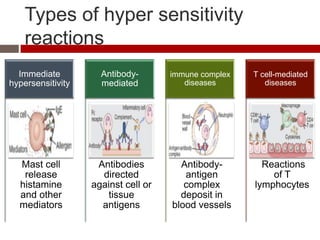
Types of hyper sensitivity
    reactions
  Immediate          Antibody-       immune complex   T cell-mediated
hypersensitivity     mediated           diseases         diseases


  Mast cell         Antibodies         Antibody-        Reactions
   release           directed           antigen           of T
  histamine        against cell or      complex       lymphocytes
  and other           tissue           deposit in
  mediators          antigens        blood vessels
Anaphylaxis
   Ana (without), phylaxis (protection).

   Acute multi-systemic allergic reaction involving
    the skin, airway, vascular system, and GI.

   Sever immediate (type I) hypersensitivity
    reaction.

   True & pseudo-anaphylaxis.
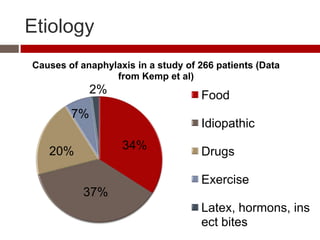
Etiology
Causes of anaphylaxis in a study of 266 patients (Data
                 from Kemp et al)
             2%                     Food
        7%
                                    Idiopathic

   20%             34%              Drugs

                                    Exercise
           37%
                                    Latex, hormons, ins
                                    ect bites
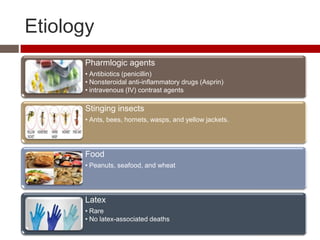
Etiology
      Pharmlogic agents
      • Antibiotics (penicillin)
      • Nonsteroidal anti-inflammatory drugs (Asprin)
      • intravenous (IV) contrast agents

      Stinging insects
      • Ants, bees, hornets, wasps, and yellow jackets.


      Food
      • Peanuts, seafood, and wheat


      Latex
      • Rare
      • No latex-associated deaths
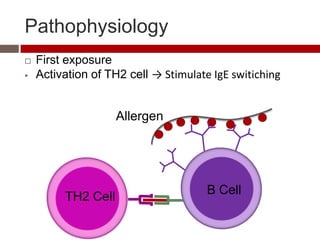
Pathophysiology
   First exposure
   Activation of TH2 cell → Stimulate IgE switiching


                    Allergen


                                      B Cell
         TH2 Cell
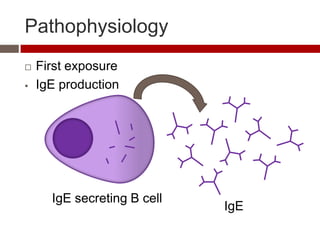
Pathophysiology
   First exposure
   IgE production


      IgE secreting B cell
                             IgE
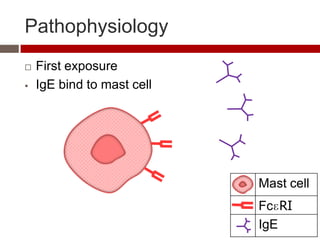
Pathophysiology
   First exposure
   IgE bind to mast cell


                            Mast cell
                            FcɛRI
                            IgE
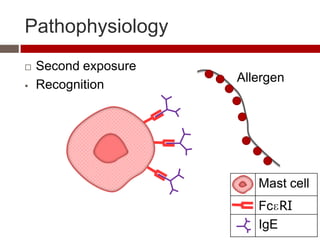
Pathophysiology
   Second exposure
                      Allergen
   Recognition


                         Mast cell
                         FcɛRI
                         IgE
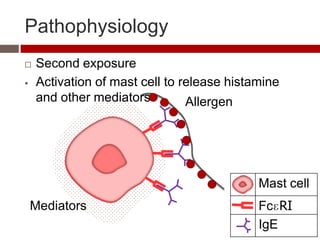
Pathophysiology
   Second exposure
   Activation of mast cell to release histamine
    and other mediators         Allergen


                                            Mast cell
    Mediators                               FcɛRI
                                            IgE
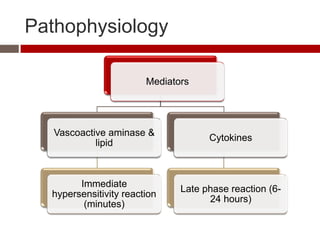
Pathophysiology

                        Mediators


   Vascoactive aminase &
                                     Cytokines
            lipid


        Immediate
                               Late phase reaction (6-
  hypersensitivity reaction
                                     24 hours)
         (minutes)
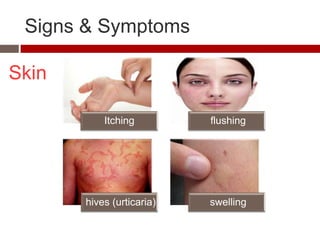
Signs & Symptoms

Skin

           Itching         flushing


       hives (urticaria)   swelling
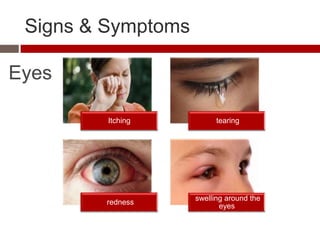
Signs & Symptoms

Eyes

         Itching          tearing


                    swelling around the
        redness
                           eyes
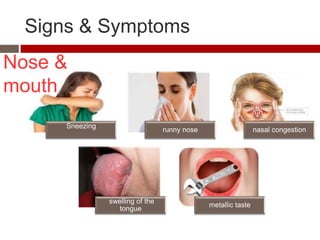
Signs & Symptoms
Nose &
mouth
      Sneezing
                                   runny nose                    nasal congestion


                 swelling of the
                                                metallic taste
                    tongue
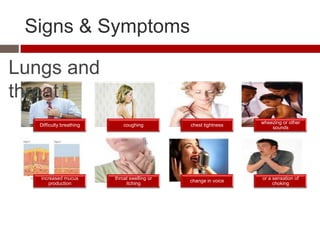
Signs & Symptoms

Lungs and
throat
                                                                 wheezing or other
   Difficulty breathing       coughing         chest tightness
                                                                     sounds


   increased mucus        throat swelling or                     or a sensation of
                                               change in voice
      production               itching                                choking
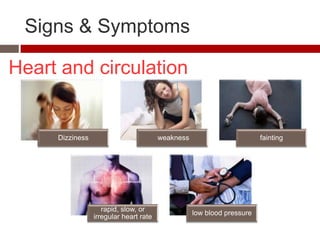
Signs & Symptoms

Heart and circulation


     Dizziness                          weakness                        fainting


                    rapid, slow, or
                                                   low blood pressure
                 irregular heart rate
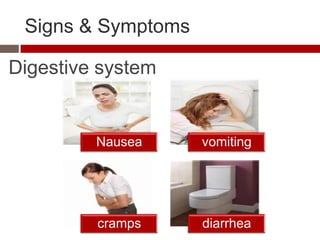
Signs & Symptoms

Digestive system


         Nausea     vomiting


         cramps     diarrhea
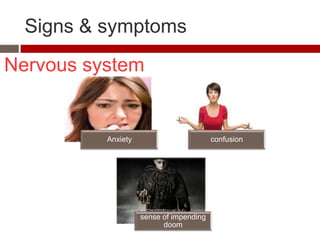
Signs & symptoms
Nervous system


          Anxiety                        confusion


                    sense of impending
                          doom
Diagnosis
   The diagnosis of anaphylaxis is based upon symptoms
    that occur suddenly after being exposed to a potential
    trigger.
   Differential diagnosis
   severe asthma attack
   heart attack
   panic attack
   food poisoning
   An increased amount of tryptase protein can be
    measured in a blood sample collected during the first
    three hours after anaphylaxis symptoms have begun.
   tryptase levels are seldom elevated in food-induced
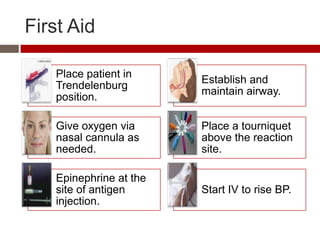
First Aid

   Place patient in
                        Establish and
   Trendelenburg
                        maintain airway.
   position.

   Give oxygen via      Place a tourniquet
   nasal cannula as     above the reaction
   needed.              site.

   Epinephrine at the
   site of antigen      Start IV to rise BP.
   injection.
Treatment
   EPINEPHRINE
   Benadryl (diphenhydramine) - H1
    antagonist
   Tagamet (cimetidine) - H2 antagonist
   Corticosteroid therapy
   In severe anaphylaxis, observe for 6 hours or
    longer
Prevention

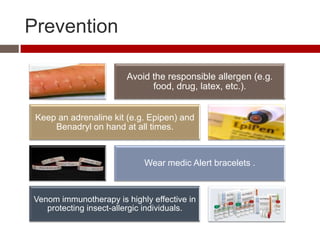
                        Avoid the responsible allergen (e.g.
                              food, drug, latex, etc.).


 Keep an adrenaline kit (e.g. Epipen) and
     Benadryl on hand at all times.


                            Wear medic Alert bracelets .


Venom immunotherapy is highly effective in
   protecting insect-allergic individuals.
References
   Abbas & Lichtman, Basic Immunology 3E, Chapter 11
   http://www.authorstream.com/Presentation/Moiloa-898248-
    anaphylaxis/
   http://med.mui.ac.ir/clinical/orjanc/Anaphylaxis.ppt
   http://www.uptodate.com/contents/anaphylaxis-symptoms-and-
    diagnosis-beyond-the-basics
   http://www.oregonems.org/Downloads/Anaphylaxis.ppt
Thank You
Fatima Al-Awadh

Anaphylaxis

  • 1.
  • 2.
    Objectives  Define Hypersensitivity Reaction.  Mention the Types of Hypersensitivity Reactions.  Define Anaphylaxis.  Mention the Etiologic Causes.  Explain the Pathophysiologic Mechanism.  Mention the Signs & Symptoms.  Demonstrate the Diagnostic Investigations.  Display the Treatment & First Aid.
  • 3.
    Hypersensitivity Reaction  Injurious, or pathologic, immune reactions are called hypersensitivity reactions.  Hypersensitivity reactions may occur in two situations.  First, responses to foreign antigens may be dysregulated or uncontrolled, resulting in tissue injury.  Second, the immune responses may be directed against self antigens, as a result of the failure of self-tolerance (autoimmunity).
  • 4.
    Types of hypersensitivity reactions Immediate Antibody- immune complex T cell-mediated hypersensitivity mediated diseases diseases Mast cell Antibodies Antibody- Reactions release directed antigen of T histamine against cell or complex lymphocytes and other tissue deposit in mediators antigens blood vessels
  • 5.
    Anaphylaxis  Ana (without), phylaxis (protection).  Acute multi-systemic allergic reaction involving the skin, airway, vascular system, and GI.  Sever immediate (type I) hypersensitivity reaction.  True & pseudo-anaphylaxis.
  • 6.
    Etiology Causes of anaphylaxisin a study of 266 patients (Data from Kemp et al) 2% Food 7% Idiopathic 20% 34% Drugs Exercise 37% Latex, hormons, ins ect bites
  • 7.
    Etiology Pharmlogic agents • Antibiotics (penicillin) • Nonsteroidal anti-inflammatory drugs (Asprin) • intravenous (IV) contrast agents Stinging insects • Ants, bees, hornets, wasps, and yellow jackets. Food • Peanuts, seafood, and wheat Latex • Rare • No latex-associated deaths
  • 8.
    Pathophysiology  First exposure  Activation of TH2 cell → Stimulate IgE switiching Allergen B Cell TH2 Cell
  • 9.
    Pathophysiology  First exposure  IgE production IgE secreting B cell IgE
  • 10.
    Pathophysiology  First exposure  IgE bind to mast cell Mast cell FcɛRI IgE
  • 11.
    Pathophysiology  Second exposure Allergen  Recognition Mast cell FcɛRI IgE
  • 12.
    Pathophysiology  Second exposure  Activation of mast cell to release histamine and other mediators Allergen Mast cell Mediators FcɛRI IgE
  • 13.
    Pathophysiology Mediators Vascoactive aminase & Cytokines lipid Immediate Late phase reaction (6- hypersensitivity reaction 24 hours) (minutes)
  • 14.
    Signs & Symptoms Skin Itching flushing hives (urticaria) swelling
  • 15.
    Signs & Symptoms Eyes Itching tearing swelling around the redness eyes
  • 16.
    Signs & Symptoms Nose& mouth Sneezing runny nose nasal congestion swelling of the metallic taste tongue
  • 17.
    Signs & Symptoms Lungsand throat wheezing or other Difficulty breathing coughing chest tightness sounds increased mucus throat swelling or or a sensation of change in voice production itching choking
  • 18.
    Signs & Symptoms Heartand circulation Dizziness weakness fainting rapid, slow, or low blood pressure irregular heart rate
  • 19.
    Signs & Symptoms Digestivesystem Nausea vomiting cramps diarrhea
  • 20.
    Signs & symptoms Nervoussystem Anxiety confusion sense of impending doom
  • 21.
    Diagnosis  The diagnosis of anaphylaxis is based upon symptoms that occur suddenly after being exposed to a potential trigger.  Differential diagnosis  severe asthma attack  heart attack  panic attack  food poisoning  An increased amount of tryptase protein can be measured in a blood sample collected during the first three hours after anaphylaxis symptoms have begun.  tryptase levels are seldom elevated in food-induced
  • 22.
    First Aid Place patient in Establish and Trendelenburg maintain airway. position. Give oxygen via Place a tourniquet nasal cannula as above the reaction needed. site. Epinephrine at the site of antigen Start IV to rise BP. injection.
  • 23.
    Treatment  EPINEPHRINE  Benadryl (diphenhydramine) - H1 antagonist  Tagamet (cimetidine) - H2 antagonist  Corticosteroid therapy  In severe anaphylaxis, observe for 6 hours or longer
  • 24.
    Prevention Avoid the responsible allergen (e.g. food, drug, latex, etc.). Keep an adrenaline kit (e.g. Epipen) and Benadryl on hand at all times. Wear medic Alert bracelets . Venom immunotherapy is highly effective in protecting insect-allergic individuals.
  • 25.
    References  Abbas & Lichtman, Basic Immunology 3E, Chapter 11  http://www.authorstream.com/Presentation/Moiloa-898248- anaphylaxis/  http://med.mui.ac.ir/clinical/orjanc/Anaphylaxis.ppt  http://www.uptodate.com/contents/anaphylaxis-symptoms-and- diagnosis-beyond-the-basics  http://www.oregonems.org/Downloads/Anaphylaxis.ppt
  • 26.